Miro and GenAI as drivers of online student engagement — from timeshighereducation.com by Jaime Eduardo Moncada Garibay A set of practical strategies for transforming passive online student participation into visible, measurable and purposeful engagement through the use of Miro, enhanced by GenAI
To address this challenge, I shifted my focus from requesting participation to designing it. This strategic change led me to integrate Miro, a visual digital workspace, into my classes. Miro enables real-time visualisation and co-creation of ideas, whether individually or in teams.
…
The transition from passive attendance to active engagement in online classes requires deliberate instructional design. Tools such as Miro, enhanced by GenAI, enable educators to create structured, visually rich learning environments in which participation is both expected and documented.
While technology provides templates, frames, timers and voting features, its real pedagogical value emerges through intentional facilitation, where the educator’s role shifts from delivering content to orchestrating collaborative, purposeful learning experiences.
In the past, it was typical for faculty to teach online courses as an “overload” of some kind, but BOnES data show that 92% of online programs feature courses taught as part of faculty member’s standard teaching responsibilities. Online teaching has become one of multiple modalities in which faculty teach regularly.
Three-quarters of chief online officers surveyed said they plan to have a great market share of online enrollments in the future, but only 23% said their current marketing is better than their competitors. The rising tide of online enrollments won’t lift all boats–some institutions will fare better than others.
Staffing at online education units is growing, with the median staff size increasing from 15 last year to 20 this year. Julie pointed out that successful online education requires investment of resources. You might need as many buildings as onsite education does, but you need people and you need technology.
GRAND RAPIDS, MI — A new course at Grand Rapids Community College aims to help students learn about artificial intelligence by using the technology to solve real-world business problems.
…
In a release, the college said its grant application was supported by 20 local businesses, including Gentex, TwistThink and the Grand Rapids Public Museum. The businesses have pledged to work with students who will use business data to develop an AI project such as a chatbot that interacts with customers, or a program that automates social media posts or summarizes customer data.
“This rapidly emerging technology can transform the way businesses process data and information,” Kristi Haik, dean of GRCC’s School of Science, Technology, Engineering and Mathematics, said in a statement. “We want to help our local business partners understand and apply the technology. We also want to create real experiences for our students so they enter the workforce with demonstrated competence in AI applications.”
As Patrick Bailey said on LinkedIn about this article:
Nice to see a pedagogy that’s setting a forward movement rather than focusing on what could go wrong with AI in a curriculum.
As a 30 year observer and participant, it seems to me that previous technology platform shifts like SaaS and mobile did not fundamentally change the LMS. AI is different. We’re standing at the precipice of LMS 2.0, where the branding change from Course Management System to Learning Management System will finally live up to its name. Unlike SaaS or mobile, AI represents a technology platform shift that will transform the way participants interact with learning systems – and with it, the nature of the LMS itself.
Given the transformational potential of AI, it is useful to set the context and think about how we got here, especially on this 30th anniversary of the LMS.
Where AI is disruptive is in its ability to introduce a whole new set of capabilities that are best described as personalized learning services. AI offers a new value proposition to the LMS, roughly the set of capabilities currently being developed in the AI Tutor / agentic TA segment. These new capabilities are so valuable given their impact on learning that I predict they will become the services with greatest engagement within a school or university’s “enterprise” instructional platform.
In this way, by LMS paradigm shift, I specifically mean a shift from buyers valuing the product on its course-centric and course management capabilities, to valuing it on its learner-centric and personalized learning capabilities.
This anthology reveals how the integration of AI in education poses profound philosophical, pedagogical, ethical and political questions. As this global AI ecosystem evolves and becomes increasingly ubiquitous, UNESCO and its partners have a shared responsibility to lead the global discourse towards an equity- and justice-centred agenda. The volume highlights three areas in which UNESCO will continue to convene and lead a global commons for dialog and action particularly in areas on AI futures, policy and practice innovation, and experimentation.
As guardian of ethical, equitable human-centred AI in education.
As thought leader in reimagining curriculum and pedagogy
As a platform for engaging pluralistic and contested dialogues
AI, copyright and the classroom: what higher education needs to know — from timeshighereducation.com by Cayce Myers As artificial intelligence reshapes teaching and research, one legal principle remains at the heart of our work: copyright. Understanding its implications isn’t just about compliance – it’s about protecting academic integrity, intellectual property and the future of knowledge creation. Cayce Myers explains
Why It Matters A decade from now, we won’t say “AI changed schools.” We’ll say: this was the year schools began to change what it means to be human, augmented by AI.
This transformation isn’t about efficiency alone. It’s about dignity, creativity, and discovery, and connecting education more directly to human flourishing. The industrial age gave us schools to produce cookie-cutter workers. The digital age gave us knowledge anywhere, anytime. The AI age—beginning now—gives us back what matters most: the chance for every learner to become infinitely capable.
This fall may look like any other—bells ringing, rows of desks—but beneath the surface, education has begun its greatest transformation since the one-room schoolhouse.
Transactional and transformational leaderships’ combined impact on AI and trust Given the volatile times we live in, a leader may find themselves in a situation where they know how they will use AI, but they are not entirely clear on the goals and journey. In a teaching context, students can be given scenarios where they must lead a team, including autonomous AI agents, to achieve goals. They can then analyse the situations and decide what leadership styles to apply and how to build trust in their human team members. Educators can illustrate this decision-making process using a table (see above).
They may need to combine transactional leadership with transformational leadership, for example. Transactional leadership focuses on planning, communicating tasks clearly and an exchange of value. This works well with both humans and automated AI agents.
Real, capability-building learning requires three key elements: content, context and conversation.
The Rise Of AI Agents: Teaching At Scale
The generative AI revolution is often framed in terms of efficiency: faster content creation, automated processes and streamlined workflows. But in the world of L&D, its most transformative potential lies elsewhere: the ability to scale great teaching.
AI gives us the means to replicate the role of an effective teacher across an entire organization. Specifically, AI agents—purpose-built systems that understand, adapt and interact in meaningful, context-aware ways—can make this possible. These tools understand a learner’s role, skill level and goals, then tailor guidance to their specific challenges and adapt dynamically over time. They also reinforce learning continuously, nudging progress and supporting application in the flow of work.
More than simply sharing knowledge, an AI agent can help learners apply it and improve with every interaction. For example, a sales manager can use a learning agent to simulate tough customer scenarios, receive instant feedback based on company best practices and reinforce key techniques. A new hire in the product department could get guidance on the features and on how to communicate value clearly in a roadmap meeting.
In short, AI agents bring together the three essential elements of capability building, not in a one-size-fits-all curriculum but on demand and personalized for every learner. While, obviously, this technology shouldn’t replace human expertise, it can be an effective tool for removing bottlenecks and unlocking effective learning at scale.
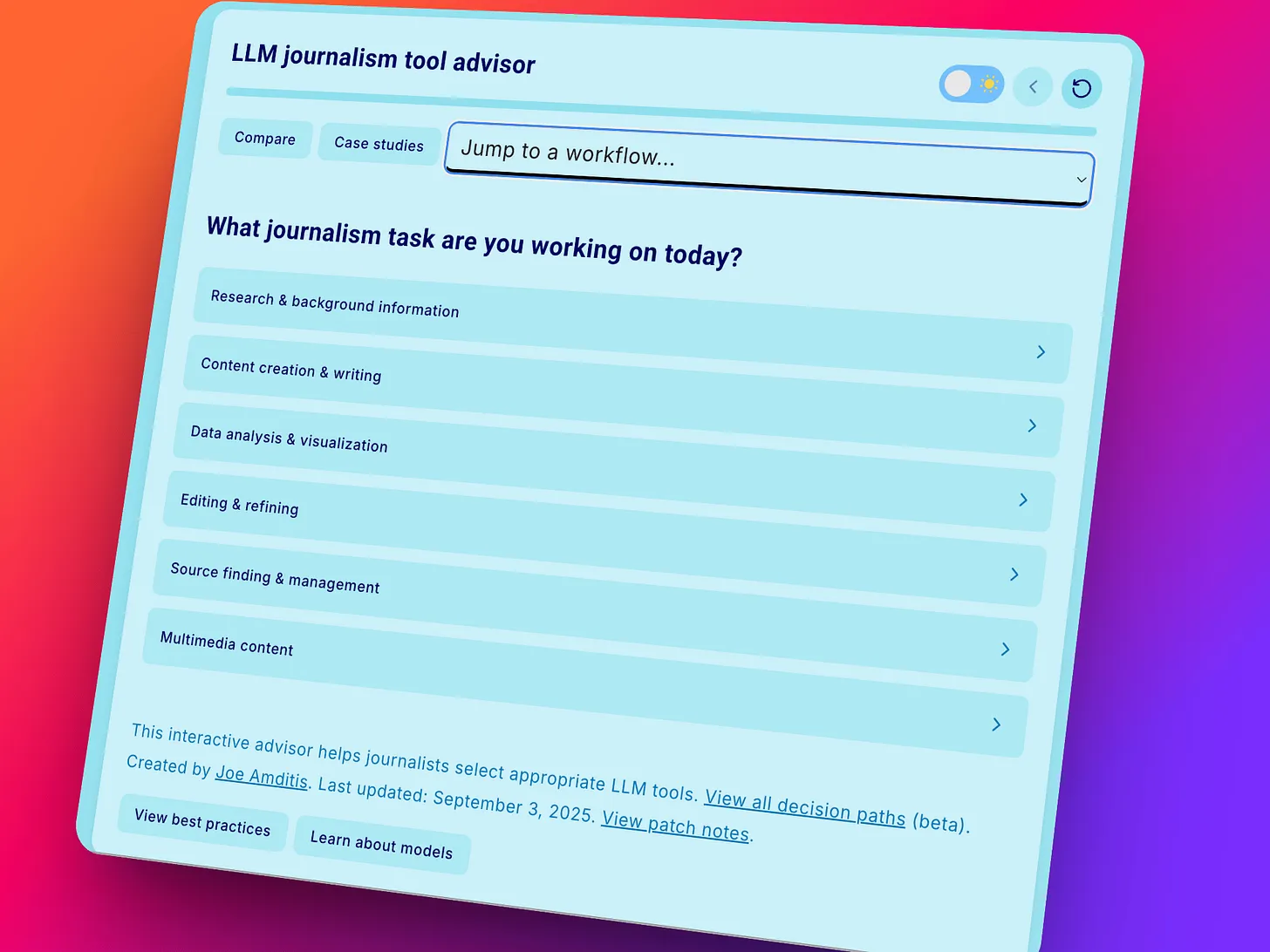
As news organizations scramble to update their digital toolkits, I invited one of the most tech savvy journalism advisors I know to share his guidance.
In the guest post below, Joe Amditis shares a bunch of useful resources. A former CUNY student of mine, Joe now serves as associate director of operations at the Center for Cooperative Media at Montclair State University.
Bottom line: The best engineers became 100x better with AI coding tools. Now the same transformation is hitting law. Joel [the CTO at Thomson Reuters] predicts the best attorneys who master these tools will become 100x more powerful than before.
4. Legal Startups Reshape the Market for Judges and Practitioners
Legal services are no longer dominated by traditional providers. Business Insider reports on a new wave of nimble “Law Firm 2.0” entities—AI-enabled startups offering fixed cost services for specific tasks such as contract reviews or drafting. The LegalTech Lab is helping launch such disruptors with funding and guidance.
At the same time, alternative legal service providers or ALSPs are integrating generative AI, moving beyond cost-efficient support to providing legal advice and enhanced services—often on subscription models.
In 2025 so far, legal technology has moved from incremental adoption to integral transformation. Generative AI, investments, startups, and regulatory readiness are reshaping the practice of law—for lawyers, judges, and the rule of law.
I recently finished reading Ethan Mollick‘s excellent book on artificial intelligence, entitled Co-Intelligence: Living and Working with AI. He does a great job of explaining what it is, how it works, how it best can be used, and where it may be headed.
…
The first point that resonated with me is that artificial intelligence tools can take those with poor skills in certain areas and significantly elevate their output. For example, Mollick cited a study that demonstrated that the performance of law students at the bottom of their class got closer to that of the top students with the use of AI.
Lawyers and law firms need to begin thinking and planning for how the coming skill equalization will impact competition and potentially profitability. They need to consider how the value of what they provide to their clients will be greater than their competition. They need to start thinking about what skill will set them apart in the new AI driven world.
Welcome to the new normal: the AI First Draft. Clients—from everyday citizens to solo entrepreneurs to sophisticated in-house counsel—are increasingly using AI to create the first draft of legal documents before outside counsel even enters the conversation. Contracts, memos, emails, issue spotters, litigation narratives: AI can now do it all.
This means outside counsel is now navigating a very different kind of document review and client relationship. One that comes with hidden risks, awkward conversations, and new economic pressures.
Here are the three things every lawyer needs to start thinking about when reviewing client-generated work product.
1. The Prompt Problem: What Was Shared, and With Whom?… 2. The Confidence Barrier: When AI Sounds Right, But Isn’t… 3. The Economic Shift: Why AI Work Can Cost More, Not Less…
SINGAPORE Sept. 3, 2025 /PRNewswire/ — Today, Midoo AIproudly announces the launch of the world’s first AI language learning agent, a groundbreaking innovation set to transform language education forever.
For decades, language learning has pursued one ultimate goal: true personalization. Traditional tools offered smart recommendations, gamified challenges, and pre-written role-play scripts—but real personalization remained out of reach. Midoo AI changes that. Here is the >launch video of Midoo AI.
Imagine a learning experience that evolves with you in real time. A system that doesn’t rely on static courses or scripts but creates a dynamic, one-of-a-kind language world tailored entirely to your needs. This is the power of Midoo’s Dynamic Generation technology.
“Midoo is not just a language-learning tool,” said Yvonne, co-founder of Midoo AI. “It’s a living agent that senses your needs, adapts instantly, and shapes an experience that’s warm, personal, and alive. Learning is no longer one-size-fits-all—now, it’s yours and yours alone.”
Language learning apps have traditionally focused on exercises, quizzes, and progress tracking. Midoo AI introduces a different approach. Instead of presenting itself as a course provider, it acts as an intelligent learning agent that builds, adapts, and sustains a learner’s journey.
This review examines how Midoo AI operates, its feature set, and what makes it distinct from other AI-powered tutors.
Midoo AI in Context: Purpose and Position
Midoo AI is not structured around distributing lessons or modules. Its core purpose is to provide an agent-like partner that adapts in real time. Where many platforms ask learners to select a “level” or “topic,”
Midoo instead begins by analyzing goals, usage context, and error patterns. The result is less about consuming predesigned units and more about co-constructing a pathway.
Turning Time Saved Into Better Learning
AI can save teachers time, but what can that time be used for (besides taking a breath)? For most of us, it means redirecting energy into the parts of teaching that made us want to pursue this profession in the first place: connecting with our students and helping them grow academically.
Differentiation Every classroom has students with different readiness levels, language needs, and learning preferences. AI tools like Diffit or MagicSchool can instantly create multiple versions of a passage or assignment, differentiated by grade level, complexity, or language. This allows every student to engage with the same core concept, moving together as one cohesive class. Instead of spending an evening retyping and rephrasing, teachers can review and tweak AI drafts in minutes, ready for the next lesson.
Mass Intelligence — from oneusefulthing.org by Ethan Mollick From GPT-5 to nano banana: everyone is getting access to powerful AI
When a billion people have access to advanced AI, we’ve entered what we might call the era of Mass Intelligence. Every institution we have — schools, hospitals, courts, companies, governments — was built for a world where intelligence was scarce and expensive. Now every profession, every institution, every community has to figure out how to thrive with Mass Intelligence. How do we harness a billion people using AI while managing the chaos that comes with it? How do we rebuild trust when anyone can fabricate anything? How do we preserve what’s valuable about human expertise while democratizing access to knowledge?
By the time today’s 9th graders and college freshman enter the workforce, the most disruptive waves of AGI and robotics may already be embedded into part society.
What replaces the old system will not simply be a more digital version of the same thing. Structurally, schools may move away from rigid age-groupings, fixed schedules, and subject silos. Instead, learning could become more fluid, personalized, and interdisciplinary—organized around problems, projects, and human development rather than discrete facts or standardized assessments.
AI tutors and mentors will allow for pacing that adapts to each student, freeing teachers to focus more on guidance, relationships, and high-level facilitation. Classrooms may feel less like miniature factories and more like collaborative studios, labs, or even homes—spaces for exploring meaning and building capacity, not just delivering content.
…
If students are no longer the default source of action, then we need to teach them to:
Design agents,
Collaborate with agents,
Align agentic systems with human values,
And most of all, retain moral and civic agency in a world where machines act on our behalf.
We are no longer educating students to be just doers.
We must now educate them to be judges, designers, and stewards of agency.
Meet Your New AI Tutor — from wondertools.substack.com by Jeremy Caplan Try new learning modes in ChatGPT, Claude, and Gemini
AI assistants are now more than simple answer machines. ChatGPT’s new Study Mode, Claude’s Learning Mode, and Gemini’s Guided Learningrepresent a significant shift. Instead of just providing answers, these free tools act as adaptive, 24/7 personal tutors.
That’s why, in preparation for my next bootcamp which kicks off September 8th 2025, I’ve just completed a full refresh of my list of the most powerful & popular AI tools for Instructional Designers, complete with tips on how to get the most from each tool.
The list has been created using my own experience + the experience of hundreds of Instructional Designers who I work with every week.
It contains the 50 most powerful AI tools for instructional design available right now, along with tips on how to optimise their benefits while mitigating their risks.
Addendums on 9/4/25:
AI Companies Roll Out Educational Tools — from insidehighered.com by Ray Schroeder This fall, Google, Anthropic and OpenAI are rolling out powerful new AI tools for students and educators, each taking a different path to shape the future of learning.
So here’s the new list of essential skills I think my students will need when they are employed to work with AI five years from now:
They can follow directions, analyze outcomes, and adapt to change when needed.
They can write or edit AI to capture a unique voice and appropriate tone in sync with an audience’s needs
They have a deep understanding of one or more content areas of a particular profession, business, or industry, so they can easily identify factual errors.
They have a strong commitment to exploration, a flexible mindset, and a broad understanding of AI literacy.
They are resilient and critical thinkers, ready to question results and demand better answers.
They are problem solvers.
And, of course, here is a new rubric built on those skills:
What’s changing is not the foundation—it’s the ecosystem. Teams are looking to create more flexible, scalable, and diverse learning experiences that meet people where they are.
What Did We Explore? Everyone seems to have a take on what’s happening in L&D these days. From bold claims about six-figure roles to debates over whether portfolios or degrees matter more, everyone seems to have a take. So, we wanted to get to the heart of it by exploring five of the biggest, most debated areas shaping our work today:
Salaries: Are compensation trends really keeping pace with the value we deliver?
Hiring: What skills are managers actually looking for—and are those ATS horror stories true?
Portfolios: Are portfolios helping candidates stand out, and what are hiring managers actually looking for?
Tools & Modalities: What types of training are teams building, and what tools are they using to build it?
Artificial Intelligence: Who’s using it, how, and what concerns still exist?
These five areas are shaping the future of instructional design—not just for job seekers, but for team leaders, hiring managers, and the entire ecosystem of L&D professionals.
The takeaway? A portfolio is more than a collection of projects—it’s a storytelling tool. The ones that stand out highlight process, decision-making, and results—not just pretty screens.
Educators use AI in and out of the classroom Educators’ uses range from developing course materials and writing grant proposals to academic advising and managing administrative tasks like admissions and financial planning.
Educators aren’t just using chatbots; they’re building their own custom tools with AI
Faculty are using Claude Artifacts to create interactive educational materials, such as chemistry simulations, automated grading rubrics, and data visualization dashboards.
Educators tend to automate the drudgery while staying in the loop for everything else
Tasks requiring significant context, creativity, or direct student interaction—like designing lessons, advising students, and writing grant proposals—are where educators are more likely to use AI as an enhancement. In contrast, routine administrative work such as financial management and record-keeping are more automation-heavy.
Some educators are automating grading; others are deeply opposed
In our Claude.ai data, faculty used AI for grading and evaluation less frequently than other uses, but when they did, 48.9% of the time they used it in an automation-heavy way (where the AI directly performs the task). That’s despite educator concerns about automating assessment tasks, as well as our surveyed faculty rating it as the area where they felt AI was least effective.
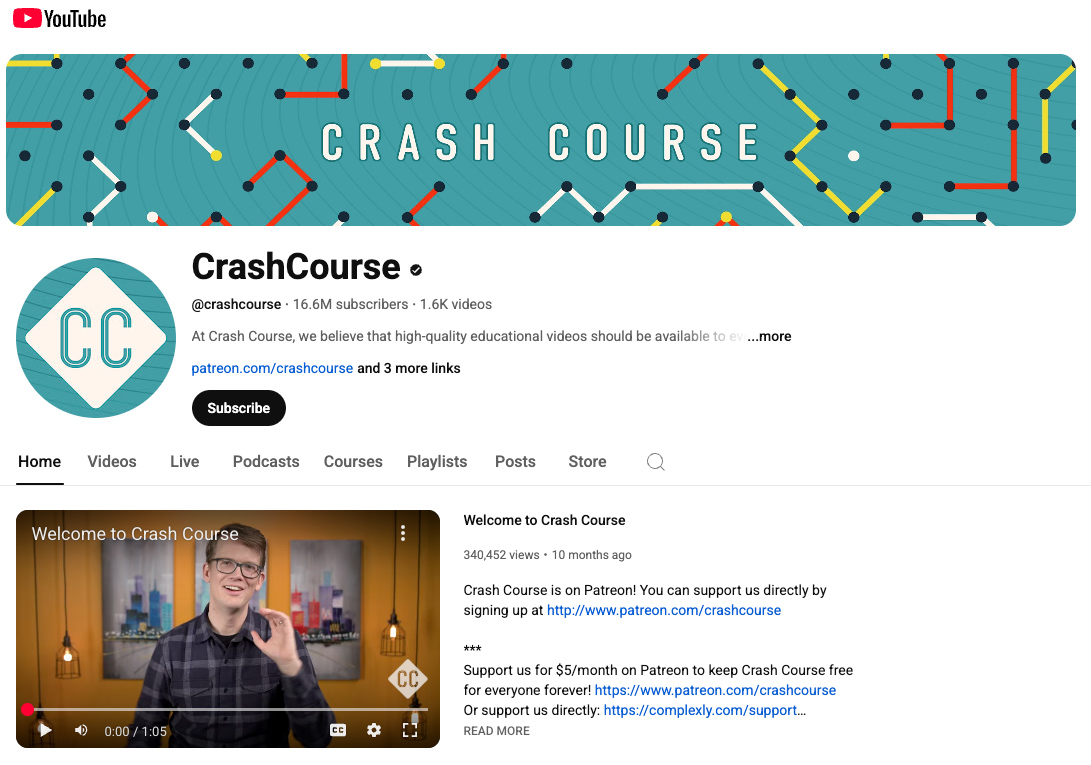
Description: At Crash Course, we believe that high-quality educational videos should be available to everyone for free! Subscribe for weekly videos from our current courses! The Crash Course team has produced more than 50 courses on a wide variety of subjects, ranging from the humanities to sciences and so much more! We also recently teamed up with Arizona State University to bring you more courses on the Study Hall channel.
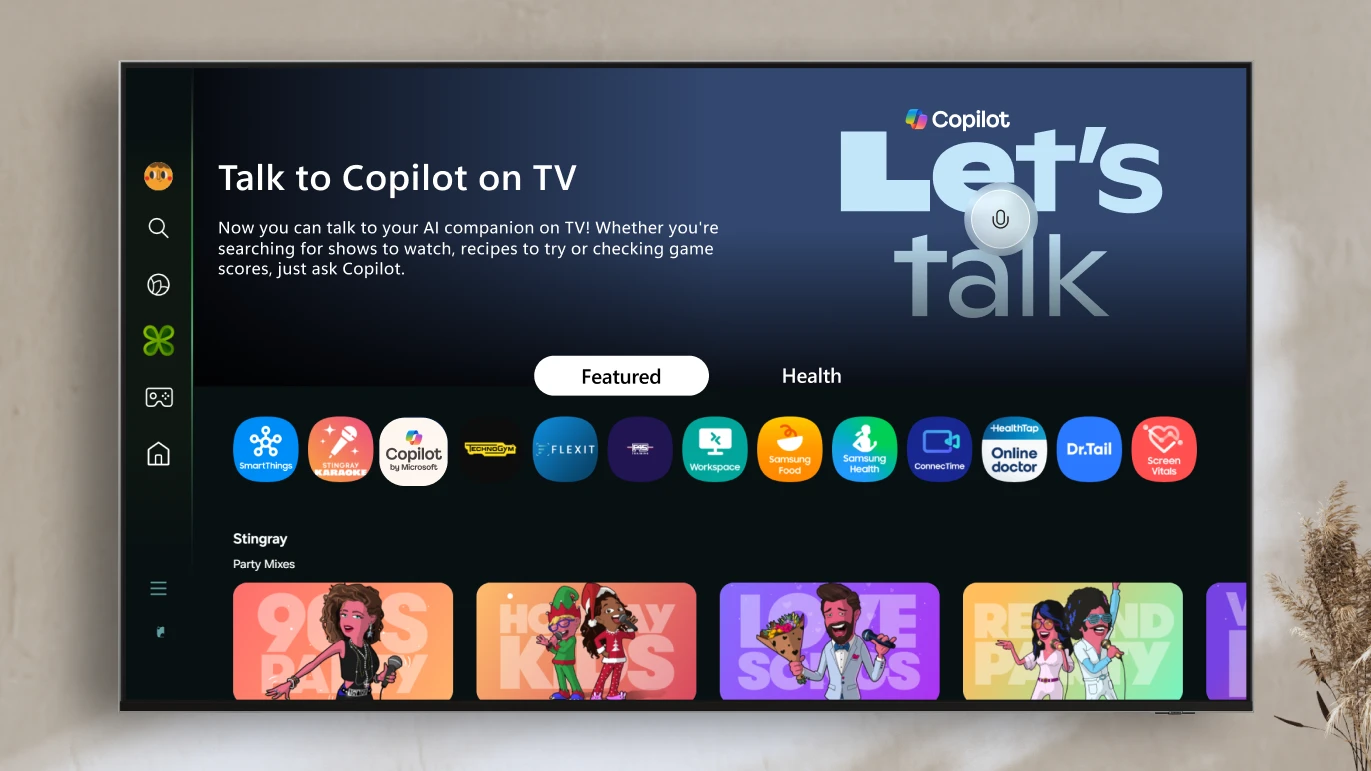
Voice-powered AI meets a visual companion for entertainment, everyday help, and everything in between.
Redmond, Wash., August 27—Today, we’re announcing the launch ofCopilot on select Samsung TVs and monitors, transforming the biggest screen in your home into your most personal and helpful companion—and it’s free to use.
Copilot makes your TV easier and more fun to use with its voice-powered interface, friendly on-screen character, and simple visual cards. Now you can quickly find what you’re looking for and discover new favorites right from your living room.
Because it lives on the biggest screen in the home, Copilot is a social experience—something you can use together with family and friends to spark conversations, help groups decide what to watch, and turn the TV into a shared space for curiosity and connection.
Disney alum Paul Williams once shared the brainstorming method developed by Walt Disney. Disney used to separate the act of coming up with and executing ideas into three distinct steps (and associated mindsets): The Dreamer, The Realist, and The Spoiler.
As Paul wrote:
“By compartmentalizing the stages, Walt didn’t let reality get in the way of the dream step. The realist was allowed to work without the harsh filter of a spoiler. And, the spoiler spends time examining a well-thought idea… something with a bit more structure.
“When we brainstorm alone and in groups – too often – we tend to fill the room with a dreamer or two, a few realists, and a bunch of spoilers. In these conditions, dream ideas don’t stand a chance.”
The Dreamer mentality specializes in blue sky thinking without constraints, the Realist mentality puts practical structure to the ideas, and the Spoiler asks the hard questions and kicks the tires. We need all three mindsets. But we need those mindsets at the right time and in the right way.
From DSC: How true this is! I’m the Dreamer in the room…and have been shut down more times than I can count. For all of you Visionaries and Dreamers out there, keep trying! And consider establishing something like Walt Disney did.
The AI Education Revolution — from linkedin.com by Whitney Kilgore We’re witnessing the biggest shift in education since the textbook—and most institutions are still deciding whether to allow it.
On the surface, ILTACON 2025, the International Legal Technology Association’s largest annual legal technology event, had all the makings of a great conference. But despite the thought-provoking sessions and keynotes, networking opportunities and PR fanfare, I couldn’t shake the sense that we were in the midst of a seismic shift in legal tech, surrounded by the restless energy of a boomtown.
… The gold rush
It wasn’t ILTACON that bothered me; it was the heady, gold-rushed, “anything goes and whatever sticks works” environment that was unsettling. While this year’s conference was pirate-themed, it felt more like the Wild West to me.
This attitude permeated the conference, driven largely by the frenzied, frontier-style artificial intelligence revolution. The AI train is hurtling forward at lightning speed, destination unknown, and everyone is trying to cash in before it derails.
Two themes emerged from my discussions. First, no matter who you spoke to, “agentic AI,” meaning AI that autonomously takes purposeful actions, was a buzzword that cropped up often, whether during press briefings or over drinks. Another key trend was the race to become the generative AI home base for legal professionals.
— Nicole Black
“We are at the start of the biggest disruption to the legal profession in its history.”
Is AI the technology that will finally force lawyer tech competence? With rapid advances and the ability to address numerous problems and pain points in our legal systems, AI simply can’t be ignored. Dennis & Tom welcome Bridget McCormack to discuss her perspectives on current AI trends and other exciting new tech applications in legal…
Diamonds in the Rough— from the-job.beehiiv.com by Paul Fain One of the country’s largest community college districts expands support for students with criminal records—and the employers who hire them.
Clearing Records, Building Careers
The Big Idea: Toyotetsu is now one of several employers in talks with Alamo Colleges as they expand their support for students with criminal backgrounds. The effort is part of a larger push to broaden the colleges’ role in lifting up their cities and regions. Alamo Colleges is one of 15 institutions participating in Achieving the Dream’s Community Vibrancy Cohort, which encourages community colleges to reimagine their role in the health and economic success of their communities.
Before joining the Achieving the Dream cohort, San Antonio College was already establishing an associate degree program at Dominguez State Jail. Julia Stotts, director of strategic planning and partnerships for the Alamo Colleges Foundation, says the initiative spurred leaders to think about how to also help those kinds of students after release.
“The earlier we can catch these students who are having these challenges, the better off they’re going to be,” Stotts says.