What AI-Generated Voice Technology Means For Creators And Brands — from bitrebels.com by Ryan Mitchell

Voice has become one of the most influential elements in how digital content is experienced. From podcasts and videos to apps, ads, and interactive platforms, spoken audio shapes how messages are understood and remembered. In recent years, the rise of the ai voice generator has changed how creators and brands approach audio production, lowering barriers while expanding creative possibilities.

Rather than relying exclusively on traditional voice recording, many teams now use AI-generated voices as part of their content and brand strategies. This shift is not simply about efficiency; it reflects broader changes in how digital experiences are produced, scaled, and personalised.

The Future Role Of AI-Generated Voice
As AI voice technology continues to improve, its role in creative and brand workflows will likely expand. Future developments may include more adaptive voices that respond to context, audience behaviour, or emotional cues in real time. Rather than replacing traditional voice work, AI-generated voice is becoming another option in a broader creative toolkit, one that offers speed, flexibility, and accessibility.
 

Corporate Training Solutions That Actually Improve Performance — from blog.upsidelearning.com by Unnati Umare

Designing Learning Around Performance in the Flow of Work
Once it becomes clear that completion does not reliably translate into changed behavior, the next question tends to surface on its own. If training is not failing outright, then what it should be designed around becomes harder to ignore.

In most organizations, the answer remains content. Content is easier to define, easier to build, and easier to track, even when it explains very little about how work actually gets done.

Performance-aligned learning design shifts that starting point by paying closer attention to how work unfolds in practice. Instead of organizing learning around topics or courses, design decisions begin with what a role requires people to notice, decide, and act on during real situations.  


10 Elearning Interaction Ideas You May Not Have Thought Of Yet — from theelearningcoach.com by Connie Malamed

Is click-to-reveal always bad for learning?
Not necessarily. Click-to-reveal interactions can be useful when you want to manage cognitive load, reveal information gradually, or work within limited screen space. In those cases, clicking supports the presentation of information.

However, from an instructional perspective, clicking alone does not make an interaction meaningful. An interaction adds value when it asks learners to think, not just trigger more content.

The interaction ideas below require learners to analyze, judge, predict, or diagnose. These are the types of mental actions learners perform in real work settings. Each one includes a short, real-world question to show how the idea might be used in practice.


Reflecting on Education in 2025 — from by Dr. Rachelle Dené Poth

Educators have become more discerning about initiatives to invest in, tools to explore, and expectations to set. The question “Can we do this?” shifted to “Should we do this? And “Why?” Which then led to the “How” part.

This shift showed up in conversations around curriculum, assessment, technology use, and student well-being. Schools began reducing or being more selective rather than layering, which helped educators to adjust better to change. Leaders focused more on coherence instead of compliance. And in some conversations I had or articles I read, I noticed respectful pushback on practices that added complexity without improving learning.

I think this is why the recalibration mattered.

AI has become less about “cheating” and more about helping students and others learn how to think, evaluate, and create responsibly in an AI-infused world.

Educators have become more discerning about initiatives to invest in, tools to explore, and expectations to set. The question “Can we do this?” shifted to “Should we do this? And “Why?” Which then led to the “How” part.


Community colleges are training the next generation of manufacturing workers — from manufacturingdive.com by Michelle No
Rutgers University explored how community colleges are responding to regional workforce training demands. Clark State College and Columbus State Community College are among those leading the way.

One underrated option may hold the most promise for workforce growth: the local community college.

That’s according to a series of reports by The Rutgers Education and Employment Research Center released in October, which examines the “hidden innovative structure” of America’s community colleges.

Community colleges excel in ways conducive to a successful manufacturing career, said Shalin Jyotishi, founder of the Future of Work & Innovation Economy Initiative at think tank New America.


6 Ed Tech Tools to Try in 2026 — from cultofpedagogy.com by Jennifer Gonzalez

It’s that time again ~ the annual round-up of tech tools we think are worth a look this year. This year I really feel like there’s something for everyone: history teachers, math and science teachers, people who run makerspaces, teachers interested in music or podcasting, writing teachers, special ed teachers, and anyone whose course content could be made clearer through graphic organizers.


Also somewhat relevant here, see:


Work from Home Jobs No Experience — from intelligenthq.com by A.Peyman Khosravani

Work from home jobs with no experience can help you earn money from home, even if you are new and have never done a remote job before. If you are looking for work from home jobs with no experience and aren’t sure which are real (and worth your time), you’re in the right place. In this guide, you will find real, beginner-friendly remote jobs you can do from home, even if you have never worked remotely before.

We will explain the best entry-level options, what they may pay, what you need to get started, and how to avoid scams. I will also share simple tips to help you get work-from-home jobs with no experience and start remote jobs faster.

1) What is the best work from home with no experience?
The best work-from-home jobs with no experience are usually remote customer service, transcription, AI task work, or moderation, since training and guidelines are provided.

2) What jobs can you do online from home with no experience?
You can do online customer support, transcription/captioning, microtasks, paid research studies, and entry-level AI evaluation tasks.


How Your Learners *Actually* Learn with AI — from drphilippahardman.substack.com by Dr. Philippa Hardman
What 37.5 million AI chats show us about how learners use AI at the end of 2025 — and what this means for how we design & deliver learning experiences in 2026

Last week, Microsoft released a similar analysis of a whopping 37.5 million Copilot conversations. These conversation took place on the platform from January to September 2025, providing us with a window into if and how AI use in general — and AI use among learners specifically – has evolved in 2025.

Microsoft’s mass behavioural data gives us a detailed, global glimpse into what learners are actually doing across devices, times of day and contexts. The picture that emerges is pretty clear and largely consistent with what OpenAI’s told us back in the summer:

AI isn’t functioning primarily as an “answers machine”: the majority of us use AI as a tool to personalise and differentiate generic learning experiences and – ultimately – to augment human learning.

Let’s dive in!

Learners don’t “decide” to use AI anymore. They assume it’s there, like search, like spellcheck, like calculators. The question has shifted from “should I use this?” to “how do I use this effectively?”


8 AI Agents Every HR Leader Needs To Know In 2026 — from forbes.com by Bernard Marr

So where do you start? There are many agentic tools and platforms for AI tasks on the market, and the most effective approach is to focus on practical, high-impact workflows. So here, I’ll look at some of the most compelling use cases, as well as provide an overview of the tools that can help you quickly deliver tangible wins.

Some of the strongest opportunities in HR include:

  • Workforce management, administering job satisfaction surveys, monitoring and tracking performance targets, scheduling interventions, and managing staff benefits, medical leave, and holiday entitlement.
  • Recruitment screening, automatically generating and posting job descriptions, filtering candidates, ranking applicants against defined criteria, identifying the strongest matches, and scheduling interviews.
  • Employee onboarding, issuing new hires with contracts and paperwork, guiding them to onboarding and training resources, tracking compliance and completion rates, answering routine enquiries, and escalating complex cases to human HR specialists.
  • Training and development, identifying skills gaps, providing self-service access to upskilling and reskilling opportunities, creating personalized learning pathways aligned with roles and career goals, and tracking progress toward completion.


25 Big Ideas that will define 2026 — from linkedin.com by LinkedIn News
This year’s predictions capture a world in flux, where technology and humanity will press closer than ever, fueling new opportunities and tensions.

Blockchain: Blockchain technology will create new ways for creators to keep more of their revenue by enabling them to host their own content, bypassing traditional social media platforms that take a cut of their earnings.

3.AI: Artificial intelligence will enhance creators’ ability to scale their personal brands exponentially — producing more content, creating virtual influencers and expanding reach in ways we’ve never seen.

Laws around artificial intelligence in mental health care are set to change dramatically in 2026, in the wake of lawsuits alleging harm or “psychosis” linked to AI tools. After years of rapid adoption — and little oversight — regulators will move to treat therapy chatbots more like medical devices than lifestyle apps.

Small businesses — which make up 90% of companies globally — will be the top destination for young jobseekers in 2026.

Generative engine optimization (GEO) is set to replace search engine optimization (SEO) as the way brands get discovered in the year ahead. As consumers turn to AI chatbots, agentic workflows and answer engines, appearing prominently in generative outputs will matter more than ranking in search engines.


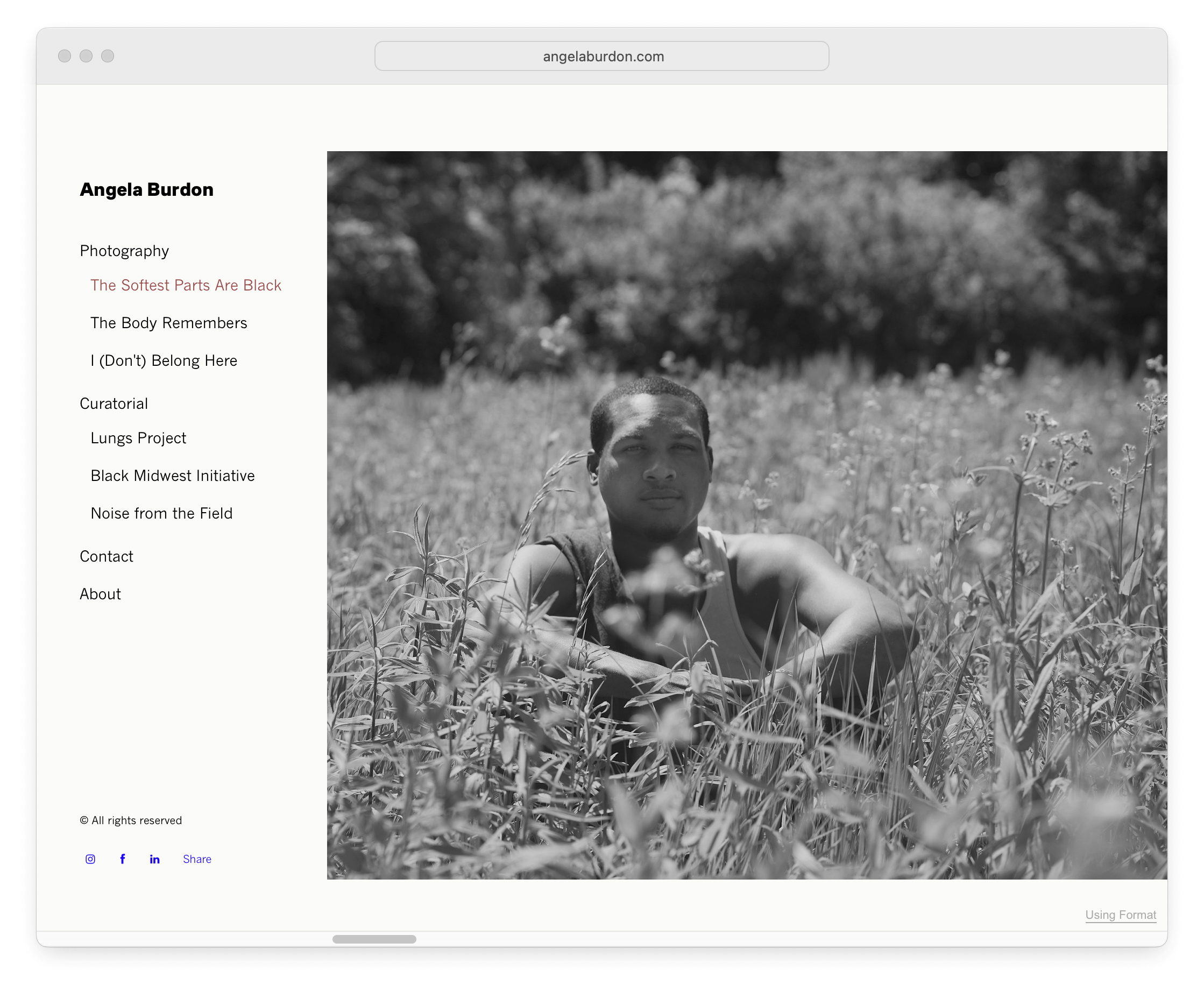
12 Photographer Portfolios Packed With Ideas and Inspiration — from booooooom.com


Speaking of photography, also see:

Photographer Spotlight: Pelle Cass — from booooooom.com


Beyond Infographics: How to Use Nano Banana to *Actually* Support Learning — from drphilippahardman.substack.com by Dr Philippa Hardman
Six evidence-based use cases to try in Google’s latest image-generating AI tool

While it’s true that Nano Banana generates better infographics than other AI models, the conversation has so far massively under-sold what’s actually different and valuable about this tool for those of us who design learning experiences.

What this means for our workflow:

Instead of the traditional “commission ? wait ? tweak ? approve ? repeat” cycle, Nano Banana enables an iterative, rapid-cycle design process where you can:

  • Sketch an idea and see it refined in minutes.
  • Test multiple visual metaphors for the same concept without re-briefing a designer.
  • Build 10-image storyboards with perfect consistency by specifying the constraints once, not manually editing each frame.
  • Implement evidence-based strategies (contrasting cases, worked examples, observational learning) that are usually too labour-intensive to produce at scale.

This shift—from “image generation as decoration” to “image generation as instructional scaffolding”—is what makes Nano Banana uniquely useful for the 10 evidence-based strategies below.


Caring for Patients for 26 Years—and Still Not a Nurse — from workshift.org/ by Colleen Connolly

Arnett’s experience spending decades in a job she intended as a first step is common among CNAs, medical assistants, and other entry-level healthcare workers, many of them women of color from low-income backgrounds. Amid a nationwide nursing shortage, elevating those workers seems like an obvious solution, but the path from CNA to nurse isn’t so much a ladder as it is a huge leap.

And obstacle after obstacle is strewn in the way. The high cost of nursing school, lengthy prerequisite requirements, rigid schedules, and unpaid clinical hours make it difficult for many CNAs to advance in their careers, despite their willingness and ability and the dire need of healthcare facilities.

While there are no national statistics about the number of entry-level healthcare workers who move on to higher-paid positions, a study of federal grants for CNA training showed that only 3% of those who completed the training went on to pursue further education to become an LPN or RN. Only 1% obtained an associate degree or above. A similar study in California showed that 22% of people who completed CNA certificate programs at community colleges went on to get a higher-level educational credential in health, but only 13% became registered nurses within six years.

That reality perpetuates chronic shortages in nursing, and it also keeps hundreds of thousands of healthcare workers locked below a living wage, often for decades.


Seeing The Unseen Students: The Invisible Strength of Teachers — from teachthought.com by Tasneem Tazkiya
One afternoon, I asked a different question: “What would make school feel worth showing up for again?”

A Moment That Changed My View of Teaching
I’ll never forget a student I’ll call Jalen. He was bright and quick with answers, sharp in debate, but he had built a wall around himself after a difficult year at home. He’d stopped turning in work and began sitting silently in the back of the room, disengaged and defiant.

One afternoon, instead of lecturing him about missing assignments, I asked a different question: “What would make school feel worth showing up for again?”

That simple question opened a door. Over the following weeks, Jalen began sharing ideas for projects connected to his interests, designing sneakers and exploring how geometry applies to shoe patterns. I adapted lessons to let him create, design, and analyze. Slowly, his confidence returned. Months later, he told me, “You made me feel like my ideas mattered.”

That moment reminded me that teaching isn’t just about delivering content; it’s about restoring belief in learning, and in oneself.


Also see:

The Power of Play — from barbarabray.net by Barbara Bray

Play brings joy and happiness to learning. Infusing play in schools prepares kids as future citizens.
When you play a game with your friends, how do you feel?

When you see children playing with other children, what do you notice?

Ask a child if they remember the worksheet they filled out last week.
Did they have fun?

Do they remember what they learned?

Let’s play more and discover how learning unfolds.
Schools can invest in more play through games, interactive experiences, and just making learning fun. Providing engaging activities through play creates learners who become critical thinkers, researchers, and designers.


Also re: teaching and learning:


How Coworking Spaces Are Becoming The Learning Ecosystems Of The Future — from hrfuture.net

What if your workspace helped you level up your career? Coworking spaces are becoming learning hubs where skills grow, ideas connect, and real-world education fits seamlessly into the workday.

Continuous learning has become a cornerstone of professional longevity, and flexible workspaces already encourage it through workshops, talks, and mentoring. Their true potential, however, may lie in becoming centers of industry-focused education that help professionals stay adaptable in a rapidly changing world of work.
.


.

What if forward-thinking workspaces and coworking centers became hubs of lifelong learning, integrating job-relevant training with accessible, real-world education?

For coworking operators, this raises important questions: Which types of learning thrive best in these environments, and how much do the design and layout of a space influence how people learn?

By exploring these questions and combining innovative programs with cutting-edge technology aligned to the future workforce, could coworking spaces ultimately become the classrooms of tomorrow?

 
© 2025 | Daniel Christian