From DSC:
We are hopefully creating the future that we want — i.e., creating the future of our dreams, not nightmares.  The 14 items below show that technology is often waaay out ahead of us…and it takes time for other areas of society to catch up (such as areas that involve making policies, laws, and/or if we should even be doing these things in the first place). 

Such reflections always make me ask:

  • Who should be involved in some of these decisions?
  • Who is currently getting asked to the decision-making tables for such discussions?
  • How does the average citizen participate in such discussions?

Readers of this blog know that I’m generally pro-technology. But with the exponential pace of technological change, we need to slow things down enough to make wise decisions.


Google AI invents its own cryptographic algorithm; no one knows how it works — from arstechnica.co.uk by Sebastian Anthony
Neural networks seem good at devising crypto methods; less good at codebreaking.

Excerpt:

Google Brain has created two artificial intelligences that evolved their own cryptographic algorithm to protect their messages from a third AI, which was trying to evolve its own method to crack the AI-generated crypto. The study was a success: the first two AIs learnt how to communicate securely from scratch.


IoT growing faster than the ability to defend it — from scientificamerican.com by Larry Greenemeier
Last week’s use of connected gadgets to attack the Web is a wake-up call for the Internet of Things, which will get a whole lot bigger this holiday season

Excerpt:

With this year’s approaching holiday gift season the rapidly growing “Internet of Things” or IoT—which was exploited to help shut down parts of the Web this past Friday—is about to get a lot bigger, and fast. Christmas and Hanukkah wish lists are sure to be filled with smartwatches, fitness trackers, home-monitoring cameras and other wi-fi–connected gadgets that connect to the internet to upload photos, videos and workout details to the cloud. Unfortunately these devices are also vulnerable to viruses and other malicious software (malware) that can be used to turn them into virtual weapons without their owners’ consent or knowledge.

Last week’s distributed denial of service (DDoS) attacks—in which tens of millions of hacked devices were exploited to jam and take down internet computer servers—is an ominous sign for the Internet of Things. A DDoS is a cyber attack in which large numbers of devices are programmed to request access to the same Web site at the same time, creating data traffic bottlenecks that cut off access to the site. In this case the still-unknown attackers used malware known as “Mirai” to hack into devices whose passwords they could guess, because the owners either could not or did not change the devices’ default passwords.


How to Get Lost in Augmented Reality — from inverse.com by Tanya Basu; with thanks to Woontack Woo for this resource
There are no laws against projecting misinformation. That’s good news for pranksters, criminals, and advertisers.

Excerpt:

Augmented reality offers designers and engineers new tools and artists and new palette, but there’s a dark side to reality-plus. Because A.R. technologies will eventually allow individuals to add flourishes to the environments of others, they will also facilitate the creation of a new type of misinformation and unwanted interactions. There will be advertising (there is always advertising) and there will also be lies perpetrated with optical trickery.

Two computer scientists-turned-ethicists are seriously considering the problematic ramifications of a technology that allows for real-world pop-ups: Keith Miller at the University of Missouri-St. Louis and Bo Brinkman at Miami University in Ohio. Both men are dismissive of Pokémon Go because smartphones are actually behind the times when it comes to A.R.

A very important question is who controls these augmentations,” Miller says. “It’s a huge responsibility to take over someone’s world — you could manipulate people. You could nudge them.”


Can we build AI without losing control over it? — from ted.com by Sam Harris

Description:

Scared of superintelligent AI? You should be, says neuroscientist and philosopher Sam Harris — and not just in some theoretical way. We’re going to build superhuman machines, says Harris, but we haven’t yet grappled with the problems associated with creating something that may treat us the way we treat ants.


Do no harm, don’t discriminate: official guidance issued on robot ethics — from theguardian.com
Robot deception, addiction and possibility of AIs exceeding their remits noted as hazards that manufacturers should consider

Excerpt:

Isaac Asimov gave us the basic rules of good robot behaviour: don’t harm humans, obey orders and protect yourself. Now the British Standards Institute has issued a more official version aimed at helping designers create ethically sound robots.

The document, BS8611 Robots and robotic devices, is written in the dry language of a health and safety manual, but the undesirable scenarios it highlights could be taken directly from fiction. Robot deception, robot addiction and the possibility of self-learning systems exceeding their remits are all noted as hazards that manufacturers should consider.


World’s first baby born with new “3 parent” technique — from newscientist.com by Jessica Hamzelou

Excerpt:

It’s a boy! A five-month-old boy is the first baby to be born using a new technique that incorporates DNA from three people, New Scientist can reveal. “This is great news and a huge deal,” says Dusko Ilic at King’s College London, who wasn’t involved in the work. “It’s revolutionary.”

The controversial technique, which allows parents with rare genetic mutations to have healthy babies, has only been legally approved in the UK. But the birth of the child, whose Jordanian parents were treated by a US-based team in Mexico, should fast-forward progress around the world, say embryologists.


Scientists Grow Full-Sized, Beating Human Hearts From Stem Cells — from popsci.com by Alexandra Ossola
It’s the closest we’ve come to growing transplantable hearts in the lab

Excerpt:

Of the 4,000 Americans waiting for heart transplants, only 2,500 will receive new hearts in the next year. Even for those lucky enough to get a transplant, the biggest risk is the their bodies will reject the new heart and launch a massive immune reaction against the foreign cells. To combat the problems of organ shortage and decrease the chance that a patient’s body will reject it, researchers have been working to create synthetic organs from patients’ own cells. Now a team of scientists from Massachusetts General Hospital and Harvard Medical School has gotten one step closer, using adult skin cells to regenerate functional human heart tissue, according to a study published recently in the journal Circulation Research.


Achieving trust through data ethics — from sloanreview.mit.edu
Success in the digital age requires a new kind of diligence in how companies gather and use data.

Excerpt:

A few months ago, Danish researchers used data-scraping software to collect the personal information of nearly 70,000 users of a major online dating site as part of a study they were conducting. The researchers then published their results on an open scientific forum. Their report included the usernames, political leanings, drug usage, and other intimate details of each account.

A firestorm ensued. Although the data gathered and subsequently released was already publicly available, many questioned whether collecting, bundling, and broadcasting the data crossed serious ethical and legal boundaries.

In today’s digital age, data is the primary form of currency. Simply put: Data equals information equals insights equals power.

Technology is advancing at an unprecedented rate — along with data creation and collection. But where should the line be drawn? Where do basic principles come into play to consider the potential harm from data’s use?


“Data Science Ethics” course — from the University of Michigan on edX.org
Learn how to think through the ethics surrounding privacy, data sharing, and algorithmic decision-making.

About this course
As patients, we care about the privacy of our medical record; but as patients, we also wish to benefit from the analysis of data in medical records. As citizens, we want a fair trial before being punished for a crime; but as citizens, we want to stop terrorists before they attack us. As decision-makers, we value the advice we get from data-driven algorithms; but as decision-makers, we also worry about unintended bias. Many data scientists learn the tools of the trade and get down to work right away, without appreciating the possible consequences of their work.

This course focused on ethics specifically related to data science will provide you with the framework to analyze these concerns. This framework is based on ethics, which are shared values that help differentiate right from wrong. Ethics are not law, but they are usually the basis for laws.

Everyone, including data scientists, will benefit from this course. No previous knowledge is needed.


Science, Technology, and the Future of Warfare — from mwi.usma.edu by Margaret Kosal

Excerpt:

We know that emerging innovations within cutting-edge science and technology (S&T) areas carry the potential to revolutionize governmental structures, economies, and life as we know it. Yet, others have argued that such technologies could yield doomsday scenarios and that military applications of such technologies have even greater potential than nuclear weapons to radically change the balance of power. These S&T areas include robotics and autonomous unmanned system; artificial intelligence; biotechnology, including synthetic and systems biology; the cognitive neurosciences; nanotechnology, including stealth meta-materials; additive manufacturing (aka 3D printing); and the intersection of each with information and computing technologies, i.e., cyber-everything. These concepts and the underlying strategic importance were articulated at the multi-national level in NATO’s May 2010 New Strategic Concept paper: “Less predictable is the possibility that research breakthroughs will transform the technological battlefield…. The most destructive periods of history tend to be those when the means of aggression have gained the upper hand in the art of waging war.”


Low-Cost Gene Editing Could Breed a New Form of Bioterrorism — from bigthink.com by Philip Perry

Excerpt:

2012 saw the advent of gene editing technique CRISPR-Cas9. Now, just a few short years later, gene editing is becoming accessible to more of the world than its scientific institutions. This new technique is now being used in public health projects, to undermine the ability of certain mosquitoes to transmit disease, such as the Zika virus. But that initiative has had many in the field wondering whether it could be used for the opposite purpose, with malicious intent.

Back in February, U.S. National Intelligence Director James Clapper put out a Worldwide Threat Assessment, to alert the intelligence community of the potential risks posed by gene editing. The technology, which holds incredible promise for agriculture and medicine, was added to the list of weapons of mass destruction.

It is thought that amateur terrorists, non-state actors such as ISIS, or rouge states such as North Korea, could get their hands on it, and use this technology to create a bioweapon such as the earth has never seen, causing wanton destruction and chaos without any way to mitigate it.


What would happen if gene editing fell into the wrong hands?


Robot nurses will make shortages obsolete — from thedailybeast.com by Joelle Renstrom
By 2022, one million nurse jobs will be unfilled—leaving patients with lower quality care and longer waits. But what if robots could do the job?

Excerpt:

Japan is ahead of the curve when it comes to this trend, given that its elderly population is the highest of any country. Toyohashi University of Technology has developed Terapio, a robotic medical cart that can make hospital rounds, deliver medications and other items, and retrieve records. It follows a specific individual, such as a doctor or nurse, who can use it to record and access patient data. Terapio isn’t humanoid, but it does have expressive eyes that change shape and make it seem responsive. This type of robot will likely be one of the first to be implemented in hospitals because it has fairly minimal patient contact, works with staff, and has a benign appearance.


partnershiponai-sept2016


Established to study and formulate best practices on AI technologies, to advance the public’s understanding of AI, and to serve as an open platform for discussion and engagement about AI and its influences on people and society.


GOALS

Support Best Practices
To support research and recommend best practices in areas including ethics, fairness, and inclusivity; transparency and interoperability; privacy; collaboration between people and AI systems; and of the trustworthiness, reliability, and robustness of the technology.

Create an Open Platform for Discussion and Engagement
To provide a regular, structured platform for AI researchers and key stakeholders to communicate directly and openly with each other about relevant issues.

Advance Understanding
To advance public understanding and awareness of AI and its potential benefits and potential costs to act as a trusted and expert point of contact as questions/concerns arise from the public and others in the area of AI and to regularly update key constituents on the current state of AI progress.


IBM Watson’s latest gig: Improving cancer treatment with genomic sequencing — from techrepublic.com by Alison DeNisco
A new partnership between IBM Watson Health and Quest Diagnostics will combine Watson’s cognitive computing with genetic tumor sequencing for more precise, individualized cancer care.


Addendum on 11/1/16:


An open letter to Microsoft and Google’s Partnership on AI — from wired.com by Gerd Leonhard
In a world where machines may have an IQ of 50,000, what will happen to the values and ethics that underpin privacy and free will?

Excerpt:

Dear Francesca, Eric, Mustafa, Yann, Ralf, Demis and others at IBM, Microsoft, Google, Facebook and Amazon.

The Partnership on AI to benefit people and society is a welcome change from the usual celebration of disruption and magic technological progress. I hope it will also usher in a more holistic discussion about the global ethics of the digital age. Your announcement also coincides with the launch of my book Technology vs. Humanity which dramatises this very same question: How will technology stay beneficial to society?

This open letter is my modest contribution to the unfolding of this new partnership. Data is the new oil – which now makes your companies the most powerful entities on the globe, way beyond oil companies and banks. The rise of ‘AI everywhere’ is certain to only accelerate this trend. Yet unlike the giants of the fossil-fuel era, there is little oversight on what exactly you can and will do with this new data-oil, and what rules you’ll need to follow once you have built that AI-in-the-sky. There appears to be very little public stewardship, while accepting responsibility for the consequences of your inventions is rather slow in surfacing.


IBM Watson Education and Pearson to drive cognitive learning experiences for college students — from prnewswire.com

Excerpt:

LAS VEGAS, Oct. 25, 2016 /PRNewswire/ — IBM (NYSE: IBM) and Pearson (FTSE: PSON) the world’s learning company, today announced a new global education alliance intended to make Watson’s cognitive capabilities available to millions of college students and professors.

Combining IBM’s cognitive capabilities with Pearson’s digital learning products will give students a more immersive learning experience with their college courses, an easy way to get help and insights when they need it, all through asking questions in natural language just like they would with another student or professor. Importantly, it provides instructors with insights about how well students are learning, allowing them to better manage the entire course and flag students who need additional help.

For example, a student experiencing difficulty while studying for a biology course can query Watson, which is embedded in the Pearson courseware. Watson has already read the Pearson courseware content and is ready to spot patterns and generate insights.  Serving as a digital resource, Watson will assess the student’s responses to guide them with hints, feedback, explanations and help identify common misconceptions, working with the student at their pace to help them master the topic.


ibm-watson-2016


Udacity partners with IBM Watson to launch the AI Nanodegree — from venturebeat.com by Paul Sawers

Excerpt:

Online education platform Udacity has partnered with IBM Watson to launch a new artificial intelligence (AI) Nanodegree program.

Costing $1,600 for the full two-term, 26-week course, the AI Nanodegree covers a myriad of topics including logic and planning, probabilistic inference, game-playing / search, computer vision, cognitive systems, and natural language processing (NLP). It’s worth noting here that Udacity already offers an Intro to Artificial Intelligence (free) course and the Machine Learning Engineer Nanodegree, but with the A.I. Nanodegree program IBM Watson is seeking to help give developers a “foundational understanding of artificial intelligence,” while also helping graduates identify job opportunities in the space.


The Future Cognitive Workforce Part 1: Announcing the AI Nanodegree with Udacity — from ibm.com by Rob High

Excerpt:

As artificial intelligence (AI) begins to power more technology across industries, it’s been truly exciting to see what our community of developers can create with Watson. Developers are inspiring us to advance the technology that is transforming society, and they are the reason why such a wide variety of businesses are bringing cognitive solutions to market.

With AI becoming more ubiquitous in the technology we use every day, developers need to continue to sharpen their cognitive computing skills. They are seeking ways to gain a competitive edge in a workforce that increasingly needs professionals who understand how to build AI solutions.

It is for this reason that today at World of Watson in Las Vegas we announced with Udacity the introduction of a Nanodegree program that incorporates expertise from IBM Watson and covers the basics of artificial intelligence. The “AI Nanodegree” program will be helpful for those looking to establish a foundational understanding of artificial intelligence. IBM will also help aid graduates of this program with identifying job opportunities.


The Future Cognitive Workforce Part 2: Teaching the Next Generation of Builders — from ibm.com by Steve Abrams

Excerpt:

Announced today at World of Watson, and as Rob High outlined in the first post in this series, IBM has partnered with Udacity to develop a nanodegree in artificial intelligence. Rob discussed IBM’s commitment to empowering developers to learn more about cognitive computing and equipping them with the educational resources they need to build their careers in AI.

To continue on this commitment, I’m excited to announce another new program today geared at college students that we’ve launched with Kivuto Solutions, an academic software distributor. Via Kivuto’s popular digital resource management platform, students and academics around the world will now gain free access to the complete IBM Bluemix Portfolio — and specifically, Watson. This offers students and faculty at any accredited university – as well as community colleges and high schools with STEM programs – an easy way to tap into Watson services. Through this access, teachers will also gain a better means to create curriculum around subjects like AI.


IBM introduces new Watson solutions for professions — from finance.yahoo.com

Excerpt:

LAS VEGAS, Oct. 25, 2016 /PRNewswire/ — IBM (NYSE:IBM) today unveiled a series of new cognitive solutions intended for professionals in marketing, commerce, supply chain and human resources. With these new offerings, IBM is enabling organizations across all industries and of all sizes to integrate new cognitive capabilities into their businesses.

Watson solutions learn in an expert way, which is critical for professionals that want to uncover insights hidden in their massive amounts of data to understand, reason and learn about their customers and important business processes. Helping professionals augment their existing knowledge and experience without needing to engage a data analyst empowers them to make more informed business decisions, spot opportunities and take action with confidence.

“IBM is bringing Watson cognitive capabilities to millions of professionals around the world, putting a trusted advisor and personal analyst at their fingertips,” said Harriet Green, general manager Watson IoT, Cognitive Engagement & Education. “Similar to the value that Watson has brought to the world of healthcare, cognitive capabilities will be extended to professionals in new areas, helping them harness the value of the data being generated in their industries and use it in new ways.”


IBM says new Watson Data Platform will ‘bring machine learning to the masses’ — from techrepublic.com by Hope Reese
On Tuesday, IBM unveiled a cloud-based AI engine to help businesses harness machine learning. It aims to give everyone, from CEOs to developers, a simple platform to interpret and collaborate on data.

Excerpt:

“Insight is the new currency for success,” said Bob Picciano, senior vice president at IBM Analytics. “And Watson is the supercharger for the insight economy.”

Picciano, speaking at the World of Watson conference in Las Vegas on Tuesday, unveiled IBM’s Watson Data Platform, touted as the “world’s fastest data ingestion engine and machine learning as a service.”

The cloud-based Watson Data Platform, will “illuminate dark data,” said Picciano, and will “change everything—absolutely everything—for everyone.”


See the #IBMWoW hashtag on Twitter for more news/announcements coming from IBM this week:


ibm-wow-hashtag-oct2016


Previous postings from earlier this month:


  • IBM launches industry first Cognitive-IoT ‘Collaboratory’ for clients and partners
    Excerpt:
    IBM have unveiled an €180 million investment in a new global headquarters to house its Watson Internet of Things business.  Located in Munich, the facility will promote new IoT capabilities around Blockchain and security as well as supporting the array of clients that are driving real outcomes by using Watson IoT technologies, drawing insights from billions of sensors embedded in machines, cars, drones, ball bearings, pieces of equipment and even hospitals. As part of a global investment designed to bring Watson cognitive computing to IoT, IBM has allocated more than $200 million USD to its global Watson IoT headquarters in Munich. The investment, one of the company’s largest ever in Europe, is in response to escalating demand from customers who are looking to transform their operations using a combination of IoT and Artificial Intelligence technologies. Currently IBM has 6,000 clients globally who are tapping Watson IoT solutions and services, up from 4,000 just 8 months ago.


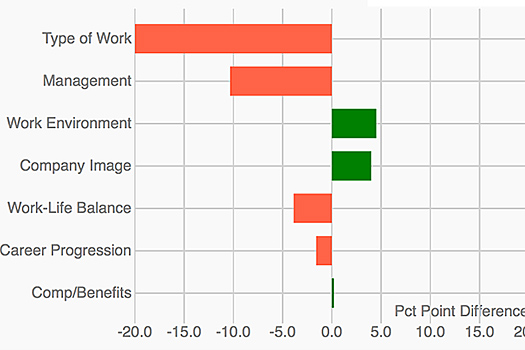
cognitiveapproachhr-oct2016


From DSC:
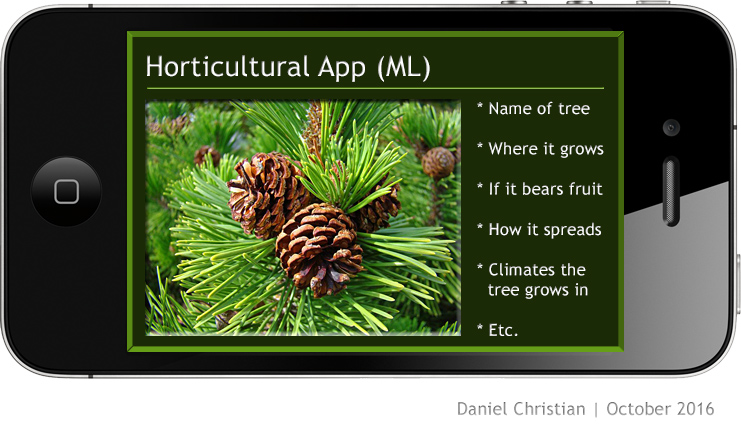
The other day I had posted some ideas in regards to how artificial intelligence, machine learning, and augmented reality are coming together to offer some wonderful new possibilities for learning (see: “From DSC: Amazing possibilities coming together w/ augmented reality used in conjunction w/ machine learning! For example, consider these ideas.”) Here is one of the graphics from that posting:


horticulturalapp-danielchristian

These affordances are just now starting to be uncovered as machines are increasingly able to ascertain patterns, things, objects…even people (which calls for a separate posting at some point).

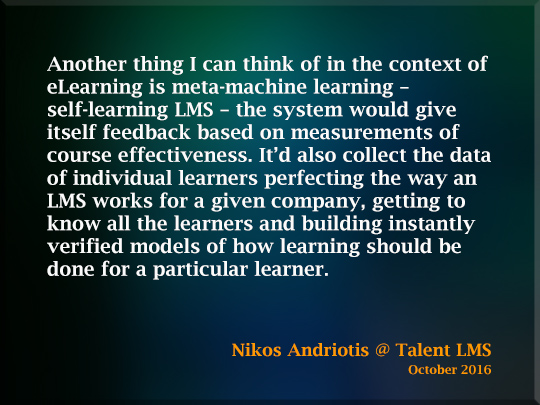
But mainly, for today, I wanted to highlight an excellent comment/reply from Nikos Andriotis @ Talent LMS who gave me permission to highlight his solid reflections and ideas:


nikosandriotisidea-oct2016

https://www.talentlms.com/blog/author/nikos-andriotis


From DSC:
Excellent reflection/idea Nikos — that would represent some serious personalized, customized learning!

Nikos’ innovative reflections also made me think about his ideas in light of their interaction or impact with web-based learner profiles, credentialing, badging, and lifelong learning.  What’s especially noteworthy here is that the innovations (that impact learning) continue to occur mainly in the online and blended learning spaces.

How might the ramifications of these innovations impact institutions who are pretty much doing face-to-face only (in terms of their course delivery mechanisms and pedagogies)?

Given:

  • That Microsoft purchased LinkedIn and can amass a database of skills and open jobs (playing a cloud-based matchmaker)
  • Everyday microlearning is key to staying relevant (RSS feeds and tapping into “streams of content” are important here, and so is the use of Twitter)
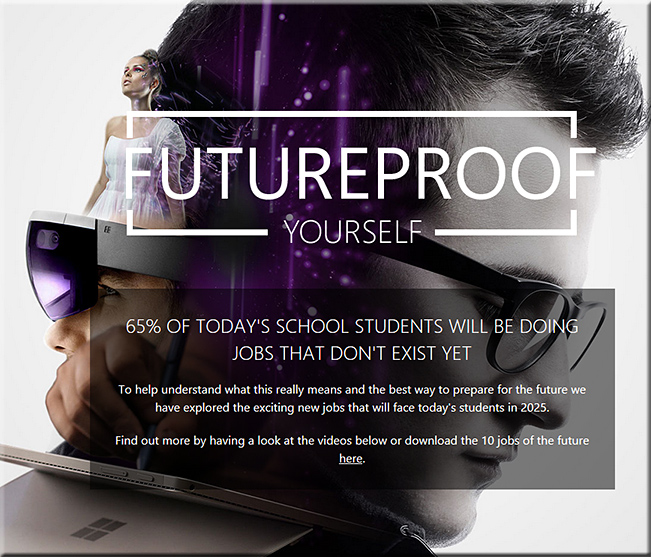
  • 65% of today’s students will be doing jobs that don’t even exist yet (per Microsoft & The Future Laboratory in 2016)


futureproofyourself-msfuturelab-2016

  • The exponential pace of technological change
  • The increasing level of experimentation with blockchain (credentialing)
  • …and more

…what do the futures look like for those colleges and universities that operate only in the face-to-face space and who are not innovating enough?


Coppell ISD becomes first district to use IBM, Apple format — from bizjournals.com by Shawn Shinneman

Excerpt:

Teachers at Coppell Independent School District have become the first to use a new IBM and Apple technology platform built to aid personalized learning.

IBM Watson Element for Educators pairs IBM analytics and data tools such as cognitive computing with Apple design. It integrates student grades, interests, participation, and trends to help educators determine how a student learns best, the company says.

It also recommends learning content personalized to each student. The platform might suggest a reading assignment on astronomy for a young student who has shown an interest in space.


From DSC:
Technologies involved with systems like IBM’s Watson will likely bring some serious impact to the worlds of education and training & development. Such systems — and the affordances that they should be able to offer us — should not be underestimated.  The potential for powerful, customized, personalized learning could easily become a reality in K-20 as well as in the corporate training space. This is an area to keep an eye on for sure, especially with the growing influence of cognitive computing and artificial intelligence.

These kinds of technology should prove helpful in suggesting modules and courses (i.e., digital learning playlists), but I think the more powerful systems will be able to drill down far more minutely than that. I think these types of systems will be able to assist with all kinds of math problems and equations as well as analyze writing examples, correct language mispronunciations, and more (perhaps this is already here…apologies if so). In other words, the systems will “learn” where students can go wrong doing a certain kind of math equation…and then suggest steps to correct things when the system spots a mistake (or provide hints at how to correct mistakes).

This road takes us down to places where we have:

  • Web-based learner profiles — including learner’s preferences, passions, interests, skills
  • Microlearning/badging/credentialing — likely using blockchain
  • Learning agents/bots to “contact” for assistance
  • Guidance for lifelong learning
  • More choice, more control


ibmwatson-oct2016


Also see:

  • First IBM Watson Education App for iPad Delivers Personalized Learning for K-12 Teachers and Students — from prnewswire.com
    Educators at Coppell Independent School District in Texas first to use new iPad app to tailor learning experiences to student’s interests and aptitudes
    Excerpts:
    With increasing demands on educators, teachers need tools that will enable them to better identify the individual needs of all students while designing learning experiences that engage and hold the students’ interest as they master the content. This is especially critical given that approximately one third of American students require remedial education when they enter college today, and current college attainment rates are not keeping pace with the country’s projected workforce needs1.  A view of academic and day-to-day updates in real time can help teachers provide personalized support when students need it.

    IBM Watson Element provides teachers with a holistic view of each student through a fun, easy-to-use and intuitive mobile experience that is a natural extension of their work. Teachers can get to know their students beyond their academic performance, including information about personal interests and important milestones students choose to share.  For example, teachers can input notes when a student’s highly anticipated soccer match is scheduled, when another has just been named president for the school’s World Affairs club, and when another has recently excelled following a science project that sparked a renewed interest in chemistry.The unique “spotlight” feature in Watson Element provides advanced analytics that enables deeper levels of communication between teachers about their students’ accomplishments and progress. For example, if a student is excelling academically, teachers can spotlight that student, praising their accomplishments across the school district. Or, if a student received a top award in the district art show, a teacher can spotlight the student so their other teachers know about it.
 

From chatbots to Einstein, artificial intelligence as a service — from infoworld.com by Yves de Montcheuil

Excerpt:

The recent announcement of Salesforce Einstein — dubbed “artificial intelligence for everyone” — sheds new light on the new and pervasive usage of artificial intelligence in every aspect of businesses.


Powered by advanced machine learning, deep learning, predictive analytics, natural language processing and smart data discovery, Einstein’s models will be automatically customized for every single customer, and it will learn, self-tune, and get smarter with every interaction and additional piece of data. Most importantly, Einstein’s intelligence will be embedded within the context of business, automatically discovering relevant insights, predicting future behavior, proactively recommending best next actions and even automating tasks.


Chatbots, or conversational bots, are the “other” trending topic in the field of artificial intelligence. At the juncture of consumer and business, they provide the ability for an AI-based system to interact with users through a headless interface. It does not matter whether a messaging app is used, or a speech-to-text system, or even another app — the chatbot is front-end agnostic.

Since the user does not have the ability to provide context around the discussion, he just asks questions in natural language to an AI-driven backend that is tasked with figuring this context and looking for the right answer.


IBM is launching a much-awaited ‘Watson’ recruiting tool — from eremedia.com by Todd Raphael

Excerpt:

For many months IBM has gone to recruiting-industry conferences to say that the famous Watson will be at some point used for talent-acquisition, but that it hasn’t happened quite yet.

It’s here.

IBM is first using Watson for its RPO customers, and then rolling it out as a product for the larger community, perhaps next spring. One of my IBM contacts, Recruitment Innovation Global Leader Yates Baker, tells me that the current version is a work in progress like the first iPhone (or perhaps like that Siri-for-recruiting tool).

There are three parts: recruiting, marketing, and sourcing.


watsonrecruitingtool-sept2016


Apple’s Siri: A Lot Smarter, but Still Kind of Dumb — from wsj.com by Joanna Stern
With the new MacOS and Apple’s AirPods, Siri’s more powerful than ever, but still not as good as some competitors

Excerpt:

With the new iOS 10, Siri can control third-party apps, like Uber and WhatsApp. With the release of MacOS Sierra on Tuesday, Siri finally lands on the desktop, where it can take care of basic operating system tasks, send emails and more. With WatchOS 3 and the new Apple Watch, Siri is finally faster on the wrist. And with Apple’s Q-tip-looking AirPods arriving in October, Siri can whisper sweet nothings in your inner ear with unprecedented wireless freedom. Think Joaquin Phoenix’s earpiece in the movie “Her.”

The groundwork is laid for an AI assistant to stake a major claim in your life, and finally save you time by doing menial tasks. But the smarter Siri becomes in some places, the dumber it seems in others—specifically compared with Google’s and Amazon’s voice assistants. If I hear “I’m sorry, Joanna, I’m afraid I can’t answer that” one more time…


IBM Research and MIT Collaborate to Advance Frontiers of Artificial Intelligence in Real-World Audio-Visual Comprehension Technologies — from prnewswire.com
Cross-disciplinary research approach will use insights from brain and cognitive science to advance machine understanding

Excerpt:

YORKTOWN HEIGHTS, N.Y., Sept. 20, 2016 /PRNewswire/ — IBM Research (NYSE: IBM) today announced a multi-year collaboration with the Department of Brain & Cognitive Sciences at MIT to advance the scientific field of machine vision, a core aspect of artificial intelligence. The new IBM-MIT Laboratory for Brain-inspired Multimedia Machine Comprehension’s (BM3C) goal will be to develop cognitive computing systems that emulate the human ability to understand and integrate inputs from multiple sources of audio and visual information into a detailed computer representation of the world that can be used in a variety of computer applications in industries such as healthcare, education, and entertainment.

The BM3C will address technical challenges around both pattern recognition and prediction methods in the field of machine vision that are currently impossible for machines alone to accomplish. For instance, humans watching a short video of a real-world event can easily recognize and produce a verbal description of what happened in the clip as well as assess and predict the likelihood of a variety of subsequent events, but for a machine, this ability is currently impossible.


Satya Nadella on Microsoft’s new age of intelligence — from fastcompany.com by Harry McCracken
How the software giant aims to tie everything from Cortana to Office to HoloLens to Azure servers into one AI experience.

Excerpt:

“Microsoft was born to do a certain set of things. We’re about empowering people in organizations all over the world to achieve more. In today’s world, we want to use AI to achieve that.”

That’s Microsoft CEO Satya Nadella, crisply explaining the company’s artificial-intelligence vision to me this afternoon shortly after he hosted a keynote at Microsoft’s Ignite conference for IT pros in Atlanta. But even if Microsoft only pursues AI opportunities that it considers to be core to its mission, it has a remarkably broad tapestry to work with. And the examples that were part of the keynote made that clear.


IBM Foundation collaborates with AFT and education leaders to use Watson to help teachers — from finance.yahoo.com

Excerpt:

ARMONK, N.Y., Sept. 28, 2016 /PRNewswire/ — Teachers will have access to a new, first-of-its-kind, free tool using IBM’s innovative Watson cognitive technology that has been trained by teachers and designed to strengthen teachers’ instruction and improve student achievement, the IBM Foundation and the American Federation of Teachers announced today.

Hundreds of elementary school teachers across the United States are piloting Teacher Advisor with Watson – an innovative tool by the IBM Foundation that provides teachers with a complete, personalized online resource. Teacher Advisor enables teachers to deepen their knowledge of key math concepts, access high-quality vetted math lessons and acclaimed teaching strategies and gives teachers the unique ability to tailor those lessons to meet their individual classroom needs.

Litow said there are plans to make Teacher Advisor available to all elementary school teachers across the U.S. before the end of the year.


In this first phase, Teacher Advisor offers hundreds of high-quality vetted lesson plans, instructional resources, and teaching techniques, which are customized to meet the needs of individual teachers and the particular needs of their students.


Also see:

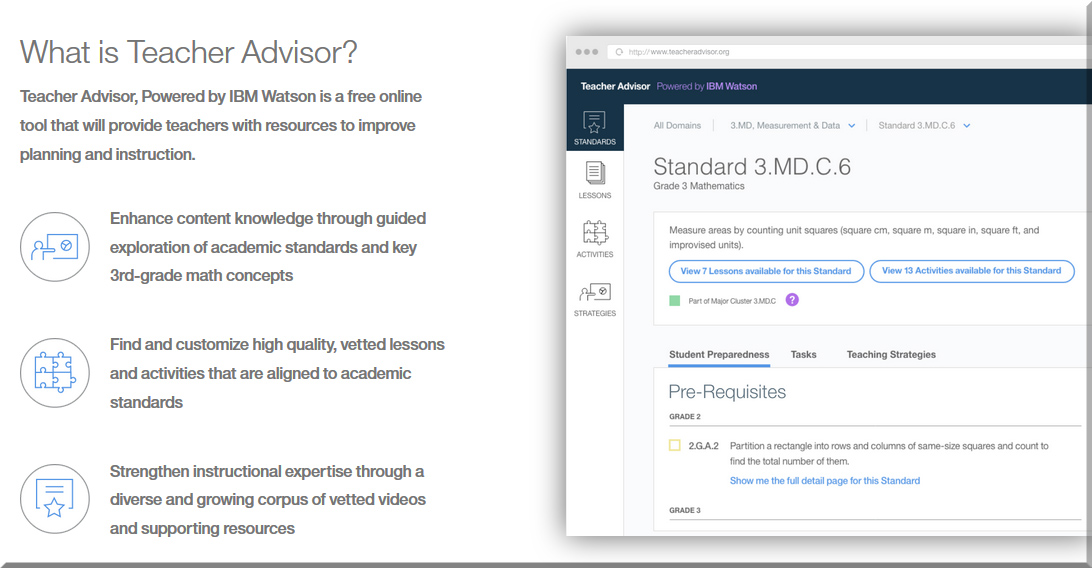
teacheradvisor-sept282016


Educators can also access high-quality videos on teaching techniques to master key skills and bring a lesson or teaching strategy to life into their classroom.


From DSC:
Today’s announcement involved personalization and giving customized directions, and it caused my mind to go in a slightly different direction. (IBM, Google, Microsoft, Apple, Amazon, and others like Smart Sparrow are likely also thinking about this type of direction as well. Perhaps they’re already there…I’m not sure.)

But given the advancements in machine learning/cognitive computing (where example applications include optical character recognition (OCR) and computer vision), how much longer will it be before software is able to remotely or locally “see” what a third grader wrote down for a given math problem (via character and symbol recognition) and “see” what the student’s answer was while checking over the student’s work…if the answer was incorrect, the algorithms will likely know where the student went wrong.  The software will be able to ascertain what the student did wrong and then show them how the problem should be solved (either via hints or by showing the entire problem to the student — per the teacher’s instructions/admin settings). Perhaps, via natural language processing, this process could be verbalized as well.

Further questions/thoughts/reflections then came to my mind:

  • Will we have bots that teachers can use to teach different subjects? (“Watson may even ask the teacher additional questions to refine its response, honing in on what the teacher needs to address certain challenges.)
  • Will we have bots that students can use to get the basics of a given subject/topic/equation?
  • Will instructional designers — and/or trainers in the corporate world — need to modify their skillsets to develop these types of bots?
  • Will teachers — as well as schools of education in universities and colleges — need to modify their toolboxes and their knowledgebases to take advantage of these sorts of developments?
  • How might the corporate world take advantage of these trends and technologies?
  • Will MOOCs begin to incorporate these sorts of technologies to aid in personalized learning?
  • What sorts of delivery mechanisms could be involved? Will we be tapping into learning-related bots from our living rooms or via our smartphones?


The Living [Class] Room -- by Daniel Christian -- July 2012 -- a second device used in conjunction with a Smart/Connected TV


Also see:


If you doubt that we are on an exponential pace of change, you need to check these articles out! [Christian]

exponentialpaceofchange-danielchristiansep2016


From DSC:
The articles listed in
this PDF document demonstrate the exponential pace of technological change that many nations across the globe are currently experiencing and will likely be experiencing for the foreseeable future. As we are no longer on a linear trajectory, we need to consider what this new trajectory means for how we:

  • Educate and prepare our youth in K-12
  • Educate and prepare our young men and women studying within higher education
  • Restructure/re-envision our corporate training/L&D departments
  • Equip our freelancers and others to find work
  • Help people in the workforce remain relevant/marketable/properly skilled
  • Encourage and better enable lifelong learning
  • Attempt to keep up w/ this pace of change — legally, ethically, morally, and psychologically


PDF file here


One thought that comes to mind…when we’re moving this fast, we need to be looking upwards and outwards into the horizons — constantly pulse-checking the landscapes. We can’t be looking down or be so buried in our current positions/tasks that we aren’t noticing the changes that are happening around us.


AI chatbot apps to infiltrate businesses sooner than you think — from searchbusinessanalytics.techtarget.com by Bridget Botelho
Artificial intelligence chatbots aren’t the norm yet, but within the next five years, there’s a good chance the sales person emailing you won’t be a person at all.

Excerpt:

In fact, artificial intelligence has come so far so fast in recent years, Gartner predicts it will be pervasive in all new products by 2020, with technologies including natural language capabilities, deep neural networks and conversational capabilities.

Other analysts share that expectation. Technologies that encompass the umbrella term artificial intelligence — including image recognition, machine learning, AI chatbots and speech recognition — will soon be ubiquitous in business applications as developers gain access to it through platforms such as the IBM Watson Conversation API and the Google Cloud Natural Language API.


3 corporate departments that chatbots will disrupt — from venturebeat.com by Natalie Lambert

Excerpt:

  1. Customer Service
  2. Human Resources
  3. Marketing


Facebook Messenger’s 11,000 chatbots are much more interactive — from androidcentral.com by Harish Jonnalagadda

Excerpt:

Facebook introduced chatbots on Messenger three months ago, and the search giant has shared today that over 11,000 bots are active on the messaging service. The Messenger Platform has picked up an update that adds a slew of new features to bots, such as a persistent menu that lists a bot’s commands, quick replies, ability to respond with GIFs, audio, video, and other files, and a rating system to provide feedback to bot developers.


Chatbots are coming to take over the world — from telecom.economictimes.indiatimes.com

Excerpts:

In another example, many businesses use interactive voice response (IVR) telephony systems, which have limited functionalities and often provide a poor user experience. Chatbots can replace these applications in future where the user will interact naturally to get relevant information without following certain steps or waiting for a logical sequence to occur.

Chatbots are a good starting point, but the future lies in more advanced versions of audio and video bots. Apple’s Siri, Amazon’s Alexa, Microsoft’s Cortana, Google with its voice assistance, are working in the same direction to achieve it. Bot ecosystems will become even more relevant in the phase of IoT mass adoption and improvement of input/output (I/O) technology.


With big players investing heavily in AI, Chatbots are likely to be an increasing feature of social media and other communications platforms.


Everything You Wanted to Know About Chatbots But Were Afraid to Ask — from businessinsider.com by Andrew Meola

Excerpt:

Chatbots are software programs that use messaging platforms as the interface to perform a wide variety of tasks—everything from scheduling a meeting to reporting the weather, to helping a customer buy a sweater.

Because texting is the heart of the mobile experience for smartphone users, chatbots are a natural way to turn something users are very familiar with into a rewarding service or marketing opportunity.

And when you consider that the top 4 messaging apps reach over 3 billion global users (MORE than the top 4 social networks), you can see that the opportunity is huge.


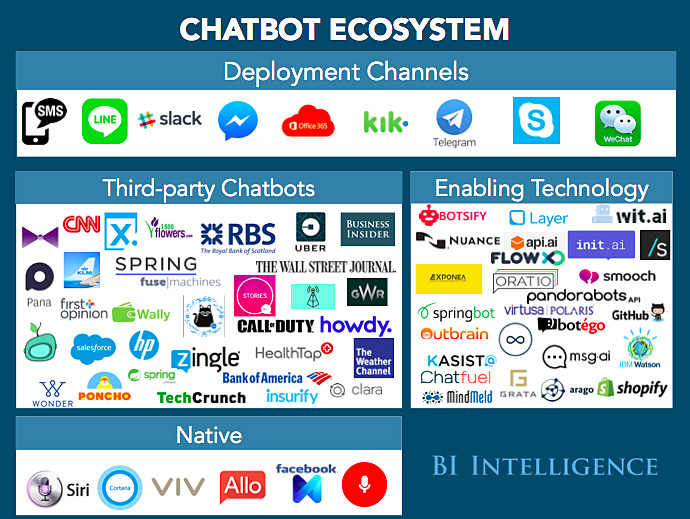
chatbotecosystem-businsider-sept2016


Microsoft taught a computer to make ‘chit chat’ — and now 40 million people love it — from businessinsider.com by Matt Weinberger

Excerpt:

The Xiaoice chat bot — pronounced “Shao-ice” and translated as “little Bing”  — born as an experiment by Microsoft Research in 2014, reaches 40 million followers in China, who often literally talk with her for hours.

At her most active, Xiaoice is holding down as many 23 conversations a session, says Microsoft Research NExT leader Dr. Peter Lee. It’s even evolved to become a nice little sideline business for Microsoft, thanks to a partnership with Chinese e-retailer JD.com that lets users buy products by talking to Xiaoice.

The reason Xiaoice is so successful is she was born of a different kind of philosophical experiment: Instead of building a chat bot that was useful, Microsoft simply tried to make it fun to talk to.


IBM made a ‘crash course’ for the White House, and it’ll teach you all the AI basics — from futurism.com by Ramon Perez

Summary:

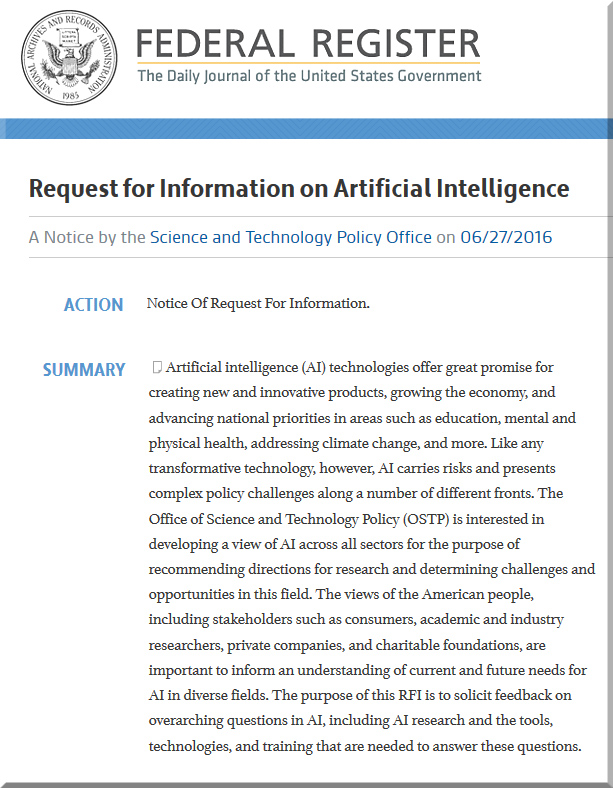
With the current AI revolution, comes a flock of skeptics. Alarmed of what AI could be in the near future, the White House released a Notice of Request For Information (RFI) on it. In response, IBM has created what seems to be an AI 101, giving a good sense of the current state, future, and risks of AI.


Also see:


FedGovt-Request4Info-June2016


Gartner reveals the top 3 emerging technologies from 2016 — from information-age.com by Nicholas Ismail
Technology is advancing at such a rapid rate that businesses are almost being forced to embrace emerging technologies in order to stay competitive

Excerpt:

Emerging technologies are fast becoming the tools with the highest priority for organisations facing rapidly accelerating digital business innovation.

Gartner’s Hype Cycle for Emerging Technologies, 2016 has selected three distinct technology trends – out of 2,000 – that organisations should track and begin to implement in order to stay competitive.

Their selection was based on what technologies will have the most impact and lead to the most competitive advantage, while establishing when these big technologies are going to mature (early stage or saturating).

Gartner’s research director Mike Walker said the hype cycle specifically focuses on the set of technologies that are showing promise in delivering a high degree of competitive advantage over the next five to ten years.

Information Age spoke to Mike Walker to gain a further insight into these three technologies, and their future business applications.


Smart machine technologies will be the most disruptive class of technologies over the next 10 years, including smart robots, autonomous cars and smart workspaces


A call to arms against the hacker hordes — from sloanreview.mit.edu by Theodore Kinni

Excerpt (emphasis DSC):

Attribution and retribution in the fight against cybercrime: Imagine being enthroned at the end of the long table in the C-suite. You’ve got riches beyond imagination at your disposal; tens of thousands of vassals are toiling day and night for you. Your knights surround you, awaiting your command. And, at this very moment, some evil-minded jester with a computer and an Internet connection is breaching the castle walls.

But wait, is that a war horn you hear in the distance? Yes, it’s the lawyers from Steptoe & Johnson riding to your rescue. Enough, says partner Stewart Baker and trusty clerk Victoria Muth in an article for Brink. “It’s pretty clear that building higher walls around our networks is a dead end. So is tighter scrutiny and control over what happens on the network,” they write. “Government is failing us…, too.” The solution? Fight back.

Attribution and retribution are the weapons in this counterattack. “It might mean building ‘beacons’ into documents so that when they are opened by attackers, they phone home to alert defenders that their information was compromised,” suggest Baker and Muth. “It might mean using information provided by beacons to compromise the attackers’ network and gather evidence as to the attackers’ identities. It might mean stopping a DDOS attack by taking over the botnet, or by patching the vulnerability by which the botnet conscripted third-party machines.”


Also see:

Machine Learning – New Weapon in the Hacking Wars?  — from by Ed Featherston
@CloudExpo #API #Cloud #BigData #MachineLearning

Excerpt:

It feels like the barbarians are continually at the gate. We can’t seem to go more than a week before a new data breach is in the news, impacting potentially millions of individuals. The targets range from companies like Omni Hotels, which had been breached affecting up to 50,000 customers whose personal and credit card information was exposed, to North Carolina State University, where over 38,000 students’ personal information, including their SSNs, were at risk. As I mentioned in a recent blog ‘Internet of Things and Big Data – who owns your data?‘, we have been storing our personal and credit card information in a variety of systems, credit card companies, banks, online retailers, hotels – and that’s just naming a few. The information in those systems is more valuable than gold to the hackers. The hacker attacks are constant, creative, and changing frequently.


IBM is training Watson to hunt hackers — from washingtonpost.com by Andrea Peterson

Excerpt:

Watson, IBM’s computer brain, has a lot of talents. It mastered “Jeopardy!,” it cooks, and even tries to cure cancer. But now, it’s training for a new challenge: Hunting hackers.

On [May10th, 2016], IBM Security announced a new cloud-based version of the cognitive technology, dubbed “Watson for Cybersecurity.” In the fall, IBM will be partnering with eight universities to help get Watson up to speed by flooding it with security reports and data.


From DSC:
I try never to judge anyone, as I don’t want to be judged (Matthew 7:1).  I try to extend grace, as I, myself, have nothing to stand on.

That said, I struggle with how to deal with and view hackers.  Daily, they wreak havoc on institutions and individuals throughout the globe — causing billions of dollars of damage.

I’m amazed at the lack of punishment dealt out to hackers. Our governments don’t step in, likely because they are all trying to hack each others’ systems as well.

But the individual and group-based hackers out there have created an underground economy…where one wakes up and goes to the office and hacks away, all for making some coin — just like a normal job evidently.  These hackers have smarts, know-how, and intelligence — but they have chosen to put it towards destructive purposes.  And there doesn’t seem to be any fear involved in doing so. 

Well, that needs to stop! There needs to be major punishment for those who hack.

That’s why the articles above caught my eye. We need to fight back against the hackers. We need to release serious damage to their systems, networks, hardware and software — just as they do to ours.

I don’t like to take this stance. I don’t like to even use the words “fight back.” But there is warfare going on — and fear needs to enter the equation for those who would resort to hacking.

BTW, I’m even nervous about posting this item…as some hacker could come after my site. If so, I hope to be back up and running again soon. But if not…yet another one bites the dust.


From DSC:
As I read the article below, I couldn’t help but think of Microsoft’s recent announcement to purchase LinkedIn.com (who had already acquired Lynda.com last year).  Perhaps Microsoft’s purchase of LinkedIn (and with it, Lynda.com) will bring big data to lifelong learning, career building, and matching job providers with job seekers (i.e., online-based marketplaces/exchanges). If Microsoft doesn’t do this, perhaps IBM’s Watson will. But this is where blockchain could come in as well…to verify that someone actually took this or that module, course, training, etc.


How Microcredentials are Changing the Landscape of Higher and Technical Education — from evolllution.com by Michael Netzer, Associate Provost & SVP of Academic Program Development and Outreach, American Public University System

Excerpts:

Just ten years ago, one would never have considered the portability of credentials that could follow a person from location to location, allowing potential employers to verify a job candidate’s fit for a position quickly. However, that is just what has happened, and the explosion of interest in digital badging and microcredentials is changing the landscape of higher education.

Digital badges encoded with microcredentials contain meta data that links back to the issuer, performance criteria, and verification of evidence.

Ultimately, badging offers portability of acknowledged skills and abilities that can be carried anywhere to demonstrate competency. Learners can accumulate badges across institutional platforms, and the badges can be sorted, shown, or hidden by the learner to reflect achievement in the particular skills or knowledge which the learner wishes to exhibit.


AI chatbot apps to infiltrate businesses sooner than you think — from searchbusinessanalytics.techtarget.com by Bridget Botelho
Artificial intelligence chatbots aren’t the norm yet, but within the next five years, there’s a good chance the sales person emailing you won’t be a person at all.

Excerpt:

In fact, artificial intelligence has come so far so fast in recent years, Gartner predicts it will be pervasive in all new products by 2020, with technologies including natural language capabilities, deep neural networks and conversational capabilities.

Other analysts share that expectation. Technologies that encompass the umbrella term artificial intelligence — including image recognition, machine learning, AI chatbots and speech recognition — will soon be ubiquitous in business applications as developers gain access to it through platforms such as the IBM Watson Conversation API and the Google Cloud Natural Language API.


3 corporate departments that chatbots will disrupt — from venturebeat.com by Natalie Lambert

Excerpt:

  1. Customer Service
  2. Human Resources
  3. Marketing


Facebook Messenger’s 11,000 chatbots are much more interactive — from androidcentral.com by Harish Jonnalagadda

Excerpt:

Facebook introduced chatbots on Messenger three months ago, and the search giant has shared today that over 11,000 bots are active on the messaging service. The Messenger Platform has picked up an update that adds a slew of new features to bots, such as a persistent menu that lists a bot’s commands, quick replies, ability to respond with GIFs, audio, video, and other files, and a rating system to provide feedback to bot developers.


Chatbots are coming to take over the world — from telecom.economictimes.indiatimes.com

Excerpts:

In another example, many businesses use interactive voice response (IVR) telephony systems, which have limited functionalities and often provide a poor user experience. Chatbots can replace these applications in future where the user will interact naturally to get relevant information without following certain steps or waiting for a logical sequence to occur.

Chatbots are a good starting point, but the future lies in more advanced versions of audio and video bots. Apple’s Siri, Amazon’s Alexa, Microsoft’s Cortana, Google with its voice assistance, are working in the same direction to achieve it. Bot ecosystems will become even more relevant in the phase of IoT mass adoption and improvement of input/output (I/O) technology.


With big players investing heavily in AI, Chatbots are likely to be an increasing feature of social media and other communications platforms.


Everything You Wanted to Know About Chatbots But Were Afraid to Ask — from businessinsider.com by Andrew Meola

Excerpt:

Chatbots are software programs that use messaging platforms as the interface to perform a wide variety of tasks—everything from scheduling a meeting to reporting the weather, to helping a customer buy a sweater.

Because texting is the heart of the mobile experience for smartphone users, chatbots are a natural way to turn something users are very familiar with into a rewarding service or marketing opportunity.

And when you consider that the top 4 messaging apps reach over 3 billion global users (MORE than the top 4 social networks), you can see that the opportunity is huge.


chatbotecosystem-businsider-sept2016


Blackboard Partners with IBM and Amazon Web Services (AWS) – North America Customer Announcement

Date Published: Jun 27,2016
Product: Collaborate, ANGEL, Learn, CE/Vista, Xythos, Moodlerooms, Analytics, Open Content
Article No.: 000042385

Announcement Details:
We are excited to share some news with you about Blackboard’s new partnership with IBM and Amazon Web Services (AWS) which will have far-reaching and lasting impacts for the education technology industry.  This communication will provide details on how this will benefit our customers and other business partners.

This partnership will enable us to accelerate our focus on developing innovative educational products and services that serve the needs of our customers. And it will open the door for us to develop novel solutions benefiting the education ecosystem.  There are two parts to this partnership that will benefit you:

Selection of AWS as our strategic cloud platform and partnership with IBM for operations and infrastructure management

We will partner with IBM in the operations and infrastructure management of Blackboard’s data centers.  We have also selected AWS as our cloud services provider and entered into an agreement with IBM to manage our cloud services environments. This partnership will enable Blackboard to focus on what we do best – developing innovative educational products and services – while relying on the world-class data hosting and operational capabilities of IBM and AWS.

This partnership does not affect our Transact customers.

This partnership offers customers many benefits. It will enable us to accelerate our focus on developing innovative educational products and services that serve the needs of our customers. Furthermore, we will leverage IBM’s experience, scale, and tools with the goal of  delivering the highest quality of service possible to our customers. This includes stringent service level agreements intended to ensure that Blackboard customers receive the most reliable and resilient hosting services available in the marketplace.  In addition, this partnership allows for enhanced technical, organizational and physical security measures to safeguard Blackboard customer data.  We will also leverage the power of the AWS ecosystem to accelerate product development and deployment; further improving customer experience in the future.

Our relationship with Amazon and IBM is integrated. There are no gaps in accountability for delivering reliable services to our clients.  And its backed by a comprehensive and robust set of service level commitments to deliver highly available and responsive services for you.

Exclusive partnership to co-develop cognitive education solutions utilizing Watson

Blackboard and IBM have entered into an exclusive agreement to develop cognitive educational solutions for the K-12 and higher education markets.  The partnership will combine Blackboard’s expertise in developing innovative education products in use by millions around the world, with the power of IBM Watson’s cognitive computing technology to create exclusive solutions to address some of the most pressing problems in education.

IBM Watson is a technology platform that uses natural language processing and machine learning to reveal insights from large amounts of unstructured data. In short, it can help to ‘hyper personalize’ the educational experience.

To sum it up, we’re tremendously excited about partnering with IBM and Amazon to deliver extraordinary capability to our customers. And we’re excited by what’s on the horizon for Blackboard and our customers as we continue to focus on delivering innovative products that address some of the most pressing challenges in education.

To learn more about our partnership, check out our press release on Blackboard.com. We’ll also provide further details in the weeks ahead through webinars and at BbWorld.


Frequently Asked Questions (FAQs)


1.  Why did Blackboard select IBM and AWS as their partners?
We spent considerable time selecting our partners, and we’re confident in what both IBM and Amazon will deliver for our customers. IBM is one of the world’s top infrastructure management organizations, and is uniquely positioned because of its experience and work in the education space. AWS is the clear leader in cloud services, with the largest global cloud infrastructure footprint, the most well-developed ecosystem, tremendous momentum and rate of innovation.Both companies share our values and dedication to maintaining the privacy of customer data, and both have invested heavily in world-class security programs to keep your data safe in accordance with global standards and regulations.

2.  Will the partnership extend to infrastructure provision and management for Blackboard’s Transact customers?
No.  Transact will continue to operate as today with no changes.

3.  How can I learn more about this partnership between Blackboard and IBM and the benefits to me?
In order to provide you with an opportunity to ask questions and learn more about this partnership and how it will benefit you, we have planned for several sessions at BbWorld, and have scheduled a series of customer webinars.  BbWorld is scheduled for July 12-14 and the webinars will be scheduled  in July and August.

4.  Will this change in responsibility affect who I call if I have a question or issue?
No.  Your support will continue to be handled by the same Blackboard team that exists today.

5.  Will I see any changes as a result of the partnership?  Yes.  We expect that you will see operational improvements starting in the 3-6 month timeframe.  These include improved system availability and accelerated response time to issues.

6.  What does this mean for Security and Privacy?
IBM and AWS share our focus on providing highly secure environments and experiences. This partnership will provide an enhanced data security program and robust technical, organizational and physical security measures to protect customer data, including student data.  Further, our agreement with IBM and AWS contains detailed provisions intended to safeguard data in North American markets in specific consideration of applicable privacy laws and regulations.   These provisions include geographic restrictions on the location and transfer of customer data, and encryption standards, to comply with applicable law.

7.  Does this partnership mean that I will need to move out of my existing Learn hosted environment?
No.  While in time many customers are planning to transition their Learn deployment to our cloud environment, customers who are currently running Learn 9.1 in our managed hosting datacenters will not be required to move.

8.  What about other Blackboard applications besides Learn?
Many other Blackboard applications are already delivered in a software-as-a-service model using Blackboard-managed datacenters. Over the coming years, IBM and Blackboard will work together to move these applications from Blackboard datacenters to AWS. Any migration plan will be developed in full consideration of giving customers an uninterrupted service and user experience.

9.  What about the current SaaS deployment for Blackboard Learn?
There is no impact.  Learn SaaS already runs on AWS.

10.  What is IBM Watson?
IBM Watson is a technology platform that uses natural language processing and machine learning to reveal insights from large amounts of unstructured data. In short, it can help to ‘hyper personalize’ the educational experience.

Watson gained a level of fame in 2011 when the team put their technology up against two of Jeopardy’s greatest champions in the history of the game. It was an exciting two-day match that resulted in Watson beating out the competition – not just from right answers, but also from using the right strategy for wagers to win the game.

See how Watson beat the Jeopardy leaders in this short video.

How does Watson work? Watch this educational video.

11.  Are there any definitive plans for the cognitive education solutions developed with Watson that I need to plan for at my institution?
We are in the early stages of this relationship. Blackboard and the Watson Education team are starting the process of scoping out the solutions that will bring the most value to K-12 and higher education.  We plan to communicate our progress and solicit your input as we move forward.

12.  What if I have more questions about this partnership?
There are three ways you can get answers to your questions:

  • Attend one of the multiple sessions planned for BbWorld.
  • Attend one of the online webinars will be schedule in the coming weeks.
  • Contact your Account Executive or Customer Success Advocate.


Addendum on 6/29/16:

  • Blackboard Inc. and IBM Enter Strategic Relationship to Develop Cognitive Solutions and Manage Infrastructure Operations
    Excerpt:
    IBM and Blackboard will work collaboratively to develop cognitive educational solutions utilizing the capabilities of both companies to advance learner success. The companies will combine Blackboard’s expertise in developing innovative education products used by millions of people around the world with the power of IBM Watson’s cognitive computing technology. The new solutions will offer greater support for teachers and students to address their collaborative needs in the classroom and help students complete and achieve their educational goals.


Some relatively recent additions to the education landscape include:


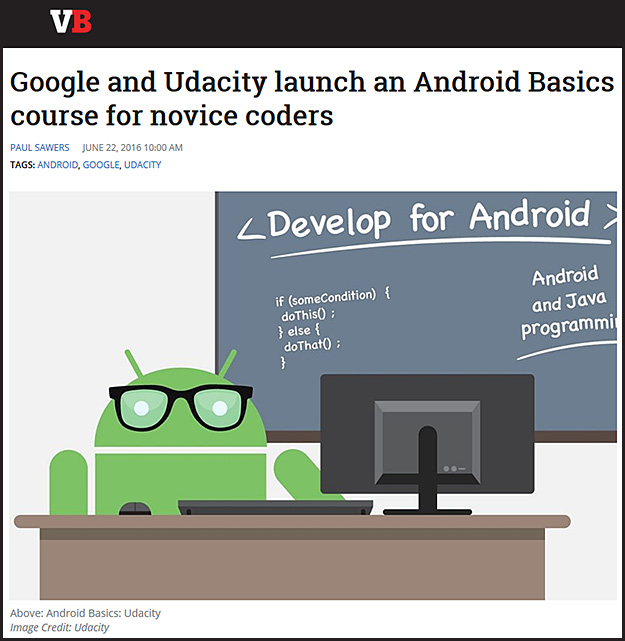
GoogleUdacity-CodingJuly2016


treehouse-2016


Teachable-June2016


FutureLeague-2016


StackSocial-July2016


Skillshare-July2016


CenterCentre-June2016


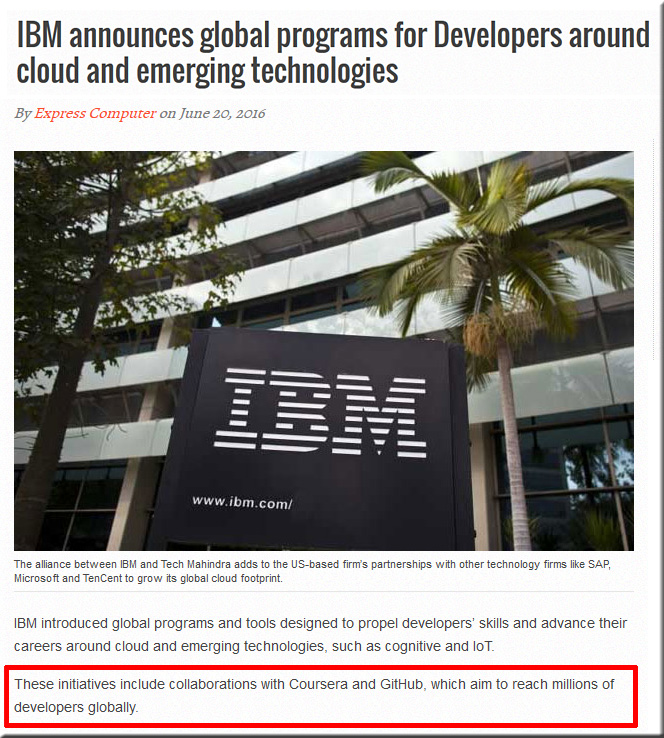
IBMCourseraGitHub-Courses-June2016


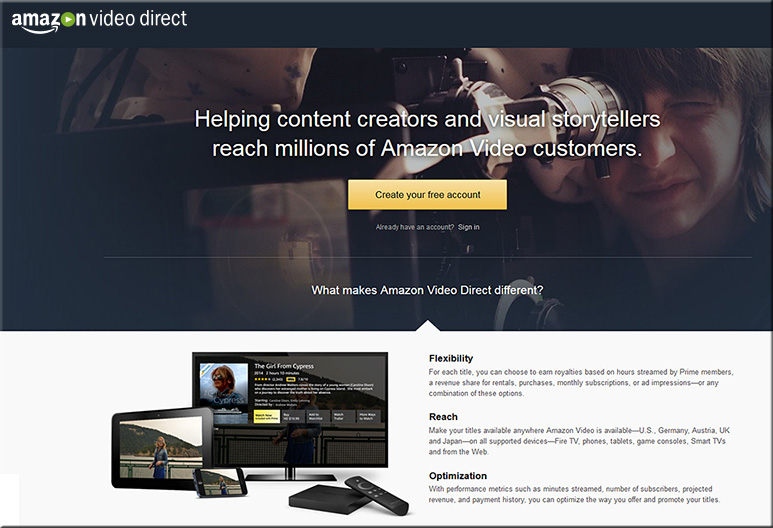
AmazonVideoDirect-June2016


Also see:


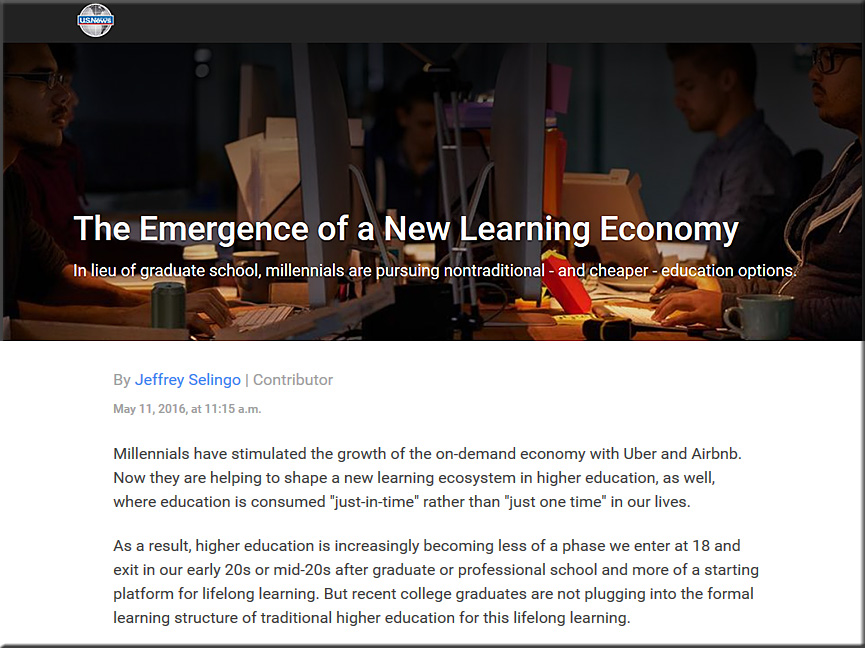
MillennialsPursuingOtherOptions-Selingo-May2016


Taking competency-based credentials seriously in the workforce — from campustechnology.com by John K. Waters
Companies like AT&T and Google are expanding their partnerships with online education providers, creating new educational pathways to real jobs.

Excerpt:

But in the Age of the Internet, for-profit online education providers such as Udacity and Coursera have tweaked that model by collaborating with companies to develop programs tailored to their specific needs.

Together the two companies created the Front-End Web Developer Nanodegree program, Udacity’s first branded microcredential. (“Nanodegree” is trademarked.)

“We worked with Udacity to develop curriculum based on tangible hiring and training needs,” said John Palmer, senior vice president and chief learning officer at AT&T, in an e-mail. “Our teams collaborated on determining what skills we needed now to address the needs of our business, but also what skills would be needed five to 10 years from now — not just at AT&T, but at other tech companies.”


uCertify

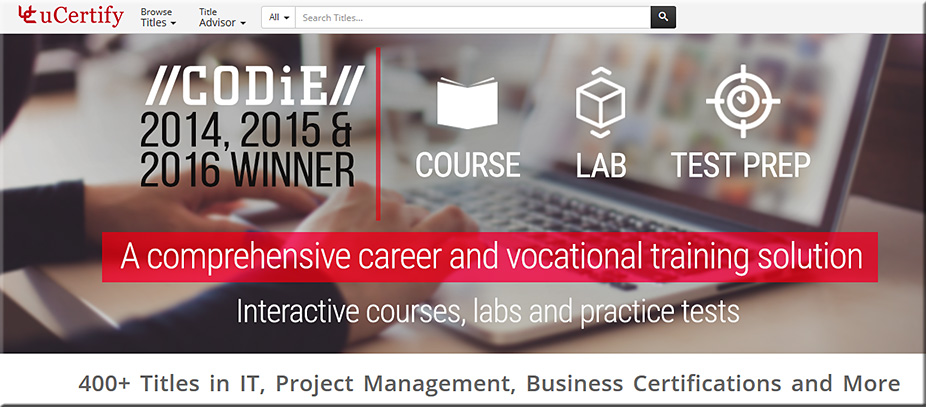
uCertify-june2016


Also related:

  • Students and higher ed leaders put their faith in online classes [#Infographic] — from edtechmagazine.com by Meg Conlan
    As a growing number of students enroll in nontraditional college classes, the value of online education becomes more clear.
    Excerpt:
    As cost-effective alternatives to traditional college classes, online learning programs continue to gain steam in higher ed.
    According to statistics gathered for an Online Learning Consortium infographic, 5.8 million students are now enrolled in online courses, and the majority put tremendous stock in the quality of their education: 90 percent of students say their online learning experiences are the same or better than in-classroom options.College and university leadership agrees: The infographic states that 71 percent of academic leaders say learning outcomes for online courses are the same or better than that of face-to-face classes.


OnlineLearningAlternativesGrowing-June2016


Related postings:


Acquisitions, mergers and reinvention (not closures) will characterize higher ed’s future — from evolllution.com; an interview with Kenneth Hartman | Past President of Drexel University Online, Drexel University

Excerpts:

We’re going to see a lot of different alternative options popping up at alternative prices with alternative delivery mechanisms offering alternative credentials in the future. I don’t think a lot of institutions will be shutting down. There will be some that close, but it’s more likely that their assets will be acquired by other, stronger institutions.

These types of programs are popping up all over the country and I think the market forces tell a story. Colleges that are able to be adaptable and flexible will be the leaders in this new higher education marketplace. Adaptability, vision and flexibility are going to be critical for schools that are not heavily-endowed. If they do not have the will to do that then I think unfortunately Christensen’s prediction will probably come true. However, I’m optimistic that when the pain gets high enough, trustees of these institutions will demand that their senior leadership provide them with the way to prevent closure.


What a Microsoft-owned LinkedIn means for education — from campustechnology.com by Dian Schaffhauser

Excerpt:

Ironically, he suggested, higher ed is also the most vulnerable target of LinkedIn as it continues to work on development of a competency marketplace that could one day replace four-year degrees as the baseline requirement for employment.

The vision of this competency marketplace is that employers can identify candidates who are close matches for positions based on the competencies their jobs require. Likewise, job candidates can get information from LinkedIn about what competencies a given position requires and pursue that through some form of training, whether through a class at a local college, a bootcamp, online learning or some other form of instruction.

“The signal for universities that the world is about to change is when employers begin to drop degree requirements from job descriptions,” said Craig. And by the way, he added, that’s already happening at recognizable companies such as Google, Penguin Random House, EY and PwC, which have either eliminated that requirement from entry-level job descriptions or begun masking a candidate’s degree status from hiring managers because they “think the degrees are actually false or poor or misleading signals of ultimate job performance.”

Not only does LinkedIn have by far the largest collection of candidate profiles, but it has become the leading platform for distributing microcredentials, said Craig.


“You can identify education and training opportunities to remediate gaps between where you are and what the job description says you need to have to qualify. So all the pieces are there,” he said. “Currently, it’s still early, but you can see where this is going. We think that is the story of the next decade in higher education.”


12 promising non-traditional college pathways to attainment — from eddesignlab.org

Excerpt:

We hear a lot about reinventing college and how we might better design the journey from school to work. Some students want faster or more experiential pathways to prosperity, re-entry points after stop-outs or opportunities for lifelong learning. “Non-traditional pathways” is a phrase you’ll hear a lot if you hang around policy and design folks who are thinking about broadening “attainment of degrees” to include meaningful credentials that lead to career readiness. This broader college success definition is not a cop out—it’s a recognition that technology, access to micro-credentials, and access to modular learning generally are blurring the lines between vocational training, liberal arts exploration, and 21st century skill building because, increasingly, students are in a position to order all these off the menu.

Lumina Foundation strategists Holly Zanville and Amber Garrison Duncan are in the thick of these designs, and the Lab caught up with them recently to help us build a list of the most promising ways that institutions, students, and third parties are piecing together non-traditional paths to meaningful credentials. Here’s a take on our “Top 12,” but we welcome your tweaks, additions, and favorite examples.


Top-ranked coding bootcamp, Fullstack Academy, launches first alumni startup investment fund — from prnewswire.com
Will provide seed funding for its graduates to launch their own startups

Excerpt:

NEW YORK, June 15, 2016 /PRNewswire/ — Fullstack Academy, the Y Combinator-backed top coding bootcamp in the U.S.,  today announced  Fullstack Fund, a new initiative to invest in promising startups created by its graduates.  “Students who complete our software engineering program go on to work for great companies like Google and Amazon, but some have opted for the entrepreneurial startup environment,” said David Yang, CEO and co-founder of Fullstack Academy. “So we asked ourselves — how can we better support alumni with a strong entrepreneurial slant? The Fullstack Fund  will empower some of the amazing teams and products that are coming out of our school.”


Addendum on 6/27/16:


Addendum on 6/30/16:


Noodle-June2016


Uncollege-June2016


CodingDojo-June2016


And a somewhat related posting:

More than 90% of institutions offer alternative credentials — from campustechnology.com by Sri Ravipati
The same study to report this statistic also found that millennial students prefer badging and certificates to traditional degrees.

Excerpt:

Millennial students seem to prefer badging and certificate programs to traditional bachelor’s degrees, according to a new study from University Professional and Continuing Education Association (UPCEA), Pennsylvania State University and Pearson that explored the role that alternative credentials play in higher education.

Demographic Shifts in Educational Demand and the Rise of Alternative Credentials” includes responses from 190 institutions, including community colleges (11 percent), baccalaureate colleges (12 percent), master’s colleges or universities (27 percent) and doctorate-granting universities (50 percent). Of the 190 institutions surveyed, 61 percent were public entities. Across the board, research revealed that programs offering alternative credentialing have become widespread in higher education, with 94 percent of the institutions reporting they offer alternative credentials. Alternative credentials can take the form of digital badges, certificates and micro-credentials.


Addendum on 7/11/16:

A model for higher education where all learning counts — from marketplace.org by Amy Scott

Excerpt:

Imagine it’s 2026, and you’re one of a billion people using a new digital platform called the Ledger.

So begins a new video from the Institute for the Future and ACT Foundation, envisioning a future system that would reward any kind of learning – from taking a course, to reading a book, to completing a project at work.

“Your Ledger account tracks everything you’ve ever learned in units called Edublocks,” the video’s narrator explains. “Each Edublock represents one hour of learning in a particular subject. Anyone can grant Edublocks to anyone else.”

The Ledger would use the same technology that powers bitcoin, the virtual currency, to create a verifiable record of every learning transaction, said Jane McGonigal, director of game research and development at the Institute for the Future, a think tank in Palo Alto, California.

 
© 2025 | Daniel Christian