Oxford and Vatican libraries to digitize 1.5 million pages of ancient texts — from theverge.com by Dante D’Orazio

Excerpt:

Two of the oldest libraries in Europe — the Vatican Library and the Bodleian Library at Oxford — are about to make parts of their collections available on the internet in a big way. The two libraries have announced that they are going to scan 1.5 million pages of ancient texts and make them available freely online. The massive undertaking isn’t the first such initiative to open up the collections from famous libraries to the whole world — both Cambridge University and the National Library of Israel recently released a trove of material from Isaac Newton and others online — but this new partnership is much greater in scope.

Tagged with:  

New IBM app presents nearly 1,000 years of math history — from wired.com by Alexandra Chang

.

Minds of Modern Mathematics interactive timeline.
Photo: Ariel Zambelich/Wired

From Acts 5:33-39

33 When they heard this, they were furious and wanted to put them to death. 34 But a Pharisee named Gamaliel, a teacher of the law, who was honored by all the people, stood up in the Sanhedrin and ordered that the men be put outside for a little while. 35 Then he addressed the Sanhedrin: “Men of Israel, consider carefully what you intend to do to these men. 36 Some time ago Theudas appeared, claiming to be somebody, and about four hundred men rallied to him. He was killed, all his followers were dispersed, and it all came to nothing. 37 After him, Judas the Galilean appeared in the days of the census and led a band of people in revolt. He too was killed, and all his followers were scattered. 38 Therefore, in the present case I advise you: Leave these men alone! Let them go! For if their purpose or activity is of human origin, it will fail. 39 But if it is from God, you will not be able to stop these men; you will only find yourselves fighting against God.”

.

Christianity now numbers 30% of the world's population -- as of Jan 2012

From DSC:
The above image was taken/edited from the infographic below:


Tagged with:  
Tagged with:  

Infographic of the day: What are the darkest parts of the Bible? — from fastcodesign.com by Suzanne LaBarre; also Openbible.info
Openbible.info charts the Bible according to positive and negative sentiment–with some surprising results.


Excerpt:

What you end up with is a snapshot of the relative cheeriness–or gloom–of different sections in the Bible. As the designer tells it:

Things start off well with creation, turn negative with Job and the patriarchs, improve again with Moses, dip with the period of the judges, recover with David, and have a mixed record (especially negative when Samaria is around) during the monarchy. The exilic period isn’t as negative as you might expect, nor the return period as positive. In the New Testament, things start off fine with Jesus, then quickly turn negative as opposition to his message grows. The story of the early church, especially in the epistles, is largely positive.

In short, it gives you a bird’s-eye view of the tone of each book, something that’s easy to miss in a line-by-line reading. You could also use it as a guide of sorts to the darkest, juiciest parts of the Bible.

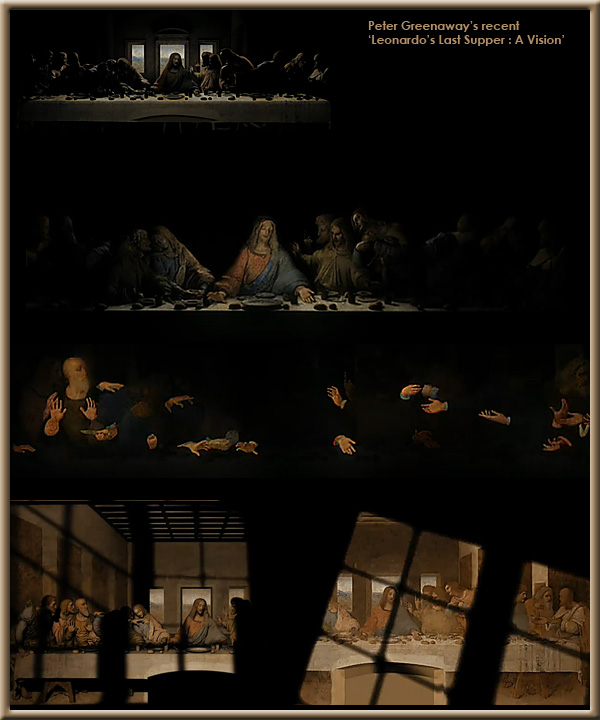
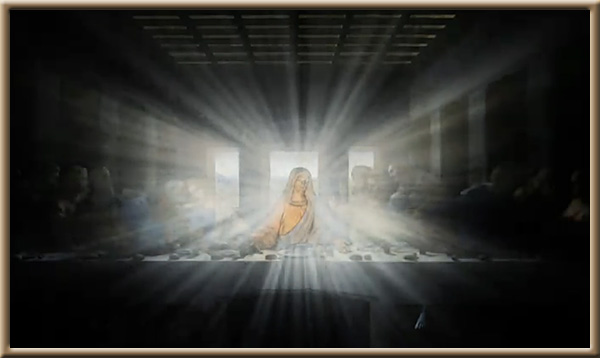
One of the “interesting examples of projection mapping” — from kimchiandchips.com

From DSC:
I’ve pulled some of the images from this video into one still piece. Amazing use of light and projection; creates different moods, makes Christ and his disciples around the table appear to be 3D at different points…


Tagged with:  

The second economy — from McKinsey Quarterly by W. Brian Arthur
Digitization is creating a second economy that’s vast, automatic, and invisible—thereby bringing the biggest change since the Industrial Revolution.

Excerpt:

We could look for one in the genetic technologies, or in nanotech, but their time hasn’t fully come. But I want to argue that something deep is going on with information technology, something that goes well beyond the use of computers, social media, and commerce on the Internet. Business processes that once took place among human beings are now being executed electronically. They are taking place in an unseen domain that is strictly digital. On the surface, this shift doesn’t seem particularly consequential—it’s almost something we take for granted. But I believe it is causing a revolution no less important and dramatic than that of the railroads. It is quietly creating a second economy, a digital one.

Evolution of the MBA [via MBA@UNC]

Evolution of the MBA via MBA@UNC

Via MBA@UNC Online MBA Program

— From Harrison Kratz, Community Manager, MBA@UNC


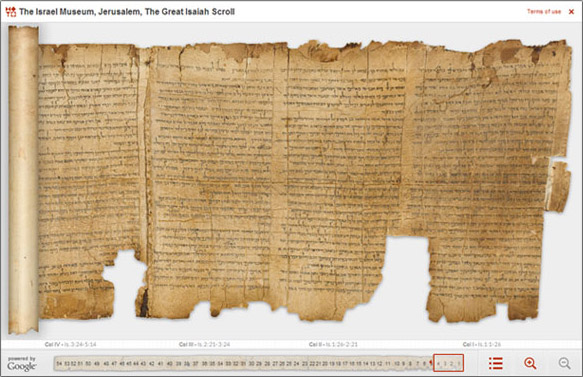
Some items concerning the fact that the Dead Sea Scrolls are now online:


The Great Isaiah Scroll


Data Visualization: Journalism’s Voyage West — from Stanford University
This visualization plots over 140,000 newspapers published over three centuries in the United States. The data comes from the Library of Congress’ “Chronicling America” project, which maintains a regularly updated directory of newspapers.


A fabulous history blog — from Maggie Koerth-Baker

Excerpt from Maggie’s posting:

If I had the time, I could probably spend the bulk of the next two days just trawling around the blog Wonders and Marvels. Curated by Vanderbilt professor Holly Tucker, the site features excerpts and tidbits from a wide variety of historical scholars.

Excerpt from Wonders & Marvels blog:

Wonders & Marvels is now a place for specialists and non-specialists to revel in the stories of the past.  It is provides learning opportunities for the college students who are involved on a daily basis in building the site.  Working closely with Professor Tucker, student interns have a chance to interact with scholars and other experienced authors, as well as with publicists and editors at the major publishing houses.

Wonders & Marvels is proof of the enduring links that exist between teaching and research, readers and writers, past and present.  We hope you will enjoy this site as much as we do!

Tagged with:  

Telepresence in the classroom: Enhancing breadth and depth of learning — from Cisco by Kerry Best

Excerpt:

All of a sudden, the classrooms lost their walls, and prior geographic and instructional limitations ceased to restrict learning.

  • …[telepresence] can bring in teachers for important subjects in which current instructors may not have specialized expertise
  • …take students on virtual field trips
  • …for teacher education
  • …bring historical figures to life


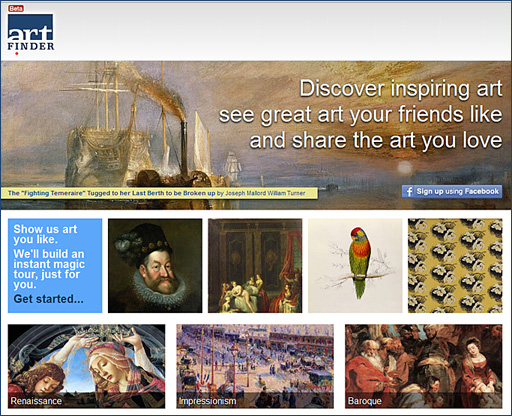
ArtFinder.com

ArtFinder.com


Also see:

Tagged with:  

All That Jazz … and Humor, Opera, Dance Music … — from The Library of Congress

[On May 10, 2011] the Library of Congress, in conjunction with Sony Music Entertainment, launched a website – “the National Jukebox” – that streams 10,000 sound recordings from the historic Victor Records collection.  It’s a fun and fascinating ramble for anyone who loves American music and wants to dig down into the roots of jazz, opera, a vast range of popular music, famous political speeches — even early sound effects.  The collection launched today (which will expand over time) is the soundtrack of our grandparents’ and great-grandparents’ early lives – music from the dawn of sound recording just after the turn of the 20th Century to the eve of the Great Depression.  The url is www.loc.gov/jukebox/.

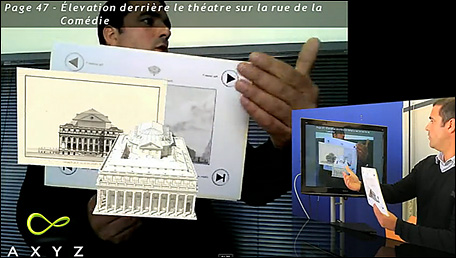
The Hyperbook by Mollat editions: When 18th century meets 21th — from Total Immersion and Axyz


Also see:

© 2025 | Daniel Christian