Within the classroom, Magic Leap One’s Lumin operating system allows multiple wearers to share in a digital experience, such as a dissection or historical map. And from a collaborative creation standpoint, students can use Magic Leap’s CAD application to join forces on 3D designs.
In success, AR’s convergence with biometric sensors and AI will give rise to an extraordinarily different education system: one comprised of delocalized, individually customizable, responsive, and accelerated learning environments.
The resurgence of learning engineering as a concept and professional role in higher education has exacerbated tensions within the field of instructional design related to job titles, responsibilities, and position within academic institutions.
“World-class instructional designers can help one institution differentiate itself from others in the online learning market. I think that realization is driving the conversation on instructional design in many institutions.”
…
“Today, we need instructional designers who are equally fluent in learning design, faculty professional development, research methods, and technology,” Bowen elaborated. “They must be able to partner with faculty to create, experiment, and publish innovative approaches to teaching and learning. Unfortunately, this looks a lot different than what we have in many instructional design units right now.”
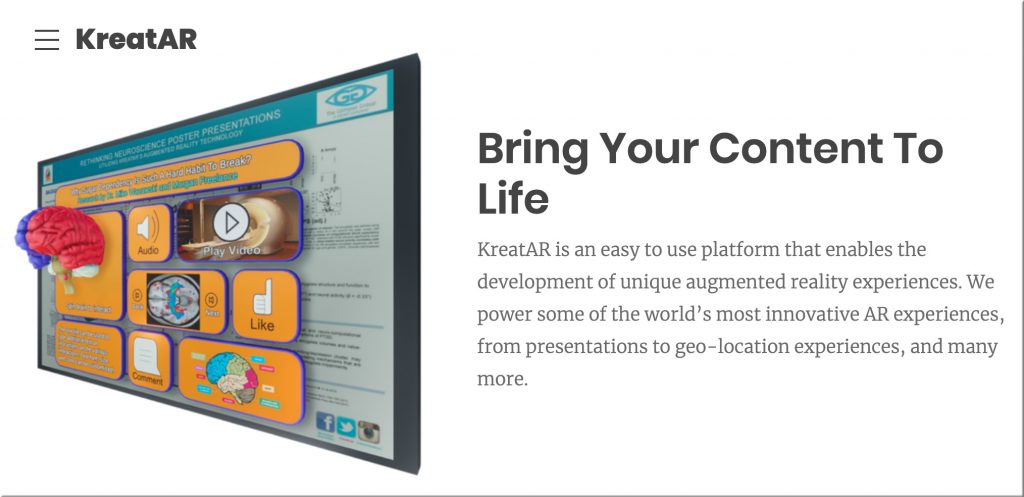
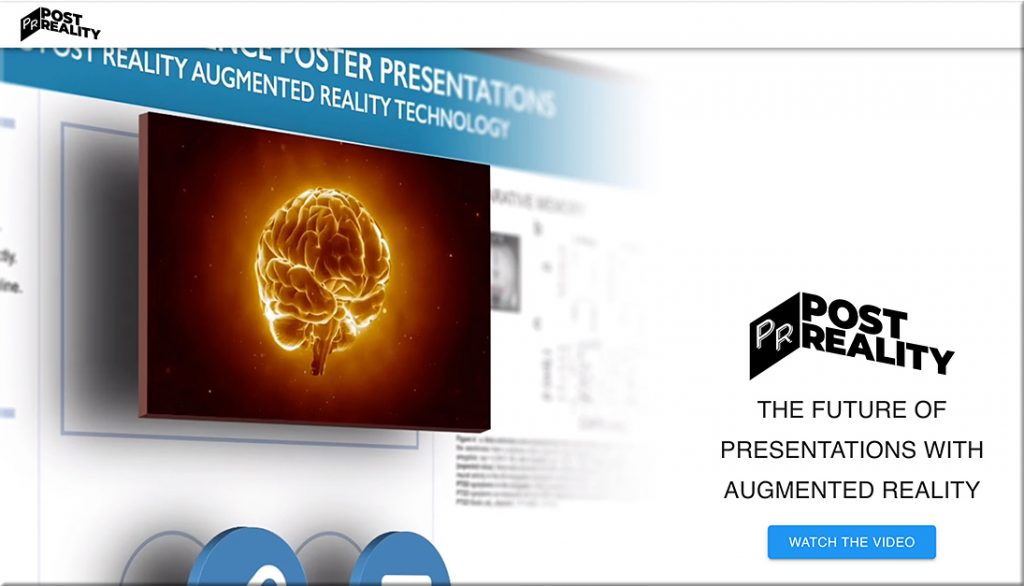
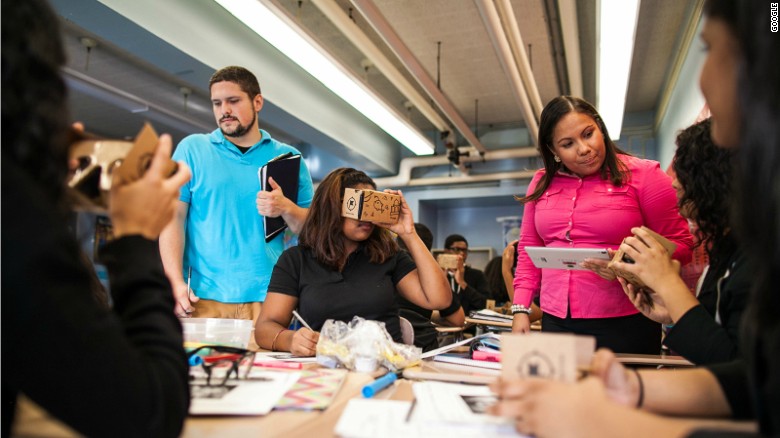
KreatAR, a subsidiary of The Glimpse Group, is helping change the way students and teachers are using augmented reality technology with PostReality, to help make learning more interactive with poster boards.
Anthony’s classroom is as much an invitation to his students to take ownership of their learning as it is a rebellion against the education system that failed him when he was a student. In his book, “High School Dropout to Teacher of the Year,” Anthony’s complicated relationship to education comes through as the fuel behind his work. In explaining his motivations behind reinventing classroom learning, he says that his focus as a teacher is to provide students with learning experiences that are “radically different” from the ones he remembers.
What makes Anthony Johnson a gem is not the fact that he is an African American male, but that he cultivates and fosters a learning environment unlike any other seen in this country.
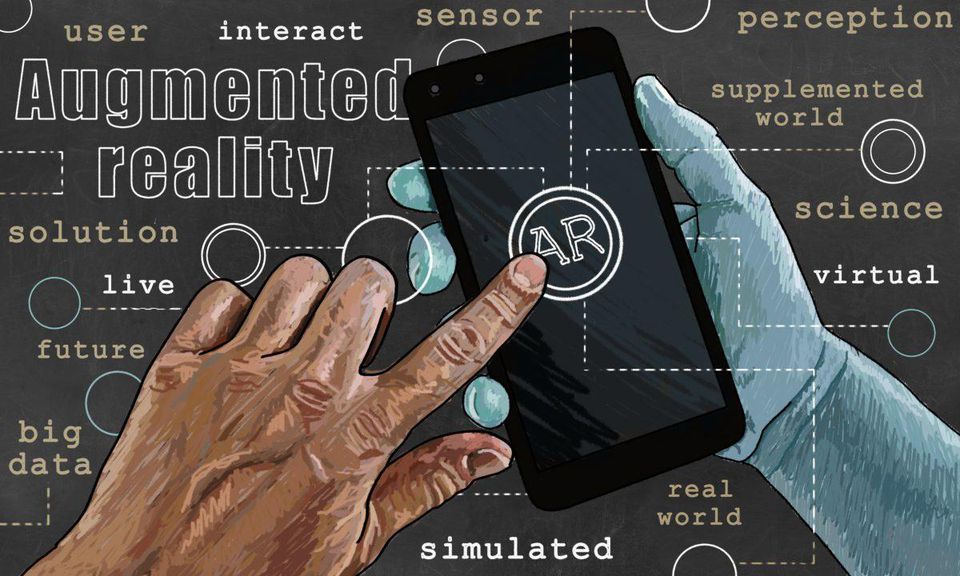
Augmented reality (AR) can add value, solve problems and enhance the user experience in nearly every industry. Businesses are catching on and increasing investments to drive the growth of augmented reality, which makes it a crucial part of the tech economy.
As referenced by Bernard in his above article:
From DSC: Along these lines, I really appreciate the “translate” feature within Twitter. It helps open up whole new avenues of learning for me from people across the globe. A very cool, practical, positive, beneficial feature/tool!!!
Inspiring Leaders | Anthony G. Picciano — from virtuallyinspired.org Co-founder of CUNY Online and founding member of the Online Learning Consortium, shares his insights on his new book, “Online Education: Foundations, Planning, and Pedagogy,” building a community in an online classroom, gaming and more.
Excerpts/items mentioned in this video:
Research Initiative for Teaching Effectiveness, University of Central Florida
Reports from the Babson Survey Research Group, Babson College
2010 U.S. Dept of Education meta-analysis — older now, but still a pivotal study
Tap into what students already know; have students bring their own experiences into the topics/discussions; bring their own materials and interests
Have students own the course as much as possible
Limit the amount of lecturing — introduce humor where possible; tap into students’ interests
Chunk lecturing up into 6-8 minute pieces — then introduce some activity that forces the students to do something
The River City — Chris Dede (mainly for high school students)
MIT elude — how to deal w/ depression
Fortnite
Elegance in simplicity — clean format, where things are, streamlined –6-7 clearly-labeled buttons, I understand what I have to do here; make it simple, not complex; use techs where makes good pedagogical sense
Future: AI, nanotechnology will lead to more quantum computing, cloud computing
Quantum computing is a whole of the level of digital circuitry design. That will allow much more power, much more speed, the likes of which we have not seen in digital technology. When that comes, that opens up lots of other possibilities in applications like artificial intelligence, like robotics, like cloud computing. All of these will be significantly enhanced as we move to a quantum computing type environment. When that happens, we will see a whole other level of digital activity not just in teaching and learning but everything we do.
OpenSight specifically utilizes the Microsoft HoloLens headset that allows simultaneous visualization of the 3D patient images in AR and the actual patient and their real-world surroundings. The technique may decrease operative times and improve surgical planning and the understanding of anatomic relationships.
“Kids love to engage with [VR] lessons,” said Guido Kovalskys, chief executive and co-founder of US-based edtech company Nearpod. “One minute, they are learning about Roman history, and the next, they are transported to ancient Rome and are exploring the Colosseum.”
From DSC: Ok, so the title is on the overhyped side, but I do think XR will positively impact learning, understanding.
VR & AR 2018: A year in review— from vrscout.com by Kyle Melnick Excerpt:
If 2016 was the birth of modern VR/AR technology, than 2018 was its elementary school graduation. While this past year may have seemed like a quiet one when compared to the more exciting releases featured in 2017 and 2016, these past 12 months have been crucial in the development of the immersive entertainment sector.
Major hardware releases, vast improvements to software, and various other integral advancements have quietly solidified VR & AR as viable, long-term technological platforms for years to come. So while there may not have been any bombshell announcements or jaw-dropping reveals per sey, 2018 will still go down as a key, if not climactic, year for VR & AR technology regardless.
With a new year full of exciting possibilities ahead of us, let’s hang back a second and take a look back at 2018’s most pivotal moments.
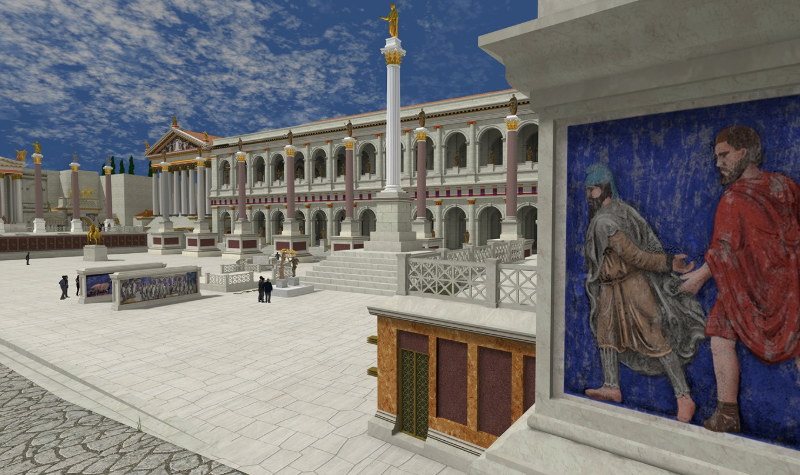
Ever wish you could step into a hot air balloon, travel back in time to 320 A.D., and soar over the streets of Ancient Rome? Well, that oddly specific fantasy is achievable in a new virtual reality experience called “Rome Reborn.”
The ambitious undertaking, painstakingly built by a team of 50 academics and computer experts over a 22-year period, recreates 7,000 buildings and monuments scattered across a 5.5 square mile stretch of the famed Italian city. The project, according to Tom Kington of the Times, is being marketed as the largest digital reconstruction of Rome to date.
While the application of VR to core academics remains nascent, early returns are promising: research now suggests students retain more information and can better synthesize and apply what they have learned after participating in virtual reality exercises.
And the technology is moving within the reach of classroom teachers. While once considered high-end and cost-prohibitive, virtual reality is becoming more affordable. Discovery VR and Google Expeditions offer several virtual reality experiences for free. Simple VR viewers now come in relatively low-cost DIY cardboard view boxes, like Google Cardboard, that fit a range of VR-capable smartphones.
…
Still, teachers may remain unsure of how they might implement such cutting-edge technology in their classrooms. Their concerns are well founded. Virtual reality takes careful planning and implementation for success. It’s not simply plug-and-play technology. It also takes a lot of work to develop.
From DSC: Reduced costs & greater development efficiencies needed here:
“In our case, to create just 10 minutes of simulation, a team of six developers logged almost 1,000 hours of development time.”
See the results of a months-long effort to create a HoloLens experience that pays homage to Mont-Saint-Michel, in Normandy, France, in all its forms – as a physical relief map and work of art; as a real place visited by millions of people over the centuries; and as a remarkable digital story of resilience. In this three-part Today in Technology series, they examine how AI and mixed reality can open a new window into French culture by using technology like HoloLens.
Amazon loves to use the word flywheel to describe how various parts of its massive business work as a single perpetual motion machine. It now has a powerful AI flywheel, where machine-learning innovations in one part of the company fuel the efforts of other teams, who in turn can build products or offer services to affect other groups, or even the company at large. Offering its machine-learning platforms to outsiders as a paid service makes the effort itself profitable—and in certain cases scoops up yet more data to level up the technology even more.
It took a lot of six-pagers to transform Amazon from a deep-learning wannabe into a formidable power. The results of this transformation can be seen throughout the company—including in arecommendations system that now runs on a totally new machine-learning infrastructure.Amazon is smarter in suggesting what you should read next, what items you should add to your shopping list, and what movie you might want to watch tonight. And this year Thirumalai started a new job, heading Amazon search, where he intends to use deep learning in every aspect of the service.
“If you asked me seven or eight years ago how big a force Amazon was in AI, I would have said, ‘They aren’t,’” says Pedro Domingos, a top computer science professor at the University of Washington. “But they have really come on aggressively. Now they are becoming a force.”
Maybe the force.
From DSC: When will we begin to see more mainstream recommendation engines for learning-basedmaterials? With the demand for people to reinvent themselves, such a next generation learning platform can’t come soon enough!
Turning over control to learners to create/enhance their own web-based learner profiles; and allowing people to say who can access their learning profiles.
AI-based recommendation engines to help people identify curated, effective digital playlists for what they want to learn about.
Voice-driven interfaces.
Matching employees to employers.
Matching one’s learning preferences (not styles) with the content being presented as one piece of a personalized learning experience.
From cradle to grave. Lifelong learning.
Multimedia-based, interactive content.
Asynchronously and synchronously connecting with others learning about the same content.
We’re about to embark on a period in American history where career reinvention will be critical, perhaps more so than it’s ever been before. In the next decade, as many as 50 million American workers—a third of the total—will need to change careers, according to McKinsey Global Institute. Automation, in the form of AI (artificial intelligence) and RPA (robotic process automation), is the primary driver. McKinsey observes: “There are few precedents in which societies have successfully retrained such large numbers of people.”
Online learning continues to expand in higher ed with the addition of several online master’s degrees and a new for-profit college that offers a hybrid of vocational training and liberal arts curriculum online.
Inside Higher Ed reported the nonprofit learning provider edX is offering nine master’s degrees through five U.S. universities — the Georgia Institute of Technology, the University of Texas at Austin, Indiana University, Arizona State University and the University of California, San Diego. The programs include cybersecurity, data science, analytics, computer science and marketing, and they cost from around $10,000 to $22,000. Most offer stackable certificates, helping students who change their educational trajectory.
Former Harvard University Dean of Social Science Stephen Kosslyn, meanwhile, will open Foundry College in January. The for-profit, two-year program targets adult learners who want to upskill, and it includes training in soft skills such as critical thinking and problem solving. Students will pay about $1,000 per course, though the college is waiving tuition for its first cohort.
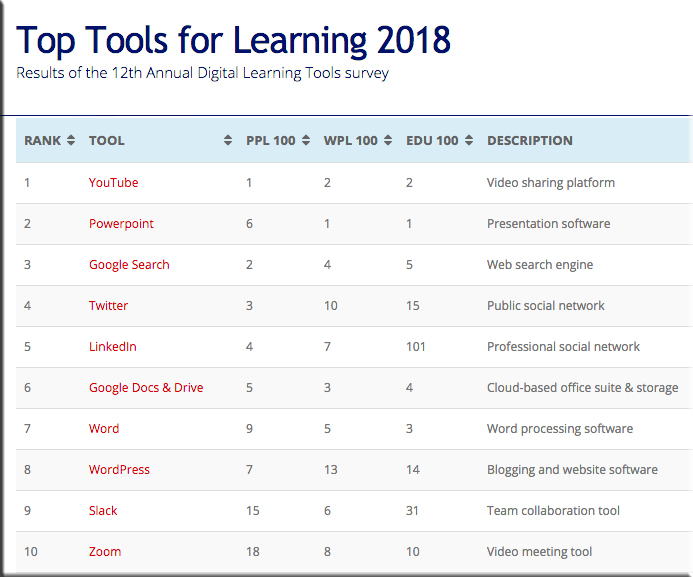
[On 9/24/18], I released the Top Tools for Learning 2018 , which I compiled from the results of the 12th Annual Digital Learning Tools Survey.
I have also categorised the tools into 30 different areas, and produced 3 sub-lists that provide some context to how the tools are being used:
Top 100 Tools for Personal & Professional Learning 2018 (PPL100): the digital tools used by individuals for their own self-improvement, learning and development – both inside and outside the workplace.
Top 100 Tools for Workplace Learning (WPL100): the digital tools used to design, deliver, enable and/or support learning in the workplace.
Top 100 Tools for Education (EDU100): the digital tools used by educators and students in schools, colleges, universities, adult education etc.
3 – Web courses are increasing in popularity. Although Coursera is still the most popular web course platform, there are, in fact, now 12 web course platforms on the list. New additions this year include Udacity and Highbrow (the latter provides daily micro-lessons). It is clear that people like these platforms because they can chose what they want to study as well as how they want to study, ie. they can dip in and out if they want to and no-one is going to tell them off – which is unlike most corporate online courses which have a prescribed path through them and their use is heavily monitored.
5 – Learning at work is becoming personal and continuous. The most significant feature of the list this year is the huge leap up the list that Degreed has made – up 86 places to 47th place – the biggest increase by any tool this year. Degreed is a lifelong learning platform and provides the opportunity for individuals to own their expertise and development through a continuous learning approach. And, interestingly, Degreed appears both on the PPL100 (at 30) and WPL100 (at 52). This suggests that some organisations are beginning to see the importance of personal, continuous learning at work. Indeed, another platform that underpins this, has also moved up the list significantly this year, too. Anders Pink is a smart curation platform available for both individuals and teams which delivers daily curated resources on specified topics. Non-traditional learning platforms are therefore coming to the forefront, as the next point further shows.
From DSC: Perhaps some foreshadowing of the presence of a powerful, online-based, next generation learning platform…?
[Here] is a diverse list adapted from resources found at fortheteachers.org of potential student products or activities learners can use to demonstrate their mastery of lesson content. The list also offers several digital tools for students to consider using in a technology-enriched learning environment.



![The Living [Class] Room -- by Daniel Christian -- July 2012 -- a second device used in conjunction with a Smart/Connected TV](http://danielschristian.com/learning-ecosystems/wp-content/uploads/2012/07/The-Living-Class-Room-Daniel-S-Christian-July-2012.jpg)