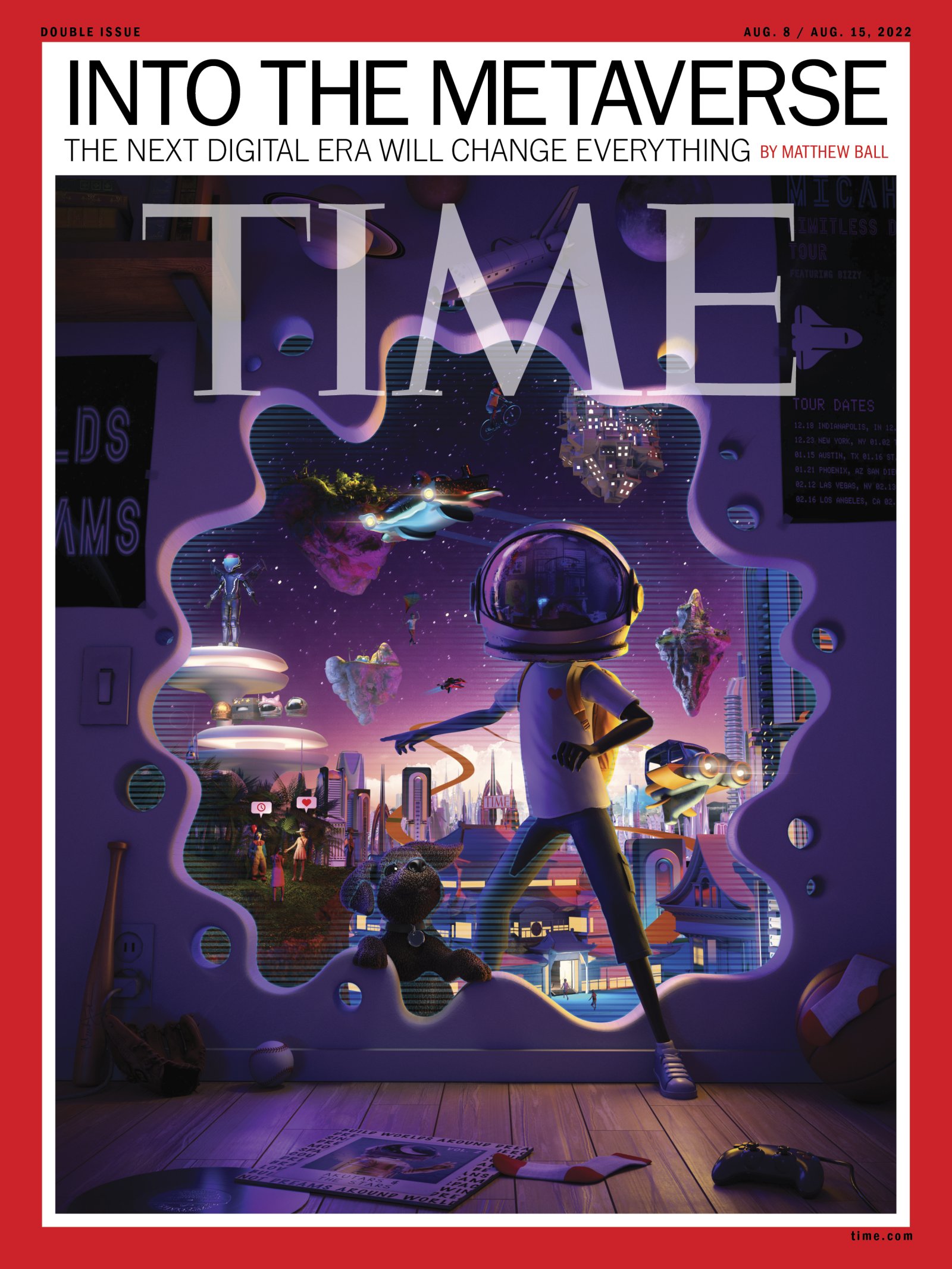
The Metaverse Will Reshape Our Lives. Let’s Make Sure It’s for the Better. — from time.com by Matthew Ball

Excerpts (emphasis DSC):

The metaverse, a 30-year-old term but nearly century-old idea, is forming around us. Every few decades, a platform shift occurs—such as that from mainframes to PCs and the internet, or the subsequent evolution to mobile and cloud computing. Once a new era has taken shape, it’s incredibly difficult to alter who leads it and how. But between eras, those very things usually do change. If we hope to build a better future, then we must be as aggressive about shaping it as are those who are investing to build it.

The next evolution to this trend seems likely to be a persistent and “living” virtual world that is not a window into our life (such as Instagram) nor a place where we communicate it (such as Gmail) but one in which we also exist—and in 3D (hence the focus on immersive VR headsets and avatars).


Matthew Ball on the metaverse: We’ve never seen a shift this enormous — protocol.com by Janko Roettgers
The leading metaverse theorist shares his thoughts on the sudden rise of the concept, its utility for the enterprise and what we still get wrong about the metaverse.

Excerpts:

What are the biggest misconceptions about the metaverse?
First, the idea that the metaverse is immersive virtual reality, such as an Oculus or Meta Quest. That’s an access device. It would be akin to saying the mobile internet is a smartphone.

We should think of the metaverse as perhaps changing the devices we use, the experiences, business models, protocols and behaviors that we enjoy online. But we’ll keep using smartphones, keyboards. We don’t need to do all video conferences or all calls in 3D. It’s supplements and complements, doesn’t replace everything.

Also relevant/see:

A former Amazon exec thinks Disney will win the metaverse — from protocol.com by

Excerpt:

This month, Ball is publishing his book, “The Metaverse: And How It Will Revolutionize Everything.” The work explains in detail what the metaverse is all about and which shifts in tech, business and culture need to fall into place for it to come into existence.

How will the metaverse change Hollywood? In his book, Ball argues that people tend to underestimate the changes new technologies will have on media and entertainment.

  • Instead of just seeing a movie play out in 360 degrees around us, we’ll want to be part of the movie and play a more active role.
  • One way to achieve that is through games, which have long blurred the lines between storytelling and interactivity. But Ball also predicts there will be a wide range of adjacent content experiences, from virtual Tinder dates in the “Star Wars” universe to Peloton rides through your favorite movie sets.

Addendum on 7/24/22:

Neurodiversity, Inclusion And The Metaverse — from workdesign.com by Derek McCallum

Excerpt:

Innovation in virtual and augmented reality platforms and the vast opportunities connected to the metaverse are driving innovation in nearly every industry. In the workplace, future-focused companies are increasingly exploring ways to use this nascent technology to offer workers more choices and better support for neurodiverse employees.

It would be nearly impossible to list all the challenges and opportunities associated with this technology in a single article, so I’ll keep things focused on an area that is top-of-mind right now as many of us start to make our way back into the office—the workplace. The truth is, while we can use our expertise and experience to anticipate outcomes, no one truly knows what the metaverse will become and what the wide-ranging effects will be. At the moment, the possibilities are exciting and bring to mind more questions than answers. As a principal and hands-on designer in a large, diverse practice, my hope is that we will be able to collectively harness the inherent opportunities of the metaverse to support richer, more accessible human experiences across all aspects of the built environment, and that includes the workplace.


Taking construction education into a new age — from highereddive.com by Jonathan Arnholz

Excerpt:

In 2021, the sixth edition of our top textbook, Core: Introduction to Basic Construction Skills was released in collaboration with our publishing partner Pearson. In addition to the standard updates to the content, this new edition introduced QR codes to our textbooks, directing students to digital resources to reinforce the material found in the book. In conjunction with the release of the printed book came a new Core eText and a fully re-imagined NCCERconnect online course with integrated augmented reality lessons, dozens of videos on performance tasks, construction math and employability skills, dynamic presentations to support classroom engagement, project-based learning assignments and more.


Addendum on 7/21/22:

Skilled Trades Labor Scarcity: Workforce Aging as Fewer Recruits Enter Trades — from finance.yahoo.com

Excerpt:

TACOMA, Wash., July 19, 2022 /PRNewswire/ — The skilled trades industry is proving to be one of the hardest hit by worker scarcity. According to a new analysis by PeopleReady Skilled Trades, a specialized division of staffing giant PeopleReady, the COVID-19 pandemic resulted in a skilled labor shortage that companies are still struggling with today. In the period from March 2020 to December 2021, four million jobs were open in key skilled trades industries like construction—more than double the amount of vacancies pre-pandemic.


‘Hologram patients’ and mixed reality headsets help train UK medical students in world first — from uk.news.yahoo.com

Excerpts:

Medical students in Cambridge, England are experiencing a new way of “hands-on learning” – featuring the use of holographic patients.

Through a mixed reality training system called HoloScenarios, students at Addenbrooke’s Hospital, part of the Cambridge University Hospitals NHS Foundation Trust, are now being trained via immersive holographic patient scenarios in a world first.

The new technology is aimed at providing a more affordable alternative to traditional immersive medical simulation training involving patient actors, which can demand a lot of resources.

Developers also hope the technology will help improve access to medical training worldwide.


Top Content Providers For Immersive Learning (2022) — from elearningindustry.com by Christopher Pappas

Summary: 

Immersive learning experiences allow learners to interact by simulating real-life scenarios. Are you ready to offer engaging virtual environments and experiences to your workforce? Dive right into this thoroughly curated top list featuring the best content providers for VR training and bring your teams one step closer to the Metaverse.


17 Best Video Converter Software in 2022 (Free and Paid) — from videoproc.com by Cecilia Hwung

Excerpt:

Looking for the best video converter software? We may need a free or paid video converter for various reasons. For instance,

  • Change videos into different formats for playing on iPhone, TVs, PS4, Xbox, Mac…
  • Convert videos recorded by GoPro, DJI, iPhone, DSLR cameras, or screen captures to editing-friendly format
  • Transcode videos for sending on Discord, Pinterest, Twitter, and other social media without quality loss
  • Share the same video on different platforms with different formats for getting the best outcomes on each platform
  • Convert DVDs (including the new and 99-title DVDs) with favored chapters, subtitles, and languages

Given the fact that hundreds of paid and free video converters out there claim themselves to be powerful, fast, and easy-to-learn while giving no compromise to quality, choosing the best video converter software becomes one of the most frustrating roadblocks you may encounter.

Lucky you are here. We have carefully selected and assembled a list of the best video converter software you can get right now. Most of them are open-source and cross-platform, meaning they are completely free video file converter programs for Windows 11/10/8/7, macOS, Linux, and web.


‘Accessibility is a journey’: A DEI expert on disability rights — from hrdive.com by Caroline Colvin
Employers can wait for a worker to request reasonable accommodation under the ADA, but Kelly Hermann asks: Why not be accommodating from the start?

Excerpt:

Often, employers jump to the obstacles that exist in physical spaces: nonexistent ramps for wheelchairs, manual doors that lack motion sensors, and the like. But the digital world presents challenges as well. Hermann and the U Phoenix accessibility team likes to “demystify” disability for campus members seeking their counsel, she said.

“Are you making those links descriptive and are you using keywords? Or are you just saying ‘click here’ and that’s your link?” Hermann asked. Like a sighted person, an individual with a disability can also scan a webpage for links with assistive technology, but this happens audibly, Hermann said, “They tell that tool to skip by link and this is what they hear: ‘Click here.’ ‘Click here.’ ‘Click here.’ ‘Click here.’ With four links on the page all hyperlinked with ‘click here,’ [they] don’t know where [they’re] going.”


Tech & Learning Announces Winners of Best of Show at ISTE 2022 — from techlearning.com

Excerpt:

Tech & Learning’s Best of Show Awards at ISTELive 22(opens in new tab) celebrate the products, and businesses behind each one, who are transforming education in schools around the world. Tech & Learning’s panel of judges awarded the products and solutions to exhibitors at ISTELive 22 Live who show the greatest promise to the industry, according to the U.S.’s most tech-savvy and knowledgeable educators.

“It was great to be back in person at ISTELive22 and see so many examples of innovation on the exhibit hall floor,” says Christine Weiser, content director for Tech & Learning. “Our judges chose the following winners as examples of excellence in terms of value, quality, ease of use, and versatility. Congratulations to our winners!”


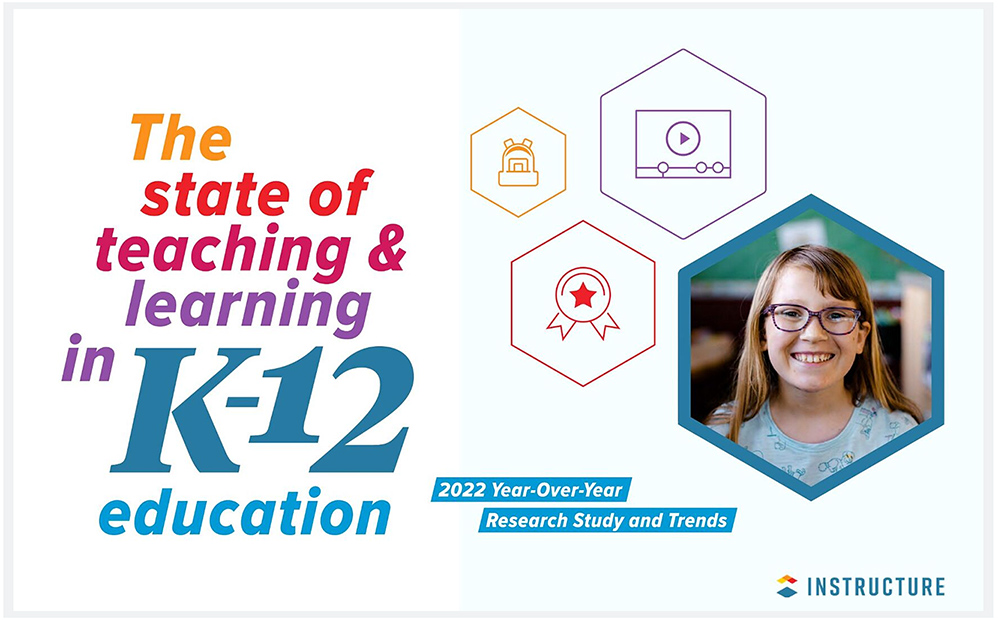
The state of teaching and learning in K12 — from Instructure

What began as an unplanned shift to remote learning two years ago has grown into a movement—a transformation, really—that has given way to a more measured approach to intentionally designed digital learning. The adoption of new educational technologies and instructional strategies has evolved teaching and learning as we know it at an unprecedented pace.

The state of teaching and learning in K12

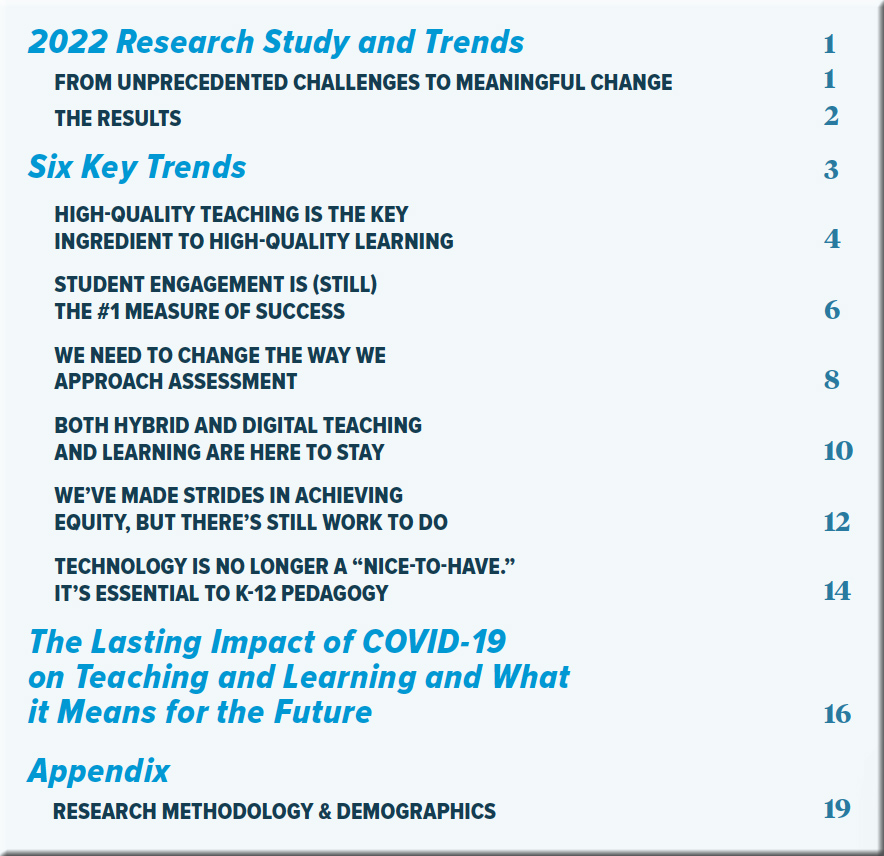
TOC for the state of teaching and learning in K12


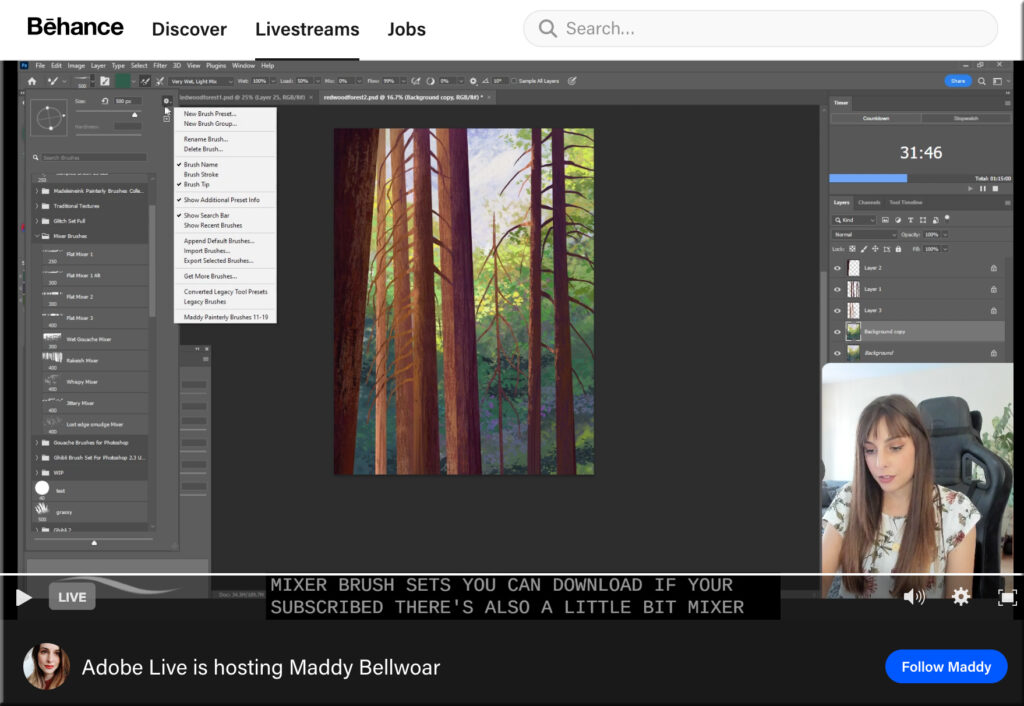
Screenshot of Adobe Live -- is Adobe Live a type of component of our future learning ecosystems?

From DSC:
It seems to me that this is one of the types of learning experiences that we will have in the future — i.e., where you can tap into a variety of live/virtual streams of content whereby you can peer over the shoulder of experts using products and/or services.

streams of content are ever flowing by -- we need to tap into them and contribute to them


From DSC:
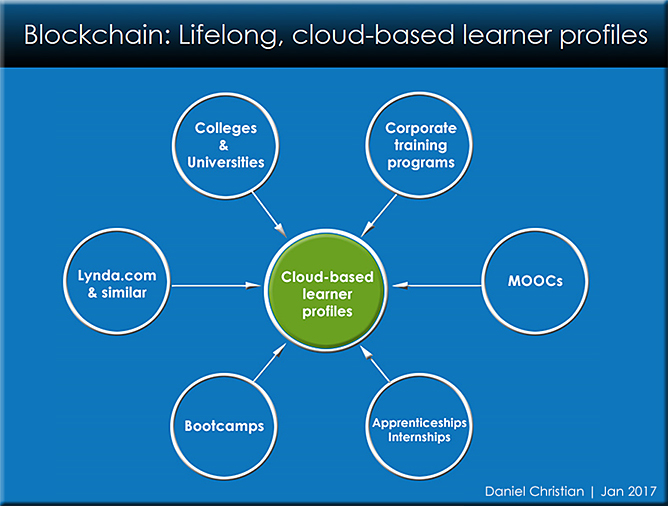
An AI-backed platform will constantly search all job postings and present the most desired skills in the marketplace and then how to get those skills. The providers will be individuals, organizations, training providers, traditional institutions of higher education, vendors and more.

Depending upon what happens with blockchain — and if a much more energy-efficient/environmentally-friendly solution can be implemented — blockchain may be a part of that equation.

 
© 2025 | Daniel Christian