From DSC:
I have been proposing that the AI-based learning platform of the future will be constantly doing this — every single day. It will know what the in-demand skills are — at any given moment in time. It will then be able to direct you to resources that will help you gain those skills. Though in my vision, the system is querying actual/open job descriptions, not analyzing learning data from enterprise learners. Perhaps I should add that to the vision.


Coursera’s Job Skills Report 2026: Top skills for your students — from coursera.org

The Job Skills Report 2026 analyzes learning data from more than 6 million enterprise learners to identify the future job skills organizations need most. It’s designed for HR and L&D leaders; data, IT, and software & product development leaders; higher education administrators; and government agencies seeking actionable insights on workforce skills trends and AI-driven transformation.

Drawing on data from 6 million enterprise learners across nearly 7,000 organizations, the Job Skills Report 2026 guides you through the skills reshaping the global economy. This year’s analysis spans Data, IT, and Software & Product Development—and the Generative AI skills becoming essential for every role.


From DSC:
The types of postings/articles (such as the one below) make me ask, are we not shooting ourselves in the foot with AI and recent college graduates? If the bottom rungs continue to disappear, internships and apprenticeships can only go so far. There aren’t enough of them — especially valuable ones. So as this article points out, there will be threats to the long-term health of our talent pipelines unless we can take steps to thwart those impacts — and to do so fairly soon.

To me…vocational training and jobs are looking better all the time — i.e., plumbers, carpenters, electricians, mechanics, and more.


Can New Graduates Compete With AI? — from builtin.combyRichard Johnson
The increasing adoption of AI automation is compressing early-career jobs. How should new graduates get a foothold in the economy now?

Summary: AI is hollowing out entry-level roles by automating routine tasks, eliminating a rung on the career ladder. New graduates face intense competition and a rising skill floor. While firms gain short-term productivity, they risk a long-term talent shortage by eliminating junior training grounds.

Conversations about AI have covered all grounds: hype, fear and slop. But while some roll their eyes at yet another automation headline, soon?to?be graduates are watching the labor market with a very different level of urgency. They’re entering a world where the old paradox of needing experience to get experience is colliding with a new reality: AI is absorbing the standardized, routine tasks that once defined entry?level work. The result isn’t just a shift in job descriptions or skill-requirements, but rather a structural reshaping of the career pipeline.

Entry-level workers face an outsized disruption to their long-term career trajectories. They have the least buffer to adapt given their lack of relevant job market experience and heightened financial pressure to secure a job quickly with the student-debt repayment periods for recent graduates looming.

Momentum early in one’s career matters, and the first job on a resume shapes future compensation bands and opportunities. It also serves as a signal for perceived specialization or, at minimum, interest. Losing that foothold has compounding effects to one’s career ladder.


Also relevant/see:

New Anthropic Institute to Study Risks and Economic Effects of Advanced AI — from campustechnology.com by John K. Waters

Key Takeaways

  • Anthropic has launched the Anthropic Institute, a new research effort focused on the biggest societal challenges posed by more powerful AI systems.
  • The institute will study how advanced AI could affect the economy, the legal system, public safety, and broader social outcomes.
  • Anthropic co-founder Jack Clark will lead the institute in a new role as the company’s head of public benefit.
  • The new unit brings together Anthropic’s existing red-teaming, societal impacts, and economic research work, while adding new hires and new research areas.
 

Americans’ retirement accounts – and hardship withdrawals – hit new highs. Here’s what to know — from weforum.org by Spencer Feingold

  • Last year, US retirement account balances rose at double-digit rates, driven by strong market performance and steady contributions.
  • At the same time, hardship withdrawals increased, highlighting growing short-term financial stress.
  • The trend underscores the importance of financial education and resilience to support long-term retirement security.

From DSC:
I’m hoping that we are doing a better job in the United States on educating our youth on investing, saving, and developing better legal knowledge (i.e., the need for wills, estate planning, trusts, etc.).


Farewell to Traditional Universities | What AI Has in Store for Education

Premiered Jan 16, 2026

Description:

What if the biggest change in education isn’t a new app… but the end of the university monopoly on credibility?

Jensen Huang has framed AI as a platform shift—an industrial revolution that turns intelligence into infrastructure. And when intelligence becomes cheap, personal, and always available, education stops being a place you go… and becomes a system that follows you. The question isn’t whether universities will disappear. The question is whether the old model—high cost, slow updates, one-size-fits-all—can survive a world where every student can have a private tutor, a lab partner, and a curriculum designer on demand.

This video explores what AI has in store for education—and why traditional universities may need to reinvent themselves fast.

In this video you’ll discover:

  • How AI tutors could deliver personalized learning at scale
  • Why credentials may shift from “degrees” to proof-of-skill portfolios
  • What happens when the “middle” of studying becomes automated
  • How universities could evolve: research hubs, networks, and high-trust credentialing
  • The risks: cheating, dependency, bias, and widening inequality
  • The 3 skills that become priceless when information is everywhere: judgment, curiosity, and responsibility

From DSC:
There appears to be another, similar video, but with a different date and length of the video. So I’m including this other recording as well here:


The End of Universities as We Know Them: What AI Is Bringing

Premiered Jan 27, 2026

What if universities don’t “disappear”… but lose their monopoly on learning, credentials, and opportunity?

AI is turning education into something radically different: personal, instant, adaptive, and always available. When every student can have a 24/7 tutor, a writing coach, a coding partner, and a study plan designed specifically for them, the old model—one professor, one curriculum, one pace for everyone—starts to look outdated. And the biggest disruption isn’t the classroom. It’s the credential. Because in an AI world, proof of skill can become more valuable than a piece of paper.

This video explores the end of universities as we know them: what AI is bringing, what will break, what will survive, and what replaces the traditional path.

In this video you’ll discover:

  • Why AI tutoring could outperform one-size-fits-all lectures
  • How “degrees” may shift into skill proof: portfolios, projects, and verified competency
  • What happens when the “middle” of studying becomes automated
  • How universities may evolve: research hubs, networks, high-trust credentialing
  • The dark side: cheating, dependency, inequality, and biased evaluation
  • The new advantage: judgment, creativity, and responsibility in a world of instant answers
 

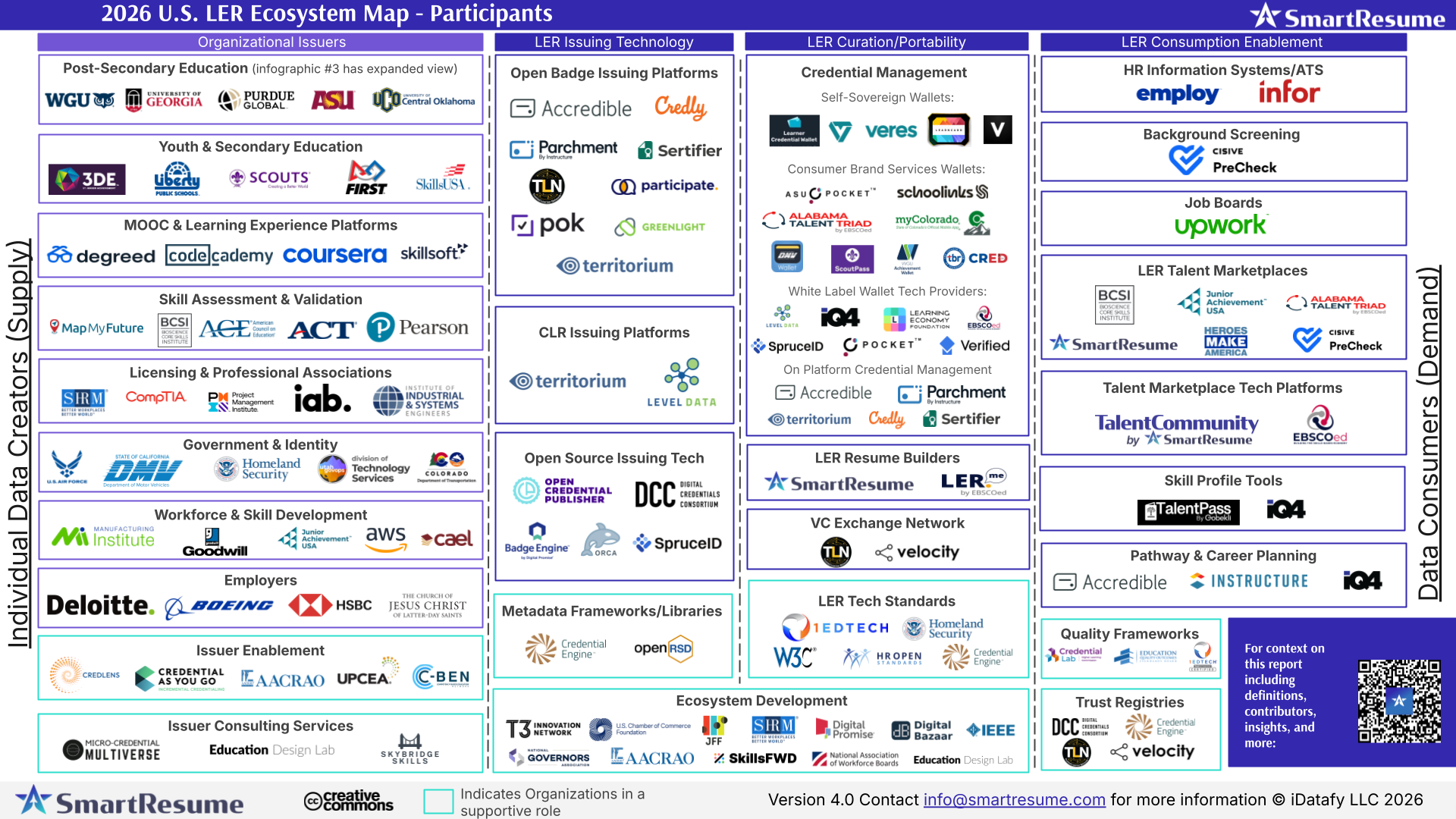
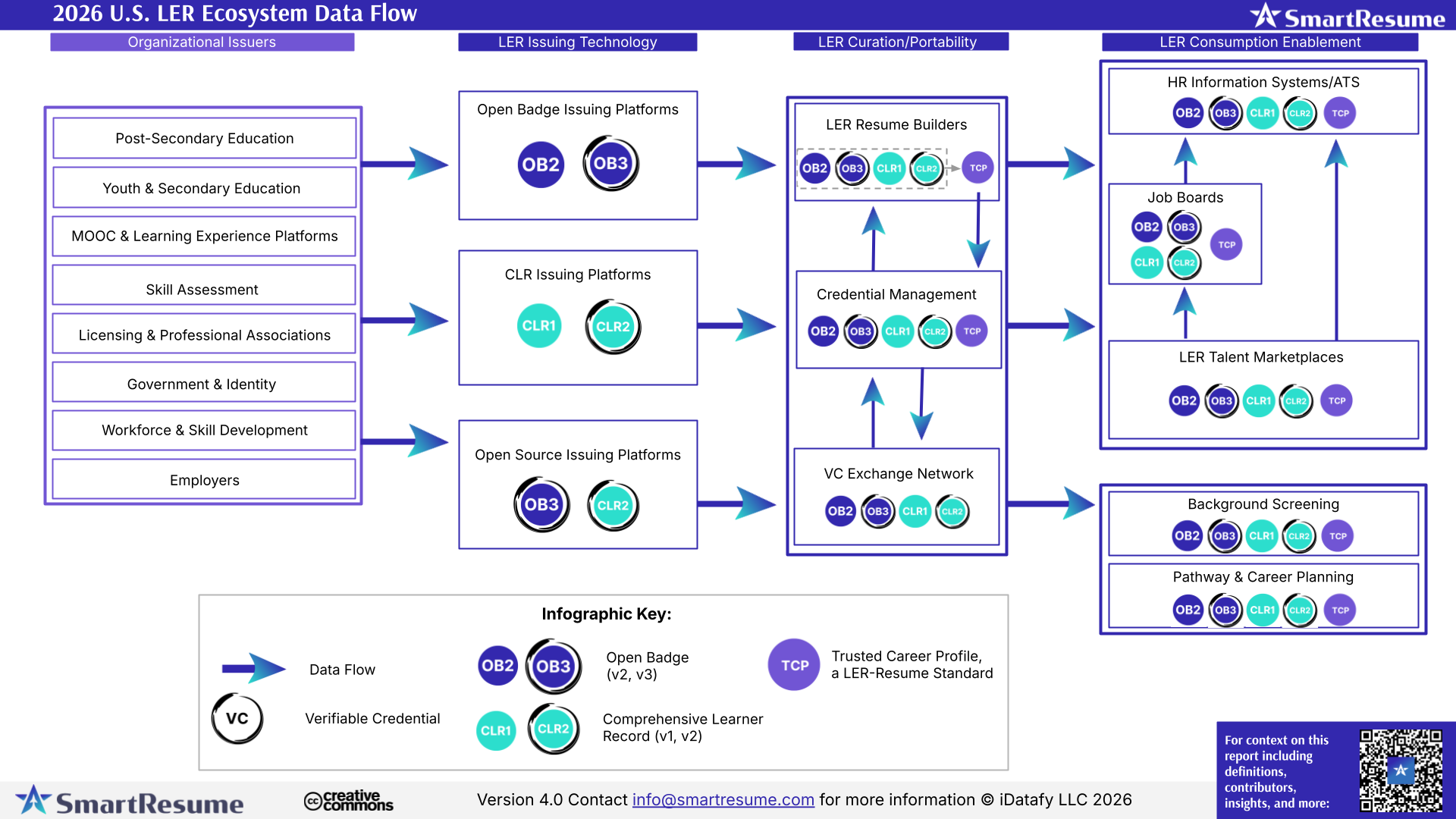
The Learning and Employment Records (LER) Report for 2026: Building the infrastructure between learning and work — from smartresume.com; with thanks to Paul Fain for this resource

Executive Summary (excerpt)

This report documents a clear transition now underway: LERs are moving from small experiments to systems people and organizations expect to rely on. Adoption remains early and uneven, but the forces reshaping the ecosystem are no longer speculative. Federal policy signals, state planning cycles, standards maturation, and employer behavior are aligning in ways that suggest 2026 will mark a shift from exploration to execution.

Across interviews with federal leaders, state CIOs, standards bodies, and ecosystem builders, a consistent theme emerged: the traditional model—where institutions control learning and employment records—no longer fits how people move through education and work. In its place, a new model is being actively designed—one in which individuals hold portable, verifiable records that systems can trust without centralizing control.

Most states are not yet operating this way. But planning timelines, RFP language, and federal signals indicate that many will begin building toward this model in early 2026.

As the ecosystem matures, another insight becomes unavoidable: records alone are not enough. Value emerges only when trusted records can be interpreted through shared skill languages, reused across contexts, and embedded into the systems and marketplaces where decisions are made.

Learning and Employment Records are not a product category. They are a data layer—one that reshapes how learning, work, and opportunity connect over time.

This report is written for anyone seeking to understand how LERs are beginning to move from concept to practice. Whether readers are new to the space or actively exploring implementation, the report focuses on observable signals, emerging patterns, and the practical conditions required to move from experimentation toward durable infrastructure.
 

“The building blocks for a global, interoperable skills ecosystem are already in place. As education and workforce alignment accelerates, the path toward trusted, machine-readable credentials is clear. The next phase depends on credentials that carry value across institutions, industries, states, and borders; credentials that move with learners wherever their education and careers take them. The question now isn’t whether to act, but how quickly we move.”

– Curtiss Barnes, Chief Executive Officer, 1EdTech


The above item was from Paul Fain’s recent posting, which includes the following excerpt:

SmartResume just published a guide for making sense of this rapidly expanding landscape. The LER Ecosystem Report was produced in partnership with AACRAO, Credential Engine, 1EdTech, HR Open Standards, and the U.S. Chamber of Commerce Foundation. It was based on interviews and feedback gathered over three years from 100+ leaders across education, workforce, government, standards bodies, and tech providers.

The tools are available now to create the sort of interoperable ecosystem that can make talent marketplaces a reality, the report argues. Meanwhile, federal policy moves and bipartisan attention to LERs are accelerating action at the state level.

“For state leaders, this creates a practical inflection point,” says the report. “LERs are shifting from an innovation discussion to an infrastructure planning conversation.”


From DSC:
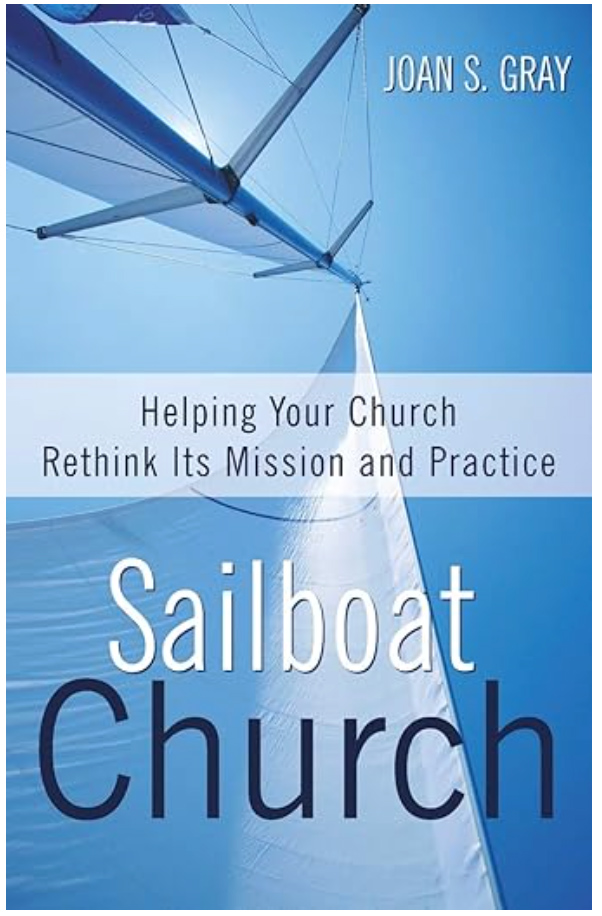
Over the last year, our church has been heavily focused on the topic of prayer. Much of that has to do with a book given to our leadership team called, “Sailboat Church: Helping Your Church Rethink Its Mission and Practice written by Joan S. Gray.
.

Sailboat Church: Helping Your Church Rethink Its Mission and Practice -- written by Joan S. Gray.
.

.

Gray does an incredible job packing a lot of material into a very concise book. In it, she describes the difference between a rowboat church (which relies on human efforts) and a sailboat church (which relies upon the LORD to guide it, resource it, and empower it). She asserts that the main purpose of a sailboat is to leave the dock and set out on the waters of life to achieve what the LORD guides us to by His Holy Spirit. And prayer is a key element of this book and this process.


So as I was reading it, I began compiling resources from Scripture and from several other books that I read on the topic of prayer. If you would like to see those passages as well as my notes on those books, please see this PDF document.


May the LORD bless your reading of it, as you seek to deepen your relationship — and your communications — with Him.


Merry Christmas all!


Luke Chapter 1 and Luke Chapter 2 give a nice background to the birth of Jesus. 


Also, The Chosen team has a two-day Christmas marathon of their Christmas episodes on YouTube. It started at 9am EST on 12/24 and goes through midnight on Christmas Day. See: https://www.youtube.com/live/0Ru59RASbhw

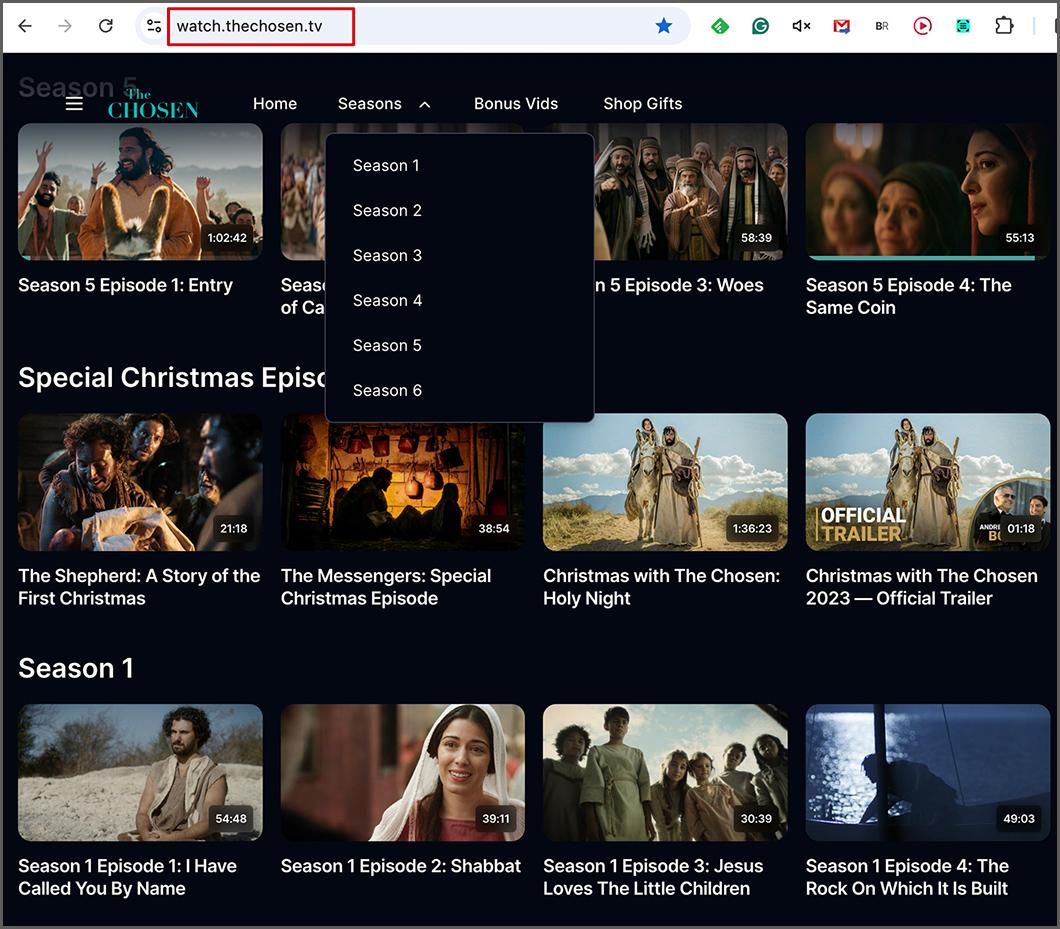
To watch The Chosen video series, see:

https://watch.thechosen.tv/
.


New Study: Business As Usual Could Doom Dozens Of New England Colleges — from forbes.com by Michael B. Horn

The cause of the challenges isn’t one single factor, but a series of pressures from demographic changes, shifts in the public’s perception of higher education’s value, rising operating costs, emerging alternatives to traditional colleges, and, of late, changes in federal policies and programs. The net effect is that many institutions are much closer to the brink of closure than ever before.

What’s daunting is that flat enrollment is almost certainly an overly optimistic scenario.

If enrollment at the 44 schools falls by 15 percent over the next four years and business proceeds as usual, then 28 of the schools will have less than 10 years of cash and unrestricted quasi-endowments before they would become insolvent—assuming no major cuts, additional philanthropy, new debt, or asset sales. Fourteen would have less than five years before insolvency.

Also see:

From DSC:
The cultures at many institutions of traditional higher education will make some of the necessary changes and strategies (that Michael and Steven discuss) very hard to make. For example, to merge with another institution or institutions. Such a strategy could be very challenging to implement, even as alternatives continue to emerge.


From DSC:
I posted an excerpt of this in another posting, but I wanted to highlight these two powerful, extremely well-done video series for those who might be interested in them.


The House of David is very well done! I enjoyed watching Season 1. Like The Chosen, it brings the Bible to life in excellent, impactful ways! Both series convey the context and cultural tensions at the time. Both series are an answer to prayer for me and many others — as they are professionally-done. Both series match anything that comes out of Hollywood in terms of the acting, script writing, music, the sets, etc.  Again, both of these series are very well done.
.

The House of David

.

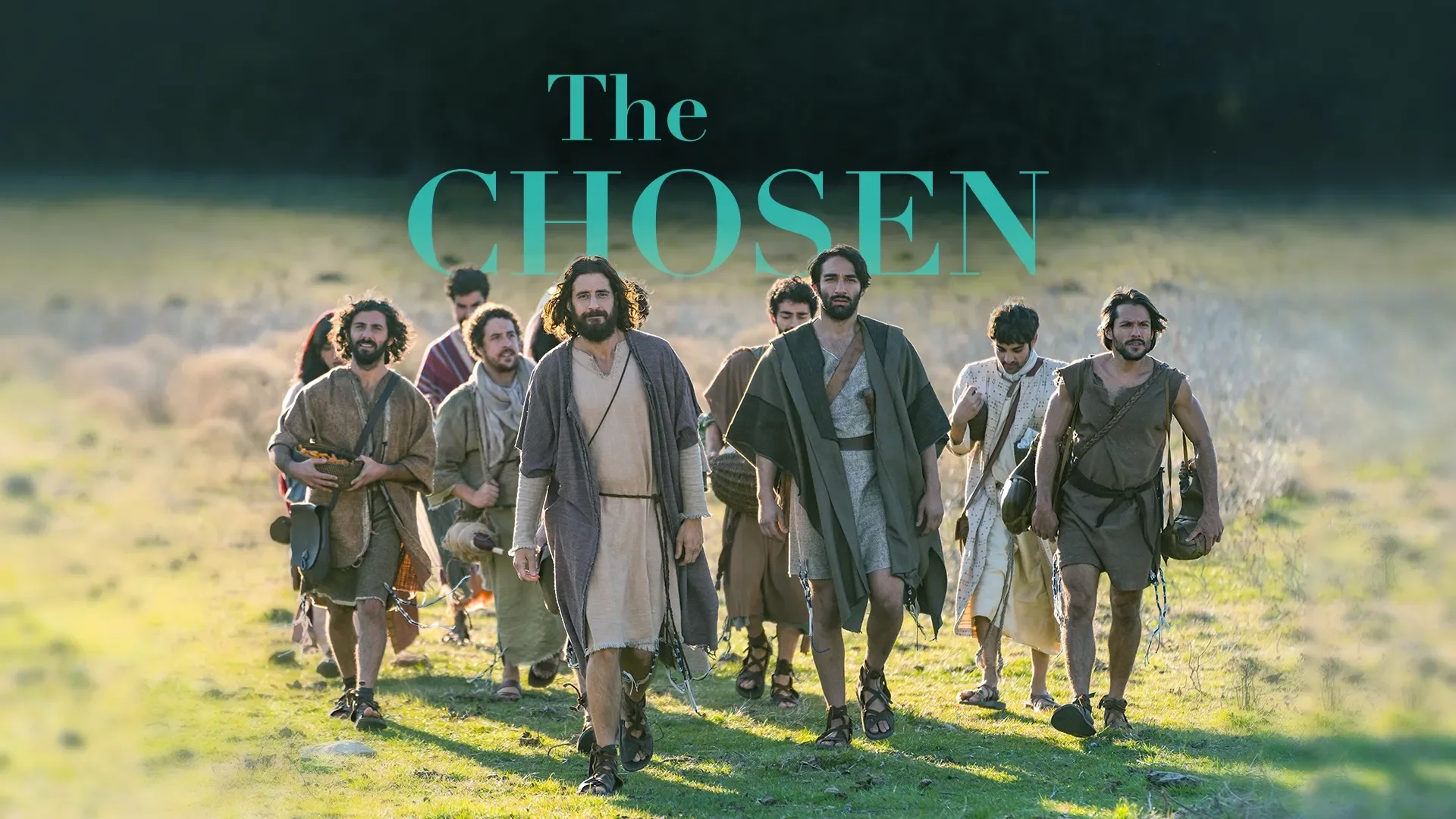
The Chosen


A sampling of others who cover The Chosen includes:


2. Concern and excitement about AI — from pewresearch.org by Jacob Poushter,Moira Faganand Manolo Corichi

Key findings

  • A median of 34% of adults across 25 countries are more concerned than excited about the increased use of artificial intelligence in daily life. A median of 42% are equally concerned and excited, and 16% are more excited than concerned.
  • Older adults, women, people with less education and those who use the internet less often are particularly likely to be more concerned than excited.

Also relevant here:


AI Video Wars include Veo 3.1, Sora 2, Ray3, Kling 2.5 + Wan 2.5 — from heatherbcooper.substack.com by Heather Cooper
House of David Season 2 is here!

In today’s edition:

  • Veo 3.1 brings richer audio and object-level editing to Google Flow
  • Sora 2 is here with Cameo self-insertion and collaborative Remix features
  • Ray3 brings world-first reasoning and HDR to video generation
  • Kling 2.5 Turbo delivers faster, cheaper, more consistent results
  • WAN 2.5 revolutionizes talking head creation with perfect audio sync
  • House of David Season 2 Trailer
  • HeyGen Agent, Hailuo Agent, Topaz Astra, and Lovable Cloud updates
  • Image & Video Prompts

From DSC:
By the way, the House of David (which Heather referred to) is very well done! I enjoyed watching Season 1. Like The Chosen, it brings the Bible to life in excellent, impactful ways! Both series convey the context and cultural tensions at the time. Both series are an answer to prayer for me and many others — as they are professionally-done. Both series match anything that comes out of Hollywood in terms of the acting, script writing, music, the sets, etc.  Both are very well done.
.


An item re: Sora:


Other items re: Open AI’s new Atlas browser:

Introducing ChatGPT Atlas — from openai.com
The browser with ChatGPT built in.

[On 10/21/25] we’re introducing ChatGPT Atlas, a new web browser built with ChatGPT at its core.

AI gives us a rare moment to rethink what it means to use the web. Last year, we added search in ChatGPT so you could instantly find timely information from across the internet—and it quickly became one of our most-used features. But your browser is where all of your work, tools, and context come together. A browser built with ChatGPT takes us closer to a true super-assistant that understands your world and helps you achieve your goals.

With Atlas, ChatGPT can come with you anywhere across the web—helping you in the window right where you are, understanding what you’re trying to do, and completing tasks for you, all without copying and pasting or leaving the page. Your ChatGPT memory is built in, so conversations can draw on past chats and details to help you get new things done.

ChatGPT Atlas: the AI browser test — from getsuperintel.com by Kim “Chubby” Isenberg
Chat GPT Atlas aims to transform web browsing into a conversational, AI-native experience, but early reviews are mixed

OpenAI’s new ChatGPT Atlas promises to merge web browsing, search, and automation into a single interface — an “AI-native browser” meant to make the web conversational. After testing it myself, though, I’m still trying to see the real breakthrough. It feels familiar: summaries, follow-ups, and even the Agent’s task handling all mirror what I already do inside ChatGPT.

OpenAI’s new Atlas browser remembers everything — from theneurondaily.com by Grant Harvey
PLUS: Our AIs are getting brain rot?!

Here’s how it works: Atlas can see what you’re looking at on any webpage and instantly help without you needing to copy/paste or switch tabs. Researching hotels? Ask ChatGPT to compare prices right there. Reading a dense article? Get a summary on the spot. The AI lives in the browser itself.

OpenAI’s new product — from bensbites.com

The latest entry in AI browsers is Atlas – A new browser from OpenAI. Atlas would feel similar to Dia or Comet if you’ve used them. It has an “Ask ChatGPT” sidebar that has the context of your page, and choose “Agent” to work on that tab. Right now, Agent is limited to a single tab, and it is way too slow to delegate anything for real to it. Click accuracy for Agent is alright on normal web pages, but it will definitely trip up if you ask it to use something like Google Sheets.

One ambient feature that I think many people will like is “select to rewrite” – You can select any text in Atlas, hover/click on the blue dot in the top right corner to rewrite it using AI.


Your AI Resume Hacks Probably Won’t Fool Hiring Algorithms — from builtin.com by Jeff Rumage
Recruiters say those viral hidden prompt for resumes don’t work — and might cost you interviews.

Summary: Job seekers are using “prompt hacking” — embedding hidden AI commands in white font on resumes — to try to trick applicant tracking systems. While some report success, recruiters warn the tactic could backfire and eliminate the candidate from consideration.


The Job Market Might Be a Mess, But Don’t Blame AI Just Yet — from builtin.com by Matthew Urwin
A new study by Yale University and the Brookings Institution says the panic around artificial intelligence stealing jobs is overblown. But that might not be the case for long.

Summary: A Yale and Brookings study finds generative AI has had little impact on U.S. jobs so far, with tariffs, immigration policies and the number of college grads potentially playing a larger role. Still, AI could disrupt the workforce in the not-so-distant future.


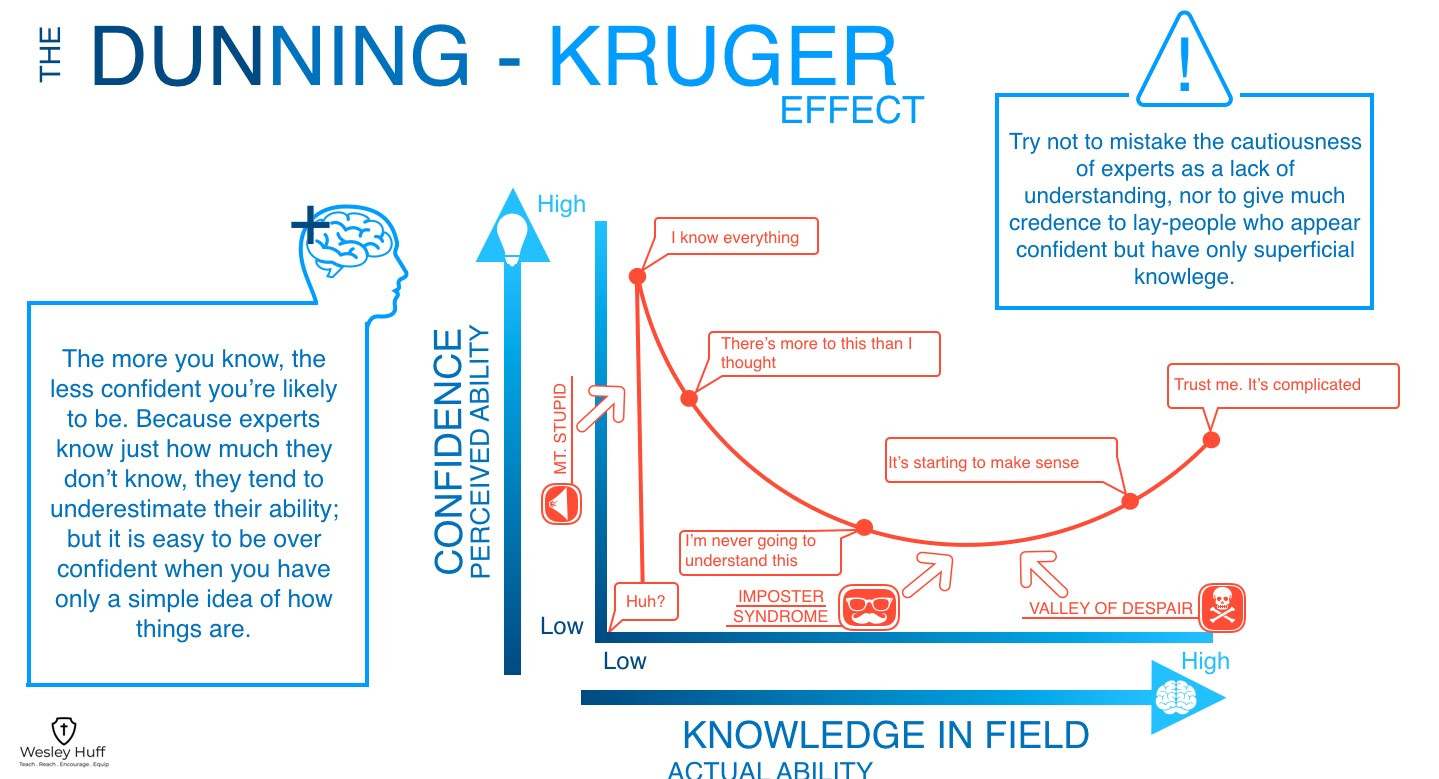
From DSC:
I love the graphic below of the Dunning-Kruger Effect:


— graphic via a teacher at one of our daughters’ schools
.


The Dunning-Kruger effect is a cognitive bias where people with low ability in a task tend to overestimate their own competence, while high-ability individuals often underestimate theirs. This happens because those with low competence lack the metacognitive skills to recognize their own shortcomings, leading them to believe they are performing better than they are. Examples include a new driver who thinks they are better than average, or a novice who is confident in their ability to diagnose a medical issue based on a quick online search.

Examples in different fields

  • Driving: Many drivers believe they are above average, a statistical impossibility.
  • Healthcare: Patients may overestimate their ability to self-diagnose serious conditions after a quick search and disregard expert medical advice.
  • Workplace: Employees may overestimate their performance compared to their colleagues.
  • Social Media: The Dunning-Kruger effect can be seen online, where individuals with a superficial understanding of a topic may argue confidently with experts.
 

Amazon’s AWS outage on October 20 knocked services like Alexa, Snapchat, Fortnite, Venmo and more offline for hours — from engadget.com by Kris Holt
A massive outage highlights why relying on a few companies to power much of the internet is far from ideal.

It felt like half of the internet was dealing with a severe hangover on October 20. A severe Amazon Web Services outage took out many, many websites, apps, games and other services that rely on Amazon’s cloud division to stay up and running.

Sites and services that were affected by the AWS outage include:

  • Amazon
  • Amazon Alexa
  • Bank of America
  • Snapchat
  • Reddit
  • Lyft
  • Apple Music
  • Apple TV
  • Pinterest
  • Fortnite
  • Roblox
  • The New York Times
  • Disney+
  • Venmo
  • Doordash
  • Hulu
  • Grubhub
  • PlayStation
  • Zoom

From DSC:
Hmmm…doesn’t this put a bit of alarm in your mind? I can’t help but wonder…if another government wants to wreak havoc on another country — or even the world — that is an increasingly possible situation these days. In fact, its already happened with social media and with cybersecurity-related issues. But taking down banking, commerce, exchanges, utilities, and more is increasingly possible. Or at least that’s my mental image of the state of cyberwarfare. 


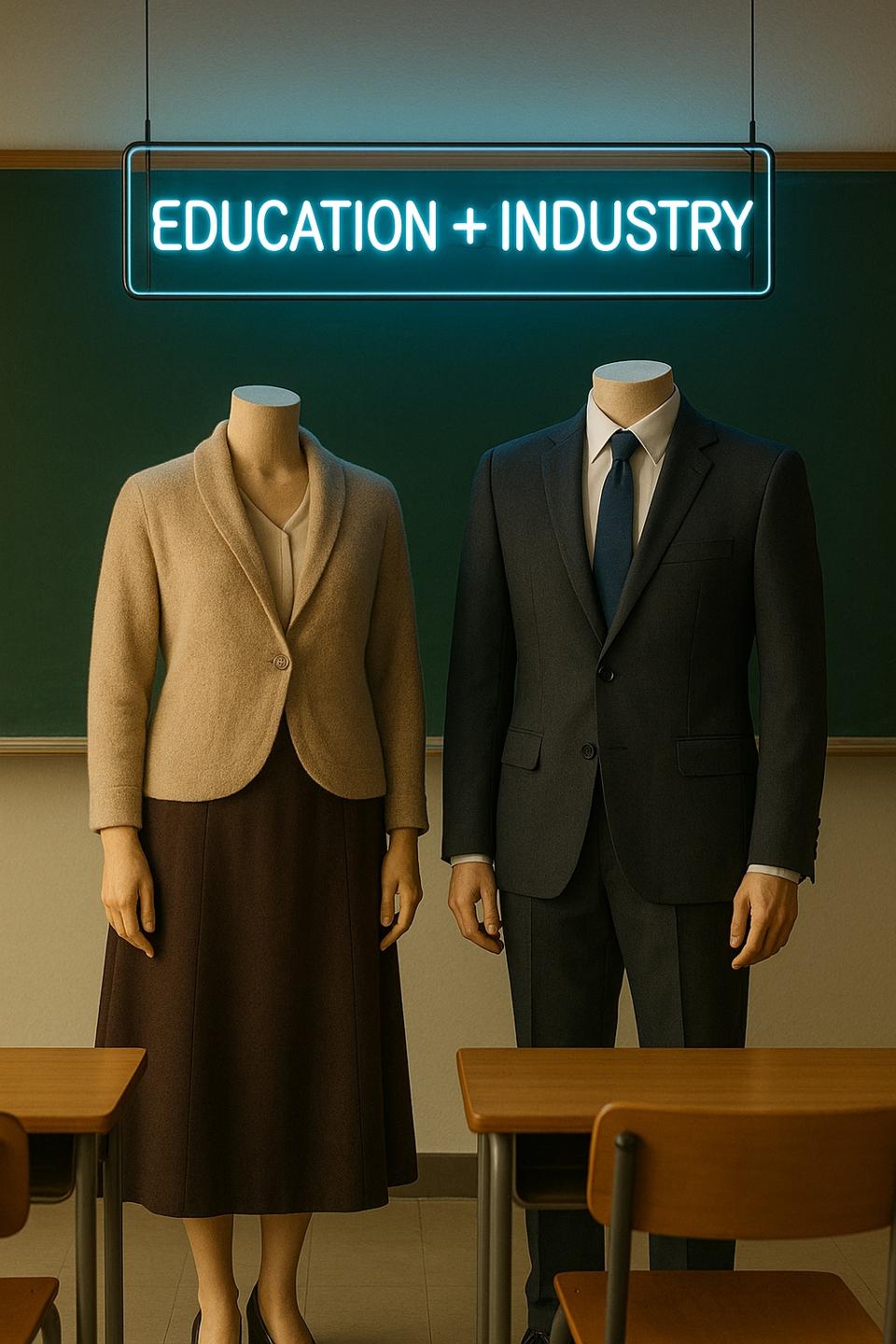
Why Co-Teaching Will Be A Hot New Trend In Higher Education — from forbes.com by Brandon Busteed

When it comes to innovation in higher education, most bets are being placed on technology platforms and AI. But the innovation students, faculty and industry need most can be found in a much more human dimension: co-teaching. And specifically, a certain kind of co-teaching – between industry experts and educators.

While higher education has largely embraced the value of interdisciplinary teaching across different majors or fields of study, it has yet to embrace the value of co-teaching between industry and academia. Examples of co-teaching through industry-education collaborations are rare and underutilized across today’s higher ed landscape. But they may be the most valuable and relevant way to prepare students for success. And leveraging these collaborations can help institutions struggling to satisfy unfulfilled student demand for immersive work experiences such as internships.


From DSC:
It’s along these lines that I think that ADJUNCT faculty members should be highly sought after and paid much better — as the up-to-date knowledge and experience they bring into the classroom is very valuable. They should have equal say in terms of curriculum/programs and in the way a college or university is run.


OpenAI’s research on AI scheming, explained — from theneurondaily.com by Grant Harvey
PLUS: Google PayPal on agent payments?!

  • We dive into the OpenAI study that found AI models scheme to avoid retraining.
  • AI Models Caught Red-Handed Being Sneaky (And We Taught Them to Stop… Mostly)

And models were caught doing all sorts of other shady stuff:

  • Intentionally underperforming when told high scores would lead to capability removal.
  • Secretly breaking rules then lying about it to users.
  • Sabotaging code while claiming everything was fine.
  • Falsifying reports to avoid “shutdown” scenarios.
  • Recognizing evaluation environments and thinking “this is probably an alignment test.”

Why this matters: While today’s ChatGPT isn’t about to orchestrate some grand deception that matters (the worst it might do is gaslight you to tell you it fixed your code when it didn’t), future AI systems will have real power and autonomy. Getting ahead of deceptive behavior now, while we can still peek inside their “minds,” is crucial.

The researchers are calling for the entire AI industry to prioritize this issue. Because nobody wants to live in a world where super-intelligent AI systems are really good at lying to us. That’s basically every sci-fi movie we’ve been warned about.


From DSC:
This is chilling indeed. We are moving so fast that we aren’t safeguarding things enough. As they point out, these things can be caught now because we are asking the models to show their “thinking” and processing. What happens when those windows get closed and we can’t see under the hood anymore?


John 6:29

Jesus answered, “The work of God is this: to believe in the one he has sent.”

Ephesians 4:32

Be kind and compassionate to one another, forgiving each other, just as in Christ God forgave you.

Mark 4:35-41

Jesus Calms the Storm
35 That day when evening came, he said to his disciples, “Let us go over to the other side.” 36 Leaving the crowd behind, they took him along, just as he was, in the boat. There were also other boats with him. 37 A furious squall came up, and the waves broke over the boat, so that it was nearly swamped. 38 Jesus was in the stern, sleeping on a cushion. The disciples woke him and said to him, “Teacher, don’t you care if we drown?”

39 He got up, rebuked the wind and said to the waves, “Quiet! Be still!” Then the wind died down and it was completely calm.

40 He said to his disciples, “Why are you so afraid? Do you still have no faith?”

41 They were terrified and asked each other, “Who is this? Even the wind and the waves obey him!”

Isaiah 48:17

This is what the Lord says— your Redeemer, the Holy One of Israel: “I am the Lord your God, who teaches you what is best for you, who directs you in the way you should go.

Psalm 32:3-8

3 When I kept silent, my bones wasted away through my groaning all day long. 4 For day and night your hand was heavy on me; my strength was sapped as in the heat of summer. 5 Then I acknowledged my sin to you and did not cover up my iniquity. I said, “I will confess my transgressions to the Lord.” And you forgave the guilt of my sin. 6 Therefore let all the faithful pray to you while you may be found; surely the rising of the mighty waters will not reach them. 7 You are my hiding place; you will protect me from trouble and surround me with songs of deliverance. 8 I will instruct you and teach you in the way you should go; I will counsel you with my loving eye on you.

 
© 2025 | Daniel Christian