How AI will change Education: Part I | Transcend Newsletter #59 — from transcend.substack.com by Alberto Arenaza; with thanks to GSV’s Big 10 for this resource

Excerpt:

You’ve likely been reading for the last few minutes my arguments for why AI is going to change education. You may agree with some points, disagree with others…

Only, those were not my words.

An AI has written every single word in this essay up until here.

The only thing I wrote myself was the first sentence: Artificial Intelligence is going to revolutionize education. The images too, everything was generated by AI.


HundrED Global Collection 2023 — from hundred.org
Meet the 100 most impactful innovations that are changing the face of education in a post-COVID world.
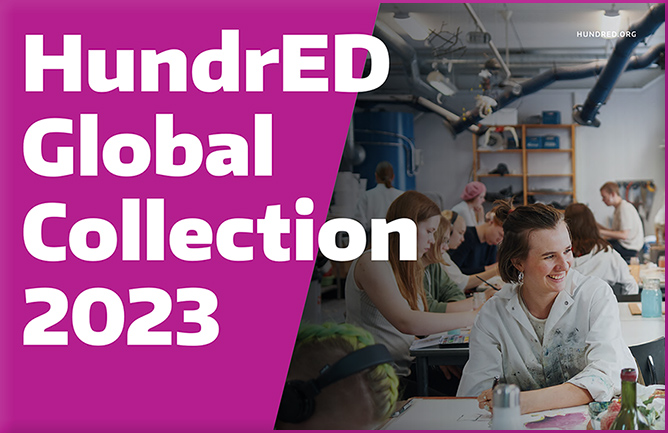
The HundrED Global Collection 2023

Excerpt:

The year 2022 has been a year to look to the future, as the global education conversation moves again toward themes of education transformation and the futures of education. The 100 innovations selected for this year’s global collection are impacting the lives of over 95 million students worldwide. The collection highlights the important role of teachers in education innovation; the continued need for students to develop 21st century skills, including social and emotional learning; an increasing focus on student wellbeing and mental health; and equity in education.

For more information, download the full Global Collection 2023 report.
You can also browse the innovation pages of the selected innovators here.
.

From DSC:
Here’s an excerpt of the email I received today from EducationHQ out of Australia — though I think it applies here in the United States as well:

.

Amplify and value teachers’ voice in education policymaking: researchers — from educationhq.com
Amplify and value teachers’ voice in education policymaking: researchers
Excerpt:

Monash University’s Teachers’ Perceptions of their Work Survey has revealed teachers’ waning satisfaction in their role and highlighted their…

Also from educationhq.com

Teachers changed my life: Trauma-informed education shows kids they matter — from educationhq.com by Beck Thompson
.

Nonprofit Bringing Businesses to Life in the Classroom — to the Tune of $400,000 — from the74million.org by Tim Newcomb
Making candles out of crayons, building birdhouses, fashioning furniture: Real World Scholars has helped 50,000 students become entrepreneurs

Not much entices a second grader to skip out on recess to get back to schoolwork. But excitement around a classroom-run business can do just that, especially when it means creating candles out of crayons and selling them in the local community.

Students design their ideal urban home in My ArchiSchool exhibition — from dezeen.com

Students were able to bring family members to the exhibition. Architectural model by Ethan Chan

Excerpt:

Promotion: fifty-two students presented digital designs and architectural models of their ideal home as part of Hong Kong-based education institute My ArchiSchool’s latest exhibition. As part of the exhibition, My ArchiSchool students were asked to design their ideal home within an urban environment. The exhibition, which took place on 2 October 2022 at the Sky100 on the 100th floor of the International Commerce Centre in Hong Kong, showcased photomontages of digital designs presented alongside physical models.

5 Resources that help students become digital citizens — from rdene915.com by Rachelle Dene Poth

Excerpt:

We need to create opportunities for students to become more digitally aware and literate, and to be responsible when using technology. There are many ways to do this, depending on our content area and grade level. We can model best practices for our students, bring in a specific digital citizenship curriculum to guide them through their learning, or use digital tools and resources available to have students explore and create.

Helping students learn to safely navigate what has become a highly digital world is something that we are all responsible for. Students need to be aware of the impact of their posts online, how to create and manage social accounts and protect their information, and how to properly access and use resources they obtain through technology.

3 Reasons School and District Leaders Should Get on Social Media — from edweek.org by Marina Whiteleather

Excerpt:

School and district leaders can—and should—be using social media in their work.

That’s the message shared by Stephanie McConnell, a superintendent in the Hawkins Independent School District in Texas, and Salome Thomas-El, a K-8 principal in Delaware, during an Education Week K-12 Essentials forum on Oct. 13.

At the event, McConnell and Thomas-El provided insights and advice for school leaders who are hesitant to post on certain social platforms or unsure how to use them.


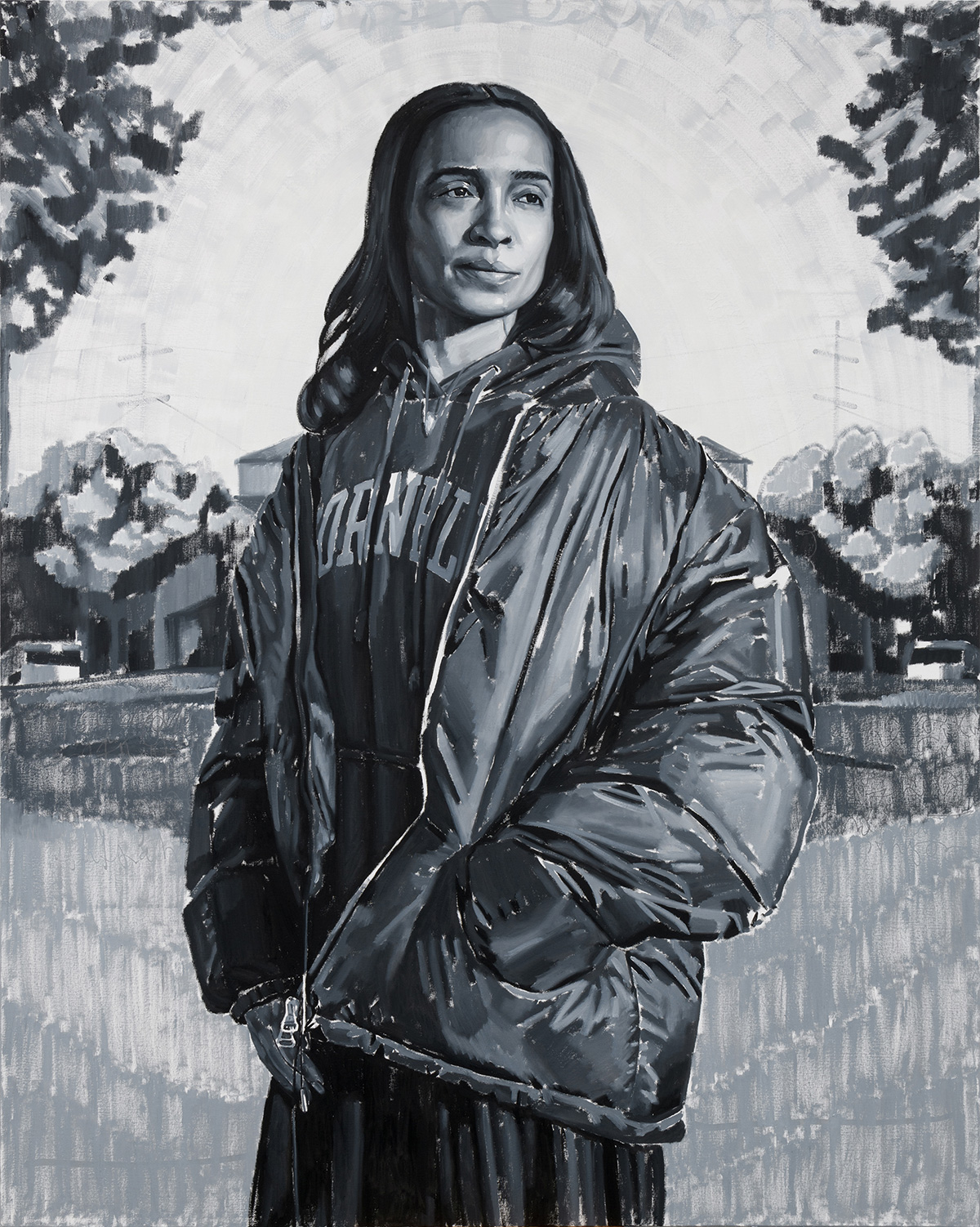
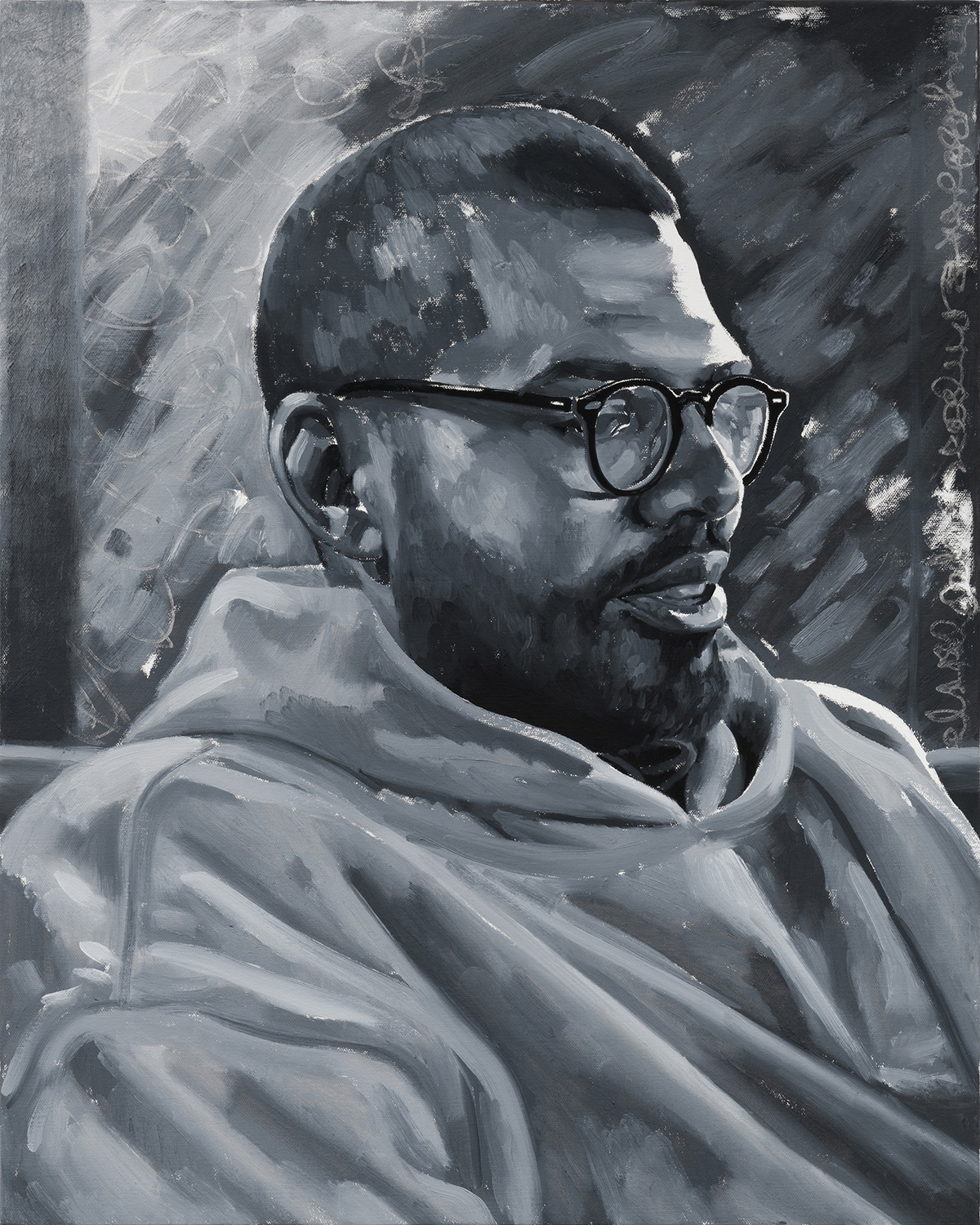
“Eight Artworks” by Artist Kohshin Finley


10 Websites to Have Fun With Your Photos — from Hongkiat.com

Excerpt:

Getting a little bored with how your photos are presented online? How about injecting some fun and humor into it? You don’t really need to be Photoshop literate to edit and add effects to your photos. There’re some really great sites out there that allow you to add effects to your photo by using their existing effect templates.

The best part is – they are free, output is shown immediately on the fly,, and no installation of apps is required. Here’s a collection of ten websites to have fun with your photos, we’ve come to know. You know they don’t really have to be your photos 🙂


From DSC:
This is another area where the slow pace of the American legal system is having a negative effect. The American Bar Association and the majority of the law school graduates (i.e., those who passed the Bar and have been practicing law in one form or another) for the last 30 years have a lot to do with this situation. They have stimied innovation and have protected their turf — at the increasing expense of the American people. 

Online learning has been going on since the late 1990’s, yet the ABA STILL doesn’t let law schools have 100% online-based learning without their special consent. 


Artists say AI image generators are copying their style to make thousands of new images — and it’s completely out of their control — from businessinsider.com by Beatrice Nolan

Excerpt:

  • OpenAI, a company founded by Elon Musk, just made its DALL-E image generator open to the public.
  • Artists say they work for years on their portfolios and people can now make copycat images in seconds.
  • But some AI companies argue that the new artworks are unique and can be copyrighted.

People are creating thousands of artworks that look like his using programs called AI-image generators, which use artificial intelligence to create original artwork in minutes or even seconds after a user types in a few words as directions.

Rutkowski’s name has been used to generate around 93,000 AI images on one image generator, Stable Diffusion — making him a far more popular search term than Picasso, Leonardo Da Vinci, and Vincent van Gogh in the program.


The 5 Biggest Artificial Intelligence (AI) Trends In 2023 — from forbes.com by Bernard Marr

Excerpt:

Today, the technology most commonly used to achieve AI is machine learning – advanced software algorithms designed to carry out one specific task, such as answering questions, translating languages or navigating a journey – and become increasingly good at it as they are exposed to more and more data.

Worldwide, spending by governments and business on AI technology will top $500 billion in 2023, according to IDC research. But how will it be used, and what impact will it have? Here, I outline what I believe will be the most important trends around the use of AI in business and society over the next 12 months.


Also relevant/see:


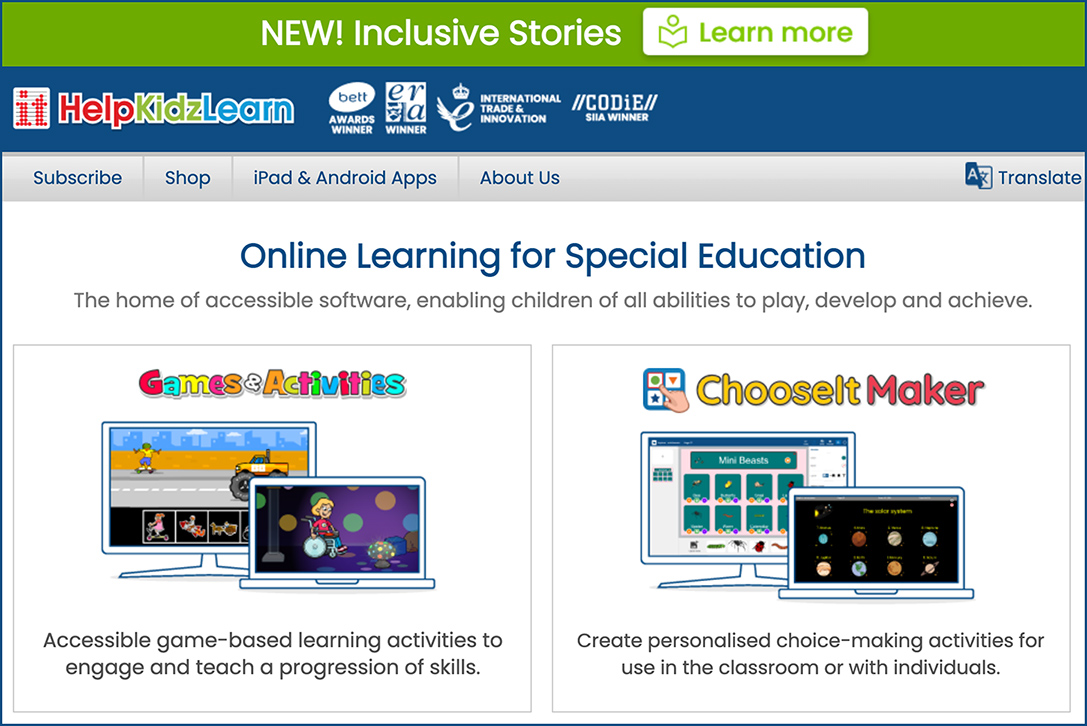
Assistive Technology for Kids with Multiple Disabilities — from equalentry.com

Help Kids Learn dot com -- online learning for special education -- uses assistive technologies


Lego Owner to Acquire Education-Technology Firm Brainpop — from nytimes.com by Trefor Moss
Kirkbi, the family-run company behind the world’s largest toy maker, plans to establish an education business

Excerpt:

Lego owner Kirkbi A/S is buying U.S. video-learning firm Brainpop for $875 million, according to the companies, as the family behind the world’s largest toy maker expands into the education business.

The Danish company said the purchase of Brainpop, which produces short animations used in schools to help children learn everything from math to music, was part of a plan to build a new business pillar. The deal—through which Kirkbi is acquiring Brainpop’s owner FWD Media Inc.—is expected to close Tuesday, the companies said.

“We are definitely on the path to establishing the Lego idea of learning through play in the formal education space,” said Jørgen Vig Knudstorp, executive chairman of the Lego Brand Group, the Kirkbi entity that oversees the toy brand.


What might the ramifications be for text-to-everything? [Christian]

From DSC:

  • We can now type in text to get graphics and artwork.
  • We can now type in text to get videos.
  • There are several tools to give us transcripts of what was said during a presentation.
  • We can search videos for spoken words and/or for words listed within slides within a presentation.

Allie Miller’s posting on LinkedIn (see below) pointed these things out as well — along with several other things.


This raises some ideas/questions for me:

  • What might the ramifications be in our learning ecosystems for these types of functionalities? What affordances are forthcoming? For example, a teacher, professor, or trainer could quickly produce several types of media from the same presentation.
  • What’s said in a videoconference or a webinar can already be captured, translated, and transcribed.
  • Or what’s said in a virtual courtroom, or in a telehealth-based appointment. Or perhaps, what we currently think of as a smart/connected TV will give us these functionalities as well.
  • How might this type of thing impact storytelling?
  • Will this help someone who prefers to soak in information via the spoken word, or via a podcast, or via a video?
  • What does this mean for Augmented Reality (AR), Mixed Reality (MR), and/or Virtual Reality (VR) types of devices?
  • Will this kind of thing be standard in the next version of the Internet (Web3)?
  • Will this help people with special needs — and way beyond accessibility-related needs?
  • Will data be next (instead of typing in text)?

Hmmm….interesting times ahead.


Artificial Intelligence in Video Production — from provideocoalition.com by Iain Anderson

Introduction

Artificial Intelligence has promised so much for so long, and in many ways, it’s been less than perfect. Siri doesn’t quite understand what you’re asking; Google Translate can’t yet seamlessly bridge the gap between languages, and navigation software still doesn’t always offer an accurate route. But it’s getting pretty good. While a variety of AI-based technologies have been improving steadily over the past several years, it’s the recent giant strides made in image generation that’s potentially groundbreaking for post production professionals. Here, I’ll take you through the ideas behind the tech, along with specific examples of how modern, smart technology will change your post workflow tomorrow, or could today.

Also relevant/see:


Artist Spotlight: Aglaé Bassens

Artist Spotlight: Aglaé Bassens — from booooooom.com

Artist Spotlight: Kyle Scott — from booooooom.com


This Uncensored AI Art Tool Can Generate Fantasies—and Nightmares — from wired.com by Will Knight
Open source project Stable Diffusion allows anyone to conjure images with algorithms, but some fear it will be used to create unethical horrors.

Excerpt:

Image generators like Stable Diffusion can create what look like real photographs or hand-crafted illustrations depicting just about anything a person can imagine. This is possible thanks to algorithms that learn to associate the properties of a vast collection of images taken from the web and image databases with their associated text labels. Algorithms learn to render new images to match a text prompt in a process that involves adding and removing random noise to an image.

Also relevant/see:

There’s a text-to-image AI art app for Mac now—and it will change everything — from fastcompany.com by Jesus Diaz
Diffusion Bee harnesses the power of the open source text-to-image AI Stable Diffusion, turning it into a one-click Mac App. Brace yourself for a new creativity Big Bang.


Speaking of AI, also see:


Five Impossible Figure Illusions — from theawesomer.com

Speaking of creativity, check these other ones out as well!

Everyday Objects and Buildings Float Atmospherically in Cinta Vidal’s Perception-Bending Murals — from by Kate Mothes and Cinta Vidal

“Public Space” (August 2022) in Toftlund, Denmark, curated by Kunstbureau Kolossal. All images © Cinta Vidal


Artist Spotlight: Arthur Maslard a.k.a. Ratur — from booooooom.com


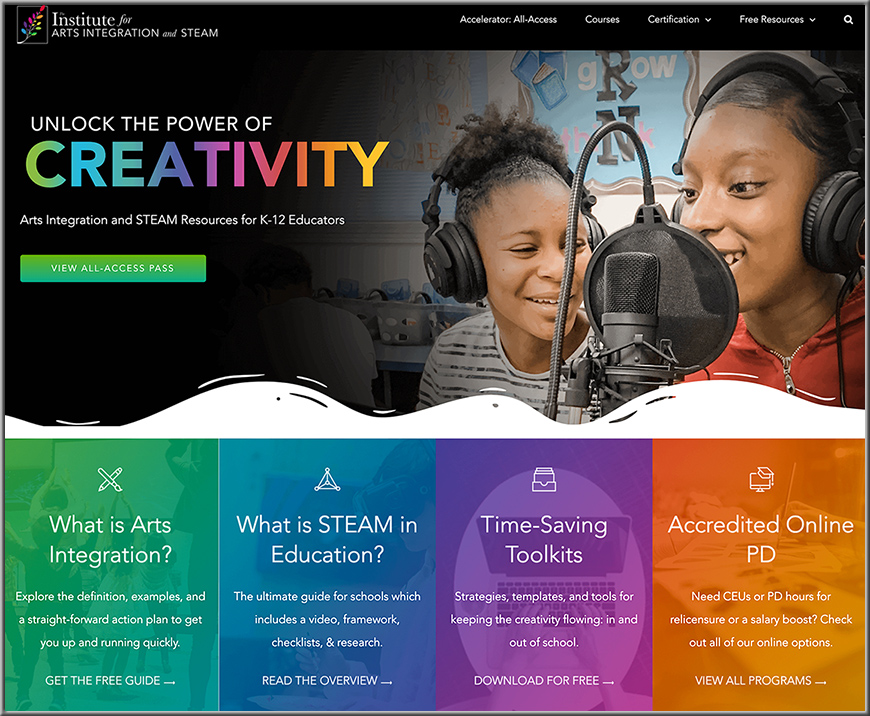
Arts Integration and STEAM Resources for K-12 Educators

Unlock the power of creativity -- arts integration and STEAM resources for K-12 educators

Official Trailer (Art Works for Teachers)

Excerpt:

Introducing the Art Works for Teacher Podcast Trailer! Get a quick sneak peek at what you can expect from this new show, launching September 22, 2022. New episodes will be available each Thursday on your favorite podcast platform, on YouTube, and right here on our site.


From DSC:
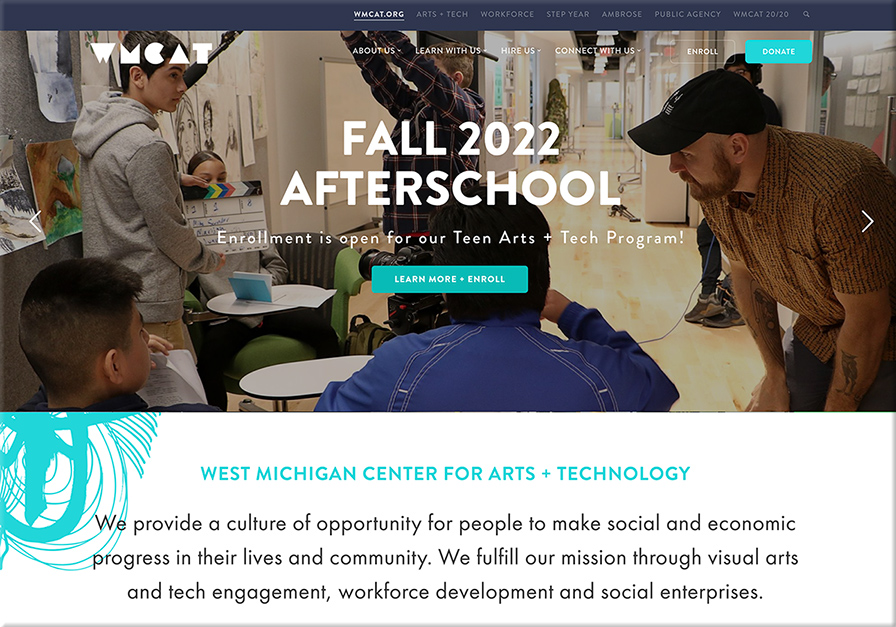
Along these lines, also see WEST MICHIGAN CENTER FOR ARTS + TECHNOLOGY. Such a learning environment builds skills and creativity while supercharging participation and engagement!


© 2025 | Daniel Christian