Gartner reveals the top 3 emerging technologies from 2016 — from information-age.com by Nicholas Ismail Technology is advancing at such a rapid rate that businesses are almost being forced to embrace emerging technologies in order to stay competitive
Excerpt:
Emerging technologies are fast becoming the tools with the highest priority for organisations facing rapidly accelerating digital business innovation.
Their selection was based on what technologies will have the most impact and lead to the most competitive advantage, while establishing when these big technologies are going to mature (early stage or saturating).
Gartner’s research director Mike Walker said the hype cycle specifically focuses on the set of technologies that are showing promise in delivering a high degree of competitive advantage over the next five to ten years.
Information Age spoke to Mike Walker to gain a further insight into these three technologies, and their future business applications.
Smart machine technologies will be the most disruptive class of technologies over the next 10 years, including smart robots, autonomous cars and smart workspaces
Description:
A new wave of compute technology -fueled by; big data analytics, the internet of things, augmented reality and so on- will change the way we live and work to be more immersive and natural with technology in the role as partner.
We haven’t even scratched the surface of the things technology can do to further human progress. Education is the next major frontier. We already have PC- and smartphone-enabled students, as well as tech-enabled classrooms, but the real breakthrough will be in personalized learning.
Every educator divides his or her time between teaching and interacting. In lectures they have to choose between teaching to the smartest kid in the class or the weakest. Efficiency (and reality) dictates that they must teach to the theoretical median, meaning some students will be bored and some will still struggle. What if a digital assistant could step in to personalize the learning experience for each student, accelerating the curriculum for the advanced students and providing greater extra support for those that need more help? The digital assistant could “sense” and “learn” that Student #1 has already mastered a particular subject and “assign” more advanced materials. And it could provide additional work to Student #2 to ensure that he or she was ready for the next subject. Self-paced learning to supplant and support classroom learning…that’s the next big advancement.
From DSC:
I read the article mentioned below. It made me wonder how 3 of the 4 main highlights that Fred mentioned (that are coming to Siri with tvOS 10) might impact education/training/learning-related applications and offerings made possible via tvOS & Apple TV:
Live broadcasts
Topic-based searches
The ability to search YouTube via Siri
The article prompted me to wonder:
Will educators and trainers be able to offer live lectures and training (globally) that can be recorded and later searched via Siri?
What if second screen devices could help learners collaborate and participate in active learning while watching what’s being presented on the main display/”TV?”
What if learning taken this way could be recorded on one’s web-based profile, a profile that is based upon blockchain-based technologies and maintained via appropriate/proven organizations of learning? (A profile that’s optionally made available to services from Microsoft/LinkedIn.com/Lynda.com and/or to a service based upon IBM’s Watson, and/or to some other online-based marketplace/exchange for matching open jobs to potential employees.)
Or what if you could earn a badge or prove a competency via this manner?
Hmmm…things could get very interesting…and very powerful.
More choice. More control. Over one’s entire lifetime.
The forthcoming update to Apple TV continues to bring fresh surprises for owners of Apple’s set top box. Many improvements are coming to tvOS 10, including single-sign-on support and an upgrade to Siri’s capabilities. Siri has already opened new doors thanks to the bundled Siri Remote, which simplifies many functions on the Apple TV interface. Four main highlights are coming to Siri with tvOS 10, which is expected to launch this fall.
CBS today announced the launch of an all-new Apple TV app that will center around the network’s always-on, 24-hour “CBSN” streaming network and has been designed exclusively for tvOS. In addition to the live stream of CBSN, the app curates news stories and video playlists for each user based on previously watched videos.
The new app will also take advantage of the 4th generation Apple TV’s deep Siri integration, allowing users to tell Apple’s personal assistant that they want to “Watch CBS News” to immediately start a full-screen broadcast of CBSN. While the stream is playing, users can interact with other parts of the app to browse related videos, bookmark some to watch later, and begin subscribing to specific playlists and topics.
ISTE 2016: Michio Kaku says education needs a revolution — from by Jena Passut The theoretical physicist says a fourth wave of technology is about to begin, and educators must prepare students to thrive in the new landscape.
Excerpt (emphasis DSC):
There have been three major waves of technology: steam power and locomotive, electricity and automobile, and high tech, Kaku said. We are about to enter a fourth wave — biotechnology, nanotechnology and artificial intelligence — that will drive the economy, he said.
How should educators respond when computers become part of the wallpaper and Internet-enabled contact lenses make information accessible at the blink of an eye?
“I don’t just want my students to learn,” she said. “I want them to want to learn.”
DENVER -June 26, 2016 -At today’s ISTE 2016 opening general session, the International Society for Technology in Education (ISTE®) and Microsoft Corp. announced they plan to combine and expand a host of their world-class initiatives to ensure educators and school leaders around the world have access to school planning and professional development resources. This collaboration stems from a shared belief that technology has the power to transform learning, and can do so most effectively when it’s embedded in how a school or educator thinks about and drives new learning opportunities.
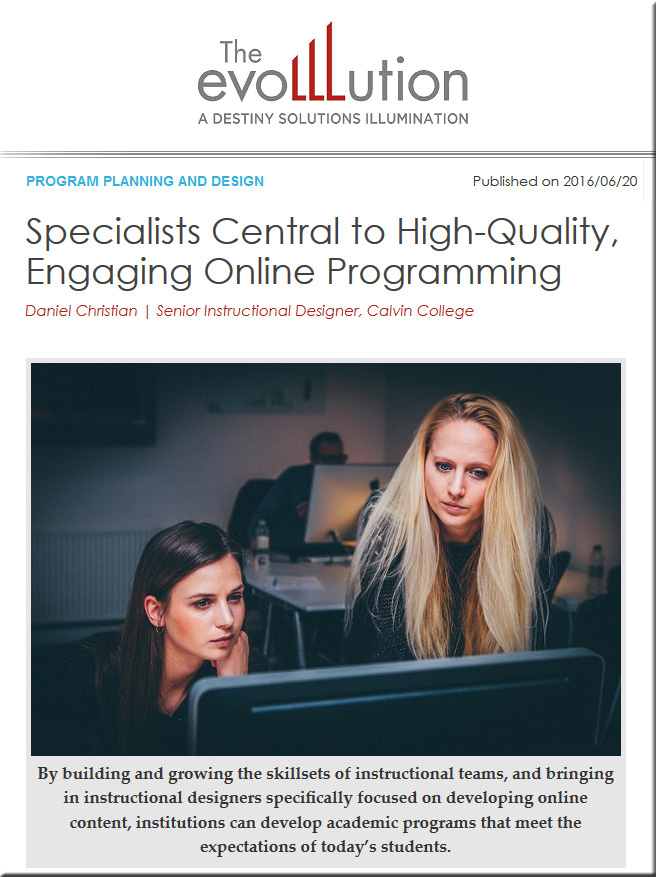
Creating high-quality online courses is getting increasingly complex—requiring an ever-growing set of skills. Faculty members can’t do it all, nor can instructional designers, nor can anyone else. As time goes by, new entrants and alternatives to traditional institutions of higher education will likely continue to appear on the higher education landscape—the ability to compete will be key.
…
For example, will there be a need for the following team members in your not-too-distant future?
Human Computer Interaction (HCI) Specialists: those with knowledge of how to leverage Virtual Reality (VR), Augmented Reality (AR), and Mixed Reality (MR) in order to create fun and engaging learning experiences (while still meeting the learning objectives)
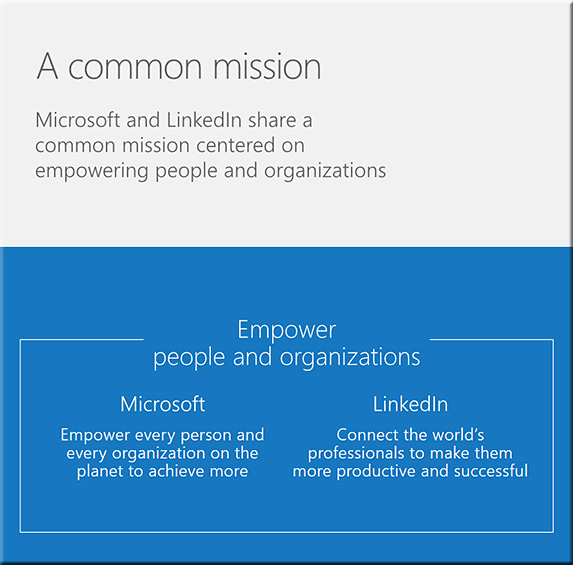
Today [6/13/16] we are excited to share that LinkedIn has entered into an agreement to be acquired by Microsoft. We are joining forces with Microsoft to realize a common mission to empower people and organizations. LinkedIn’s vision – to create economic opportunity for every member of the global workforce – is not changing and our members still come first.
Our companies are the world’s leading professional cloud and network. This deal will allow us to keep growing, investing in and innovating on LinkedIn to drive value for our members and our customers. Our members will continue to develop their skills, find a job and be great at that job, using our platform. We will continue to help our customers hire top talent, market their brand, and sell to their customers.
From DSC: It’s interesting to reflect upon what this acquisition could mean and what it could bring to the workplace/career development table.
LinkedIn.com purchased/acquired Lynda.com (announced in April 2015), a growing/thriving (online-based learning) training and development company who can deliver lifelong learning and credentials to people…which continues to help people reinvent themselves.
LinkedIn.com is working on an economic graph, a digital mapping of the global economy…building a database/marketplace of job openings and people who can fill those jobs.
What is the Economic Graph?
The Economic Graph is, in short, a digital mapping of the global economy. It will include a profile for every one of the 3 billion members of the global workforce, enabling them to represent their professional identity and subsequently find and realize their most valuable opportunities. It will include a profile for every company in the world, who you know at those companies up to three degrees to help you get your foot in the door, and the product and services those companies offer to enable you to be more productive and successful. It will digitally represent every economic opportunity offered by those companies, full-time, temporary and volunteer, and every skill required to obtain those opportunities. It will include a digital presence for every higher education organization in the world that can help members obtain those skills. And it will overlay the professionally relevant knowledge of every one of those individuals, companies, and universities to the extent that they want to publicly share it. Learn more about the Economic Graph and join the discussion.
Now Microsoft is purchasing/acquiring LinkedIn.com and the data/endeavors/technologies/platforms LinkedIn.com has been working on.
(Add to that the fact that Microsoft has been working on artificial intelligence (AI), personal assistants (i.e., Cortana). It has been working on other forms of HCI as well, such as HoloLens.)
Therefore, some questions come to my mind:
Will the purchase of LinkedIn.com now add a potentially huge new reason to choose their platform/ecosystem as well? In fact, Microsoft could be expanding their platform/ecosystem — or creating a new platform — to take advantage of using AI, personal assistants, and big data to play the ultimate match maker in the workplace.
Will freelancers utilize their services to find work? (The use of freelancing continues to grow; already in the mid-30 percents of the American workforce now.)
Will Microsoft be a source of cloud-based learner profiles?
Will Microsoft now get into the credentialing business? Will Microsoft employ blockchain-based technologies? (Higher ed, take note if so.)
How will badges/badging play into this platform?
Will Microsoft work with companies to offer assessments into whether person A can be successful in position B?
He said that buy buying LinkedIn’s professional network:
“It helps us differentiate our CRM product with social selling. It helps us take Dynamics into new spaces like human capital management with recruiting, and learning, and talent management.”
He later told analysts that connecting LinkedIn data with Dynamics [Microsoft’s suite of business management software] is “where the magic starts to happen.”
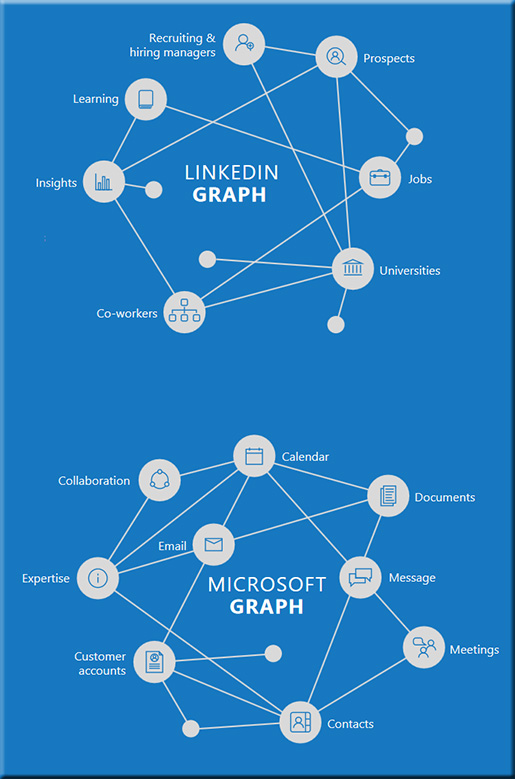
Think about it: How people find jobs, build skills, sell, market and get work done and ultimately find success requires a connected professional world.It requires a vibrant network that brings together a professional’s information in LinkedIn’s public network with the information in Office 365 and Dynamics. This combination will make it possible for new experiences such as a LinkedIn newsfeed that serves up articles based on the project you are working on and Office suggesting an expert to connect with via LinkedIn to help with a task you’re trying to complete. As these experiences get more intelligent and delightful, the LinkedIn and Office 365 engagement will grow.And in turn, new opportunities will be created for monetization through individual and organization subscriptions and targeted advertising.
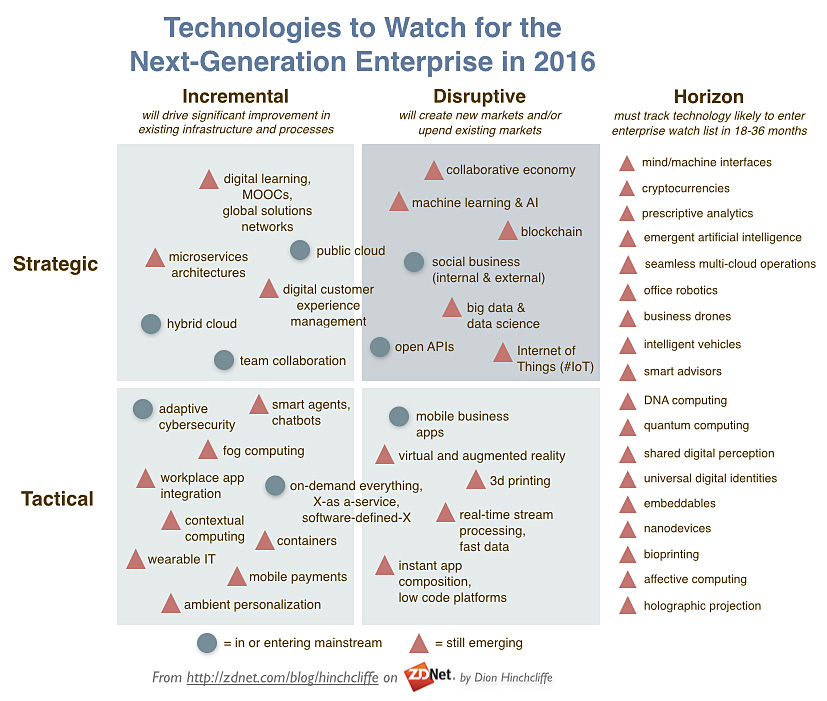
The enterprise technologies to watch in 2016 — from zdnet.com by Dion Hinchcliffe While enterprise technology has always been somewhat a breed apart from consumer tech, this year we see that consumer tech will definitively set the agenda for businesses like never before in this year’s list of tech to watch.
Excerpts:
This year’s round-up of enterprise technologies to watch in 2016 is more crowded than ever. This is partly due to the fact that there’s just more new tech this year, and partly because the consumer-focused side of the technology industry is creating ever more disruptive advances that enterprises are simply required to face more quickly to maintain their relevancy in the market.
There are several new additions to the list this year that — despite rampant overuse of the term these days — hold the potential to be genuinely disruptive in the short term. These include blockchain, digital/customer experience management, and real-time stream processing, or fast data.
…
The enterprise technologies to watch in 2016:
Microservices architectures
Digital learning, MOOCs, global solutions networks
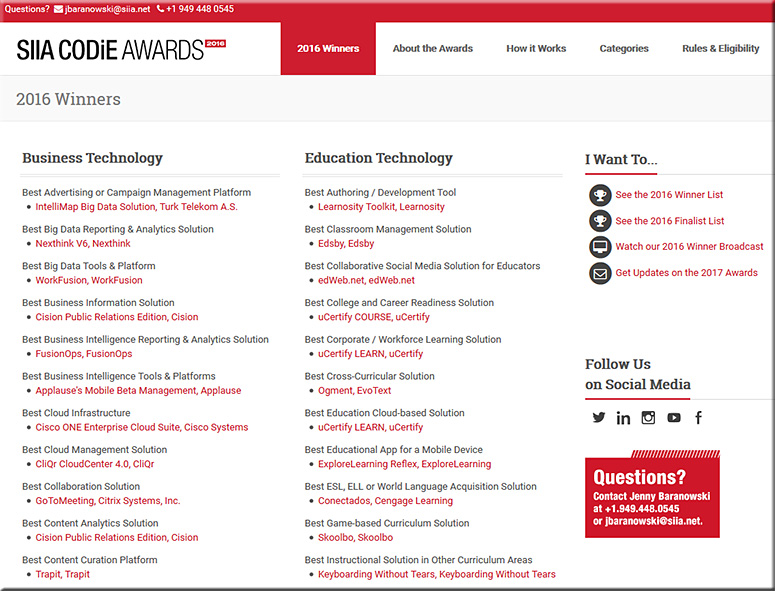
The SIIA CODiE Awards for 2016 — with thanks to Neha Jaiswal from uCertify for this resource; uCertify, as you will see, did quite well
Since 1986, the SIIA CODiE Awards have recognized more than 1,000 software and information companies for achieving excellence. The CODiE Awards remain the only peer-recognized program in the content, education, and software industries so each CODiE Award win serves as incredible market validation for a product’s innovation, vision, and overall industry impact.
Which jobs/positions are being impacted by new forms of Human Computer Interaction (HCI)?
What new jobs/positions will be created by these new forms of HCI?
Will it be necessary for instructional technologists, instructional designers, teachers, professors, trainers, coaches, learning space designers, and others to pulse check this landscape? Will that be enough?
Or will such individuals need to dive much deeper than that in order to build the necessary skillsets, understandings, and knowledgebases to meet the new/changing expectations for their job positions?
How many will say, “No thanks, that’s not for me” — causing organizations to create new positions that do dive deeply in this area?
Will colleges and universities build and offer more courses involving HCI?
Will Career Services Departments get up to speed in order to help students carve out careers involving new forms of HCI?
How will languages and language translation be impacted by voice recognition software?
Will new devices be introduced to our classrooms in the future?
In the corporate space, how will training departments handle these new needs and opportunities? How will learning & development groups be impacted? How will they respond in order to help the workforce get/be prepared to take advantage of these sorts of technologies? What does it mean for these staffs personally? Do they need to invest in learning more about these advancements?
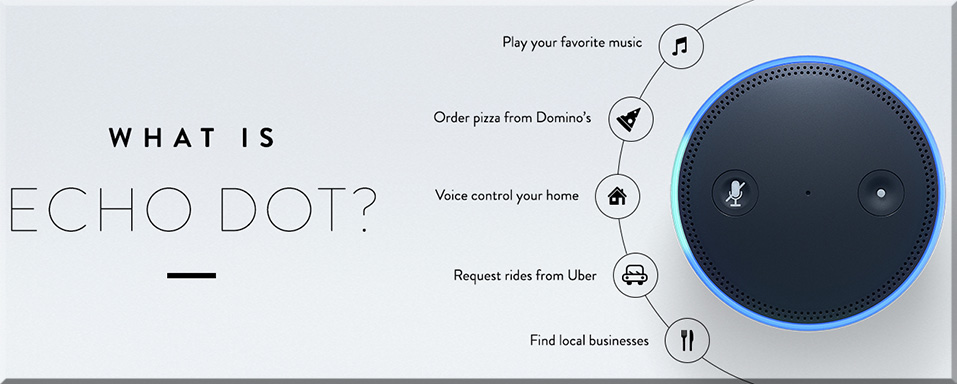
As an example of what I’m trying to get at here, who all might be involved with an effort like Echo Dot? What types of positions created it? Who all could benefit from it? What other platforms could these technologies be integrated into? Besides the home, where else might we find these types of devices?
Echo Dot is a hands-free, voice-controlled device that uses the same far-field voice recognition as Amazon Echo. Dot has a small built-in speaker—it can also connect to your speakers over Bluetooth or with the included audio cable. Dot connects to the Alexa Voice Service to play music, provide information, news, sports scores, weather, and more—instantly.
Echo Dot can hear you from across the room, even while music is playing. When you want to use Echo Dot, just say the wake word “Alexa” and Dot responds instantly. If you have more than one Echo or Echo Dot, you can set a different wake word for each—you can pick “Amazon”, “Alexa” or “Echo” as the wake word.
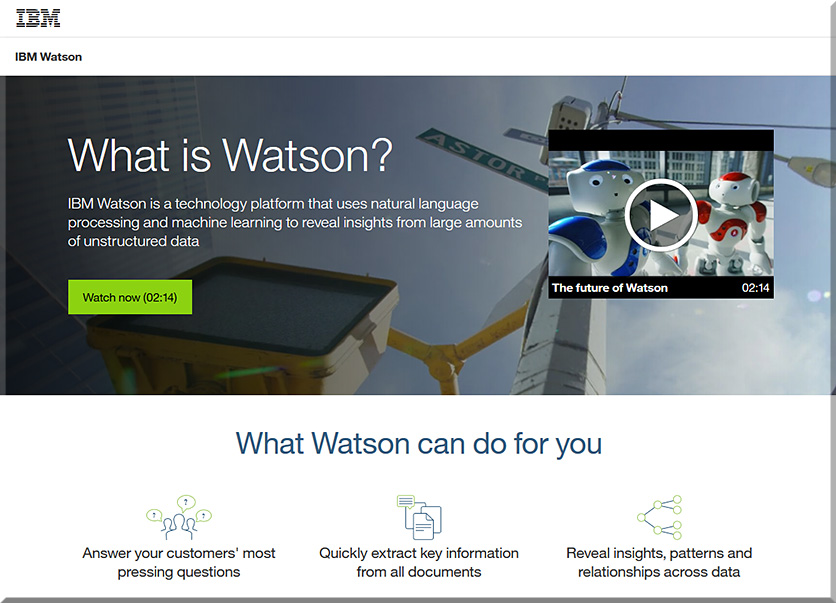
Or how might students learn about the myriad of technologies involved withIBM’s Watson? What courses are out there today that address this type of thing? Are more courses in the works that will address this type of thing? In which areas (Computer Science, User Experience Design, Interaction Design, other)?
Lots of questions…but few answers at this point. Still, given the increasing pace of technological change, it’s important that we think about this type of thing and become more responsive, nimble, and adaptive in our organizations and in our careers.
10. VR developer
9. Blockchain engineer/developer
8. Security engineer
7. Internet of Things architect
6. UX designer
5. Data protection officer
4. Chief digital officer
3. AI developer
2. DevOps engineer
1. Data scientist
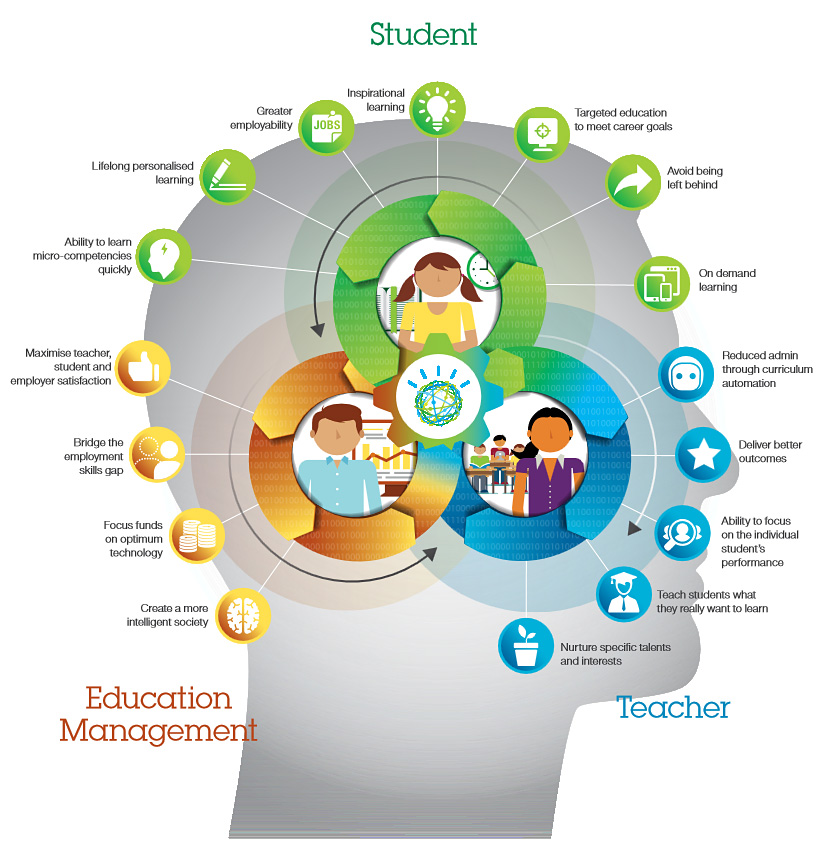
From curriculum to career with cognitive systems
Data-driven cognitive technologies will enable personalised education and improve outcomes for students, educators and administrators. Ultimately, education experiences will be transformed and improved when data can accompany the students throughout their life-long learning journey.
In this research, we explore how educators are using digital education services to deliver personalised programs. Through inputs from a series of in-depth interviews, surveys and social listening, we paint a picture of how the world of work and learning might evolve over the next forty years.
…find out how the EdTech startups we met at TechCrunch Disrupt 2016 are transforming the education landscape and how three education technology startups are already changing education as we know it.
Expect to see many organizations become deeply disillusioned by Big Data in 2016 because they had hoped to get different results from their business, without using Big Data to actually change how they operated. Those who used Big Data to make substantive changes to how they operate will dramatically out-compete those who used Big Data to produce merely-more-detailed reports, but little actual change.
Two 15-year-old students from Business Technology Early College High School (BTECH) in Queens, New York dazzled me with big-picture thinking about the social implications of harnessing big data while protecting our future. The teens shared very entrepreneurial thoughts of how to deliver genomic big data solutions without diminishing individual self-worth.
One young man used the example of applying genomic big data to people to create a “Superman” in the future. Yet, he noted that if everyone were Superman, no one would be. In other words, no one would be unique, stand out from the crowd. Wow! That’s big picture thinking that reminds me of a science fiction novel.
The art of data science: The skills you need and how to get them — from kdnuggets.com by Joseph Blue Learn, how to turn the deluge of data into the gold by algorithms, feature engineering, reasoning out business value and ultimately building a data driven organization.
From DSC: The items above made me think of trying to excerpt meaning from big data…which made me think of programming…which lead me to think of algorithms…which lead me to think of artificial intelligence (AI). Then, when I was thinking about AI, I wondered…
How might AI and algorithms play into the future of MOOCs — especially in regards to providing automated assessments, scoring, and grading…?
Hmmm….could be helpful…though knowledgeable experts/humans will likely still be needed. But such technologies could help with some of the heavy (and often time-consuming) lifting here.
Google is once again sharing its state-of-art artificial intelligence with the rest of the world.
[On 3/323/16] at an event in San Francisco, the company unveiled a new family of cloud computing services that allow any developer or business to use the machine learning technologies that power some of Google’s most powerful services.
Technology major Hewlett-Packard Enterprise (HPE) today announced the commercial launch of Haven OnDemand, a cloud platform that provides advanced machine learning application programme interfaces and services that enable developers, startups and enterprises to build data-rich mobile and enterprise applications.
The company also announced a new version of Idol analytics platform, which applies data analytics and machine learning for organisations to automate and supplement a vast array of manual-based tasks such as trend analysis and video surveillance.



![The Living [Class] Room -- by Daniel Christian -- July 2012 -- a second device used in conjunction with a Smart/Connected TV](http://danielschristian.com/learning-ecosystems/wp-content/uploads/2012/07/The-Living-Class-Room-Daniel-S-Christian-July-2012.jpg)