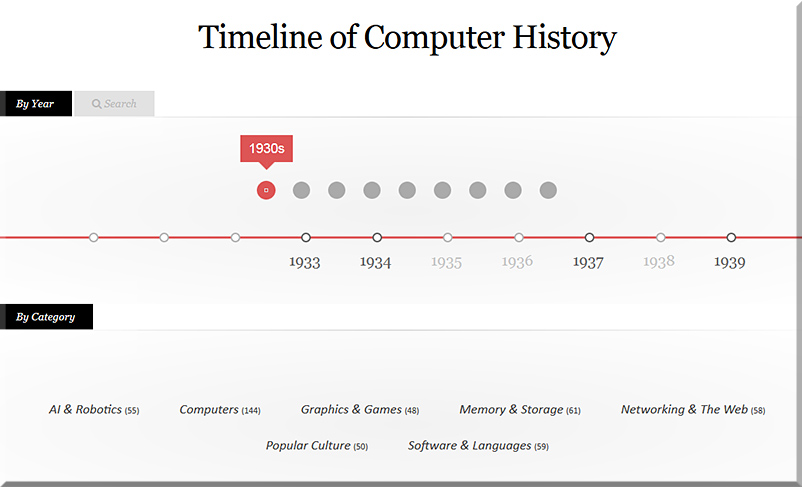
Check out:
computerhistory.org/timeline/
For the history of AI and robotics, see:
computerhistory.org/timeline/ai-robotics/

Check out:
computerhistory.org/timeline/
For the history of AI and robotics, see:
computerhistory.org/timeline/ai-robotics/

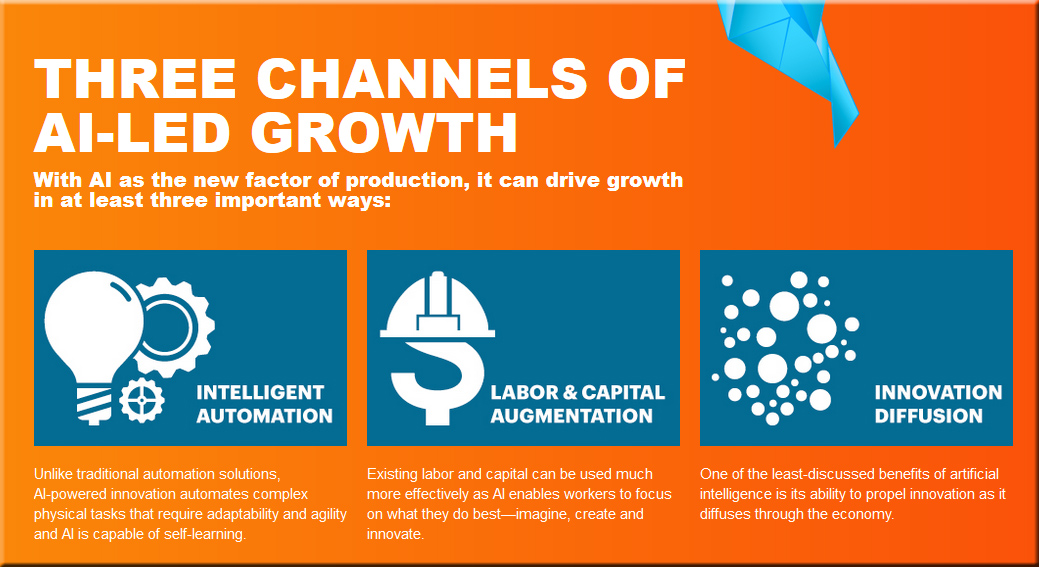
Why Artificial Intelligence is the Future of Growth — from accenture.com
Excerpt:
Fuel For Growth
Compelling data reveal a discouraging truth about growth today. There has been a marked decline in the ability of traditional levers of production—capital investment and labor—to propel economic growth.
Yet, the numbers tell only part of the story. Artificial intelligence (AI) is a new factor of production and has the potential to introduce new sources of growth, changing how work is done and reinforcing the role of people to drive growth in business.
Accenture research on the impact of AI in 12 developed economies reveals that AI could double annual economic growth rates in 2035 by changing the nature of work and creating a new relationship between man and machine. The impact of AI technologies on business is projected to increase labor productivity by up to 40 percent and enable people to make more efficient use of their time.
Also see:
Established to study and formulate best practices on AI technologies, to advance the public’s understanding of AI, and to serve as an open platform for discussion and engagement about AI and its influences on people and society.
GOALS
Support Best Practices
To support research and recommend best practices in areas including ethics, fairness, and inclusivity; transparency and interoperability; privacy; collaboration between people and AI systems; and of the trustworthiness, reliability, and robustness of the technology.
Create an Open Platform for Discussion and Engagement
To provide a regular, structured platform for AI researchers and key stakeholders to communicate directly and openly with each other about relevant issues.
Advance Understanding
To advance public understanding and awareness of AI and its potential benefits and potential costs to act as a trusted and expert point of contact as questions/concerns arise from the public and others in the area of AI and to regularly update key constituents on the current state of AI progress.
From DSC:
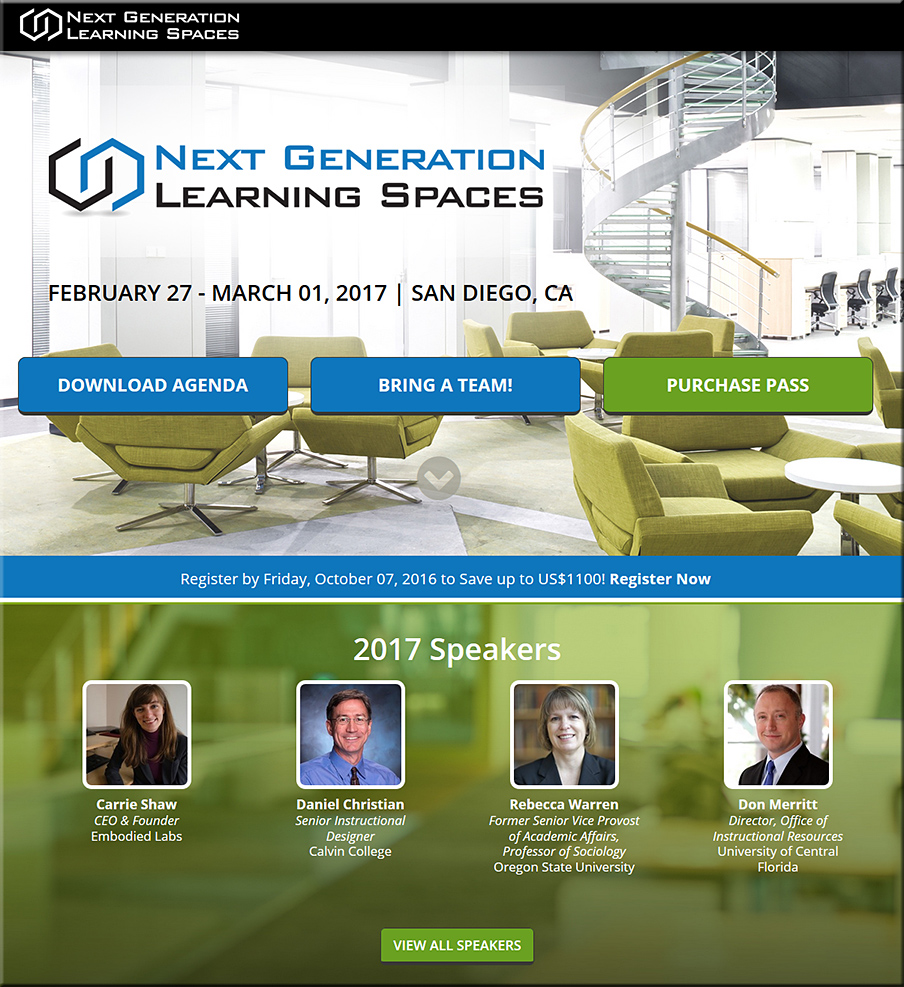
I have attended the Next Generation Learning Spaces Conference for the past two years. Both conferences were very solid and they made a significant impact on our campus, as they provided the knowledge, research, data, ideas, contacts, and the catalyst for us to move forward with building a Sandbox Classroom on campus. This new, collaborative space allows us to experiment with different pedagogies as well as technologies. As such, we’ve been able to experiment much more with active learning-based methods of teaching and learning. We’re still in Phase I of this new space, and we’re learning new things all of the time.
For the upcoming conference in February, I will be moderating a New Directions in Learning panel on the use of augmented reality (AR), virtual reality (VR), and mixed reality (MR). Time permitting, I hope that we can also address other promising, emerging technologies that are heading our way such as chatbots, personal assistants, artificial intelligence, the Internet of Things, tvOS, blockchain and more.
The goal of this quickly-moving, engaging session will be to provide a smorgasbord of ideas to generate creative, innovative, and big thinking. We need to think about how these topics, trends, and technologies relate to what our next generation learning environments might look like in the near future — and put these things on our radars if they aren’t already there.
Key takeaways for the panel discussion:
I’m looking forward to catching up with friends, meeting new people, and to the solid learning that I know will happen at this conference. I encourage you to check out the conference and register soon to take advantage of the early bird discounts.
From chatbots to Einstein, artificial intelligence as a service — from infoworld.com by Yves de Montcheuil
Excerpt:
The recent announcement of Salesforce Einstein — dubbed “artificial intelligence for everyone” — sheds new light on the new and pervasive usage of artificial intelligence in every aspect of businesses.
Powered by advanced machine learning, deep learning, predictive analytics, natural language processing and smart data discovery, Einstein’s models will be automatically customized for every single customer, and it will learn, self-tune, and get smarter with every interaction and additional piece of data. Most importantly, Einstein’s intelligence will be embedded within the context of business, automatically discovering relevant insights, predicting future behavior, proactively recommending best next actions and even automating tasks.
…
Chatbots, or conversational bots, are the “other” trending topic in the field of artificial intelligence. At the juncture of consumer and business, they provide the ability for an AI-based system to interact with users through a headless interface. It does not matter whether a messaging app is used, or a speech-to-text system, or even another app — the chatbot is front-end agnostic.
Since the user does not have the ability to provide context around the discussion, he just asks questions in natural language to an AI-driven backend that is tasked with figuring this context and looking for the right answer.
IBM is launching a much-awaited ‘Watson’ recruiting tool — from eremedia.com by Todd Raphael
Excerpt:
For many months IBM has gone to recruiting-industry conferences to say that the famous Watson will be at some point used for talent-acquisition, but that it hasn’t happened quite yet.
It’s here.
IBM is first using Watson for its RPO customers, and then rolling it out as a product for the larger community, perhaps next spring. One of my IBM contacts, Recruitment Innovation Global Leader Yates Baker, tells me that the current version is a work in progress like the first iPhone (or perhaps like that Siri-for-recruiting tool).
There are three parts: recruiting, marketing, and sourcing.
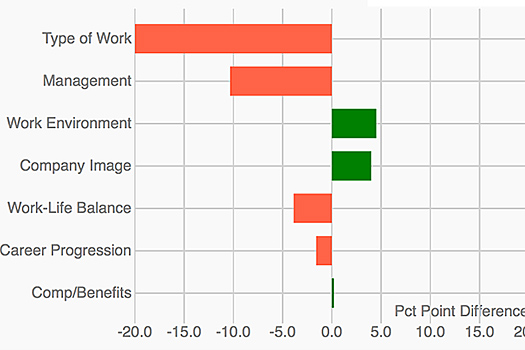
Apple’s Siri: A Lot Smarter, but Still Kind of Dumb — from wsj.com by Joanna Stern
With the new MacOS and Apple’s AirPods, Siri’s more powerful than ever, but still not as good as some competitors
Excerpt:
With the new iOS 10, Siri can control third-party apps, like Uber and WhatsApp. With the release of MacOS Sierra on Tuesday, Siri finally lands on the desktop, where it can take care of basic operating system tasks, send emails and more. With WatchOS 3 and the new Apple Watch, Siri is finally faster on the wrist. And with Apple’s Q-tip-looking AirPods arriving in October, Siri can whisper sweet nothings in your inner ear with unprecedented wireless freedom. Think Joaquin Phoenix’s earpiece in the movie “Her.”
The groundwork is laid for an AI assistant to stake a major claim in your life, and finally save you time by doing menial tasks. But the smarter Siri becomes in some places, the dumber it seems in others—specifically compared with Google’s and Amazon’s voice assistants. If I hear “I’m sorry, Joanna, I’m afraid I can’t answer that” one more time…
IBM Research and MIT Collaborate to Advance Frontiers of Artificial Intelligence in Real-World Audio-Visual Comprehension Technologies — from prnewswire.com
Cross-disciplinary research approach will use insights from brain and cognitive science to advance machine understanding
Excerpt:
YORKTOWN HEIGHTS, N.Y., Sept. 20, 2016 /PRNewswire/ — IBM Research (NYSE: IBM) today announced a multi-year collaboration with the Department of Brain & Cognitive Sciences at MIT to advance the scientific field of machine vision, a core aspect of artificial intelligence. The new IBM-MIT Laboratory for Brain-inspired Multimedia Machine Comprehension’s (BM3C) goal will be to develop cognitive computing systems that emulate the human ability to understand and integrate inputs from multiple sources of audio and visual information into a detailed computer representation of the world that can be used in a variety of computer applications in industries such as healthcare, education, and entertainment.
The BM3C will address technical challenges around both pattern recognition and prediction methods in the field of machine vision that are currently impossible for machines alone to accomplish. For instance, humans watching a short video of a real-world event can easily recognize and produce a verbal description of what happened in the clip as well as assess and predict the likelihood of a variety of subsequent events, but for a machine, this ability is currently impossible.
Satya Nadella on Microsoft’s new age of intelligence — from fastcompany.com by Harry McCracken
How the software giant aims to tie everything from Cortana to Office to HoloLens to Azure servers into one AI experience.
Excerpt:
“Microsoft was born to do a certain set of things. We’re about empowering people in organizations all over the world to achieve more. In today’s world, we want to use AI to achieve that.”
That’s Microsoft CEO Satya Nadella, crisply explaining the company’s artificial-intelligence vision to me this afternoon shortly after he hosted a keynote at Microsoft’s Ignite conference for IT pros in Atlanta. But even if Microsoft only pursues AI opportunities that it considers to be core to its mission, it has a remarkably broad tapestry to work with. And the examples that were part of the keynote made that clear.
IBM Foundation collaborates with AFT and education leaders to use Watson to help teachers — from finance.yahoo.com
Excerpt:
ARMONK, N.Y., Sept. 28, 2016 /PRNewswire/ — Teachers will have access to a new, first-of-its-kind, free tool using IBM’s innovative Watson cognitive technology that has been trained by teachers and designed to strengthen teachers’ instruction and improve student achievement, the IBM Foundation and the American Federation of Teachers announced today.
Hundreds of elementary school teachers across the United States are piloting Teacher Advisor with Watson – an innovative tool by the IBM Foundation that provides teachers with a complete, personalized online resource. Teacher Advisor enables teachers to deepen their knowledge of key math concepts, access high-quality vetted math lessons and acclaimed teaching strategies and gives teachers the unique ability to tailor those lessons to meet their individual classroom needs.
…
Litow said there are plans to make Teacher Advisor available to all elementary school teachers across the U.S. before the end of the year.
In this first phase, Teacher Advisor offers hundreds of high-quality vetted lesson plans, instructional resources, and teaching techniques, which are customized to meet the needs of individual teachers and the particular needs of their students.
Also see:
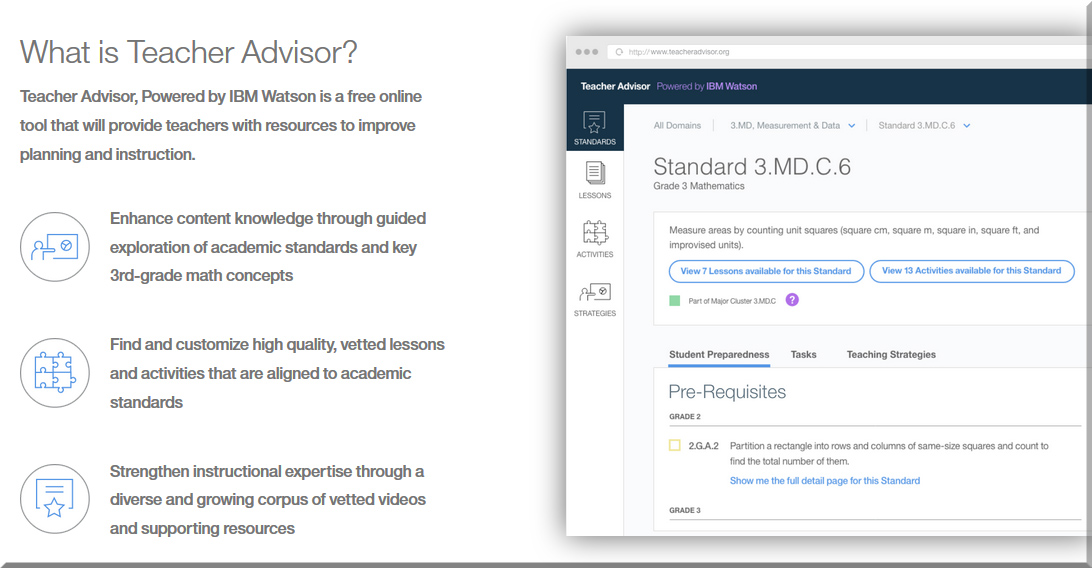
Educators can also access high-quality videos on teaching techniques to master key skills and bring a lesson or teaching strategy to life into their classroom.
From DSC:
Today’s announcement involved personalization and giving customized directions, and it caused my mind to go in a slightly different direction. (IBM, Google, Microsoft, Apple, Amazon, and others like Smart Sparrow are likely also thinking about this type of direction as well. Perhaps they’re already there…I’m not sure.)
But given the advancements in machine learning/cognitive computing (where example applications include optical character recognition (OCR) and computer vision), how much longer will it be before software is able to remotely or locally “see” what a third grader wrote down for a given math problem (via character and symbol recognition) and “see” what the student’s answer was while checking over the student’s work…if the answer was incorrect, the algorithms will likely know where the student went wrong. The software will be able to ascertain what the student did wrong and then show them how the problem should be solved (either via hints or by showing the entire problem to the student — per the teacher’s instructions/admin settings). Perhaps, via natural language processing, this process could be verbalized as well.
Further questions/thoughts/reflections then came to my mind:
![The Living [Class] Room -- by Daniel Christian -- July 2012 -- a second device used in conjunction with a Smart/Connected TV](http://danielschristian.com/learning-ecosystems/wp-content/uploads/2012/07/The-Living-Class-Room-Daniel-S-Christian-July-2012.jpg)
Also see:
LinkedIn announced several things yesterday (9/22/16). Below are some links to these announcements:
Introducing LinkedIn Learning, a Better Way to Develop Skills and Talent — from learning.linkedin.com
Excerpt (emphasis DSC):
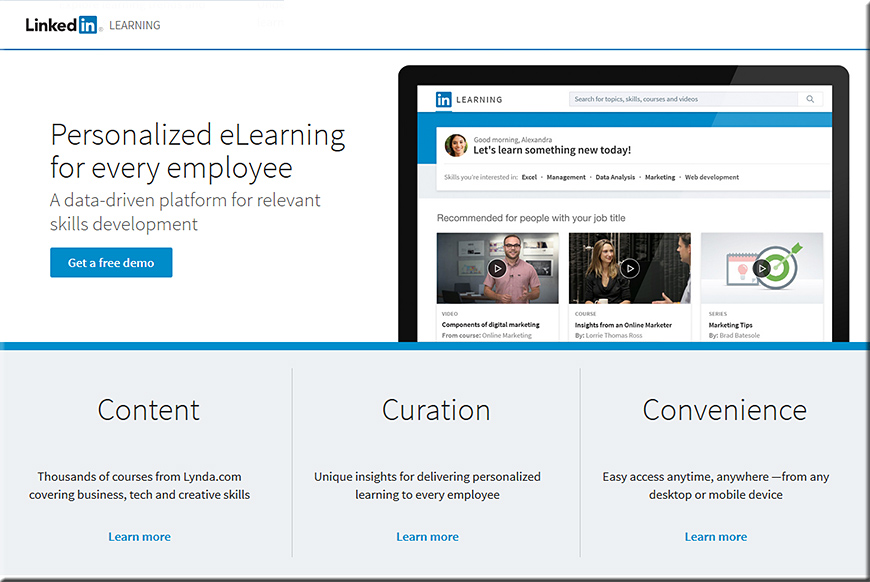
Today, we are thrilled to announce the launch of LinkedIn Learning, an online learning platform enabling individuals and organizations to achieve their objectives and aspirations. Our goal is to help people discover and develop the skills they need through a personalized, data-driven learning experience.
LinkedIn Learning combines the industry-leading content from Lynda.com with LinkedIn’s professional data and network. With more than 450 million member profiles and billions of engagements, we have a unique view of how jobs, industries, organizations and skills evolve over time. From this, we can identify the skills you need and deliver expert-led courses to help you obtain those skills. We’re taking the guesswork out of learning.
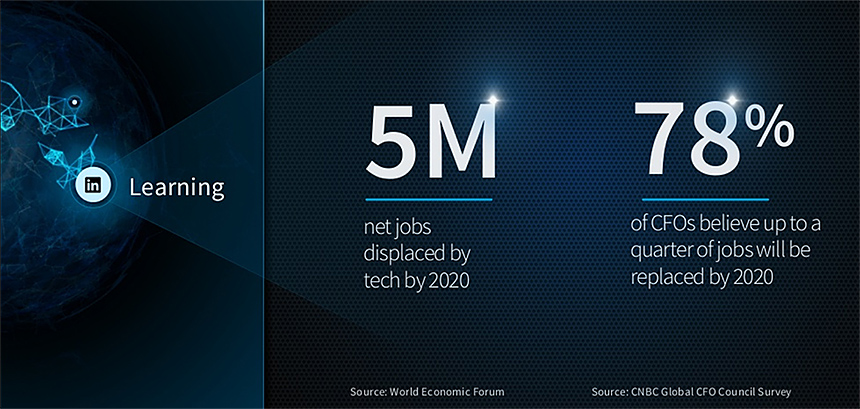
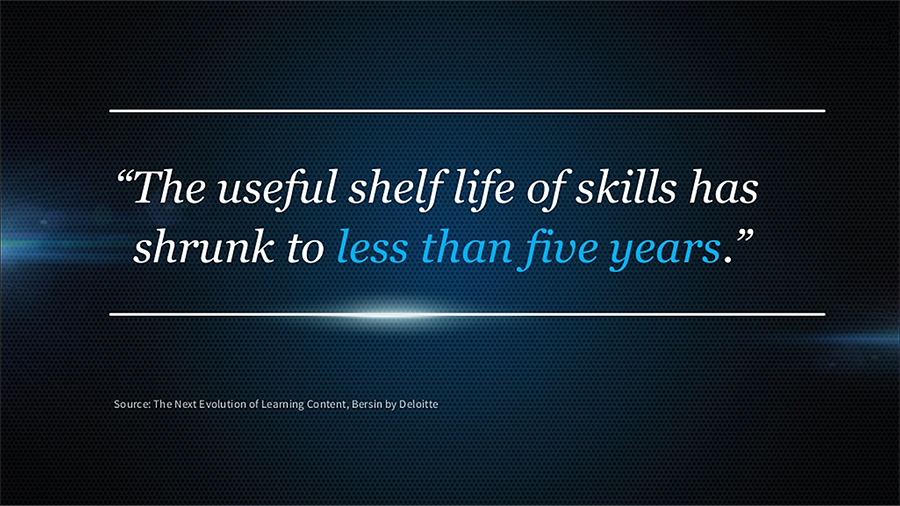
The pressure on individuals and organizations to adapt to change has never been greater. The skills that got you to where you are today are not the skills to prepare you for tomorrow. In fact, the shelf-life of skills is less than five years, and many of today’s fastest growing job categories didn’t even exist five years ago.
To tackle these challenges, LinkedIn Learning is built on three core pillars:
…
Data-driven personalization: We get the right course in front of you at the right time. Using the intelligence that comes with our network, LinkedIn Learning creates personalized recommendations, so learners can efficiently discover which courses are most relevant to their goals or job function. Organizations can use LinkedIn insights to customize multi-course Learning Paths to meet their specific needs. We also provide robust analytics and reporting to help you measure learning effectiveness.
LinkedIn’s first big move since the $26.2 billion Microsoft acquisition is basically a ‘school’ for getting a better job — from finance.yahoo.com
Excerpt:
Today, LinkedIn has launched LinkedIn Learning — its first major product launch since the news last June that Microsoft would be snapping up the social network for $26.2 billion in a deal that has yet to close.
LinkedIn Learning takes the online skills training classes the company got in its 2015 acquisition of Lynda.com for $1.5 billion.
The idea, says LinkedIn CEO Jeff Weiner, is to help its 433 million-plus members get the skills they need to stay relevant in a world that’s increasingly reliant on digital skills.
LinkedIn’s New Learning Platform to Recommend Lynda Courses for Professionals — from edsurge.com by Marguerite McNeal
Excerpt:
Companies will also be able to create their own “learning paths”—bundles of courses around a particular topic—to train employees. A chief learning officer, for instance, might compile a package of courses in product management and ask 10 employees to complete the assignments over the course of a few months.
…
LinkedIn is also targeting higher-education institutions with the new offering. It is marketing the solution as a professional development tool that can help faculty learn how to use classroom tools such as Moodle, Adobe Captivate and learning management systems.
“Increasingly predictions of tech displacing workers are coming to fruition,” he added. “The idea that you can study a skill once and have a job for the rest of your life—those days are over.”
LinkedIn Learning for higher education
LinkedIn adding new training features, news feeds and ‘bots’ — from finance.yahoo.com
Excerpt:
LinkedIn is also adding more personalized features to its news feed, where members can see articles and announcements posted by their professional contacts. A new “Interest Feed” will offer a collection of articles, posts and opinion pieces on major news events or current issues.
AI chatbot apps to infiltrate businesses sooner than you think — from searchbusinessanalytics.techtarget.com by Bridget Botelho
Artificial intelligence chatbots aren’t the norm yet, but within the next five years, there’s a good chance the sales person emailing you won’t be a person at all.
Excerpt:
In fact, artificial intelligence has come so far so fast in recent years, Gartner predicts it will be pervasive in all new products by 2020, with technologies including natural language capabilities, deep neural networks and conversational capabilities.
Other analysts share that expectation. Technologies that encompass the umbrella term artificial intelligence — including image recognition, machine learning, AI chatbots and speech recognition — will soon be ubiquitous in business applications as developers gain access to it through platforms such as the IBM Watson Conversation API and the Google Cloud Natural Language API.
3 corporate departments that chatbots will disrupt — from venturebeat.com by Natalie Lambert
Excerpt:
Facebook Messenger’s 11,000 chatbots are much more interactive — from androidcentral.com by Harish Jonnalagadda
Excerpt:
Facebook introduced chatbots on Messenger three months ago, and the search giant has shared today that over 11,000 bots are active on the messaging service. The Messenger Platform has picked up an update that adds a slew of new features to bots, such as a persistent menu that lists a bot’s commands, quick replies, ability to respond with GIFs, audio, video, and other files, and a rating system to provide feedback to bot developers.
Chatbots are coming to take over the world — from telecom.economictimes.indiatimes.com
Excerpts:
In another example, many businesses use interactive voice response (IVR) telephony systems, which have limited functionalities and often provide a poor user experience. Chatbots can replace these applications in future where the user will interact naturally to get relevant information without following certain steps or waiting for a logical sequence to occur.
…
Chatbots are a good starting point, but the future lies in more advanced versions of audio and video bots. Apple’s Siri, Amazon’s Alexa, Microsoft’s Cortana, Google with its voice assistance, are working in the same direction to achieve it. Bot ecosystems will become even more relevant in the phase of IoT mass adoption and improvement of input/output (I/O) technology.
With big players investing heavily in AI, Chatbots are likely to be an increasing feature of social media and other communications platforms.
Everything You Wanted to Know About Chatbots But Were Afraid to Ask — from businessinsider.com by Andrew Meola
Excerpt:
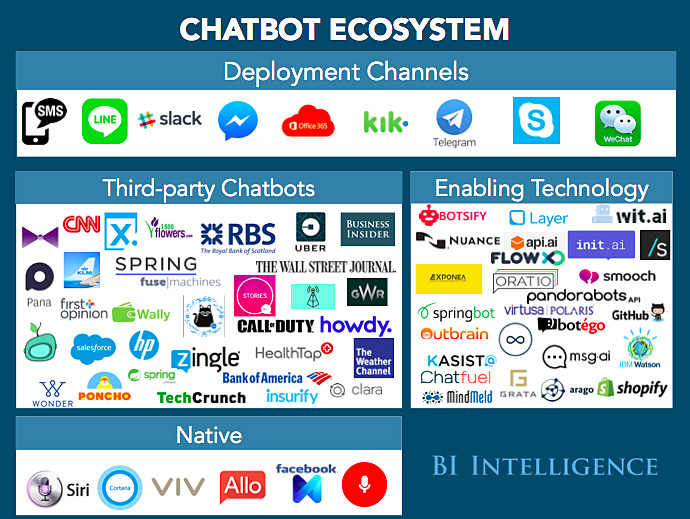
Chatbots are software programs that use messaging platforms as the interface to perform a wide variety of tasks—everything from scheduling a meeting to reporting the weather, to helping a customer buy a sweater.
Because texting is the heart of the mobile experience for smartphone users, chatbots are a natural way to turn something users are very familiar with into a rewarding service or marketing opportunity.
And when you consider that the top 4 messaging apps reach over 3 billion global users (MORE than the top 4 social networks), you can see that the opportunity is huge.
Microsoft taught a computer to make ‘chit chat’ — and now 40 million people love it — from businessinsider.com by Matt Weinberger
Excerpt:
The Xiaoice chat bot — pronounced “Shao-ice” and translated as “little Bing” — born as an experiment by Microsoft Research in 2014, reaches 40 million followers in China, who often literally talk with her for hours.
At her most active, Xiaoice is holding down as many 23 conversations a session, says Microsoft Research NExT leader Dr. Peter Lee. It’s even evolved to become a nice little sideline business for Microsoft, thanks to a partnership with Chinese e-retailer JD.com that lets users buy products by talking to Xiaoice.
The reason Xiaoice is so successful is she was born of a different kind of philosophical experiment: Instead of building a chat bot that was useful, Microsoft simply tried to make it fun to talk to.
Tech breakthroughs megatrend— from pwc.com by Vicki Huff Eckert, Sahil Bhardwaj, and Chris Curran; with thanks to Woontack Woo for this resource
Excerpt:
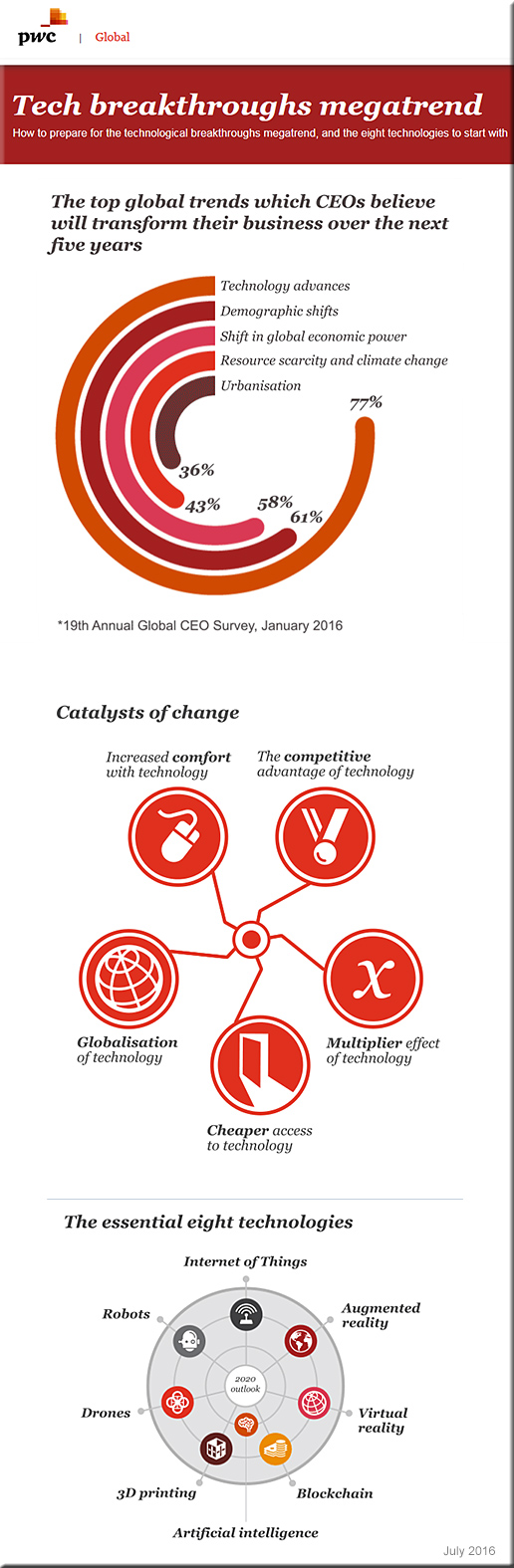
Given the sheer pace and acceleration of technological advances in recent years, business leaders can be forgiven for feeling dazed and perhaps a little frustrated. When we talked to CEOs as part of our annual Global CEO Survey, 61% of them told us they were concerned about the speed of technological change in their industries. Sure, more and more C-suite executives are genuinely tech-savvy – increasingly effective champions for their companies’ IT vision – and more and more of them know that digital disruption can be friend as well as enemy. But it’s fair to say that most struggle to find the time and energy necessary to keep up with the technologies driving transformation across every industry and in every part of the world.
Not one catalyst, but several
History is littered with companies that have waited out the Next New Thing in the belief that it’s a technology trend that won’t amount to much, or that won’t affect their industries for decades. Yet disruption happens. It’s safe to say that the history of humankind is a history of disruption – a stream of innovations that have tipped the balance in favour of the innovators. In that sense, technological breakthroughs are the original megatrend. What’s unique in the 21st century, though, is the ubiquity of technology, together with its accessibility, reach, depth, and impact.
Business leaders worldwide acknowledge these changes, and have a clear sense of their significance. CEOs don’t single out any particular catalyst that leads them to that conclusion. But we maintain that technological advancements are appearing, rapidly and simultaneously, in fields as disparate as healthcare and industrial manufacturing, because of the following concurrent factors…
From DSC:
For those of us working in K-20 as well as in the corporate training/L&D space, how are we doing in getting people trained and ready to deal these developments?
Public Input and Next Steps on the Future of Artificial Intelligence — from whitehouse.gov by Ed Felten and Terah Lyons
Summary:
Today, OSTP is releasing public comments on AI, sharing insights from events across the country, and announcing a new White House event on AI this fall.
See also:
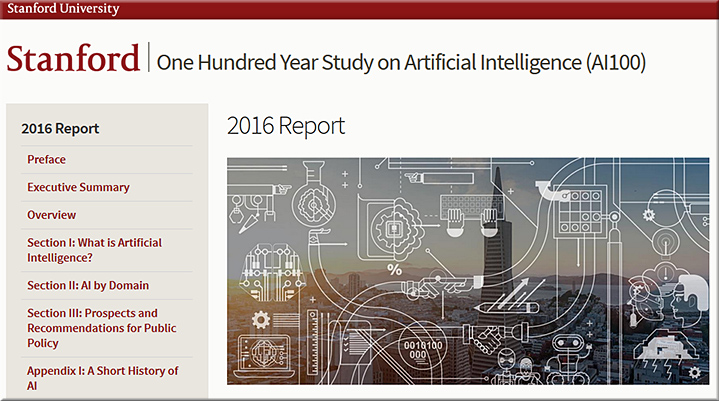
Stanford | One Hundred Year Study on Artificial Intelligence (AI100)
Executive Summary
Artificial Intelligence (AI) is a science and a set of computational technologies that are inspired by—but typically operate quite differently from—the ways people use their nervous systems and bodies to sense, learn, reason, and take action. While the rate of progress in AI has been patchy and unpredictable, there have been significant advances since the field’s inception sixty years ago. Once a mostly academic area of study, twenty-first century AI enables a constellation of mainstream technologies that are having a substantial impact on everyday lives. Computer vision and AI planning, for example, drive the video games that are now a bigger entertainment industry than Hollywood. Deep learning, a form of machine learning based on layered representations of variables referred to as neural networks, has made speech-understanding practical on our phones and in our kitchens, and its algorithms can be applied widely to an array of applications that rely on pattern recognition. Natural Language Processing (NLP) and knowledge representation and reasoning have enabled a machine to beat the Jeopardy champion and are bringing new power to Web searches.
While impressive, these technologies are highly tailored to particular tasks. Each application typically requires years of specialized research and careful, unique construction. In similarly targeted applications, substantial increases in the future uses of AI technologies, including more self-driving cars, healthcare diagnostics and targeted treatments, and physical assistance for elder care can be expected. AI and robotics will also be applied across the globe in industries struggling to attract younger workers, such as agriculture, food processing, fulfillment centers, and factories. They will facilitate delivery of online purchases through flying drones, self-driving trucks, or robots that can get up the stairs to the front door.
This report is the first in a series to be issued at regular intervals as a part of the One Hundred Year Study on Artificial Intelligence (AI100). Starting from a charge given by the AI100 Standing Committee to consider the likely influences of AI in a typical North American city by the year 2030, the 2015 Study Panel, comprising experts in AI and other relevant areas focused their attention on eight domains they considered most salient: transportation; service robots; healthcare; education; low-resource communities; public safety and security; employment and workplace; and entertainment. In each of these domains, the report both reflects on progress in the past fifteen years and anticipates developments in the coming fifteen years. Though drawing from a common source of research, each domain reflects different AI influences and challenges, such as the difficulty of creating safe and reliable hardware (transportation and service robots), the difficulty of smoothly interacting with human experts (healthcare and education), the challenge of gaining public trust (low-resource communities and public safety and security), the challenge of overcoming fears of marginalizing humans (employment and workplace), and the social and societal risk of diminishing interpersonal interactions (entertainment). The report begins with a reflection on what constitutes Artificial Intelligence, and concludes with recommendations concerning AI-related policy. These recommendations include accruing technical expertise about AI in government and devoting more resources—and removing impediments—to research on the fairness, security, privacy, and societal impacts of AI systems.
Contrary to the more fantastic predictions for AI in the popular press, the Study Panel found no cause for concern that AI is an imminent threat to humankind. No machines with self-sustaining long-term goals and intent have been developed, nor are they likely to be developed in the near future. Instead, increasingly useful applications of AI, with potentially profound positive impacts on our society and economy are likely to emerge between now and 2030, the period this report considers. At the same time, many of these developments will spur disruptions in how human labor is augmented or replaced by AI, creating new challenges for the economy and society more broadly. Application design and policy decisions made in the near term are likely to have long-lasting influences on the nature and directions of such developments, making it important for AI researchers, developers, social scientists, and policymakers to balance the imperative to innovate with mechanisms to ensure that AI’s economic and social benefits are broadly shared across society. If society approaches these technologies primarily with fear and suspicion, missteps that slow AI’s development or drive it underground will result, impeding important work on ensuring the safety and reliability of AI technologies. On the other hand, if society approaches AI with a more open mind, the technologies emerging from the field could profoundly transform society for the better in the coming decades.
From DSC:
I’m a bit more cautious and skeptical on the potential uses of AI than this panel. Though there will likely be many positive impacts of AI on society, I see plenty in our world that drives my skepticism (one such example is the use of AI and robotics that are being leveraged/developed by the large military operations of the world).
Why every college campus needs a chatbot — from venturebeat.com by John Brandon
Excerpts:
Dropping a child off at college is a stressful experience. I should know — I dropped off one last week and another today. It’s confusing because everything is so new, your child (who is actually a young adult, how did that happen?) is anxious, and you usually have to settle up on your finances.
This situation happens to be ideal for a chatbot, because the administrative staff is way too busy to handle questions in person or by phone. There might be someone directing you in the parking lot, but not everyone standing around in the student center knows how to submit FAFSA data.
…
One of the main reasons for thinking of this is that I would have used one myself today. It’s a situation where you want immediate, quick information without having to explain all of the background information. You just need the campus map or the schedule for the day — that’s it. You don’t want any extra frills.
From DSC:
My question is:
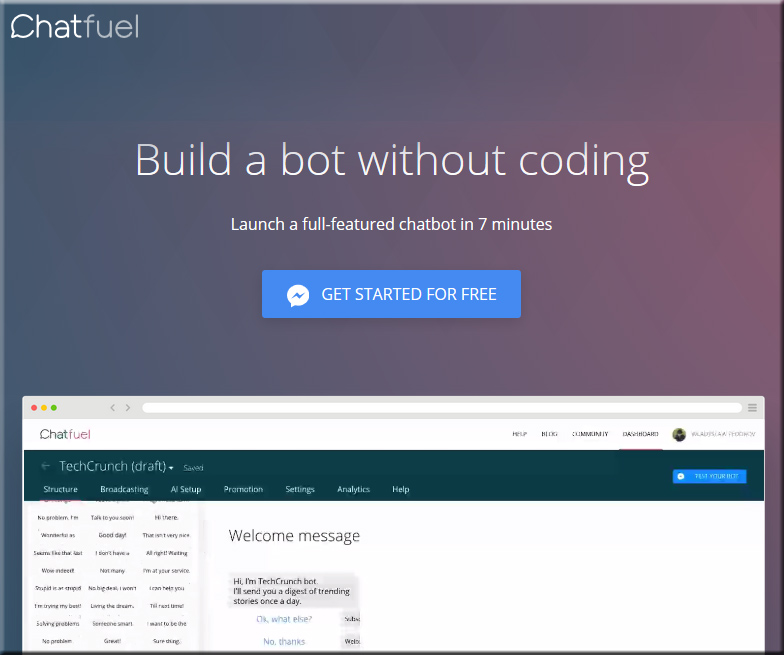
Will Instructional Designers, Technical Communicators, e-Learning Designers, Trainers, (and other positions as as well) going to have to know how to build chatbots in the future? Our job descriptions could be changing soon. Or will this kind of thing require more programming-related skills? Perhaps more firms like the one below could impact that situation…
The Top Ten Emerging Technologies of 2016 — from wsj.com by Irving Wladawsky-Berger
Excerpt:
Here are the ten technologies comprising the 2016 list, along with the reason cited by the WEF for their selection:
Also see:
34 Most Disruptive Technologies of the Next Decade — from inc.com by Tess Townsend
Smart dust? 4-D printing? Gartner’s annual hype cycle report offers insight into new directions in technology.

Here are all the technologies in the report:
Education Technology And Artificial Intelligence: How Education Chatbots [could] Revolutionize Personalized Learning — from parentherald.com by Kristine Walker
From DSC:
I inserted a [could] in the title, as I don’t think we’re there yet. That said, I don’t see chatbots, personal assistants, and the use of AI going away any time soon. This should be on our radars from here on out. Chatbots could easily be assigned some heavy lifting duties within K-20 education as well as in the corporate world; but even then, we’ll still need excellent teachers, professors, and trainers/subject matter experts out there. I don’t see anyone being replaced at this point.
Excerpt:
As the equity gap in American education continues, Microsoft co-founder Bill Gates has been urging educators, investors and tech companies to be more open in investing time and money in artificial intelligence-driven education technology programs. The reason? Gates believed that these AI-based EdTech platforms could personalize and revolutionize school learning experience while eliminating the equity gap.
Also see:
Are ‘Motivation Bots’ Part of the Future of Education? — from educationworld.com
The Motivation, Revision and Announcement bots each perform respective functions that are intended to help students master exams.
The Motivation bot, for instance, “keeps students motivated with reminders, social support, and other means,” while the Revision bot “helps students to best understand ways to improve their work” and the Announcement bot “tells students how much studying they need to do based on the amount of time available.”
Somewhat related:
Deep Learning Is Still A No-Show In Gartner 2016 Hype Cycle For Emerging Technologies — from .forbes.com by Gil Press
Excerpt:
Machine learning is best defined as the transition from feeding the computer with programs containing specific instructions in the forms of step-by-step rules or algorithms to feeding the computer with algorithms that can “learn” from data and can make inferences “on their own.” The computer is “trained” by data which is labeled or classified based on previous outcomes, and its software algorithms “learn” how to predict the classification of new data that is not labeled or classified. For example, after a period of training in which the computer is presented with spam and non-spam email messages, a good machine learning program will successfully identify, (i.e., predict,) which email message is spam and which is not without human intervention. In addition to spam filtering, machine learning has been applied successfully to problems such as hand-writing recognition, machine translation, fraud detection, and product recommendations.

The next battleground: The 4th Era of Personal Computing — from stevebrownfuturist.com by Steve Brown
Excerpt:
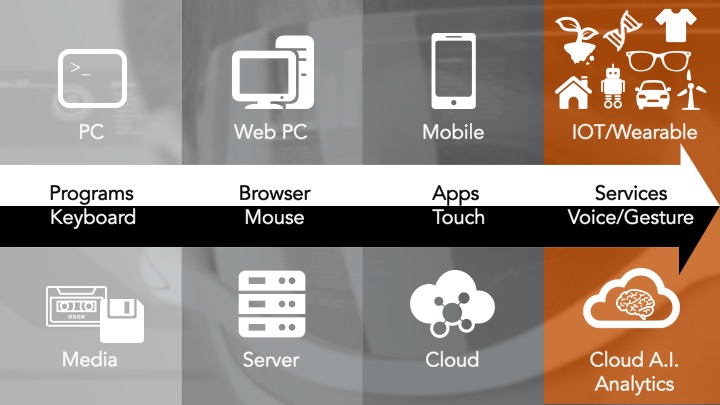
I believe we are moving into the fourth era of personal computing. The first era was characterized by the emergence of the PC. The second by the web and the browser, and the third by mobile and apps.
The fourth personal computing platform will be a combination of IOT, wearable and AR-based clients using speech and gesture, connected over 4G/5G networks to PA, CaaS and social networking platforms that draw upon a new class of cloud-based AI to deliver highly personalized access to information and services.
So what does the fourth era of personal computing look like? It’s a world of smart objects, smart spaces, voice control, augmented reality, and artificial intelligence.