videogamedesignschools.net

From DSC:
My thanks to Sara McDowell for this resource, which she developed.


Addendums on 6/16/11 — also see:

101 quick ideas to ignite your online learning community — from Bloomfire.com by Josh Little and Nehemiah Chu

Excerpt:

Our quick start guide to starting your online learning community (or taking your existing one to another level). Includes community management tips touching on contests, awards, prizes, recognition, and internal marketing.

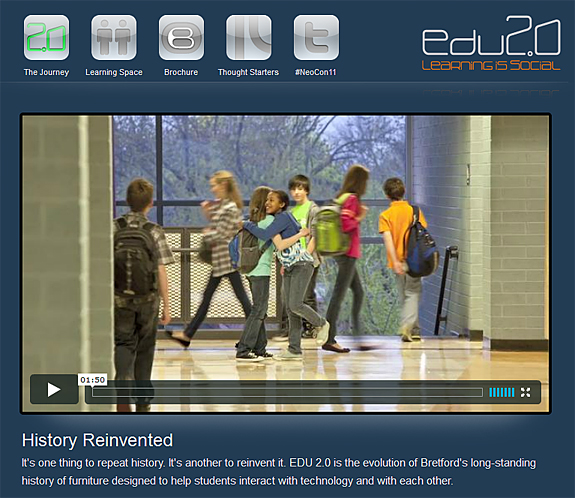
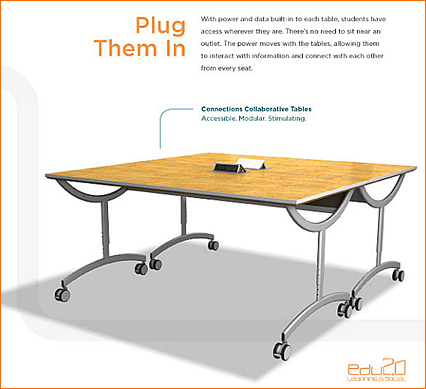
Powermat and Bretford -- wireless charging for learning spaces


Bretford -- Edu 2.0 announcements - June 2011


From DSC:
I hesitated in posting this because I don’t know what the future will tell us re: the use of wireless technologies. But for now, the majority of the tests/research that I’ve seen assert that we are not in much danger from using wireless technologies. (I just hope this arena doesn’t turn out to be another Philip Morris type of move from the manufactures/companies selling these items.)


DIY U: The Future Of Learning [Video] — from FastCompany.com by Anya Kamenetz
From Khan Academy and TED Talks to instructional YouTube videos, the future of learning is open and free.
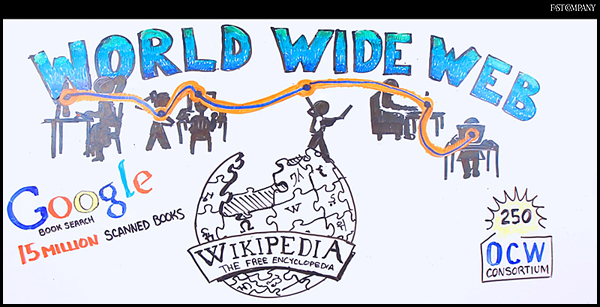

DYI: The future of learning


A related comment from DSC:


I have it that higher ed is a bubble and if an increasingly larger group of people can’t afford ityet still want it — then, in my book, that’s a major problem.

I’ll use myself as an example. My wife and I could not begin to afford to send our kids to many of the colleges and universities out there right now — today, in 2011! (Let alone in 2017+ when our kids start hitting the college scene.)  I should note that our kids are doing well in school and are very talented, hard workers.  I should also point out that my wife and I place a very high value on being educated and we are both trying to pass that value along to the next generation.

But if you tell me that higher ed is not a bubble, the first question I will ask you (besides what planet are you living on) is what’s the gross income for your household? If you are making close to 6 figures, I highly doubt that your perspective will be the same as that of folks from households who are making $20,000-$50,000 a year. In fact, my hunch is that those who say higher ed is not a bubble are:

  • Upper middle class to upper class (i.e. wealthy in the eyes of many in the world today)
  • Folks who don’t have to worry about where their next paycheck is coming from (nor have they had to live like that in years!); that is, they are doing quite well these days…living quite comfortably
  • College educated (nothing wrong with that!)
  • Potentially involved with higher ed — or at least want to maintain the status quo
  • Folks who do not have children

My take on this is that all of us in higher education need to figure out how we can greatly reduce the price of higher education. It shouldn’t be how well you understand the system or how many hours of work you have done to figure out the grants, loans, etc. that exist out there.

NEVER again should we be pleased with ANY sort of increase in tuition. Never again should we say, “Well, our tuition only went up by ___% which is the smallest increase in our history (or the smallest increase relative to our competition…or the smallest in our state/country/nation).”

Such a situation is causing a backlash against the current higher education environment/setup.
As such, we need to constantly be looking to reinvent ourselves — and to staying relevant.


Addendum on 6/17/11:

From DSC:
In case it’s helpful to you, this Learning Ecosystems blog is now in the e-learning portion of Alltop.


Featured in Alltop


A technology broadside against school leadership preparation programs — from BigThink.com by Scott McLeod

Excerpt:

If every other information-oriented societal sector is finding that transformative reinvention is the cost of survival in our current climate, schools and universities shouldn’t expect that they somehow will be immune from the same changes that are radically altering their institutional peers. We shouldn’t pretend that these revolutions aren’t going to affect us too, in compelling and often as yet unknown ways. And, yet, for some reason we do.

As long-existing barriers to learning, communicating, and collaborating disappear – and as what it means to be a productive learner, citizen, and employee shifts dramatically – it’s worth asking how we as educational leadership faculty and programs are responding. Are we doing what we should? To date the evidence is pretty clear that most of us are not.

Can we as educational leadership faculty do better? Given the scale and scope of the transformations occurring around us – and their power and potential for student learning – we MUST do better. It’s embarrassing to consider how little we’ve done to stay relevant. A learning revolution has occurred and – given the attention we’ve paid it – it’s as if many of us didn’t care.


From DSC — also see:


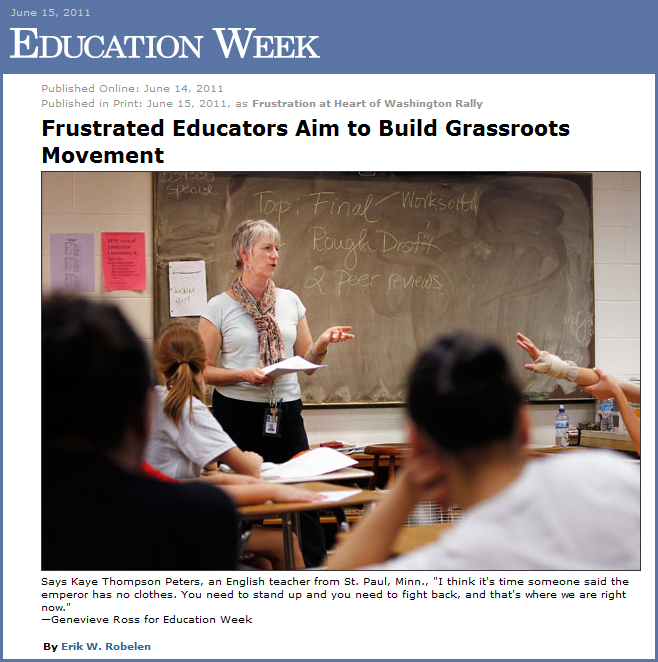
Frustrated Educators Aim to Build Grassroots Movement


Proverbs 23:12

Proverbs 23:12

12 Apply your heart to instruction
and your ears to words of knowledge.


© 2025 | Daniel Christian