From DSC:
The recent pieces below made me once again reflect on the massive changes that are quickly approaching — and in some cases are already here — for a variety of nations throughout the world.

They caused me to reflect on:

  • What the potential ramifications for higher education might be regarding these changes that are just starting to take place in the workplace due to artificial intelligence (i.e., the increasing use of algorithms, machine learning, and deep learning, etc.), automation, & robotics?
  • The need for people to reinvent themselves quickly throughout their careers (if we can still call them careers)
  • How should we, as a nation, prepare for these massive changes so that there isn’t civil unrest due to soaring inequality and unemployment?

As found in the April 9th, 2017 edition of our local newspaper here:
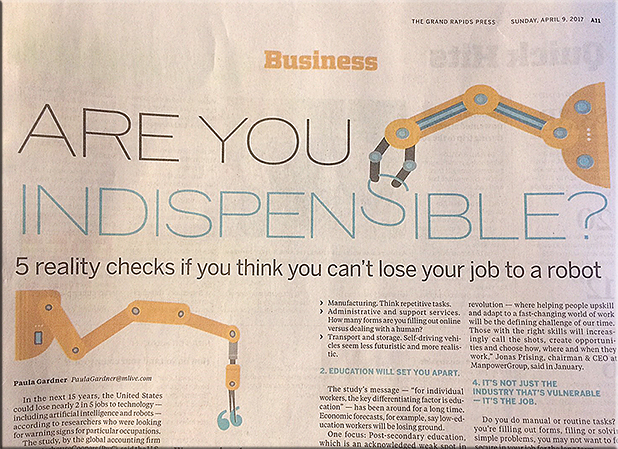
When even our local newspaper is picking up on this trend, you know it is real and has some significance to it.


Then, as I was listening to the radio a day or two after seeing the above article, I heard of another related piece on NPR.  NPR is having a journalist travel across the country, trying to identify “robot-safe” jobs.  Here’s the feature on this from MarketPlace.org


What changes do institutions of traditional higher education
immediately need to begin planning for? Initiating?

What changes should be planned for and begin to be initiated
in the way(s) that we accredit new programs?


Keywords/ideas that come to my mind:

  • Change — to society, to people, to higher ed, to the workplace
  • Pace of technological change — no longer linear, but exponential
  • Career development
  • Staying relevant — as institutions, as individuals in the workplace
  • Reinventing ourselves over time — and having to do so quickly
  • Adapting, being nimble, willing to innovate — as institutions, as individuals
  • Game-changing environment
  • Lifelong learning — higher ed needs to put more emphasis on microlearning, heutagogy, and delivering constant/up-to-date streams of content and learning experiences. This could happen via the addition/use of smaller learning hubs, some even makeshift learning hubs that are taking place at locations that these institutions don’t even own…like your local Starbucks.
  • If we don’t get this right, there could be major civil unrest as inequality and unemployment soar
  • Traditional institutions of higher education have not been nearly as responsive to change as they have needed to be; this opens the door to alternatives. There’s a limited (and closing) window of time left to become more nimble and responsive before these alternatives majorly disrupt the current world of higher education.


Addendum from the corporate world (emphasis DSC):


From The Impact 2017 Conference:

The Role of HR in the Future of Work – A Town Hall

  • Josh Bersin, Principal and Founder, Bersin by Deloitte, Deloitte Consulting LLP
  • Nicola Vogel, Global Senior HR Director, Danfoss
  • Frank Møllerop, Chief Executive Officer, Questback
  • David Mallon, Head of Research, Bersin by Deloitte, Deloitte Consulting LLP

Massive changes spurred by new technologies such as artificial intelligence, mobile platforms, sensors and social collaboration have revolutionized the way we live, work and communicate – and the pace is only accelerating. Robots and cognitive technologies are making steady advances, particularly in jobs and tasks that follow set, standardized rules and logic. This reinforces a critical challenge for business and HR leaders—namely, the need to design, source, and manage the future of work.

In this Town Hall, we will discuss the role HR can play in leading the digital transformation that is shaping the future of work in organizations worldwide. We will explore the changes we see taking place in three areas:

  • Digital workforce: How can organizations drive new management practices, a culture of innovation and sharing, and a set of talent practices that facilitate a new network-based organization?
  • Digital workplace: How can organizations design a working environment that enables productivity; uses modern communication tools (such as Slack, Workplace by Facebook, Microsoft Teams, and many others); and promotes engagement, wellness, and a sense of purpose?
  • Digital HR: How can organizations change the HR function itself to operate in a digital way, use digital tools and apps to deliver solutions, and continuously experiment and innovate?
 

Lifeliqe Piloting Mixed Reality on Microsoft HoloLens for Grade 6-12 Classrooms — from thejournal.com by Richard Chang

Excerpt:

Using interactive 3D models and lesson plans from its app, Lifeliqe (pronounced “life like”) is now delivering educational content on two major immersive hardware platforms (Microsoft HoloLens and HTC Vive) as well as software platforms (Windows and iOS).

Students and teachers at Renton Prep Christian School in Washington state and Castro Valley Unified College in California participated in the pilot and were the first ever to try out Lifeliqe’s educational content on HoloLens during a science lesson (see video).


“The excitement we witnessed during the pilot shows us the great potential mixed reality has in sparking lightbulb moments.”


Lifeliqe is introducing pilots of mixed reality applications on Microsoft HoloLens — from lifeliqe.com

Excerpt:

Lifeliqe is thrilled to start piloting mixed reality educational scenarios for Microsoft HoloLens in grade 6-12 classrooms! The first two schools we are working with are Renton Prep in Seattle, WA and Castro Valley Unified College, CA. The students and teachers there were the first ever to try out Lifeliqe’s educational content on HoloLens during a Science lesson.


Per Charlotte Wilson, Marketing, Open Education Database:

The American Association for University Women recently reported that 53% of women have high student loan debt just one year after graduation, compared to 39% of men. Many women also face the added difficulties of trying to go to college for the first time later in life, returning to school after long gaps of time, and attaining a degree while being a single parent.

To help make college more accessible for them, the college planning experts at OEDB.org developed two holistic financial aid guides specifically for women. The guides break down available grants, scholarships, and fellowships, along with useful tips and tricks. See:


The 82 Hottest EdTech Tools of 2017 According to Education Experts — from tutora.co.uk by Giorgio Cassella

Excerpt:

If you work in education, you’ll know there’s a HUGE array of applications, services, products and tools created to serve a multitude of functions in education.

Tools for teaching and learning, parent-teacher communication apps, lesson planning software, home-tutoring websites, revision blogs, SEN education information, professional development qualifications and more.

There are so many companies creating new products for education, though, that it can be difficult to keep up – especially with the massive volumes of planning and marking teachers have to do, never mind finding the time to actually teach!

So how do you know which ones are the best?

Well, as a team of people passionate about education and learning, we decided to do a bit of research to help you out.

We’ve asked some of the best and brightest in education for their opinions on the hottest EdTech of 2017. These guys are the real deal – experts in education, teaching and new tech from all over the world from England to India, to New York and San Francisco.

They’ve given us a list of 82 amazing, tried and tested tools…


From DSC:
The ones that I mentioned that Giorgio included in his excellent article were:

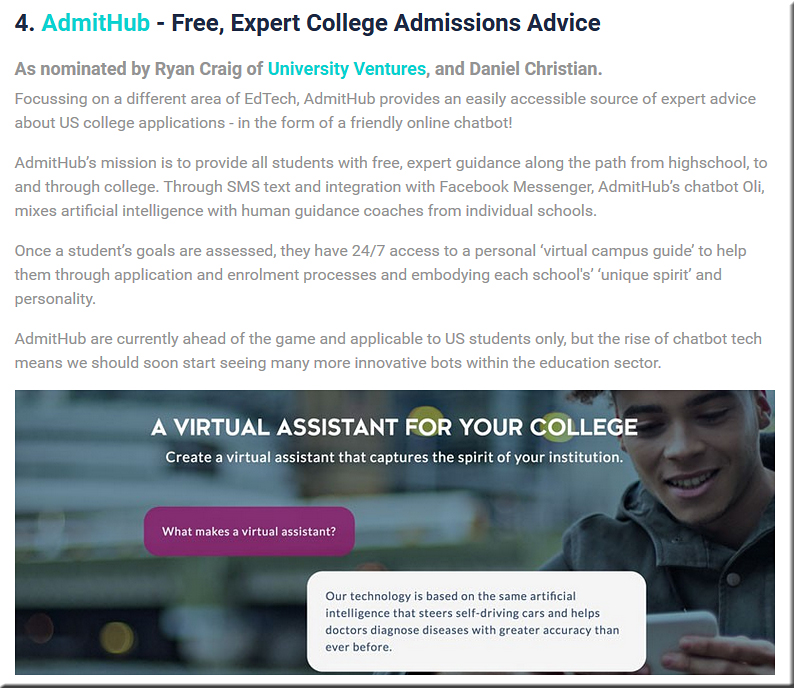
  • AdmitHub – Free, Expert College Admissions Advice
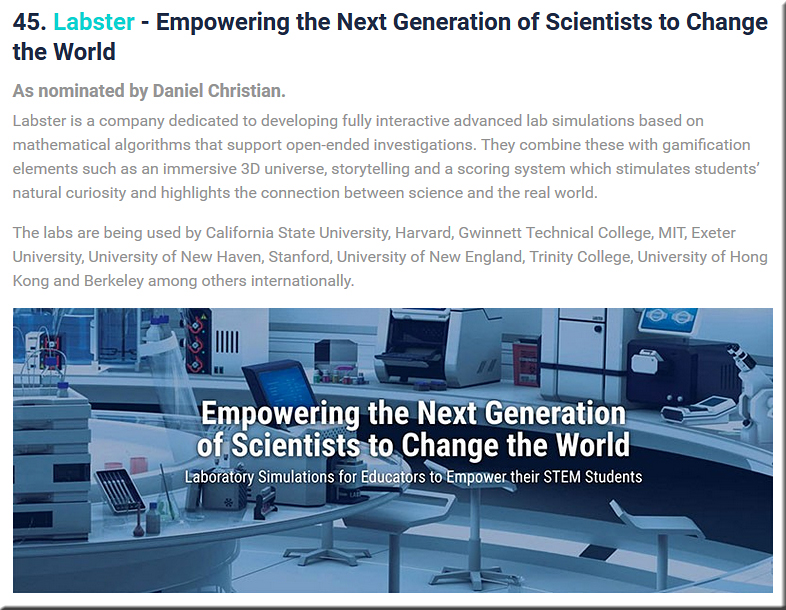
  • Labster – Empowering the Next Generation of Scientists to Change the World
  • Unimersiv – Virtual Reality Educational Experiences
  • Lifeliqe – Interactive 3D Models to Augment Classroom Learning


A Guide to Internships: Finding Hands-On Experience Locally & Abroad — from learnhowtobecome.org

Excerpt:

A good internship may be the deciding factor for employers looking to hire recent graduates. The professional experience acquired in an internship could mean the candidate is more likely to provide value from day one. Find out the ways an internship can boost a career, what type of internship is the right fit and tips for getting your dream internship locally and abroad.
How Internships Benefit Careers

From hands-on experience to networking, internships offer students experiences they often will not find in the classroom. The following list includes some of the reasons why internships are beneficial to students, and a great way to get a head start on a career path.

Searching for and starting an internship can be intimidating. The list below offers students advice on how to find the right internship and be successful once they start.


Professional networking: Since most job positions are not advertised, professional networking plays a huge role in any successful job search. As an intern, students meet people who can become part of their professional network, which may help them find a job after graduation. Even if there isn’t a position available in the organization they interned for, the contacts students make can lead to a job somewhere else.


Summer 2017 Human++ — fromcambridge.nuvustudio.com
Human-Machine Intelligence, Hacking Drones, Bio Fashion, Augmented Video Games, Aerial Filmmaking, Smart Tools, Soft Robotics and more!

Excerpt:

NuVu is a place where young students grow their spirit of innovation. They use their curiosity and creativity to explore new ideas, and make their concepts come to life through our design process. Our model is based on the architecture studio model, and every Summer we use imaginative themes to frame two-week long Studios in which students dive into hands-on design, engineering, science, technology, art and more!


Move over tablets? This tech could be the future of learning — from fastcodesign.com by Katharine Schwab
Fluid dynamics are a lot cooler when you can see them at work with your own eyes.


Excerpt:

Physics can be difficult to grasp—even for adults. So how do you teach the subject’s abstract ideas to middle schoolers?

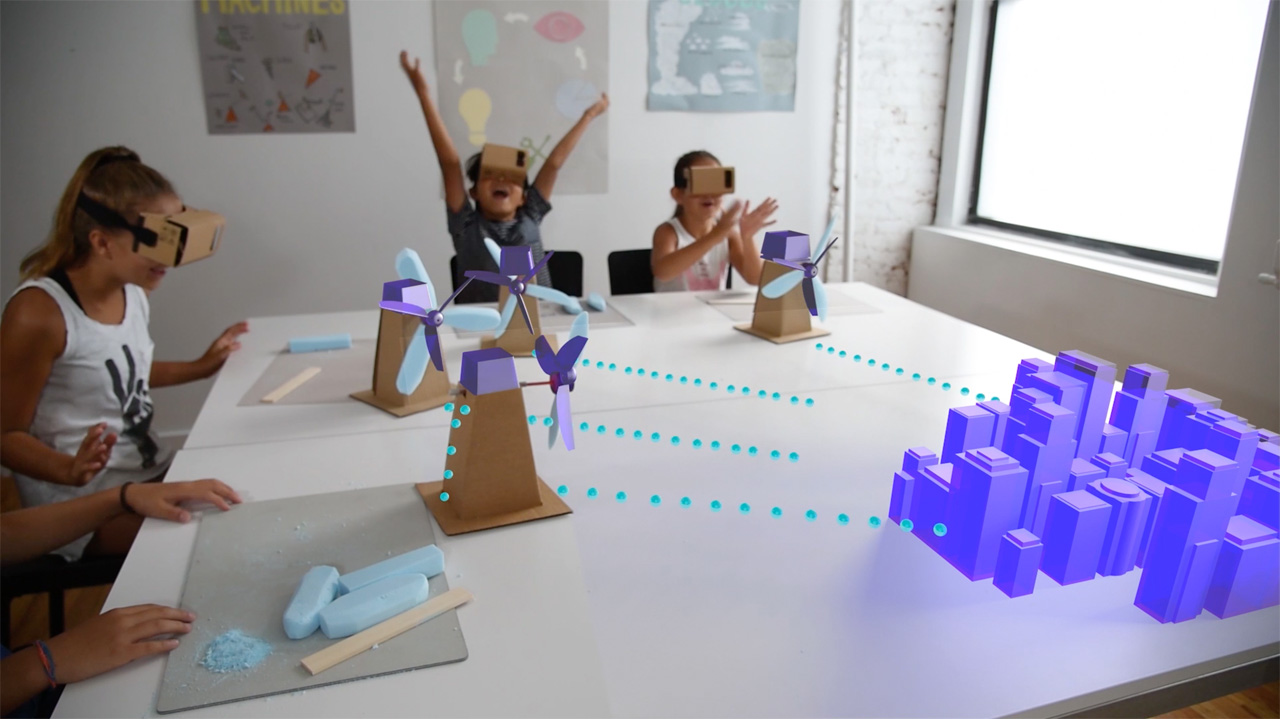
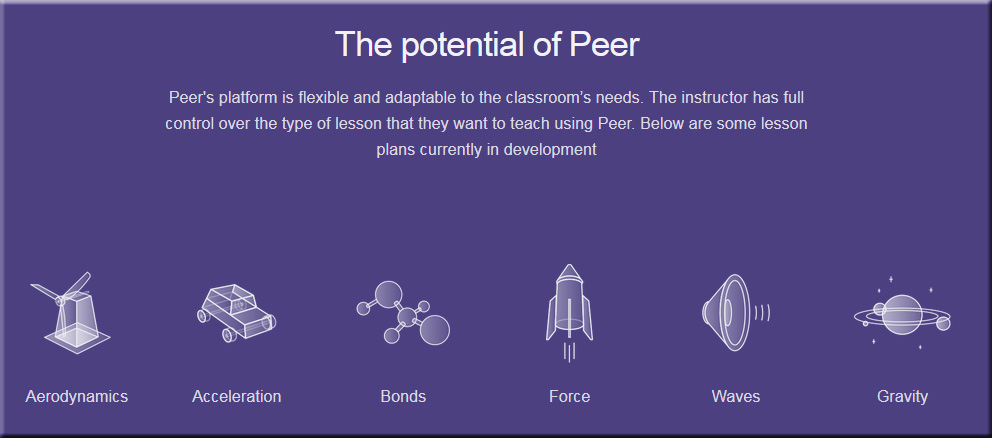
Show some of the concepts in action. That’s the idea behind Peer, an experimental project from New York-based design firm Moment that uses mixed reality to teach middle schoolers scientific ideas such as aerodynamics, sound waves, gravity, and acceleration. The project, though purely conceptual, is a tantalizing hint at where technology in the classroom could be headed next.


Also see:


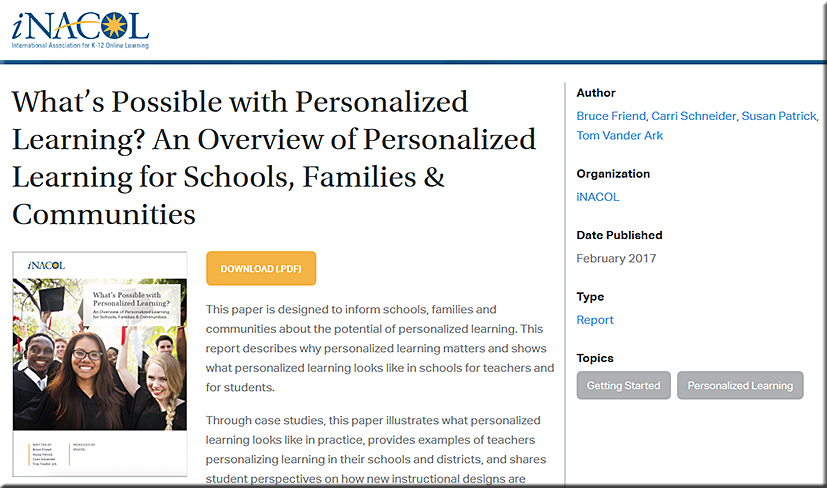
The 4 Common Characteristics of Personalized Learning — from thejournal.com by Leila Meyer
iNACOL offers ideas for implementing personalized learning in K-12 schools with the support of families and the community.

Excerpt:

According to the report, there are many different approaches to personalized learning, but most of them share these common characteristics:

  • Student ownership of their learning process;
  • Focus on the learning process rather than “big end-of-year tests”;
  • Competency or mastery-based student progression; and
  • Anytime, anywhere learning.


See also:


From DSC:
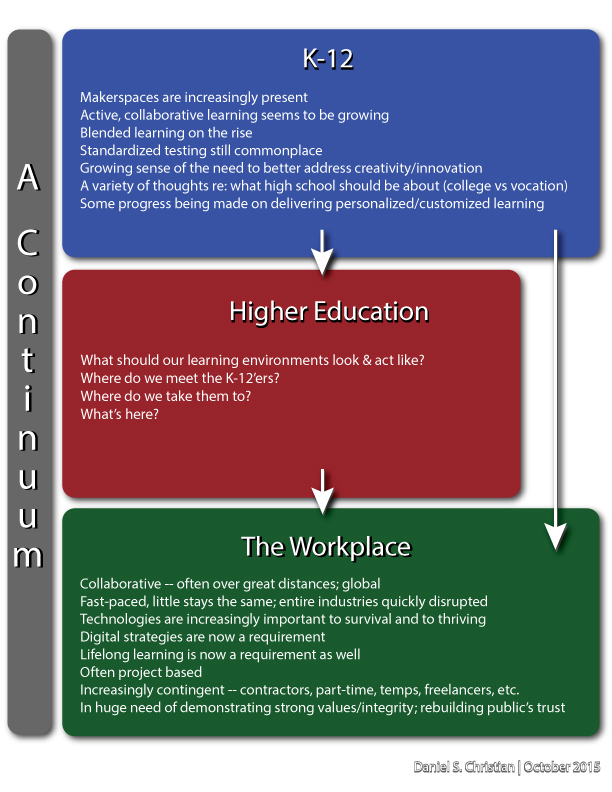
In the spirit of pulse-checking the landscapes…those of us working in higher education, take heed.  These are your future students.  What expectations from students might you encounter in the (not-too-distant) future?  What are the ramifications for which pedagogies you decide to use?

Further out, for those of you working in the corporate learning & development world or in corporate training/universities, your time may be further out here…but you need to take heed as well.  These are your future employees.  They will come into your organizations with their expectations for how they prefer to learn and grow. Will you meet them where they are at?

We operate in a continuum…we’d be wise to pulse-check what’s happening in the earlier phases of this continuum.


Apple Releases Education Bundle With Video, Audio Editing Tools — from campustechnology.com

Excerpt:

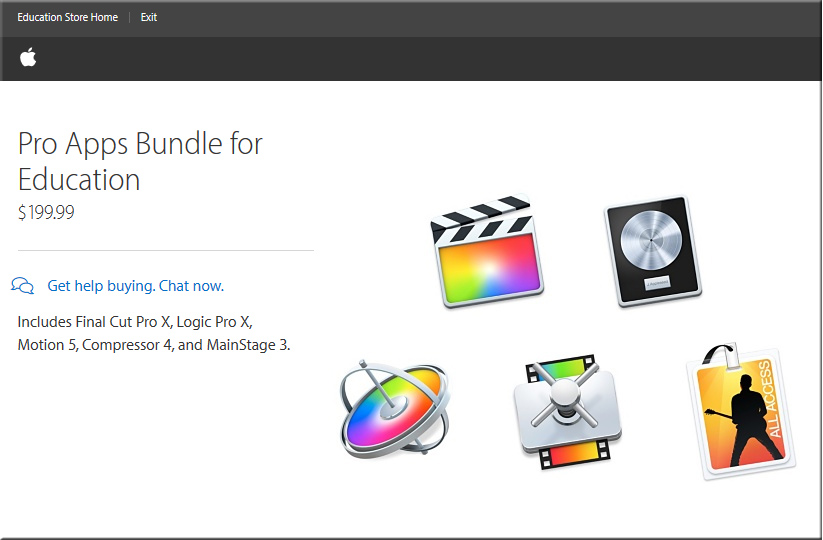
Apple Friday introduced its Pro Apps Bundle for Education, available for K–12 schools and higher ed institutions.

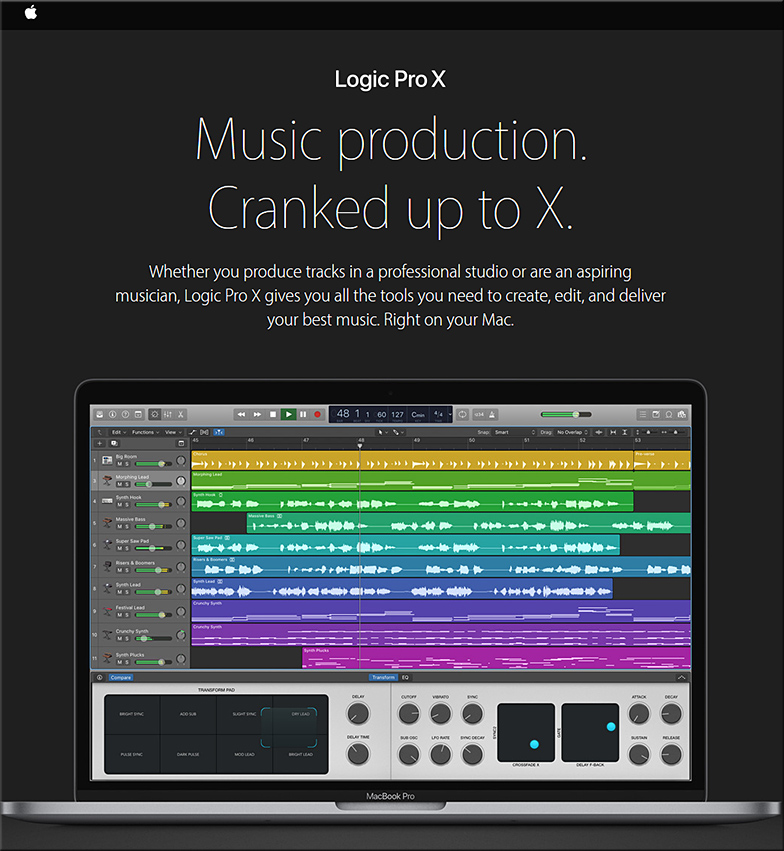
The bundle is a collection of five apps from Apple that deliver industry-level tools for video editors and musicians:


Also see:


IBM Equips Youth with Tech Career Skills in Nationwide Network of High Performing P-TECH Schools — from finance.yahoo.com

Excerpt:

BROOKLYN, N.Y., Jan. 5, 2017 /PRNewswire/ — Today, IBM announced that P-TECH, the IBM-inspired six-year education model that is leading a national wave of career-focused technical education in nearly 60 schools across six states, has already graduated more than 50 students, including a new class of 16 graduates in January. All of these graduates completed the six-year curriculum ahead of schedule, earning both their high school and two-year college tech degrees, with some finishing in as little as 3.5 years. Some of their stories can be found here.


5 Online Education Trends to Watch in 2017 — from usnews.com by Jordan Friedman
Experts predict more online programs will offer alternative credentials and degrees in specialized fields.

Excerpts:

  1. Greater emphasis on nontraditional credentials
  2. Increased use of big data to measure student performance
  3. Greater incorporation of artificial intelligence into classes
  4. Growth of nonprofit online programs
  5. Online degrees in surprising and specialized disciplines


The Future of Online Learning Is Offline: What Strava Can Teach Digital Course Designers — from edsurge.com by Amy Ahearn

Excerpt:

I became a Strava user in 2013, around the same time I became an online course designer. Quickly I found that even as I logged runs on Strava daily, I struggled to find the time to log into platforms like Coursera, Udemy or Udacity to finish courses produced by my fellow instructional designers. What was happening? Why was the fitness app so “sticky” as opposed to the online learning platforms?

As a thought experiment, I tried to recast my Strava experience in pedagogical terms. I realized that I was recording hours of deliberate practice (my early morning runs), formative assessments (the occasional speed workout on the track) and even a few summative assessments (races) on the app. Strava was motivating my consistent use by overlaying a digital grid on my existing offline activities. It let me reconnect with college teammates who could keep me motivated. It enabled me to analyze the results of my efforts and compare them to others. I didn’t have to be trapped behind a computer to benefit from this form of digital engagement—yet it was giving me personalized feedback and results. How could we apply the same practices to learning?

I’ve come to believe that one of the biggest misunderstandings about online learning is that it has to be limited to things that can be done in front of a computer screen. Instead, we need to reimagine online courses as something that can enable the interplay between offline activities and digital augmentation.

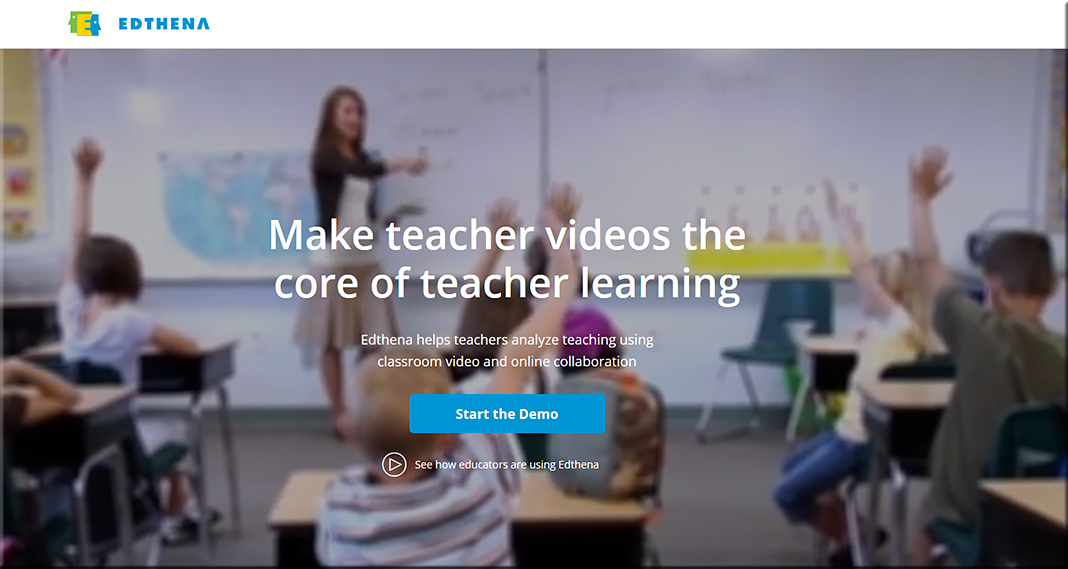
A few companies are heading that way. Edthena enables teachers to record videos of themselves teaching and then upload these to the platform to get feedback from mentors.


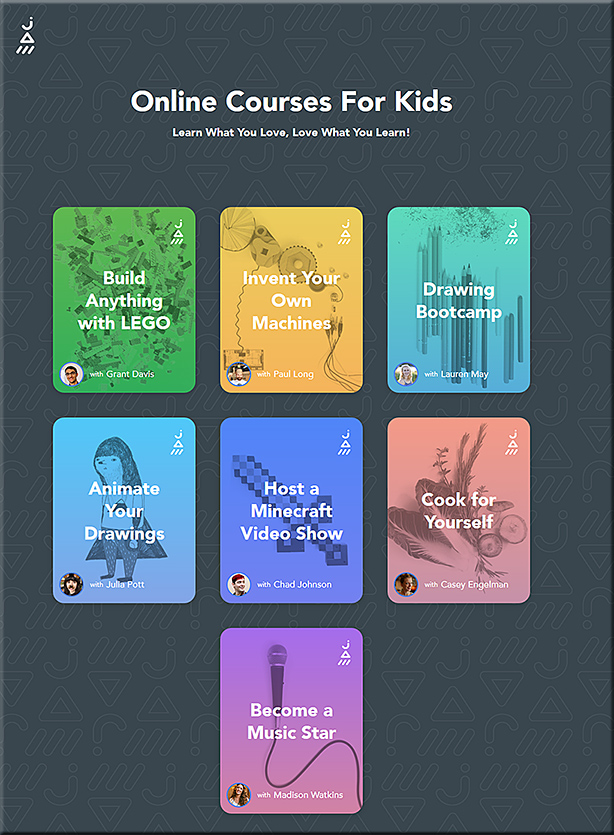
DIY’s JAM online courses let kids complete hands-on activities like drawing or building with LEGOs and then has them upload pictures of their work to earn badges and share their projects.


My team at +Acumen has built online courses that let teams complete projects together offline and then upload their prototypes to the NovoEd platform to receive feedback from peers. University campuses are integrating Kaltura into their LMS platforms to enable students to capture and upload videos.


We need to focus less on building multiple choice quizzes or slick lecture videos and more on finding ways to robustly capture evidence of offline learning that can be validated and critiqued at scale by peers and experts online.


A new $300 gadget from Mattel will make being a parent much easier — from thestreet.com by Lindsay Rittenhouse
Mattel is developing a smart baby monitor called Aristotle that is designed to grow and learn with the child.

Excerpts:

Aristotle by Nabi — the Mattel-owned unit that produces children’s tablets — will debut this summer and is developed with the help of Microsoft and Qualcomm. The system uses artificial intelligence, cognitive services and Internet of Things (IoT) technology to cater to the basic needs of children, the Barbie maker said in a statement today.

However, one of the groundbreaking features of Aristotle is that the device is designed to adapt to the child’s life as it grows. For toddlers, Aristotle will use audio and visual learning methods to teach children basic education such as the ABCs and 123s, Mattel said.

For “kids,” Aristotle can help with homework or become an entertainment system, and for “tweens” the gadget transforms into a “more sophisticated” learning device that can teach foreign languages, according to Mattel.


From DSC:
Though I’m a bit skeptical on how much such a device can lessen the enormous task of parenting, I do find the “grow with the child” approach very interesting and highly  innovative.


However, one of the groundbreaking features of Aristotle is that the device is designed to adapt to the child’s life as it grows.


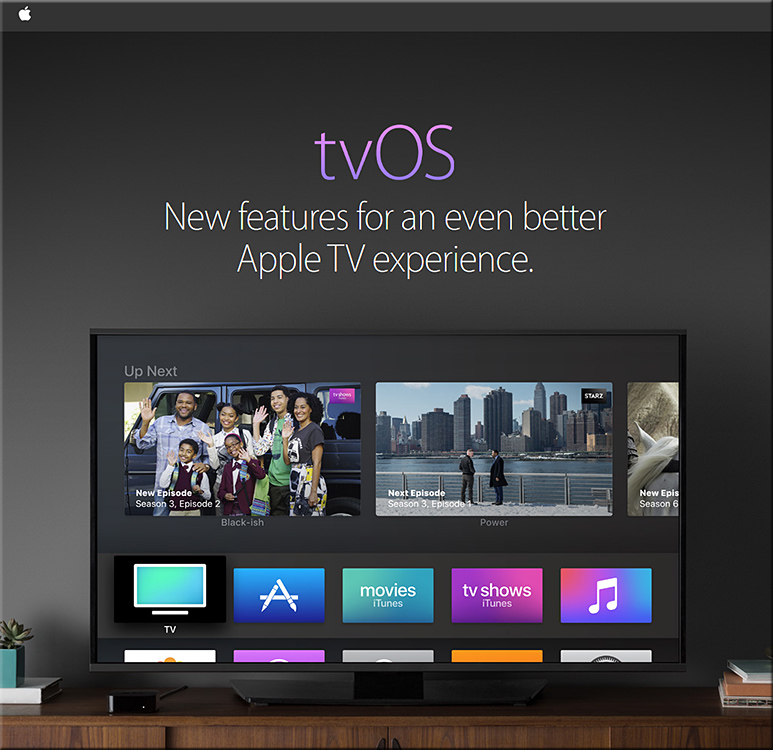
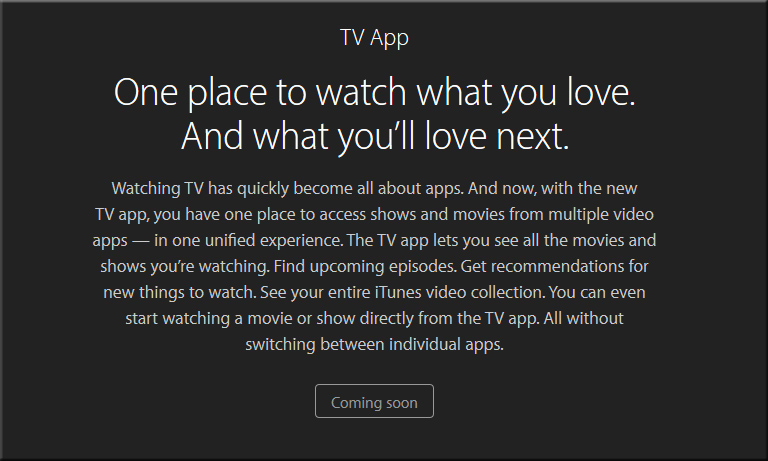
Some reflections/resources on today’s announcements from Apple

tv-app-apple-10-27-16


tv-app2-apple-10-27-16

From DSC:
How long before recommendation engines like this can be filtered/focused down to just display apps, channels, etc. that are educational and/or training related (i.e., a recommendation engine to suggest personalized/customized playlists for learning)?

That is, in the future, will we have personalized/customized playlists for learning on our Apple TVs — as well as on our mobile devices — with the assessment results of our taking the module(s) or course(s) being sent in to:

  • A credentials database on LinkedIn (via blockchain)
    and/or
  • A credentials database at the college(s) or university(ies) that we’re signed up with for lifelong learning (via blockchain)
    and/or
  • To update our cloud-based learning profiles — which can then feed a variety of HR-related systems used to find talent? (via blockchain)

Will participants in MOOCs, virtual K-12 schools, homeschoolers, and more take advantage of learning from home?

Will solid ROI’s from having thousands of participants paying a smaller amount (to take your course virtually) enable higher production values?

Will bots and/or human tutors be instantly accessible from our couches?

Will we be able to meet virtually via our TVs and share our computing devices?


bigscreen_rocket_league


The Living [Class] Room -- by Daniel Christian -- July 2012 -- a second device used in conjunction with a Smart/Connected TV


Other items on today’s announcements:


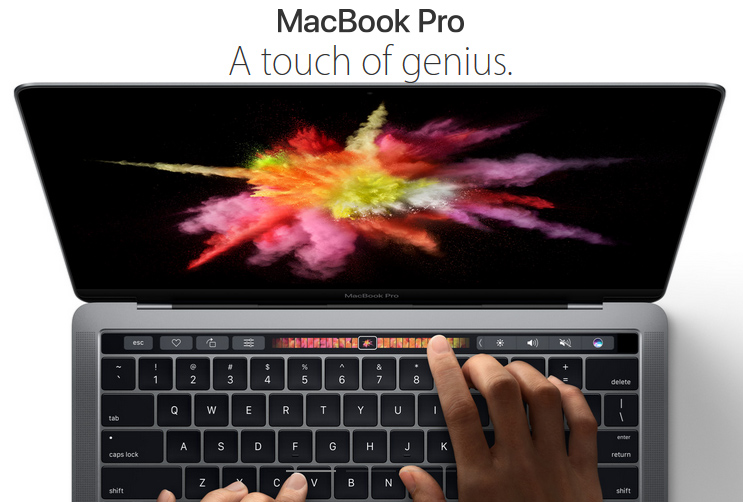
macbookpro-10-27-16


All the big announcements from Apple’s Mac event — from amp.imore.com by Joseph Keller

  • MacBook Pro
  • Final Cut Pro X
  • Apple TV > new “TV” app
  • Touch Bar


Apple is finally unifying the TV streaming experience with new app — from techradar.com by Nick Pino


How to migrate your old Mac’s data to your new Mac — from amp.imore.com by Lory Gil


MacBook Pro FAQ: Everything you need to know about Apple’s new laptops — from amp.imore.com by Serenity Caldwell


Accessibility FAQ: Everything you need to know about Apple’s new accessibility portal — from imore.com by Daniel Bader


Apple’s New MacBook Pro Has a ‘Touch Bar’ on the Keyboard — from wired.com by Brian Barrett


Apple’s New TV App Won’t Have Netflix or Amazon Video — from wired.com by Brian Barrett


Apple 5th Gen TV To Come With Major Software Updates; Release Date Likely In 2017 — from mobilenapps.com


nmc-digitalliteracyreport-oct2016


The New Media Consortium (NMC) has released Digital Literacy: An NMC Horizon Project Strategic Brief in conjunction with the 2016 EDUCAUSE Annual Conference.

In analyzing the progress and gaps in this area, the NMC’s report has identified a need for higher education leaders and technology companies to prioritize students as makers, learning through the act of content creation rather than mere consumption. Additionally, the publication recommends that colleges and universities establish productive collaborations with industry, government, and libraries to provide students with access to the latest technologies and tools.

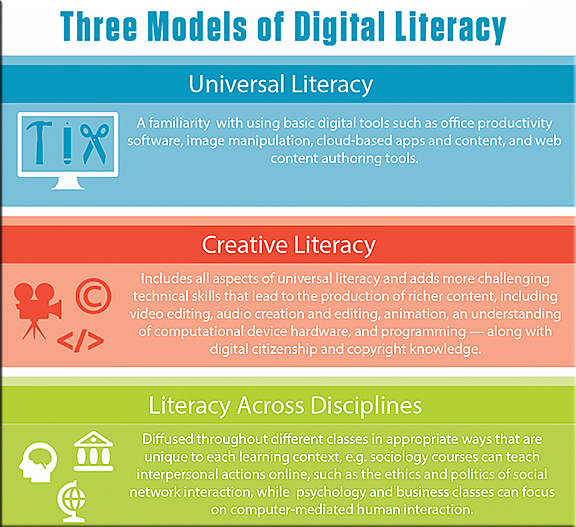
Based on the variety and complexity of these results, NMC cannot identify just one model of digital literacy. Instead three different digital literacies are now evident, each with distinct standards, potential curriculum, and implications for creative educators.


digitallits-nmc-oct2016


The aim of this publication is to establish a shared vision of digital literacy for higher education leaders by illuminating key definitions and models along with best practices and recommendations for implementing successful digital literacy initiatives.


To be digitally literate, you need to be:
fluent at critical thinking,
collaborating,
being creative, and
problem-solving in
digital environments.


Computer science and digital media classes can instruct on everything from office productivity applications to programming and video editing, for example.  Sociology courses can teach interpersonal actions online, such as the ethics and politics of social network interaction, while psychology and business classes can focus on computer-mediated human interaction. Government and political science classes are clearly well equipped to explore the intersection of digital technology and citizenship mentioned above. Communication, writing, and  literature classes have the capacity to instruct students on producing digital content in the form of stories, arguments, personal expression, posters, and more. 


From DSC:
If faculty members aren’t asking students to create multimedia in their assignments and/or take part in online/digitally-based means of communications and learning, the vast majority of the students won’t (and don’t) care about digital literacy…it’s simply not relevant to them: “Whatever gets me the grade, that’s what I’ll do. But no more.”

This type of situation/perspective is quite costly.  Because once students graduate from college, had they built up some solid digital literacy — especially the “creative literacy” mentioned above — they would be in much better shape to get solid jobs, and prosper at those jobs. They would be much better able to craft powerful communications — and reach a global audience in doing so. They would have honed their creativity, something increasingly important as the onward march of AI, robotics, algorithms, automation, and such continues to eat away at many types of jobs (that don’t really need creative people working in them).

This is an important topic, especially as digitally-based means of communication continue to grow in their usage and impact.


Part of digital literacy is not just understanding how a tool works but also why it is useful in the real world and when to use it.


Women of Foresight: Changes in Education for Future Student Success — from leadingthought.us.com by Dr. Liz Alexander


Excerpt:

Education. A topic that remains hotly debated all over the world. Especially now, as we struggle to find our footing as our futures hurtle towards us, faster and more profoundly different than ever before.

What changes do existing schools and colleges need to make to better prepare students for the trends we already see? Together with those “weak signals” that suggest other, possible futures? In “trying to adapt education for what the American economy is evolving into,” is mandating “coding classes” part of the answer?  Are we doing enough to take into account contrarian perspectives like this one? Who gets to decide what the purpose of education should be, in any case?

These are just some of the questions everyone–from policy makers to parents, academics to students themselves–need to think about.

Intrigued as to what the global futurist and foresight communities might have in mind, I posed them the following question:

If there was one thing I could change in education to better prepare students for the future of work, it would be…

The twenty women that responded to my call are either professional futurists or apply foresight in their roles as leaders in global firms and consultancies, think tanks and foundations. They’re from countries as geographically disperse as Australia, Egypt, Germany, India, New Zealand, Norway, United Arab Emirates, United Kingdom, and United States.

(If you’re wondering why I only asked women, it was a deliberate move to broaden commentary on “our futures,” so people don’t think it’s the sole purview of older, white men. Also, because I believe women’s natural inclinations toward relationships and collaboration, communities and mutual support, are the future!)


One example/answer:

“…to put more emphasis on HOW students will contribute, rather than WHAT their expertise will be, by helping them answer these three questions:

  • How do I most want to contribute to something larger than myself, aka my ‘mission in life’?
  • In what work environment will I be able to make the meaningful contributions I’m capable of?
  • How do I interact with others? What might derail my ambitions, dreams, and wishes? What can I do about it?”


© 2025 | Daniel Christian