Voice has become one of the most influential elements in how digital content is experienced. From podcasts and videos to apps, ads, and interactive platforms, spoken audio shapes how messages are understood and remembered. In recent years, the rise of the ai voice generator has changed how creators and brands approach audio production, lowering barriers while expanding creative possibilities.
Rather than relying exclusively on traditional voice recording, many teams now use AI-generated voices as part of their content and brand strategies. This shift is not simply about efficiency; it reflects broader changes in how digital experiences are produced, scaled, and personalised.
The Future Role Of AI-Generated Voice As AI voice technology continues to improve, its role in creative and brand workflows will likely expand. Future developments may include more adaptive voices that respond to context, audience behaviour, or emotional cues in real time. Rather than replacing traditional voice work, AI-generated voice is becoming another option in a broader creative toolkit, one that offers speed, flexibility, and accessibility.
Could Your Next Side Hustle Be Training AI? — from builtin.com by Jeff Rumage As automation continues to reshape the labor market, some white-collar professionals are cashing in by teaching AI models to do their jobs.
Summary: Artificial intelligence may be replacing jobs, but it’s also creating some new ones. Professionals in fields like medicine, law and engineering can earn big money training AI models, teaching them human skills and expertise that may one day make those same jobs obsolete.
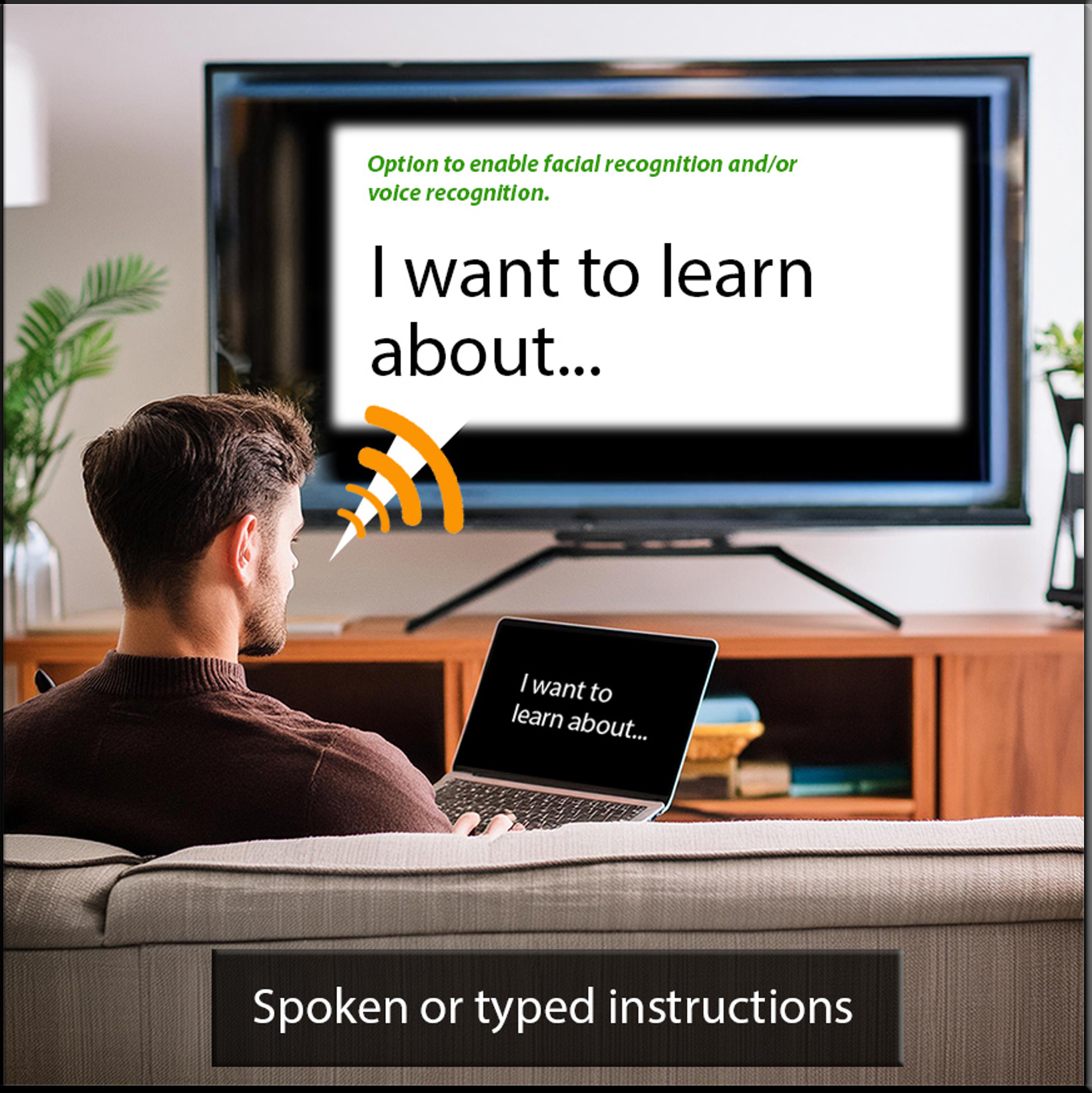
Here’s the thing: voice is finally good enough to replace typing now. And I mean actually good enough, not “Siri, play Despacito” good enough.
To Paraphrase Andrej Karpathy’s famous quote, “the hottest new programming language is English”, in this case, the hottest new user interface is talking.
The Great Convergence: Why Voice Is Having Its Moment Three massive shifts just collided to make voice interfaces inevitable.
First, speech recognition stopped being terrible. …
Second, our devices got ears everywhere. …
Third, and most importantly: LLMs made voice assistants smart enough to be worth talking to. …
Update on November 20, 2025: Early feedback from the pilot has been positive, so we’re expanding group chats to all logged-in users on ChatGPT Free, Go, Plus and Pro plans globally over the coming days. We will continue refining the experience as more people start using it.
Today, we’re beginning to pilot a new experience in a few regions that makes it easy for people to collaborate with each other—and with ChatGPT—in the same conversation. With group chats, you can bring friends, family, or coworkers into a shared space to plan, make decisions, or work through ideas together.
Whether you’re organizing a group dinner or drafting an outline with coworkers, ChatGPT can help. Group chats are separate from your private conversations, and your personal ChatGPT memory is never shared with anyone in the chat.
Voice-powered AI meets a visual companion for entertainment, everyday help, and everything in between.
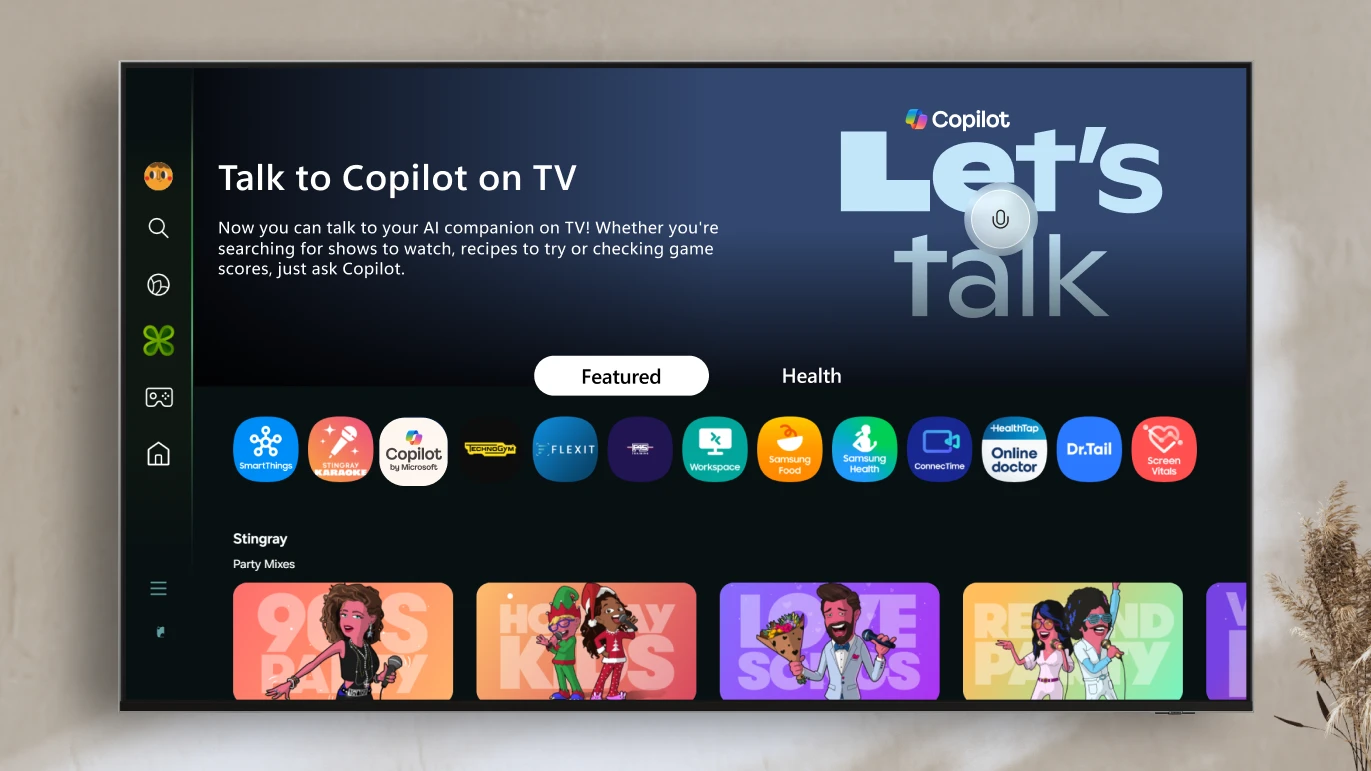
Redmond, Wash., August 27—Today, we’re announcing the launch ofCopilot on select Samsung TVs and monitors, transforming the biggest screen in your home into your most personal and helpful companion—and it’s free to use.
Copilot makes your TV easier and more fun to use with its voice-powered interface, friendly on-screen character, and simple visual cards. Now you can quickly find what you’re looking for and discover new favorites right from your living room.
Because it lives on the biggest screen in the home, Copilot is a social experience—something you can use together with family and friends to spark conversations, help groups decide what to watch, and turn the TV into a shared space for curiosity and connection.
.Get the 2025 Student Guide to Artificial Intelligence — from studentguidetoai.org This guide is made available under a Creative Commons license by Elon University and the American Association of Colleges and Universities (AAC&U). .
Agentic AI is taking these already huge strides even further. Rather than simply asking a question and receiving an answer, an AI agent can assess your current level of understanding and tailor a reply to help you learn. They can also help you come up with a timetable and personalized lesson plan to make you feel as though you have a one-on-one instructor walking you through the process. If your goal is to learn to speak a new language, for example, an agent might map out a plan starting with basic vocabulary and pronunciation exercises, then progress to simple conversations, grammar rules and finally, real-world listening and speaking practice.
…
For instance, if you’re an entrepreneur looking to sharpen your leadership skills, an AI agent might suggest a mix of foundational books, insightful TED Talks and case studies on high-performing executives. If you’re aiming to master data analysis, it might point you toward hands-on coding exercises, interactive tutorials and real-world datasets to practice with.
The beauty of AI-driven learning is that it’s adaptive. As you gain proficiency, your AI coach can shift its recommendations, challenge you with new concepts and even simulate real-world scenarios to deepen your understanding.
Ironically, the very technology feared by workers can also be leveraged to help them. Rather than requiring expensive external training programs or lengthy in-person workshops, AI agents can deliver personalized, on-demand learning paths tailored to each employee’s role, skill level, and career aspirations. Given that 68% of employees find today’s workplace training to be overly “one-size-fits-all,” an AI-driven approach will not only cut costs and save time but will be more effective.
This is one reason why I don’t see AI-embedded classrooms and AI-free classrooms as opposite poles. The bone of contention, here, is not whether we can cultivate AI-free moments in the classroom, but for how long those moments are actually sustainable.
Can we sustain those AI-free moments for an hour? A class session? Longer?
…
Here’s what I think will happen. As AI becomes embedded in society at large, the sustainability of imposed AI-free learning spaces will get tested. Hard. I think it’ll become more and more difficult (though maybe not impossible) to impose AI-free learning spaces on students.
However, consensual and hybrid AI-free learning spaces will continue to have a lot of value. I can imagine classes where students opt into an AI-free space. Or they’ll even create and maintain those spaces.
Duolingo’s AI Revolution — from drphilippahardman.substack.com by Dr. Philippa Hardman What 148 AI-Generated Courses Tell Us About the Future of Instructional Design & Human Learning
Last week, Duolingo announced an unprecedented expansion: 148 new language courses created using generative AI, effectively doubling their content library in just one year. This represents a seismic shift in how learning content is created — a process that previously took the company 12 years for their first 100 courses.
As CEO Luis von Ahn stated in the announcement, “This is a great example of how generative AI can directly benefit our learners… allowing us to scale at unprecedented speed and quality.”
In this week’s blog, I’ll dissect exactly how Duolingo has reimagined instructional design through AI, what this means for the learner experience, and most importantly, what it tells us about the future of our profession.
Medical education is experiencing a quiet revolution—one that’s not taking place in lecture theatres or textbooks, but with headsets and holograms. At the heart of this revolution are Mixed Reality (MR) AI Agents, a new generation of devices that combine the immersive depth of mixed reality with the flexibility of artificial intelligence. These technologies are not mere flashy gadgets; they’re revolutionising the way medical students interact with complicated content, rehearse clinical skills, and prepare for real-world situations. By combining digital simulations with the physical world, MR AI Agents are redefining what it means to learn medicine in the 21st century.
4 Reasons To Use Claude AI to Teach — from techlearning.com by Erik Ofgang Features that make Claude AI appealing to educators include a focus on privacy and conversational style.
After experimenting using Claude AI on various teaching exercises, from generating quizzes to tutoring and offering writing suggestions, I found that it’s not perfect, but I think it behaves favorably compared to other AI tools in general, with an easy-to-use interface and some unique features that make it particularly suited for use in education.
Essential AI tools for better work — from wondertools.substack.com by Jeremy Caplan My favorite tactics for making the most of AI — a podcast conversation
AI tools I consistently rely on (areas covered mentioned below)
Research and analysis
Communication efficiency
Multimedia creation
AI tactics that work surprisingly well
1. Reverse interviews Instead of just querying AI, have it interview you. Get the AI to interview you, rather than interviewing it. Give it a little context and what you’re focusing on and what you’re interested in, and then you ask it to interview you to elicit your own insights.”
This approach helps extract knowledge from yourself, not just from the AI. Sometimes we need that guide to pull ideas out of ourselves.
Isla Fulford, a researcher at OpenAI, had a hunch that Deep Research would be a hit even before it was released.
Fulford had helped build the artificial intelligence agent, which autonomously explores the web, deciding for itself what links to click, what to read, and what to collate into an in-depth report. OpenAI first made Deep Research available internally; whenever it went down, Fulford says, she was inundated with queries from colleagues eager to have it back. “The number of people who were DMing me made us pretty excited,” says Fulford.
Since going live to the public on February 2, Deep Research has proven to be a hit with many users outside the company too.
Nvidia (NASDAQ:NVDA) will open a quantum computing research lab in Boston which is expected to start operations later this year.
The Nvidia Accelerated Quantum Research Center, or NVAQC, will integrate leading quantum hardware with AI supercomputers, enabling what is known as accelerated quantum supercomputing, said the company in a March 18 press release.
Nvidia’s CEO Jensen Huang also made this announcement on Thursday at the company’s first-ever Quantum Day at its annual GTC event.
PARIS, March 21 (Reuters) – Pasqal, a fast-growing French quantum computer start-up company, announced on Friday a partnership with chip giant Nvidia (NVDA.O), opens new tab whereby Pasqal’s customers would gain access to more tools to develop quantum applications.
Pasqal said it would connect its quantum computing units and cloud platform onto NVIDIA’s open-source platform called CUDA-Q.
Today, we’re launching new speech-to-text and text-to-speech audio models in the API—making it possible to build more powerful, customizable, and intelligent voice agents that offer real value. Our latest speech-to-text models set a new state-of-the-art benchmark, outperforming existing solutions in accuracy and reliability—especially in challenging scenarios involving accents, noisy environments, and varying speech speeds. These improvements increase transcription reliability, making the models especially well-suited for use cases like customer call centers, meeting note transcription, and more.
DeepSeek R-1 Explained— from aieducation.substack.com by Claire Zau A no-nonsense FAQ (for everyone drowning in DeepSeek headlines)
There is a good chance you’re exhausted by the amount of DeepSeek coverage flooding your inbox. Between the headlines and hot takes on X, it’s hard not to have questions: What is DeepSeek? Why is it special? Why is everyone freaking out? What does this mean for the AI ecosystem? Can you explain the tech? Am I allowed to use it?
Let’s break down why exactly it’s such a big deal with some straightforward FAQs:
Voice is one of the most powerful unlocks for AI application companies. It is the most frequent (and most information-dense) form of human communication, made “programmable” for the first time due to AI.
…
For consumers, we believe voice will be the first — and perhaps the primary — way people interact with AI. This interaction could take the form of an always-available companion or coach, or by democratizing services, such as language learning, that were previously inaccessible.
The use of artificial intelligence at work continues to climb. Twice as many LinkedIn members in the U.S. say they are using AI on the job now compared to 2023, according to the latest Workforce Confidence survey. Meanwhile, at least half of workers say AI skills will help them progress in their careers. Product managers are the most likely to agree AI will give them a boost, while those in healthcare services roles are least likely.
At the end of 2024 and start of 2025, we’ve witnessed some fascinating developments in the world of AI and education, from from India’s emergence as a leader in AI education and Nvidia’s plans to build an AI school in Indonesia to Stanford’s Tutor CoPilot improving outcomes for underserved students.
Other highlights include Carnegie Learning partnering with AI for Education to train K-12 teachers, early adopters of AI sharing lessons about implementation challenges, and AI super users reshaping workplace practices through enhanced productivity and creativity.
India emerges as Global Leader in AI Education: Bosch Tech Compass 2025 — from medianews4u.com 57% Indians receive employer-provided AI training, surpassing Germany, and other European nations
Bengaluru: India is emerging as a global leader in artificial intelligence (AI) education, with over 50% of its population actively self-educating in AI-related skills, according to Bosch’s fourth annual Tech Compass Survey. The report highlights India’s readiness to embrace AI in work, education, and daily life, positioning the nation as a frontrunner in the AI revolution.
AI for Education reviewed the ElevenLabs AI Voice Tool through an educator lens, digging into the new autonomous voice agent functionality that facilitates interactive user engagement. We showcase the creation of a customized vocabulary bot, which defines words at a 9th-grade level and includes options for uploading supplementary material. The demo includes real-time testing of the bot’s capabilities in defining terms and quizzing users.
The discussion also explored the AI tool’s potential for aiding language learners and neurodivergent individuals, and Mandy presented a phone conversation coach bot to help her 13-year-old son, highlighting the tool’s ability to provide patient, repetitive practice opportunities.
While acknowledging the technology’s potential, particularly in accessibility and language learning, we also want to emphasize the importance of supervised use and privacy considerations. Right now the tool is currently free, this likely won’t always remain the case, so we encourage everyone to explore and test it out now as it continues to develop.
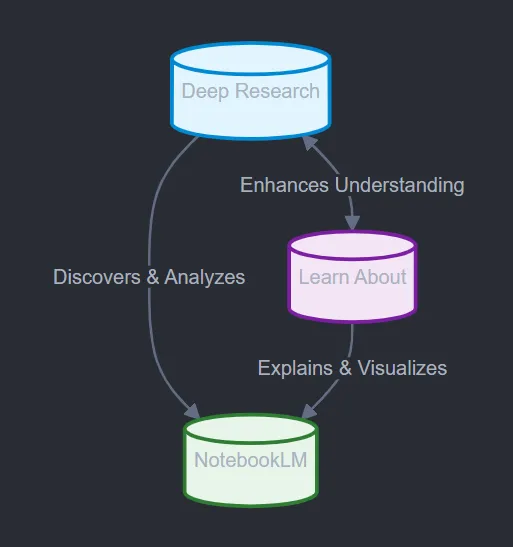
Why Combine Them? Faster Onboarding: Start broad with Deep Research, then refine and clarify concepts through Learn About. Finally, use NotebookLM to synthesize everything into a cohesive understanding.
Deeper Clarity: Unsure about a concept uncovered by Deep Research? Head to Learn About for a primer. Want to revisit key points later? Store them in NotebookLM and generate quick summaries on demand.
Adaptive Exploration: Create a feedback loop. Let new terms or angles from Learn About guide more targeted Deep Research queries. Then, compile all findings in NotebookLM for future reference. .
There are several challenges to making policy that make institutions hesitant to or delay their ability to produce it. Policy (as opposed to guidance) is much more likely to include a mixture of IT, HR, and legal services. This means each of those entities has to wrap their heads around GenAI—not just for their areas but for the other relevant areas such as teaching & learning, research, and student support. This process can definitely extend the time it takes to figure out the right policy.
That’s naturally true with every policy. It does not often come fast enough and is often more reactive than proactive.
Still, in my conversations and observations, the delay derives from three additional intersecting elements that feel like they all need to be in lockstep in order to actually take advantage of whatever possibilities GenAI has to offer.
Which Tool(s) To Use
Training, Support, & Guidance, Oh My!
Strategy: Setting a Direction…
Prophecies of the Flood — from oneusefulthing.org by Ethan Mollick What to make of the statements of the AI labs?
What concerns me most isn’t whether the labs are right about this timeline – it’s that we’re not adequately preparing for what even current levels of AI can do, let alone the chance that they might be correct. While AI researchers are focused on alignment, ensuring AI systems act ethically and responsibly, far fewer voices are trying to envision and articulate what a world awash in artificial intelligence might actually look like. This isn’t just about the technology itself; it’s about how we choose to shape and deploy it. These aren’t questions that AI developers alone can or should answer. They’re questions that demand attention from organizational leaders who will need to navigate this transition, from employees whose work lives may transform, and from stakeholders whose futures may depend on these decisions. The flood of intelligence that may be coming isn’t inherently good or bad – but how we prepare for it, how we adapt to it, and most importantly, how we choose to use it, will determine whether it becomes a force for progress or disruption. The time to start having these conversations isn’t after the water starts rising – it’s now.
Top AI Tools of 2024 — from ai-supremacy.com by Michael Spencer (behind a paywall) Which AI tools stood out for me in 2024? My list.
Memorable AI Tools of 2024
Catergories included:
Useful
Popular
Captures the zeighest of AI product innovation
Fun to try
Personally satisfying
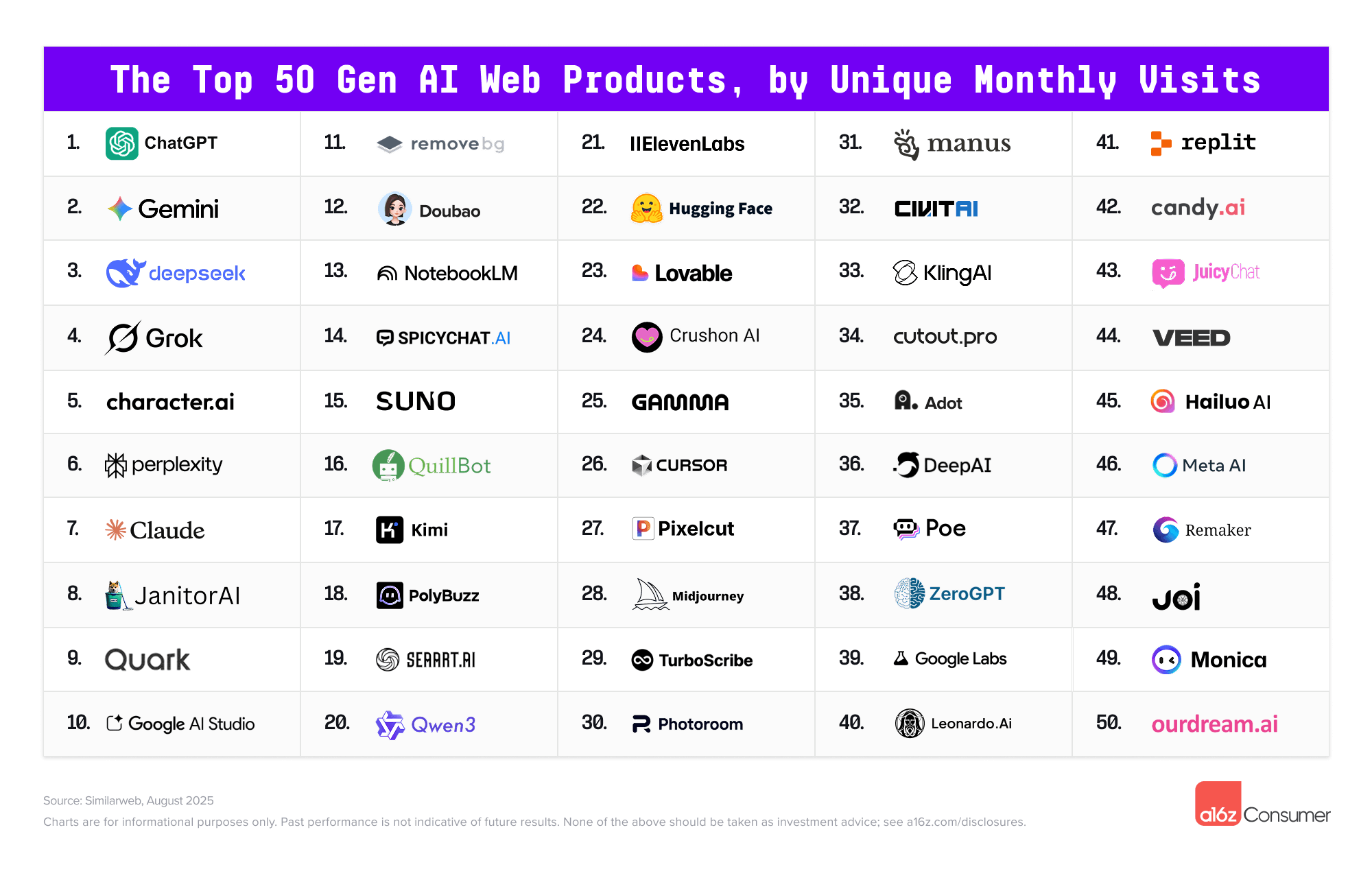
NotebookLM
Perplexity
Claude
…
New “best” AI tool? Really? — from theneurondaily.com by Noah and Grant
PLUS: A free workaround to the “best” new AI…
What is Google’s Deep Research tool, and is it really “the best” AI research tool out there? … Here’s how it works: Think of Deep Research as a research team that can simultaneously analyze 50+ websites, compile findings, and create comprehensive reports—complete with citations.
Unlike asking ChatGPT to research for you, Deep Research shows you its research plan before executing, letting you edit the approach to get exactly what you need.
…
It’s currently free for the first month (though it’ll eventually be $20/month) when bundled with Gemini Advanced. Then again, Perplexity is always free…just saying.
We couldn’t just take J-Cal’s word for it, so we rounded up some other takes:
Our take: We then compared Perplexity, ChatGPT Search, and Deep Research (which we’re calling DR, or “The Docta” for short) on robot capabilities from CES revealed:
An excerpt from today’s Morning Edition from Bloomberg
Global banks will cut as many as 200,000 jobs in the next three to five years—a net 3% of the workforce—as AI takes on more tasks, according to a Bloomberg Intelligence survey. Back, middle office and operations are most at risk. A reminder that Citi said last year that AI is likely to replace more jobs in banking than in any other sector. JPMorgan had a more optimistic view (from an employee perspective, at any rate), saying its AI rollout has augmented, not replaced, jobs so far.
NVIDIA’s Apple moment?! — from theneurondaily.com by Noah Edelman and Grant Harvey PLUS: How to level up your AI workflows for 2025…
NVIDIA wants to put an AI supercomputer on your desk (and it only costs $3,000). … And last night at CES 2025, Jensen Huang announced phase two of this plan: Project DIGITS, a $3K personal AI supercomputer that runs 200B parameter models from your desk. Guess we now know why Apple recently developed an NVIDIA allergy…
… But NVIDIA doesn’t just want its “Apple PC moment”… it also wants its OpenAI moment. NVIDIA also announced Cosmos, a platform for building physical AI (think: robots and self-driving cars)—which Jensen Huang calls “the ChatGPT moment for robotics.”
NVIDIA is bringing AI from the cloud to personal devices and enterprises, covering all computing needs from developers to ordinary users.
At CES 2025, which opened this morning, NVIDIA founder and CEO Jensen Huang delivered a milestone keynote speech, revealing the future of AI and computing. From the core token concept of generative AI to the launch of the new Blackwell architecture GPU, and the AI-driven digital future, this speech will profoundly impact the entire industry from a cross-disciplinary perspective.
From DSC: I’m posting this next item (involving Samsung) as it relates to how TVs continue to change within our living rooms. AI is finding its way into our TVs…the ramifications of this remain to be seen.
The Rundown: Samsung revealed its new “AI for All” tagline at CES 2025, introducing a comprehensive suite of new AI features and products across its entire ecosystem — including new AI-powered TVs, appliances, PCs, and more.
The details:
Vision AI brings features like real-time translation, the ability to adapt to user preferences, AI upscaling, and instant content summaries to Samsung TVs.
Several of Samsung’s new Smart TVs will also have Microsoft Copilot built in, while also teasing a potential AI partnership with Google.
Samsung also announced the new line of Galaxy Book5 AI PCs, with new capabilities like AI-powered search and photo editing.
AI is also being infused into Samsung’s laundry appliances, art frames, home security equipment, and other devices within its SmartThings ecosystem.
Why it matters: Samsung’s web of products are getting the AI treatment — and we’re about to be surrounded by AI-infused appliances in every aspect of our lives. The edge will be the ability to sync it all together under one central hub, which could position Samsung as the go-to for the inevitable transition from smart to AI-powered homes.
***
“Samsung sees TVs not as one-directional devices for passive consumption but as interactive, intelligent partners that adapt to your needs,” said SW Yong, President and Head of Visual Display Business at Samsung Electronics. “With Samsung Vision AI, we’re reimagining what screens can do, connecting entertainment, personalization, and lifestyle solutions into one seamless experience to simplify your life.” — from Samsung
The following framework I offer for defining, understanding, and preparing for agentic AI blends foundational work in computer science with insights from cognitive psychology and speculative philosophy. Each of the seven levels represents a step-change in technology, capability, and autonomy. The framework expresses increasing opportunities to innovate, thrive, and transform in a data-fueled and AI-driven digital economy.
The Rise of AI Agents and Data-Driven Decisions — from devprojournal.com by Mike Monocello Fueled by generative AI and machine learning advancements, we’re witnessing a paradigm shift in how businesses operate and make decisions.
AI Agents Enhance Generative AI’s Impact Burley Kawasaki, Global VP of Product Marketing and Strategy at Creatio, predicts a significant leap forward in generative AI. “In 2025, AI agents will take generative AI to the next level by moving beyond content creation to active participation in daily business operations,” he says. “These agents, capable of partial or full autonomy, will handle tasks like scheduling, lead qualification, and customer follow-ups, seamlessly integrating into workflows. Rather than replacing generative AI, they will enhance its utility by transforming insights into immediate, actionable outcomes.”
Everyone’s talking about the potential of AI agents in 2025 (and don’t get me wrong, it’s really significant), but there’s a crucial detail that keeps getting overlooked: the gap between current capabilities and practical reliability.
Here’s the reality check that most predictions miss: AI agents currently operate at about 80% accuracy (according to Microsoft’s AI CEO). Sounds impressive, right? But here’s the thing – for businesses and users to actually trust these systems with meaningful tasks, we need 99% reliability. That’s not just a 19% gap – it’s the difference between an interesting tech demo and a business-critical tool.
This matters because it completely changes how we should think about AI agents in 2025. While major players like Microsoft, Google, and Amazon are pouring billions into development, they’re all facing the same fundamental challenge – making them work reliably enough that you can actually trust them with your business processes.
Think about it this way: Would you trust an assistant who gets things wrong 20% of the time? Probably not. But would you trust one who makes a mistake only 1% of the time, especially if they could handle repetitive tasks across your entire workflow? That’s a completely different conversation.
In the tech world, we like to label periods as the year of (insert milestone here). This past year (2024) was a year of broader experimentation in AI and, of course, agentic use cases.
As 2025 opens, VentureBeat spoke to industry analysts and IT decision-makers to see what the year might bring. For many, 2025 will be the year of agents, when all the pilot programs, experiments and new AI use cases converge into something resembling a return on investment.
In addition, the experts VentureBeat spoke to see 2025 as the year AI orchestration will play a bigger role in the enterprise. Organizations plan to make management of AI applications and agents much more straightforward.
Here are some themes we expect to see more in 2025.
AI agents take charge
Jérémy Grandillon, CEO of TC9 – AI Allbound Agency, said “Today, AI can do a lot, but we don’t trust it to take actions on our behalf. This will change in 2025. Be ready to ask your AI assistant to book a Uber ride for you.” Start small with one agent handling one task. Build up to an army.
“If 2024 was agents everywhere, then 2025 will be about bringing those agents together in networks and systems,” said Nicholas Holland, vice president of AI at Hubspot. “Micro agents working together to accomplish larger bodies of work, and marketplaces where humans can ‘hire’ agents to work alongside them in hybrid teams. Before long, we’ll be saying, ‘there’s an agent for that.'”
… Voice becomes default
Stop typing and start talking. Adam Biddlecombe, head of brand at Mindstream, predicts a shift in how we interact with AI. “2025 will be the year that people start talking with AI,” he said. “The majority of people interact with ChatGPT and other tools in the text format, and a lot of emphasis is put on prompting skills.
Biddlecombe believes, “With Apple’s ChatGPT integration for Siri, millions of people will start talking to ChatGPT. This will make AI so much more accessible and people will start to use it for very simple queries.”
Get ready for the next wave of advancements in AI. AGI arrives early, AI agents take charge, and voice becomes the norm. Video creation gets easy, AI embeds everywhere, and one-person billion-dollar companies emerge.
To better understand the types of roles that AI is impacting, ZoomInfo’s research team looked to its proprietary database of professional contacts for answers. The platform, which detects more than 1.5 million personnel changes per day, revealed a dramatic increase in AI-related job titles since 2022. With a 200% increase in two years, the data paints a vivid picture of how AI technology is reshaping the workforce.
Why does this shift in AI titles matter for every industry?
Checking the Pulse: The Impact of AI on Everyday Lives So, what exactly did our users have to say about how AI transformed their lives this year? .
Top 2024 Developments in AI
Video Generation…
AI Employees…
Open Source Advancements…
Getting ready for 2025: your AI team members (Gift lesson 3/3) — from flexos.com by Daan van Rossum
And that’s why today, I’ll tell you exactly which AI tools I’ve recommended for the top 5 use cases to almost 200 business leaders who took the Lead with AI course.
1. Email Management: Simplifying Communication with AI
Microsoft Copilot for Outlook. …
Gemini AI for Gmail. …
Grammarly. …
2. Meeting Management: Maximize Your Time
Otter.ai. …
Copilot for Microsoft Teams. …
Other AI Meeting Assistants. Zoom AI Companion, Granola, and Fathom
3. Research: Streamlining Information Gathering
ChatGPT. …
Perplexity. …
Consensus. …
…plus several more items and tools that were mentioned by Daan.
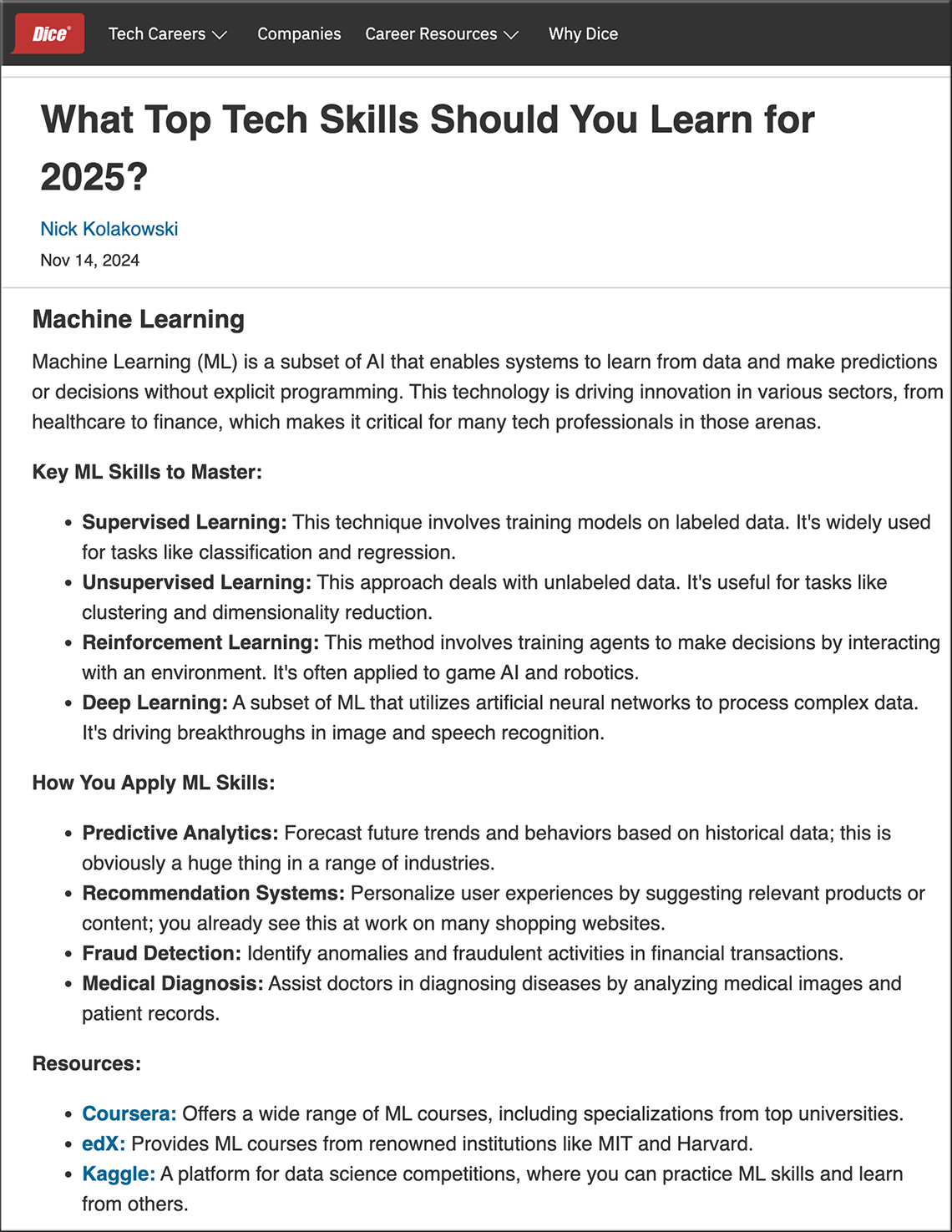
…you will see that they outline which skills you should consider mastering in 2025 if you want to stay on top of the latest career opportunities. They then list more information about the skills, how you apply the skills, and WHERE to get those skills.
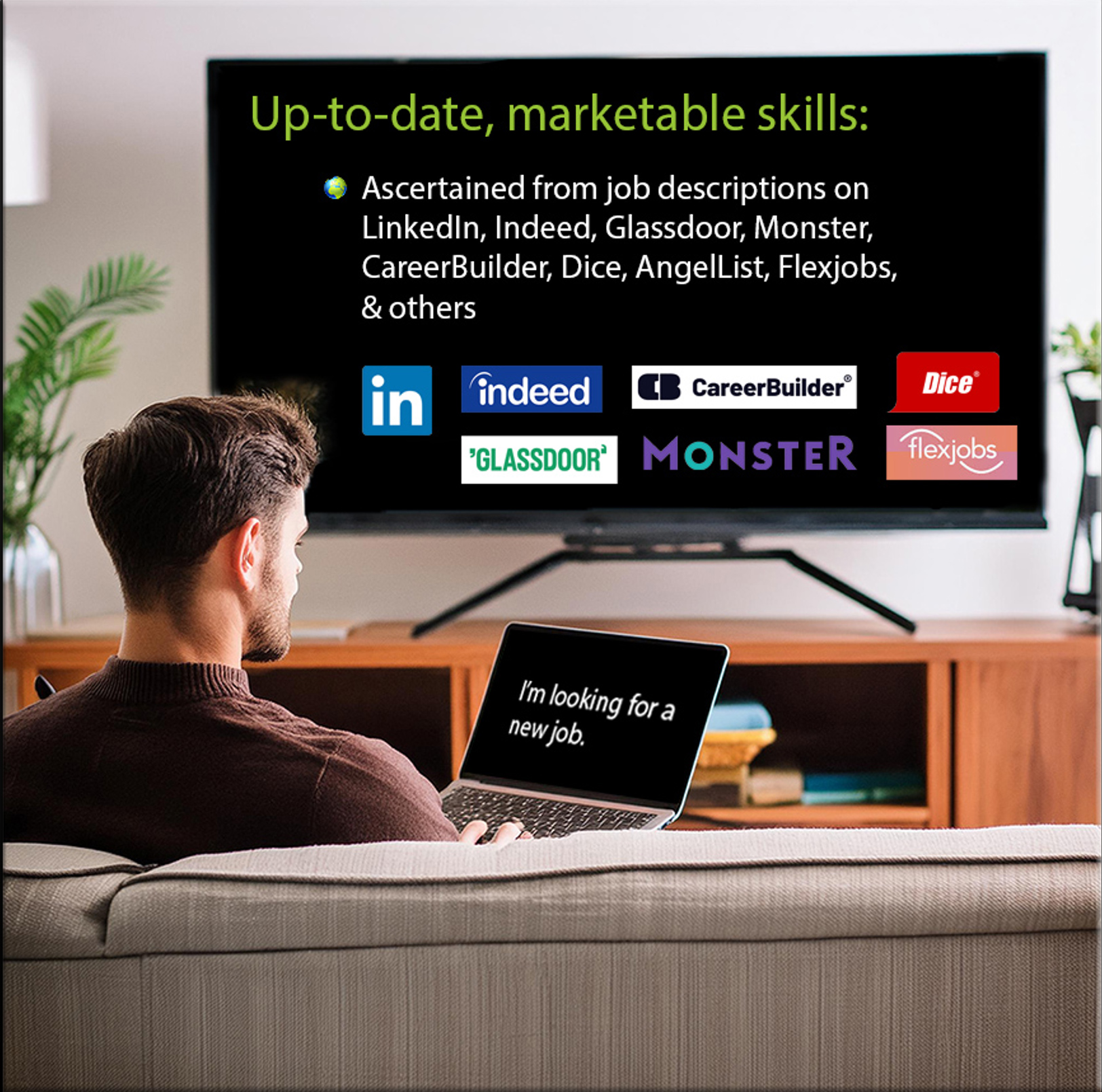
I assert that in the future, people will be able to see this information on a 24x7x365 basis.
Which jobs are in demand?
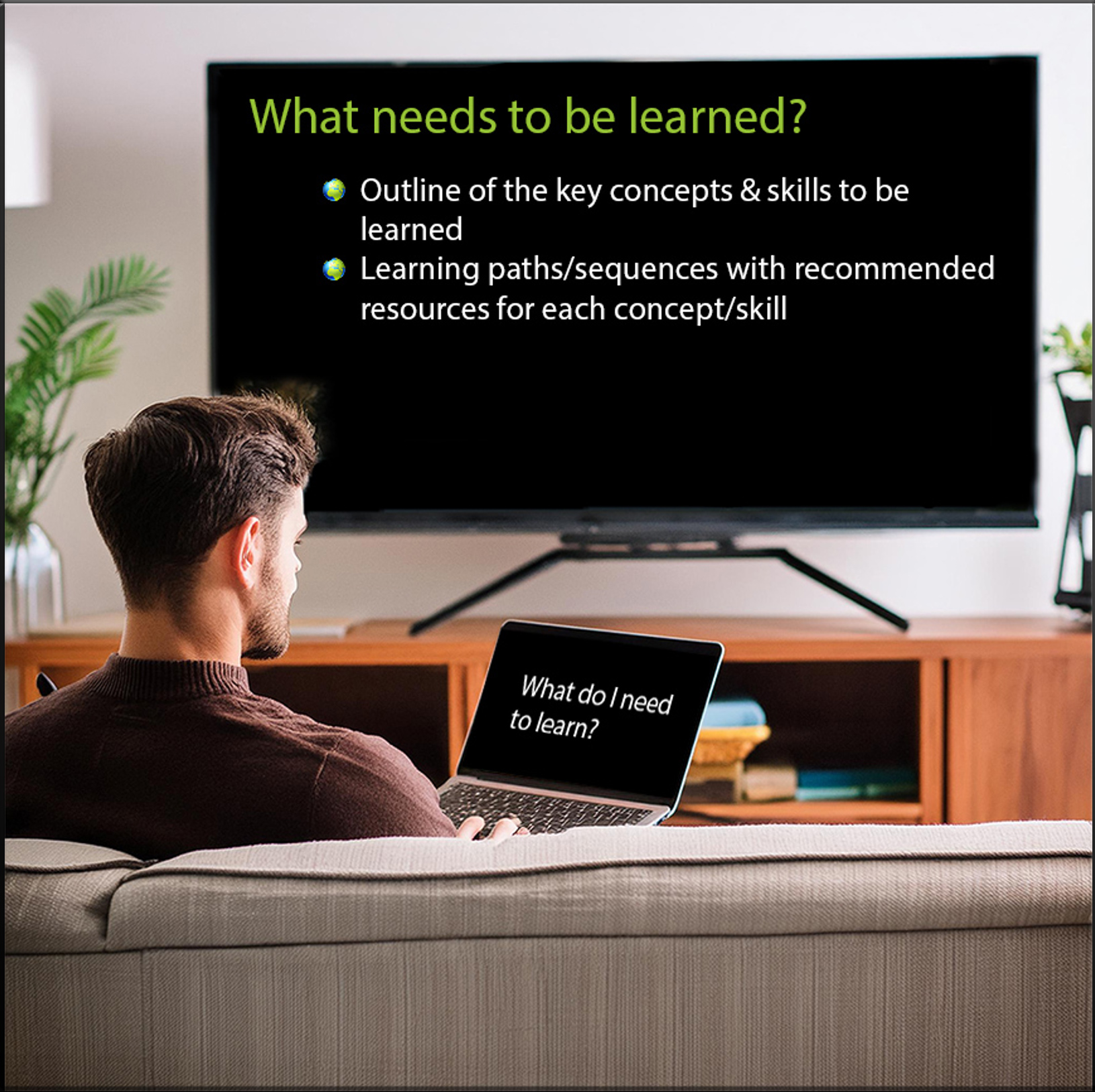
What skills do I need to do those jobs?
WHERE do I get/develop those skills?
And that last part (about the WHERE do I develop those skills) will pull from many different institutions, people, companies, etc.
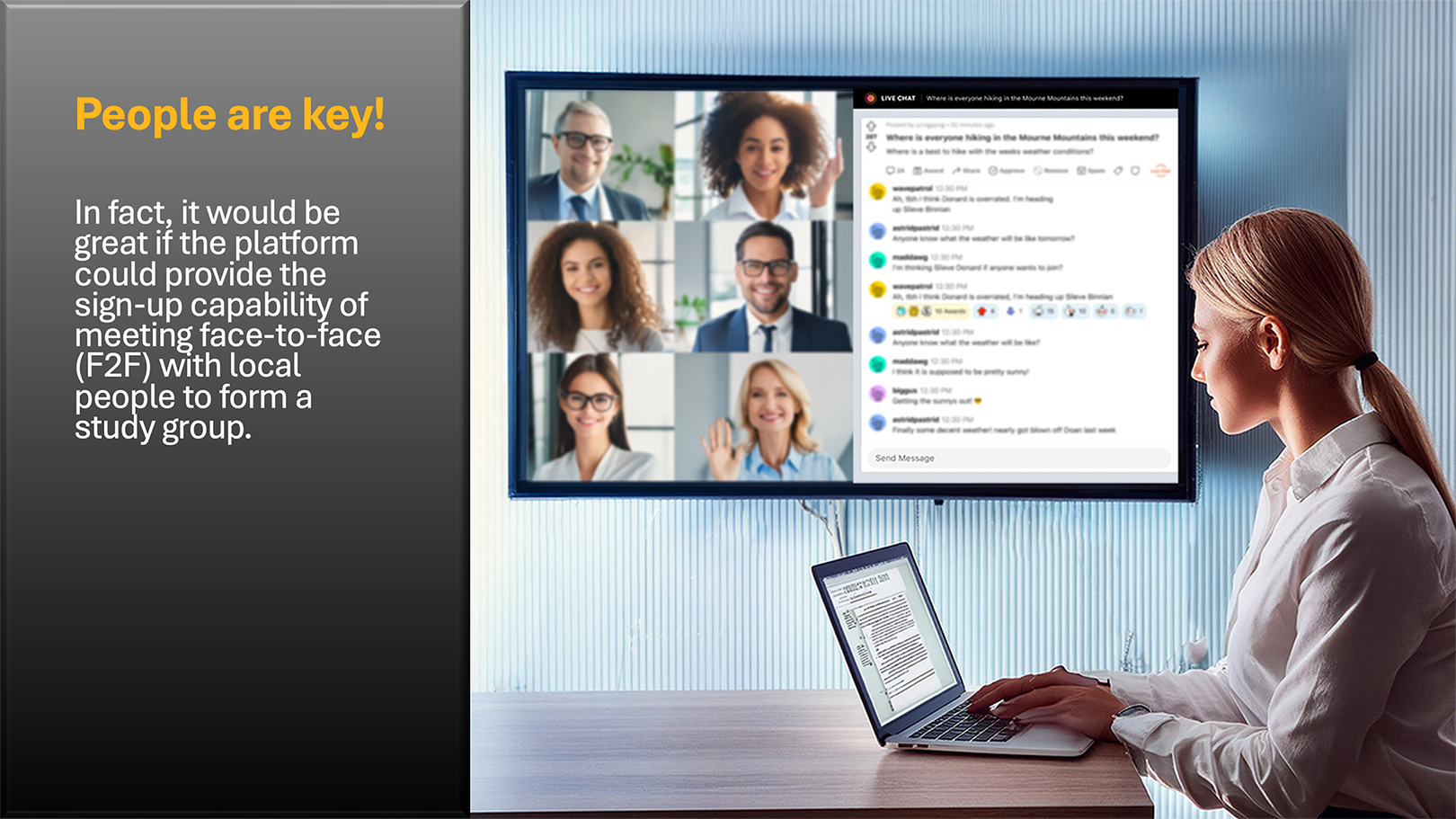
BUT PEOPLE are the key! Oftentimes, we need to — and prefer to — learn with others!
Duolingo’s new Video Call feature represents a leap forward in language practice for learners. This AI-powered tool allows Duolingo Max subscribers to engage in spontaneous, realistic conversations with Lily, one of Duolingo’s most popular characters. The technology behind Video Call is designed to simulate natural dialogue and provides a personalized, interactive practice environment. Even beginner learners can converse in a low-pressure environment because Video Call is designed to adapt to their skill level. By offering learners the opportunity to converse in real-time,Video Call builds the confidence needed to communicate effectively in real-world situations. Video Call is available for Duolingo Max subscribers learning English, Spanish, and French.
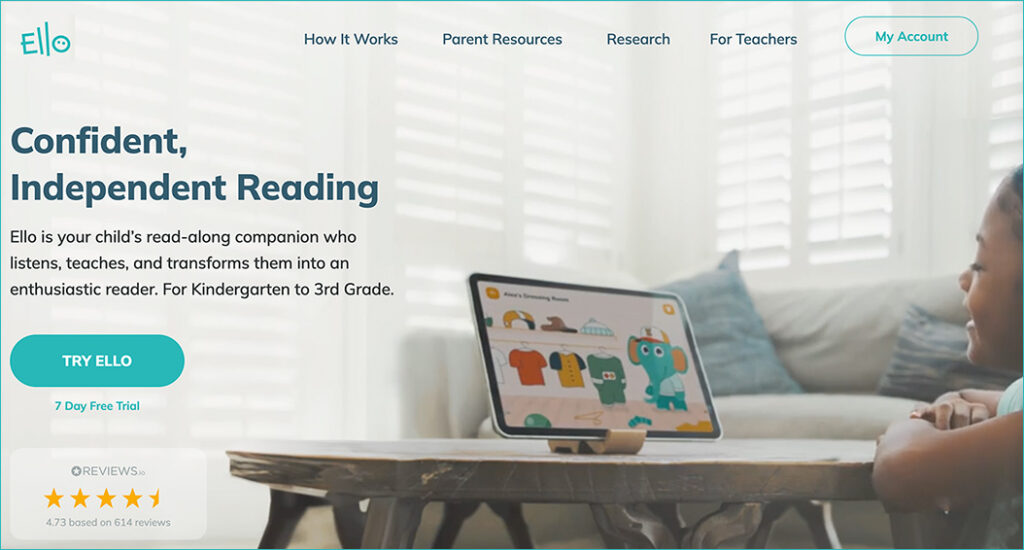
Ello, the AI reading companion that aims to support kids struggling to read, launched a new product on Monday that allows kids to participate in the story-creation process.
Called “Storytime,” the new AI-powered feature helps kids generate personalized stories by picking from a selection of settings, characters, and plots. For instance, a story about a hamster named Greg who performed in a talent show in outer space.
AI’s Trillion-Dollar Opportunity — from bain.com by David Crawford, Jue Wang, and Roy Singh The market for AI products and services could reach between $780 billion and $990 billion by 2027.
At a Glance
The big cloud providers are the largest concentration of R&D, talent, and innovation today, pushing the boundaries of large models and advanced infrastructure.
Innovation with smaller models (open-source and proprietary), edge infrastructure, and commercial software is reaching enterprises, sovereigns, and research institutions.
Commercial software vendors are rapidly expanding their feature sets to provide the best use cases and leverage their data assets.
Accelerated market growth. Nvidia’s CEO, Jensen Huang, summed up the potential in the company’s Q3 2024 earnings call: “Generative AI is the largest TAM [total addressable market] expansion of software and hardware that we’ve seen in several decades.”
And on a somewhat related note (i.e., emerging technologies), also see the following two postings:
Surgical Robots: Current Uses and Future Expectations — from medicalfuturist.com by Pranavsingh Dhunnoo As the term implies, a surgical robot is an assistive tool for performing surgical procedures. Such manoeuvres, also called robotic surgeries or robot-assisted surgery, usually involve a human surgeon controlling mechanical arms from a control centre.
Key Takeaways
Robots’ potentials have been a fascination for humans and have even led to a booming field of robot-assisted surgery.
Surgical robots assist surgeons in performing accurate, minimally invasive procedures that are beneficial for patients’ recovery.
The assistance of robots extend beyond incisions and includes laparoscopies, radiosurgeries and, in the future, a combination of artificial intelligence technologies to assist surgeons in their craft.
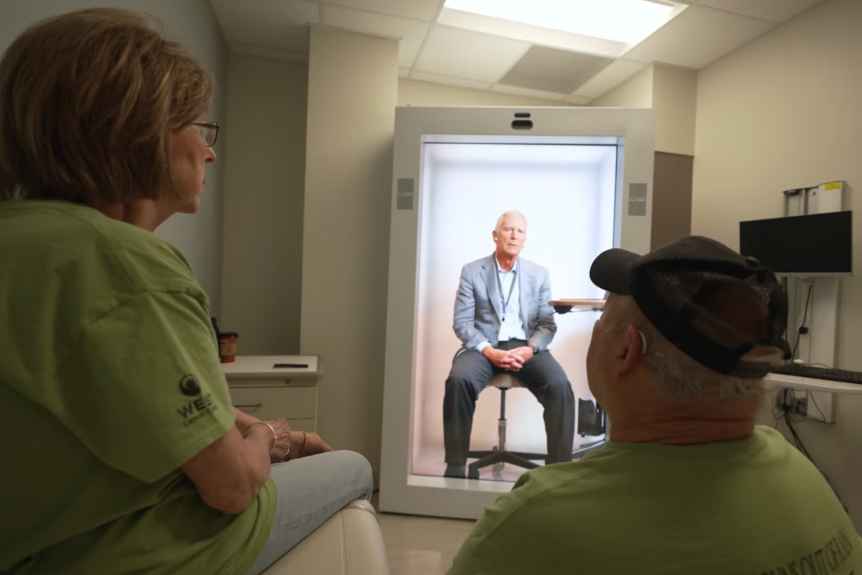
“Working with the team from Proto to bring to life, what several years ago would have seemed impossible, is now going to allow West Cancer Center & Research Institute to pioneer options for patients to get highly specialized care without having to travel to large metro areas,” said West Cancer’s CEO, Mitch Graves.
Obviously this workflow works just as well for meetings as it does for lectures. Stay present in the meeting with no screens and just write down the key points with pen and paper. Then let NotebookLM assemble the detailed summary based on your high-level notes. https://t.co/fZMG7LgsWG
In a matter of months, organizations have gone from AI helping answer questions, to AI making predictions, to generative AI agents. What makes AI agents unique is that they can take actions to achieve specific goals, whether that’s guiding a shopper to the perfect pair of shoes, helping an employee looking for the right health benefits, or supporting nursing staff with smoother patient hand-offs during shifts changes.
In our work with customers, we keep hearing that their teams are increasingly focused on improving productivity, automating processes, and modernizing the customer experience. These aims are now being achieved through the AI agents they’re developing in six key areas: customer service; employee empowerment; code creation; data analysis; cybersecurity; and creative ideation and production.
…
Here’s a snapshot of how 185 of these industry leaders are putting AI to use today, creating real-world use cases that will transform tomorrow.
AI Video Tools You Can Use Today— from heatherbcooper.substack.com by Heather Cooper The latest AI video models that deliver results
AI video models are improving so quickly, I can barely keep up! I wrote about unreleased Adobe Firefly Video in the last issue, and we are no closer to public access to Sora.
No worries – we do have plenty of generative AI video tools we can use right now.
Kling AI launched its updated v1.5 and the quality of image or text to video is impressive.
Hailuo MiniMax text to video remains free to use for now, and it produces natural and photorealistic results (with watermarks).
Runway added the option to upload portrait aspect ratio images to generate vertical videos in Gen-3 Alpha & Turbo modes.
…plus several more
Advanced Voice is rolling out to all Plus and Team users in the ChatGPT app over the course of the week.
While you’ve been patiently waiting, we’ve added Custom Instructions, Memory, five new voices, and improved accents.
People started discussing what they could do with Notebook LM after Google launched the audio overview, where you can listen to 2 hosts talking in-depth about the documents you upload. Here are what it can do:
Summarization: Automatically generate summaries of uploaded documents, highlighting key topics and suggesting relevant questions.
Question Answering: Users can ask NotebookLM questions about their uploaded documents, and answers will be provided based on the information contained within them.
Idea Generation: NotebookLM can assist with brainstorming and developing new ideas.
Source Grounding: A big plus against AI chatbot hallucination, NotebookLM allows users to ground the responses in specific documents they choose.
…plus several other items
The posting also lists several ideas to try with NotebookLM such as:
Idea 2: Study Companion
Upload all your course materials and ask NotebookLM to turn them into Question-and-Answer format, a glossary, or a study guide.
Get a breakdown of the course materials to understand them better.
“Google’s AI note-taking app NotebookLM can now explain complex topics to you out loud”
With more immersive text-to-video and audio products soon available and the rise of apps like Suno AI, how we “experience” Generative AI is also changing from a chatbot of 2 years ago, to a more multi-modal educational journey. The AI tools on the research and curation side are also starting to reflect these advancements.
1. Upload a variety of sources for NotebookLM to use.
You can use …
websites
PDF files
links to websites
any text you’ve copied
Google Docs and Slides
even Markdown
You can’t link it to YouTube videos, but you can copy/paste the transcript (and maybe type a little context about the YouTube video before pasting the transcript).
2. Ask it to create resources. 3. Create an audio summary. 4. Chat with your sources.
5. Save (almost) everything.
I finally tried out Google’s newly-announced NotebookLM generative AI application. It provides a set of LLM-powered tools to summarize documents. I fed it my dissertation, and am surprised at how useful the output would be.
The most impressive tool creates a podcast episode, complete with dual hosts in conversation about the document. First – these are AI-generated hosts. Synthetic voices, speaking for synthetic hosts. And holy moly is it effective. Second – although I’d initially thought the conversational summary would be a dumb gimmick, it is surprisingly powerful.
4 Tips for Designing AI-Resistant Assessments — from techlearning.com by Steve Baule and Erin Carter As AI continues to evolve, instructors must modify their approach by designing meaningful, rigorous assessments.
As instructors work through revising assessments to be resistant to generation by AI tools with little student input, they should consider the following principles:
Incorporate personal experiences and local content into assignments
Ask students for multi-modal deliverables
Assess the developmental benchmarks for assignments and transition assignments further up Bloom’s Taxonomy
He added that he wants to avoid a global “AI divide” and that Google is creating a $120 million Global AI Opportunity Fund through which it will “make AI education and training available in communities around the world” in partnership with local nonprofits and NGOs.
Google on Thursday announced new updates to its AI note-taking and research assistant, NotebookLM, allowing users to get summaries of YouTube videos and audio files and even create sharable AI-generated audio discussions…
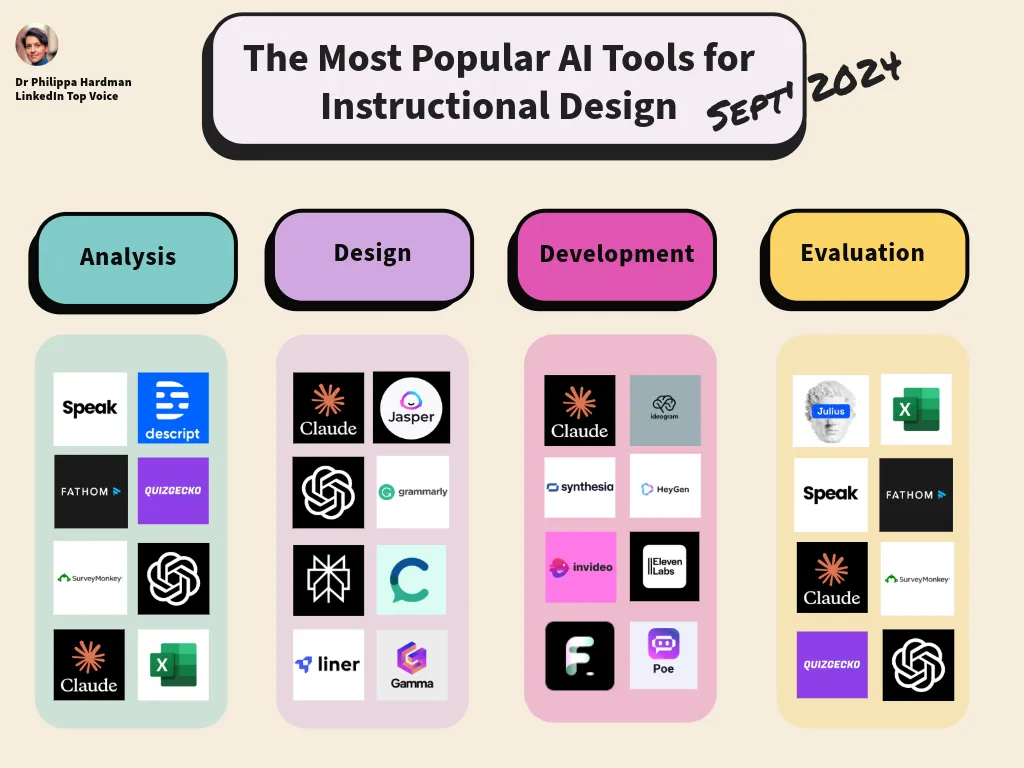
This week, as I kick off the 20th cohort of my AI-Learning Design bootcamp, I decided to do some analysis of the work habits of the hundreds of amazing AI-embracing instructional designers who I’ve worked with over the last year or so.
My goal was to answer the question: which AI tools do we use most in the instructional design process, and how do we use them?
Here’s where we are in September, 2024:
…
Developing Your Approach to Generative AI — from scholarlyteacher.com by Caitlin K. Kirby, Min Zhuang, Imari Cheyne Tetu, & Stephen Thomas (Michigan State University)
As generative AI becomes integrated into workplaces, scholarly work, and students’ workflows, we have the opportunity to take a broad view of the role of generative AI in higher education classrooms. Our guiding questions are meant to serve as a starting point to consider, from each educator’s initial reaction and preferences around generative AI, how their discipline, course design, and assessments may be impacted, and to have a broad view of the ethics of generative AI use.
AI technology tools hold remarkable promise for providing more accessible, equitable, and inclusive learning experiences for students with disabilities.