This see-through smart ring translates sign language and almost works like magic — from digitaltrends.com by Rachit Agarwal

For people who are hard of hearing, sign language isn’t just a communication tool; it’s their primary language. The problem is that sign language is not taught to people with regular hearing, thus creating a barrier that’s hard to bridge. Now, a team of researchers in South Korea may have just found a surprisingly elegant solution to this age-old problem.

According to a new study published in Science Advances, the system, called WRSLT (wirelessly connected, ring-type sign language translator), can recognize and translate both American Sign Language and International Sign Language words with around 88% accuracy. And yes, it works in real time.
.


Want Students to Build a Healthier Relationship With Technology? Start With The Arts — from techlearning.com by Adrianna Marshall
Arts classrooms demonstrate what technology integration at its best can look like
But at a moment defined by rapid AI adoption and ongoing debates about screen time, the argument for protecting and investing in arts education needs to take on a new tone. The arts continue to be one of the most effective places in school for students to build healthier, more intentional relationships with technology.

In short, in the age of AI, we need the arts more than ever.

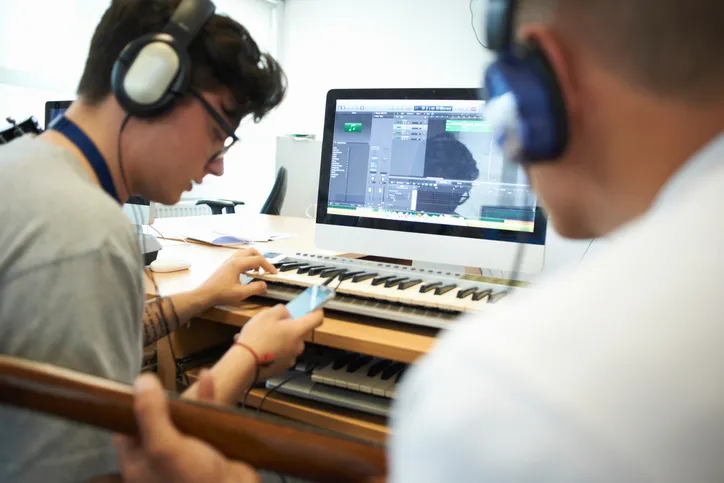
Digital composition software, notation tools, and recording platforms allow students to experiment, revise, and refine their ideas in ways that would have been far more time-consuming a decade ago. Students can layer tracks, hear immediate playback, annotate their own scores, and collaborate across devices. The same is true in other contexts besides music; in visual arts, for instance, a variety of digital drawing and painting platforms enable students to practice with new mediums, styles, and techniques without having to worry about supplies or messes. But in either case, the core intellectual work of looking and listening critically, understanding structure, and making aesthetic choices remains entirely human and part of the learning.


From DSC:
I agree. At one of my previous positions, I spent 10 years supervising a digital studio — helping professors and students use a variety of applications to create things. The applications were from Adobe, Apple, and a variety of smaller vendors. The deliverables could be graphics, edited soundtracks, music, videos, flyers, posters, collages, edited photographs, presentations, websites, and more. I longed for people to discover the power of multimedia to communicate their messages, tell stories, stir emotion, powerfully engage themselves (and others), and unleash their creativity.

There were several obstacles to our digital studio being more impactful at that institution. It was under the IT department, not the academic side of the house. It was in the basement of the library, where few students and faculty traveled. During those years, it was highly uncommon for faculty members to require multimedia-based assignments — so many students had to WANT to develop these skills on their own time. The majority of students didn’t see the value in developing the types of digital skills that we were trying to build…or they didn’t have the time.


Also relevant/see:


Let AI Interview You — from wondertools.substack.com by Jeremy Caplan & Jay Dixit
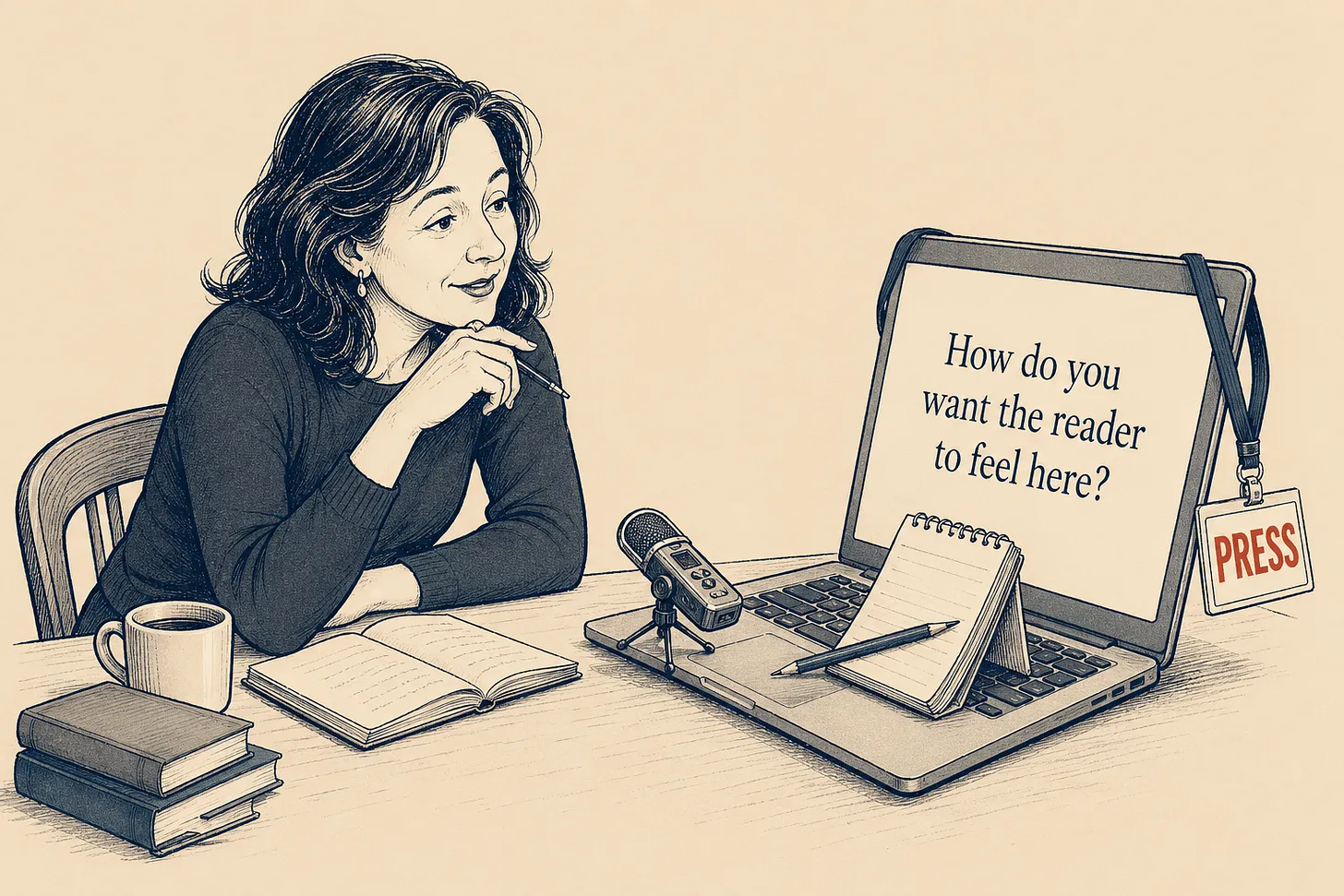
A smarter way to get past the blank page

There’s nothing wrong with using AI to get answers to your questions. But there’s another mode of interacting with AI that many people never consider — one I find much more useful for my creative process.

Here’s what I do instead: I flip the script and let the AI ask the questions. Instead of prompting AI, I get the AI to prompt me.


Nvidia just invested in the AI legal startup that’s splashing Jude Law ads everywhere — from cnbc.com by Kai Nicol-Schwarz

Key Points

  • Nvidia has backed Swedish AI legal tech Legora in a $50 million Series D extension, CNBC can reveal.
  • The chip giant has been ramping up startup investments in recent years.
  • Investors have been piling into to promising young AI companies as they bet big on the commercial potential of tech to reshape entire industries and bring big efficiency gains.

Legora is its first bet in the legal tech sector, according to Dealroom data.

The AI startup is building AI agents and tools to help lawyers automate and streamline workflows. 


Recording at LegalWeek in New York, Zach sits down with Shlomo Klapper (founder of Learned Hand) and Bridget McCormack, former Chief Justice of the Michigan Supreme Court and now CEO of the American Arbitration Association, to challenge one of the biggest double standards in legal AI: “AI for me, but not for thee.” Lawyers are now widely using AI like #Harvey and #Legora — and now more than ever #claude — but the moment it touches judges or arbitrators, support drops off.

That hesitation comes as courts are under real strain, with judges handling thousands of cases a year and only minutes to decide each one, and no realistic way to keep up. Shlomo describes Learned Hand’s “AI law clerk,” built to support judicial research, analysis, and drafting, while Bridget brings the perspective of someone who has both made decisions on the bench and has pioneered the American Arbitration Association’s AI Arbitrator, a first of its kind. The conversation moves beyond AI as an assistant and into a harder shift: AI as part of decision-making itself, and whether the system can continue to function without it.


Also see:

Are Judges the Next To Adopt AI? Is That a Good Thing? — from legallydisrupted.com by Zach Abramowitz
Episode 46 of Legally Disrupted Has the Two Best Experts on the Topic

This brings us to an admitted, glaring double standard between lawyers and judges. Lawyers are totally fine with lawyers using AI, but those same lawyers become apoplectic at the thought of judges or arbitrators using AI. It is very much “AI for me, but not for thee.” A survey last year from White & Case and Queen Mary University of London School of Law showed that nearly 90% of lawyers were deeply supportive of AI for their own research and analytics, but that support drops to just 23% when it comes to a judge or arbitrator using it to make a decision.

Yet, despite that hullabaloo, there is a massive need for alternative forms of intelligence in our courts. Right now, the system is drowning. We have state court trial judges disposing of 2,500 cases a year, meaning they have barely half an hour to spend on a single case. We are simply not going to lawyer our way out of this 50-year backlog. If we just use humans, we have a massive demand for intelligence but a severely limited supply. AI could step in to give these judges the capacity they desperately need for the courts to actually function.


AI for Your Next Career Move — from wondertools.substack.com by Jeremy Caplan
Free tools to explore, research, and interview better

AI tools can serve as patient assistants when you’re looking for a job. Use them to organize your search. Or to challenge your assumptions about potential jobs. They can also help you present your strengths more persuasively. When you’re changing fields, or trying to move up, AI can help you stand out.

1. Visualize Your Career Options
Try: Google’s
Career Dreamer

What it is: A free tool for exploring jobs adjacent to yours. See a map of professional fields related to your interests.

How to use it: Start by typing in a current or previous role. Or name a job that interests you. Use up to five words. You can also name a specific organization or industry, if you have one in mind.

Career Dreamer asks what work activities interest you, then maps related career paths. Pick one at a time to explore.

You can then browse actual job openings. Refine the search based on location, company size, or other factors you care about.


Make learning accessible to all in higher education — from The Times Higher Education

When accessibility is placed at the heart of teaching and learning, rather than treated as a bolt-on, every student benefits. This week’s spotlight guide offers advice on designing universally accessible learning, in-person and online. Find out how to ease the burden of disability disclosure with universal design for learning, better support neurodivergent students and students with hearing or vision issues, design more accessible assessments and ensure digital tools work for all.


Which Jobs Are Most at Risk From AI? New Anthropic Data Offers Clues. — from builtin.com by Matthew Urwin
Anthropic set out in its latest study to predict how artificial intelligence could impact the labor market. Instead, its findings raise more questions than answers for tech workers as the U.S. government refuses to regulate the AI industry.

Summary:
In its latest labor market study, Anthropic found that artificial intelligence poses the greatest threat to software jobs, women and younger professionals. As the Trump administration takes a hands-off approach to AI, tech workers may be left to grapple with these findings on their own.


Matthew links to:

Labor market impacts of AI: A new measure and early evidence — from anthropic.com

Key findings

  • We introduce a new measure of AI displacement risk, observed exposure, that combines theoretical LLM capability and real-world usage data, weighting automated (rather than augmentative) and work-related uses more heavily
  • AI is far from reaching its theoretical capability: actual coverage remains a fraction of what’s feasible
  • Occupations with higher observed exposure are projected by the BLS to grow less through 2034
  • Workers in the most exposed professions are more likely to be older, female, more educated, and higher-paid
  • We find no systematic increase in unemployment for highly exposed workers since late 2022, though we find suggestive evidence that hiring of younger workers has slowed in exposed occupations


Google expands Search Live globally with voice and camera AI — from digitaltrends.com by Varun Mirchandani
The feature is now available in 200+ countries with multilingual support

Think of it as Google Search… but you talk to it. Search Live lets users ask questions using voice or even their phone’s camera, both on Android and iOS, via the Google App, and get spoken responses along with relevant web links.

This is a pretty big shift. Google isn’t just improving search, but it’s also slowly replacing the whole “type and scroll” experience. With Search Live, users can talk, ask follow-ups, and interact naturally, making it feel more like a conversation than a query. It’s basically ChatGPT-style interaction, but baked right into Google Search.

.


Meta, YouTube found negligent in landmark social media addiction trial — from by Ian Duncan
A Los Angeles jury awarded $3 million in compensation to a young woman who alleged she had become addicted to the platforms as a child.

A Los Angeles jury found social media giant Meta and video platform YouTube negligent in a landmark trial, awarding $3 million in compensation to a young woman who alleged she had become addicted to the companies’ platforms as a child.

The verdict came at the end of a month-long trial that featured testimony by Facebook founder Mark Zuckerberg and a day after a jury in New Mexico ordered Meta to pay $375 million in penalties for endangering children. The twin verdicts are signs that legal protections which for decades made tech companies seem almost impervious are beginning to crack, as lawyers accuse the platforms of putting addictive or otherwise harmful features into their platforms.

With the armor of Silicon Valley companies fractured, they will now have to size up their appetite for future courtroom battles. There are thousands more lawsuits waiting to be heard, with young internet users, parents, school districts and state attorneys general all seeking to hold the industry accountable.


From DSC:
I have been proposing that the AI-based learning platform of the future will be constantly doing this — every single day. It will know what the in-demand skills are — at any given moment in time. It will then be able to direct you to resources that will help you gain those skills. Though in my vision, the system is querying actual/open job descriptions, not analyzing learning data from enterprise learners. Perhaps I should add that to the vision.


Coursera’s Job Skills Report 2026: Top skills for your students — from coursera.org

The Job Skills Report 2026 analyzes learning data from more than 6 million enterprise learners to identify the future job skills organizations need most. It’s designed for HR and L&D leaders; data, IT, and software & product development leaders; higher education administrators; and government agencies seeking actionable insights on workforce skills trends and AI-driven transformation.

Drawing on data from 6 million enterprise learners across nearly 7,000 organizations, the Job Skills Report 2026 guides you through the skills reshaping the global economy. This year’s analysis spans Data, IT, and Software & Product Development—and the Generative AI skills becoming essential for every role.


From DSC:
The types of postings/articles (such as the one below) make me ask, are we not shooting ourselves in the foot with AI and recent college graduates? If the bottom rungs continue to disappear, internships and apprenticeships can only go so far. There aren’t enough of them — especially valuable ones. So as this article points out, there will be threats to the long-term health of our talent pipelines unless we can take steps to thwart those impacts — and to do so fairly soon.

To me…vocational training and jobs are looking better all the time — i.e., plumbers, carpenters, electricians, mechanics, and more.


Can New Graduates Compete With AI? — from builtin.combyRichard Johnson
The increasing adoption of AI automation is compressing early-career jobs. How should new graduates get a foothold in the economy now?

Summary: AI is hollowing out entry-level roles by automating routine tasks, eliminating a rung on the career ladder. New graduates face intense competition and a rising skill floor. While firms gain short-term productivity, they risk a long-term talent shortage by eliminating junior training grounds.

Conversations about AI have covered all grounds: hype, fear and slop. But while some roll their eyes at yet another automation headline, soon?to?be graduates are watching the labor market with a very different level of urgency. They’re entering a world where the old paradox of needing experience to get experience is colliding with a new reality: AI is absorbing the standardized, routine tasks that once defined entry?level work. The result isn’t just a shift in job descriptions or skill-requirements, but rather a structural reshaping of the career pipeline.

Entry-level workers face an outsized disruption to their long-term career trajectories. They have the least buffer to adapt given their lack of relevant job market experience and heightened financial pressure to secure a job quickly with the student-debt repayment periods for recent graduates looming.

Momentum early in one’s career matters, and the first job on a resume shapes future compensation bands and opportunities. It also serves as a signal for perceived specialization or, at minimum, interest. Losing that foothold has compounding effects to one’s career ladder.


Also relevant/see:

New Anthropic Institute to Study Risks and Economic Effects of Advanced AI — from campustechnology.com by John K. Waters

Key Takeaways

  • Anthropic has launched the Anthropic Institute, a new research effort focused on the biggest societal challenges posed by more powerful AI systems.
  • The institute will study how advanced AI could affect the economy, the legal system, public safety, and broader social outcomes.
  • Anthropic co-founder Jack Clark will lead the institute in a new role as the company’s head of public benefit.
  • The new unit brings together Anthropic’s existing red-teaming, societal impacts, and economic research work, while adding new hires and new research areas.
 

Here is Chris Martin’s posting on LinkedIn.com:


Here is Dominik Mate Kovacs’ posting on LinkedIn.com:


The AI ‘hivemind’: Why so many student essays sound alike — from hechingerreport.org by Jill Barshay
A study of more than 70 large language models found similar answers to brainstorming and creative writing prompts

The answers were frequently indistinguishable across different models by different companies that have different architectures and use different training data. The metaphors, imagery, word choices, sentence structures — even punctuation — often converged. Jiang’s team called this phenomenon “inter-model homogeneity” and quantified the overlaps and similarities. To drive the point home, Jiang titled her paper, the “Artificial Hivemind.” The study won a best paper award at the annual conference on Neural Information Processing Systems in December 2025, one of the premier gatherings for AI research.


AI Has No Moral Compass. Do You? — from michelleweise.substack.com by Michelle Weise & Dana Walsh
Why the Age of AI Demands We Take Character Formation Seriously

Here’s something to chew on:

Anthropic, the company behind Claude — a chatbot used by 30 million users per month — has exactly one person (whom we know of) working on AI ethics. One. A young Scottish philosopher is doing the vital work of training a large language model to discern right from wrong.

I don’t say this to shame Anthropic. In fact, Anthropic appears to be the only company (that we know of) being explicit about the moral foundations and reasoning of its chatbot. Hundreds of millions of users worldwide are leveraging tools from other LLMs that do not appear to have an explicit moral compass being cultivated from within.

I raise this because this is yet another example of where we are: extraordinary technical power advancing without an equally strong moral infrastructure to support it.

Why do we keep producing people who are skilled but not wise?


Law Firm AI Adoption: So Many Choices — from abovethelaw.com by Stephen Embry
Firms need to recognize reality, define what their legal professionals need, and then determine how to adopt and govern the use of AI tools.

It’s tough to be a law firm managing partner in the age of AI. So many choices, so little time. It’s like the proverbial kid in the candy store who has so many choices that they either can’t pick out anything or reach for too much. We see evidence of the first option in 8am’s recent outstanding Legal Industry Report, authored by Niki Black.

8am’s Legal Industry Report
One thing that stood out in the report was the discrepancy between use of AI by individual legal professionals and what firms are doing when it comes to AI adoption and guidance.  Almost 75% of those who responded said they were using general purpose AI tools like ChatGPT and Claude for work purposes. That’s pretty significant.


Legalweek: It’s time to re-engineer how legal work is delivered — from legaltechnology.com by Caroline Hill

AI for good
While focusing on the risks of AI going wrong, it is only fair to mention the conversations I had around using AI for good.  Two in particular stand out.

The first is the news from Everlaw that its Everlaw for Good Program has, over the past year, supported more than 675 active cases across 235 organisations, and expanded its support to a growing network of non-profit organisations.

The program extends Everlaw’s technology to organisations working to advance access to justice. In a recent survey by Everlaw, 88% of legal aid professionals said they are optimistic about AI’s potential to help narrow the justice gap.

“Mission-driven organizations are increasingly handling complex investigations and litigation with limited resources,” said Joanne Sprague, head of Everlaw for Good. “Expanding access to powerful, easy-to-use technology helps level the playing field so these teams can uncover critical evidence, take on more complex matters, and yield stronger results for the communities they serve.”


LawNext on Location: Visiting Everlaw’s Headquarters For A Conversation with AJ Shankar, Founder and CEO — from lawnext.com by Bob Ambrogi

The bulk of our conversation focuses on generative AI, and how Everlaw has approached it differently than much of the market. Rather than bolting on a chatbot, AJ says, Everlaw embedded AI deliberately throughout the platform — document summarization, coding suggestions, deposition analysis, fact extraction — always grounding responses in the actual documents at hand and citing sources so users can verify the work. The December launch of Deep Dive, which lets litigators pose a question and get a synthesized, cited answer drawn from an entire document corpus in about a minute, is the feature AJ calls a “new era” for discovery — one he genuinely believes represents a categorical shift.

 
© 2025 | Daniel Christian