From EdTech to TechEd: The next chapter in learning’s evolution — from linkedin.com by Lev Gonick

A day in the life: The next 25 years
A learner wakes up. Their AI-powered learning coach welcomes them, drawing their attention to their progress and helping them structure their approach to the day.  A notification reminds them of an upcoming interview and suggests reflections to add to their learning portfolio.

Rather than a static gradebook, their portfolio is a dynamic, living record, curated by the student, validated by mentors in both industry and education, and enriched through co-creation with maturing modes of AI. It tells a story through essays, code, music, prototypes, journal reflections, and team collaborations. These artifacts are not “submitted”, they are published, shared, and linked to verifiable learning outcomes.

And when it’s time to move, to a new institution, a new job, or a new goal, their data goes with them, immutable, portable, verifiable, and meaningful.

From DSC:
And I would add to that last solid sentence that the learner/student/employee will be able to control who can access this information. Anyway, some solid reflections here from Lev.


AI Could Surpass Schools for Academic Learning in 5-10 Years — from downes.ca with commentary from Stephen Downes

I know a lot of readers will disagree with this, and the timeline feels aggressive (the future always arrives more slowly than pundits expect) but I think the overall premise is sound: “The concept of a tipping point in education – where AI surpasses traditional schools as the dominant learning medium – is increasingly plausible based on current trends, technological advancements, and expert analyses.”


The world’s first AI cabinet member — from therundown.ai by Zach Mink, Rowan Cheung, Shubham Sharma, Joey Liu & Jennifer Mossalgue

The Rundown: In this tutorial, you will learn how to combine NotebookLM with ChatGPT to master any subject faster, turning dense PDFs into interactive study materials with summaries, quizzes, and video explanations.

Step-by-step:

  1. Go to notebooklm.google.com, click the “+” button, and upload your PDF study material (works best with textbooks or technical documents)
  2. Choose your output mode: Summary for a quick overview, Mind Map for visual connections, or Video Overview for a podcast-style explainer with visuals
  3. Generate a Study Guide under Reports — get Q&A sets, short-answer questions, essay prompts, and glossaries of key terms automatically
  4. Take your PDF to ChatGPT and prompt: “Read this chapter by chapter and highlight confusing parts” or “Quiz me on the most important concepts”
  5. Combine both tools: Use NotebookLM for quick context and interactive guides, then ChatGPT to clarify tricky parts and go deeperPro Tip: If your source is in EPUB or audiobook, convert it to PDF before uploading. Both NotebookLM and ChatGPT handle PDFs best.

Claude can now create and edit files — from anthropic.com

Claude can now create and edit Excel spreadsheets, documents, PowerPoint slide decks, and PDFs directly in Claude.ai and the desktop app. This transforms how you work with Claude—instead of only receiving text responses or in-app artifacts, you can describe what you need, upload relevant data, and get ready-to-use files in return.

Also see:

  • Microsoft to lessen reliance on OpenAI by buying AI from rival Anthropic — from techcrunch.com byRebecca Bellan
    Microsoft will pay to use Anthropic’s AI in Office 365 apps, The Information reports, citing two sources. The move means that Anthropic’s tech will help power new features in Word, Excel, Outlook, and PowerPoint alongside OpenAI’s, marking the end of Microsoft’s previous reliance solely on the ChatGPT maker for its productivity suite. Microsoft’s move to diversify its AI partnerships comes amid a growing rift with OpenAI, which has pursued its own infrastructure projects as well as a potential LinkedIn competitor.

Ep. 11 AGI and the Future of Higher Ed: Talking with Ray Schroeder

In this episode of Unfixed, we talk with Ray Schroeder—Senior Fellow at UPCEA and Professor Emeritus at the University of Illinois Springfield—about Artificial General Intelligence (AGI) and what it means for the future of higher education. While most of academia is still grappling with ChatGPT and basic AI tools, Schroeder is thinking ahead to AI agents, human displacement, and AGI’s existential implications for teaching, learning, and the university itself. We explore why AGI is so controversial, what institutions should be doing now to prepare, and how we can respond responsibly—even while we’re already overwhelmed.


Best AI Tools for Instructional Designers — from blog.cathy-moore.com by Cathy Moore

Data from the State of AI and Instructional Design Report revealed that 95.3% of the instructional designers interviewed use AI in their daily work [1]. And over 85% of this AI use occurs during the design and development process.

These figures showcase the immense impact AI is already having on the instructional design world.

If you’re an L&D professional still on the fence about adding AI to your workflow or an AI convert looking for the next best tools, keep reading.

This guide breaks down 5 of the top AI tools for instructional designers in 2025, so you can streamline your development processes and build better training faster.

But before we dive into the tools of the trade, let’s address the elephant in the room:


3 Human Skills That Make You Irreplaceable in an AI World — from gettingsmart.com/ by Tom Vander Ark and Mason Pashia

Key Points

  • Update learner profiles to emphasize curiosity, curation, and connectivity, ensuring students develop irreplaceable human skills.
  • Integrate real-world learning experiences and mastery-based assessments to foster agency, purpose, and motivation in students.
 

Miro and GenAI as drivers of online student engagement — from timeshighereducation.com by Jaime Eduardo Moncada Garibay
A set of practical strategies for transforming passive online student participation into visible, measurable and purposeful engagement through the use of Miro, enhanced by GenAI

To address this challenge, I shifted my focus from requesting participation to designing it. This strategic change led me to integrate Miro, a visual digital workspace, into my classes. Miro enables real-time visualisation and co-creation of ideas, whether individually or in teams.

The transition from passive attendance to active engagement in online classes requires deliberate instructional design. Tools such as Miro, enhanced by GenAI, enable educators to create structured, visually rich learning environments in which participation is both expected and documented.

While technology provides templates, frames, timers and voting features, its real pedagogical value emerges through intentional facilitation, where the educator’s role shifts from delivering content to orchestrating collaborative, purposeful learning experiences.


Benchmarking Online Education with Bruce Etter and Julie Uranis — from buzzsprout.com by Derek Bruff

Here are some that stood out to me:

  • In the past, it was typical for faculty to teach online courses as an “overload” of some kind, but BOnES data show that 92% of online programs feature courses taught as part of faculty member’s standard teaching responsibilities. Online teaching has become one of multiple modalities in which faculty teach regularly.
  • Three-quarters of chief online officers surveyed said they plan to have a great market share of online enrollments in the future, but only 23% said their current marketing is better than their competitors. The rising tide of online enrollments won’t lift all boats–some institutions will fare better than others.
  • Staffing at online education units is growing, with the median staff size increasing from 15 last year to 20 this year. Julie pointed out that successful online education requires investment of resources. You might need as many buildings as onsite education does, but you need people and you need technology.


GRCC students to use AI to help businesses solve ‘real world’ challenges in new course — from www-mlive-com.cdn.ampproject.org by Brian McVicar; via Patrick Bailey on LinkedIn

GRAND RAPIDS, MI — A new course at Grand Rapids Community College aims to help students learn about artificial intelligence by using the technology to solve real-world business problems.

In a release, the college said its grant application was supported by 20 local businesses, including Gentex, TwistThink and the Grand Rapids Public Museum. The businesses have pledged to work with students who will use business data to develop an AI project such as a chatbot that interacts with customers, or a program that automates social media posts or summarizes customer data.

“This rapidly emerging technology can transform the way businesses process data and information,” Kristi Haik, dean of GRCC’s School of Science, Technology, Engineering and Mathematics, said in a statement. “We want to help our local business partners understand and apply the technology. We also want to create real experiences for our students so they enter the workforce with demonstrated competence in AI applications.”

As Patrick Bailey said on LinkedIn about this article:

Nice to see a pedagogy that’s setting a forward movement rather than focusing on what could go wrong with AI in a curriculum.


Forecast for Learning and Earning in 2025-2026 report — from pages.asugsvsummit.com by Jennifer Lee and Claire Zau

In this look ahead at the future of learning and work, we aim to define:

  • Major thematic observations
  • What makes this moment an inflection point
  • Key predictions (and their precedent)
  • Short- and long-term projected impacts


The LMS at 30: From Course Management to Learning Management (At Last) — from onedtech.philhillaa.com; a guest post from Matthew Pittinsky, Ph.D.

As a 30 year observer and participant, it seems to me that previous technology platform shifts like SaaS and mobile did not fundamentally change the LMS. AI is different. We’re standing at the precipice of LMS 2.0, where the branding change from Course Management System to Learning Management System will finally live up to its name. Unlike SaaS or mobile, AI represents a technology platform shift that will transform the way participants interact with learning systems – and with it, the nature of the LMS itself.

Given the transformational potential of AI, it is useful to set the context and think about how we got here, especially on this 30th anniversary of the LMS.

LMS at 30 Part 2: Learning Management in the AI Era — from onedtech.philhillaa.com; a guest post from Matthew Pittinsky, Ph.D.

Where AI is disruptive is in its ability to introduce a whole new set of capabilities that are best described as personalized learning services. AI offers a new value proposition to the LMS, roughly the set of capabilities currently being developed in the AI Tutor / agentic TA segment. These new capabilities are so valuable given their impact on learning that I predict they will become the services with greatest engagement within a school or university’s “enterprise” instructional platform.

In this way, by LMS paradigm shift, I specifically mean a shift from buyers valuing the product on its course-centric and course management capabilities, to valuing it on its learner-centric and personalized learning capabilities.


AI and the future of education: disruptions, dilemmas and directions — from unesdoc.unesco.org

This anthology reveals how the integration of AI in education poses profound philosophical, pedagogical, ethical and political questions. As this global AI ecosystem evolves and becomes increasingly ubiquitous, UNESCO and its partners have a shared responsibility to lead the global discourse towards an equity- and justice-centred agenda. The volume highlights three areas in which UNESCO will continue to convene and lead a global commons for dialog and action particularly in areas on AI futures, policy and practice innovation, and experimentation.

  1. As guardian of ethical, equitable human-centred AI in education.
  2. As thought leader in reimagining curriculum and pedagogy
  3. As a platform for engaging pluralistic and contested dialogues

AI, copyright and the classroom: what higher education needs to know — from timeshighereducation.com by Cayce Myers
As artificial intelligence reshapes teaching and research, one legal principle remains at the heart of our work: copyright. Understanding its implications isn’t just about compliance – it’s about protecting academic integrity, intellectual property and the future of knowledge creation. Cayce Myers explains


The School Year We Finally Notice “The Change” — from americanstogether.substack.com by Jason Palmer

Why It Matters
A decade from now, we won’t say “AI changed schools.” We’ll say: this was the year schools began to change what it means to be human, augmented by AI.

This transformation isn’t about efficiency alone. It’s about dignity, creativity, and discovery, and connecting education more directly to human flourishing. The industrial age gave us schools to produce cookie-cutter workers. The digital age gave us knowledge anywhere, anytime. The AI age—beginning now—gives us back what matters most: the chance for every learner to become infinitely capable.

This fall may look like any other—bells ringing, rows of desks—but beneath the surface, education has begun its greatest transformation since the one-room schoolhouse.


How should universities teach leadership now that teams include humans and autonomous AI agents? — from timeshighereducation.com by Alex Zarifis
Trust and leadership style are emerging as key aspects of teambuilding in the age of AI. Here are ways to integrate these considerations with technology in teaching

Transactional and transformational leaderships’ combined impact on AI and trust
Given the volatile times we live in, a leader may find themselves in a situation where they know how they will use AI, but they are not entirely clear on the goals and journey. In a teaching context, students can be given scenarios where they must lead a team, including autonomous AI agents, to achieve goals. They can then analyse the situations and decide what leadership styles to apply and how to build trust in their human team members. Educators can illustrate this decision-making process using a table (see above).

They may need to combine transactional leadership with transformational leadership, for example. Transactional leadership focuses on planning, communicating tasks clearly and an exchange of value. This works well with both humans and automated AI agents.


Higher ed’s ‘hunker-down mindset’ — from open-campus-dispatch.beehiiv.com by Colleen Murphy
A tight housing market and a fragile job market mean those working in higher ed have fewer options than ever.

Faculty and administrators could be just as constrained by the golden handcuffs of a 2% interest rate as everybody else. That makes them less likely to move for a new job, Kelchen said, especially since they’re unlikely to get the type of salary increase they’d need to offset more pricey mortgage payments. Plus, even finding an affordable house in the first place could be a challenge right now.

All of this contributes to what Kelchen called a “hunker-down mindset” in higher ed.

“Even if the institutions are giving out pay raises, the pay raises aren’t matching housing costs,” Kelchen said. “And then that creates a pressure to stay.”

While that might seem like a “first-world problem,” it also affects college and university staff members, Kelchen told me. Often the only way for staff members to make more money is to move universities — there aren’t the same in-house growth opportunities as there are for faculty. But that’s easier said than done.


Midoo AI Launches the World’s First AI Language Learning Agent, Redefining How People Learn Languages — from morningstar.com

SINGAPORE Sept. 3, 2025  /PRNewswire/ — Today, Midoo AI proudly announces the launch of the world’s first AI language learning agent, a groundbreaking innovation set to transform language education forever.

For decades, language learning has pursued one ultimate goal: true personalization. Traditional tools offered smart recommendations, gamified challenges, and pre-written role-play scripts—but real personalization remained out of reach. Midoo AI changes that. Here is the >launch video of Midoo AI.

Imagine a learning experience that evolves with you in real time. A system that doesn’t rely on static courses or scripts but creates a dynamic, one-of-a-kind language world tailored entirely to your needs. This is the power of Midoo’s Dynamic Generation technology.

“Midoo is not just a language-learning tool,” said Yvonne, co-founder of Midoo AI. “It’s a living agent that senses your needs, adapts instantly, and shapes an experience that’s warm, personal, and alive. Learning is no longer one-size-fits-all—now, it’s yours and yours alone.”


Midoo AI Review: Meet the First AI Language Learning Agent — from autogpt.net

Language learning apps have traditionally focused on exercises, quizzes, and progress tracking. Midoo AI introduces a different approach. Instead of presenting itself as a course provider, it acts as an intelligent learning agent that builds, adapts, and sustains a learner’s journey.

This review examines how Midoo AI operates, its feature set, and what makes it distinct from other AI-powered tutors.

Midoo AI in Context: Purpose and Position
Midoo AI is not structured around distributing lessons or modules. Its core purpose is to provide an agent-like partner that adapts in real time. Where many platforms ask learners to select a “level” or “topic,”

Midoo instead begins by analyzing goals, usage context, and error patterns. The result is less about consuming predesigned units and more about co-constructing a pathway.


AI Isn’t Replacing Teachers — It’s Helping Us Teach Better — from rdene915.com by guest author Matthew Mawn

Turning Time Saved Into Better Learning
AI can save teachers time, but what can that time be used for (besides taking a breath)? For most of us, it means redirecting energy into the parts of teaching that made us want to pursue this profession in the first place: connecting with our students and helping them grow academically.

Differentiation
Every classroom has students with different readiness levels, language needs, and learning preferences. AI tools like Diffit or MagicSchool can instantly create multiple versions of a passage or assignment, differentiated by grade level, complexity, or language. This allows every student to engage with the same core concept, moving together as one cohesive class. Instead of spending an evening retyping and rephrasing, teachers can review and tweak AI drafts in minutes, ready for the next lesson.


Mass Intelligence — from oneusefulthing.org by Ethan Mollick
From GPT-5 to nano banana: everyone is getting access to powerful AI

When a billion people have access to advanced AI, we’ve entered what we might call the era of Mass Intelligence. Every institution we have — schools, hospitals, courts, companies, governments — was built for a world where intelligence was scarce and expensive. Now every profession, every institution, every community has to figure out how to thrive with Mass Intelligence. How do we harness a billion people using AI while managing the chaos that comes with it? How do we rebuild trust when anyone can fabricate anything? How do we preserve what’s valuable about human expertise while democratizing access to knowledge?


AI Is the Cognitive Layer. Schools Still Think It’s a Study Tool. — from stefanbauschard.substack.com by Stefan Bauschard

By the time today’s 9th graders and college freshman enter the workforce, the most disruptive waves of AGI and robotics may already be embedded into part society.

What replaces the old system will not simply be a more digital version of the same thing. Structurally, schools may move away from rigid age-groupings, fixed schedules, and subject silos. Instead, learning could become more fluid, personalized, and interdisciplinary—organized around problems, projects, and human development rather than discrete facts or standardized assessments.

AI tutors and mentors will allow for pacing that adapts to each student, freeing teachers to focus more on guidance, relationships, and high-level facilitation. Classrooms may feel less like miniature factories and more like collaborative studios, labs, or even homes—spaces for exploring meaning and building capacity, not just delivering content.

If students are no longer the default source of action, then we need to teach them to:

    • Design agents,
    • Collaborate with agents,
    • Align agentic systems with human values,
    • And most of all, retain moral and civic agency in a world where machines act on our behalf.

We are no longer educating students to be just doers.
We must now educate them to be judgesdesigners, and stewards of agency.


Meet Your New AI Tutor — from wondertools.substack.com by Jeremy Caplan
Try new learning modes in ChatGPT, Claude, and Gemini

AI assistants are now more than simple answer machines. ChatGPT’s new Study Mode, Claude’s Learning Mode, and Gemini’s Guided Learning represent a significant shift. Instead of just providing answers, these free tools act as adaptive, 24/7 personal tutors.


AI Tools for Instructional Design (September, 2025) — from drphilh.gumroad.com by Dr Philippa Hardman

That’s why, in preparation for my next bootcamp which kicks off September 8th 2025, I’ve just completed a full refresh of my list of the most powerful & popular AI tools for Instructional Designers, complete with tips on how to get the most from each tool.

The list has been created using my own experience + the experience of hundreds of Instructional Designers who I work with every week.

It contains the 50 most powerful AI tools for instructional design available right now, along with tips on how to optimise their benefits while mitigating their risks.


Addendums on 9/4/25:


AI Companies Roll Out Educational Tools — from insidehighered.com by Ray Schroeder
This fall, Google, Anthropic and OpenAI are rolling out powerful new AI tools for students and educators, each taking a different path to shape the future of learning.


Rethinking My List of Essential Job Skills in the Age of AI — from michellekassorla.substack.com by Michelle Kassorla

So here’s the new list of essential skills I think my students will need when they are employed to work with AI five years from now:

  1. They can follow directions, analyze outcomes, and adapt to change when needed.
  2. They can write or edit AI to capture a unique voice and appropriate tone in sync with an audience’s needs
  3. They have a deep understanding of one or more content areas of a particular profession, business, or industry, so they can easily identify factual errors.
  4. They have a strong commitment to exploration, a flexible mindset, and a broad understanding of AI literacy.
  5. They are resilient and critical thinkers, ready to question results and demand better answers.
  6. They are problem solvers.

And, of course, here is a new rubric built on those skills:


Anthropic Education Report: How educators use Claude — from anthropic.com

We find that:

Educators use AI in and out of the classroom
Educators’ uses range from developing course materials and writing grant proposals to academic advising and managing administrative tasks like admissions and financial planning.

Educators aren’t just using chatbots; they’re building their own custom tools with AI
Faculty are using Claude Artifacts to create interactive educational materials, such as chemistry simulations, automated grading rubrics, and data visualization dashboards.

Educators tend to automate the drudgery while staying in the loop for everything else
Tasks requiring significant context, creativity, or direct student interaction—like designing lessons, advising students, and writing grant proposals—are where educators are more likely to use AI as an enhancement. In contrast, routine administrative work such as financial management and record-keeping are more automation-heavy.

Some educators are automating grading; others are deeply opposed
In our Claude.ai data, faculty used AI for grading and evaluation less frequently than other uses, but when they did, 48.9% of the time they used it in an automation-heavy way (where the AI directly performs the task). That’s despite educator concerns about automating assessment tasks, as well as our surveyed faculty rating it as the area where they felt AI was least effective.


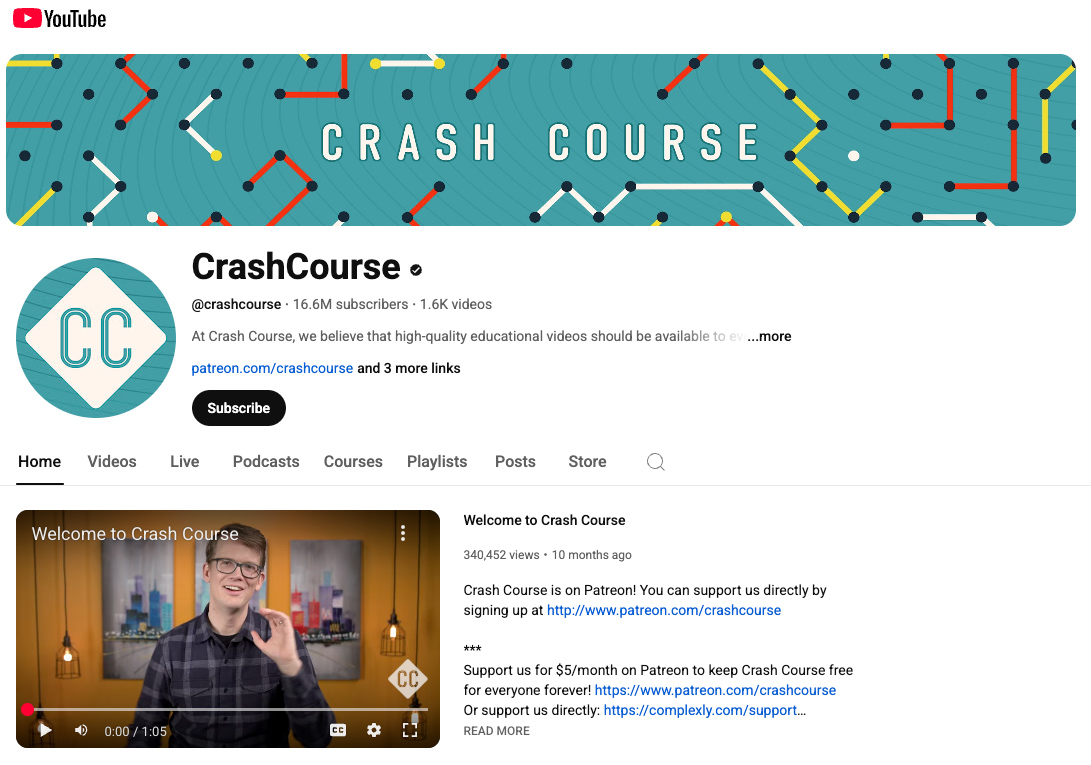
CrashCourse on YouTube — via Matt Tower’s The EdSheet Vol. 18

Description:
At Crash Course, we believe that high-quality educational videos should be available to everyone for free! Subscribe for weekly videos from our current courses! The Crash Course team has produced more than 50 courses on a wide variety of subjects, ranging from the humanities to sciences and so much more! We also recently teamed up with Arizona State University to bring you more courses on the Study Hall channel.

And as Matt stated:


From DSC:
I wasn’t familiar with this “channel” — but I like their mission to help people learn…very inexpensively! Along these lines,  I, too, pray for the world’s learning ecosystems — especially those belonging to children.


The 2025 Changing Landscape of Online Education (CHLOE) 10 Report — from qualitymatters.org; emphasis below from DSC

Notable findings from the 73-page report include: 

  • Online Interest Surges Across Student Populations: 
  • Institutional Preparedness Falters Amid Rising Demand: Despite accelerating demand, institutional readiness has stagnated—or regressed—in key areas.
  • The Online Education Marketplace Is Increasingly Competitive: …
  • Alternative Credentials Take Center Stage: …
  • AI Integration Lacks Strategic Coordination: …

Just 28% of faculty are considered fully prepared for online course design, and 45% for teaching. Alarmingly, only 28% of institutions report having fully developed academic continuity plans for future emergency pivots to online.


Also relevant, see:


Great Expectations, Fragile Foundations — from onedtech.philhillaa.com by Glenda Morgan
Lessons about growth from the CHLOE & BOnES reports

Cultural resistance remains strong. Many [Chief Online Learning Officers] COLOs say faculty and deans still believe in-person learning is “just better,” creating headwinds even for modest online growth. As one respondent at a four-year institution with a large online presence put it:

Supportive departments [that] see the value in online may have very different levels of responsiveness compared to academic departments [that] are begrudgingly online. There is definitely a growing belief that students “should” be on-ground and are only choosing online because it’s easy/ convenient. Never mind the very real and growing population of nontraditional learners who can only take online classes, and the very real and growing population of traditional-aged learners who prefer online classes; many faculty/deans take a paternalistic, “we know what’s best” approach.


Ultimately, what we need is not just more ambition but better ambition. Ambition rooted in a realistic understanding of institutional capacity, a shared strategic vision, investments in policy and infrastructure, and a culture that supports online learning as a core part of the academic mission, not an auxiliary one. It’s time we talked about what it really takes to grow online learning , and where ambition needs to be matched by structure.

From DSC:
Yup. Culture is at the breakfast table again…boy, those strategies taste good.

I’d like to take some of this report — like the graphic below — and share it with former faculty members and members of a couple of my past job families’ leadership. They strongly didn’t agree with us when we tried to advocate for the development of online-based learning/programs at our organizations…but we were right. We were right all along. And we were LEADING all along. No doubt about it — even if the leadership at the time said that we weren’t leading.

The cultures of those organizations hurt us at the time. But our cultivating work eventually led to the development of online programs — unfortunately, after our groups were disbanded, they had to outsource those programs to OPMs.


Arizona State University — with its dramatic growth in online-based enrollments.


Back to School in the AI Era: Why Students Are Rewriting Your Lesson Plan — from linkedin.com by Hailey Wilson

As a new academic year begins, many instructors, trainers, and program leaders are bracing for familiar challenges—keeping learners engaged, making complex material accessible, and preparing students for real-world application.

But there’s a quiet shift happening in classrooms and online courses everywhere.

This fall, it’s not the syllabus that’s guiding the learning experience—it’s the conversation between the learner and an AI tool.


From bootcamp to bust: How AI is upending the software development industry — from reuters.com by Anna Tong; via Paul Fain
Coding bootcamps have been a mainstay in Silicon Valley for more than a decade. Now, as AI eliminates the kind of entry-level roles for which they trained people, they’re disappearing.

Coding bootcamps have been a Silicon Valley mainstay for over a decade, offering an important pathway for non-traditional candidates to get six-figure engineering jobs. But coding bootcamp operators, students and investors tell Reuters that this path is rapidly disappearing, thanks in large part to AI.

“Coding bootcamps were already on their way out, but AI has been the nail in the coffin,” said Allison Baum Gates, a general partner at venture capital fund SemperVirens, who was an early employee at bootcamp pioneer General Assembly.

Gates said bootcamps were already in decline due to market saturation, evolving employer demand and market forces like growth in international hiring.


Here are my favorite back-to-school activities to strengthen learning — from retrievalpractice.org by Pooja K. Agarwal, Ph.D.

Welcome back to school! For most of us (myself included), the whirlwind of lesson prep, meetings, professional development—and of course, teaching—is here. Keep reading for my favorite back-to-school activities to engage students with retrieval practice during the first week of class.

It may (or may not) surprise you to know that my first day of class is full of retrieval practice. Even if you haven’t introduced content yet, use retrieval practice the first day or week of class. Here’s how, with quick activities you can adapt for K–12 students, higher ed courses, and all content areas:


How to Teach a Good First Day of Class — by James Lang; via Dr. Pooja Agarwal’s posting above

What you can expect to find here:

  • I’ll start, as we academics so love to do, with a little bit of theory — specifically, four core principles that can help shape your planning for the first day of your course.
  • Next, I’ll cover the logistics of a successful first day, including managing the space and technology as well as getting to know your students.
  • To show you how to put the principles and the logistics into practice, I will provide examples of what a good set of first-day activities might look like in four disciplines.
  • I’ll finish with some suggestions for how to support the good work you have done on the first day with some follow-up activities.

7 Pieces of Advice for New Teachers — from edutopia.org by Brienne May
Focus on relationships with students and colleagues to make a good start to the year—and remember to ask for what you need.

Too often, teacher preparation programs are rich in theory but light on practical guidance. After working hard through my undergraduate classes, completing student teaching, and spending countless hours laminating and cutting, I still found myself on the first day of school, standing in front of a room full of expectant faces with eager eyes, and realized I had no idea what to do next. I didn’t know what to say to students in that moment, let alone how to survive the following 180 days. Twelve years later, I have collected a trove of advice I wish I could have shared with that fresh-faced teacher.


The Transient Information Effect: Why Great Explanations Don’t Always Stick — from scienceoflearning.substack.com by Nidhi Sachdeva and Jim Hewitt
In this post, Dr. John Sweller describes how the Transient Information Effect can overload student working memory and what teachers can do about it.

Highlights:

  • The Transient Information Effect happens when important information disappears before learners can process and remember it.
  • Dr. John Sweller, who first studied the Transient Information Effect, answers our questions about this overlooked learning challenge.
  • Turning transient information into something students can revisit (like writing key steps on the board) can help explanations stick.

41 Elementary Classroom Jobs to Build Shared Responsibility and Community — from edutopia.org by Donna Paul
Classroom jobs help students feel seen, trusted, and excited to contribute to their classroom community.

Each fall, one of the first routines I introduce is our classroom job board. It’s more than a list of tasks—it helps students feel that they belong and have real roles in our shared space. Over the years, I’ve expanded beyond classic jobs like Line Leader and Pencil Sharpener to include creative roles with quirky titles that engage and resonate with students.

Here are the jobs that have helped my students feel seen, trusted, and excited to contribute.


Guiding Students to Overcome Learned Helplessness — from edutopia.org by Michelle Singh
New teachers can create an environment where students feel supported and understand that mistakes are part of the learning process.


Creating a Kid-Led Hall of Fame for Books — from edutopia.org by Eric Hall
Allowing elementary students to nominate and vote for their favorite books of the year can create a culture of celebration in the classroom.

When I started teaching, I remembered that conversation with my elementary school librarian. I thought, “Why should adults have all the fun?” I wanted my students to experience the excitement of recognizing books they thought were the best. And just like that, the Hallbery Awards were born and continued twice a year for over 15 years. (Why Hallbery? Because my last name is Hall.)


Understanding Diagnostic, Formative, and Summative Assessments — from edmentum.com

Today, we’re taking a look at the three primary forms of assessments—diagnostic, formative, and summative—with the goal of not only differentiating between them but also better understanding the purpose and potential power of each.

At their core, each of the three primary assessment types serves a distinct purpose. Diagnostic assessments are used before instruction to help identify where students are in their comprehension of academic content. Formative assessments are used while content is being taught to understand what students are picking up, to guide their learning, and to help teachers determine what to focus on moving forward. Summative assessments are used after instruction to evaluate the outcomes of student learning: what, or how much, they ultimately learned.


How one state revamped high school to reflect reality: Not everyone goes to college — from hechingerreport.org by Kavitha Cardoza
Indiana’s initial plan for revised graduation requirements was criticized for prioritizing workforce skills over academic preparedness. The state has tried to find a balance between the two

This story is part of Hechinger’s ongoing coverage about rethinking high school. Read about high school apprenticeships in Indiana, a new diploma in Alabama that trades chemistry for carpentry, and “career education for all” in Kentucky.

The “New Indiana Diploma” — which was signed into law in April and goes into effect for all incoming first-year students this academic year — gives students the option to earn different “seals” in addition to a basic diploma, depending on whether they plan to attend college, go straight to work or serve in the military. Jenner describes it as an effort to tailor the diploma to students’ interests, expose students to careers and recognize different forms of student achievement.


How Teachers in This District Pushed to Have Students Spend Less Time Testing — from edweek.org by Elizabeth Heubeck

Students in one Arizona district will take fewer standardized tests this school year, the result of an educator-led push to devote less time to testing.

The Tucson Education Association, backed by the school board and several parents, reached an agreement with the Tucson Unified school system in May to reduce the number of district-mandated standardized assessments students take annually starting in the 2025-26 academic year.

Just 25 percent of educators agreed that state-mandated tests provide useful information for the teachers in their school, according to a 2023 EdWeek Research Center survey of teachers, principals, and district leaders. 


30 Ways to Bring Calm to a Noisy High School Classroom — from edutopia.org by Anne Noyes Saini
From ‘finding the lull’ to the magic of a dramatic whisper, these teacher-tested strategies quickly get high school students focused and back on track.


Approaching Experiential Learning as a Continuum — from edutopia.org by Bill Manchester
Teachers can consider 12 characteristics of experiential learning to make lessons more or less active for students.


Bringing the best of AI to college students for free — from blog.google by Sundar Pichai

Millions of college students around the world are getting ready to start classes. To help make the school year even better, we’re making our most advanced AI tools available to them for free, including our new Guided Learning mode. We’re also providing $1 billion to support AI education and job training programs and research in the U.S. This includes making our AI and career training free for every college student in America through our AI for Education Accelerator — over 100 colleges and universities have already signed up.

Guided Learning: from answers to understanding
AI can broaden knowledge and expand access to it in powerful ways, helping anyone, anywhere learn anything in the way that works best for them. It’s not about just getting an answer, but deepening understanding and building critical thinking skills along the way. That opportunity is why we built Guided Learning, a new mode in Gemini that acts as a learning companion guiding you with questions and step-by-step support instead of just giving you the answer. We worked closely with students, educators, researchers and learning experts to make sure it’s helpful for understanding new concepts and is backed by learning science.


BREAKING: Google introduces Guided Learning — from aieducation.substack.com by Claire Zau
Some thoughts on what could make Google’s AI tutor stand out

Another major AI lab just launched “education mode.”

Google introduced Guided Learning in Gemini, transforming it into a personalized learning companion designed to help you move from quick answers to real understanding.

Instead of immediately spitting out solutions, it:

  • Asks probing, open-ended questions
  • Walks learners through step-by-step reasoning
  • Adapts explanations to the learner’s level
  • Uses visuals, videos, diagrams, and quizzes to reinforce concepts

This Socratic style tutor rollout follows closely behind similar announcements like OpenAI’s Study Mode (last week) and Anthropic’s Claude for Education (April 2025).


How Sci-Fi Taught Me to Embrace AI in My Classroom — from edsurge.com by Dan Clark

I’m not too naive to understand that, no matter how we present it, some students will always be tempted by “the dark side” of AI. What I also believe is that the future of AI in education is not decided. It will be decided by how we, as educators, embrace or demonize it in our classrooms.

My argument is that setting guidelines and talking to our students honestly about the pitfalls and amazing benefits that AI offers us as researchers and learners will define it for the coming generations.

Can AI be the next calculator? Something that, yes, changes the way we teach and learn, but not necessarily for the worse? If we want it to be, yes.

How it is used, and more importantly, how AI is perceived by our students, can be influenced by educators. We have to first learn how AI can be used as a force for good. If we continue to let the dominant voice be that AI is the Terminator of education and critical thinking, then that will be the fate we have made for ourselves.


AI Tools for Strategy and Research – GT #32 — from goodtools.substack.com by Robin Good
Getting expert advice, how to do deep research with AI, prompt strategy, comparing different AIs side-by-side, creating mini-apps and an AI Agent that can critically analyze any social media channel

In this issue, discover AI tools for:

  • Getting Expert Advice
  • Doing Deep Research with AI
  • Improving Your AI Prompt Strategy
  • Comparing Results from Different AIs
  • Creating an AI Agent for Social Media Analysis
  • Summarizing YouTube Videos
  • Creating Mini-Apps with AI
  • Tasting an Award-Winning AI Short Film

GPT-Building, Agentic Workflow Design & Intelligent Content Curation — from drphilippahardman.substack.com by Dr. Philippa Hardman
What 3 recent job ads reveal about the changing nature of Instructional Design

In this week’s blog post, I’ll share my take on how the instructional design role is evolving and discuss what this means for our day-to-day work and the key skills it requires.

With this in mind, I’ve been keeping a close eye on open instructional design roles and, in the last 3 months, have noticed the emergence of a new flavour of instructional designer: the so-called “Generative AI Instructional Designer.”

Let’s deep dive into three explicitly AI-focused instructional design positions that have popped up in the last quarter. Each one illuminates a different aspect of how the role is changing—and together, they paint a picture of where our profession is likely heading.

Designers who evolve into prompt engineers, agent builders, and strategic AI advisors will capture the new premium. Those who cling to traditional tool-centric roles may find themselves increasingly sidelined—or automated out of relevance.


Google to Spend $1B on AI Training in Higher Ed — from insidehighered.com by Katherine Knott

Google’s parent company announced Wednesday (8/6/25) that it’s planning to spend $1 billion over the next three years to help colleges teach and train students about artificial intelligence.

Google is joining other AI companies, including OpenAI and Anthropic, in investing in AI training in higher education. All three companies have rolled out new tools aimed at supporting “deeper learning” among students and made their AI platforms available to certain students for free.


5 Predictions for How AI Will Impact Community Colleges — from pistis4edu.substack.com by Feng Hou

Based on current technology capabilities, adoption patterns, and the mission of community colleges, here are five well-supported predictions for AI’s impact in the coming years.

  1. Universal AI Tutor Access
  2. AI as Active Teacher
  3. Personalized Learning Pathways
  4. Interactive Multimodal Learning
  5. Value-Centric Education in an AI-Abundant World


One-size-fits-all learning is about to become completely obsolete. — from linkedin.com by Allie Miller


AI in the University: From Generative Assistant to Autonomous Agent This Fall — from insidehighered.com by
This fall we are moving into the agentic generation of artificial intelligence.

“Where generative AI creates, agentic AI acts.” That’s how my trusted assistant, Gemini 2.5 Pro deep research, describes the difference.

Agents, unlike generative tools, create and perform multistep goals with minimal human supervision. The essential difference is found in its proactive nature. Rather than waiting for a specific, step-by-step command, agentic systems take a high-level objective and independently create and execute a plan to achieve that goal. This triggers a continuous, iterative workflow that is much like a cognitive loop. The typical agentic process involves six key steps, as described by Nvidia:


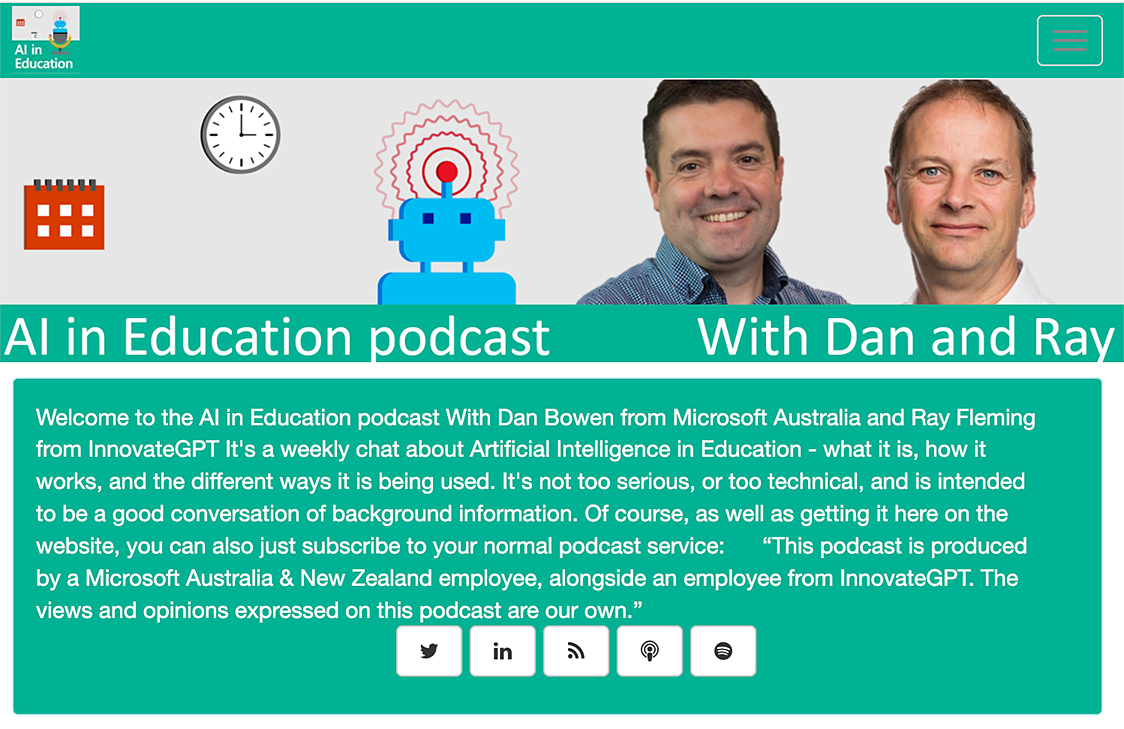
AI in Education Podcast — from aipodcast.education by Dan Bowen and Ray Fleming


The State of AI in Education 2025 Key Findings from a National Survey — from Carnegie Learning

Our 2025 national survey of over 650 respondents across 49 states and Puerto Rico reveals both encouraging trends and important challenges. While AI adoption and optimism are growing, concerns about cheating, privacy, and the need for training persist.

Despite these challenges, I’m inspired by the resilience and adaptability of educators. You are the true game-changers in your students’ growth, and we’re honored to support this vital work.

This report reflects both where we are today and where we’re headed with AI. More importantly, it reflects your experiences, insights, and leadership in shaping the future of education.


Instructure and OpenAI Announce Global Partnership to Embed AI Learning Experiences within Canvas — from instructure.com

This groundbreaking collaboration represents a transformative step forward in education technology and will begin with, but is not limited to, an effort between Instructure and OpenAI to enhance the Canvas experience by embedding OpenAI’s next-generation AI technology into the platform.

IgniteAI announced earlier today, establishes Instructure’s future-ready, open ecosystem with agentic support as the AI landscape continues to evolve. This partnership with OpenAI exemplifies this bold vision for AI in education. Instructure’s strategic approach to AI emphasizes the enhancement of connections within an educational ecosystem comprising over 1,100 edtech partners and leading LLM providers.

“We’re committed to delivering next-generation LMS technologies designed with an open ecosystem that empowers educators and learners to adapt and thrive in a rapidly changing world,” said Steve Daly, CEO of Instructure. “This collaboration with OpenAI showcases our ambitious vision: creating a future-ready ecosystem that fosters meaningful learning and achievement at every stage of education. This is a significant step forward for the education community as we continuously amplify the learning experience and improve student outcomes.”


Faculty Latest Targets of Big Tech’s AI-ification of Higher Ed — from insidehighered.com by Kathryn Palmer
A new partnership between OpenAI and Instructure will embed generative AI in Canvas. It may make grading easier, but faculty are skeptical it will enhance teaching and learning.

The two companies, which have not disclosed the value of the deal, are also working together to embed large language models into Canvas through a feature called IgniteAI. It will work with an institution’s existing enterprise subscription to LLMs such as Anthropic’s Claude or OpenAI’s ChatGPT, allowing instructors to create custom LLM-enabled assignments. They’ll be able to tell the model how to interact with students—and even evaluate those interactions—and what it should look for to assess student learning. According to Instructure, any student information submitted through Canvas will remain private and won’t be shared with OpenAI.

Faculty Unsurprised, Skeptical
Few faculty were surprised by the Canvas-OpenAI partnership announcement, though many are reserving judgment until they see how the first year of using it works in practice.


© 2025 | Daniel Christian