What Students Are Saying About Teachers Using A.I. to Grade — from nytimes.com by The Learning Network; via Claire Zau
Teenagers and educators weigh in on a recent question from The Ethicist.

Is it unethical for teachers to use artificial intelligence to grade papers if they have forbidden their students from using it for their assignments?

That was the question a teacher asked Kwame Anthony Appiah in a recent edition of The Ethicist. We posed it to students to get their take on the debate, and asked them their thoughts on teachers using A.I. in general.

While our Student Opinion questions are usually reserved for teenagers, we also heard from a few educators about how they are — or aren’t — using A.I. in the classroom. We’ve included some of their answers, as well.


OpenAI wants to pair online courses with chatbots — from techcrunch.com by Kyle Wiggers; via James DeVaney on LinkedIn

If OpenAI has its way, the next online course you take might have a chatbot component.

Speaking at a fireside on Monday hosted by Coeus Collective, Siya Raj Purohit, a member of OpenAI’s go-to-market team for education, said that OpenAI might explore ways to let e-learning instructors create custom “GPTs” that tie into online curriculums.

“What I’m hoping is going to happen is that professors are going to create custom GPTs for the public and let people engage with content in a lifelong manner,” Purohit said. “It’s not part of the current work that we’re doing, but it’s definitely on the roadmap.”


15 Times to use AI, and 5 Not to — from oneusefulthing.org by Ethan Mollick
Notes on the Practical Wisdom of AI Use

There are several types of work where AI can be particularly useful, given the current capabilities and limitations of LLMs. Though this list is based in science, it draws even more from experience. Like any form of wisdom, using AI well requires holding opposing ideas in mind: it can be transformative yet must be approached with skepticism, powerful yet prone to subtle failures, essential for some tasks yet actively harmful for others. I also want to caveat that you shouldn’t take this list too seriously except as inspiration – you know your own situation best, and local knowledge matters more than any general principles. With all that out of the way, below are several types of tasks where AI can be especially useful, given current capabilities—and some scenarios where you should remain wary.


Learning About Google Learn About: What Educators Need To Know — from techlearning.com by Ray Bendici
Google’s experimental Learn About platform is designed to create an AI-guided learning experience

Google Learn About is a new experimental AI-driven platform available that provides digestible and in-depth knowledge about various topics, but showcases it all in an educational context. Described by Google as a “conversational learning companion,” it is essentially a Wikipedia-style chatbot/search engine, and then some.

In addition to having a variety of already-created topics and leading questions (in areas such as history, arts, culture, biology, and physics) the tool allows you to enter prompts using either text or an image. It then provides a general overview/answer, and then suggests additional questions, topics, and more to explore in regard to the initial subject.

The idea is for student use is that the AI can help guide a deeper learning process rather than just provide static answers.


What OpenAI’s PD for Teachers Does—and Doesn’t—Do — from edweek.org by Olina Banerji
What’s the first thing that teachers dipping their toes into generative artificial intelligence should do?

They should start with the basics, according to OpenAI, the creator of ChatGPT and one of the world’s most prominent artificial intelligence research companies. Last month, the company launched an hour-long, self-paced online course for K-12 teachers about the definition, use, and harms of generative AI in the classroom. It was launched in collaboration with Common Sense Media, a national nonprofit that rates and reviews a wide range of digital content for its age appropriateness.

…the above article links to:

ChatGPT Foundations for K–12 Educators — from commonsense.org

This course introduces you to the basics of artificial intelligence, generative AI, ChatGPT, and how to use ChatGPT safely and effectively. From decoding the jargon to responsible use, this course will help you level up your understanding of AI and ChatGPT so that you can use tools like this safely and with a clear purpose.

Learning outcomes:

  • Understand what ChatGPT is and how it works.
  • Demonstrate ways to use ChatGPT to support your teaching practices.
  • Implement best practices for applying responsible AI principles in a school setting.

Takeaways From Google’s Learning in the AI Era Event — from edtechinsiders.substack.com by Sarah Morin, Alex Sarlin, and Ben Kornell
Highlights from Our Day at Google + Behind-the-Scenes Interviews Coming Soon!

  1. NotebookLM: The Start of an AI Operating System
  2. Google is Serious About AI and Learning
  3. Google’s LearnLM Now Available in AI Studio
  4. Collaboration is King
  5. If You Give a Teacher a Ferrari

Rapid Responses to AI — from the-job.beehiiv.com by Paul Fain
Top experts call for better data and more short-term training as tech transforms jobs.

AI could displace middle-skill workers and widen the wealth gap, says landmark study, which calls for better data and more investment in continuing education to help workers make career pivots.

Ensuring That AI Helps Workers
Artificial intelligence has emerged as a general purpose technology with sweeping implications for the workforce and education. While it’s impossible to precisely predict the scope and timing of looming changes to the labor market, the U.S. should build its capacity to rapidly detect and respond to AI developments.
That’s the big-ticket framing of a broad new report from the National Academies of Sciences, Engineering, and Medicine. Congress requested the study, tapping an all-star committee of experts to assess the current and future impact of AI on the workforce.

“In contemplating what the future holds, one must approach predictions with humility,” the study says…

“AI could accelerate occupational polarization,” the committee said, “by automating more nonroutine tasks and increasing the demand for elite expertise while displacing middle-skill workers.”

The Kicker: “The education and workforce ecosystem has a responsibility to be intentional with how we value humans in an AI-powered world and design jobs and systems around that,” says Hsieh.


AI Predators: What Schools Should Know and Do — from techlearning.com by Erik Ofgang
AI is increasingly be used by predators to connect with underage students online. Yasmin London, global online safety expert at Qoria and a former member of the New South Wales Police Force in Australia, shares steps educators can take to protect students.

The threat from AI for students goes well beyond cheating, says Yasmin London, global online safety expert at Qoria and a former member of the New South Wales Police Force in Australia.

Increasingly at U.S. schools and beyond, AI is being used by predators to manipulate children. Students are also using AI generate inappropriate images of other classmates or staff members. For a recent report, Qoria, a company that specializes in child digital safety and wellbeing products, surveyed 600 schools across North America, UK, Australia, and New Zealand.


Why We Undervalue Ideas and Overvalue Writing — from aiczar.blogspot.com by Alexander “Sasha” Sidorkin

A student submits a paper that fails to impress stylistically yet approaches a worn topic from an angle no one has tried before. The grade lands at B minus, and the student learns to be less original next time. This pattern reveals a deep bias in higher education: ideas lose to writing every time.

This bias carries serious equity implications. Students from disadvantaged backgrounds, including first-generation college students, English language learners, and those from under-resourced schools, often arrive with rich intellectual perspectives but struggle with academic writing conventions. Their ideas – shaped by unique life experiences and cultural viewpoints – get buried under red ink marking grammatical errors and awkward transitions. We systematically undervalue their intellectual contributions simply because they do not arrive in standard academic packaging.


Google Scholar’s New AI Outline Tool Explained By Its Founder — from techlearning.com by Erik Ofgang
Google Scholar PDF reader uses Gemini AI to read research papers. The AI model creates direct links to the paper’s citations and a digital outline that summarizes the different sections of the paper.

Google Scholar has entered the AI revolution. Google Scholar PDF reader now utilizes generative AI powered by Google’s Gemini AI tool to create interactive outlines of research papers and provide direct links to sources within the paper. This is designed to make reading the relevant parts of the research paper more efficient, says Anurag Acharya, who co-founded Google Scholar on November 18, 2004, twenty years ago last month.


The Four Most Powerful AI Use Cases in Instructional Design Right Now — from drphilippahardman.substack.com by Dr. Philippa Hardman
Insights from ~300 instructional designers who have taken my AI & Learning Design bootcamp this year

  1. AI-Powered Analysis: Creating Detailed Learner Personas…
  2. AI-Powered Design: Optimising Instructional Strategies…
  3. AI-Powered Development & Implementation: Quality Assurance…
  4. AI-Powered Evaluation: Predictive Impact Assessment…

How Are New AI Tools Changing ‘Learning Analytics’? — from edsurge.com by Jeffrey R. Young
For a field that has been working to learn from the data trails students leave in online systems, generative AI brings new promises — and new challenges.

In other words, with just a few simple instructions to ChatGPT, the chatbot can classify vast amounts of student work and turn it into numbers that educators can quickly analyze.

Findings from learning analytics research is also being used to help train new generative AI-powered tutoring systems.

Another big application is in assessment, says Pardos, the Berkeley professor. Specifically, new AI tools can be used to improve how educators measure and grade a student’s progress through course materials. The hope is that new AI tools will allow for replacing many multiple-choice exercises in online textbooks with fill-in-the-blank or essay questions.


Increasing AI Fluency Among Enterprise Employees, Senior Management & Executives — from learningguild.com by Bill Brandon

This article attempts, in these early days, to provide some specific guidelines for AI curriculum planning in enterprise organizations.

The two reports identified in the first paragraph help to answer an important question. What can enterprise L&D teams do to improve AI fluency in their organizations?

You could be surprised how many software products have added AI features. Examples (to name a few) are productivity software (Microsoft 365 and Google Workspace); customer relationship management (Salesforce and Hubspot); human resources (Workday and Talentsoft); marketing and advertising (Adobe Marketing Cloud and Hootsuite); and communication and collaboration (Slack and Zoom). Look for more under those categories in software review sites.

 

VLOG: Learning in Medical School — from learningscientists.org by The Learning Scientists

NOTE:
  • This vlog is for anyone in medical school, interested in medical school, or just curious about what learning is like in medical school!

In this vlog Althea and Cindy talk about their work with medical student learners. They discuss common learning challenges in medical school, efficient learning strategies, learning in the context of attentional disorders and anxiety, and what it means to prepare future healers.


What Happens When ‘Play’ Is Left Out of the School Curriculum — from edsurge.com by Fatema Elbakoury
When two birds flew into my classroom, I realized how much teachers lose when we don’t trust students to play.

Due to the rigidity of curriculum, standardized tests and the controlling nature of compulsory education, playfulness and unstructured time are seen as detrimental to a student’s learning. But what is learning and why is play seen as so antithetical to teaching? What if we centered playfulness and unstructured time in our classrooms, even when it has nothing to do with the curriculum? Part of learning is acquiring knowledge through experience. If play is an experience it, too, can result in the acquisition of knowledge.


Campus webinar: The art of bringing creativity and fun into the classroom — from Times Higher Education

In our latest webinar, we spoke to three experts from Campus+ partner across the UK to discuss creative and fun ways to get students engaged, both online and in the classroom.

Gary Burnett from Loughborough University, Simon Brownhill from the University of Bristol and Kelly Edmunds from the University of East Anglia talked to us about:

  • Creative and fun ways to get students engaged, in-person and online
  • Tapping into students’ creativity for better learning outcomes
  • Creating a culture of creativity and experimentation
  • Breaking down disciplinary boundaries for learning and collaboration
  • Creative ways to bring AI into classroom activities and assignments
  • Play as a powerful teaching tool


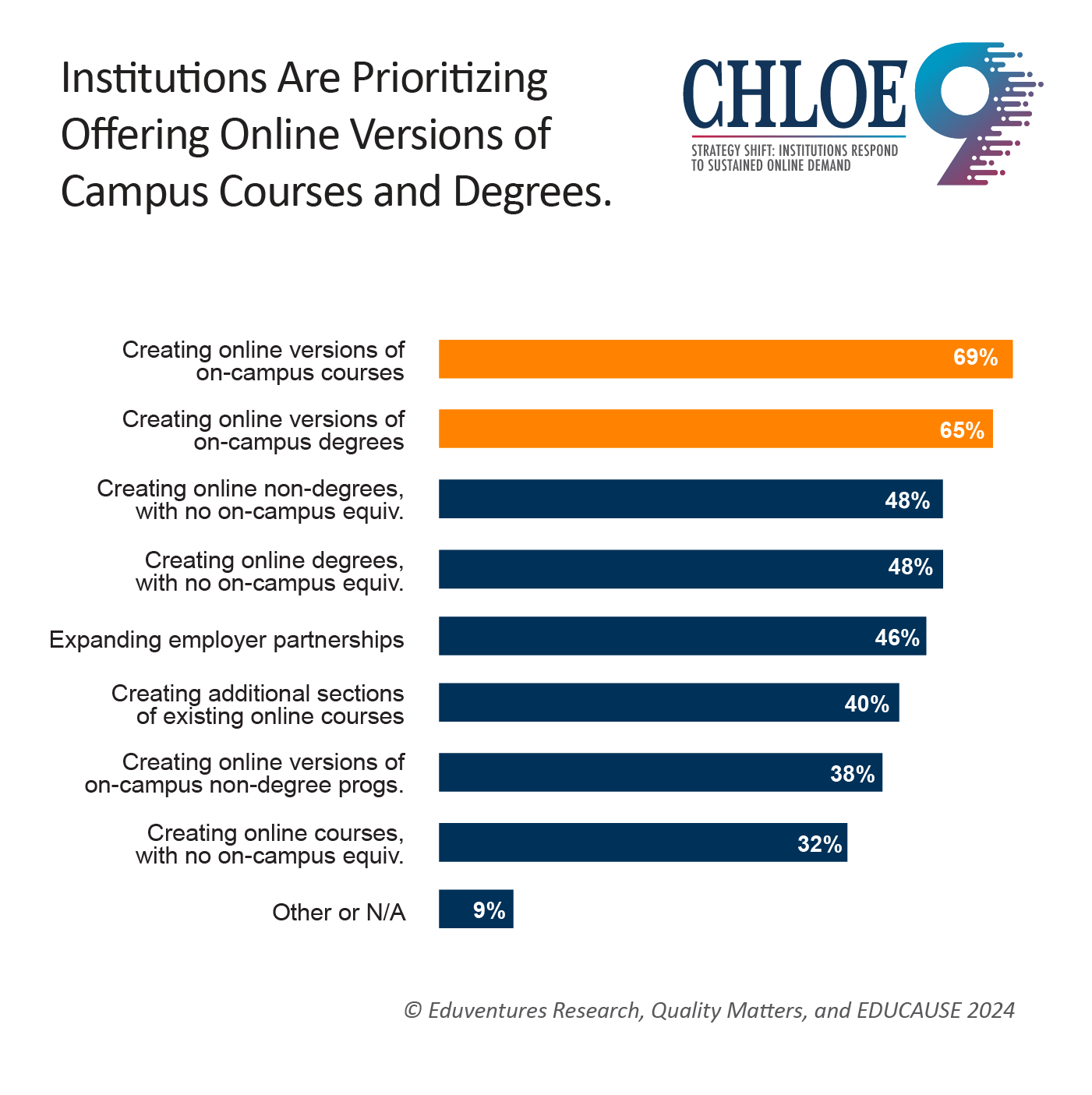
Adapting to the future | Educause

Institutions are balancing capacity issues and rapid technological advancements—including artificial intelligence—while addressing a loss of trust in higher education.

To adapt to the future, technology and data leaders must work strategically to restore trust, prepare for policy updates, and plan for online education growth.


What DICE does in this posting will be available 24x7x365 in the future [Christian]

From DSC:
First of all, when you look at the following posting:


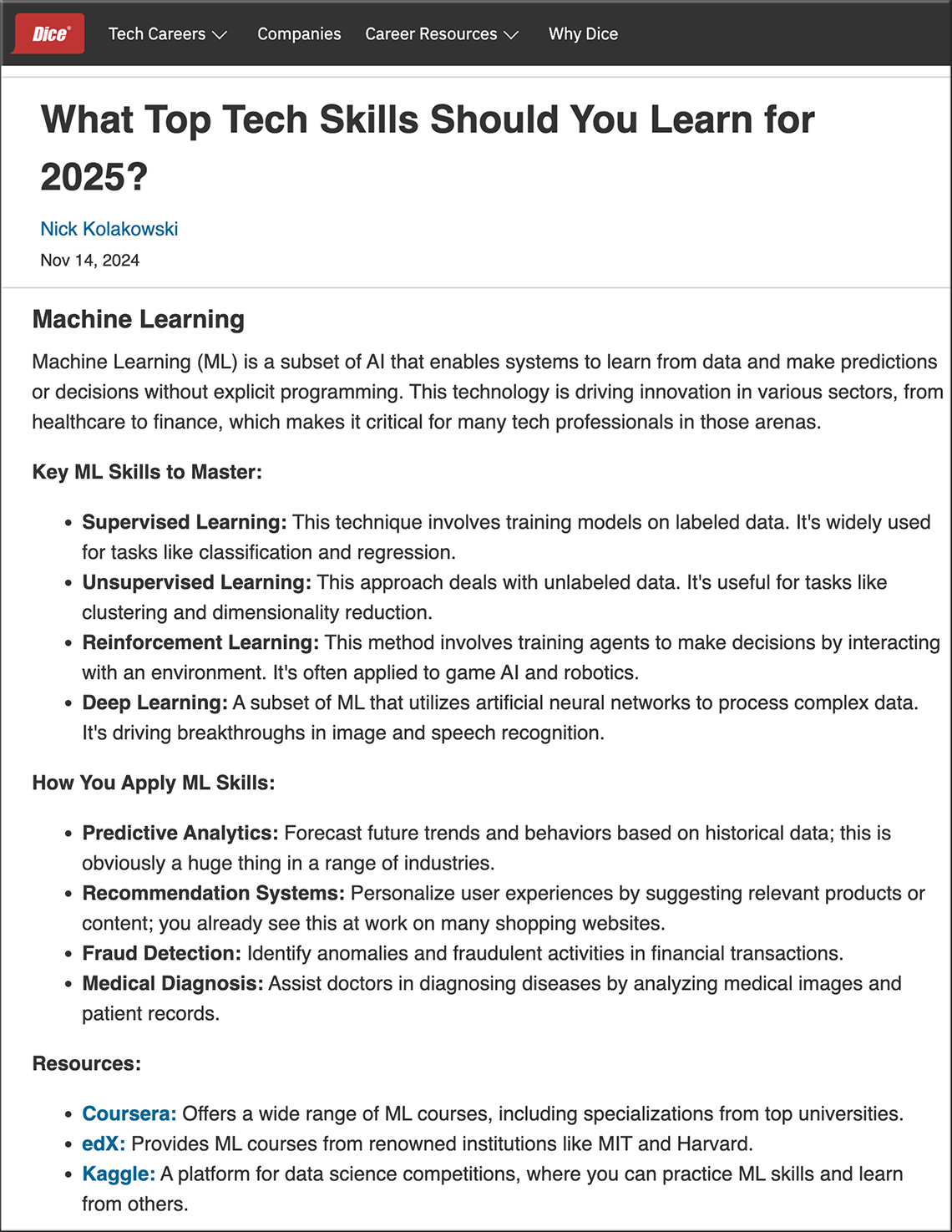
What Top Tech Skills Should You Learn for 2025? — from dice.com by Nick Kolakowski


…you will see that they outline which skills you should consider mastering in 2025 if you want to stay on top of the latest career opportunities. They then list more information about the skills, how you apply the skills, and WHERE to get those skills.

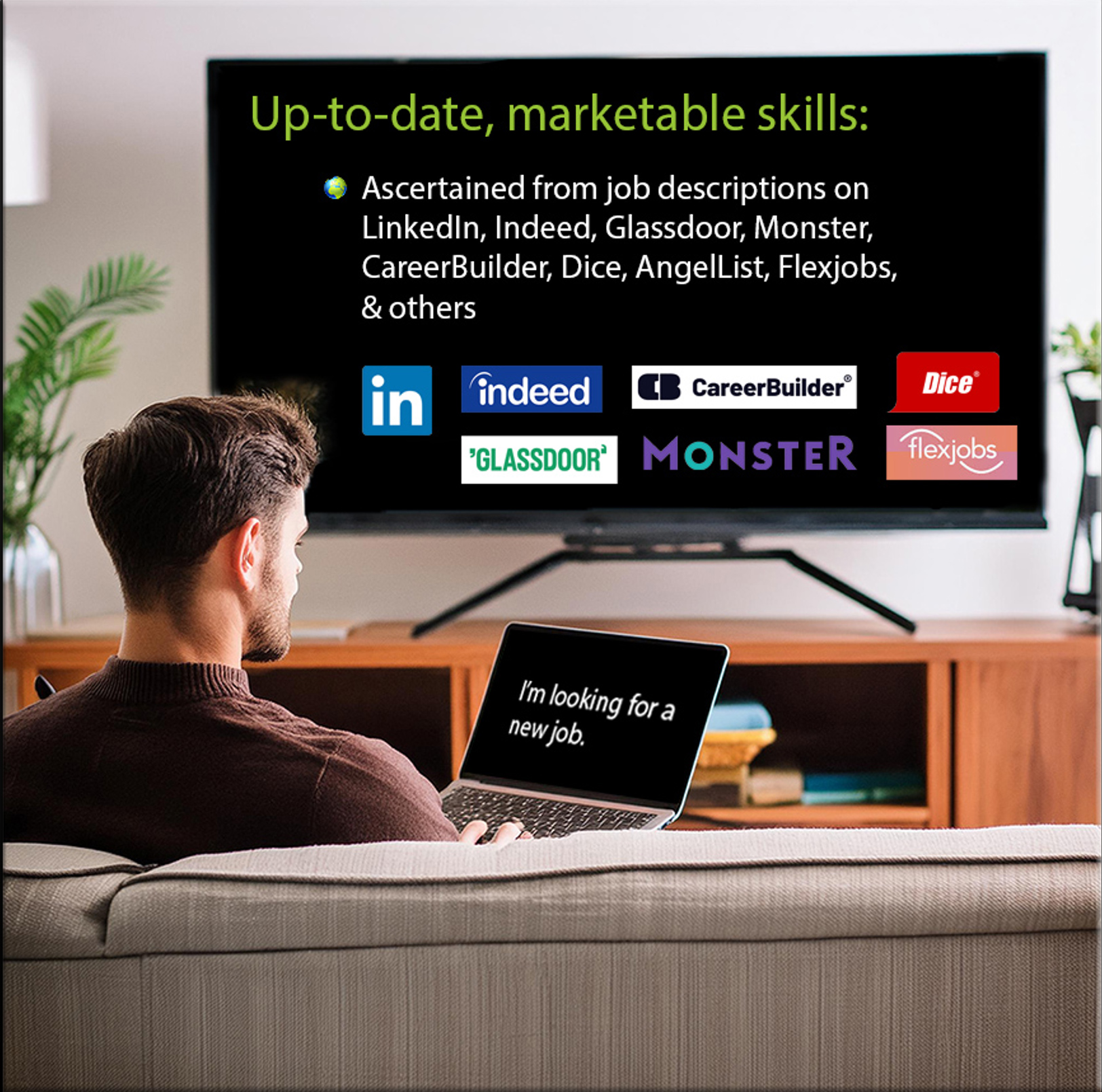
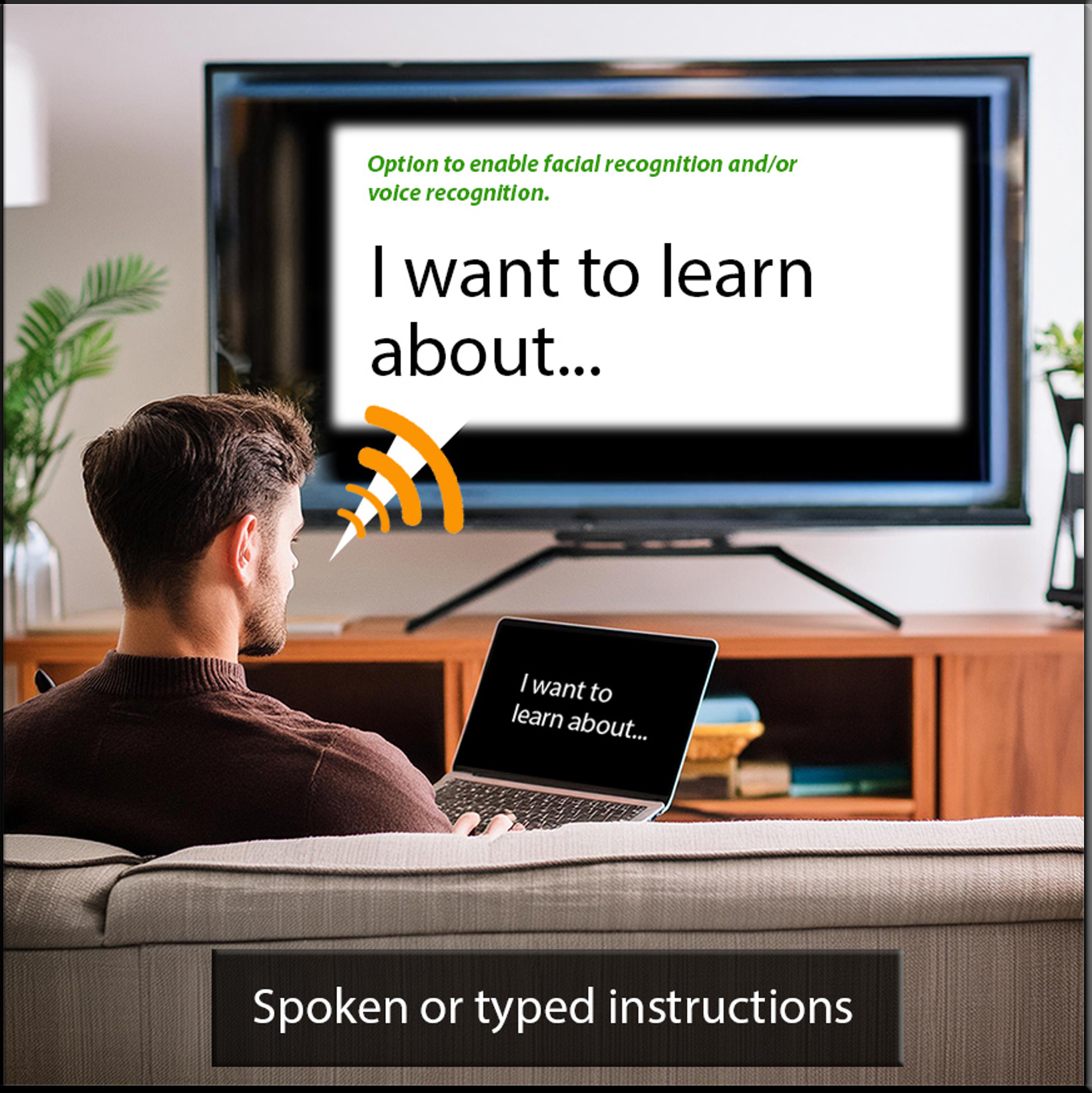
I assert that in the future, people will be able to see this information on a 24x7x365 basis.

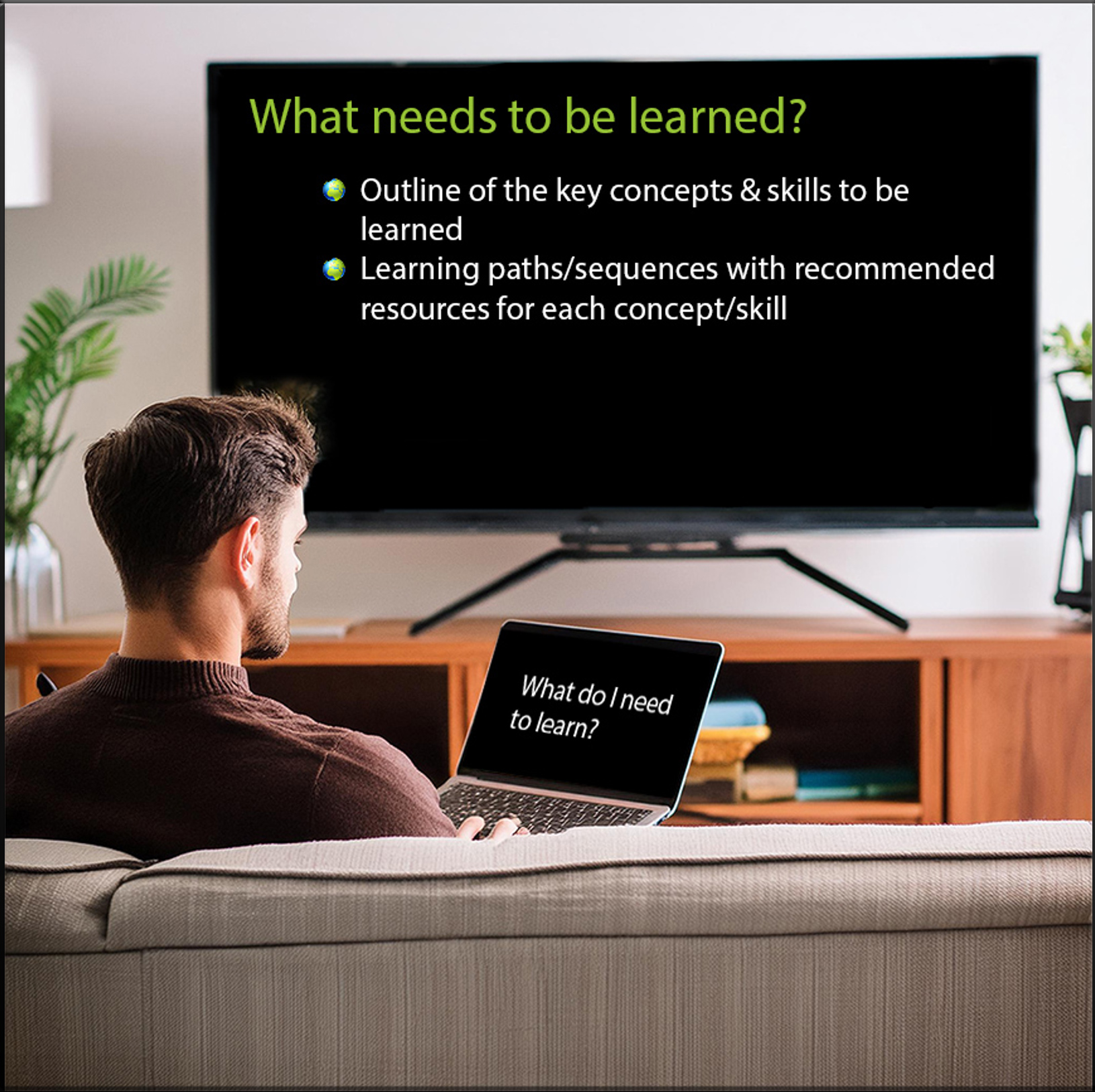
  • Which jobs are in demand?
  • What skills do I need to do those jobs?
  • WHERE do I get/develop those skills?


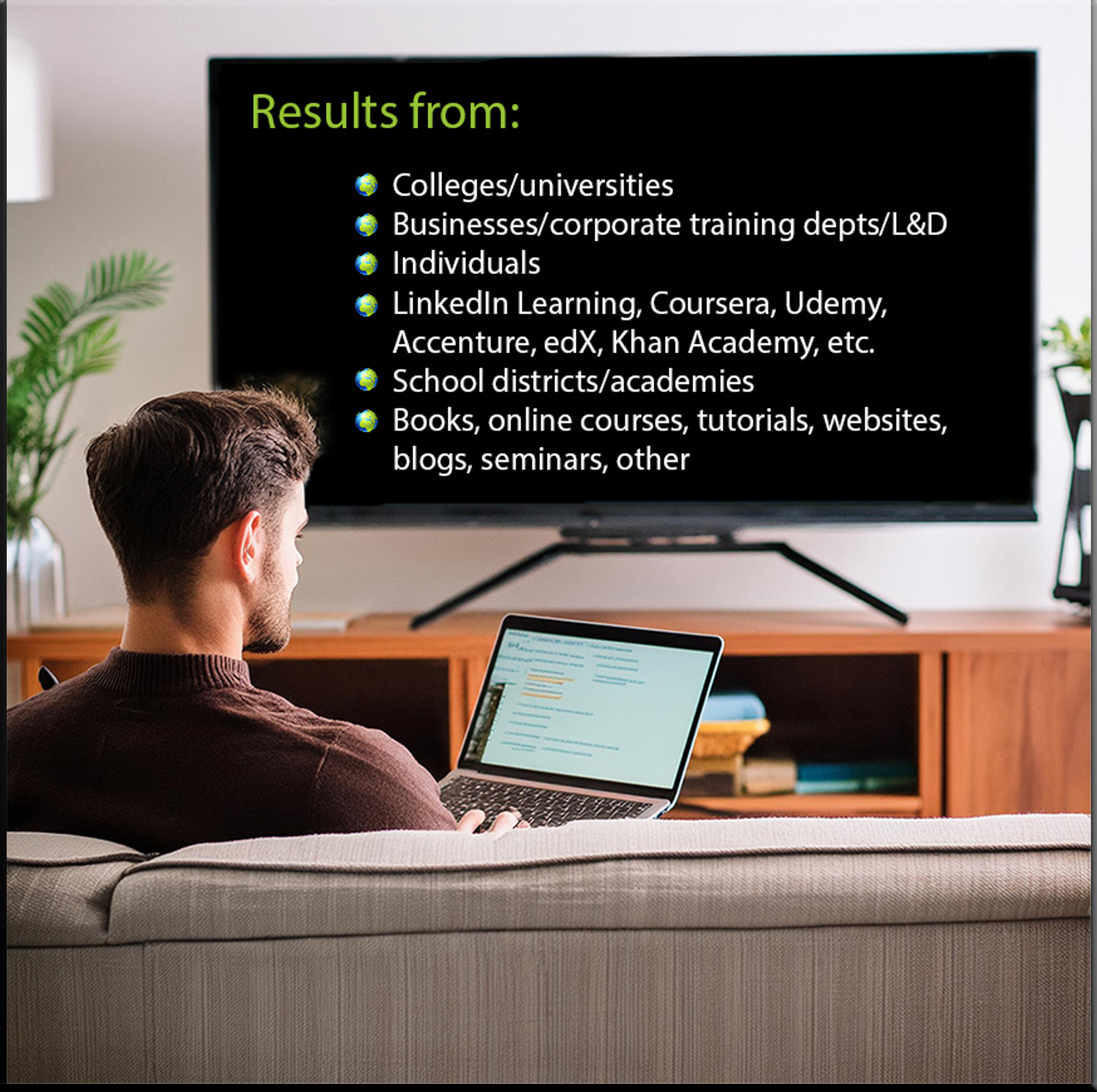
And that last part (about the WHERE do I develop those skills) will pull from many different institutions, people, companies, etc.

BUT PEOPLE are the key! Oftentimes, we need to — and prefer to — learn with others!


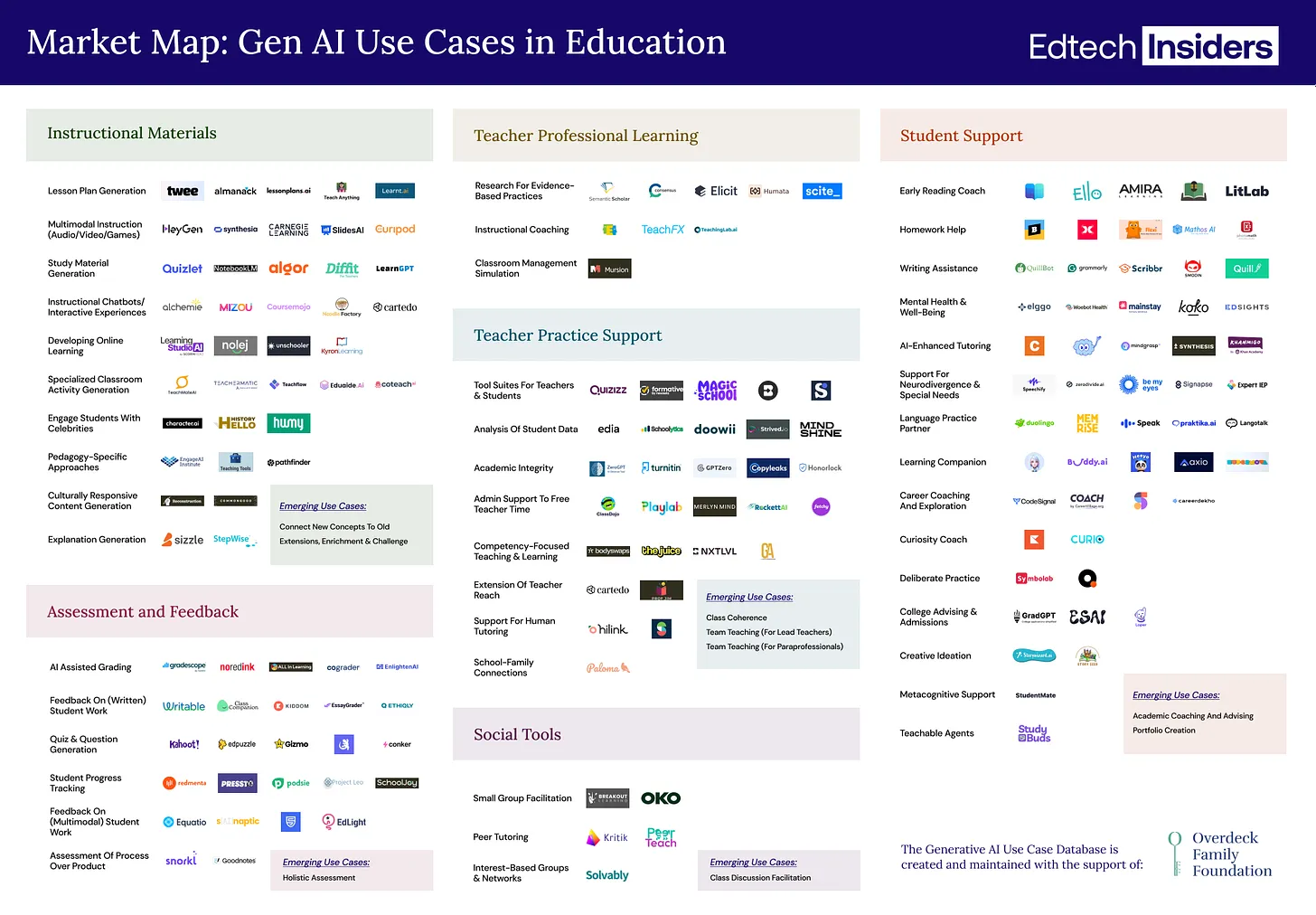
The Edtech Insiders Generative AI Map — from edtechinsiders.substack.com by Ben Kornell, Alex Sarlin, Sarah Morin, and Laurence Holt
A market map and database featuring 60+ use cases for GenAI in education and 300+ GenAI powered education tools.


A Student’s Guide to Writing with ChatGPT— from openai.com

Used thoughtfully, ChatGPT can be a powerful tool to help students develop skills of rigorous thinking and clear writing, assisting them in thinking through ideas, mastering complex concepts, and getting feedback on drafts.

There are also ways to use ChatGPT that are counterproductive to learning—like generating an essay instead of writing it oneself, which deprives students of the opportunity to practice, improve their skills, and grapple with the material.

For students committed to becoming better writers and thinkers, here are some ways to use ChatGPT to engage more deeply with the learning process.


Community Colleges Are Rolling Out AI Programs—With a Boost from Big Tech — from workshift.org by Colleen Connolly

The Big Idea: As employers increasingly seek out applicants with AI skills, community colleges are well-positioned to train up the workforce. Partnerships with tech companies, like the AI Incubator Network, are helping some colleges get the resources and funding they need to overhaul programs and create new AI-focused ones.

Along these lines also see:

Practical AI Training — from the-job.beehiiv.com by Paul Fain
Community colleges get help from Big Tech to prepare students for applied AI roles at smaller companies.

Miami Dade and other two-year colleges try to be nimble by offering training for AI-related jobs while focusing on local employers. Also, Intel’s business struggles while the two-year sector wonders if Republicans will cut funds for semiconductor production.


Can One AI Agent Do Everything? How To Redesign Jobs for AI? HR Expertise And A Big Future for L&D. — from joshbersin.com by Josh Bersin

Here’s the AI summary, which is pretty good.

In this conversation, Josh Bersin discusses the evolving landscape of AI platforms, particularly focusing on Microsoft’s positioning and the challenges of creating a universal AI agent. He delves into the complexities of government efficiency, emphasizing the institutional challenges faced in re-engineering government operations.

The conversation also highlights the automation of work tasks and the need for businesses to decompose job functions for better efficiency.

Bersin stresses the importance of expertise in HR, advocating for a shift towards full stack professionals who possess a broad understanding of various HR functions.

Finally, he addresses the impending disruption in Learning and Development (L&D) due to AI advancements, predicting a significant transformation in how L&D professionals will manage knowledge and skills.


Integrating Active Learning in Large STEM Lectures — from scholarlyteacher.com by Gabriele Pinto

Key Statement: Implementing elements of active learning into a large course may seem daunting task, but think-pair-share aided by quizzing and clickers can be done in any size classroom.

Many teachers do not realize how seamless it can be to shift their lectures towards a more active learning environment. In this article, we looked at how think-pair-share (TPS) is a simple activity that can be easily introduced and integrated within a lecture framework. We also explored how clickers and quizzing may fit into course design to provide greater tools of participation for the students and enrich their classroom experience and study patterns. These implementations, which do not involve drastic and daunting changes to lecturing, will improve student engagement and learning, and will allow the instructor to better gauge the state of the class, evaluate and adjust content pacing accordingly, and enrich his own teaching experience, as well as the students’ education.


“The Value of Doing Things: What AI Agents Mean for Teachers” — from nickpotkalitsky.substack.com by guest author Jason Gulya, Professor of English and Applied Media at Berkeley College in New York City

AI Agents make me nervous. Really nervous.

I wish they didn’t.

I wish I could write that the last two years have made me more confident, more self-assured that AI is here to augment workers rather than replace them.

But I can’t.

I wish I could write that I know where schools and colleges will end up. I wish I could say that AI Agents will help us get where we need to be.

But I can’t.

At this point, today, I’m at a loss. I’m not sure where the rise of AI agents will take us, in terms of how we work and learn. I’m in the question-asking part of my journey. I have few answers.

So, let’s talk about where (I think) AI Agents will take education. And who knows? Maybe as I write I’ll come up with something more concrete.

It’s worth a shot, right?

From DSC: 
I completely agree with Jason’s following assertion:

A good portion of AI advancement will come down to employee replacement. And AI Agents push companies towards that. 

THAT’s where/what the ROI will be for corporations. They will make their investments up in the headcount area, and likely in other areas as well (product design, marketing campaigns, engineering-related items, and more). But how much time it takes to get there is a big question mark.

One last quote here…it’s too good not to include:

Behind these questions lies a more abstract, more philosophical one: what is the relationship between thinking and doing in a world of AI Agents and other kinds of automation?


How Good are Claude, ChatGPT & Gemini at Instructional Design? — from drphilippahardman.substack.com by Dr Philippa Hardman
A test of AI’s Instruction Design skills in theory & in practice

By examining models across three AI families—Claude, ChatGPT, and Gemini—I’ve started to identify each model’s strengths, limitations, and typical pitfalls.

Spoiler: my findings underscore that until we have specialised, fine-tuned AI copilots for instructional design, we should be cautious about relying on general-purpose models and ensure expert oversight in all ID tasks.


From DSC — I’m going to (have Nick) say this again:
I simply asked my students to use AI to brainstorm their own learning objectives. No restrictions. No predetermined pathways. Just pure exploration. The results? Astonishing.

Students began mapping out research directions I’d never considered. They created dialogue spaces with AI that looked more like intellectual partnerships than simple query-response patterns. 


The Digital Literacy Quest: Become an AI Hero — from gamma.app

From DSC:
I have not gone through all of these online-based materials, but I like what they are trying to get at:

  • Confidence with AI
    Students gain practical skills and confidence in using AI tools effectively.
  • Ethical Navigation
    Learn to navigate the ethical landscape of AI with integrity and responsibility. Make informed decisions about AI usage.
  • Mastering Essential Skills
    Develop critical thinking and problem-solving skills in the context of AI.


Expanding access to the Gemini app for teen students in education — from workspaceupdates.googleblog.com

Google Workspace for Education admins can now turn on the Gemini app with added data protection as an additional service for their teen users (ages 13+ or the applicable age in your country) in the following languages and countries. With added data protection, chats are not reviewed by human reviewers or otherwise used to improve AI models. The Gemini app will be a core service in the coming weeks for Education Standard and Plus users, including teens,


5 Essential Questions Educators Have About AI  — from edsurge.com by Annie Ning

Recently, I spoke with several teachers regarding their primary questions and reflections on using AI in teaching and learning. Their thought-provoking responses challenge us to consider not only what AI can do but what it means for meaningful and equitable learning environments. Keeping in mind these reflections, we can better understand how we move forward toward meaningful AI integration in education.


FrontierMath: A Benchmark for Evaluating Advanced Mathematical Reasoning in AI — from epoch.ai
FrontierMath presents hundreds of unpublished, expert-level mathematics problems that specialists spend days solving. It offers an ongoing measure of AI complex mathematical reasoning progress.

We’re introducing FrontierMath, a benchmark of hundreds of original, expert-crafted mathematics problems designed to evaluate advanced reasoning capabilities in AI systems. These problems span major branches of modern mathematics—from computational number theory to abstract algebraic geometry—and typically require hours or days for expert mathematicians to solve.


Rising demand for AI courses in UK universities shows 453% growth as students adapt to an AI-driven job market — from edtechinnovationhub.com

The demand for artificial intelligence courses in UK universities has surged dramatically over the past five years, with enrollments increasing by 453%, according to a recent study by Currys, a UK tech retailer.

The study, which analyzed UK university admissions data and surveyed current students and recent graduates, reveals how the growing influence of AI is shaping students’ educational choices and career paths.

This growth reflects the broader trend of AI integration across industries, creating new opportunities while transforming traditional roles. With AI’s influence on career prospects rising, students and graduates are increasingly drawn to AI-related courses to stay competitive in a rapidly changing job market.


Is Generative AI and ChatGPT healthy for Students? — from ai-supremacy.com by Michael Spencer and Nick Potkalitsky
Beyond Text Generation: How AI Ignites Student Discovery and Deep Thinking, according to firsthand experiences of Teachers and AI researchers like Nick Potkalitsky.

After two years of intensive experimentation with AI in education, I am witnessing something amazing unfolding before my eyes. While much of the world fixates on AI’s generative capabilities—its ability to create essays, stories, and code—my students have discovered something far more powerful: exploratory AI, a dynamic partner in investigation and critique that’s transforming how they think.

They’ve moved beyond the initial fascination with AI-generated content to something far more sophisticated: using AI as an exploratory tool for investigation, interrogation, and intellectual discovery.

Instead of the much-feared “shutdown” of critical thinking, we’re witnessing something extraordinary: the emergence of what I call “generative thinking”—a dynamic process where students learn to expand, reshape, and evolve their ideas through meaningful exploration with AI tools. Here I consciously reposition the term “generative” as a process of human origination, although one ultimately spurred on by machine input.


A Road Map for Leveraging AI at a Smaller Institution — from er.educause.edu by Dave Weil and Jill Forrester
Smaller institutions and others may not have the staffing and resources needed to explore and take advantage of developments in artificial intelligence (AI) on their campuses. This article provides a roadmap to help institutions with more limited resources advance AI use on their campuses.

The following activities can help smaller institutions better understand AI and lay a solid foundation that will allow them to benefit from it.

  1. Understand the impact…
  2. Understand the different types of AI tools…
  3. Focus on institutional data and knowledge repositories…

Smaller institutions do not need to fear being left behind in the wake of rapid advancements in AI technologies and tools. By thinking intentionally about how AI will impact the institution, becoming familiar with the different types of AI tools, and establishing a strong data and analytics infrastructure, institutions can establish the groundwork for AI success. The five fundamental activities of coordinating, learning, planning and governing, implementing, and reviewing and refining can help smaller institutions make progress on their journey to use AI tools to gain efficiencies and improve students’ experiences and outcomes while keeping true to their institutional missions and values.

Also from Educause, see:


AI school opens – learners are not good or bad but fast and slow — from donaldclarkplanb.blogspot.com by Donald Clark

That is what they are doing here. Lesson plans focus on learners rather than the traditional teacher-centric model. Assessing prior strengths and weaknesses, personalising to focus more on weaknesses and less on things known or mastered. It’s adaptive, personalised learning. The idea that everyone should learn at the exactly same pace, within the same timescale is slightly ridiculous, ruled by the need for timetabling a one to many, classroom model.

For the first time in the history of our species we have technology that performs some of the tasks of teaching. We have reached a pivot point where this can be tried and tested. My feeling is that we’ll see a lot more of this, as parents and general teachers can delegate a lot of the exposition and teaching of the subject to the technology. We may just see a breakthrough that transforms education.


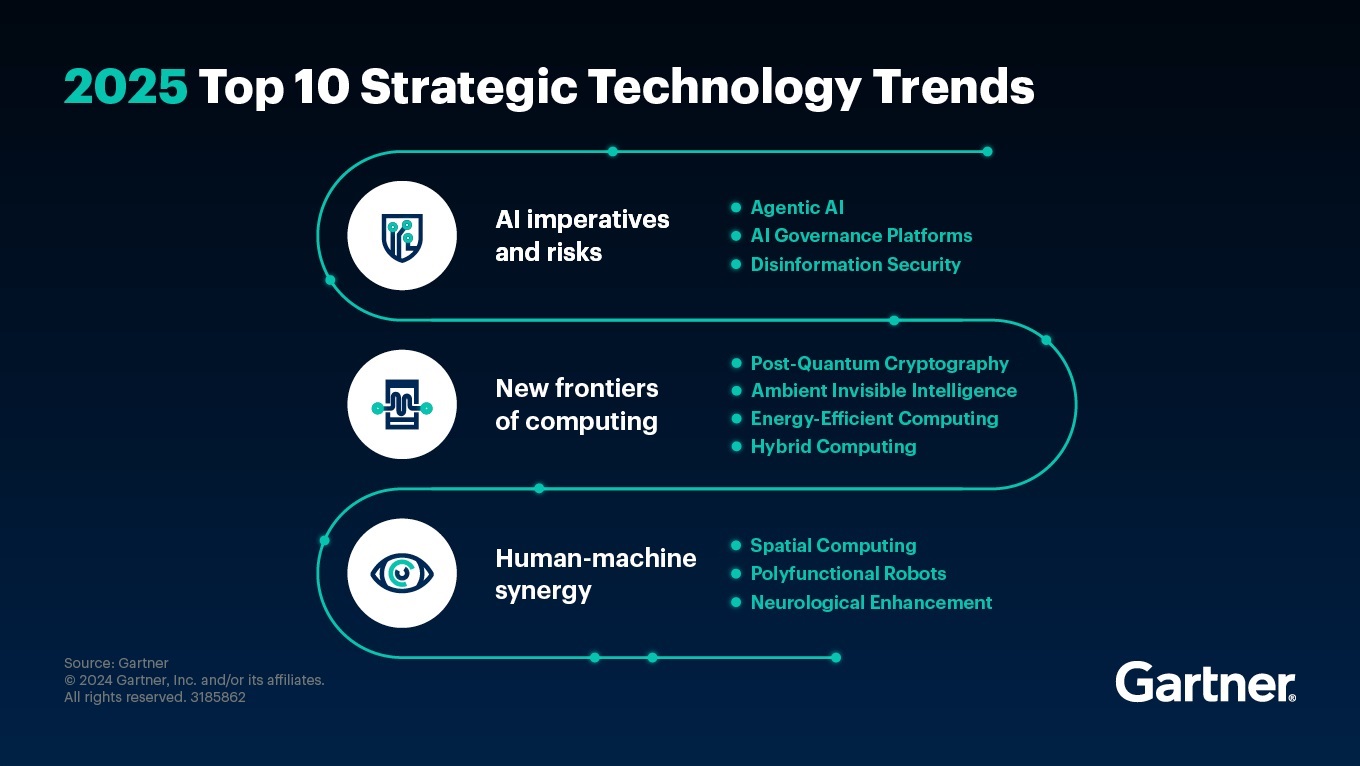
Agentic AI Named Top Tech Trend for 2025 — from campustechnology.com by David Ramel

Agentic AI will be the top tech trend for 2025, according to research firm Gartner. The term describes autonomous machine “agents” that move beyond query-and-response generative chatbots to do enterprise-related tasks without human guidance.

More realistic challenges that the firm has listed elsewhere include:

    • Agentic AI proliferating without governance or tracking;
    • Agentic AI making decisions that are not trustworthy;
    • Agentic AI relying on low-quality data;
    • Employee resistance; and
    • Agentic-AI-driven cyberattacks enabling “smart malware.”

Also from campustechnology.com, see:


Three items from edcircuit.com:


All or nothing at Educause24 — from onedtech.philhillaa.com by Kevin Kelly
Looking for specific solutions at the conference exhibit hall, with an educator focus

Here are some notable trends:

  • Alignment with campus policies: …
  • Choose your own AI adventure: …
  • Integrate AI throughout a workflow: …
  • Moving from prompt engineering to bot building: …
  • More complex problem-solving: …


Not all AI news is good news. In particular, AI has exacerbated the problem of fraudulent enrollment–i.e., rogue actors who use fake or stolen identities with the intent of stealing financial aid funding with no intention of completing coursework.

The consequences are very real, including financial aid funding going to criminal enterprises, enrollment estimates getting dramatically skewed, and legitimate students being blocked from registering for classes that appear “full” due to large numbers of fraudulent enrollments.


Boosting Student Engagement with Interactive and Practical Teaching Methods — from campustechnology.com by Dr. Lucas Long

One of my biggest goals as an educator is to show students how the material they learn in class can be applied to real-world situations. In my finance courses, this often means taking what we’re learning about financial calculations and connecting it to decisions they’ll have to make as adults. For example, I’ve used real-life scenarios like buying a car with a loan, paying off student debt, saving for a wedding, or calculating mortgage payments for a future home purchase. I even use salary data to show students what they could realistically afford given average salaries after graduation, helping them relate to the financial decisions they will face after college.

These practical examples don’t just keep students engaged; they also demonstrate the immediate value of learning financial principles. I often hear students express frustration when they feel like they’re learning concepts that won’t apply to their lives. But when I use real scenarios and provide tools like financial calculators to show them exactly how they’ll use this knowledge in their future, their attitude changes. They become more motivated to engage with the material because they see its relevance beyond the classroom.


The Uberfication of Higher Ed — from evolllution.com by Robert Ubell | Vice Dean Emeritus of Online Learning in the School of Engineering, New York University
As the world of work increasingly relies on the gig economy, higher ed is no different. Many institutions seek to drive down labor costs by hiring contingent works, thereby leaving many faculty in a precarious position and driving down the quality of education.

While some of us are aware that higher ed has been steadily moving away from employing mostly full-time, tenured and tenure-track faculty, replacing them with a part-time, contingent academic workforce, the latest AAUP report issued this summer shows the trend is accelerating. Precarious college teachers have increased by nearly 300,000 over the last decade, as conventional faculty employment stays pretty much flat. It’s part of a national trend in the wider economy that replaces permanent workers with lower paid, contingent staff—members of what we now call the gig economy.

The wide disparity is among the most glaring dysfunctions—along with vast student debt, falling enrollment, rising tuition and other dangers afflicting higher education—but it’s the least acknowledged. Rarely, if ever, does it take its place among the most troubling ails of academic life. It’s a silent disease, its symptoms largely ignored for over half a century.

Do families who send their kids to college, paying increasingly stiff tuition, realize that most of the faculty at our universities are as precarious as Uber drivers?

Everyone at the table was taken aback, totally surprised, a sign—even if anecdotal—that this dirty secret is pretty safe. Mass participation of contingent faculty at our universities remains largely obscure, wrapped in a climate of silence, with adjunct faculty perpetuating the quiet by leaving their students mostly uninformed about their working conditions.  


Half of Higher Ed Institutions Now Use AI for Outcomes Tracking, But Most Lag in Implementing Comprehensive Learner Records — from prnewswire.com; via GSV

SALT LAKE CITY, Oct. 22, 2024 /PRNewswire/ — Instructure, the leading learning ecosystem and UPCEA, the online and professional education association, announced the results of a survey on whether institutions are leveraging AI to improve learner outcomes and manage records, along with the specific ways these tools are being utilized. Overall, the study revealed interest in the potential of these technologies is far outpacing adoption. Most respondents are heavily involved in developing learner experiences and tracking outcomes, though nearly half report their institutions have yet to adopt AI-driven tools for these purposes. The research also found that only three percent of institutions have implemented Comprehensive Learner Records (CLRs), which provide a complete overview of an individual’s lifelong learning experiences.


New Survey Says U.S. Teachers Colleges Lag on AI Training. Here are 4 Takeaways — from the74million.org by ; via GSV
Most preservice teachers’ programs lack policies on using AI, CRPE finds, and are likely unready to teach future educators about the field.

In the nearly two years since generative artificial intelligence burst into public consciousness, U.S. schools of education have not kept pace with the rapid changes in the field, a new report suggests.

Only a handful of teacher training programs are moving quickly enough to equip new K-12 teachers with a grasp of AI fundamentals — and fewer still are helping future teachers grapple with larger issues of ethics and what students need to know to thrive in an economy dominated by the technology.

The report, from the Center on Reinventing Public Education, a think tank at Arizona State University, tapped leaders at more than 500 U.S. education schools, asking how their faculty and preservice teachers are learning about AI. Through surveys and interviews, researchers found that just one in four institutions now incorporates training on innovative teaching methods that use AI. Most lack policies on using AI tools, suggesting that they probably won’t be ready to teach future educators about the intricacies of the field anytime soon.


The 5 Secret Hats Teachers are Wearing Right Now (Thanks to AI!) — from aliciabankhofer.substack.com by Alicia Bankhofer
New, unanticipated roles for educators sitting in the same boat

As beta testers, we’re shaping the tools of tomorrow. As researchers, we’re pioneering new pedagogical approaches. As ethical guardians, we’re ensuring that AI enhances rather than compromises the educational experience. As curators, we’re guiding students through the wealth of information AI provides. And as learners ourselves, we’re staying at the forefront of educational innovation.


Are ChatGPT, Claude & NotebookLM *Really* Disrupting Education? — from drphilippahardman.substack.com
Evaluating Gen AI’s *real* impact on human learning

The TLDR here is that, as useful as popular AI tools are for learners, as things stand they only enable us to take the very first steps on what is a long and complex journey of learning.

AI tools like ChatGPT 4o, Claude 3.5 & NotebookLM can help to give us access to information but (for now at least) the real work of learning remains in our – the humans’ – hands.


To which Anna Mills had a solid comment:

It might make a lot of sense to regulate generated audio to require some kind of watermark and/or metadata. Instructors who teach online and assign voice recordings, we need to recognize that these are now very easy and free to auto-generate. In some cases we are assigning this to discourage students from using AI to just autogenerate text responses, but audio is not immune.


S&P: Community colleges lifted by improved enrollment and finances — from highereddive.com by Ben Unglesbee

Dive Brief:

  • With enrollment trends improving and state appropriations increasing, the community college sector has reason for “optimism,” according to a recent report from S&P Global Ratings.
  • For 2023, median full-time equivalent enrollment, at 5,439 students, was down just 0.3% from 2021 and up nearly 8.1% from the previous year, S&P found among the roughly 200 community colleges it rates. That comes after enrollment in the sector fell 7.7% year over year in 2022,.
  • Meanwhile, median state appropriations per FTE student for the sector increased 19.1% to $4,930 between 2021 and 2023, analysts found.

College competition and operational pain are the ‘new normal,’ S&P says — from highereddive.com by Ben Unglesbee-
Margins are down, costs are up and tuition revenue is constrained after the pandemic exacerbated existing challenges, according to a recent report.

Dive Brief:

  • U.S. colleges face a “new normal” and accelerated existing challenges in the wake of the COVID-19 pandemic, including constrained operations and heavy competition, a recent report from S&P Global Ratings found.
  • Between 2018 and 2023, operating margin rates fell from 0.8% to -0.1% amid rising costs to colleges, according to S&P. Meanwhile, median tuition discount rates at private colleges rose by more than 5 percentage points, to 44.4%, in that period, putting pressure on college revenues.
  • From 2019 through the second quarter of 2024, the ratings agency issued 126 credit downgrades for the higher ed sector, compared to 62 upgrades, per the report.

5 ways colleges can improve outreach to rural students — from highereddive.com by Laura Spitalniak
Students from small towns help strengthen campus communities, said panelists at the National Association for College Admission Counseling’s conference.

We cannot just swoop in and take the best and brightest and just say, ‘Oh, good job us.’ We want this to be a two-way highway, not a one-way brain drain. 

Marjorie Betley
Deputy director of admissions at the University of Chicago


A Trauma-Informed Teaching Framework for Stewards — from scholarlyteacher.com by Jeannette Baca, New Mexico Highlands University; Debbie Gonzalez, California State Polytechnic University, Humboldt; Jamie Langlois, Grand Valley State University; and Mary Kirk, Winona State University

Using the Trauma-Informed Community of Inquiry (T-I CoI) framework as a pedagogical design helped us address students’ emotional stress and facilitated cognitive growth and connection to the learning process. It also provided an opportunity to create a sense of community within an online learning environment. When we returned to in-person instruction, the model continued to be beneficial.

 
© 2025 | Daniel Christian