From DSC: I also wanted to highlight the item below, which Barsee also mentioned above, as it will likely hit the world of education and training as well:
Last night, Jensen Huang of NVIDIA gave his very first live keynote in 4-years.
The most show-stopping moment from the event was when he showed off the real-time AI in video games. A human speaks, the NPC responds, in real time and the dialogue was generated with AI on the fly. pic.twitter.com/TDoUM1zSiy
So today, I wanted to share something that I’m also personally proud of – an elaborate resources page for student podcasting that our team published earlier this year. My big boss Steve Drummond named it “Sound Advice: The NPR guide to student podcasting.” And, again, this isn’t just for Student Podcast Challenge participants. We have guides from NPR and more for anyone interested in starting a podcast!
Here’s a sampler of some of my favorite resources:
Using sound: Teachers, here’s a lovely video you can play for your class! Or for any visual learners, this is a fun watch! In this video, veteran NPR correspondent Don Gonyea walks you through how to build your own recording studio – a pillow fort! (And yes, this is an actual trick we use at NPR!)
Voice coaching: Speaking into a microphone is hard, even for our radio veterans. In this video, NPR voice coach Jessica Hansen and our training team share a few vocal exercises that will help you sound more natural in front of a mic! I personally watched this video before recording my first radio story, so I’d highly recommend it for everyone!
Life Kit episode on podcasting:In this episode from NPR’s Life Kit, Lauren Migaki, our very own NPR Ed senior producer, brings us tips from podcast producers across NPR, working on all your favorite shows, including Code Switch, Planet Money and more! It’s an awesome listen for a class or on your own!

From DSC: Before we get to Scott Belsky’s article, here’s an interesting/related item from Tobi Lutke:
I just clued in how insane text2vid will get soon. As crazy as this sounds, we will be able to generate movies from just minor prompts and the path there is pretty clear.
Recent advances in technology will stir shake the pot of culture and our day-to-day experiences. Examples? A new era of synthetic entertainment will emerge, online social dynamics will become “hybrid experiences” where AI personas are equal players, and we will sync ourselves with applications as opposed to using applications.
A new era of synthetic entertainment will emerge as the world’s video archives – as well as actors’ bodies and voices – will be used to train models. Expect sequels made without actor participation, a new era of ai-outfitted creative economy participants, a deluge of imaginative media that would have been cost prohibitive, and copyright wars and legislation.
Unauthorized sequels, spin-offs, some amazing stuff, and a legal dumpster fire: Now lets shift beyond Hollywood to the fast-growing long tail of prosumer-made entertainment. This is where entirely new genres of entertainment will emerge including the unauthorized sequels and spinoffs that I expect we will start seeing.
This is how I viewed a fascinating article about the so-called #AICinema movement. Benj Edwards describes this nascent current and interviews one of its practitioners, Julie Wieland. It’s a great example of people creating small stories using tech – in this case, generative AI, specifically the image creator Midjourney.
From DSC: How will text-to-video impact the Learning and Development world? Teaching and learning? Those people communicating within communities of practice? Those creating presentations and/or offering webinars?
Modeled on research demonstrating that the most effective form of learning is one-on-one tutoring1, Q-Chat offers students the experience of interacting with a personal AI tutor in an effective and conversational way. Whether they’re learning French vocabulary or Roman History, Q-Chat engages students with adaptive questions based on relevant study materials delivered through a fun chat experience. Pulling from Quizlet’s massive educational content library and using the question-based Socratic method to promote active learning, Q-Chat has the ability to test a student’s knowledge of educational content, ask in-depth questions to get at underlying concepts, test reading comprehension, help students learn a language and encourage students on healthy learning habits.
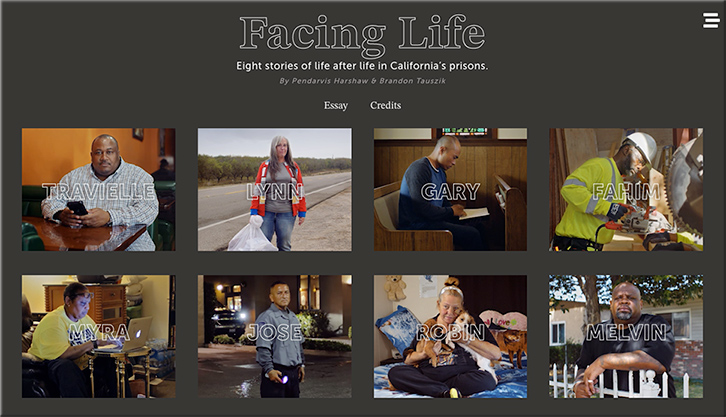
This project, created by Pendarvis Harshaw and Brandon Tauszik, has so many wonderful and original storytelling components, it’s the perfect model for student journalists looking for ways to tell important stories online.
ChatGPT: 30 incredible ways to use the AI-powered chatbot — from interestingengineering.com by Christopher McFadden You’ve heard of ChatGPT, but do you know how to use it? Or what to use it for? If not, then here are some ideas to get you started.
Excerpts:
It’s great at writing CVs and resumes
It can also read and improve the existing CV or resume
There are obvious questions like “Are the AI’s algorithms good enough?” (probably not yet) and “What will happen to Google?” (nobody knows), but I’d like to take a step back and ask some more fundamental questions: why chat? And why now?
Most people don’t realize that the AI model powering ChatGPT is not all that new. It’s a tweaked version of a foundation model, GPT-3, that launched in June 2020. Many people have built chatbots using it before now. OpenAI even has a guide in its documentation showing exactly how you can use its APIs to make one.
So what happened? The simple narrative is that AI got exponentially more powerful recently, so now a lot of people want to use it. That’s true if you zoom out. But if you zoom in, you start to see that something much more complex and interesting is happening.
This leads me to a surprising hypothesis: perhaps the ChatGPT moment never would have happened without DALL-E 2 and Stable Diffusion happening earlier in the year!
Like writing and coding before it, prompt engineering is an emergent form of thinking. It lies somewhere between conversation and query, between programming and prose. It is the one part of this fast-changing, uncertain future that feels distinctly human.
OpenAI’s ChatGPT, with new funding from Microsoft, has grown to over one million users faster than many of dominant tech companies, apps and platforms of the past decade.
Unlike the metaverse concept, which had a hype cycle based on an idea still nebulous to many, generative AI as tech’s next big thing is being built on top of decades of existing machine learning already embedded in business processes.
We asked top technology officers, specifically reaching out to many at non-tech sector companies, to break down the potential and pitfalls of AI adoption.
Take Your Words From Lecture to Page — from chronicle.com by Rachel Toor What compelling lecturers do, and how their techniques can translate to good writing.
Excerpts:
Thing is, many of the moves that the best lecturers make on the stage can translate to the page and help you draw in readers. That is especially important in writing textbooks and other work for general readers. If you can bring the parts of yourself that work in the classroom to the prose, you will delight readers as much as you do your students.
Narrative can be key. Data and research aren’t enough in either the classroom or on the page. People like to be told stories. If you want to be persuasive in both realms, use narrative to make arguments. Don’t forget that much scholarly work is really a quest. What journey can you take a reader on?
… It’s a performance on the page, too. A great lecture is a performance. So is great writing.
… Raise real questions the reader will want answers to.
The use of digital tools that help to connect students with real-world learning opportunities will expand global awareness and transform the learning experience.
Here are 12 digital tools to consider using in 2023.
StoryJumper is a digital storytelling platform that gives students so many ways to share their learning. Students can choose different characters, props, and background scenes and even add audio to the books that they create. StoryJumper helps educators promote student choice, and spark curiosity and creativity as they design their stories. There are also libraries full of books to explore. Books can also be shared with classmates and families.
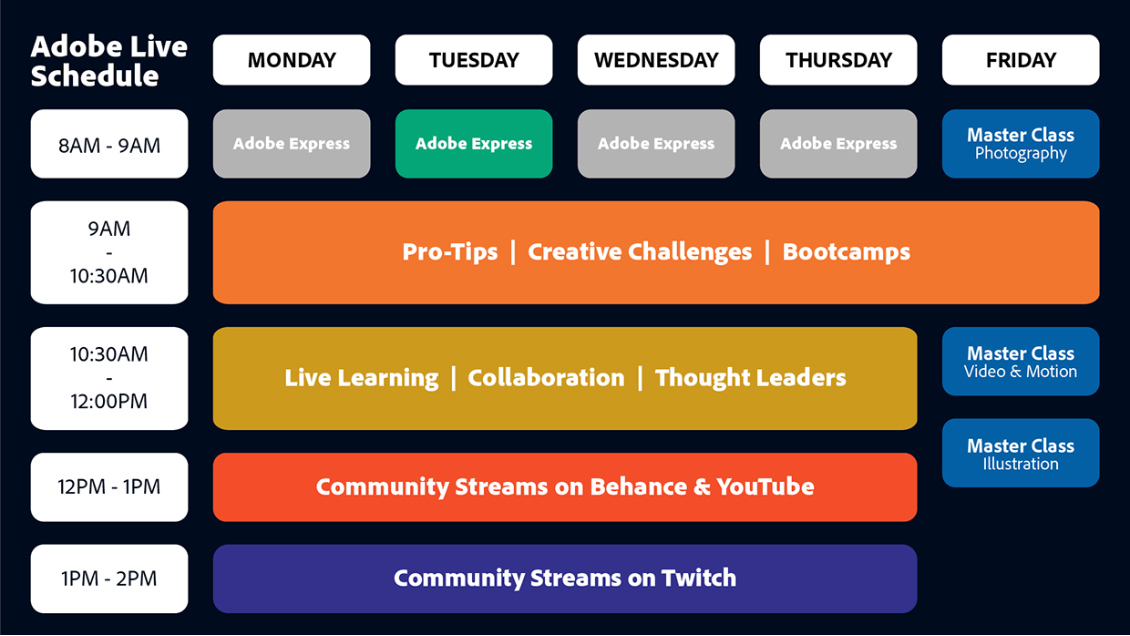
Join us in the morning for Adobe Express streams — If you are an aspiring creative, small business owner, or looking to kickstart a side hustle – these live streams are for you!
Then level up your skills with Creative Challenges, Bootcamps, and Pro-Tips. Get inspired by artists from all over the world during our live learning events. Tune in to connect directly with your instructors and other creatives just like you.
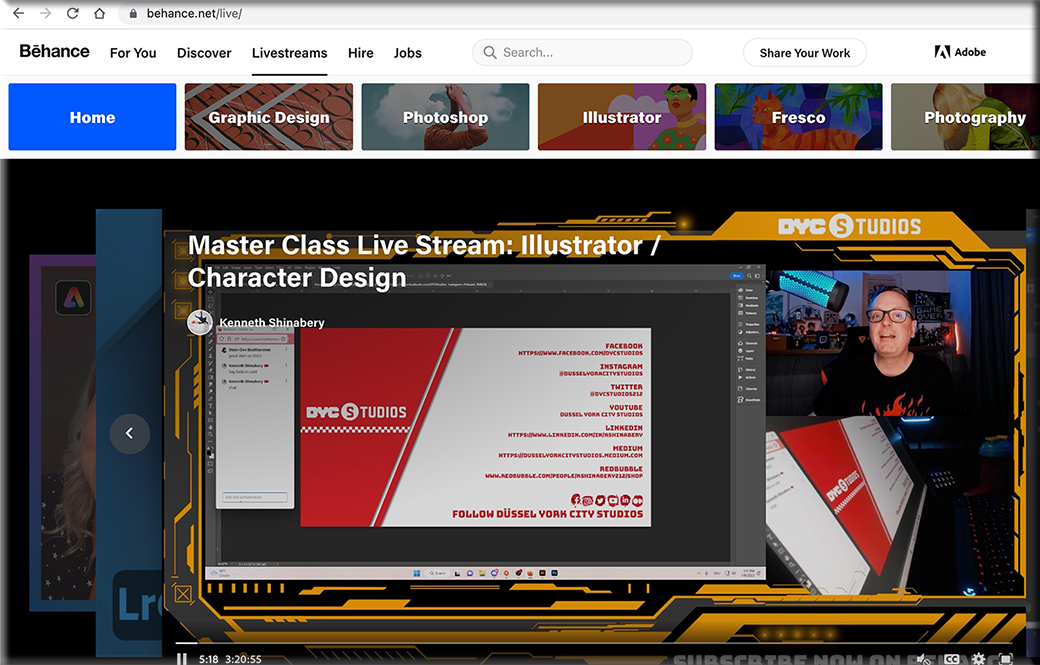
In the afternoon, join creatives in their own Community Streams! Laugh and create along side other Adobe Live Community members on Behance, Youtube and Twitch!
For weekly updates on the Adobe Live schedule + insight into upcoming guests and content, join our discord communities!
From DSC:
Check out the items below. As with most technologies, there are likely going to be plusses & minuses regarding the use of AI in digital video, communications, arts, and music.
DC: What?!? Wow. I should have seen this coming. I can see positives & negatives here. Virtual meetings could become a bit more creative/fun. But apps could be a bit scarier in some instances, such as with #telelegal.
It would be an understatement to say that lecturing is frowned upon in modern teaching. At this point it’s almost become a cliché: Don’t be the sage on the stage; be the guide on the side. Ideally, we should stick to supporting students through inquiry learning, cooperative learning, project-based learning, and so on. I have personally advocated for ALL of these approaches, over and over again. And I do believe that students need to be active in their learning.
But does that mean we dump lectures altogether? At a time when TED Talks and online courses are incredibly popular, when our students get at least some portion of their instruction through video-based, blended learning platforms, and when most people reading this have probably learned something useful or interesting in the last month from YouTube, aren’t we all learning from lectures all the time?
I’d argue that two factors have given lectures a bad name: overuse and poor execution. Let’s look at these issues one at a time.
In researching “upskilling for L&D practitioners” earlier this year, Learning Guild members were asked what they feel has been the biggest shift in their work over time: While technology has driven much change, sometimes seemingly exponentially, nearly everyone talked about a different sort of shift. This was true even of those who landed on the younger end of the experience spectrum. According to respondents, the biggest change is the move away from the idea that the primary role of L&D is to create “courses.” Technology changed and became easier to use, enabling development of myriad digital solutions. As noted in that report, respondents viewed this change as welcome and positive. …
When asked what other types of content respondents created to be delivered OUTSIDE of a traditional course, the most common responses were creating video and job aids/performance support materials. Microlearning and curated content were also frequently mentioned, and curated collections of existing material was popular with those engaged in traditional design.
Also relevant/see:
Games, Organizing, & Motivation: ID Links 10/25/22 — from christytuckerlearning.com by Christy Tucker Curated links on games built in Twine, storytelling, organization, useful tools, motivation, and transitioning from teaching to ID.
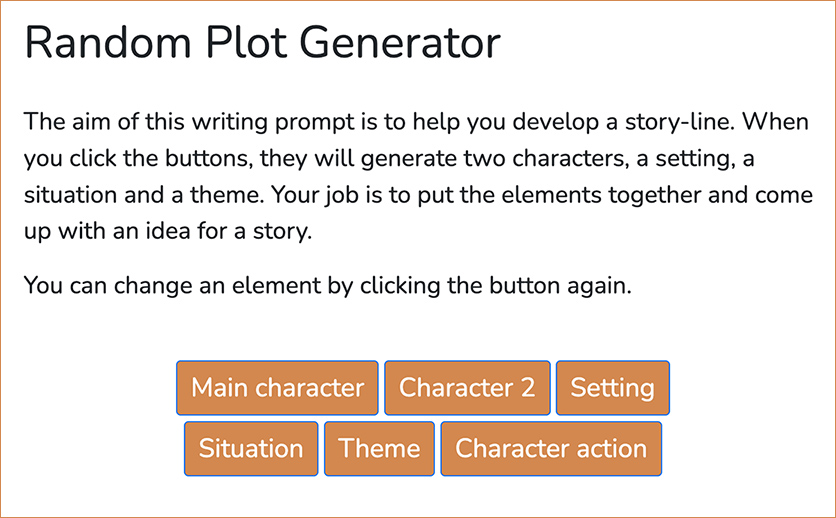
From DSC: Under the Storytelling and CYOA books section, it was interesting to see the Random Plot Generator, where Christy wrote: “A writing prompt tool to generate two characters, a setting, situation, theme, and character action. This could be a fun way to start scenarios if you’re feeling stuck. h/t Jean Marrapodi.”
I thought this might be a good tool for developing writers, improv actors, and likely others as well! 🙂
Also from Christy Tucker, see:
Voice Over and Video in Branching Scenarios When should you use voice over and video in branching scenarios? Use them for stable content and when multimedia improve skill transfer.
If the content is very stable and unlikely to change much over time, voice over might make sense in a branching scenario. Investing in creating video also makes more sense for more stable content and skills than for something that changes every 6 months.