


On 07/06/2023,
in Access to Justice (A2J), Daniel S. Christian, global / globalization, India, law schools, legal reform, legislatures / government / legal, policy, political science, society, sociology,
by Daniel Christian
On 06/29/2023,
in Bias | Diversity Equity & Inclusion (DE&I), business side of he, career development, change, changing business models, colleges, community colleges, higher education, learning ecosystem, legislatures / government / legal, participation, policy, society, sociology, United States, universities,
by Daniel Christian
Supreme Court makes its historic ruling in affirmative action cases — from hechingerreport.org by Olivia Sanchez
Court rules that these policies violate the equal protection clause of the 14th amendment
Ever since the Supreme Court announced last year that it would rule on two cases involving affirmative action in college admissions, the world of higher education has been anxiously awaiting a decision. Most experts predicted the court would eventually forbid the use of race as a factor in admissions decisions, and colleges and advocates have been scrambling to prepare for that new world.
On Thursday, the Supreme Court met those expectations, ruling that the consideration of race in college admissions is unconstitutional.
Supreme Court rules against race-conscious admissions at Harvard and UNC-Chapel Hill — from highereddive.com by Jeremy Bauer-Wolf
The opinion issued Thursday was unsurprising for college access advocates who had nonetheless urged the high court to keep with decades of precedent.
The U.S. Supreme Court ruled Thursday that race-conscious admissions practices at Harvard University and the University of North Carolina at Chapel Hill are unconstitutional, shattering decades of legal precedent and upending the recruitment and enrollment landscape for years to come.
Supreme Court rejects race-based affirmative action in college admissions — from washingtonpost.com by Robert Barnes
The Supreme Court on Thursday held that race-conscious admissions programs at Harvard and the University of North Carolina violate the Constitution’s guarantee of equal protection, a historic ruling that rolls back decades of precedent and will force a dramatic change in how the nation’s private and public universities select their students.
U.S. Supreme Court Strikes Down Race-Conscious Admissions Nationwide — from chronicle.com by Andy Thomason and Sarah Brown
The U.S. Supreme Court on Thursday struck down colleges’ use of race-conscious admissions nationwide, ruling in a pair of closely watched cases that the practice is racially discriminatory.
Writing for the court’s majority, Chief Justice John G. Roberts Jr. said that policies that claim to consider an applicant’s race as one factor among many are in fact violating the equal-protection clause of the 14th Amendment to the U.S. Constitution.
Pioneering Advanced Math from Behind Bars Math research gives meaning to years spent in prison — from scientificamerican.com by Amory Tillinghast-Raby
Excerpt:
Now a nonprofit co-founded by Havens has invented a computational programming platform built around one of the few technologies that people in prison do have access to: highly restricted, text-only e-mail. And as this facility begins to offer new opportunities, more and more incarcerated people are working on advanced mathematics to give meaning to their years behind bars.
On 05/25/2023,
in 21st century, 24x7x365 access, Artificial Intelligence/Agents/LLMs/and Related, digital audio, emerging technologies, Emotion, experimentation, hearts -- matters of the heart, multimedia, music, platforms, podcasting, society, sociology,
by Daniel Christian
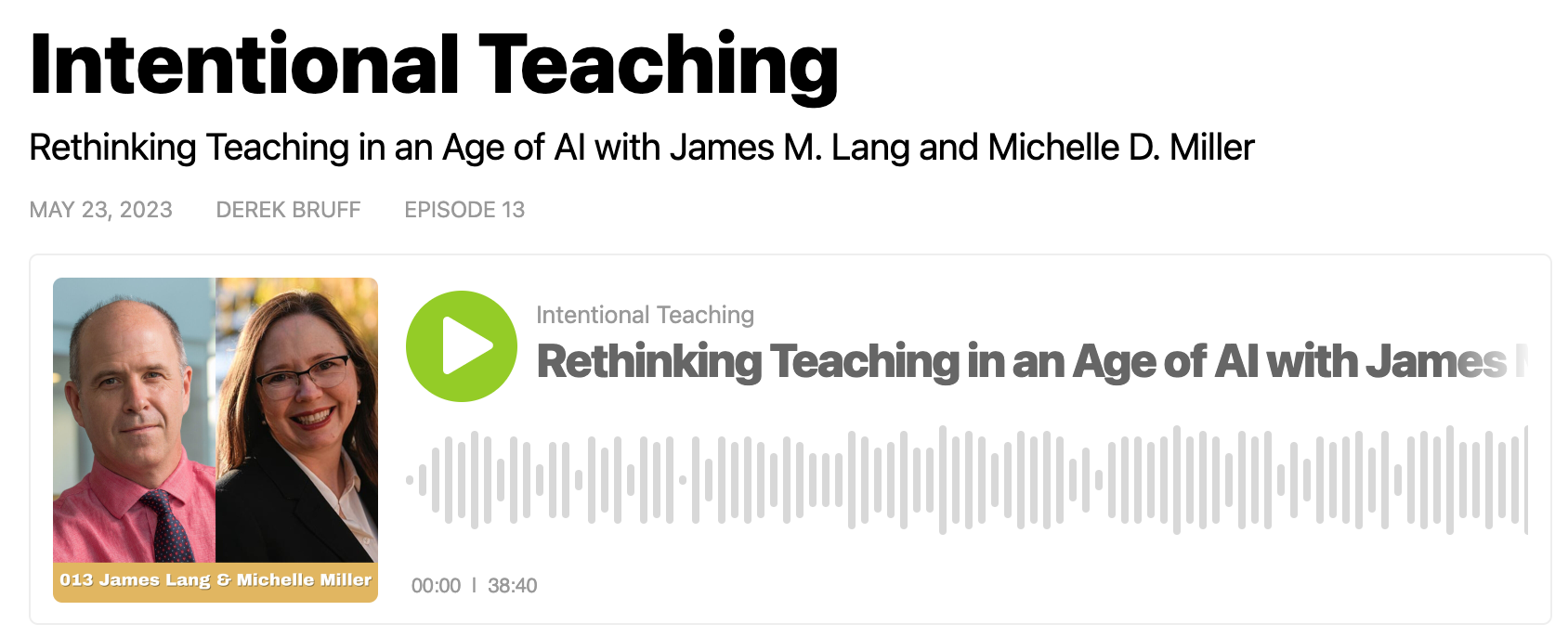
Intentional Teaching — from intentionalteaching.buzzsprout.com by Derek Bruff
Rethinking Teaching in an Age of AI with James M. Lang and Michelle D. Miller
Excerpt:
In her 2022 book Remembering and Forgetting in the Age of Technology, Michelle D. Miller writes about the “moral panics” that often happen in response to new technologies. In his 2013 book Cheating Lessons: Learning from Academic Dishonesty, James M. Lang argues that the best way to reduce cheating is through better course design. What do these authors have to say about teaching in an age of generative AI tools like ChatGPT? Lots!
Governance of superintelligence — from openai.com
Now is a good time to start thinking about the governance of superintelligence—future AI systems dramatically more capable than even AGI.
OpenAI leaders propose international regulatory body for AI — from techcrunch.com by Devin Coldewey
Excerpt:
AI is developing rapidly enough and the dangers it may pose are clear enough that OpenAI’s leadership believes that the world needs an international regulatory body akin to that governing nuclear power — and fast. But not too fast. In a post to the company’s blog, OpenAI founder Sam Altman, President Greg Brockman and Chief Scientist Ilya Sutskever explain that the pace of innovation in artificial intelligence is so fast that we can’t expect existing authorities to adequately rein in the technology. While there’s a certain quality of patting themselves on the back here, it’s clear to any impartial observer that the tech, most visibly in OpenAI’s explosively popular ChatGPT conversational agent, represents a unique threat as well as an invaluable asset.
OpenAI-backed robot startup beats Elon Musk’s Tesla, deploys AI-enabled robots in real world — from firstpost.com by Mehul Reuben Das; via The Rundown
A robotics startup backed by OpenAI, the makers of ChatGPT has beaten Elon Musk’s Tesla in the humanoid robots race, and has successfully deployed humanoid robots as security guards. Next, they will be deploying the robots in hospices and assisted living facilities
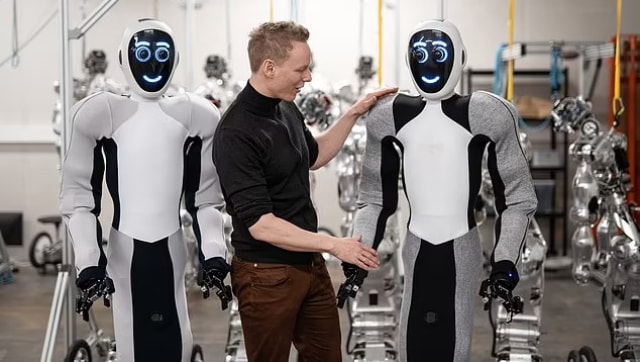
A robotics startup backed by OpenAI, the makers of ChatGPT has beaten Elon Musk’s Tesla in the humanoid robots race, and has successfully deployed humanoid robots as security guards. Next, they will be deploying the robots in hospices and assisted living facilities.
From DSC:
Hmmm…given the crisis of loneliness in the United States, I’m not sure that this type of thing is a good thing. But I’m sure there are those who would argue the other side of this.
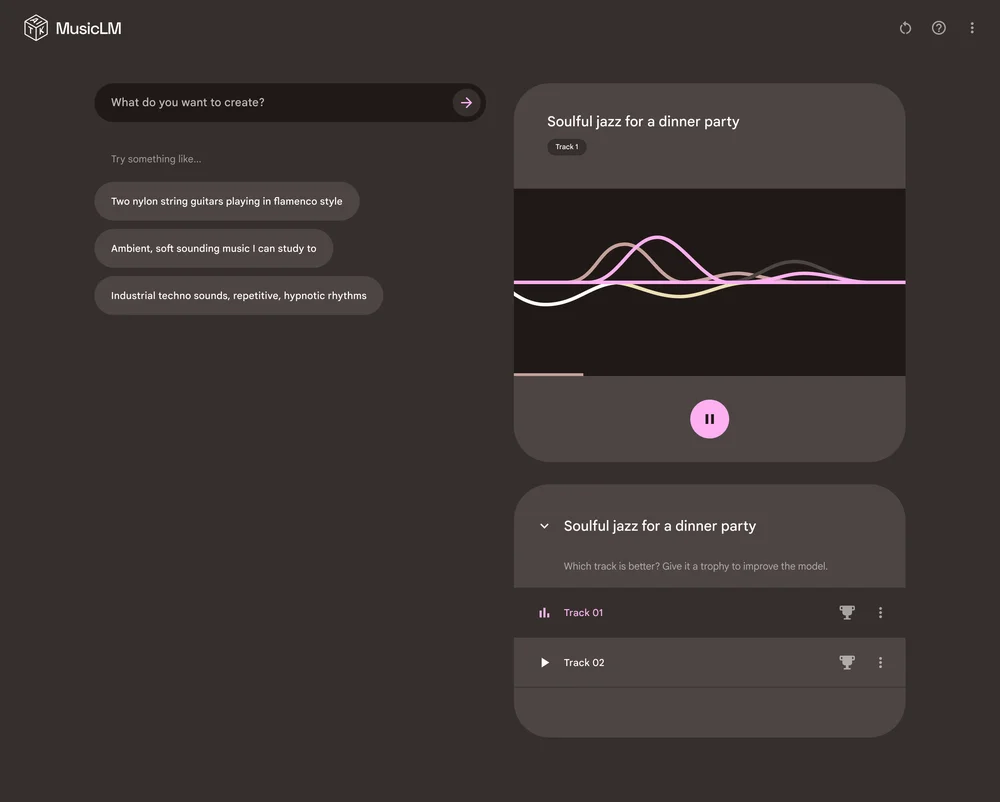
Turn ideas into music with MusicLM — from blog.google
Experiment today by describing a musical idea and hearing it come to life.
On 05/24/2023,
in adjunct faculty, adult learning, blended learning, business side of he, career development, change, changing business models, colleges, community colleges, cost of getting a degree, credentialing, curriculum, experimentation, faculty/staff, future of higher education, game-changing environment, generational differences, higher education, history, hybrid learning, Hyflex learning, leadership, learning ecosystem, Learning Experience Design, learning preferences, liberal arts, lifelong learning, more voice more choice more control, new business models, online learning, parents/guardians, psychology, real-world assignments, reinvent, religion, skills, society, sociology, student-related, surviving, traditional / tradition, trends, United States, universities, workplace,
by Daniel Christian
Trend No. 3: The business model faces a full-scale transformation — from www2.deloitte.com by Cole Clark, Megan Cluver, and Jeffrey J. Selingo
The traditional business model of higher education is broken as institutions can no longer rely on rising tuition among traditional students as the primary driver of revenue.
Excerpt:
Yet the opportunities for colleges and universities that shift their business model to a more student-centric one, serving the needs of a wider diversity of learners at different stages of their lives and careers, are immense. Politicians and policymakers are looking for solutions to the demographic cliff facing the workforce and the need to upskill and reskill generations of workers in an economy where the half-life of skills is shrinking. This intersection of needs—higher education needs students; the economy needs skilled workers—means that colleges and universities, if they execute on the right set of strategies, could play a critical role in developing the workforce of the future. For many colleges, this shift will require a significant rethinking of mission and structure as many institutions weren’t designed for workforce development and many faculty don’t believe it’s their job to get students a job. But if a set of institutions prove successful on this front, they could in the process improve the public perception of higher education, potentially leading to more political and financial support for growing this evolving business model in the future.
Also see:
Trend No. 2: The value of the degree undergoes further questioning — from www2.deloitte.com by Cole Clark, Megan Cluver, and Jeffrey J. Selingo
The perceived value of higher education has fallen as the skills needed to keep up in a job constantly change and learners have better consumer information on outcomes.
Excerpt:
Higher education has yet to come to grips with the trade-offs that students and their families are increasingly weighing with regard to obtaining a four-year degree.
…
But the problem facing the vast majority of colleges and universities is that they are no longer perceived to be the best source for the skills employers are seeking. This is especially the case as traditional degrees are increasingly competing with a rising tide of microcredentials, industry-based certificates, and well-paying jobs that don’t require a four-year degree.
Trend No. 1: College enrollment reaches its peak — from www2.deloitte.com by Cole Clark, Megan Cluver, and Jeffrey J. Selingo
Enrollment rates in higher education have been declining in the United States over the years as other countries catch up.
Excerpt:
Higher education in the United States has only known growth for generations. But enrollment of traditional students has been falling for more than a decade, especially among men, putting pressure both on the enrollment pipeline and on the work ecosystem it feeds. Now the sector faces increased headwinds as other countries catch up with the aggregate number of college-educated adults, with China and India expected to surpass the United States as the front runners in educated populations within the next decade or so.
Plus the other trends listed here >>
Also related to higher education, see the following items:
Number of Colleges in Distress Is Up 70% From 2012 — from bloomberg.com by Nic Querolo (behind firewall)
More schools see falling enrollement and tuition revenue | Small private, public colleges most at risk, report show
About 75% of students want to attend college — but far fewer expect to actually go — from highereddive.com by Jeremy Bauer-Wolf
There Is No Going Back: College Students Want a Live, Remote Option for In-Person Classes — from campustechnology.com by Eric Paljug
Excerpt:
Based on a survey of college students over the last three semesters, students understand that remotely attending a lecture via remote synchronous technology is less effective for them than attending in person, but they highly value the flexibility of this option of attending when they need it.
Future Prospects and Considerations for AR and VR in Higher Education Academic Technology — from er.educause.edu by Owen McGrath, Chris Hoffman and Shawna Dark
Imagining how the future might unfold, especially for emerging technologies like AR and VR, can help prepare for what does end up happening.
Black Community College Enrollment is Plummeting. How to Get Those Students Back — from the74million.org by Karen A. Stout & Francesca I. Carpenter
Stout & Carpenter: Schools need a new strategy to bolster access for learners of color who no longer see higher education as a viable pathway
As the Level Up coalition reports ,“the vast majority — 80% — of Black Americans believe that college is unaffordable.” This is not surprising given that Black families have fewer assets to pay for college and, as a result, incur significantly more student loan debt than their white or Latino peers. This is true even at the community college level. Only one-third of Black students are able to earn an associate degree without incurring debt.
Repairing Gen Ed | Colleges struggle to help students answer the question, ‘Why am I taking this class?’ — from chronicle.com by Beth McMurtrie
Students Are Disoriented by Gen Ed. So Colleges Are Trying to Fix It.
Excerpts:
Less than 30 percent of college graduates are working in a career closely related to their major, and the average worker has 12 jobs in their lifetime. That means, he says, that undergraduates must learn to be nimble and must build transferable skills. Why can’t those skills and ways of thinking be built into general education?
…
“Anyone paying attention to the nonacademic job market,” he writes, “will know that skills, rather than specific majors, are the predominant currency.”
Micro-credentials Survey. 2023 Trends and Insights. — from holoniq.com
HolonIQ’s 2023 global survey on micro-credentials
3 Keys to Making Microcredentials Valid for Learners, Schools, and Employers — from campustechnology.com by Dave McCool
To give credentials value in the workplace, the learning behind them must be sticky, visible, and scalable.
Positive Partnership: Creating Equity in Gateway Course Success — from insidehighered.com by Ashley Mowreader
The Gardner Institute’s Courses and Curricula in Urban Ecosystems initiative works alongside institutions to improve success in general education courses.
American faith in higher education is declining: one poll — from bryanalexander.org by Bryan Alexander
Excerpt:
The main takeaway is that our view of higher education’s value is souring. Fewer of us see post-secondary learning as worth the cost, and now a majority think college and university degrees are no longer worth it: “56% of Americans think earning a four-year degree is a bad bet compared with 42% who retain faith in the credential.”
…
Again, this is all about one question in one poll with a small n. But it points to directions higher ed and its national setting are headed in, and we should think hard about how to respond.

On 04/28/2023,
in animation, art, creativity, education, Emotion, engagement / engaging students, history, ideas, instructional design, K-12 related, Learning Experience Design, Michigan, society, sociology, student-related, teachers, writing, youth,
by Daniel Christian
Poetry writing about Flint murals allows for ‘creative freedom’ in this high school classroom — from mlive.com by Dylan Goetz (behind paywall)
Excerpt:
It’s a new tradition in the curriculum of the senior-level English class, where teacher Carrie Mattern asks her students to seek out a mural in Flint and write poetry about it.
This year, there was a focus on writing around cultural grief and the process of healing.
It’s become a favorite assignment for the students who’ve worked on the project, who say it allows them to use “creative freedom” in a way that other classes don’t.
.


Also see:
On 04/17/2023,
in Access to Justice (A2J), career development, law schools, legislatures / government / legal, pathways, programming, society, sociology, United States, workplace,
by Daniel Christian
Justice Through Code — from centerforjustice.columbia.edu by ; via Matt Tower
Unlocking Potential for the 80+ Million Americans with a Conviction History.
Excerpt:
A world where every person, regardless of past convictions or incarceration can access life-sustaining and meaningful careers.
We are working to make this vision a reality through our technical and professional career development accelerators.
Our Mission: We educate and nurture talent with conviction histories to create a more just and diverse workforce. We increase workplace equity through partnerships that educate and prepare teams to create supportive pathways to careers that end the cycle of poverty that contributes to incarceration and recidivism.
JTC is jointly offered by Columbia University’s Center for Justice, and the Tamer Center for Social Enterprise at the Columbia Business School.
On 04/14/2023,
in 21st century, 24x7x365 access, colleges, community colleges, global / globalization, higher education, IT in HE, society, sociology, telecommunications, universities, vendors,
by Daniel Christian
Tech Titans: The crossroads of humanity and technology — from enterprisersproject.com by E.G. Nadhan
This year’s panel of IT leaders discusses the ongoing problem of equitable access to technology for underserved communities
Excerpts:
Can technology be a catalyst to improve the quality of life in these communities and, thus, resist the status quo?
“You cannot escape technology – tech is intertwined no matter what we do; it has become a utility like water, heat, and electricity. Not having access to technology can be detrimental to having access to the essentials of daily life. We need to work together to ensure that everyone – especially the underserved and disenfranchised communities – have access to technology.”
Also relevant/see:
Anywhere Learning Happens: The eduroam Global WiFi Access Service — from campustechnology.com by Mary Grush
A conversation with eduroam community leaders Saira Hasnain and Brett Bieber
Steadily, eduroam is reaching toward ubiquity, and that’s one big factor that will ultimately allow it to continue to expand services to users all around the globe.
…
Impressively, in 2022, eduroam logged more than 6.4 billion individual authentications around the globe.
On 03/31/2023,
in Access to Justice (A2J), Canada, career development, Cost of legal services - including access, legal reform, legislatures / government / legal, society, sociology, United States,
by Daniel Christian
Building a bridge to justice from the other side — from jordanfurlong.substack.com by Jordan Furlong
Our professional-centric approach to resolving unmet legal needs hasn’t worked. Maybe it’s time we empowered the people who are already there.

Excerpts:
Given all that, I think it’s time we tried a demand-side approach instead — one that doesn’t require us to licence and deploy more legal services professionals, but instead focuses on and empowers those who are already dealing with people’s unmet and unrecognized legal needs.
…
So if we’re not looking for legal professionals, who are we looking for? If we take a user-centred, needs-focused approach, we’ll find ourselves looking for someone who’s familiar to and trusted by the vulnerable people with unmet legal needs, who’s walked with them, earned their confidence over time — “someone who looks like them, understands their situation, and are trusted members of their community.”
These individuals are already present in the lives of people with unmet legal needs. They’re community activists, librarians, hospital employees, teachers, social workers, homeless advocates, therapists, food bank employees, members of a religious order, financial counsellors, mental health clinic staffers, juvenile case workers, and many others.
On 03/27/2023,
in 21st century, 24x7x365 access, Artificial Intelligence/Agents/LLMs/and Related, business, change, cloud-based computing / apps / other cloud-related, computer science, content development, aggregation, repositories, corporate / business world, design, digital audio, digital video, emerging technologies, entrepreneurship, ethics, experimentation, global / globalization, graphics, innovation, morals/values, platforms, policy, political science, society, sociology, the downsides of how people use tech, tools, trends, United States, vendors, vision/possibilities,
by Daniel Christian
Also relevant/see:
- “Godfather of artificial intelligence” weighs in on the past and potential of AI — from cbsnews.com
- Sketching the Field of AI Tools for Local Newsrooms — from medium.com by Dalia Hashim
- Adobe Firefly, Bing Image Creator, Canva’s AI, ChatGPT Plugins, Google Workspace AI, Microsoft Loop, Runway Gen2 – Volume 03 — from heatherbcooper.substack.com by Heather Cooper
Another week of everything, everywhere, all at once in AI news – and get my free AI Visual toolkit! - It takes a few dollars and 8 minutes to create a deepfake. And that’s only the start — from npr.org by Shannon Bond; with thanks to Mr. Robert Gibson on LinkedIn for this resource
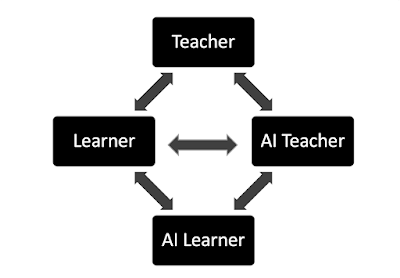
- We’ve just gone from a simple teacher-learner model to a new world of AI teachers – a new pedAIgogy — from donaldclarkplanb.blogspot.com by Donald Clark
- ChatGPT is about to revolutionize the economy. We need to decide what that looks like. — from technologyreview.com by David Rotman
New large language models will transform many jobs. Whether they will lead to widespread prosperity or not is up to us. - Is GPT-4 Worth the Subscription? Here’s What You Should Know — from wired.com Reece Rogers
The new algorithm is exclusive to ChatGPT Plus, OpenAI’s subscriber-only service. We signed up and put it to the test. - Superhuman: What can AI do in 30 minutes? — from oneusefulthing.substack.com Ethan Mollick
AI multiplies your efforts. I found out by how much…