MIT Technology Review — Big problems that demand bigger energy. — from technologyreview.com by various

Technology is all about solving big thorny problems. Yet one of the hardest things about solving hard problems is knowing where to focus our efforts. There are so many urgent issues facing the world. Where should we even begin? So we asked dozens of people to identify what problem at the intersection of technology and society that they think we should focus more of our energy on. We queried scientists, journalists, politicians, entrepreneurs, activists, and CEOs.

Some broad themes emerged: the climate crisis, global health, creating a just and equitable society, and AI all came up frequently. There were plenty of outliers, too, ranging from regulating social media to fighting corruption.

MIT Technology Review interviews many people to weigh in on the underserved issues at the intersections of technology and society.


Advice From More than A Decade of Career Pathway Innovation — from gettingsmart.com by Hilary Sontag and Kerri McDermid

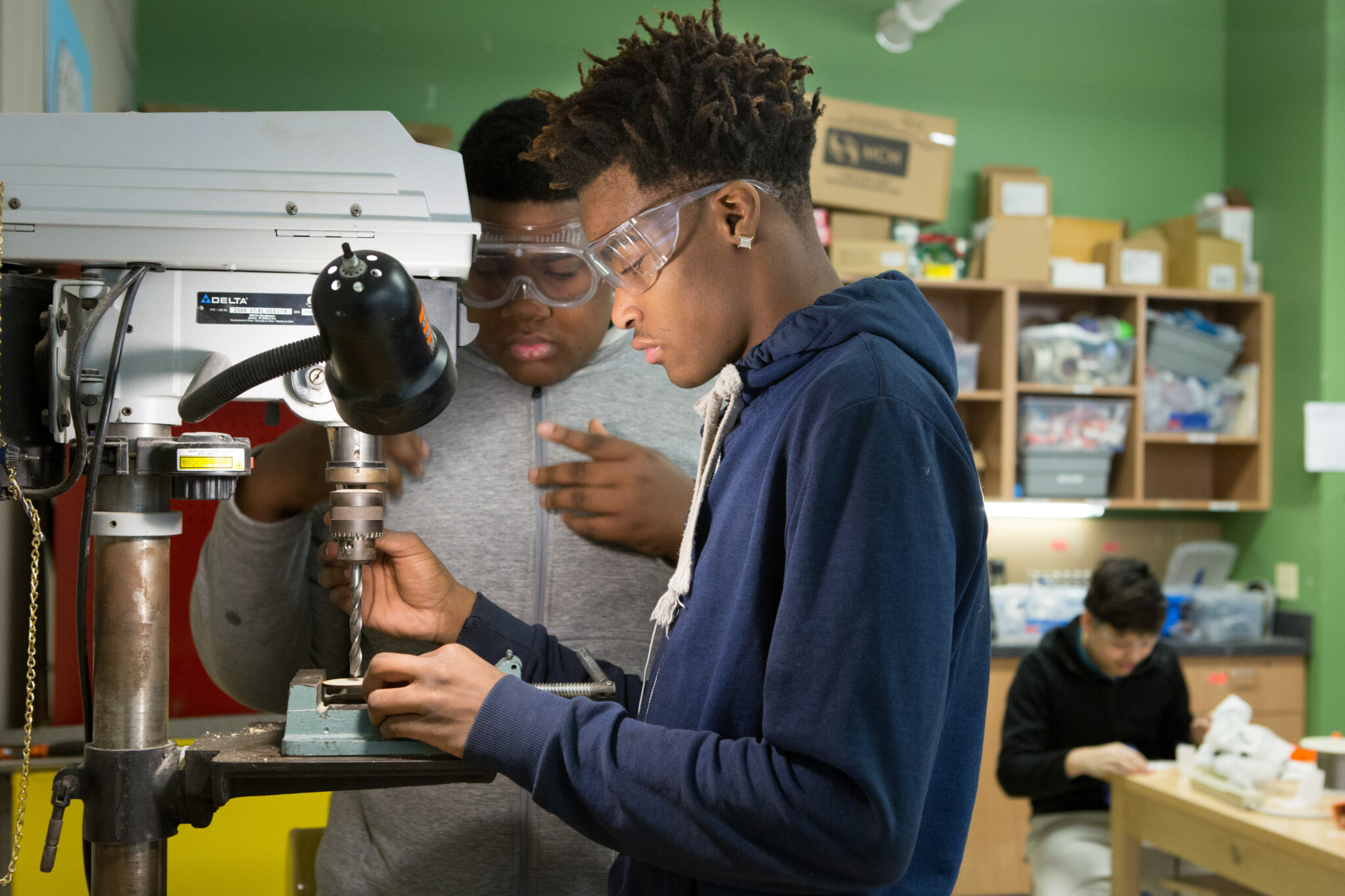
A student uses a drill press to work on an engineering project.

Excerpt:

With nearly 15 years of experience in building and leading career-connected learning initiatives, St. Vrain offers a roadmap for districts of all sizes who are beginning the journey to create their own pathways of opportunity for students.

Over the past decade, St. Vrain Valley Schools has launched more than two dozen career pathways and now has a goal to offer quality work-based learning experiences for every graduate. As staff have developed these opportunities, St. Vrain has seen significant increases in graduation rates – approximately 94 percent of St. Vrain students graduate high school in four years – and a significant decrease in dropout rates to less than one percent of students. Graduation rates among our Hispanic students have increased by 30 percentage points, almost completely eliminating graduation rate gaps between all students and students of color. St. Vrain’s post-pandemic achievement has also accelerated at a remarkable pace. Building career-connected programming, and offering it as early and broadly as possible, has demonstrated a compelling case for the effectiveness of career pathways in accelerating achievement and student success.


The value of hands-on learning in prison — from college-inside.beehiiv.com  by Charlotte West
Women in Washington reflect on their experience with a pre-apprenticeship that introduces them to the trades.

When I visited the prison in May, Brittany Wright had plans to go down to the Cement Masons & Plasterers Local Union 528 in Seattle when she got out a few days later. She’s now an apprentice working on a light rail expansion project for Sound Transit, making $31 an hour plus benefits. “I’m a little nervous, but more excited to get out there and actually start using the trades,” she told me at the time. “They seem like they’re willing to work with me. And that’s all that matters.”


Creating an ‘ecosystem’ to close the Black talent gap in technology — from mckinsey.com (emphasis below from DSC)

Chris Perkins, associate partner, McKinsey: Promoting diversity in tech is more nuanced than driving traditional diversity initiatives. This is primarily because of the specialized hard and soft skills required to enter tech-oriented professions and succeed throughout their careers. Our research shows us that various actors, such as nonprofits, for-profits, government agencies, and educational institutions are approaching the problem in small pockets. Could we help catalyze an ecosystem with wraparound support across sectors?

To design this, we have to look at the full pipeline and its “leakage” points, from getting talent trained and in the door all the way up to the C-suite. These gaps are caused by lack of awareness and support in early childhood education through college, and lack of sponsorship and mentorship in early- and mid- career positions.


Corporate America Promised to Hire a Lot More People of Color. — from bloomberg.com
It Actually Did.
The year after Black Lives Matter protests, the S&P 100 added more than 300,000 jobs — 94% went to people of color.

The overall job growth included 20,524 White workers. The other 302,570 jobs — or 94% of the headcount increase — went to people of color.

But the trend continued up the job ladder in top, high-paid jobs, too: Companies increased their racial diversity among executives, managers and professionals.


For another item relevant to career development, see:


Why Christians need to support diversity professionals, not demonize them — from religionnews.com by Michelle Loyd-Paige
Even among Christians, DEI leaders find themselves isolated and unsupported.

For nearly 39 years, I have taught about and advocated for diversity, equity, inclusion, anti-racism and social justice in Christian contexts. I have been sustained by the knowledge that diversity is a part of God’s good creation and is celebrated in the Bible. 

And not just diversity, but love for our neighbors, care for the immigrant, and justice for the marginalized and oppressed. In fact, the Hebrew and Greek words for justice appear in Scripture more than 1,000 times. 

It could be argued that Jesus’ ministry on earth exemplified the value of diversity, the importance of inclusion and the obligation of justice and restoration. Our ministry — in schools, churches, business, wherever we find ourselves — should reflect the same.

From DSC:
I was at Calvin (then College) when Michelle was there. I am very grateful for her work over my 10+ years there. I learned many things from her and had my “lenses” refined several times due to her presentations, questions, and the media that she showed. Thank you Michelle for all of your work and up-hill efforts! It’s made a difference! It impacted the culture at Calvin. It impacted me.

The other thing that hepled me in my background was when my family moved to a much more diverse area. And I’ve tried to continue that perspective in my own family. I don’t know half of the languages that are spoken in our neighborhood, but I love the diversity there! I believe our kids (now mostly grown) have benefited from it and are better prepared for what they will encounter in the real world.


Don’t Be Fooled: How You Can Master Media Literacy in the Digital Age — from youtube.com by Professor Sue Ellen Christian

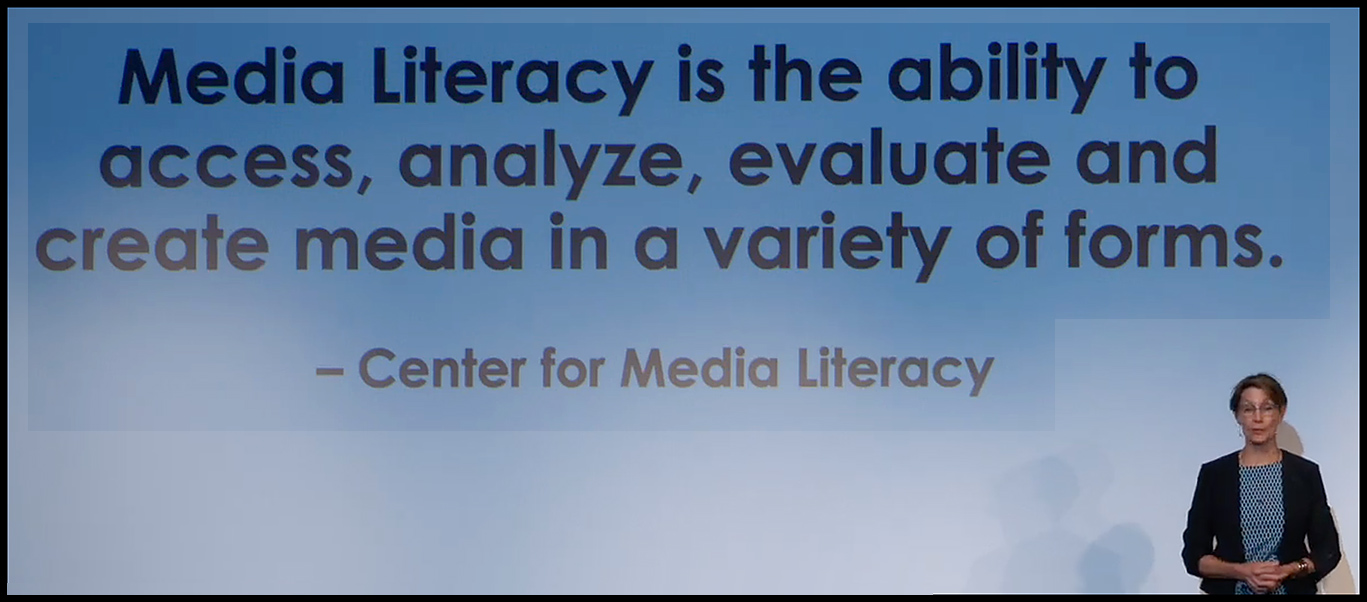
During this special keynote presentation, Western Michigan University (WMU) professor Sue Ellen Christian speaks about the importance of media literacy for all ages and how we can help educate our friends and families about media literacy principles. Hosted by the Grand Rapids Public Library and GRTV, a program of the Grand Rapids Community Media Center. Special thanks to the Grand Rapids Public Library Foundation for their support of this program.

Excerpts:

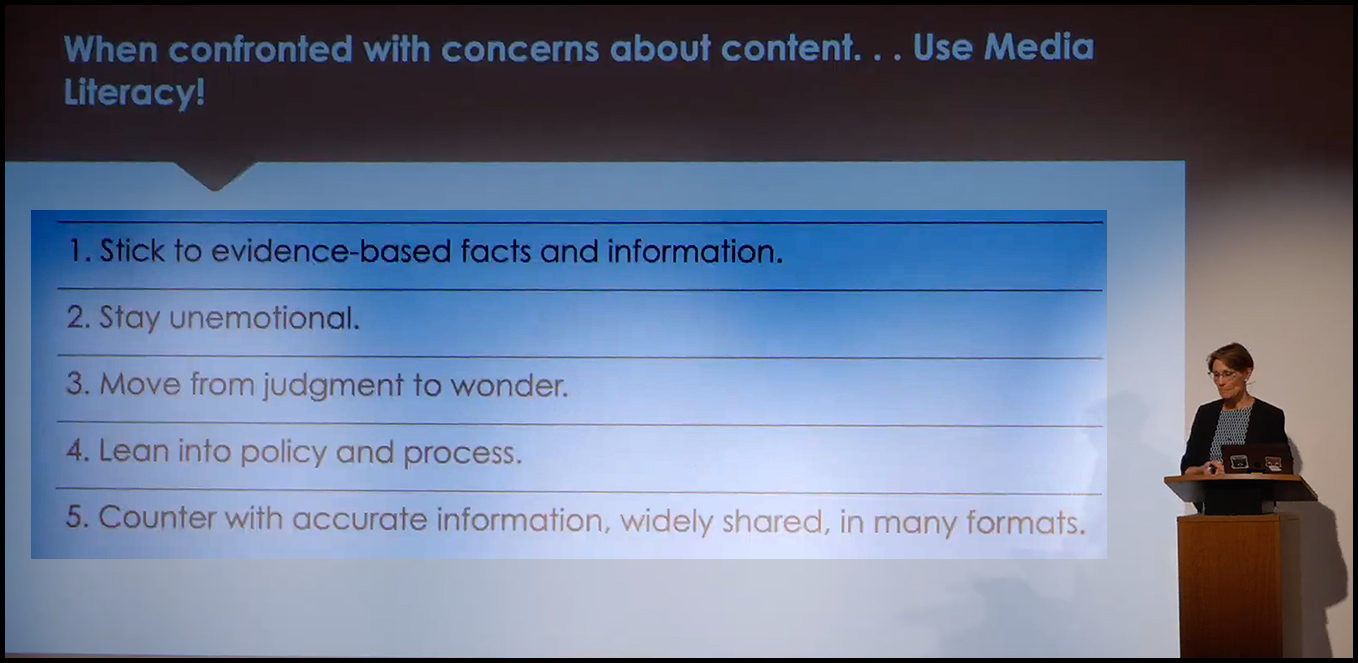
Media Literacy is the ability to access, analyze, evaluate, and create media in a variety of forms. Center for Media Literacy

5 things to do when confronted with concerns about content.


Also relevant/see:

Kalamazoo Valley Museum’s newest exhibit teaches community about media literacy — from mlive.com by Gabi Broekema


A Guide to Finding Housing For The Previously Incarcerated — from todayshomeowner.com by Alexis Bennett & Alexis Curls

For many individuals stepping back into society after incarceration, finding a stable place to call home can be complicated. The reality is that those who have been previously incarcerated are almost 10 times more likely to face homelessness compared to the general public. With over 725,000 people leaving state and federal prisons each year, the quest for housing becomes not only a personal challenge but a broader societal concern. Stable housing is crucial for successful reintegration, providing a foundation for building a new chapter in life. In this article, we’ll shed light on the challenges and offer empowering resources for those on their journey to find housing after prison.

Table of Contents

  • Understanding the Housing Landscape
  • Utilizing Support Services
  • Creating a Housing Plan
  • Securing and Maintaining Housing
  • Continuing Personal Growth and Reintegration
  • Conclusion

From DSC:
I’m posting this in the hopes that this information may help someone out there. Also, my dad used to donate some of his time in retirement to an agency that helped people find housing. He mentioned numerous times how important it was for someone to have a safe place to stay that they could call their own.


Letter from the Editor: Experienced teachers are leaving Michigan schools. This is why. — from mlive.com by Matthew Miller

They talked instead about issues like pay, stress and the sense that they no longer had the solid backing of school administrators.

Sue Harper, who retired this summer from Kreeger Elementary in Fowlerville, blamed what she called “bulldozer parents.”

“I have never been one to quit anything, and teaching is my passion, but this is not teaching,” one teacher wrote. “This is hours of endless paperwork, this is social work, this is counseling, this is parenting, this is babysitting, this is coaching, this is everything but teaching.”

Also relevant/see:

Low pay, culture wars, and ‘bulldozer parents.’ Why Michigan’s best teachers are calling it quits. — from mlive.com by Melissa Frick and Matthew Miller

Now a change management coordinator for Fifth Third Bank, she said, “I don’t take the stress from my job home. I don’t feel guilty, like I always could be doing more for someone.”

Thousands of experienced teachers have retired or left the profession in the years since the COVID-19 pandemic first closed schools and shifted classes to Zoom.

Teachers say they’re burnt out, tired of a lack of support and lack of respect, feeling the impact of the increasingly acrimonious politics surrounding public education.

And finally:


Let’s Use ChatGPT to ‘Think Different’ About K-12 Schools — from gettingsmart.com by Kara Stern

So, in addition to asking ChatGPT to think like a school communications professional, a principal, or a teacher, what if we asked ChatGPT to think like the populations we’re serving, as a way of improving the education (or UX) we’re delivering?


Why I Keep Teaching — from edutopia.org by Rachel Jorgensen
A veteran educator explains why, despite the many challenges, she continues to try to change students’ lives, in turn enriching her own.

EVERY TIME I SHOW UP FOR WORK, A STUDENT MIGHT CHANGE MY LIFE FOR THE BETTER

EVERY TIME I SHOW UP FOR WORK, A STUDENT MIGHT CHANGE MY LIFE FOR THE BETTER

MY WORK HAS INVISIBLE RIPPLE EFFECTS


34 Ways to Quiet a Rambunctious Class — from edutopia.org by Daniel Leonard
From “Silent 20” to imaginary marshmallows, these teacher-tested strategies for all grade levels can help you snap an unruly classroom back to attention.


Per EdSurge:

‘THE MOTH’ GOES TO SCHOOL: For more than a decade, the nonprofit behind the popular storytelling podcast The Moth has run workshops in schools to help students share impactful stories from their lives. Now the group started a spin-off podcast, Grown, highlighting those student stories. Here’s what they’re learning, and why they say storytelling needs to be taught in schools.

.

Grown, a podcast from The Moth
.


In solitary confinement, your neighbors are your teachers. — from opencampusmedia.org by Charlotte West

Kwaneta Harris, who is incarcerated in Texas, writes about helping the young women who live next to her in solitary confinement learn how to read. This essay was co-published with Slate.


San Quentin is helping men prepare for jobs outside — from college-inside.beehiiv.com by Charlotte West

I visited Employer Day at San Quentin, where 30 incarcerated men sit down with Bay Area employers and apply what they learned during a four-month job readiness program.

Job interviews can be daunting, especially if you’ve never done one before. But even more so if you’ve been incarcerated. I visited Employer Day at San Quentin in March to learn more.


Post-prison job training — hechingerreport.org by Olivia Sanchez and Tara García Mathewson

We’ve known for a long time that higher education can play a huge role in helping people who serve time in prison get back on their feet. Research shows that higher-ed attainment is directly correlated with a lower likelihood of being reincarcerated, as is stable employment.

But people getting out of prison face many obstacles in finding jobs, and lack of educational opportunities is just part of the issue. A patchwork of more than 14,000 federal, state and local laws and regulations restricts individuals who have arrest and conviction histories from getting licensed in certain fields. Here’s some of what my reporting found about how pervasive this problem is and why it matters:


10 Charts That Capture How the World Is Changing (July 2023) — from digitalnative.substack.com by Rex Woodbury
From Higher Education to AI Art, Therapy to Venture Capital Funding

The charts this week again cover a broad range of themes—

  1. Confidence in Higher Education
  2. Confidence in Institutions
  3. AI Mania
  4. Is Art Created by AI Still Art?
  5. A Venture Capital Reset
  6. The Highs and Lows of Threads
  7. More Americans Are Living Alone
  8. Therapy Goes Mainstream
  9. Secondhand Explosion
  10. A Climate Reckoning


From DSC:
The Bible talks about listening quite frequently. The authors ask people to listen to what is being communicated.

Proverbs 16:20
Whoever gives heed to instruction prospers,
and blessed is the one who trusts in the Lord.

Unfortunately, it often involves people NOT listening to the LORD and/or to others and, instead, going their/our own way. In my own life, things don’t go so well when I do that. I think the same is true on a more general/corporate level as well.

For example, Israel in ancient days thought and behaved this way too. Read 1 Kings and 2 Kings to see what I mean. They didn’t listen to the LORD. They didn’t listen to instruction. They thought they knew it all. They didn’t give credit to Whom credit was due. They made up their own gods and worshipped the things that they created.

The LORD wanted to bless them — and us. But they didn’t — and we still don’t — want to listen and submit to His will at times (even though His will is meant to BLESS US).

I used to see the LORD looking down from heaven, with a stern or disappointed look on His face. He was tapping His foot, and had His arms folded. I imagined Him saying, “Daniel, get your stuff together!!!” I didn’t see Him as being on my team.

Through the years He has shown me that He IS on my team and that He is active in my heart, mind, and life. He is full of grace, truth, patience, forgiveness, vulnerable love, and wisdom. He’s awesome. I love Him and His ways — but that’s taken me decades to be able to say that.

He wants what is best for us. He gave us gifts and wants us to use those gifts to serve others.


Recording Arts as Reengagement, Social Justice and Pathway — from gettingsmart.com

Key Points

  • After a successful career as a recording artist, David “TC” Ellis created Studio 4 in St. Paul to spot budding music stars.
  • It became a hangout spot for creative young people, most of whom had “dropped out of school due to boredom and a sense that school wasn’t relevant to their lives and dreams.”
  • Ellis and colleagues then opened the High School for Recording Arts in 1998.

Young people learning how to perform and record music at the High School for Recording Arts


Introducing Superalignment — from openai.com
We need scientific and technical breakthroughs to steer and control AI systems much smarter than us. To solve this problem within four years, we’re starting a new team, co-led by Ilya Sutskever and Jan Leike, and dedicating 20% of the compute we’ve secured to date to this effort. We’re looking for excellent ML researchers and engineers to join us.

Excerpts (emphasis DSC):

How do we ensure AI systems much smarter than humans follow human intent?

Currently, we don’t have a solution for steering or controlling a potentially superintelligent AI, and preventing it from going rogue. Our current techniques for aligning AI, such as reinforcement learning from human feedback, rely on humans’ ability to supervise AI. But humans won’t be able to reliably supervise AI systems much smarter than us, and so our current alignment techniques will not scale to superintelligence. We need new scientific and technical breakthroughs.

Our goal is to build a roughly human-level automated alignment researcher. We can then use vast amounts of compute to scale our efforts, and iteratively align superintelligence.

From DSC:
Hold up. We’ve been told for years that AI is at the toddler stage. But now assertions are being made that AI systems are smarter than humans — much smarter even. That said, then why is the goal of OpenAI to build a roughly human-level automated alignment researcher if humans aren’t that smart after all…? Which is it? I must be missing or misunderstanding something here…

OpenAI are jumping back on the alignment bandwagon with the brilliantly-named Superalignment Team. And you guessed it – they’re researching alignment of future superintelligent AIs. They reckon that AI can align other AI faster than humans can, and the plan is to build an AI that does just that. Head-spinning stuff…

Ben’s Bites

Plus…

Who else should be on this team? We certainly don’t want a team comprised of just technical people. How about including rabbis, pastors, priests, parents, teachers, professors, social workers, judges, legislators, and many others who can help represent other specialties, disciplines, and perspectives to protect society?


Authors file a lawsuit against OpenAI for unlawfully ‘ingesting’ their books — from theguardian.com by Ella Creamer; via Ben’s Bytes
Mona Awad and Paul Tremblay allege that their books, which are copyrighted, were ‘used to train’ ChatGPT because the chatbot generated ‘very accurate summaries’ of the works
.


How AI is Transforming Workplace Architecture and Design — from workdesign.com by Christian Lehmkuhl


London Futurists | Generative AI drug discovery breakthrough, with Alex Zhavoronkov — from londonfuturists.buzzsprout.com

Alex Zhavoronkov is our first guest to make a repeat appearance, having first joined us in episode 12, last November. We are delighted to welcome him back, because he is doing some of the most important work on the planet, and he has some important news.

In 2014, Alex founded Insilico Medicine, a drug discovery company which uses artificial intelligence to identify novel targets and novel molecules for pharmaceutical companies. Insilico now has drugs designed with AI in human clinical trials, and it is one of a number of companies that are demonstrating that developing drugs with AI can cut the time and money involved in the process by as much as 90%.


Watch This Space: New Field of Spatial Finance Uses AI to Estimate Risk, Monitor Assets, Analyze Claims — from blogs.nvidia.com

When making financial decisions, it’s important to look at the big picture — say, one taken from a drone, satellite or AI-powered sensor.

The emerging field of spatial finance harnesses AI insights from remote sensors and aerial imagery to help banks, insurers, investment firms and businesses analyze risks and opportunities, enable new services and products, measure the environmental impact of their holdings, and assess damage after a crisis.


Secretive hardware startup Humane’s first product is the Ai Pin — from techcrunch.com by Kyle Wiggers; via The Rundown AI

Excerpt:

Humane, the startup launched by ex-Apple design and engineering duo Imran Chaudhri and Bethany Bongiorno, today revealed details about its first product: The Humane Ai Pin.

Humane’s product, as it turns out, is a wearable gadget with a projected display and AI-powered features. Chaudhri gave a live demo of the device onstage during a TED Talk in April, but a press release issued today provides a few additional details.

The Humane Ai Pin is a new type of standalone device with a software platform that harnesses the power of AI to enable innovative personal computing experiences.


He Spent $140 Billion on AI With Little to Show. Now He Is Trying Again. — from wsj.com by Eliot Brown; via Superhuman
Billionaire Masayoshi Son said he would make SoftBank ‘the investment company for the AI revolution,’ but he missed out on the most recent frenzy


“Stunning”—Midjourney update wows AI artists with camera-like feature — from arstechnica.com by Benj Edwards; via Sam DeBrule from Machine Learnings
Midjourney v5.2 features camera-like zoom control over framing, more realism.


What is AIaaS? Guide to Artificial Intelligence as a Service — from eweek.com by Shelby Hiter
Artificial intelligence as a service, AIaaS, is an outsourced AI service provided by cloud-based AI providers.

AIaaS Definition
When a company is interested in working with artificial intelligence but doesn’t have the in-house resources, budget, and/or expertise to build and manage its own AI technology, it’s time to invest in AIaaS.

Artificial intelligence as a service, or AIaaS, is an outsourced service model AI that cloud-based companies provide to other businesses, giving them access to different AI models, algorithms, and other resources directly through a cloud computing platform; this access is usually managed through an API or SDK connection.


The Rise of the AI Engineer — from latent.space


Boost ChatGPT with new plugins — from wondertools.substack.com by Jeremy Caplan
Wonder Tools | Six new ways to use AI
.


A series re: AI from Jeff Foster out at ProvideoCoalition.com


The AI upskilling imperative to build a future-ready workforce — from businessinsider.com

Excerpts:

Skill development has always been crucial, but recent technological advancements have raised the stakes. We are currently in the midst of the fourth industrial revolution, where automation and breakthroughs in artificial intelligence (AI) are revolutionising the workplace. In this era of quick change and short half-life of skills, upskilling shouldn’t be an afterthought. Instead, reskilling and upskilling have to evolve into requirements for effective professional development.

To understand the significance of upskilling for your career trajectory, it is important to recognise the ever-evolving nature of technology and the rapid pace of digital transformation. Business Insider India has been exploring how businesses and thought leaders are driving innovation by educating their staff on the technologies and skills that will shape the future.

 
© 2025 | Daniel Christian