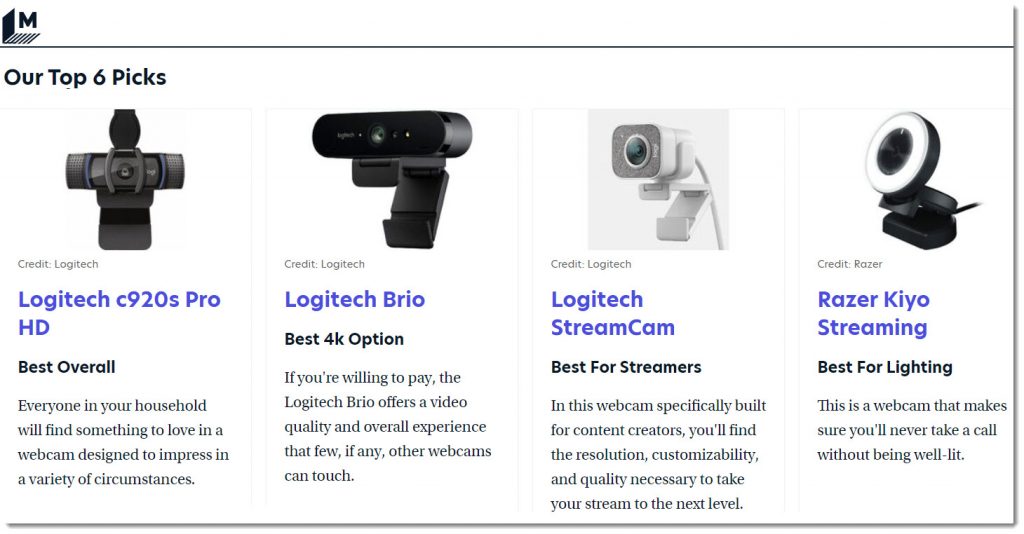
Why Do My Webcam And Microphone Not Work? — from techlearning.com by Luke Edwards
Webcam and microphone not work? This is how you can get up and running.

Excerpt:

Webcam and microphone not work? That can be a frustrating situation to be in, especially when you need to teach a class over Zoom or attend a school meeting using Meet. Whatever your video chat platform, without a microphone or webcam working, you’re stuck.

Thankfully, it can often be the case that it’s not a hardware fault with your device but rather a setting issue, which can be relatively easily fixed. So even if you’re in a chat right this minute, frantically scouring the web for a fix and finding yourself here, you may yet join that meeting.

This guide aims to clarify a few areas that should be checked before going into panic mode and heading to your hardware store with the credit card at the ready.
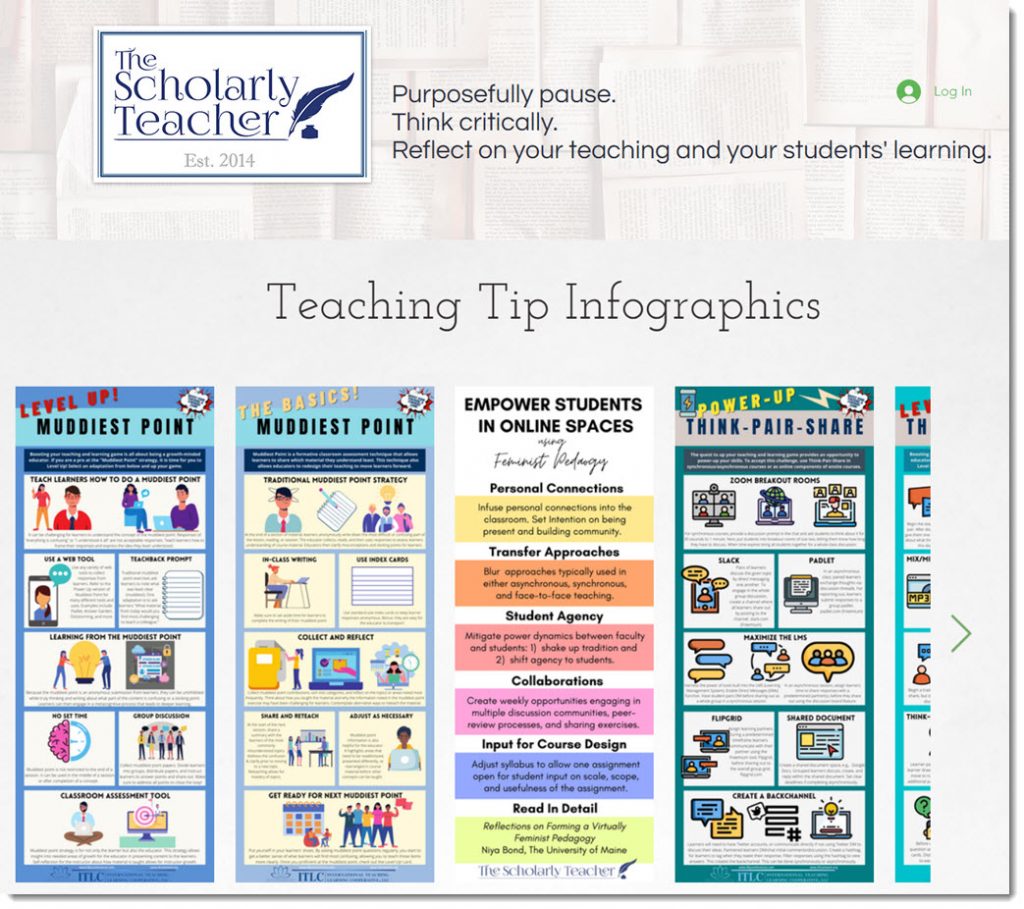


Teaching Tip Infographics — from scholarlyteacher.com


Three Steps to Building a Learning Culture That Delivers Innovation — from sloanreview.mit.edu by Ori Mor
To create technological solutions for grand challenges, companies must foster cultures that support continuous learning and team optimism.

Excerpt:

Now that we’re on the other side, with our system up and running in retail outlets, helping to reduce e-waste (such as cords and batteries), we’re able to look back and see what it took to get here. While the skills of our team were essential, the biggest reason we ultimately succeeded was our culture of continuous learning. Three steps in particular allowed that culture to thrive.

Also relevant — especially to those working in higher education — see:


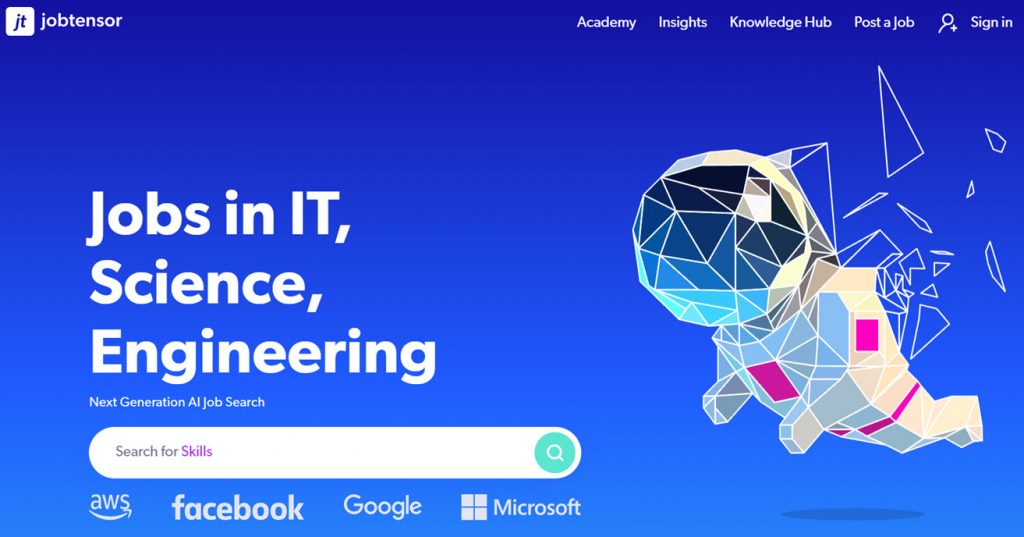
jobtensor.com/uk <– an AI job board from the UK — with thanks to Dr. Jakob Sidoruk for this resource.

From DSC:
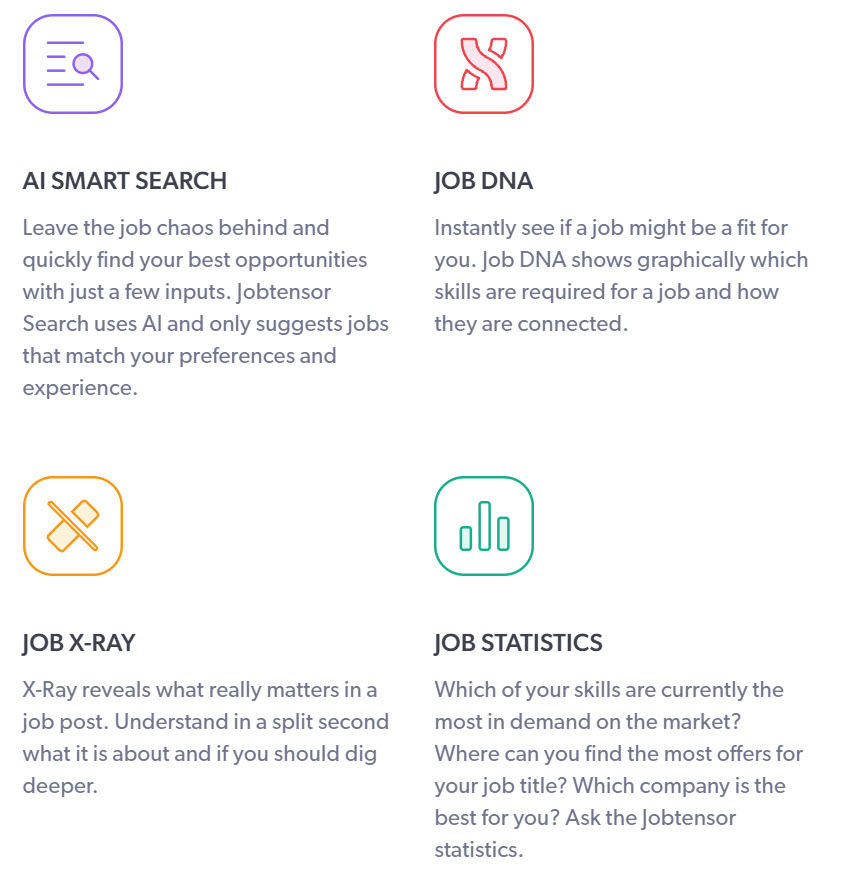
Jakob mentioned that Jobtensor has built a tool for jobs in tech, science and engineering and that the goal of this tool is to make job searches more fun and efficient for job seekers. I’m glad to see this from the other side of the table. That is, there have been plenty Applicant Tracking Systems (ATSs) out there that have essentially weeded people out time and again — while making many job searches long, expensive, and emotionally draining. 

jobtensor.com/uk -- an AI job board from the UK

jobtensor.com/uk -- an AI job board from the UK


From DSC:
It is exactly this kind of tool that could — and should — be integrated into a next-generation learning platform. Have an AI-enabled system of identifying the most current needs out in the workplace. Provide a mechanism/listing of those needs along with the existing courses, streams of content, podcasts, and more that could help someone learn those skills.

Learning from the living class room

streams of content are ever flowing by -- we need to tap into them and contribute to them


Twitter for Teachers’ Professional Development: A Guide to Advanced Search Tips — from educatorstechnology.com

Excerpt:

Twitter is one of the most popular microblogging platform among educators. More and more teachers are drawing on its communicative and social networking powers to connect, share, and grow professionally. As such, Twitter embeds tons of educational resources buried deep into its Tweetosphere. In today’s post, I am sharing with a host of practical search tips that will enable you to easily locate resources and grow your PLN. More specifically, you will learn how to search for Tweets that contain specific words, phrase, hashtags, or mentions; how to search Tweets sent from or sent in reply to a given user; how to access Tweets that embed links in them, how to search for Tweets shared during a particular period of time, and many more.


A ‘New Normal’ Requires New Tools for Attendance and Family Engagement — from edsurge.com by Liesel Carlson

Excerpt:

Mini arrived at the Office of School Culture in Michigan’s Lansing School District in December 2020. She came on board to help us assess our attendance goals and strategies several months into a global pandemic. Mini immediately organized our scattered data and got to work pushing critical information about attendance to families by sending positive “nudges” via text messages, offering empathetic support and guidance.

Mini happens to be a chatbot.


From DSC:
For IDs, trainers, teachers, faculty members, & teams who are working on creating and delivering online-based learning……the following article is a good one for us to check out and reflect upon:

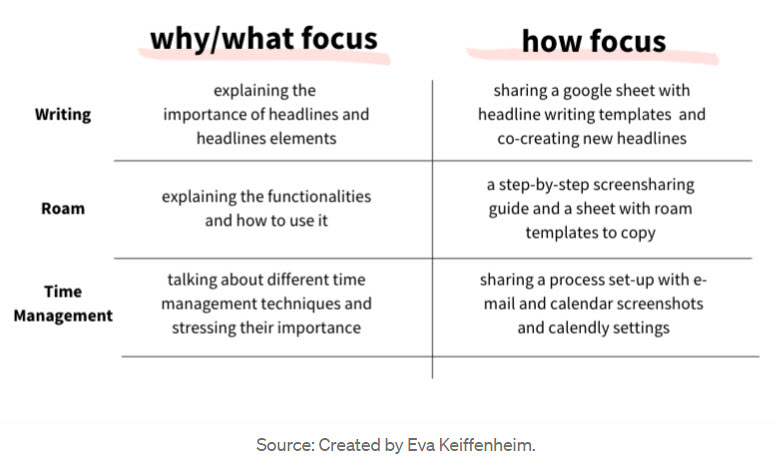
Most Online Courses Are a Waste of Your Time — Here’s How You Know — from medium.com by Eva Keiffenheim
A quick guide that helps you find the worthy ones.

Excerpts:

Not all learning investments are created equal. People who’ve excelled at their craft are often not the best teachers. Likewise, creators who write the best sales copy don’t offer the most value.

Here’s precisely how you can spot bad online courses so that you won’t waste your time and money.


Could AR and/or VR enable a massive 3D-based type of “Voicethread?” [Christian]

From DSC:
What if we could quickly submit items for a group to discuss, annotate, and respond to — using whichever media format is available/preferable for a person — like a massive 3D-based Voicethread? What if this type of discussion could be contributed to and accessed via Augmented Reality (AR) and/or via Virtual Reality (VR) types of devices?

It could be a new 3D format that a person could essentially blow all the way up into the size of a billboard. Think, “Honey, I shrunk the kids” type of stuff.  

Input devices might include:

  • Augmented Reality (AR) glasses
  • Virtual Reality (VR) headsets/glasses
  • Scanners
  • Smartphones
  • Tablets
  • Desktops and laptops
  • SmartTVs
  • Other types of input devices

For example, a person could take a picture of a document or something else and then save that image into a new file format that would be vector-based. I say a vector-based file format so that the image could be enlarged to the size of a billboard without losing any resolution (i.e., wouldn’t become grainy; the image would remain crystal clear regardless of how big the image is). I’m thinking here along the lines of “Honey, I shrunk the kids!”

Other thoughts here:

  • The files could be accessible online for attendees of classes or for audiences of presentations/webinars
  • The files could be displayed on the walls of learning/presentation spaces for marking them up
  • One could manipulate the 3D image if that person was using a virtual/immersive environment
  • Users should be able to annotate on those images and/or be able to save such annotations and notes

A question for phase II:
Could this concept also be used if virtual courts take off?

Hmmmm…just thinking out loud.


From DSC:
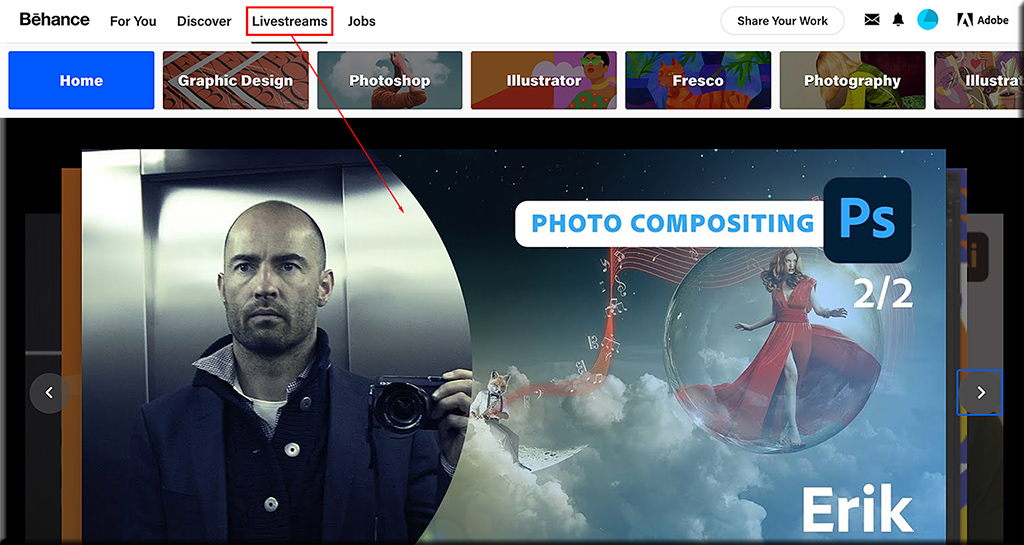
Also check one of the things that Scott mentioned in his talk — Behance, a network of creatives. They consistently offer livestreams — where the learner has more choice, more control over what they learn about.

Livestreams are one of the services offered out at Behance.net

The search function out at Behance.net


Also see:


Artificial Intelligence: Should You Teach It To Your Employees?— from forbes.com by Tom Taulli

Excerpt:

“If more people are AI literate and can start to participate and contribute to the process, more problems–both big and small–across the organization can be tackled,” said David Sweenor, who is the Senior Director of Product Marketing at Alteryx. “We call this the ‘Democratization of AI and Analytics.’ A team of 100, 1,000, or 5,000 working on different problems in their areas of expertise certainly will have a bigger impact than if left in the hands of a few.”

New Artificial Intelligence Tool Accelerates Discovery of Truly New Materials — from scitechdaily.com
The new artificial intelligence tool has already led to the discovery of four new materials.

Excerpt:

Researchers at the University of Liverpool have created a collaborative artificial intelligence tool that reduces the time and effort required to discover truly new materials.

AI development must be guided by ethics, human wellbeing and responsible innovation — from healthcareitnews.com by Bill Siwicki
An expert in emerging technology from the IEEE Standards Association describes the elements that must be considered as artificial intelligence proliferates across healthcare.


What Makes a Successful Video? — from learningsolutionsmag.com by Bill Brandon

Excerpt:

For the purposes of this article, there are two kinds of videos. There are tutorials, in which you going to show a user how to do a task. And there are instructional videos, which will address interpersonal communication skills, leadership, and analytical tasks. There are some situations in which you may want to do a kind of combination of the two types. The exact names (tutorial and instructional) are not really important, but the purposes are.

 
© 2025 | Daniel Christian