


On 07/06/2023,
in Access to Justice (A2J), Daniel S. Christian, global / globalization, India, law schools, legal reform, legislatures / government / legal, policy, political science, society, sociology,
by Daniel Christian
On 06/29/2023,
in Bias | Diversity Equity & Inclusion (DE&I), business side of he, career development, change, changing business models, colleges, community colleges, higher education, learning ecosystem, legislatures / government / legal, participation, policy, society, sociology, United States, universities,
by Daniel Christian
Supreme Court makes its historic ruling in affirmative action cases — from hechingerreport.org by Olivia Sanchez
Court rules that these policies violate the equal protection clause of the 14th amendment
Ever since the Supreme Court announced last year that it would rule on two cases involving affirmative action in college admissions, the world of higher education has been anxiously awaiting a decision. Most experts predicted the court would eventually forbid the use of race as a factor in admissions decisions, and colleges and advocates have been scrambling to prepare for that new world.
On Thursday, the Supreme Court met those expectations, ruling that the consideration of race in college admissions is unconstitutional.
Supreme Court rules against race-conscious admissions at Harvard and UNC-Chapel Hill — from highereddive.com by Jeremy Bauer-Wolf
The opinion issued Thursday was unsurprising for college access advocates who had nonetheless urged the high court to keep with decades of precedent.
The U.S. Supreme Court ruled Thursday that race-conscious admissions practices at Harvard University and the University of North Carolina at Chapel Hill are unconstitutional, shattering decades of legal precedent and upending the recruitment and enrollment landscape for years to come.
Supreme Court rejects race-based affirmative action in college admissions — from washingtonpost.com by Robert Barnes
The Supreme Court on Thursday held that race-conscious admissions programs at Harvard and the University of North Carolina violate the Constitution’s guarantee of equal protection, a historic ruling that rolls back decades of precedent and will force a dramatic change in how the nation’s private and public universities select their students.
U.S. Supreme Court Strikes Down Race-Conscious Admissions Nationwide — from chronicle.com by Andy Thomason and Sarah Brown
The U.S. Supreme Court on Thursday struck down colleges’ use of race-conscious admissions nationwide, ruling in a pair of closely watched cases that the practice is racially discriminatory.
Writing for the court’s majority, Chief Justice John G. Roberts Jr. said that policies that claim to consider an applicant’s race as one factor among many are in fact violating the equal-protection clause of the 14th Amendment to the U.S. Constitution.
On 06/27/2023,
in adjunct faculty, Artificial Intelligence/Agents/LLMs/and Related, assessment, business, changing business models, colleges, community colleges, corporate / business world, digital learning, digital video, economics, education technology, emerging technologies, experimentation, faculty/staff, future, future of higher education, game-changing environment, generational differences, graphics, higher education, human-computer interaction (HCI), ideas, innovation, instructional design, intelligent systems, intelligent tutoring, IT in HE, law schools, learning, learning agents, learning ecosystem, Learning Experience Design, Learning from the Living [Class] Room, liberal arts, lifelong learning, new business models, open courseware and systems, personalized/customized learning, platforms, policy, society, teachers, teaching & learning, technologies for your home, tools, UK, United States, universities, workplace, writing,
by Daniel Christian
The economic potential of generative AI — from mckinsey.com; via Superhuman
.
DC: It should prove to be interesting & fun to watch how #AI and #XR related technologies will be integrated into games & the #gamification of #learning .https://t.co/HO2CftqNrs via @VRScout
— Daniel Christian (he/him/his) (@dchristian5) June 23, 2023
.
On giving AI eyes and ears — from oneusefulthing.org by Ethan Mollick
AI can listen and see, with bigger implications than we might realize.
Excerpt:
But even this is just the beginning, and new modes of using AI are appearing, which further increases their capabilities. I want to show you some examples of this emerging world, which I think will soon introduce a new wave of AI use cases, and accompanying disruption.
We need to recognize that these capabilities will continue to grow, and AI will be able to play a more active role in the real world by observing and listening. The implications are likely to be profound, and we should start thinking through both the huge benefits and major concerns today.
Ethan Mollick
5 Steps to Transforming Images into Videos Using AI Tools — from heatherbcooper.substack.com by Heather Cooper
A simple guide to layering AI tools for quick video creation

.
‘Nobody wins in an academic-integrity arms race’ — from chonicle.com by Ian Wilhelm
How artificial intelligence is changing the way college thing about cheating
Even though generative AI is a new thing, it doesn’t change why students cheat. They’ve always cheated for the same reason: They don’t find the work meaningful, and they don’t think they can achieve it to their satisfaction. So we need to design assessments that students find meaning in.
Tricia Bertram Gallant
Caught off guard by AI — from chonicle.com by Beth McMurtrie and Beckie Supiano
Professor scrambled to react to ChatGPT this spring — and started planning for the fall
Excerpt:
Is it cheating to use AI to brainstorm, or should that distinction be reserved for writing that you pretend is yours? Should AI be banned from the classroom, or is that irresponsible, given how quickly it is seeping into everyday life? Should a student caught cheating with AI be punished because they passed work off as their own, or given a second chance, especially if different professors have different rules and students aren’t always sure what use is appropriate?
GPT-4 Can Use Tools Now—That’s a Big Deal — from every.to by Dan Shipper; resource via Sam DeBrule
What “function calling” is, how it works, and what it means
Excerpt:
…OpenAI built tool use right into the GPT API with an update called function calling. It’s a little like a child’s ability to ask their parents to help them with a task that they know they can’t do on their own. Except in this case, instead of parents, GPT can call out to external code, databases, or other APIs when it needs to.
Each function in function calling represents a tool that a GPT model can use when necessary, and GPT gets to decide which ones it wants to use and when. This instantly upgrades GPT capabilities—not because it can now do every task perfectly—but because it now knows how to ask for what it wants and get it.
.
.
How ChatGPT can help disrupt assessment overload — from timeshighereducation.com by David Carless
Advances in AI are not necessarily the enemy – in fact, they should prompt long overdue consideration of assessment types and frequency, says David Carless
Excerpt:
Reducing the assessment burden could support trust in students as individuals wanting to produce worthwhile, original work. Indeed, students can be co-opted as partners in designing their own assessment tasks, so they can produce something meaningful to them.
A strategic reduction in quantity of assessment would also facilitate a refocusing of assessment priorities on deep understanding more than just performance and carries potential to enhance feedback processes.
If we were to tackle assessment overload in these ways, it opens up various possibilities. Most significantly there is potential to revitalise feedback so that it becomes a core part of a learning cycle rather than an adjunct at its end. End-of-semester, product-oriented feedback, which comes after grades have already been awarded, fails to encourage the iterative loops and spirals typical of productive learning.
.
.
The full 12 uses are here: https://edgeoflearning.com/your-new-teaching-superpower-ai-tools/
The AI Tools in Education Database — from kiwi-path-612.notion.site by EdTech Insiders
Excerpt (emphasis DSC):
Since AI in education has been moving at the speed of light, we built this AI Tools in Education database to keep track of the most recent AI tools in education and the changes that are happening every day. This database is intended to be a community resource for educators, researchers, students, and other edtech specialists looking to stay up to date. This is a living document, so be sure to come back for regular updates.
.
.
Time for Class 2023 Study finds students are earlier adopters of generative AI tools than faculty, and majority (69%) of learners prefer hybrid, blended or online course formats — from globenewswire.com by Tyton Partners
.
AI Could Prevent Hiring Bias — Unless It Makes It Worse — from nerdwallet.com by Anna Helhoski
Advocates say AI can eliminate human biases in hiring. Skeptics point out that AI tools are trained by … humans.
Excerpt:
These claims conjure up the rosiest of images: human resource departments and their robot buddies solving discrimination in workplace hiring. It seems plausible, in theory, that AI could root out unconscious bias, but a growing body of research shows the opposite may be more likely.
…
Companies’ use of AI didn’t come out of nowhere: For example, automated applicant tracking systems have been used in hiring for decades. That means if you’ve applied for a job, your resume and cover letter were likely scanned by an automated system. You probably heard from a chatbot at some point in the process. Your interview might have been automatically scheduled and later even assessed by AI.
From DSC:
Here was my reflection on this:
DC: Along these lines, I wonder if Applicant Tracking Systems cause us to become like typecast actors and actresses — only thought of for certain roles. Pigeonholed.
— Daniel Christian (he/him/his) (@dchristian5) June 23, 2023
Also related to AI in hiring, see:
4 in 10 Companies Will Be Using AI Interviews by 2024 — from resumebuilder.com
In June, ResumeBuilder.com surveyed more than 1,000 employees who are involved in hiring processes at their workplaces to find out about their companies’ use of AI interviews.
The results:
- 43% of companies already have or plan to adopt AI interviews by 2024
- Two-thirds of this group believe AI interviews will increase hiring efficiency
- 15% say that AI will be used to make decisions on candidates without any human input
- More than half believe AI will eventually replace human hiring managers
Watch OpenAI CEO Sam Altman on the Future of AI — from bloomberg.com
Sam Altman, CEO & Co-Founder, OpenAI discusses the explosive rise of OpenAI and its products and what an AI-laced future can look like with Bloomberg’s Emily Chang at the Bloomberg Technology Summit.
.
PowerSchool Announces Collaboration with Microsoft Azure OpenAI Service to Provide Personalized Learning at Scale in K-12 Education — from powerschool.com
Large-scale language models integrated within PowerSchool Performance Matters and PowerSchool LearningNav products will empower educators in delivering transformative personalized learning pathways
The implementation of generative AI within these products will dramatically improve educators’ ability to deliver personalized learning to students at scale by enabling the application of personalized assessments and learning pathways based on individual student needs and learning goals. K-12 educators will also benefit from access to OpenAI technology…
.
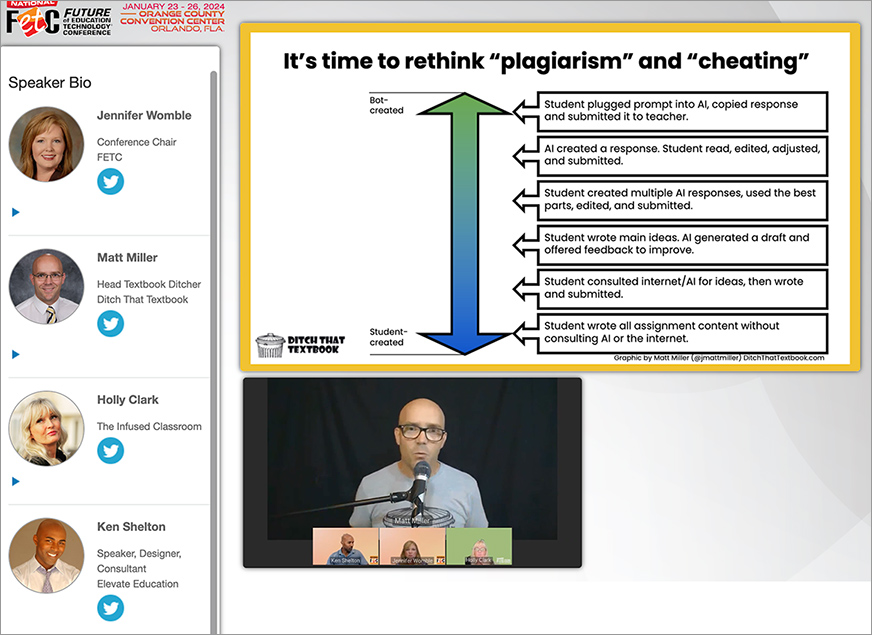
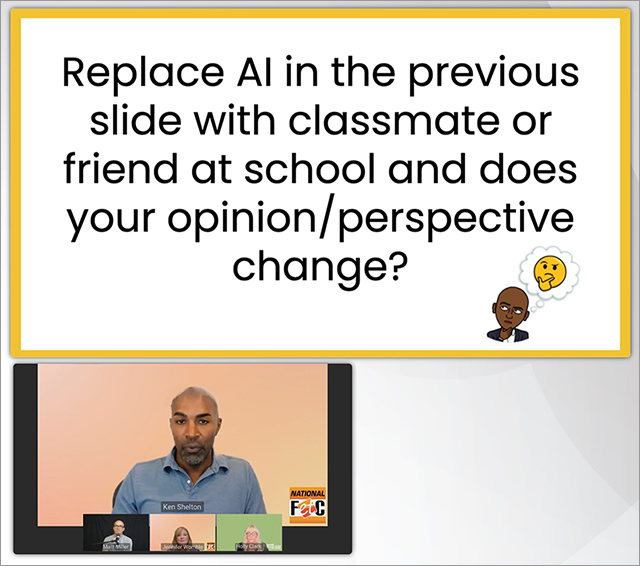
FETC 2023 Virtual Roundtable: How AI Will Transform K-12 Education
AI could be the great equalizer!
Holly Clark
Example screenshots:
On 06/16/2023,
in Access to Justice (A2J), experimentation, law schools, Legal operations, legal reform, legislatures / government / legal, policy, society,
by Daniel Christian
IAALS Releases National Framework for States to Create New Tier of Legal Professionals Who Can Offer More Affordable Legal Help — from iaals.du.edu by Kelsey Montague
Excerpt:
IAALS, the Institute for the Advancement of the American Legal System at the University of Denver, announced today the release of its new report, Allied Legal Professionals: A National Framework for Program Growth. As part of IAALS’ Allied Legal Professionals project—which is generously supported by the Sturm Family Foundation—this report includes multiple research-informed recommendations to help standardize a new tier of legal professionals across states, with the goal of increasing the options for accessible and affordable legal help for the public.
“To hire a lawyer, people either need considerable money or have an income low enough to qualify for the limited legal aid available. The problem is that the majority of people in the middle class don’t fit into either of those categories, making access to legal services incredibly difficult,” says IAALS Director of Special Projects Michael Houlberg. “Even if every lawyer took on pro bono clients, it wouldn’t come close to addressing the need. And IAALS’ research shows that people who need legal help are open to receiving it from qualified and authorized providers who are not lawyers.”
On 06/08/2023,
in adjunct faculty, business side of he, colleges, community colleges, dangers of the status quo, Daniel S. Christian, faculty/staff, higher education, learning, learning ecosystem, Learning Experience Design, policy, student-related, teaching & learning, United States, universities,
by Daniel Christian
Discount Rates At Colleges Continue To Increase As Colleges Explore Alternate Pricing Strategies — from forbes.com by Lucie Lapovsky
Excerpt (emphasis DSC):
Since 2012, 65 private colleges and universities with enrollment of 500 students or more, that I know of, have reduced their tuition, and commensurately reduced their discount rate. Several more schools are planning price resets for fall 2024. Schools use this strategy to increase the number of students who will consider them, and this approach has been successful for more than 80 percent of the schools which have reduced their published price.
From DSC:
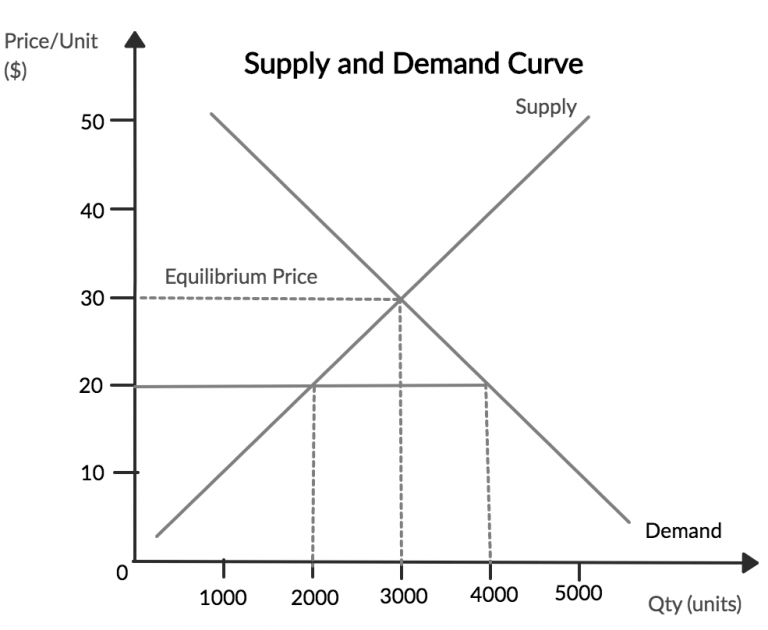
What I learned of economics in college would agree with this last bit. As the price goes down, demand goes up. And conversely, as the price goes up, demand goes down. As Lucie points out, many people don’t know about the heavily discounted prices within higher education. I’ve been fighting for price decreases for over 15 years…clearly, I haven’t had much success in that area.
Excerpts from Kristen Trader’s recent posting on LinkedIn:
(Emphasis DSC)
How liberal arts colleges can make career services a priority — from highereddive.com by John Boyer
Creating internships and focusing on short-term experiences has a big impact, the longtime undergraduate dean at the University of Chicago says.
Virginia to eliminate degree requirements for most state jobs — from hrdive.com/ by Kathryn Moody
State movement on the issue reflects ongoing private sector interest in reducing reliance on four-year degrees for hiring purposes.
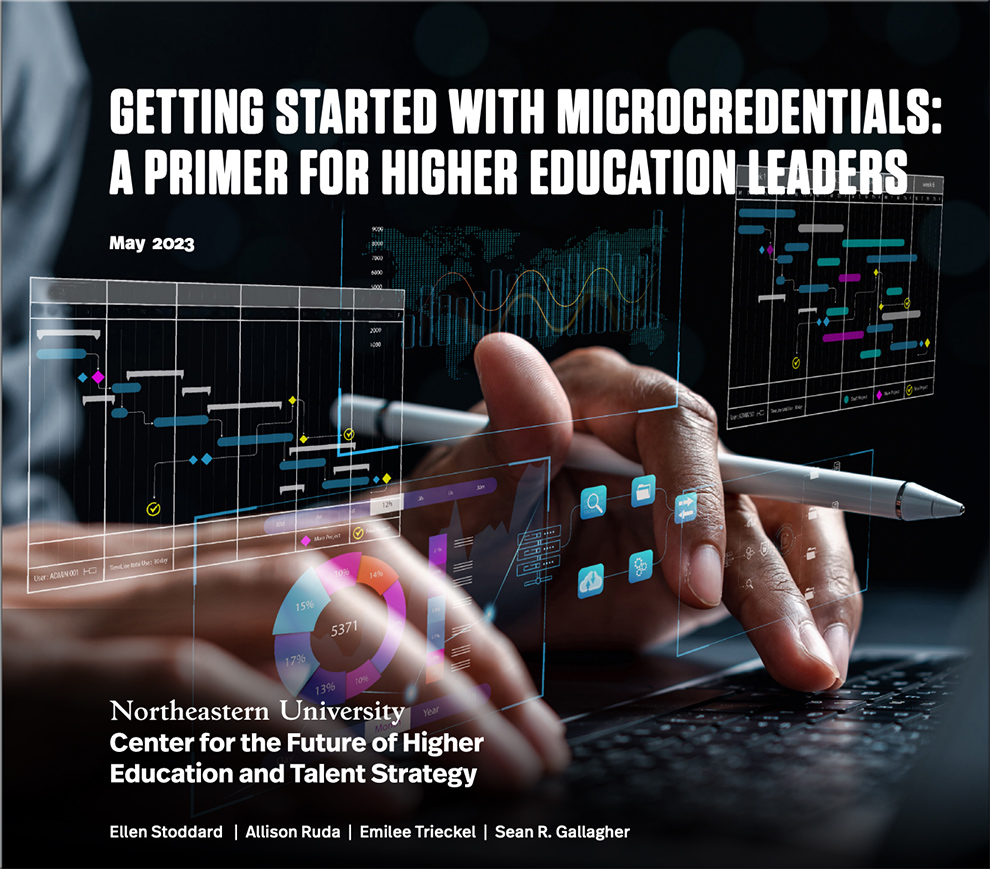
GETTING STARTED WITH MICROCREDENTIALS: A PRIMER FOR HIGHER EDUCATION LEADERS — from cps.northeastern.edu by Ellen Stoddard | Allison Ruda | Emilee Trieckel | Sean R. Gallagher; with thanks to Goldie Blenstyk for this resource
3 Ways Campus Leaders Can Prepare Students for Technology Transformation in the Workforce — from campustechnology.comby Sandra Loughlin, Ph.D.
Consider these strategies for equipping students with the tech skills they will need to succeed post-graduation.
TI-ADDIE: A Trauma-Informed Model of Instructional Design — from er.educause.edu by Ali Carr-Chellman and Treavor Bogard
Adjusting the ADDIE model of instructional design specifically to accommodate trauma offers an opportunity to address the collective challenges that designers, instructors, and learners have faced during the current learning moment.
On 05/25/2023,
in credentialing, Daniel S. Christian, emerging technologies, game-changing environment, generational differences, higher education, law schools, online learning, policy, technology (general), United States, universities, workplace,
by Daniel Christian
Law school students can take up to half of their credits online after ABA policy change — from highereddive.com by Jeremy Bauer-Wolf
Dive Brief:
- Law school students can now take up to half of their classes online following a recent policy change by the American Bar Association.
- ABA’s accrediting body voted last week to raise the ceiling on the number of credits students can earn online for their J.D., up from one-third.
- It also struck down a prohibition on first-year law students taking no more than 10 credit hours remotely.
From DSC:
It’s almost June of 2023 and matters/impacts of Artificial Intelligence (AI) are increasingly popping up throughout our society. But WOW! Look at this recent piece of news from the American Bar Association: Law school students can now take up to 50% of their credits online! (It used to be just 30%.)
At a time when we need many more lawyers, judges, legislators, politicians, and others to be more informed about emerging technologies — as well as being more tech-savvy themselves — I don’t think the ABA should be patting themselves on the back for this policy change. It’s a step in the right direction, but why it’s not 100% is mind-boggling to me.
On 05/15/2023,
in colleges, community colleges, cost of getting a degree, economics, faculty/staff, higher education, law schools, learning ecosystem, liberal arts, parents/guardians, policy, student-related, United States, universities,
by Daniel Christian
Microcredentials Can Make a Huge Difference in Higher Education — from newthinking.com by Shannon Riggs
The Ecampus executive director of academic programs and learning innovation at Oregon State University believes that shorter form, low-cost courses can open up colleges to more people.
That so much student loan debt exists is a clear signal that higher education needs to innovate to reduce costs, increase access and improve students’ return on investment. Microcredentials are one way we can do this.
As the Supreme Court weighs Biden’s student loan forgiveness, education debt swells — from cnbc.com by Jessica Dickler
KEY POINTS
- As the Supreme Court weighs President Joe Biden’s student loan forgiveness plan, college tuition keeps climbing.
- This year’s incoming freshman class can expect to borrow as much as $37,000 to help cover the cost of a bachelor’s degree, according to a recent report.
College is only getting more expensive. Tuition and fees plus room and board at four-year, in-state public colleges rose more than 2% to $23,250, on average, in the 2022-23 academic year; at four-year private colleges, it increased by more than 3% to $53,430, according to the College Board, which tracks trends in college pricing and student aid.
Many students now borrow to cover the tab, which has already propelled collective student loan debt in the U.S. past $1.7 trillion.
Access, Outcomes, and Value: Envisioning the Future of Higher Education — from milkeninstitute.org with Jeff Selingo, Gene Block, Jim Gash, Eric Gertler, and Nicole Hurd
Leaders of colleges and universities face unprecedented challenges today. Tuition has more than doubled over the past two decades as state and federal funding has decreased. Renewed debates about affirmative action and legacy admissions are roiling many campuses and confusing students about what it takes to get accepted. Growing numbers of administrators are matched by declining student enrollment, placing new financial pressures on institutions of higher learning. And many prospective students and their parents are losing faith in the ROI of such an expensive investment and asking the simple question: Is it all worth it? Join distinguished leaders from public and private institutions for this panel discussion on how they are navigating these shifts and how they see the future of higher education.
What the New ‘U.S. News’ Law-School Rankings Reveal About the Rankings Enterprise — from chronicle.com by Francie Diep
Excerpt (emphasis DSC):
This year’s lists also offer a hint of how widespread the rankings revolt was. Seventeen medical schools and 62 law schools — nearly a third of the law schools U.S. News ranks — didn’t turn in data to the magazine this year. (It’s not clear what nonparticipation rates have been in the past. Reached by email to request historical context, a spokesperson for U.S. News pointed to webpages that are no longer online. U.S. News ranked law and medical schools that didn’t cooperate this year by using publicly available and past survey data.)
Report: Many borrowers who could benefit from income-driven repayment don’t know about it — from highereddive.com by Laura Spitalniak
Dive Brief:
- Student loan borrowers who would stand to benefit the most from income-driven repayment plans, or IDRs, are less likely to know about them, according to a new report from left-leaning think tank New America.
- Around 2 in 5 student-debt holders earning less than $30,000 a year reported being unfamiliar with the repayment plans. Under a proposed plan from the U.S. Education Department, IDR minimum monthly loan payments for low-income earners, such as this group, could drop to $0.
- Just under half of borrowers in default had not heard of IDRs, despite the plans offering a pathway to becoming current on their loans, the report said. Only one-third of currently defaulted borrowers had ever enrolled in IDR.
Addendum on 5/16/23:
On 04/11/2023,
in 21st century, 24x7x365 access, Artificial Intelligence/Agents/LLMs/and Related, Asia, business, colleges, community colleges, computer science, corporate / business world, emerging technologies, ethics, experimentation, future, game-changing environment, global / globalization, higher education, law schools, legislatures / government / legal, morals/values, platforms, policy, productivity / tips and tricks, professional development, research, science, skills, society, the downsides of how people use tech, United States, universities,
by Daniel Christian
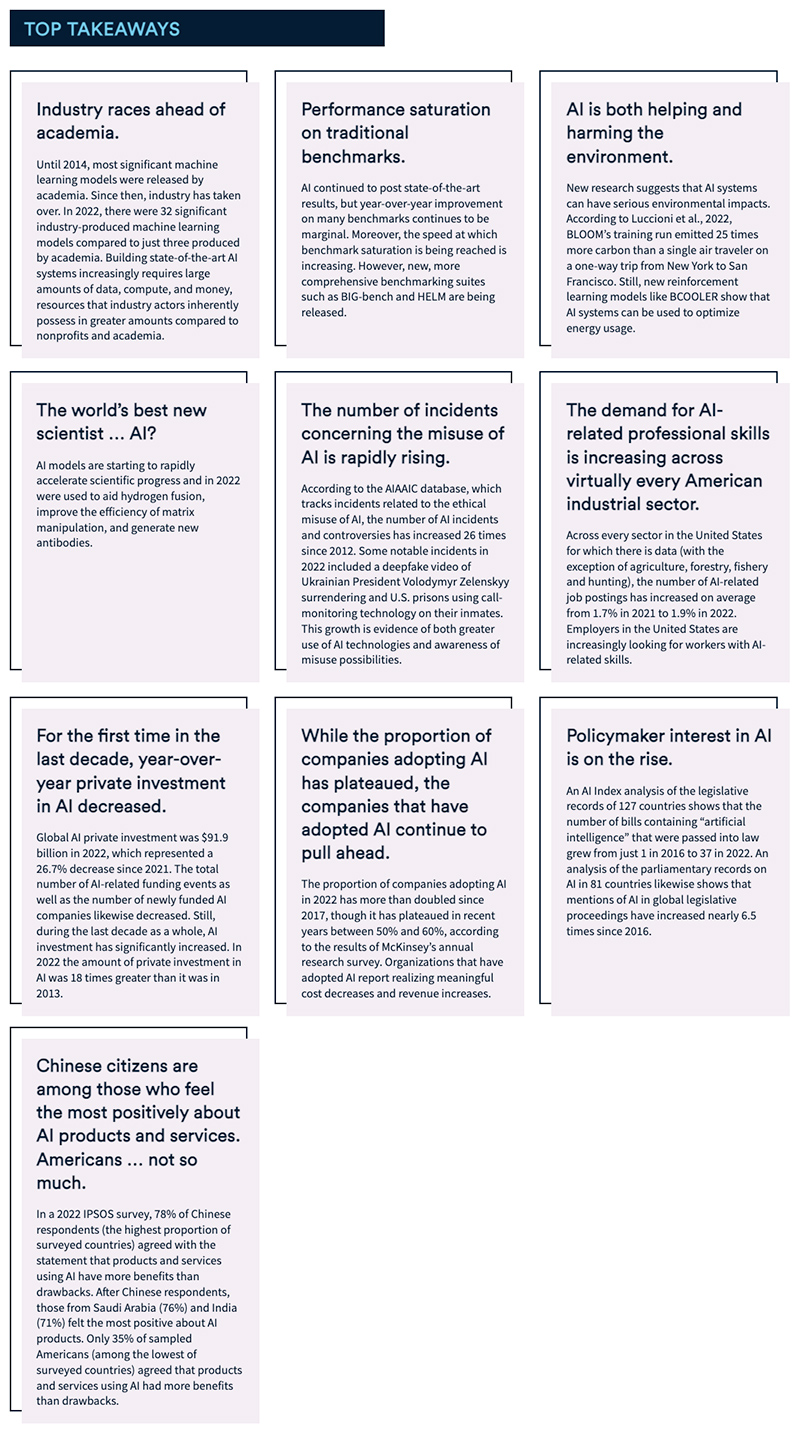
On 03/27/2023,
in 21st century, 24x7x365 access, Artificial Intelligence/Agents/LLMs/and Related, business, change, cloud-based computing / apps / other cloud-related, computer science, content development, aggregation, repositories, corporate / business world, design, digital audio, digital video, emerging technologies, entrepreneurship, ethics, experimentation, global / globalization, graphics, innovation, morals/values, platforms, policy, political science, society, sociology, the downsides of how people use tech, tools, trends, United States, vendors, vision/possibilities,
by Daniel Christian
Also relevant/see:
- “Godfather of artificial intelligence” weighs in on the past and potential of AI — from cbsnews.com
- Sketching the Field of AI Tools for Local Newsrooms — from medium.com by Dalia Hashim
- Adobe Firefly, Bing Image Creator, Canva’s AI, ChatGPT Plugins, Google Workspace AI, Microsoft Loop, Runway Gen2 – Volume 03 — from heatherbcooper.substack.com by Heather Cooper
Another week of everything, everywhere, all at once in AI news – and get my free AI Visual toolkit! - It takes a few dollars and 8 minutes to create a deepfake. And that’s only the start — from npr.org by Shannon Bond; with thanks to Mr. Robert Gibson on LinkedIn for this resource
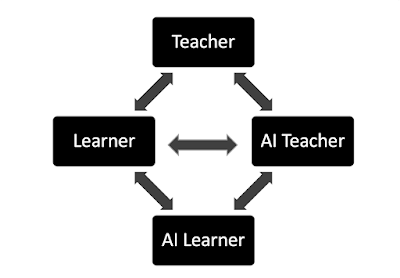
- We’ve just gone from a simple teacher-learner model to a new world of AI teachers – a new pedAIgogy — from donaldclarkplanb.blogspot.com by Donald Clark
- ChatGPT is about to revolutionize the economy. We need to decide what that looks like. — from technologyreview.com by David Rotman
New large language models will transform many jobs. Whether they will lead to widespread prosperity or not is up to us. - Is GPT-4 Worth the Subscription? Here’s What You Should Know — from wired.com Reece Rogers
The new algorithm is exclusive to ChatGPT Plus, OpenAI’s subscriber-only service. We signed up and put it to the test. - Superhuman: What can AI do in 30 minutes? — from oneusefulthing.substack.com Ethan Mollick
AI multiplies your efforts. I found out by how much…
AI-assisted cheating isn’t a temptation if students have a reason to care about their own learning.
Yesterday I happened to listen to two different podcasts that ended up resonating with one another and with an idea that’s been rattling around inside my head with all of this moral uproar about generative AI:
** If we trust students – and earn their trust in return – then they will be far less motivated to cheat with AI or in any other way. **
First, the question of motivation. On the Intentional Teaching podcast, while interviewing James Lang and Michelle Miller on the impact of generative AI, Derek Bruff points out (drawing on Lang’s Cheating Lessons book) that if students have “real motivation to get some meaning out of [an] activity, then there’s far less motivation to just have ChatGPT write it for them.” Real motivation and real meaning FOR THE STUDENT translates into an investment in doing the work themselves.
…
Then I hopped over to one of my favorite podcasts – Teaching in Higher Ed – where Bonni Stachowiak was interviewing Cate Denial about a “pedagogy of kindness,” which is predicated on trusting students and not seeing them as adversaries in the work we’re doing.
So the second key element: being kind and trusting students, which builds a culture of mutual respect and care that again diminishes the likelihood that they will cheat.
…
Again, human-centered learning design seems to address so many of the concerns and challenges of the current moment in higher ed. Maybe it’s time to actually practice it more consistently. #aiineducation #higheredteaching #inclusiveteaching