The future of learning: Co-creating skills development strategies with employee preferences — from chieflearningofficer.com by Stacey Young Rivers
The limitations of developing just-in-time learning strategies perpetuate a paradigm where learning and development can appear ineffective for teams that have to move quickly and fail fast.

Excerpt:

I believe the future of learning will be a system where employees and learning teams co-create experiences. No longer will skills development programs be created in silos for employees to consume. Gone will be the days of conducting exhaustive needs analysis that can add layers of complexity for program delivery.

The limitations of developing just-in-time learning strategies perpetuate a paradigm where learning and development can appear ineffective for teams that have to move quickly and fail fast. Thinking about how to overcome these challenges conjures a solution similar to a metaverse, a persistent virtual world that is always open. One value proposition of a metaverse is that everyone can create their own adventure in an ecosystem supporting curiosity and experimentation, two areas undergirding skills development.

With this lens, understanding employee preferences for learning is the beginning of co-creating experiences, and one approach for how L&D leaders can begin to structure skills development programs. While conducting a study to engage employees in training, we uncovered new insights into where corporate L&D is headed in the future.

Also relevant here, see:

Workplace Learning: Still a Mess — from eliterate.us by Michael Feldstein
Excerpt:

There’s a mantra these days that higher education needs to get better at listening to industry so they can better prepare students for work. And while there is definitely some truth to that, it assumes that “industry” knows what it needs its workers to know. Former HP CEO Lew Platt once famously said, “If only Hewlett Packard knew what Hewlett Packard knows, we’d be three times more productive.”

In other words, a lot of vital know-how is locked up in pockets within the organization. It doesn’t reach either the training folks or the HR folks. So how are either universities or EdTech professional development companies supposed to serve an invisible need?

It’s not that they don’t know how to learn or they don’t like to learn online. It’s because their experience tells them that their valuable time spent “learning” might not equate to actual skills development.


Addendum on 8/15/22:


Anxiety in children: Physical, emotional, and behavioral symptoms — from raisinglifelonglearners.com by Colleen Kessler

Excerpt:

This continues our new series, all about homeschooling a child with anxiety. Today, we discuss the physical, emotional, and behavioral symptoms of anxiety in our children, as well as how we can help.


5 creative ways to share your passions (with classroom ideas, too!) — from classtechtips.com by Dr. Monica Burns

Excerpt:

If we’re anything alike, there are topics you just can’t stop talking about. I am definitely guilty of being “that” person who talks about the latest piece of advice they heard on a podcast or a recipe from TikTok that they can’t wait to try out. You might also find me going on and on about how fun it was to visit a new school, a new lesson idea I want to try out, or an EdTech tool that totally changed the way I think about [fill in the blank]. In today’s blog post, I put together a list of five creative ways to share your passions. You’ll also find creative classroom ideas to go along with each one.

Some of these are part of my regular practice of sharing things I’m passionate about. Others I’ve tried a few times and loved, even if they’re not my daily, weekly, or monthly way of sharing.

Best of all… all of these ideas are ones your students can try, too.


Also relevant/see:

Liven up your lesson with a comic strip twist — from classtechtips.com by Dr. Monica Burns


27 Fun Ways to Celebrate the End of the School Year — from commonsense.org by Erin Wilkey O.

Excerpt:

This year, things are closer to “normal,” but we can still be creative in recognizing and celebrating students’ accomplishments. Use this list of ideas to help you plan some fun end-of-year activities — we’ve included a special section at the end for celebrating the class of 2022. Many of the ideas here play out in the digital world, but we’ve mixed in some offline options as well.

We hope these activities bring you and your students some much-deserved joy as we close out the 2021–2022 school year.


Google accelerates audiobook production exponentially — from provideocoalition.com by Allan Tépper

Excerpt:

In March 2022, I published Google’s Aloud auto-dubs your English video in Castilian or Portuguese, free. Now, Google is doing a similar quantum leap for audiobook production. In fact, I already converted and published one of my own books as an audiobook successfully using Google’s semi-automatic voices. Ahead, I’ll explain how Google’s process can convert the manuscript into a presentable audiobook in a few hours instead of over a month of work, using one of Google’s automated voices which are available for different languages and regions.


What The Future Of Technology In The Workplace Means For Office Design And Operations — from workdesign.com by Mara Hauser

Excerpt:

Advances in technology continue to influence the workplace as corporate entities and coworking operators are confronted with modern challenges surrounding productivity and collaboration. We lead teams to execute intentional designs that reflect brand vision and produce lively, productive workspaces. With the growing demand from employees for workplace flexibility, these technological advancements must be reflected in both office design and business practices in order to add value and ultimately achieve operational excellence.

.

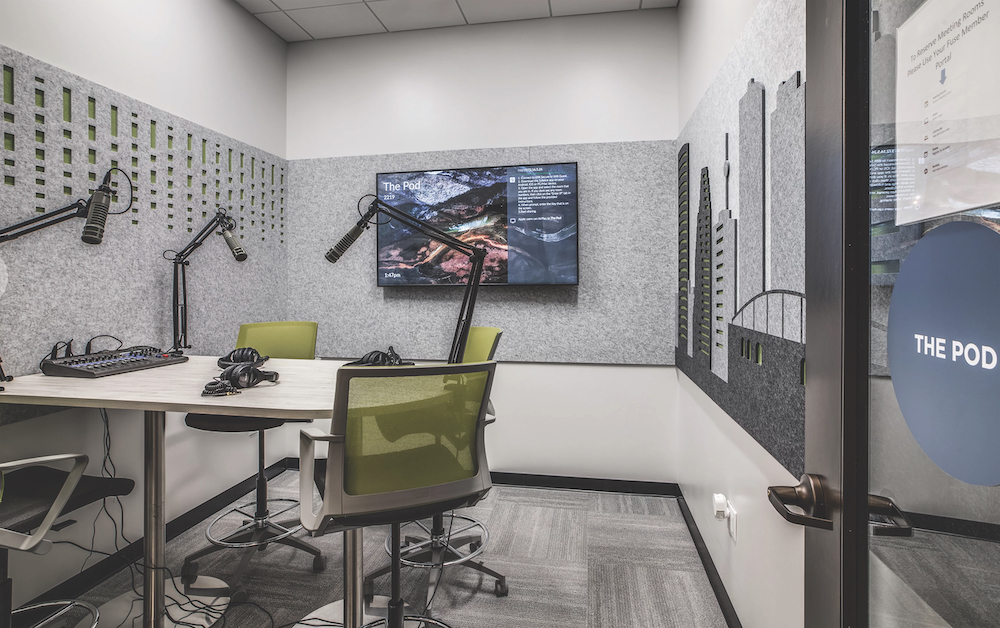
Podcasting studio at FUSE Workspace in Houston, TX.
 

A Podcast Listening Strategy for Learning — from learntrepreneurs.com by Eva Keiffenheim
Three steps to make the most of your podcast time

Excerpt (emphasis DSC):

Use apps that help you remember more
You won’t remember much from a podcast if you only listen to it. Your brain needs repetition and elaboration to make new knowledge stick.

Unlike books, you can’t highlight audio?—?or can you?

I listen to my podcasts while biking or walking. Hence, an extremely uncomfortable situation to open a notepad or Roam Research whenever I hear an interesting idea.

But two applications have transformed how I listen to podcasts: Snipd and Airr. Both are audio highlighting tools.


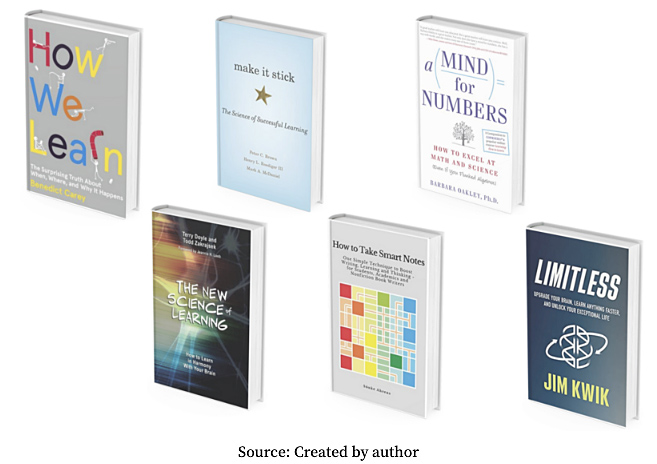
The Key Idea All Great Books on Learning Have in Common — from learntrepreneurs.com by Eva Keiffenheim
And how you can implement the powerful way to learn.
.

teaching in public is the principle all great books on learning agree on


Podcasts For High School Students — from teachthought.com by Dennis Lee,

Categories covered include:

  • Academic Related Podcasts
  • General and Special Interest Podcasts
  • Entrepreneurship
  • Inspirational & Motivational
 

Teaching: Fresh Approaches to Faculty Development — from chronicle.com by Beckie Supiano

Excerpt:

Baranovic can’t imagine returning to the old model: He’s sticking to panels in Zoom. Among the benefits, he says: “This arrangement breaks institutional silos, allows faculty to talk more about their experiences, shares effective practices from sources faculty trust (their peers), creates a stronger sense of community, makes it easy for panelists (they receive the questions ahead of time if they want to prepare, but because they’re speaking to experience, they don’t really have to prepare), and creates a form of support that works like therapy but doesn’t feel like therapy.”

Next, Baranovic hopes to turn the panels into a podcast format for professors unable to attend in real time.

From DSC:
As someone who had been involved with Teaching & Learning Centers for years, I can tell you that it’s very disheartening to put together a training session for faculty members and have very few — if any — people show up for it. It’s a waste of time and it leaves the T&L staff and/or IT staff members feeling discouraged and unvalued.

Over the years, I developed a preference for putting things into an asynchronous digital format for faculty members and adjunct faculty members to access per their own schedules. The institutions that I was working for got a greater ROI from those sessions and they were able to visit an internal “course” or website to reference those materials on-demand.

I also like the idea of podcasting here, but that takes a lot of time and effort — and isn’t always possible when you are one person trying to assist hundreds of faculty members (from a technical support and an LMS admin standpoint).

As an Instructional Designer, I also want to comment that it’s hard to help steer a car if you can’t even get into the car. Those institutions that are using team-based approaches will be far more successful in designing and developing more polished, effective, accessible learning experiences. Very few people can do it all.


Law firms are entering the metaverse, here’s why — from web3law.center by Meagan Cline

Excerpt:

Lawyers and law firms are increasingly exploring web3 and the metaverse. The technology is here and likely will only become a greater part of our society. Therefore, lawyers must at least consider how their operations may need to evolve to meet the growing demand for web3 literate legal services.


In this episode, David Aird talks;

  • Diversity and Inclusion
  • Social Mobility in Legal IT
  • Security Matters and Cyber-threats
  • Technology as the Answer
  • Artificial Intelligence and the Future

HUGE NEWS!

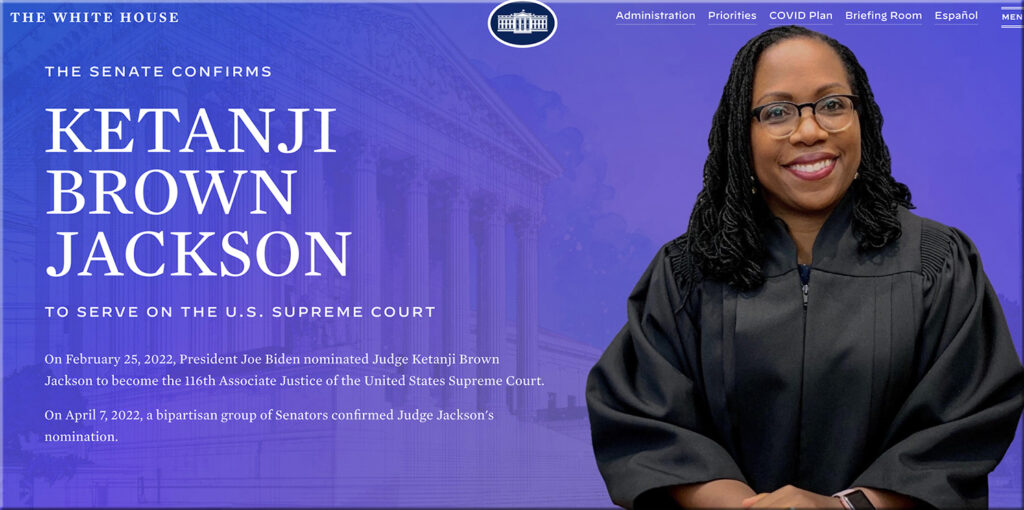
KETANJI BROWN JACKSON
TO SERVE ON THE U.S. SUPREME COURT

This Week’s Latest Additions to the LawNext Legal Technology Directory — from legaltechmonitor.com by Bob Ambrogi

This Week’s Latest Additions to the LawNext Legal Technology Directory -- by Bob Ambrogi

Photo Geotagging for Lawyers — from legaltechmonitor.com by Jim Calloway

How to automate your law office — from lawtechnologytoday.org

New Microsoft Study Reveals Work Changes: We Aren’t Going Back — from legaltechmonitor.com by Stephen Embry

https://www.lawtechnologytoday.org/2022/03/top-5-benefits-of-a-virtual-law-practice/

Reimagining Law: Embracing the Power of ‘No’ (Part 1) — from legaltechmonitor.com by 2civility

Reimagining Law: Embracing the Power of ‘No’ (Part 2) — from legaltechmonitor.com by 2civility

JUSTICE IN A CHANGING WORLD 2021 | ANNUAL REPORT — from iaals.du.edu

Another State Adopts Duty of Technology Competence for Lawyers, Bringing Total to 40 — from legaltechmonitor.com by Bob Ambrogi

IAALS Launches Allied Legal Professionals in an Effort to Increase Access to Quality Legal Services and Help Reduce Barriers to Representation — from iaals.du.edu by Kelsey Montague

Excerpt:

IAALS, the Institute for the Advancement of the American Legal System at the University of Denver, announced today that it is launching Allied Legal Professionals. With generous support from the Sturm Family Foundation, this project seeks to help standardize a new tier of legal professionals nationally—to increase the options for accessible and affordable legal help for the public.

Up and down the income scale, the legal needs of people in this country are going unmet. The inability to afford a lawyer, among other factors, has led to ballooning rates of self-representation in our justice system, with over 70 percent of civil and family cases including a party without a lawyer. People in these situations are not only facing life-altering challenges such as child custody hearings or landlord/tenant issues alone—they also face disproportionately bad outcomes in their cases.

Addendums on 4/8/22:


From Instructional Design to Learning Experience Design: Understanding the Whole Student — a podcast out at campustechnology.com by Rhea Kelly, Mark Milliron, and Kim Round

Excerpt:

These days, we hear a lot about the “new normal” in higher education. Remote and hybrid learning is here to stay, offering students more flexibility in their learning journeys. But what if the new normal is not enough? It’s time to go beyond the new normal and consider the “new possible” — how to put together the best of face-to-face, online and hybrid to create powerful learning experiences based on a deep understanding of the whole student. We spoke to Mark Milliron, senior vice president of Western Governors University and executive dean of the Teachers College, and Kim Round, academic programs director and associate dean of the Teachers College, about their vision for reimagining education and why learning experience design is essential to student success.

Another interesting podcast:


ABA TECHSHOW 2022: Modernizing Court Technology with Judge Scott Schlegel — from legaltalknetwork.com
Judge Scott Schlegel shares essential technology tips for facilitating virtual court.

Description of podcast:

As the pandemic necessitated major tech innovations in the legal system, courts had to work hard to facilitate the continuance of justice. Host Joe Patrice chats with Judge Scott Schlegel about the process of moving to virtual proceedings, how they’re doing now, and what tech was most helpful along the way.


L&D Go Beyond Podcast: Writing Better Multiple-Choice Questions to Assess Learning — from upsidelearning.com by Amit Garg and Patti Shank

Excerpt:

In this episode of the L&D Go Beyond podcast, Amit Garg interacts with Patti Shank, President Learning Peaks LLC. They talk about a very interesting topic – Writing Better Multiple-Choice Questions (MCQs) to Assess Learning.


Universities can combat misinformation by sharing research with the public — from edsurge.com by Avery M. D. Davis

Here’s my New Year’s resolution for higher education: extend the reach of research to the people.

Avery M. D. Davis

Excerpt:

It’s part of a growing recognition that research really belongs to the people. Even as the postsecondary industry opened its doors to become a more-accessible system for students, it locked up the research conducted by its faculty and staff. But it’s often individuals from outside of academia who construct topical questions of interest for scholars, serve as study participants, and fund organizations producing such work.

And yet, open science ambitions have cautions worth noting, such as the challenges of interpreting research publicly and the potential political misuse of study findings. To address this, higher education must revisit its roots in educating citizens, preparing both students for society and society for itself.

From DSC:
Yet another benefit/reason for faculty members to write for a public audience! I wish citizens could tap into more faculty/staff-driven streams of content.

streams of content are ever flowing by -- we need to tap into them and contribute to them


© 2025 | Daniel Christian