


Field Kallop Meditates on Universal Patterns Through Bold Chromatic Compositions — from thisiscolossal.com by Field Kallop and Grace Ebert
.

Field Kallop Meditates on Universal Patterns Through Bold Chromatic Compositions — from thisiscolossal.com by Field Kallop and Grace Ebert
.
GTC March 2024 Keynote with NVIDIA CEO Jensen Huang
Also relevant/see:

Today is the beginning of our moonshot to solve embodied AGI in the physical world. I’m so excited to announce Project GR00T, our new initiative to create a general-purpose foundation model for humanoid robot learning.
The GR00T model will enable a robot to understand multimodal… pic.twitter.com/EqN19Z3cXH
— Jim Fan (@DrJimFan) March 18, 2024
NVIDIA just announced GR00T.
It will enable a robot to understand multimodal instructions like language, video, and motion.
Very soon we will see them cooking, preparing coffee, in supermarkets, changing tires, etc.pic.twitter.com/3PptgNS1Yi
— Barsee ? (@heyBarsee) March 19, 2024
Feynman – Don’t lecture and Feynman Technique — from donaldclarkplanb.blogspot.com by Donald Clark
Excerpt from the Feynman Technique section
Learning this way is iterative, as you must go back to sources to fill in any gaps uncovered by your attempts to recall what you think you know. The act of writing, teaching, simplification and analogising, is a form of retrieval practice that increases understanding and retention.
Also see:
The Feynman Technique Can Help You Remember Everything You Read — from medium.com by Eva Keiffenheim
How to use this simple principle for you.
Excerpts:
Social climber Dale Carnegie used to say knowledge isn’t power until it’s applied. And to apply what you read, you must first remember what you learned.
Nobel Prize-winning physicist Richard Feynman (1918–1988) was an expert for remembering what he learned.
Most people confuse consumption with learning. They think reading, watching, or hearing information will make the information stick with them.
Unless you’ve got a photographic memory, no idea could be further from the truth.
…
Teaching is the most effective way to embed information in your mind. Plus, it’s an easy way to check whether you’ve remembered what you read. Because before you teach, you have to take several steps: filter relevant information, organize this information, and articulate them using your own vocabulary.
Better Questions in the Classroom Lead Students to Think Harder—and Learn Deeper — from edsurge.com by Staci Bradbury and Rebekah Berlin
Excerpt:
The takeaway here is that teachers should ask questions and design tasks that require students to engage in effortful thinking. This “teacher action,” as we like to call it, is one of the ways in which Deans for Impact has operationalized the vast body of research about how people learn in a way that teachers can use.
Also see:
Before providing evidence to support that claim, a quick recap of our organizational journey. Two years ago, we launched the Learning by Scientific Design (LbSD) Network to begin the vital—albeit challenging—work of redesigning how teachers are prepared. This effort is informed by principles of learning science and taking place in what is now a network of 10 educator-preparation programs across the country. More than 70 faculty are working with us to change the arc of experiences that teacher-candidates receive as they prepare to become teachers.
Teaching: Why an Active-Learning Evangelist Is Sold on Online Teaching — from chronicle.com by Beth McMurtrie
Excerpts:
Now, says Mazur, the results are in and he’s convinced: online teaching is better. Not in all circumstances, to be sure. But in his applied-physics courses, students showed larger learning gains and felt more supported than students had in in-person classes. In fact, they appear to have learned so much more effectively in this new format that he wonders if it’s “almost unethical,” to return to the classroom this fall.
“I have never been able to offer a course of the quality that I’m offering now,” he says. “I am convinced that there is no way I could do anything close to what I’m doing in person. Online teaching is better than in person.”
One benefit of this setup, says Mazur, is that students go at their own pace. He has thought a lot about how classroom-based work, even when it is student-led, is hostage to the clock and the instructor. Not every group works at the same pace, yet everyone has to wait until others are ready, or rush ahead when they fall behind. When groups set their own pace, it gives them the space to work through problems or get help as needed. The value of self-paced learning is also evident outside of class, says Mazur, who built more asynchronous work into his online course.
“I have never seen students work this hard for my course,” he says. “Never. And so consistently.”
Also see:
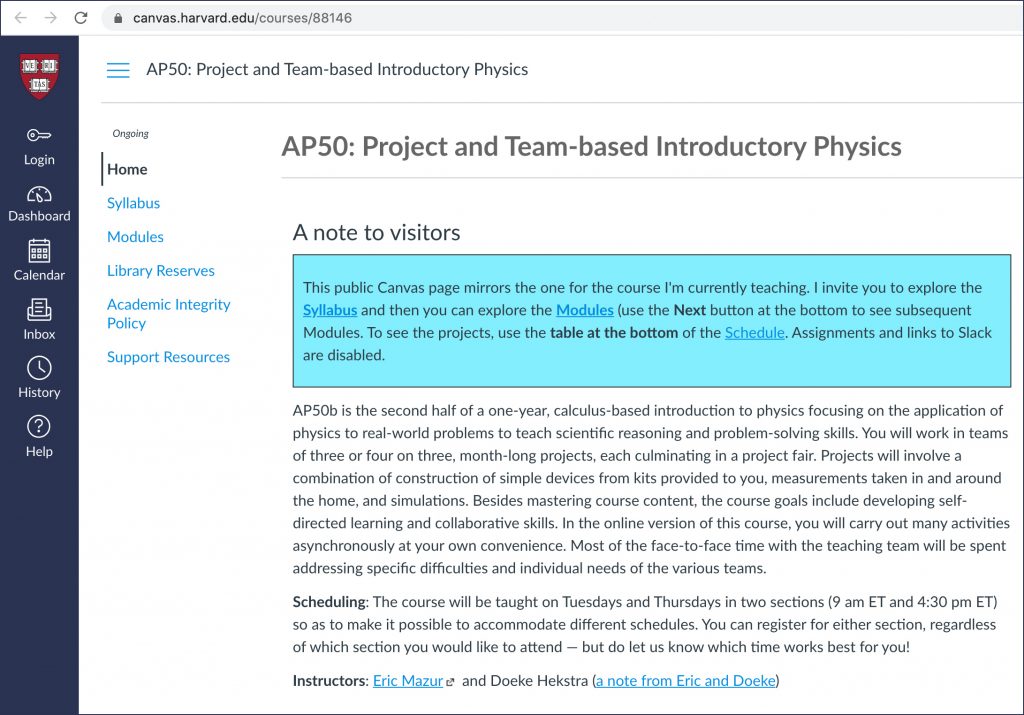
But he’s so convinced of how valuable this model is that he asked Harvard to allow him to keep teaching online this fall.
Also relevant/see:
21 jobs of the future: A guide to getting — and staying — employed over the next 10 years — from cognizant.com and the Center for The Future of Work
Excerpt:
WHAT THE NEXT 10 YEARS WILL BRING: NEW JOBS
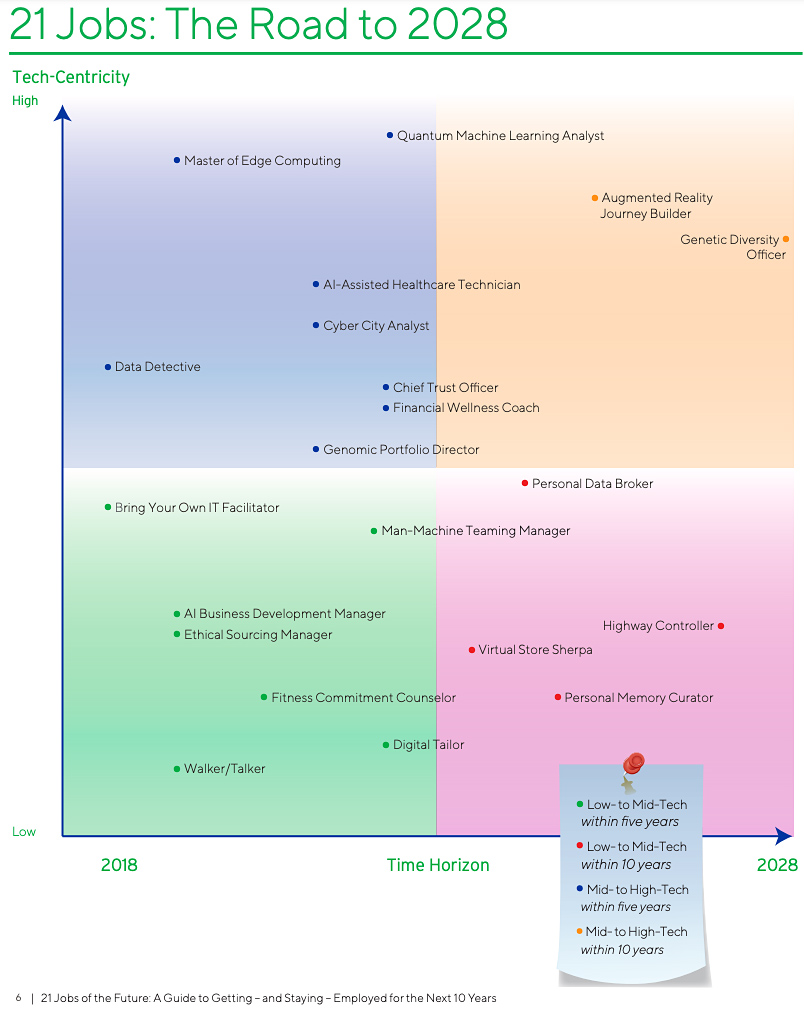
In this report, we propose 21 new jobs that will emerge over the next 10 years and will become cornerstones of the future of work. In producing this report, we imagined hundreds of jobs that could emerge within the major macroeconomic, political, demographic, societal, cultural, business and technology trends observable today, e.g., growing populations, aging populations, populism, environmentalism, migration, automation, arbitrage, quantum physics, AI, biotechnology, space exploration, cybersecurity, virtual reality.
Among the jobs we considered, some seemed further out on the horizon and are not covered here: carbon farmers, 3-D printing engineers, avatar designers, cryptocurrency arbitrageurs, drone jockeys, human organ developers, teachers of English as a foreign language for robots, robot spa owners, algae farmers, autonomous fleet valets, Snapchat addiction therapists, urban vertical farmers and Hyperloop construction managers. These are jobs that younger generations may do in the further off future.
Also see:
Here are the top 10 jobs of the future — from bigthink.com by Robert Brown
Say hello to your new colleague, the Workplace Environment Architect.
Excerpt:
6. Algorithm Bias Auditor – “All online, all the time” lifestyles for work and leisure accelerated the competitive advantage derived from algorithms by digital firms everywhere. But from Brussels to Washington, given the increasing statutory scrutiny on data, it’s a near certainty that when it comes to how they’re built, verification through audits will help ensure the future workforce is also the fair workforce.
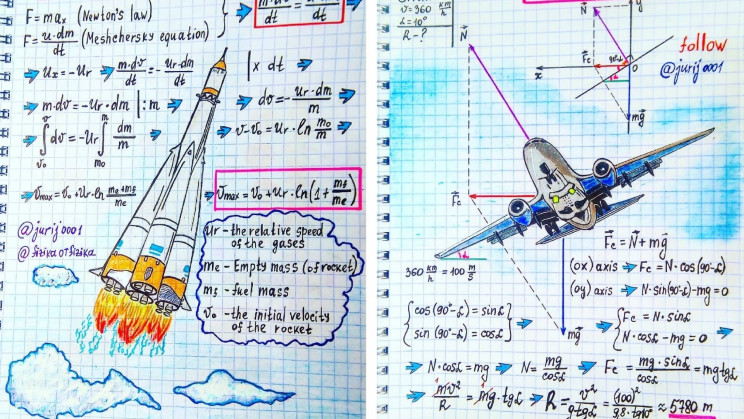
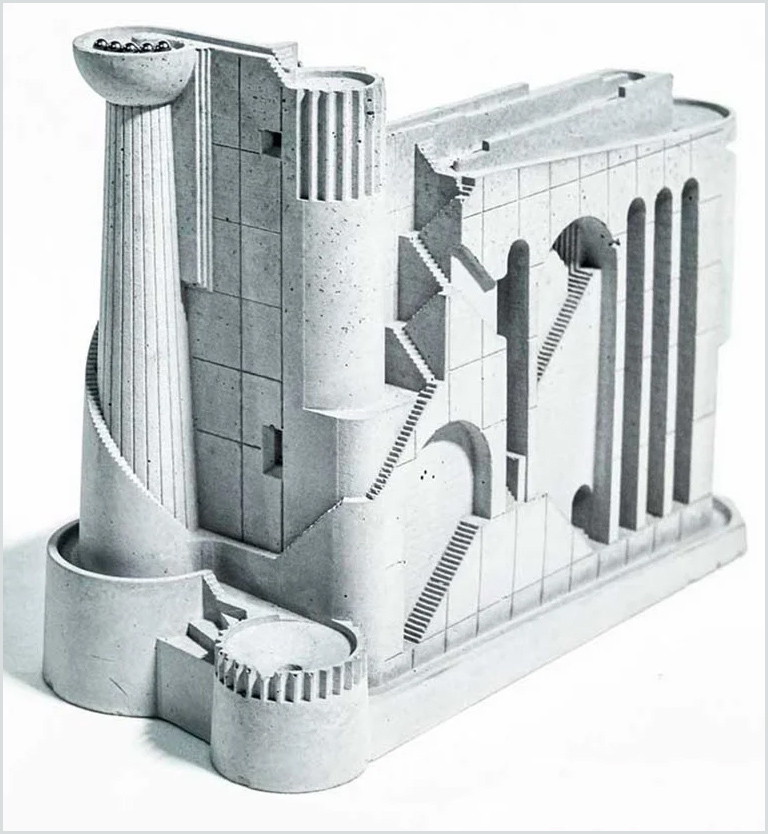
Teacher Makes Beautiful Illustrations of Your Favorite Physics Formulas — from interestingengineering.com by Loukia Papadopoulos
From electromagnetism to the law of conservation of energy, this teacher illustrates all your favorite physics formulas.
From DSC:
Not all of us have these kinds of skills — but how cool to see this creative, artistic, multidisciplinary approach to teaching and learning. The use of teams comes to mind for the rest of us! 🙂
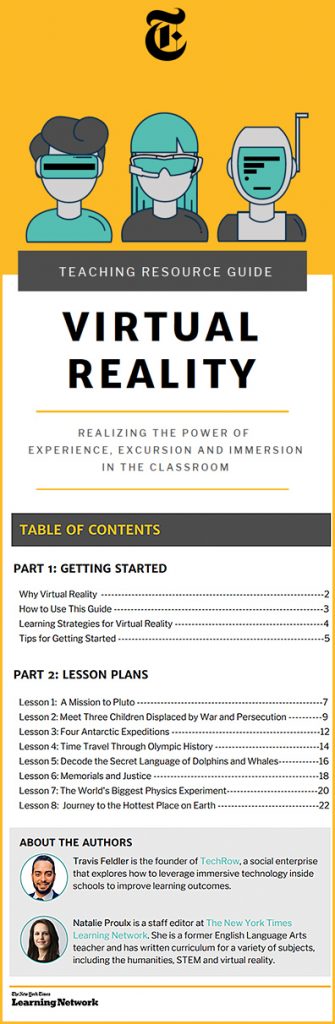
Virtual Reality: Realizing the Power of Experience, Excursion and Immersion in the Classroom — from nytimes.com
A framework for teaching with New York Times 360 V.R. videos, plus eight lesson plans for STEM and the humanities.
A Guide for Using NYT VR With Students
DC: Will be interesting to see if the level of innovation/investment takes a leap forward during this time…https://t.co/jw1ibbQkwg#highereducation #innovation #edtech #AR #XR #science #chemistry #biology #physics
— Daniel Christian (@dchristian5) September 9, 2020
Also see:
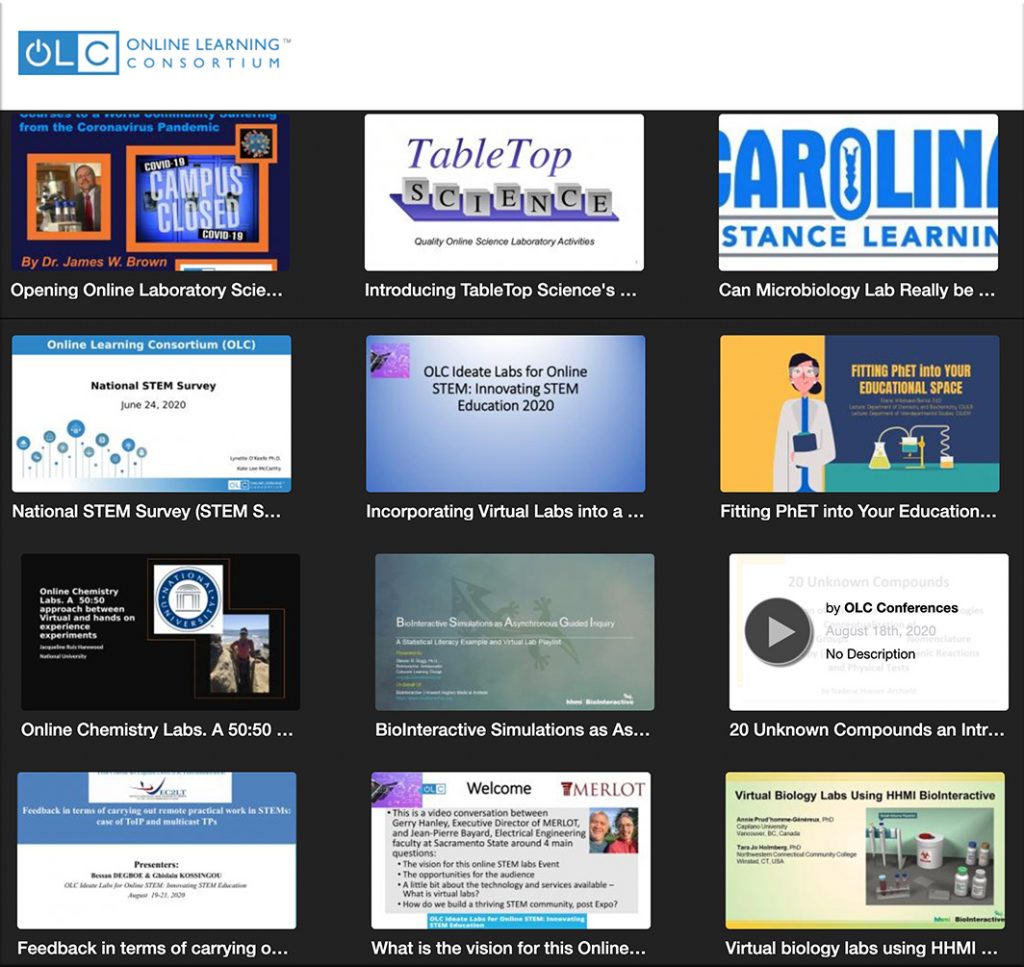
7 Things You Should Know About Virtual Labs — from library.educause.edu
Excerpt:
Virtual labs are interactive, digital simulations of activities that typically take place in physical laboratory settings. Virtual labs simulate the tools, equipment, tests, and procedures used in chemistry, biochemistry, physics, biology, and other disciplines. Virtual labs allow students to participate in lab-based learning exercises without the costs and limitations of a physical lab. Virtual labs can be an important element in institutional efforts to expand access to lab-based courses to more and different groups of students, as well as efforts to establish contingency plans for natural disasters or other interruptions of campus activities.
Addendum on 8/27/20:
DC: There are likely several things a physics professor/teacher could do with this!https://t.co/KqFdyXgkQ3
— Daniel Christian (@dchristian5) August 5, 2020
From DSC:
The article below relays some interesting thoughts on what an alternative syllabus could look like. It kind of reminds me of a digital playlist…
Looking For Syllabus 2.0 — from usv.com by Dani Grant
Excerpt:
There have been several attempts already to curate online resources for learning new topics. Usually they take the form of a list of links. The problem with the list of links approach is that they are static and they are inefficient. You don’t need to read a whole link to get the main point, you want to curate little bits and pieces of open resources: 30 seconds of this podcast, a minute and a half from this youtube video, just these 4 paragraphs from this article.
The thing that is closest to a modern internet syllabi is Susan Fowler’s guide for learning physics (it’s really amazing, go check it out). What if you could have that type of curated guide for many topics that gets updated by the community over time, with inline discussion with other learners?
I think Syllabus 2.0 could look something like this:
…
We’ve created a sample syllabus for this last topic so you can see what we envision in action. It curates 8 hours of podcasts, talks and blog posts into a 30 minute guide.