We need a coherent approach grounded in understanding how the technology works, where it is going and what it will be used for.
From DSC: I almost feel like Meghan should right the words “this week” or “this month” after the above sentence. Whew! Things are moving fast.
For example, we’re now starting to see more agents hitting the scene — software that can DO things. But that can open up a can of worms too.
Students know the ground has shifted — and that the world outside the university expects them to shift with it. A.I. will be part of their lives regardless of whether we approve. Few issues expose the campus cultural gap as starkly as this one.ce
From DSC: Universities and colleges have little choice but to integrate AI into their programs and offerings. There’s enough pressure on institutions of traditional higher education to prove their worth/value. Students and their families want solid ROI’s. Students know that they are going to need AI-related skills (see the link immediately below for example), or they are going to be left out of the competitive job search process.
For 29 years, the private, non-profit center — don’t call it a school — has been a refuge for kids who chafe at the stress, loneliness or bullying of school. They spend a few months or a few years here, catching their breath as they prepare for life after graduation.
With an enrollment of 65, it offers rigorous, one-on-one tutoring; small, personalized classes in history, math, writing and the arts, and extracurriculars like weekly hiking club excursions. This year, young people designed and taught three courses on Dungeons & Dragons.
“You’re accountable to yourself. Is this the life you want?”
Kenneth Danford
While most mainstream educators would say letting young people “do nothing” for a year is out of the question, he sees it differently: In the unschooling world, he said, “there’s no such thing as ‘doing nothing.’ ”
From DSC: This one is for the youth out there. Learn these lessons NOW, before you go too much further in your journey here on Earth. If you do, you will reap the benefits of this learning for the rest of your days.
As I mentioned to our own kids when I forwarded this article to them:
My dad passed along a bit of wisdom to me when he told me what *his* dad (my Grandpa Christian) had told him:
“If a job is worth doing, it’s worth doing well.”
I’ve always remembered that and I *try* to do quality work.
The following article is worth your time. It touches upon a similar idea: .
I pass it along to help us *try* to do quality things and work…but NOT to load up unrealistic expectations on ourselves or create a harried, perfectionistic lifestyle.
Excerpt:
An old carpenter told his boss that he planned to retire. The boss was sad to lose the carpenter, but understood.
He asked if he’d stick around for one last job—to build one final house.
The carpenter reluctantly agreed, figuring he could get it done quickly. He cut corners, used cheap materials, and rushed through the work.
When the house was done, his boss arrived for the final inspection. But instead of walking the house, he reached into his pocket, and handed the carpenter the keys.
“This is your house,” his boss smiled, “My retirement gift to you.”
The carpenter was stunned. If he’d known he was building his own house, he would have done it differently. Now he’d have to live in a house he had built none too well.
The lesson: You’re always building your own house.
For today’s chief learning officer, the days of just rolling out compliance training are long gone. In 2025, learning and development leaders are architects of innovation, crafting ecosystems that are agile, automated and AI-infused. This quarter’s Tech Check invites us to pause, assess and get strategic about where tech is taking us. Because the goal isn’t more tools—it’s smarter, more human learning systems that scale with the business.
Sections include:
The state of AI in L&D: Hype vs. reality
AI in design: From static content to dynamic experiences
AI in development: Redefining production workflows
NEW YORK – The AFT, alongside the United Federation of Teachers and lead partner Microsoft Corp., founding partner OpenAI, and Anthropic, announced the launch of the National Academy for AI Instruction today. The groundbreaking $23 million education initiative will provide access to free AI training and curriculum for all 1.8 million members of the AFT, starting with K-12 educators. It will be based at a state-of-the-art bricks-and-mortar Manhattan facility designed to transform how artificial intelligence is taught and integrated into classrooms across the United States.
The academy will help address the gap in structured, accessible AI training and provide a national model for AI-integrated curriculum and teaching that puts educators in the driver’s seat.
In an era when the college-going rate of high school graduates has dropped from an all-time high of 70 percent in 2016 to roughly 62 percent now, AI seems to be heightening the anxieties about the value of college.
According to the survey, two-thirds of parents say AI is impacting their view of the value of college. Thirty-seven percent of parents indicate they are now scrutinizing college’s “career-placement outcomes”; 36 percent say they are looking at a college’s “AI-skills curriculum,” while 35 percent respond that a “human-skills emphasis” is important to them.
This echoes what I increasingly hear from college leadership: Parents and students demand to see a difference between what they are getting from a college and what they could be “learning from AI.”
Culture matters here. Organizations that foster psychological safety—where experimentation is welcomed and mistakes are treated as learning—are making the most progress. When leaders model curiosity, share what they’re trying, and invite open dialogue, teams follow suit. Small tests become shared wins. Shared wins build momentum.
Career development must be part of this equation. As roles evolve, people will need pathways forward. Some will shift into new specialties. Others may leave familiar roles for entirely new ones. Making space for that evolution—through upskilling, mobility, and mentorship—shows your people that you’re not just investing in AI, you’re investing in them.
And above all, people need transparency. Teams don’t expect perfection. But they do need clarity. They need to understand what’s changing, why it matters, and how they’ll be supported through it. That kind of trust-building communication is the foundation for any successful change.
These shifts may play out differently across sectors—but the core leadership questions will likely be similar.
AI marks a turning point—not just for technology, but for how we prepare our people to lead through disruption and shape the future of learning.
At least 85% of students with disabilities can learn and achieve on grade level.
14% of all U.S. students have a disability.
No belief is more damaging in education than the misperception that children with disabilities cannot really succeed and shouldn’t be challenged to reach the same high standards as all children.
Arne Duncan, former U.S. Secretary of Education
From DSC: One of our kids — actually, who is no longer a kid anymore — was born with Mosaic Down Syndrome. Looking back on her K-12 years, first through fifth grade went very well — which my wife and I were very grateful for. (We didn’t know what each year would bring and whether she would be able to move on to the next grade.)
But sixth and seventh grades were very rough. At the end of seventh grade, we decided to homeschool our daughter. The system she was in — like so many school systems across the nation — was meant to address the 80% of students who are neither gifted nor have special needs. The quickly-moving trains leave at such and such a time and then stop at such and such a time. One better keep up. This traditional system is a one-size-fits-all approach, and it’s something we do for administrative purposes — it’s not for the benefit of the kids within K-12 schools.
After a few years of both homeschooling and Christian education, it turned out that our daughter was able to learn almost all of the subjects in high school. But she needed to learn ON HER TIMELINE…AT HER OWN PACE of learning.
We’re proud of her. She has had a couple of jobs already and is doing quite well overall. Her motivation has been very low at times, which made homeschooling very tough. But, overall, I would agree with Karla Phillips-Krivicka’s key point that at least 85% of students with disabilities can learn and achieve at grade level. That’s been true for our daughter who has some special needs.
The microschooling sector’s robust diversity of educational approaches is often described by the families who choose it as among its most appealing attributes. The wide range of approaches offered, and the many ways different approaches are combined within different microschooling models, offer families options usually not currently available in the communities they live.
And while many of these approaches, like project-based learning, are popular across all of American education, within the smaller, more personalized and responsive context of a microschool, educators are able to take advantage of their flexibility to delve more deeply into the possibilities of each than they were in the more rigid structures of most traditional schools.
According to 2025 research published by the National Microschooling Center, microschool leaders reported that project-based learning is the most popular educational approach used (72 percent). Respondents were asked to indicate all that apply, so microschools typically indicated incorporating multiple approaches.
From DSC: And regarding this weekend, what an incredible waste of money to put the military on display (for his own birthday). This smacks of what arrogant dictators do. It’s big-time ugly.
If our justice system had done its job, this arrogant lawbreaker and convicted criminal would be in jail right now. No wonder he has no regard for the legal system, the Constitution, or the law — those things don’t serve his interests. They impede his interests. And thank God for that! In fact, may true leaders rise up within the Legislative and Judicial Branches of our government. The latter is our best chance of keeping our democracy, as the Republican Party has ceded all of their power — and responsibility — over to Donald Trump. They are not leaders in any sense of the word.
But whatever happens, ultimately, there WILL be justice.
Is America being humbled? Or is it being destroyed?
In President Trump’s first term, the Pentagon opposed his desire for a military parade in Washington, wanting to keep the armed forces out of politics.
But in Mr. Trump’s second term, that guardrail has vanished. There will be a parade this year, and on the president’s 79th birthday, no less.
The current plan involves a tremendous scene in the center of Washington: 28 M1A1 Abrams tanks (at 70 tons each for the heaviest in service); 28 Stryker armored personnel carriers; more than 100 other vehicles; a World War II-era B-25 bomber; 6,700 soldiers; 50 helicopters; 34 horses; two mules; and a dog.
As the class of 2025 enters the workforce, the Trump administration has dismantled career pathways for graduates interested in climate and sustainability work, international aid, public service and research across the natural, behavioral and social sciences. Federal jobs are disappearing, and the administration is eliminating grants and agency divisions that sustain university research programs and nonprofits that are crucial to launching careers.
The National Science Foundation, for example, halved graduate research fellowships, canceled some undergraduate research grants, stopped awarding new grants, froze funding for existing ones, and eliminated several hundred grants for focusing on diversity, equity and inclusion. In March, Robert F. Kennedy Jr. announced 10,000 layoffs at his agency, the Department of Health and Human Services; earlier buyouts and firings had already cut another 10,000 jobs.
Sometimes career paths follow a straight line, with early life ambitions setting us on a clear path to training or a degree and a specific profession. Just as often, circumstance, luck, exposure and a willingness to adapt to change influence what we do for a living.
…
Developmental psychologists and career counselors recommend exposing children to a wide variety of career paths at a young age.
“It’s not so that they’ll pick a career, but that they will realize that there’s lots of opportunities and not limit themselves out of careers,” said Jennifer Curry, a Louisiana State University professor who researches career and college readiness.
Preparing for a world of AI In addition to exposing children to career routes through early conversations and school courses, experts recommend teaching children about artificial intelligence and how it is reshaping the world and work.
“My goal for them is for them to love learning,” Franco said. “It’s realizing you can educate your child beyond the school model.”
Some parents say their children are thriving in the unschooling environment, fueling their confidence and desire to learn.
But not all students find success in unschooling. Some former students say the lack of structure and accountability can lead to educational neglect if parents don’t have the resources to make it work. Some kids who were unschooled feel they were left unprepared for adulthood and had fewer career opportunities.
Unschooling is a growing alternative education movement where children learn through life experiences instead of traditional classroom instruction. As more parents seek personalized and flexible learning paths, unschooling is gaining popularity across the U.S. and here’s what you need to know!
So, just what exactly is unschooling? Well, Unschooling is a form of homeschooling that breaks away from the idea of following a set curriculum. Instead, it centers the child’s interests, passions, and pace.
The belief is that learning doesn’t have to be separate from life because it is life. Unschooling functions on the premise that when kids are given the freedom to explore, they develop deep, authentic understanding and a lifelong love of learning.
74 percent of microschools have annual tuition and fees at or below $10,000, with 65 percent offering sliding scale tuition and discounts;
Among microschools that track academic growth data of students over time, 81 percent reported between 1 and 2 years of academic gains during one school year;
Children receive letter grades in just 29 percent of microschools, while observation-based reporting, portfolios, and tracking mastery are the most prevalent methods of tracking their impact;
The most important student outcomes for currently-operating microschools are growth in nonacademic learning, children’s happiness in their microschool, skills perceived as needed for future, and academic growth.
How To Get Hired During the AI Apocalypse — from kathleendelaski.substack.com by Kathleen deLaski And other discussions to have with your kids on the way to college graduation
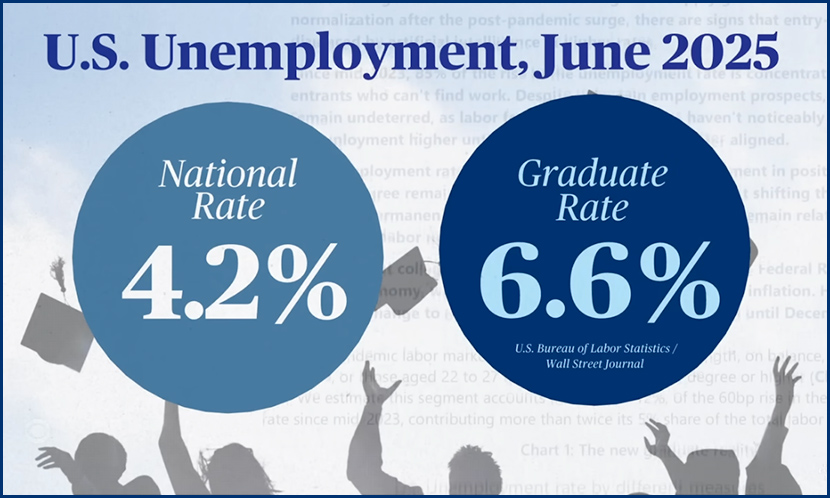
A less temporary, more existential threat to the four year degree: AI could hollow out the entry level job market for knowledge workers (i.e. new college grads). And if 56% of families were saying college “wasn’t worth it” in 2023,(WSJ), what will that number look like in 2026 or beyond? The one of my kids who went to college ended up working in a bike shop for a year-ish after graduation. No regrets, but it came as a shock to them that they weren’t more employable with their neuroscience degree.
A colleague provided a great example: Her son, newly graduated, went for a job interview as an entry level writer last month and he was asked, as a test, to produce a story with AI and then use that story to write a better one by himself. He would presumably be judged on his ability to prompt AI and then improve upon its product. Is that learning how to DO? I think so. It’s using AI tools to accomplish a workplace task.
Also relevant in terms of the job search, see the following gifted article:
‘We Are the Most Rejected Generation’— from nytimes.com by David Brooks; gifted article David talks admissions rates for selective colleges, ultra-hard to get summer internships, a tough entry into student clubs, and the job market.
Things get even worse when students leave school and enter the job market. They enter what I’ve come to think of as the seventh circle of Indeed hell. Applying for jobs online is easy, so you have millions of people sending hundreds of applications each into the great miasma of the internet, and God knows which impersonal algorithm is reading them. I keep hearing and reading stories about young people who applied to 400 jobs and got rejected by all of them.
It seems we’ve created a vast multilayered system that evaluates the worth of millions of young adults and, most of the time, tells them they are not up to snuff.
Many administrators and faculty members I’ve spoken to are mystified that students would create such an unforgiving set of status competitions. But the world of competitive exclusion is the world they know, so of course they are going to replicate it.
And in this column I’m not even trying to cover the rejections experienced by the 94 percent of American students who don’t go to elite schools and don’t apply for internships at Goldman Sachs. By middle school, the system has told them that because they don’t do well on academic tests, they are not smart, not winners. That’s among the most brutal rejections our society has to offer.
A wide range of roles can or will quickly be replaced with AI, including inside sales representatives, customer service representatives, junior lawyers, junior accountants, and physicians whose focus is diagnosis.
Dario Amodei — CEO of Anthropic, one of the world’s most powerful creators of artificial intelligence — has a blunt, scary warning for the U.S. government and all of us:
AI could wipe out half of all entry-level white-collar jobs — and spike unemployment to 10-20% in the next one to five years, Amodei told us in an interview from his San Francisco office.
Amodei said AI companies and government need to stop “sugar-coating” what’s coming: the possible mass elimination of jobs across technology, finance, law, consulting and other white-collar professions, especially entry-level gigs.
Why it matters: Amodei, 42, who’s building the very technology he predicts could reorder society overnight, said he’s speaking out in hopes of jarring government and fellow AI companies into preparing — and protecting — the nation.