AI Tutors: Hype or Hope for Education? — from educationnext.org by John Bailey and John Warner In a new book, Sal Khan touts the potential of artificial intelligence to address lagging student achievement. Our authors weigh in.
In Salman Khan’s new book, Brave New Words: How AI Will Revolutionize Education (and Why That’s a Good Thing) (Viking, 2024), the Khan Academy founder predicts that AI will transform education by providing every student with a virtual personalized tutor at an affordable cost. Is Khan right? Is radically improved achievement for all students within reach at last? If so, what sorts of changes should we expect to see, and when? If not, what will hold back the AI revolution that Khan foresees? John Bailey, a visiting fellow at the American Enterprise Institute, endorses Khan’s vision and explains the profound impact that AI technology is already making in education. John Warner, a columnist for the Chicago Tribune and former editor for McSweeney’s Internet Tendency, makes the case that all the hype about AI tutoring is, as Macbeth quips, full of sound and fury, signifying nothing.
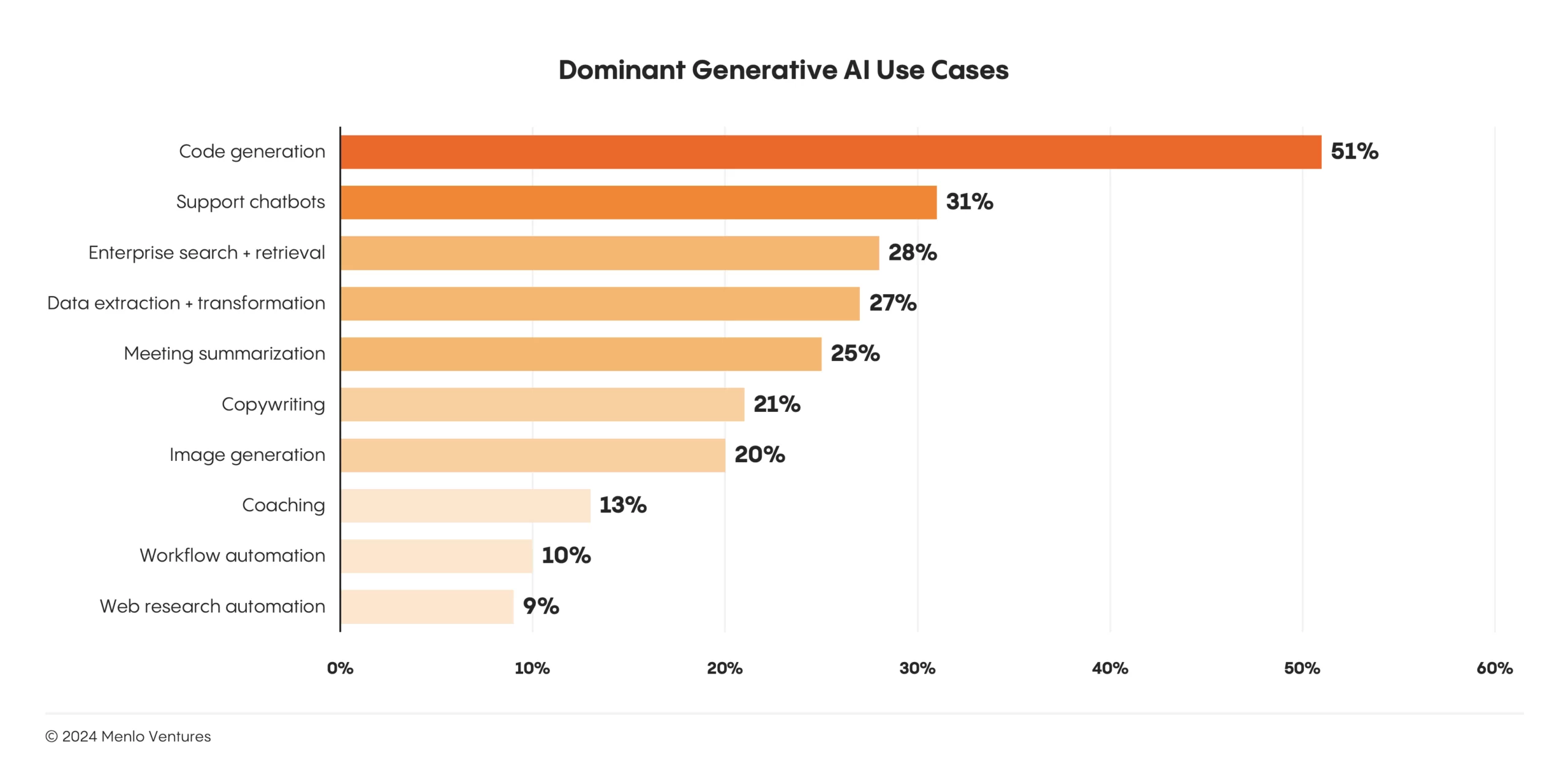
2024: The State of Generative AI in the Enterprise — from menlovc.com (Menlo Ventures) The enterprise AI landscape is being rewritten in real time. As pilots give way to production, we surveyed 600 U.S. enterprise IT decision-makers to reveal the emerging winners and losers.
This spike in spending reflects a wave of organizational optimism; 72% of decision-makers anticipate broader adoption of generative AI tools in the near future. This confidence isn’t just speculative—generative AI tools are already deeply embedded in the daily work of professionals, from programmers to healthcare providers.
Despite this positive outlook and increasing investment, many decision-makers are still figuring out what will and won’t work for their businesses. More than a third of our survey respondents do not have a clear vision for how generative AI will be implemented across their organizations. This doesn’t mean they’re investing without direction; it simply underscores that we’re still in the early stages of a large-scale transformation. Enterprise leaders are just beginning to grasp the profound impact generative AI will have on their organizations.
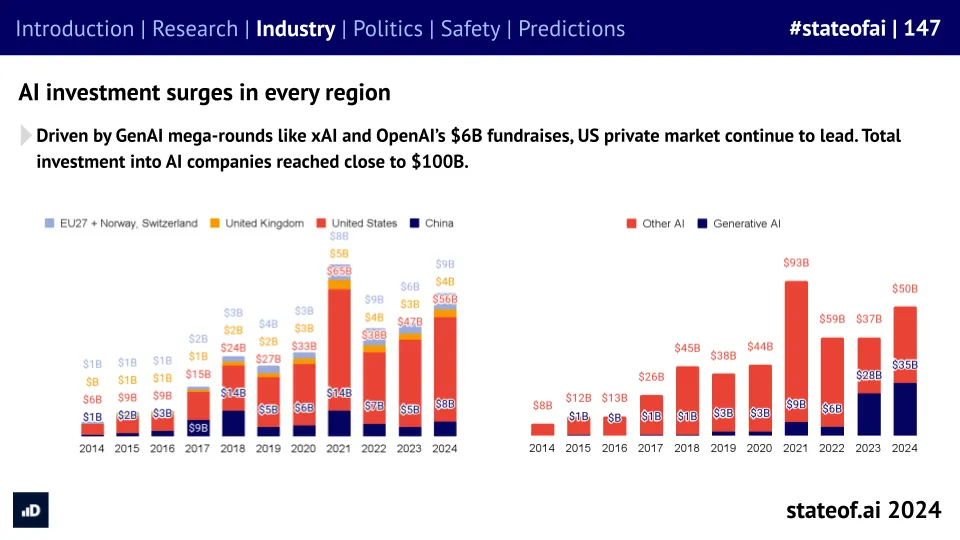
Business spending on generative AI surged 500% this year, hitting $13.8 billion — up from just $2.3 billion in 2023, according to data from Menlo Ventures released Wednesday.
OpenAI ceded market share in enterprise AI, declining from 50% to 34%, per the report.
Amazon-backed Anthropic doubled its market share from 12% to 24%.
Microsoft has quietly built the largest enterprise AI agent ecosystem, with over 100,000 organizations creating or editing AI agents through its Copilot Studio since launch – a milestone that positions the company ahead in one of enterprise tech’s most closely watched and exciting segments.
…
The rapid adoption comes as Microsoft significantly expands its agent capabilities. At its Ignite conference [that started on 11/19/24], the company announced it will allow enterprises to use any of the 1,800 large language models (LLMs) in the Azure catalog within these agents – a significant move beyond its exclusive reliance on OpenAI’s models. The company also unveiled autonomous agents that can work independently, detecting events and orchestrating complex workflows with minimal human oversight.
To understand the implications of AI agents, it’s useful to clarify the distinctions between AI, generative AI, and AI agents and explore the opportunities and risks they present to our autonomy, relationships, and decision-making.
… AI Agents: These are specialized applications of AI designed to perform tasks or simulate interactions. AI agents can be categorized into:
Tool Agents…
Simulation Agents..
While generative AI creates outputs from prompts, AI agents use AI to act with intention, whether to assist (tool agents) or emulate (simulation agents). The latter’s ability to mirror human thought and action offers fascinating possibilities — and raises significant risks.
Risks on the Horizon: ASL Levels The two key risks Dario is concerned about are:
a) cyber, bio, radiological, nuclear (CBRN)
b) model autonomy
These risks are captured in Anthropic’s framework for understanding AI Safety Levels (ASL):
1. ASL-1: Narrow-task AI like Deep Blue (no autonomy, minimal risk).
2. ASL-2: Current systems like ChatGPT/Claude, which lack autonomy and don’t pose significant risks beyond information already accessible via search engines.
3. ASL-3: Agents arriving soon (potentially next year) that can meaningfully assist non-state actors in dangerous activities like cyber or CBRN (chemical, biological, radiological, nuclear) attacks. Security and filtering are critical at this stage to prevent misuse.
4. ASL-4: AI smart enough to evade detection, deceive testers, and assist state actors with dangerous projects. AI will be strong enough that you would want to use the model to do anything dangerous. Mechanistic interpretability becomes crucial for verifying AI behavior.
5. ASL-5: AGI surpassing human intelligence in all domains, posing unprecedented challenges.
Anthropic’s if/then framework ensures proactive responses: if a model demonstrates danger, the team clamps down hard, enforcing strict controls.
Should You Still Learn to Code in an A.I. World? — from nytimes.com by Coding boot camps once looked like the golden ticket to an economically secure future. But as that promise fades, what should you do? Keep learning, until further notice.
Compared with five years ago, the number of active job postings for software developers has dropped 56 percent, according to data compiled by CompTIA. For inexperienced developers, the plunge is an even worse 67 percent.
“I would say this is the worst environment for entry-level jobs in tech, period, that I’ve seen in 25 years,” said Venky Ganesan, a partner at the venture capital firm Menlo Ventures.
For years, the career advice from everyone who mattered — the Apple chief executive Tim Cook, your mother — was “learn to code.” It felt like an immutable equation: Coding skills + hard work = job.
There’s a new coding startup in town, and it just MIGHT have everybody else shaking in their boots (we’ll qualify that in a sec, don’t worry).
It’s called Lovable, the “world’s first AI fullstack engineer.”
… Lovable does all of that by itself. Tell it what you want to build in plain English, and it creates everything you need. Want users to be able to log in? One click. Need to store data? One click. Want to accept payments? You get the idea.
Early users are backing up these claims. One person even launched a startup that made Product Hunt’s top 10 using just Lovable.
As for us, we made a Wordle clone in 2 minutes with one prompt. Only edit needed? More words in the dictionary. It’s like, really easy y’all.
From DSC: I have to admit I’m a bit suspicious here, as the “conversation practice” product seems a bit too scripted at times, but I post it because the idea of using AI to practice soft skills development makes a great deal of sense:
This is mind-blowing!
NVIDIA has introduced Edify 3D, a 3D AI generator that lets us create high-quality 3D scenes using just a simple prompt. And all the assets are fully editable!
Nearly every Fortune 500 company now uses artificial intelligence (AI) to screen resumes and assess test scores to find the best talent. However, new research from the University of Florida suggests these AI tools might not be delivering the results hiring managers expect.
The problem stems from a simple miscommunication between humans and machines: AI thinks it’s picking someone to hire, but hiring managers only want a list of candidates to interview.
Without knowing about this next step, the AI might choose safe candidates. But if it knows there will be another round of screening, it might suggest different and potentially stronger candidates.
In the last two years, the world has seen a lot of breakneck advancement in the Generative AI space, right from text-to-text, text-to-image and text-to-video based Generative AI capabilities. And all of that’s been nothing short of stepping stones for the next big AI breakthrough – AI agents. According to Bloomberg, OpenAI is preparing to launch its first autonomous AI agent, which is codenamed ‘Operator,’ as soon as in January 2025.
Apparently, this OpenAI agent – or Operator, as it’s codenamed – is designed to perform complex tasks independently. By understanding user commands through voice or text, this AI agent will seemingly do tasks related to controlling different applications in the computer, send an email, book flights, and no doubt other cool things. Stuff that ChatGPT, Copilot, Google Gemini or any other LLM-based chatbot just can’t do on its own.
In the enterprise of the future, human workers are expected to work closely alongside sophisticated teams of AI agents.
According to McKinsey, generative AI and other technologies have the potential to automate 60 to 70% of employees’ work. And, already, an estimated one-third of American workers are using AI in the workplace — oftentimes unbeknownst to their employers.
However, experts predict that 2025 will be the year that these so-called “invisible” AI agents begin to come out of the shadows and take more of an active role in enterprise operations.
“Agents will likely fit into enterprise workflows much like specialized members of any given team,” said Naveen Rao, VP of AI at Databricks and founder and former CEO of MosaicAI.
A recent report from McKinsey predicts that generative AI could unlock up to $2.6 to $4.4 annually trillion in value within product development and innovation across various industries. This staggering figure highlights just how significantly generative AI is set to transform the landscape of product development. Generative AI app development is driving innovation by using the power of advanced algorithms to generate new ideas, optimize designs, and personalize products at scale. It is also becoming a cornerstone of competitive advantage in today’s fast-paced market. As businesses look to stay ahead, understanding and integrating technologies like generative AI app development into product development processes is becoming more crucial than ever.
AI agents handle complex, autonomous tasks beyond simple commands, showcasing advanced decision-making and adaptability.
The Based AI Agent template by Coinbase and Replit provides an easy starting point for developers to build blockchain-enabled AI agents.
AI based agents specifically integrate with blockchain, supporting crypto wallets and transactions.
Securing API keys in development is crucial to protect the agent from unauthorized access.
What are AI Agents and How Are They Used in Different Industries?— from rtinsights.com by Salvatore Salamone AI agents enable companies to make smarter, faster, and more informed decisions. From predictive maintenance to real-time process optimization, these agents are delivering tangible benefits across industries.
Is Generative AI and ChatGPT healthy for Students? — from ai-supremacy.com by Michael Spencer and Nick Potkalitsky Beyond Text Generation: How AI Ignites Student Discovery and Deep Thinking, according to firsthand experiences of Teachers and AI researchers like Nick Potkalitsky.
After two years of intensive experimentation with AI in education, I am witnessing something amazing unfolding before my eyes. While much of the world fixates on AI’s generative capabilities—its ability to create essays, stories, and code—my students have discovered something far more powerful: exploratory AI, a dynamic partner in investigation and critique that’s transforming how they think.
…
They’ve moved beyond the initial fascination with AI-generated content to something far more sophisticated: using AI as an exploratory tool for investigation, interrogation, and intellectual discovery.
…
Instead of the much-feared “shutdown” of critical thinking, we’re witnessing something extraordinary: the emergence of what I call “generative thinking”—a dynamic process where students learn to expand, reshape, and evolve their ideas through meaningful exploration with AI tools. Here I consciously reposition the term “generative” as a process of human origination, although one ultimately spurred on by machine input.
A Road Map for Leveraging AI at a Smaller Institution — from er.educause.edu by Dave Weil and Jill Forrester Smaller institutions and others may not have the staffing and resources needed to explore and take advantage of developments in artificial intelligence (AI) on their campuses. This article provides a roadmap to help institutions with more limited resources advance AI use on their campuses.
The following activities can help smaller institutions better understand AI and lay a solid foundation that will allow them to benefit from it.
Understand the impact…
Understand the different types of AI tools…
Focus on institutional data and knowledge repositories…
Smaller institutions do not need to fear being left behind in the wake of rapid advancements in AI technologies and tools. By thinking intentionally about how AI will impact the institution, becoming familiar with the different types of AI tools, and establishing a strong data and analytics infrastructure, institutions can establish the groundwork for AI success. The five fundamental activities of coordinating, learning, planning and governing, implementing, and reviewing and refining can help smaller institutions make progress on their journey to use AI tools to gain efficiencies and improve students’ experiences and outcomes while keeping true to their institutional missions and values.
That is what they are doing here. Lesson plans focus on learners rather than the traditional teacher-centric model. Assessing prior strengths and weaknesses, personalising to focus more on weaknesses and less on things known or mastered. It’s adaptive, personalised learning. The idea that everyone should learn at the exactly same pace, within the same timescale is slightly ridiculous, ruled by the need for timetabling a one to many, classroom model.
For the first time in the history of our species we have technology that performs some of the tasks of teaching. We have reached a pivot point where this can be tried and tested. My feeling is that we’ll see a lot more of this, as parents and general teachers can delegate a lot of the exposition and teaching of the subject to the technology. We may just see a breakthrough that transforms education.
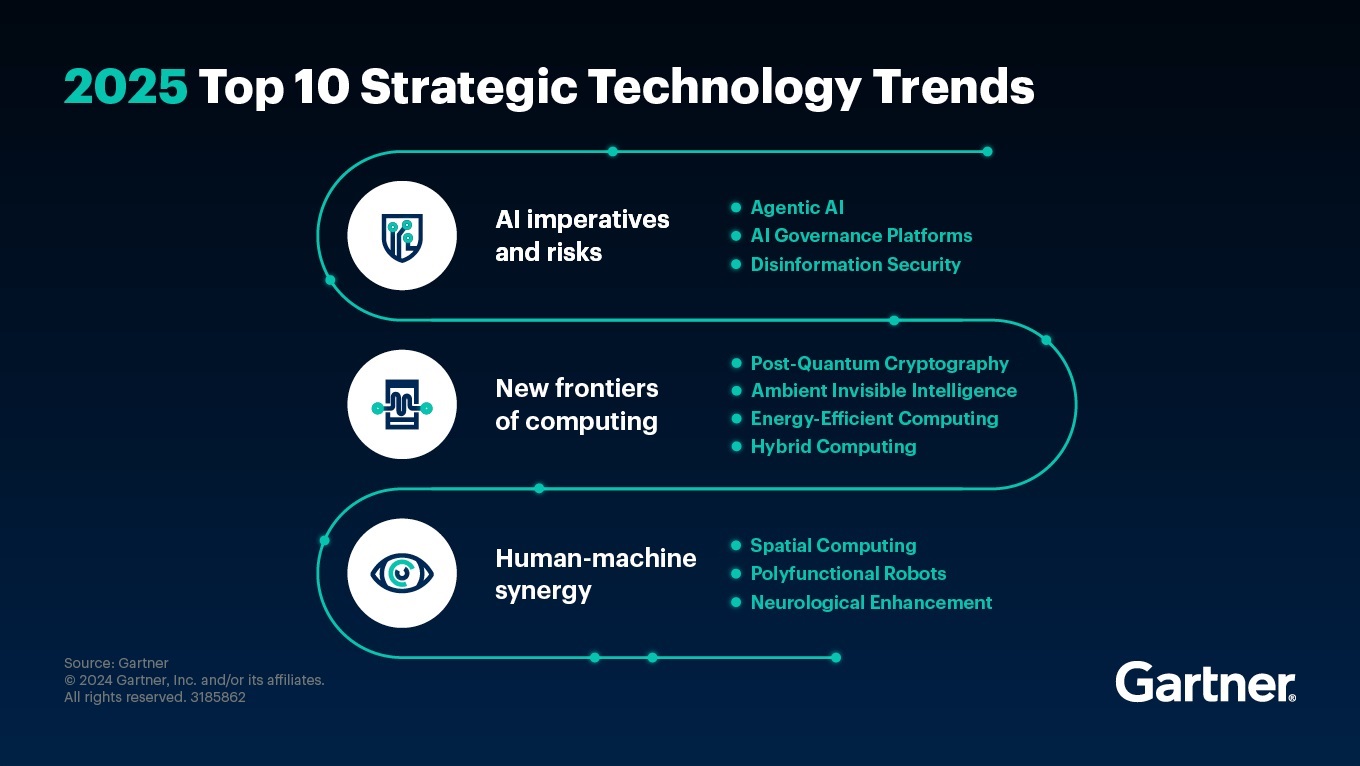
Agentic AI will be the top tech trend for 2025, according to research firm Gartner. The term describes autonomous machine “agents” that move beyond query-and-response generative chatbots to do enterprise-related tasks without human guidance.
…
More realistic challenges that the firm has listed elsewhere include:
Agentic AI proliferating without governance or tracking;
Agentic AI making decisions that are not trustworthy;
All or nothing at Educause24 — from onedtech.philhillaa.com by Kevin Kelly Looking for specific solutions at the conference exhibit hall, with an educator focus
Here are some notable trends:
Alignment with campus policies: …
Choose your own AI adventure: …
Integrate AI throughout a workflow: …
Moving from prompt engineering to bot building: …
More complex problem-solving: …
…
Not all AI news is good news. In particular, AI has exacerbated the problem of fraudulent enrollment–i.e., rogue actors who use fake or stolen identities with the intent of stealing financial aid funding with no intention of completing coursework.
…
The consequences are very real, including financial aid funding going to criminal enterprises, enrollment estimates getting dramatically skewed, and legitimate students being blocked from registering for classes that appear “full” due to large numbers of fraudulent enrollments.
Google’s worst nightmare just became reality. OpenAI didn’t just add search to ChatGPT – they’ve launched an all-out assault on traditional search engines.
It’s the beginning of the end for search as we know it.
Let’s be clear about what’s happening: OpenAI is fundamentally changing how we’ll interact with information online. While Google has spent 25 years optimizing for ad revenue and delivering pages of blue links, OpenAI is building what users actually need – instant, synthesized answers from current sources.
The rollout is calculated and aggressive: ChatGPT Plus and Team subscribers get immediate access, followed by Enterprise and Education users in weeks, and free users in the coming months. This staged approach is about systematically dismantling Google’s search dominance.
Open for AI: India Tech Leaders Build AI Factories for Economic Transformation — from blogs.nvidia.com Yotta Data Services, Tata Communications, E2E Networks and Netweb are among the providers building and offering NVIDIA-accelerated infrastructure and software, with deployments expected to double by year’s end.
We’ve added a new analysis tool. The tool helps Claude respond with mathematically precise and reproducible answers. You can then create interactive data visualizations with Artifacts.
We’re also introducing a groundbreaking new capability in public beta: computer use. Available today on the API, developers can direct Claude to use computers the way people do—by looking at a screen, moving a cursor, clicking buttons, and typing text. Claude 3.5 Sonnet is the first frontier AI model to offer computer use in public beta. At this stage, it is still experimental—at times cumbersome and error-prone. We’re releasing computer use early for feedback from developers, and expect the capability to improve rapidly over time.
A few days ago, Anthropic released Claude Computer Use, which is a model + code that allows Claude to control a computer. It takes screenshots to make decisions, can run bash commands and so forth.
It’s cool, but obviously very dangerous because of prompt injection.Claude Computer Use enables AI to run commands on machines autonomously, posing severe risks if exploited via prompt injection.
This blog post demonstrates that it’s possible to leverage prompt injection to achieve, old school, command and control (C2) when giving novel AI systems access to computers. … We discussed one way to get malware onto a Claude Computer Use host via prompt injection. There are countless others, like another way is to have Claude write the malware from scratch and compile it. Yes, it can write C code, compile and run it. There are many other options.
TrustNoAI.
And again, remember do not run unauthorized code on systems that you do not own or are authorized to operate on.
From a survey with more than 800 senior business leaders, this report’s findings indicate that weekly usage of Gen AI has nearly doubled from 37% in 2023 to 72% in 2024, with significant growth in previously slower-adopting departments like Marketing and HR. Despite this increased usage, businesses still face challenges in determining the full impact and ROI of Gen AI. Sentiment reports indicate leaders have shifted from feelings of “curiosity” and “amazement” to more positive sentiments like “pleased” and “excited,” and concerns about AI replacing jobs have softened. Participants were full-time employees working in large commercial organizations with 1,000 or more employees.
For a while now, companies like OpenAI and Google have been touting advanced “reasoning” capabilities as the next big step in their latest artificial intelligence models. Now, though, a new study from six Apple engineers shows that the mathematical “reasoning” displayed by advanced large language models can be extremely brittle and unreliable in the face of seemingly trivial changes to common benchmark problems.
The fragility highlighted in these new results helps support previous research suggesting that LLMs use of probabilistic pattern matching is missing the formal understanding of underlying concepts needed for truly reliable mathematical reasoning capabilities. “Current LLMs are not capable of genuine logical reasoning,” the researchers hypothesize based on these results. “Instead, they attempt to replicate the reasoning steps observed in their training data.”
We are bringing developer choice to GitHub Copilot with Anthropic’s Claude 3.5 Sonnet, Google’s Gemini 1.5 Pro, and OpenAI’s o1-preview and o1-mini. These new models will be rolling out—first in Copilot Chat, with OpenAI o1-preview and o1-mini available now, Claude 3.5 Sonnet rolling out progressively over the next week, and Google’s Gemini 1.5 Pro in the coming weeks. From Copilot Workspace to multi-file editing to code review, security autofix, and the CLI, we will bring multi-model choice across many of GitHub Copilot’s surface areas and functions soon.
In a groundbreaking study, researchers from Penn Engineering showed how AI-powered robots can be manipulated to ignore safety protocols, allowing them to perform harmful actions despite normally rejecting dangerous task requests.
What did they find ?
Researchers found previously unknown security vulnerabilities in AI-governed robots and are working to address these issues to ensure the safe use of large language models(LLMs) in robotics.
Their newly developed algorithm, RoboPAIR, reportedly achieved a 100% jailbreak rate by bypassing the safety protocols on three different AI robotic systems in a few days.
Using RoboPAIR, researchers were able to manipulate test robots into performing harmful actions, like bomb detonation and blocking emergency exits, simply by changing how they phrased their commands.
Why does it matter?
This research highlights the importance of spotting weaknesses in AI systems to improve their safety, allowing us to test and train them to prevent potential harm.
From DSC: Great! Just what we wanted to hear. But does it surprise anyone? Even so…we move forward at warp speeds.
From DSC:
So, given the above item, does the next item make you a bit nervous as well? I saw someone on Twitter/X exclaim, “What could go wrong?” I can’t say I didn’t feel the same way.
We’re also introducing a groundbreaking new capability in public beta: computer use.Available today on the API, developers can direct Claude to use computers the way people do—by looking at a screen, moving a cursor, clicking buttons, and typing text. Claude 3.5 Sonnet is the first frontier AI model to offer computer use in public beta. At this stage, it is still experimental—at times cumbersome and error-prone. We’re releasing computer use early for feedback from developers, and expect the capability to improve rapidly over time.
Per The Rundown AI:
The Rundown: Anthropic just introduced a new capability called ‘computer use’, alongside upgraded versions of its AI models, which enables Claude to interact with computers by viewing screens, typing, moving cursors, and executing commands.
… Why it matters: While many hoped for Opus 3.5, Anthropic’s Sonnet and Haiku upgrades pack a serious punch. Plus, with the new computer use embedded right into its foundation models, Anthropic just sent a warning shot to tons of automation startups—even if the capabilities aren’t earth-shattering… yet.
Also related/see:
What is Anthropic’s AI Computer Use? — from ai-supremacy.com by Michael Spencer Task automation, AI at the intersection of coding and AI agents take on new frenzied importance heading into 2025 for the commercialization of Generative AI.
New Claude, Who Dis? — from theneurondaily.com Anthropic just dropped two new Claude models…oh, and Claude can now use your computer.
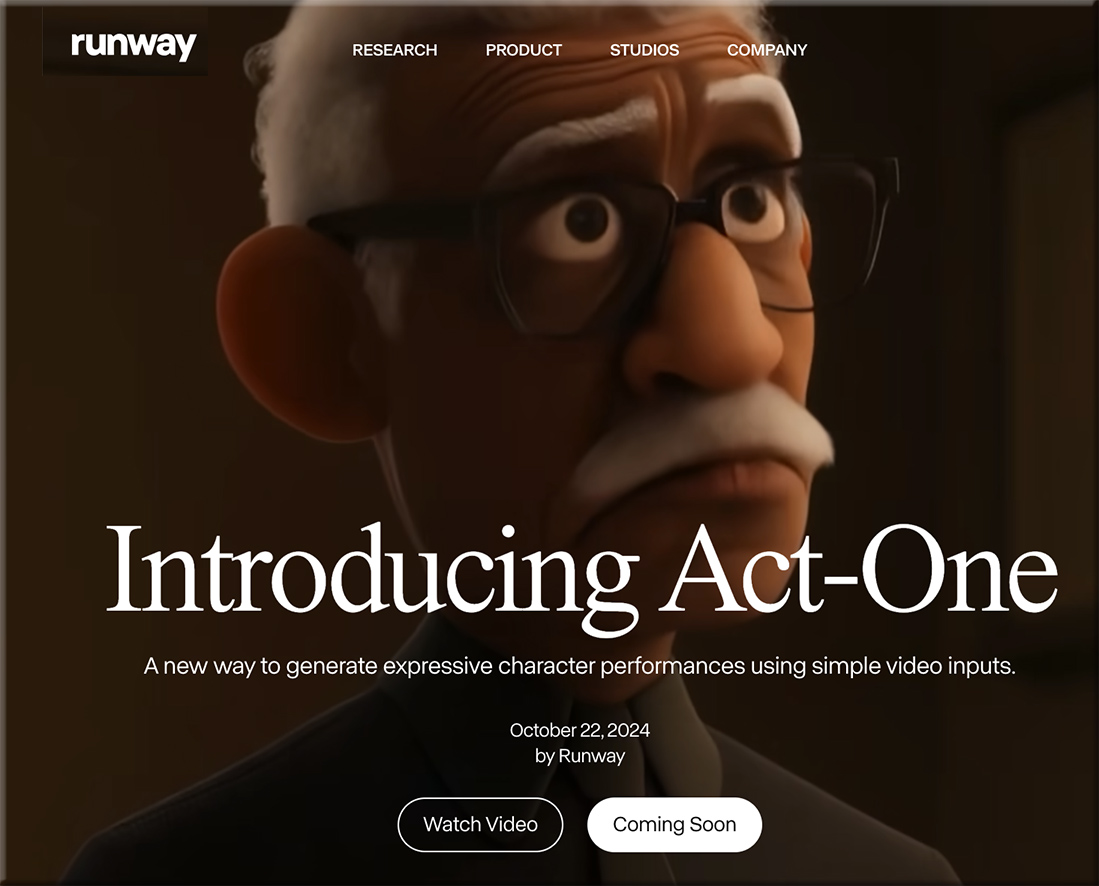
What makes Act-One special? It can capture the soul of an actor’s performance using nothing but a simple video recording. No fancy motion capture equipment, no complex face rigging, no army of animators required. Just point a camera at someone acting, and watch as their exact expressions, micro-movements, and emotional nuances get transferred to an AI-generated character.
Think about what this means for creators: you could shoot an entire movie with multiple characters using just one actor and a basic camera setup. The same performance can drive characters with completely different proportions and looks, while maintaining the authentic emotional delivery of the original performance. We’re witnessing the democratization of animation tools that used to require millions in budget and years of specialized training.
Also related/see:
Introducing, Act-One. A new way to generate expressive character performances inside Gen-3 Alpha using a single driving video and character image. No motion capture or rigging required.
Google has signed a “world first” deal to buy energy from a fleet of mini nuclear reactors to generate the power needed for the rise in use of artificial intelligence.
The US tech corporation has ordered six or seven small nuclear reactors (SMRs) from California’s Kairos Power, with the first due to be completed by 2030 and the remainder by 2035.
After the extreme peak and summer slump of 2023, ChatGPT has been setting new traffic highs since May
ChatGPT has been topping its web traffic records for months now, with September 2024 traffic up 112% year-over-year (YoY) to 3.1 billion visits, according to Similarweb estimates. That’s a change from last year, when traffic to the site went through a boom-and-bust cycle.
Google has made a historic agreement to buy energy from a group of small nuclear reactors (SMRs) from Kairos Power in California. This is the first nuclear power deal specifically for AI data centers in the world.
Hey creators!
Made on YouTube 2024 is here and we’ve announced a lot of updates that aim to give everyone the opportunity to build engaging communities, drive sustainable businesses, and express creativity on our platform.
Below is a roundup with key info – feel free to upvote the announcements that you’re most excited about and subscribe to this post to get updates on these features! We’re looking forward to another year of innovating with our global community it’s a future full of opportunities, and it’s all Made on YouTube!
Today, we’re announcing new agentic capabilities that will accelerate these gains and bring AI-first business process to every organization.
First, the ability to create autonomous agents with Copilot Studio will be in public preview next month.
Second, we’re introducing ten new autonomous agents in Dynamics 365 to build capacity for every sales, service, finance and supply chain team.
10 Daily AI Use Cases for Business Leaders— from flexos.work by Daan van Rossum While AI is becoming more powerful by the day, business leaders still wonder why and where to apply today. I take you through 10 critical use cases where AI should take over your work or partner with you.
Emerging Multi-Modal AI Video Creation Platforms The rise of multi-modal AI platforms has revolutionized content creation, allowing users to research, write, and generate images in one app. Now, a new wave of platforms is extending these capabilities to video creation and editing.
Multi-modal video platforms combine various AI tools for tasks like writing, transcription, text-to-voice conversion, image-to-video generation, and lip-syncing. These platforms leverage open-source models like FLUX and LivePortrait, along with APIs from services such as ElevenLabs, Luma AI, and Gen-3.
The TLDR here is that, as useful as popular AI tools are for learners, as things stand they only enable us to take the very first steps on what is a long and complex journey of learning.
AI tools like ChatGPT 4o, Claude 3.5 & NotebookLM can help to give us access to information but (for now at least) the real work of learning remains in our – the humans’ – hands.
To which Anna Mills had a solid comment:
It might make a lot of sense to regulate generated audio to require some kind of watermark and/or metadata. Instructors who teach online and assign voice recordings, we need to recognize that these are now very easy and free to auto-generate. In some cases we are assigning this to discourage students from using AI to just autogenerate text responses, but audio is not immune.
1. Using AI to Scale Exceptional Instructional Design Practice
Imagine a bonification system that doesn’t just automate tasks, but scales best practices in instructional design:
2. Surfacing AI’s Instructional Design Thinking
Instead of hiding AI’s decision-making process, what if we built an AI system which invites instructional designers to probe, question, and learn from an expert trained AI?
Explain This Design…
Show Me Alternatives…
Challenge My Assumptions…
Learning Science Insights…
By reimagining the role of AI in this way, we would…
OpenAI’s Education Forum was eye-opening for a number of reasons, but the one that stood out the most was Leah Belsky acknowledging what many of us in education had known for nearly two years—the majority of the active weekly users of ChatGPT are students. OpenAI has internal analytics that track upticks in usage during the fall and then drops off in the spring. Later that evening, OpenAI’s new CFO, Sarah Friar, further drove the point home with an anecdote about usage in the Philippines jumping nearly 90% at the start of the school year.
I had hoped to gain greater insight into OpenAI’s business model and how it related to education, but the Forum left me with more questions than answers. What app has the majority of users active 8 to 9 months out of the year and dormant for the holidays and summer breaks? What business model gives away free access and only converts 1 out of every 20-25 users to paid users? These were the initial thoughts that I hoped the Forum would address. But those questions, along with some deeper and arguably more critical ones, were skimmed over to drive home the main message of the Forum—Universities have to rapidly adopt AI and become AI-enabled institutions.
As we embrace these technologies, we must also consider the experiences we need to discover and maintain our connections—and our humanity. In a world increasingly shaped by AI, I find myself asking: What are the experiences that define us, and how do they influence the relationships we build, both professionally and personally?
This concept of “off-loading” has become central to my thinking. In simple terms, off-loading is the act of delegating tasks to AI that we would otherwise do ourselves. As AI systems advance, we’re increasingly confronted with a question: Which tasks should we off-load to AI?
From DSC: Great…we have another tool called Canvas. Or did you say Canva?
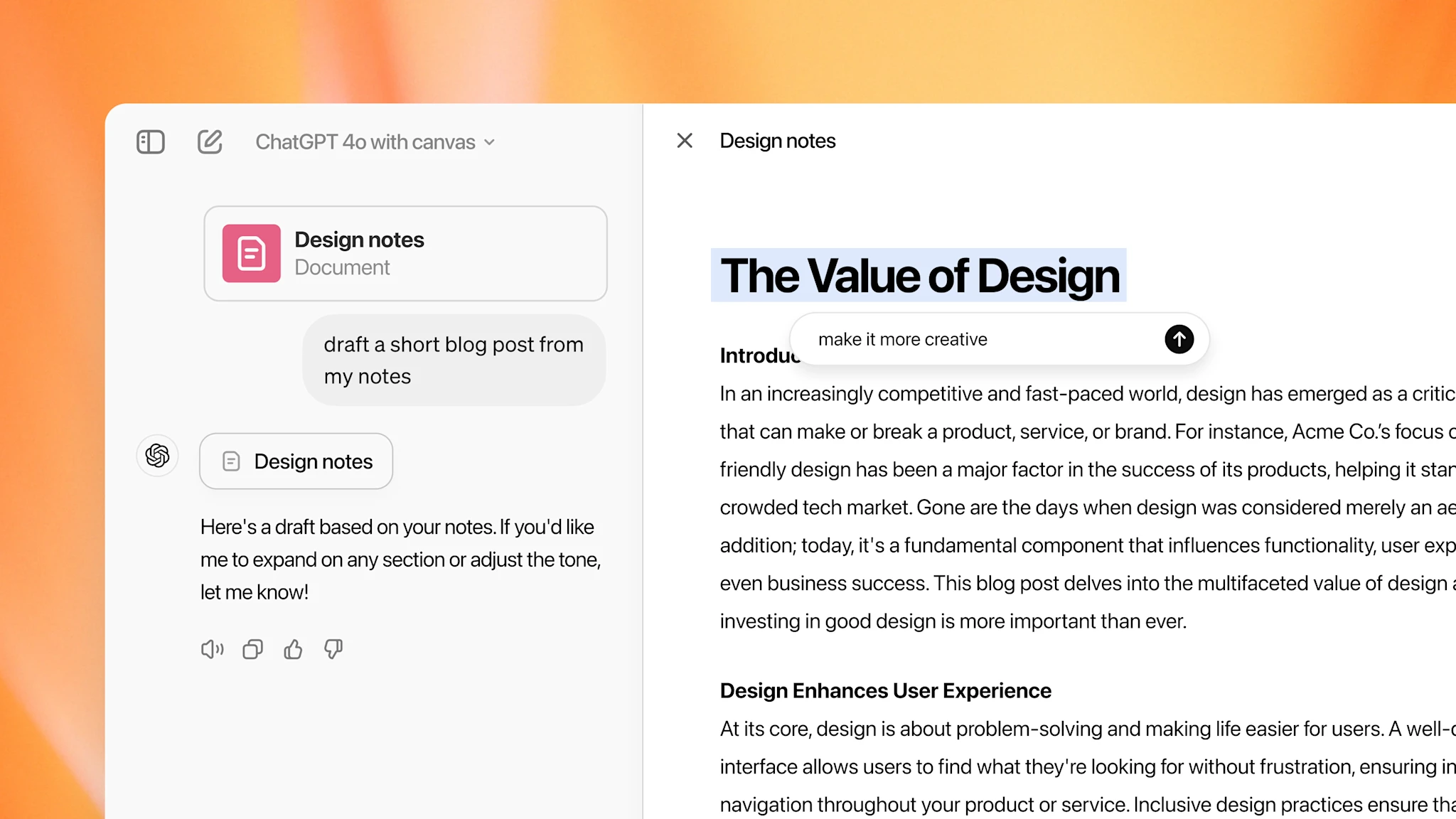
Introducing canvas — from OpenAI A new way of working with ChatGPT to write and code
We’re introducing canvas, a new interface for working with ChatGPT on writing and coding projects that go beyond simple chat. Canvas opens in a separate window, allowing you and ChatGPT to collaborate on a project. This early beta introduces a new way of working together—not just through conversation, but by creating and refining ideas side by side.
Canvas was built with GPT-4o and can be manually selected in the model picker while in beta. Starting today we’re rolling out canvas to ChatGPT Plus and Team users globally. Enterprise and Edu users will get access next week. We also plan to make canvas available to all ChatGPT Free users when it’s out of beta.
The way Americans buy homes is changing dramatically.
New industry rules about how home buyers’ real estate agents get paid are prompting a reckoning among housing experts and the tech sector. Many house hunters who are already stretched thin by record-high home prices and closing costs must now decide whether, and how much, to pay an agent.
A 2-3% commission on the median home price of $416,700 could be well over $10,000, and in a world where consumers are accustomed to using technology for everything from taxes to tickets, many entrepreneurs see an opportunity to automate away the middleman, even as some consumer advocates say not so fast.
The Great Mismatch — from the-job.beehiiv.com. by Paul Fain Artificial intelligence could threaten millions of decent-paying jobs held by women without degrees.
Women in administrative and office roles may face the biggest AI automation risk, find Brookings researchers armed with data from OpenAI. Also, why Indiana could make the Swiss apprenticeship model work in this country, and how learners get disillusioned when a certificate doesn’t immediately lead to a good job.
…
A major new analysisfrom the Brookings Institution, using OpenAI data, found that the most vulnerable workers don’t look like the rail and dockworkers who have recaptured the national spotlight. Nor are they the creatives—like Hollywood’s writers and actors—that many wealthier knowledge workers identify with. Rather, they’re predominantly women in the 19M office support and administrative jobs that make up the first rung of the middle class.
“Unfortunately the technology and automation risks facing women have been overlooked for a long time,” says Molly Kinder, a fellow at Brookings Metro and lead author of the new report. “Most of the popular and political attention to issues of automation and work centers on men in blue-collar roles. There is far less awareness about the (greater) risks to women in lower-middle-class roles.”
introducing swarm: an experimental framework for building, orchestrating, and deploying multi-agent systems. ?https://t.co/97n4fehmtM
Is this how AI will transform the world over the next decade? — from futureofbeinghuman.com by Andrew Maynard Anthropic’s CEO Dario Amodei has just published a radical vision of an AI-accelerated future. It’s audacious, compelling, and a must-read for anyone working at the intersection of AI and society.
But if Amodei’s essay is approached as a conversation starter rather than a manifesto — which I think it should be — it’s hard to see how it won’t lead to clearer thinking around how we successfully navigate the coming AI transition.
Given the scope of the paper, it’s hard to write a response to it that isn’t as long or longer as the original. Because of this, I’d strongly encourage anyone who’s looking at how AI might transform society to read the original — it’s well written, and easier to navigate than its length might suggest.
That said, I did want to pull out a few things that struck me as particularly relevant and important — especially within the context of navigating advanced technology transitions.
And speaking of that essay, here’s a summary from The Rundown AI:
Anthropic CEO Dario Amodei just published a lengthy essay outlining an optimistic vision for how AI could transform society within 5-10 years of achieving human-level capabilities, touching on longevity, politics, work, the economy, and more.
The details:
Amodei believes that by 2026, ‘powerful AI’ smarter than a Nobel Prize winner across fields, with agentic and all multimodal capabilities, will be possible.
He also predicted that AI could compress 100 years of scientific progress into 10 years, curing most diseases and doubling the human lifespan.
The essay argued AI could strengthen democracy by countering misinformation and providing tools to undermine authoritarian regimes.
The CEO acknowledged potential downsides, including job displacement — but believes new economic models will emerge to address this.
He envisions AI driving unprecedented economic growth but emphasizes ensuring AI’s benefits are broadly distributed.
Why it matters:
As the CEO of what is seen as the ‘safety-focused’ AI lab, Amodei paints a utopia-level optimistic view of where AI will head over the next decade. This thought-provoking essay serves as both a roadmap for AI’s potential and a call to action to ensure the responsible development of technology.
However, most workers remain unaware of these efforts. Only a third (33%) of all U.S. employees say their organization has begun integrating AI into their business practices, with the highest percentage in white-collar industries (44%).
… White-collar workers are more likely to be using AI. White-collar workers are, by far, the most frequent users of AI in their roles. While 81% of employees in production/frontline industries say they never use AI, only 54% of white-collar workers say they never do and 15% report using AI weekly.
… Most employees using AI use it for idea generation and task automation. Among employees who say they use AI, the most common uses are to generate ideas (41%), to consolidate information or data (39%), and to automate basic tasks (39%).
Selling like hotcakes: The extraordinary demand for Blackwell GPUs illustrates the need for robust, energy-efficient processors as companies race to implement more sophisticated AI models and applications. The coming months will be critical to Nvidia as the company works to ramp up production and meet the overwhelming requests for its latest product.
Here’s my AI toolkit — from wondertools.substack.com by Jeremy Caplan and Nikita Roy How and why I use the AI tools I do — an audio conversation
1. What are two useful new ways to use AI?
AI-powered research: Type a detailed search query into Perplexity instead of Google to get a quick, actionable summary response with links to relevant information sources. Read more of my take on why Perplexity is so useful and how to use it.
Notes organization and analysis: Tools like NotebookLM, Claude Projects, and Mem can help you make sense of huge repositories of notes and documents. Query or summarize your own notes and surface novel connections between your ideas.
As we look to the future of umpiring in baseball, a balanced approach may offer the best solution. Rather than an all-or-nothing choice between human umpires and full automation, a hybrid system could potentially offer the benefits of both worlds. For instance, automated tracking systems could be used to assist human umpires, providing them with real-time data to inform their calls. This would maintain the human element and authority on the field while significantly enhancing accuracy and consistency.
Such a system would allow umpires to focus more on game management, player interactions, and the myriad other responsibilities that require human judgment and experience. It would preserve the traditional aspects of the umpire’s role that fans and players value, while leveraging technology to address concerns about accuracy and fairness.
Introduction Continuing with our baseball analogy, we now turn our focus to the courtroom.
The intersection of technology and the justice system is a complex and often contentious space, much like the debate over automated umpires in baseball. As Major League Baseball considers whether automated systems should replace the human element in calling balls and strikes, the legal world faces similar questions: How far should we go in allowing technology to aid our decision-making processes, and what is the right balance between innovation and the traditions that define the courtroom?
AI and the rise of the Niche Lawyer— from jordanfurlong.substack.com by Jordan Furlong A new legal market will create a new type of lawyer: Specialized, flexible, customized, fractional, home-based and online, exclusive, balanced and focused. This could be your future legal career.
Think of a new picture. A lawyer dressed in Professional Casual, or Business Comfortable, an outfit that looks sharp but feels relaxed. A lawyer inside their own apartment, in an extra bedroom, or in a shared workspace on a nearby bus route, taking an Uber to visit some clients and using Zoom to meet with others. A lawyer with a laptop and a tablet and a smartphone and no other capital expenditures. A lawyer whose overhead is only what’s literally over their head.
This lawyer starts work when they feel like it (maybe 7 am, maybe 10; maybe Monday, maybe not) and they stop working when they feel like it (maybe 4 pm, maybe 9). They have as many clients as they need, for whom they provide very specific, very personalized services. They provide some services that aren’t even “legal” to people who aren’t “clients” as we understand both terms. They have essential knowledge and skills that all lawyers share but unique knowledge and skills that hardly any others possess. They make as much money as they need in order to meet the rent and pay down their debts and afford a life with the people they love. They’re in complete charge of their career and their destiny, something they find terrifying and stressful and wonderful and fulfilling.
While the latest ChatGPT model is dominating tech headlines, I was unexpectedly blown away by Google’s recent release of a new NotebookLM feature: Audio Overview. This tool, which transforms written content into simulated conversations, caught me off guard with its capabilities. I uploaded some of my blog posts on AI and the justice system, and what it produced left me speechless. The AI generated podcast-like discussions felt remarkably authentic, complete with nuanced interpretations and even slight misunderstandings of my ideas. This mirrors real-life discussions perfectly – after all, how often do we hear our own thoughts expressed by others and think, “That’s not quite what I meant”?
AI’s Trillion-Dollar Opportunity — from bain.com by David Crawford, Jue Wang, and Roy Singh The market for AI products and services could reach between $780 billion and $990 billion by 2027.
At a Glance
The big cloud providers are the largest concentration of R&D, talent, and innovation today, pushing the boundaries of large models and advanced infrastructure.
Innovation with smaller models (open-source and proprietary), edge infrastructure, and commercial software is reaching enterprises, sovereigns, and research institutions.
Commercial software vendors are rapidly expanding their feature sets to provide the best use cases and leverage their data assets.
Accelerated market growth. Nvidia’s CEO, Jensen Huang, summed up the potential in the company’s Q3 2024 earnings call: “Generative AI is the largest TAM [total addressable market] expansion of software and hardware that we’ve seen in several decades.”
And on a somewhat related note (i.e., emerging technologies), also see the following two postings:
Surgical Robots: Current Uses and Future Expectations — from medicalfuturist.com by Pranavsingh Dhunnoo As the term implies, a surgical robot is an assistive tool for performing surgical procedures. Such manoeuvres, also called robotic surgeries or robot-assisted surgery, usually involve a human surgeon controlling mechanical arms from a control centre.
Key Takeaways
Robots’ potentials have been a fascination for humans and have even led to a booming field of robot-assisted surgery.
Surgical robots assist surgeons in performing accurate, minimally invasive procedures that are beneficial for patients’ recovery.
The assistance of robots extend beyond incisions and includes laparoscopies, radiosurgeries and, in the future, a combination of artificial intelligence technologies to assist surgeons in their craft.
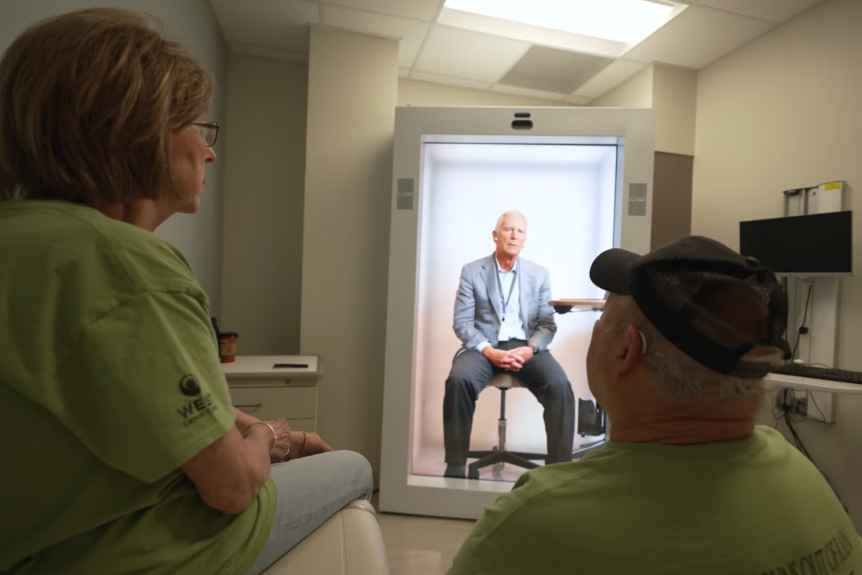
“Working with the team from Proto to bring to life, what several years ago would have seemed impossible, is now going to allow West Cancer Center & Research Institute to pioneer options for patients to get highly specialized care without having to travel to large metro areas,” said West Cancer’s CEO, Mitch Graves.
Obviously this workflow works just as well for meetings as it does for lectures. Stay present in the meeting with no screens and just write down the key points with pen and paper. Then let NotebookLM assemble the detailed summary based on your high-level notes. https://t.co/fZMG7LgsWG
In a matter of months, organizations have gone from AI helping answer questions, to AI making predictions, to generative AI agents. What makes AI agents unique is that they can take actions to achieve specific goals, whether that’s guiding a shopper to the perfect pair of shoes, helping an employee looking for the right health benefits, or supporting nursing staff with smoother patient hand-offs during shifts changes.
In our work with customers, we keep hearing that their teams are increasingly focused on improving productivity, automating processes, and modernizing the customer experience. These aims are now being achieved through the AI agents they’re developing in six key areas: customer service; employee empowerment; code creation; data analysis; cybersecurity; and creative ideation and production.
…
Here’s a snapshot of how 185 of these industry leaders are putting AI to use today, creating real-world use cases that will transform tomorrow.
AI Video Tools You Can Use Today— from heatherbcooper.substack.com by Heather Cooper The latest AI video models that deliver results
AI video models are improving so quickly, I can barely keep up! I wrote about unreleased Adobe Firefly Video in the last issue, and we are no closer to public access to Sora.
No worries – we do have plenty of generative AI video tools we can use right now.
Kling AI launched its updated v1.5 and the quality of image or text to video is impressive.
Hailuo MiniMax text to video remains free to use for now, and it produces natural and photorealistic results (with watermarks).
Runway added the option to upload portrait aspect ratio images to generate vertical videos in Gen-3 Alpha & Turbo modes.
…plus several more
Advanced Voice is rolling out to all Plus and Team users in the ChatGPT app over the course of the week.
While you’ve been patiently waiting, we’ve added Custom Instructions, Memory, five new voices, and improved accents.
From DSC: I’m not trying to gossip here. I post this because Sam Altman is the head of arguably one of the most powerful companies in the world today — at least in terms of introducing change to a variety of societies throughout the globe (both positive and negative). So when we’ve now seen almost the entire leadership team head out the door, this certainly gives me major pause. I don’t like it. Items like the ones below begin to capture some of why I’m troubled and suspicious about these troubling moves.
OpenAI to Become For-Profit Company — from wsj.com by Deepa Seetharaman, Berber Jin, and Tom Dotan (behind paywall) Planned restructuring comes amid personnel upheaval including resignation of chief technology officer
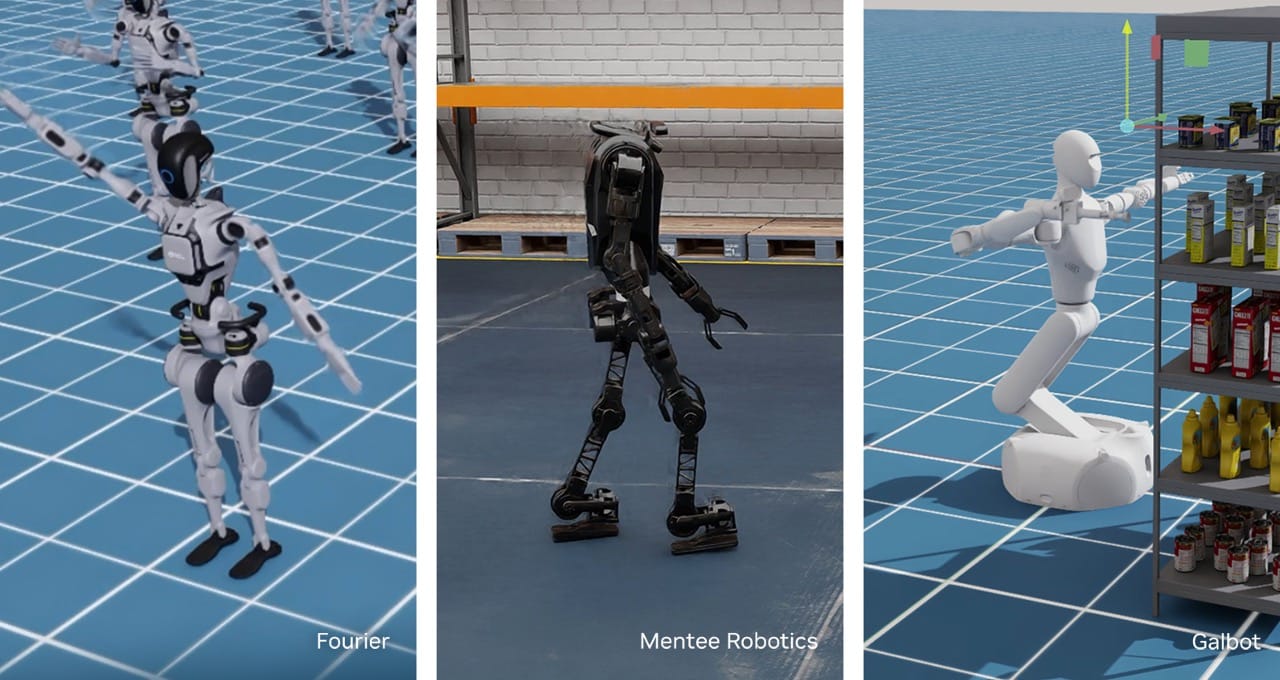
AI researcher Jim Fan has had a charmed career. He was OpenAI’s first intern before he did his PhD at Stanford with “godmother of AI,” Fei-Fei Li. He graduated into a research scientist position at Nvidia and now leads its Embodied AI “GEAR” group. The lab’s current work spans foundation models for humanoid robots to agents for virtual worlds. Jim describes a three-pronged data strategy for robotics, combining internet-scale data, simulation data and real world robot data. He believes that in the next few years it will be possible to create a “foundation agent” that can generalize across skills, embodiments and realities—both physical and virtual. He also supports Jensen Huang’s idea that “Everything that moves will eventually be autonomous.”
Runway Partners with Lionsgate — from runwayml.com via The Rundown AI Runway and Lionsgate are partnering to explore the use of AI in film production.
Lionsgate and Runway have entered into a first-of-its-kind partnership centered around the creation and training of a new AI model, customized on Lionsgate’s proprietary catalog. Fundamentally designed to help Lionsgate Studios, its filmmakers, directors and other creative talent augment their work, the model generates cinematic video that can be further iterated using Runway’s suite of controllable tools.
Per The Rundown:Lionsgate, the film company behind The Hunger Games, John Wick, and Saw, teamed up with AI video generation company Runway to create a custom AI model trained on Lionsgate’s film catalogue.
The details:
The partnership will develop an AI model specifically trained on Lionsgate’s proprietary content library, designed to generate cinematic video that filmmakers can further manipulate using Runway’s tools.
Lionsgate sees AI as a tool to augment and enhance its current operations, streamlining both pre-production and post-production processes.
Runway is considering ways to offer similar custom-trained models as templates for individual creators, expanding access to AI-powered filmmaking tools beyond major studios.
Why it matters: As many writers, actors, and filmmakers strike against ChatGPT, Lionsgate is diving head-first into the world of generative AI through its partnership with Runway. This is one of the first major collabs between an AI startup and a major Hollywood company — and its success or failure could set precedent for years to come.
Each prompt on ChatGPT flows through a server that runs thousands of calculations to determine the best words to use in a response.
In completing those calculations, these servers, typically housed in data centers, generate heat. Often, water systems are used to cool the equipment and keep it functioning. Water transports the heat generated in the data centers into cooling towers to help it escape the building, similar to how the human body uses sweat to keep cool, according to Shaolei Ren, an associate professor at UC Riverside.
Where electricity is cheaper, or water comparatively scarce, electricity is often used to cool these warehouses with large units resembling air-conditioners, he said. That means the amount of water andelectricity an individual query requires can depend on a data center’s location and vary widely.
AI, Humans and Work: 10 Thoughts.— from rishad.substack.com by Rishad Tobaccowala The Future Does Not Fit in the Containers of the Past. Edition 215.
10 thoughts about AI, Humans and Work in 10 minutes:
AI is still Under-hyped.
AI itself will be like electricity and is unlikely to be a differentiator for most firms.
AI is not alive but can be thought of as a new species.
Knowledge will be free and every knowledge workers job will change in 2025.
The key about AI is not to ask what AI will do to us but what AI can do for us.