Agentic AI and the New Era of Corporate Learning for 2026 — from hrmorning.com by Carol Warner

That gap creates compliance risk and wasted investment. It leaves HR leaders with a critical question: How do you measure and validate real learning when AI is doing the work for employees?

Designing Training That AI Can’t Fake
Employees often find static slide decks and multiple-choice quizzes tedious, while AI can breeze through them. If employees would rather let AI take training for them, it’s a red flag about the content itself.

One of the biggest risks with agentic AI is disengagement. When AI can complete a task for employees, their incentive to engage disappears unless they understand why the skill matters, Rashid explains. Personalization and context are critical. Training should clearly connect to what employees value most – career mobility, advancement, and staying relevant in a fast-changing market.

Nearly half of executives believe today’s skills will expire within two years, making continuous learning essential for job security and growth. To make training engaging, Rashid recommends:

  • Delivering content in formats employees already consume – short videos, mobile-first modules, interactive simulations, or micro-podcasts that fit naturally into workflows. For frontline workers, this might mean replacing traditional desktop training with mobile content that integrates into their workday.
  • Aligning learning with tangible outcomes, like career opportunities or new responsibilities.
  • Layering in recognition, such as digital badges, leaderboards, or team shout-outs, to reinforce motivation and progress

Microsoft 365 Copilot AI agents reach a new milestone — is teamwork about to change? — from windowscentral.comby Adam Hales
Microsoft expands Copilot with collaborative agents in Teams, SharePoint and more to boost productivity and reshape teamwork.

Microsoft is pitching a recent shift of AI agents in Microsoft Teams as more than just smarter assistance. Instead, these agents are built to behave like human teammates inside familiar apps such as Teams, SharePoint, and Viva Engage. They can set up meeting agendas, keep files in order, and even step in to guide community discussions when things drift off track.

Unlike tools such as ChatGPT or Claude, which mostly wait for prompts, Microsoft’s agents are designed to take initiative. They can chase up unfinished work, highlight items that still need decisions, and keep projects moving forward. By drawing on Microsoft Graph, they also bring in the right files, past decisions, and context to make their suggestions more useful.


Chris Dede’s comments on LinkedIn re: Aibrary

As an advisor to Aibrary, I am impressed with their educational philosophy, which is based both on theory and on empirical research findings. Aibrary is an innovative approach to self-directed learning that complements academic resources. Expanding our historic conceptions of books, libraries, and lifelong learning to new models enabled by emerging technologies is central to empowering all of us to shape our future.
.

Also see:
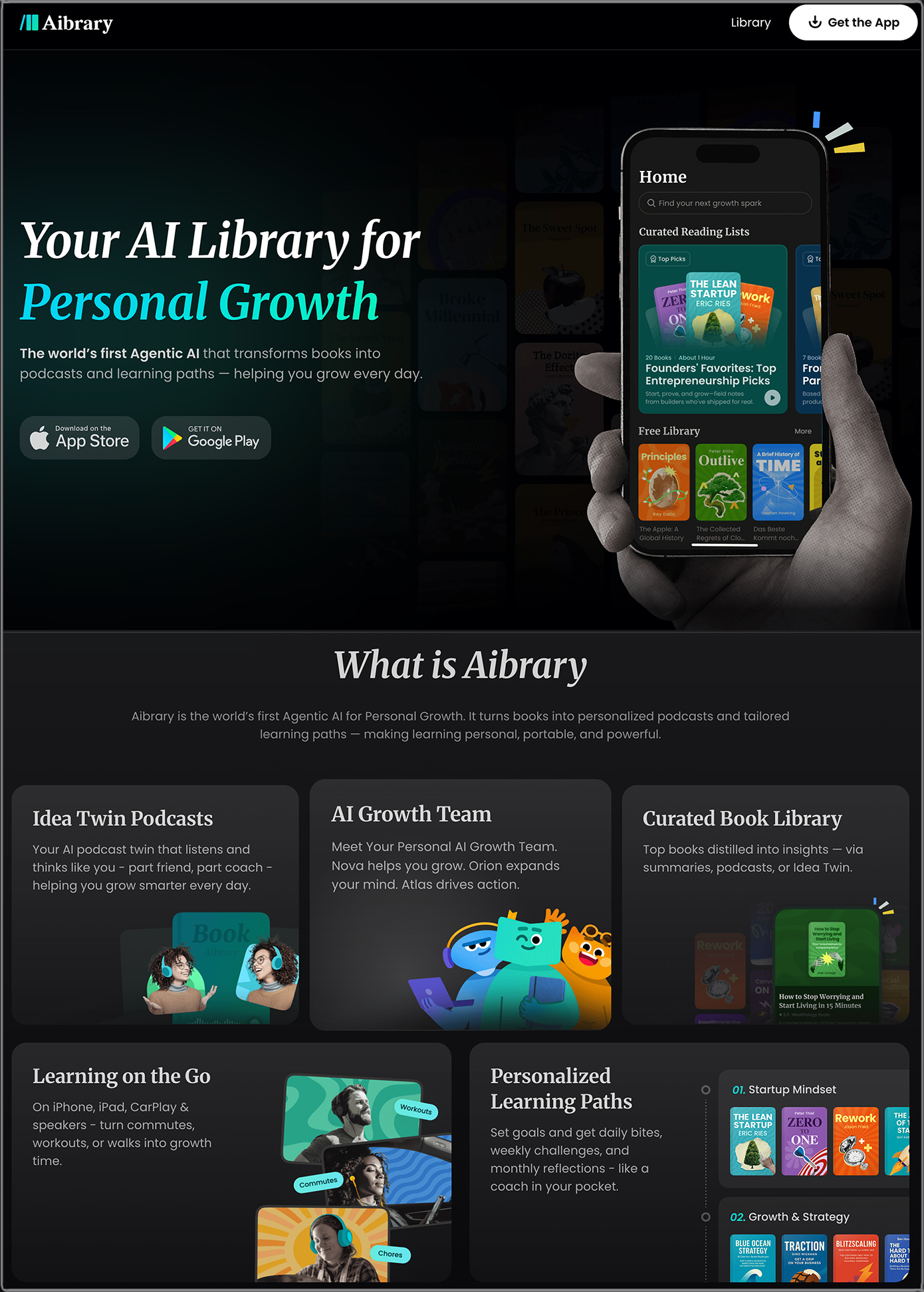
Aibrary.ai


Why AI literacy must come before policy — from timeshighereducation.com by Kathryn MacCallum and David Parsons
When developing rules and guidelines around the uses of artificial intelligence, the first question to ask is whether the university policymakers and staff responsible for implementing them truly understand how learners can meet the expectations they set

Literacy first, guidelines second, policy third
For students to respond appropriately to policies, they need to be given supportive guidelines that enact these policies. Further, to apply these guidelines, they need a level of AI literacy that gives them the knowledge, skills and understanding required to support responsible use of AI. Therefore, if we want AI to enhance education rather than undermine it, we must build literacy first, then create supportive guidelines. Good policy can then follow.


AI training becomes mandatory at more US law schools — from reuters.com by Karen Sloan and Sara Merken

Sept 22 (Reuters) – At orientation last month, 375 new Fordham Law students were handed two summaries of rapper Drake’s defamation lawsuit against his rival Kendrick Lamar’s record label — one written by a law professor, the other by ChatGPT.

The students guessed which was which, then dissected the artificial intelligence chatbot’s version for accuracy and nuance, finding that it included some irrelevant facts.

The exercise was part of the first-ever AI session for incoming students at the Manhattan law school, one of at least eight law schools now incorporating AI training for first-year students in orientation, legal research and writing courses, or through mandatory standalone classes.


Digital Accessibility in 2025: A Screen Reader User’s Honest Take — from blog.usablenet.com by Michael Taylor

In this post, part of the UsableNet 25th anniversary series, I’m taking a look at where things stand in 2025. I’ll discuss the areas that have improved—such as online shopping, banking, and social media—and the ones that still make it challenging to perform basic tasks, including travel, healthcare, and mobile apps. I hope that by sharing what works and what doesn’t, I can help paint a clearer picture of the digital world as it stands today.


Why EAA Compliance and Legal Trends Are Shaping Accessibility in 2025 — from blog.usablenet.com by Jason Taylor

On June 28, 2025, the European Accessibility Act (EAA) officially became enforceable across the European Union. This law requires digital products and services—including websites, mobile apps, e-commerce platforms, and software to meet the defined accessibility standards outlined in EN 301 549, which aligns with the WCAG 2.1 Level AA.

Companies that serve EU consumers must be able to demonstrate that accessibility is built into the design, development, testing, and maintenance of their digital products and services.

This milestone also arrives as UsableNet celebrates 25 years of accessibility leadership—a moment to reflect on how far we’ve come and what digital teams must do next.


This AI App Can Solve Your Math Homework, Steps Included — from link.wired.com by Will Knight

Right now, high schoolers and college students around the country are experimenting with free smartphone apps that help complete their math homework using generative AI. One of the most popular options on campus right now is the Gauth app, with millions of downloads. It’s owned by ByteDance, which is also TikTok’s parent company.

The Gauth app first launched in 2019 with a primary focus on mathematics, but soon expanded to other subjects as well, like chemistry and physics. It’s grown in relevance, and neared the top of smartphone download lists earlier this year for the education category. Students seem to love it. With hundreds of thousands of primarily positive reviews, Gauth has a favorable 4.8 star rating in the Apple App Store and Google Play Store.

All students have to do after downloading the app is point their smartphone at a homework problem, printed or handwritten, and then make sure any relevant information is inside of the image crop. Then Gauth’s AI model generates a step-by-step guide, often with the correct answer. 

From DSC:
I do hesitate to post this though, as I’ve seen numerous posting re: the dubious quality of AI as it relates to giving correct answers to math-related problems – or whether using AI-based tools help or hurt the learning process. The situation seems to be getting better, but as I understand it, we still have some progress to make in this area of mathematics.


Redefining Creativity in the Age of AI — from gettingsmart.com by David Ross

Key Points

  • Educational leaders must reconsider the definition of creativity, taking into account how generative AI tools can be used to produce novel and impactful creative work, similar to how film editors compile various elements into a cohesive, creative whole.
  • Generative AI democratizes innovation by allowing all students to become creators, expanding access to creative processes that were previously limited and fostering a broader inclusion of diverse talents and ideas in education.


AI-Powered Instructional Design at ASU — from drphilippahardman.substack.com by Dr. Philippa Hardman
How ASU’s Collaboration with OpenAI is Reshaping the Role of Instructional Designers

The developments and experiments at ASU provide a fascinating window into two things:

    1. How the world is reimagining learning in the age of AI;
    2. How the role of the instructional designer is changing in the age of AI.

In this week’s blog post, I’ll provide a summary of how faculty, staff and students at ASU are starting to reimagine education in the age of AI, and explore what this means for the instructions designers who work there.


PhysicsWallah’s ‘Alakh AI’ is Making Education Accessible to Millions in India — from analyticsindiamag.com by Siddharth Jindal

India’s ed-tech unicorn PhysicsWallah is using OpenAI’s GPT-4o to make education accessible to millions of students in India. Recently, the company launched a suite of AI products to ensure that students in Tier 2 & 3 cities can access high-quality education without depending solely on their enrolled institutions, as 85% of their enrollment comes from these areas.

Last year, AIM broke the news of PhysicsWallah introducing ‘Alakh AI’, its suite of generative AI tools, which was eventually launched at the end of December 2023. It quickly gained traction, amassing over 1.5 million users within two months of its release.


Top List: The Best Mobile Learning Content Development Companies (2023) — from elearningindustry.com by Christopher Pappas

Summary: 

Working remotely has brought a major shift to corporate training, making mobile learning more important than ever. Your top assets, and frankly your whole staff, will need to adjust to this new reality. To help you out, we decided to gather the best content providers for mobile learning in one place. Explore our top list and find the right partner to start your mobile learning project or even develop your own mobile app. Are you ready?


From DSC:
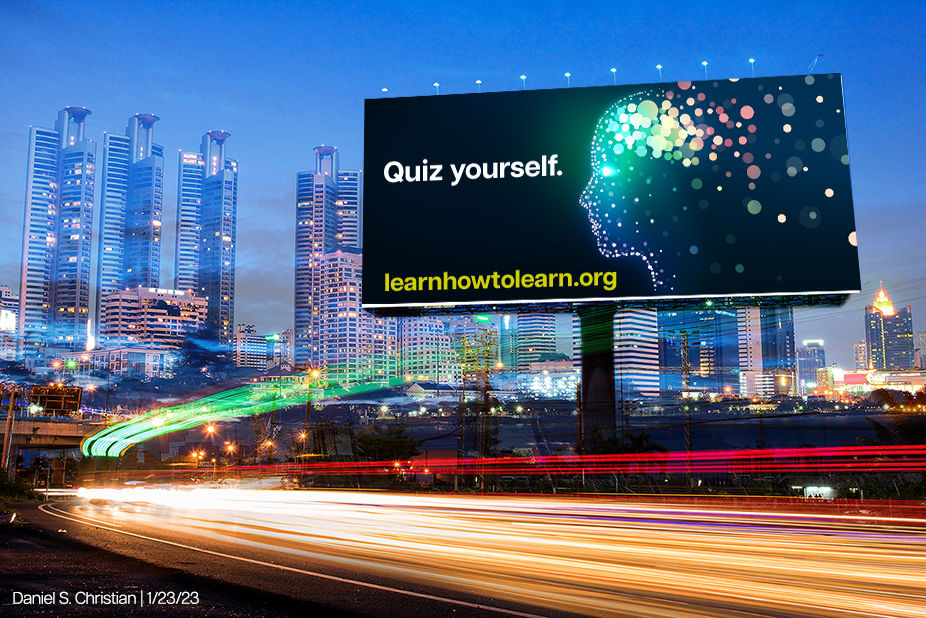
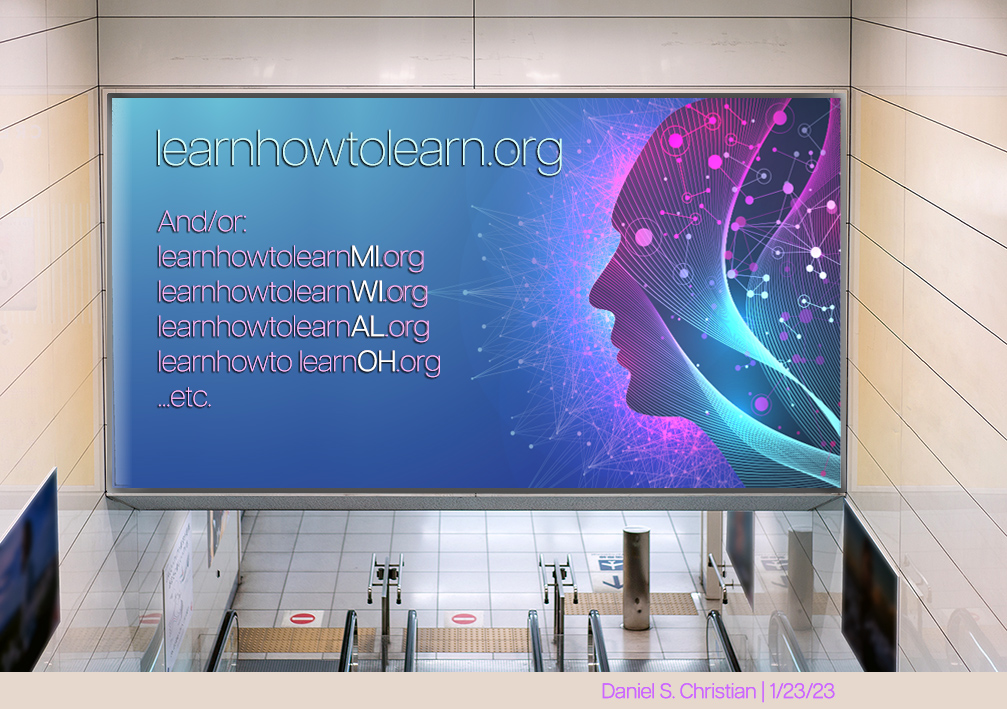
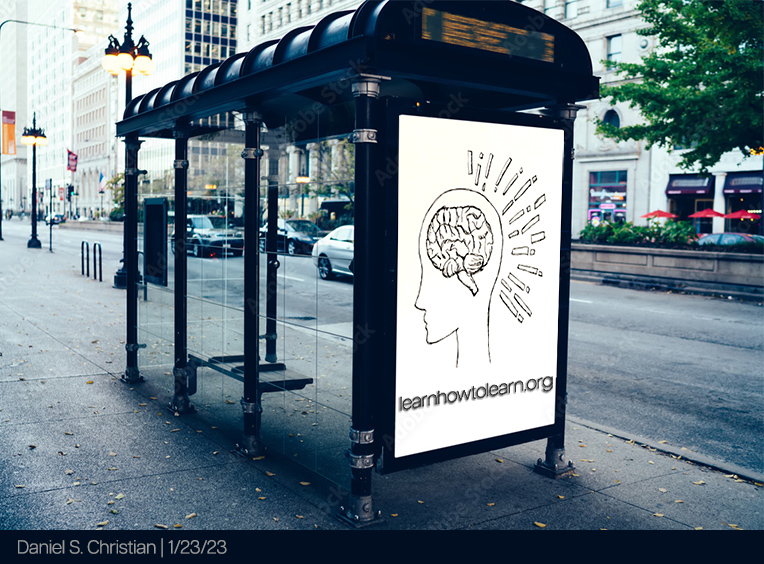
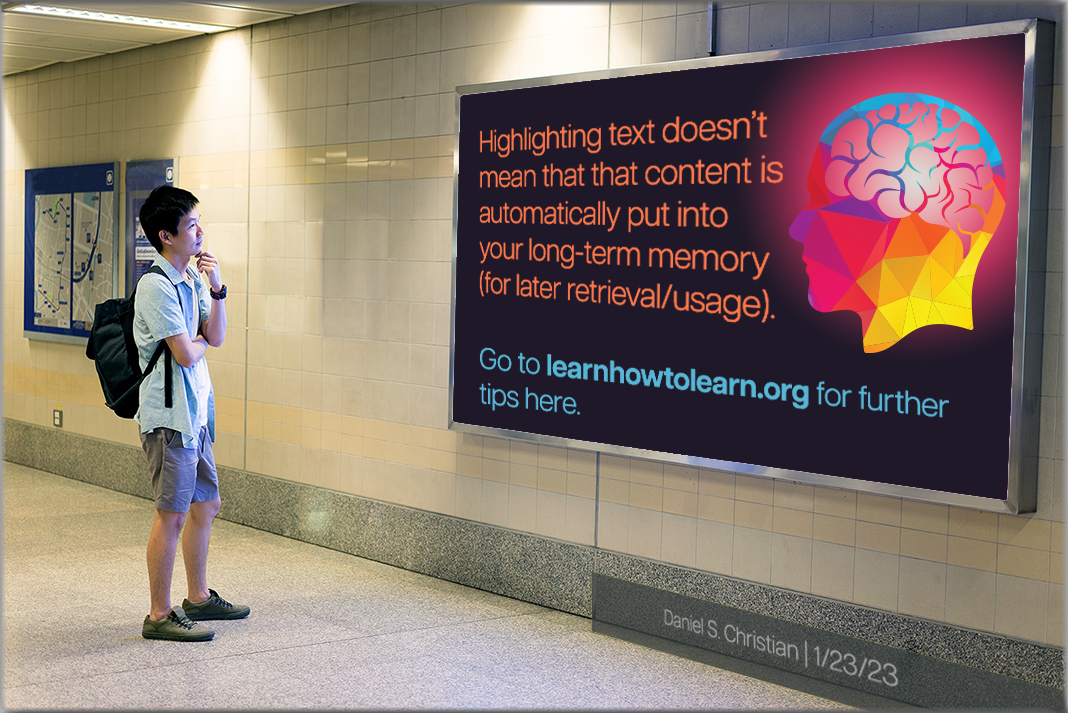
Let’s put together a nationwide campaign that would provide a website — or a series of websites if an agreement can’t be reached amongst the individual states — about learning how to learn. In business, there’s a “direct-to-consumer” approach. Well, we could provide a “direct-to-learner” approach — from cradle to grave. Seeing as how everyone is now required to be a lifelong learner, such a campaign would have enormous benefits to all of the United States. This campaign would be located in airports, subway stations, train stations, on billboards along major highways, in libraries, and in many more locations.

We could focus on things such as:

  • Quizzing yourself / retrieval practice
  • Spaced retrieval
  • Interleaving
  • Elaboration
  • Chunking
  • Cognitive load
  • Learning by doing (active learning)
  • Journaling
  • The growth mindset
  • Metacognition (thinking about one’s thinking)
  • Highlighting doesn’t equal learning
  • There is deeper learning in the struggle
  • …and more.

A learn how to learn campaign covering airports, billboards, subways, train stations, highways, and more


A learn how to learn campaign covering airports, billboards, subways, train stations, highways, and more


A learn how to learn campaign covering airports, billboards, subways, train stations, highways, and more


A learn how to learn campaign covering airports, billboards, subways, train stations, highways, and more


NOTE:
The URL I’m using above doesn’t exist, at least not at the time of this posting.
But I’m proposing that it should exist.


A group of institutions, organizations, and individuals could contribute to this. For example The Learning Scientists, Daniel Willingham, Donald Clark, James Lang, Derek Bruff, The Learning Agency Lab, Robert Talbert, Pooja Agarwal and Patrice Bain, Eva Keffenheim, Benedict Carey, Ken Bain, and many others.

Perhaps there could be:

  • discussion forums to provide for social interaction/learning
  • scheduled/upcoming webinars
  • how to apply the latest evidence-based research in the classroom
  • link(s) to learning-related platforms and/or resources
 

Some example components of a learning ecosystem [Christian]

A learning ecosystem is composed of people, tools, technologies, content, processes, culture, strategies, and any other resource that helps one learn. Learning ecosystems can be at an individual level as well as at an organizational level.

Some example components:

  • Subject Matter Experts (SMEs) such as faculty, staff, teachers, trainers, parents, coaches, directors, and others
  • Fellow employees
  • L&D/Training professionals
  • Managers
  • Instructional Designers
  • Librarians
  • Consultants
  • Types of learning
    • Active learning
    • Adult learning
    • PreK-12 education
    • Training/corporate learning
    • Vocational learning
    • Experiential learning
    • Competency-based learning
    • Self-directed learning (i.e., heutagogy)
    • Mobile learning
    • Online learning
    • Face-to-face-based learning
    • Hybrid/blended learning
    • Hyflex-based learning
    • Game-based learning
    • XR-based learning (AR, MR, and VR)
    • Informal learning
    • Formal learning
    • Lifelong learning
    • Microlearning
    • Personalized/customized learning
    • Play-based learning
  • Cloud-based learning apps
  • Coaching & mentoring
  • Peer feedback
  • Job aids/performance tools and other on-demand content
  • Websites
  • Conferences
  • Professional development
  • Professional organizations
  • Social networking
  • Social media – Twitter, LinkedIn, Facebook/Meta, other
  • Communities of practice
  • Artificial Intelligence (AI) — including ChatGPT, learning agents, learner profiles, 
  • LMS/CMS/Learning Experience Platforms
  • Tutorials
  • Videos — including on YouTube, Vimeo, other
  • Job-aids
  • E-learning-based resources
  • Books, digital textbooks, journals, and manuals
  • Enterprise social networks/tools
  • RSS feeds and blogging
  • Podcasts/vodcasts
  • Videoconferencing/audio-conferencing/virtual meetings
  • Capturing and sharing content
  • Tagging/rating/curating content
  • Decision support tools
  • Getting feedback
  • Webinars
  • In-person workshops
  • Discussion boards/forums
  • Chat/IM
  • VOIP
  • Online-based resources (periodicals, journals, magazines, newspapers, and others)
  • Learning spaces
  • Learning hubs
  • Learning preferences
  • Learning theories
  • Microschools
  • MOOCs
  • Open courseware
  • Portals
  • Wikis
  • Wikipedia
  • Slideshare
  • TED talks
  • …and many more components.

These people, tools, technologies, etc. are constantly morphing — as well as coming and going in and out of our lives.


Augmented Books Are On The Way According To Researchers — from vrscout.com by Kyle Melnick

Excerpt:

Imagine this. You’re several chapters into a captivating novel when a character from an earlier book makes a surprise appearance. You swipe your finger across their name on the page at which point their entire backstory is displayed on a nearby smartphone, allowing you to refresh your memory before moving forward.

This may sound like science fiction, but researchers at the University of Surrey in England say that the technology described above is already here in the form of “a-books” (augmented reality books).

The potential use-cases for such a technology are virtually endless. As previously mentioned, a-books could be used to deliver character details and plot points for a variety of fictional works. The same technology could also be applied to textbooks, allowing students to display helpful information on their smartphones, tablets, and smart TVs with the swipe of a finger.

From DSC:

  • How might instructional designers use this capability?
  • How about those in theatre/drama?
  • Educational gaming?
  • Digital storytelling?
  • Interaction design?
  • Interface design?
  • User experience design?

Also see:


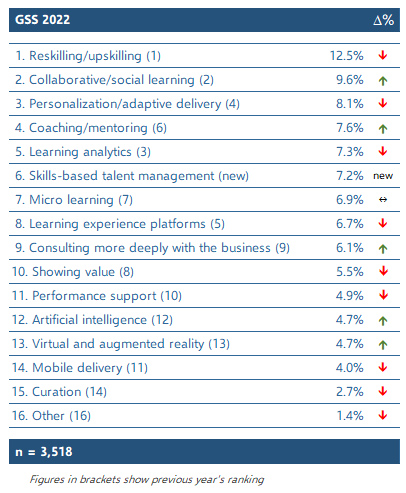
The 2022 L&D Global Sentiment Survey — from donaldtaylor.co.uk by Donald Taylor

Excerpt:

This year’s L&D Global Sentiment Survey, the ninth, shows L&D at a turning point, as the result of two forces. One is the demands of organisations, as they emerge from the pandemic, for more training delivery, very often with unchanged or reduced resources for L&D. The other is the need to deal with the emergency measures put in place in 2020 to deal with the immediate impact of COVID-19.

This sense of practitioners being under pressure is amply illustrated by responses to the free text question ‘What is your biggest L&D challenge in 2022?’ 40% of respondents answered, with the answers painting a picture of practitioners being asked to do more, in difficult circumstances, to support the learning of overworked employees and uninterested employers.

It is tempting to see this as a return to business-as-usual for L&D. Hasn‘t it always been the case that the department needed to fight for the attention of both executives and employees? Behind this undeniable reality, however, there are definite signs of longer-term trends emerging.


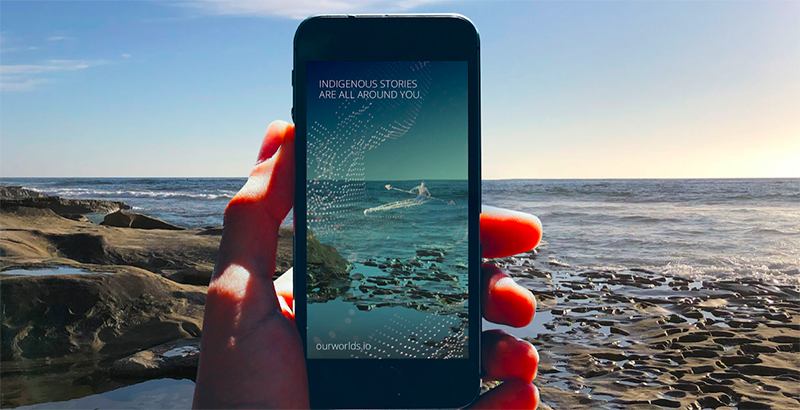
SXSW EDU Launch Winner Our Worlds Bringing Native American Culture to Life Through Mobile-Based Immersive Reality — from the74million.org by Tim Newcomb

Excerpt:

Take a stroll along the La Jolla Shores Beach in San Diego, and you might find sand between your toes. But users of the new Our Worlds app, winner of the 2022 SXSW EDU Launch Competition, might also find much more. Through augmented reality, they can look at that same stretch of beach and see handmade tule boats from the local Kumeyaay tribe.

Our Worlds launched to highlight Native American history via modern-day technology, putting what founder and CEO Kilma Lattin calls “code to culture” and pushing Native American civilization forward. Lattin says Our Worlds offers a full suite of technology — virtual reality, augmented reality, artificial intelligence — to capture all the components that make a culture.


Apple’s first AR/VR headset inches closer to launch — from protocol.com by Nat Rubio-Licht
The company reportedly showed off the device to board members as it makes progress on the headset’s operating system.

Camp K12 Launches Hatch Kids, a Metaverse & AR/VR Creation Platform for Kids — from edtechreview.in by Stephen Soulunii

….


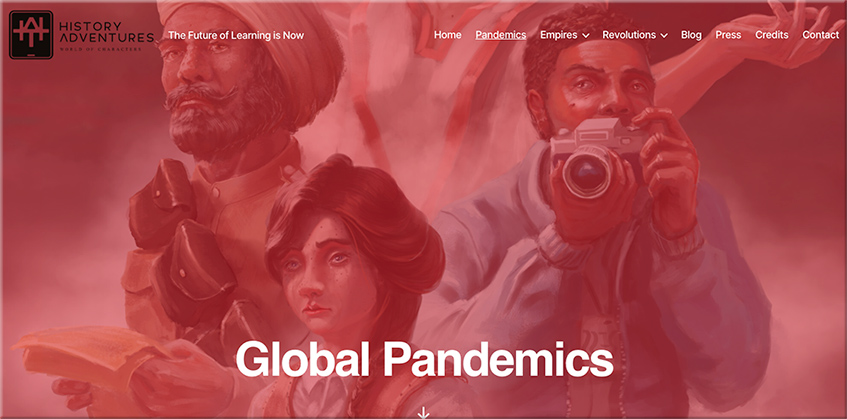
Global Pandemics is a cutting-edge, browser-based, digital learning experience—designed to enhance student understanding of the role of pandemics in world history.

Global Pandemics — from historyadventures.co with thanks to Andrea Boros for the resource

Excerpts:

Global Pandemics is “a cutting-edge, browser-based, digital learning experience—designed to enhance student understanding of the role of pandemics in world history. One year in the making, and involving a talented, interdisciplinary team from around the world—the new product features cutting-edge digital learning design, web animation, interaction design, and digital storytelling.”

This browser-based digital learning experience introduces multiple novel technologies, including:

  • 3D Motion Design to Recreate History
  • Advanced Web Animation to Simulate Pathogens
  • Immersive 360 Panoramas of Historical Locations
  • Animated Historical Timeline & Maps
  • Choice-based Narrative Design
  • Interactive Original Historical Documents
  • Media-Rich Adaptive Assessments

Also see:


Resource via @ernperez
at this article/page.

From DSC:

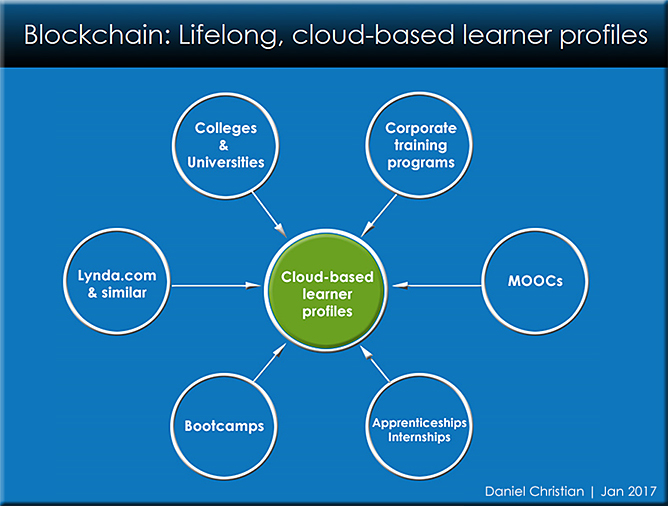
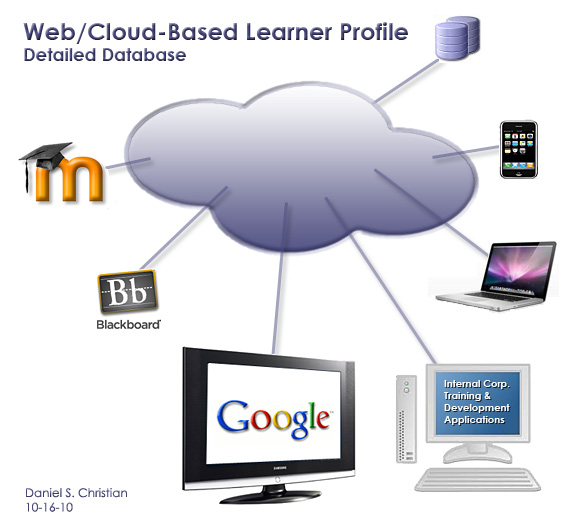
Cloud-based learner profiles are a likely element of our future learning ecosystems


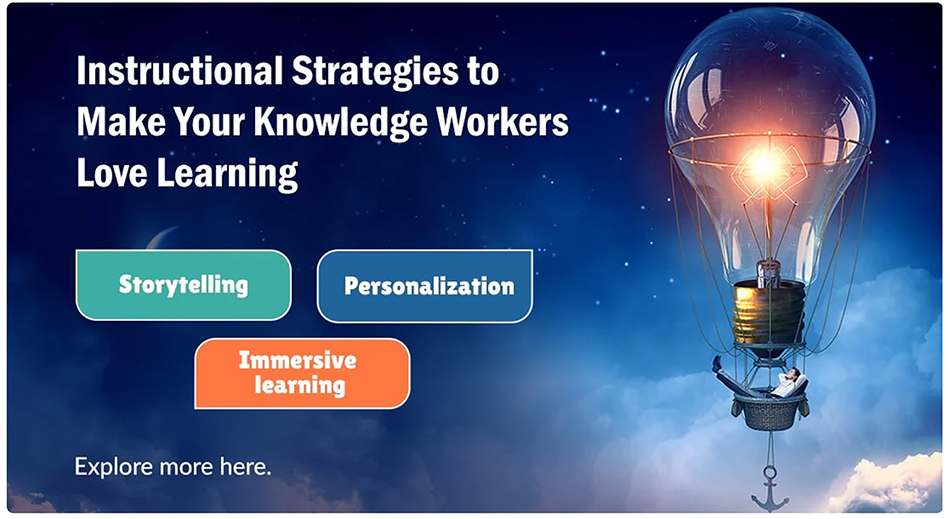
Make your knowledge workers love learning through storytelling, personalization, and immersive learning

Instructional strategies to make your knowledge workers love learning — from blog.commlabindia.com

Excerpt:

As a training manager, you need to step up your game to cater to the corporate training needs of these thinkers. Functional and creative instructional strategies should be used to engage learners and offer sticky learning, in the classroom and online. The strategies need to involve learners emotionally, offer an experiential set up, and appeal to their creative side.


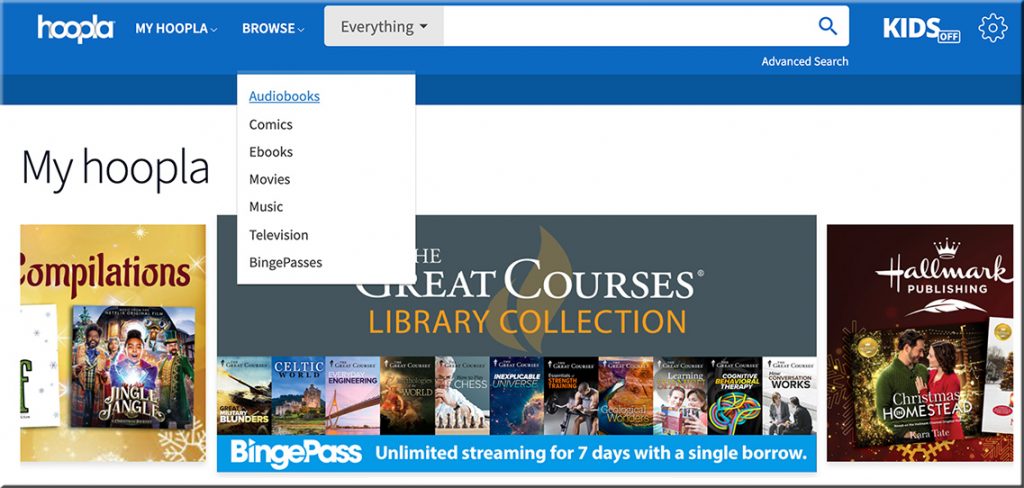
hoopla digital streaming service -- borrow books, music, movies, and more. Very cool service.

hoopla digital is a digital streaming service for library users to access eBooks, eAudiobooks, music, movies, and TV shows using portable devices like smartphones and tablets.

From DSC:
I downloaded this app yesterday and borrowed a classical Christmas album on the spot. Our local library gives us 10 items per month:

  • Books are available for 21 days
  • Videos are available for 72 hours
  • Music titles are available for 7 days

NOTE: hoopla is available on desktops, phones, tablets, Alexa devices, Rokus, Apple TVs, Fire TVs, and Android TVs.

 
© 2025 | Daniel Christian