


How Constructivism Learning Theory Shapes Modern Instructional Design And L&D Strategy — from elearningindustry.com by Christopher Pappas
.
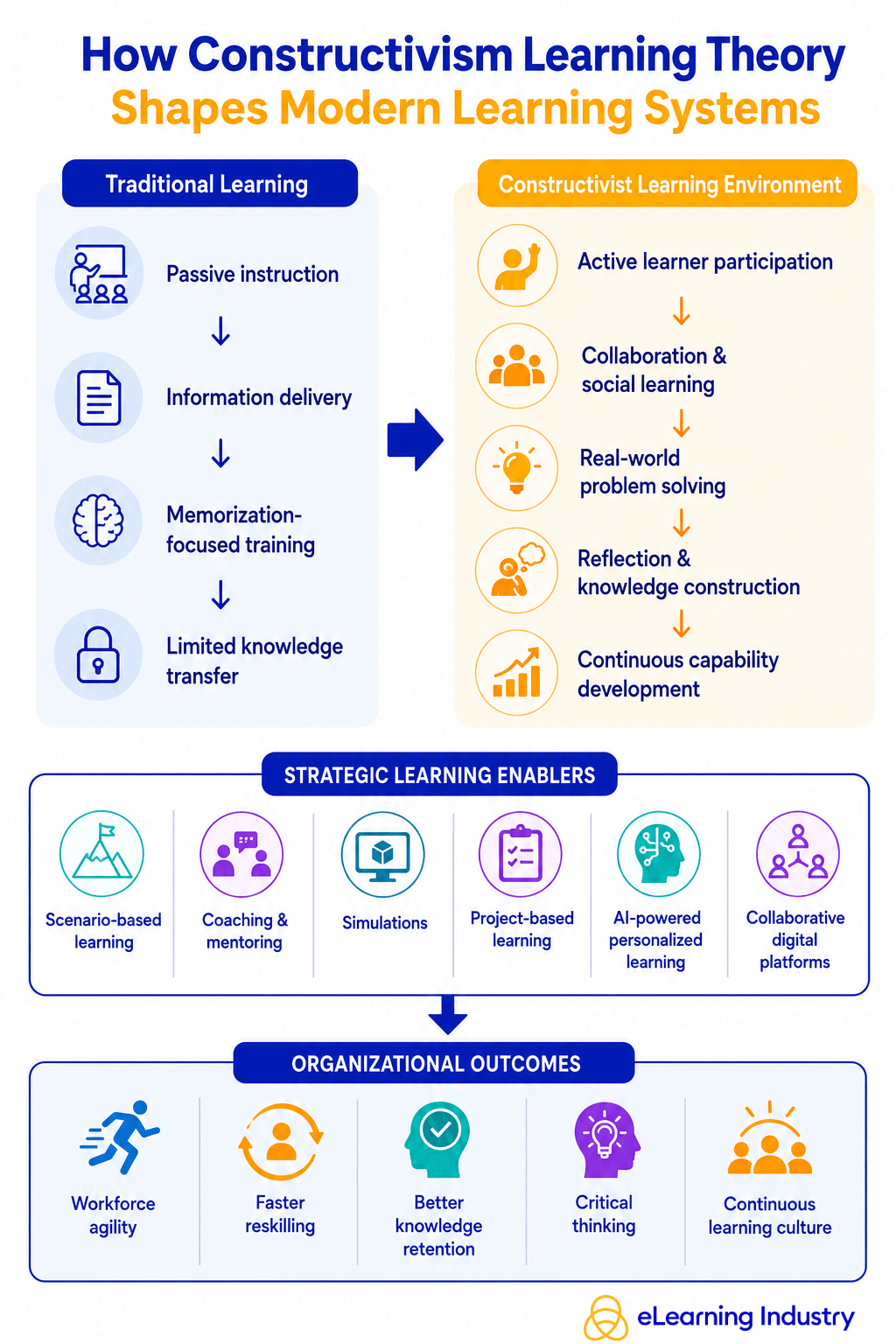
Also see:
- Microlearning Trends And Strategies In 2026 — from elearningindustry.com by Christopher Pappas
From DSC:
Could this be a part of our future learning ecosystems? Education as a personalized content feed.
Coursera wants users to learn through shorter, faster content — from digitaltrends.com by Moinak Pal
Coursera wants online learning to feel more like TikTok
.

Online learning platform Coursera is taking a page straight out of TikTok’s playbook. The company has launched a new AI-powered feed designed to serve short-form educational content in a scrollable, personalized format, signaling a major shift in how digital learning platforms may try to keep users engaged.
The feature introduces bite-sized video lessons, clips, and explainers curated through artificial intelligence based on a user’s interests, learning habits, career goals, and previous course activity. Instead of committing to hour-long lectures or full certification programs upfront, users can now discover short educational snippets designed to make learning feel more casual, accessible, and addictive.
Users scroll through a feed of short educational videos and AI-curated learning moments covering topics ranging from coding and business to AI, productivity, data science, and personal development.
Pinpoint, Explained — from wondertools.substack.com by Jeremy Caplan
A guide to Google’s free tool, now open to all
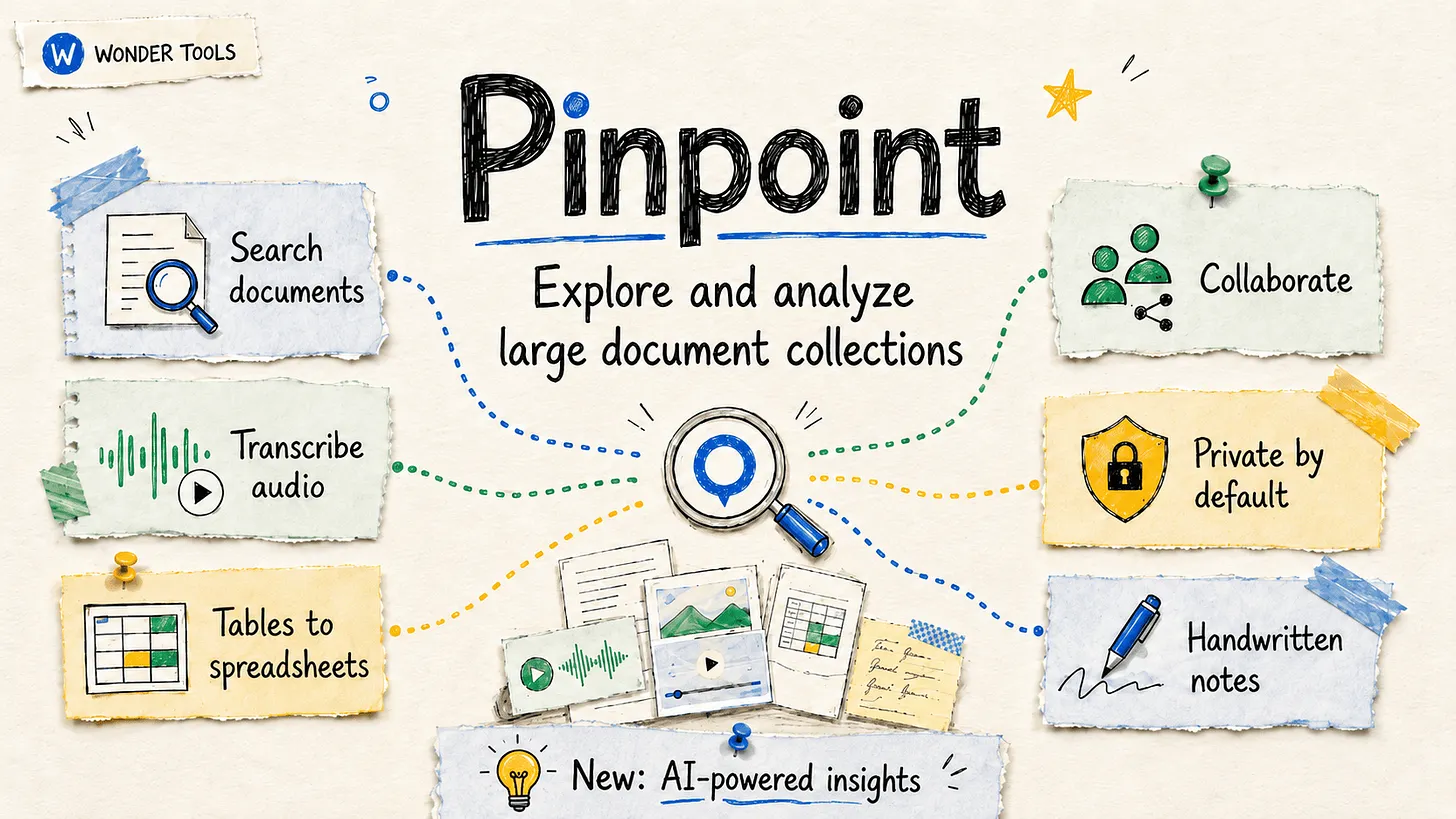
.Jeremy prompted ChatGPT to generate illustrations in his post.
.
Learn about Pinpoint— from support.google.com
Pinpoint is an AI-powered research platform designed to help journalists and academics analyze large collections of documents. With Pinpoint, you can:
- Analyze massive collections: Easily search, filter, transcribe and organize thousands of documents, including PDFs, images, and audio files.
- Leverage generative AI: Use Gemini’s capabilities to answer research questions together with supporting evidence found in your documents.
- Foster collaborative research: share your work with colleagues and tackle large scale projects as a team. You can also publicly share – supporting community-driven research.
For assistance with Pinpoint, please consult our Community Forum or you can contact our support team.
4 Strategies For Teaching With AI Effectively — from techlearning.com by Erik Ofgang
Health sciences professor Humberto López Castillo urges students to use AI to help with science research, but never to lose sight of the human element.
Castillo, a trained pediatrician and professor in the Department of Health Sciences, has also seen students use AI in creative ways to promote public health understanding, and as a research tool. For one project, Castillo asks students to explain health concepts from class to non-experts, and since he started encouraging students to use AI, he’s seen the projects get better. Students have created health-themed board games and Hamilton-style rap songs. Others have designed AI to aid in health research in ways that wouldn’t be possible without the technology.
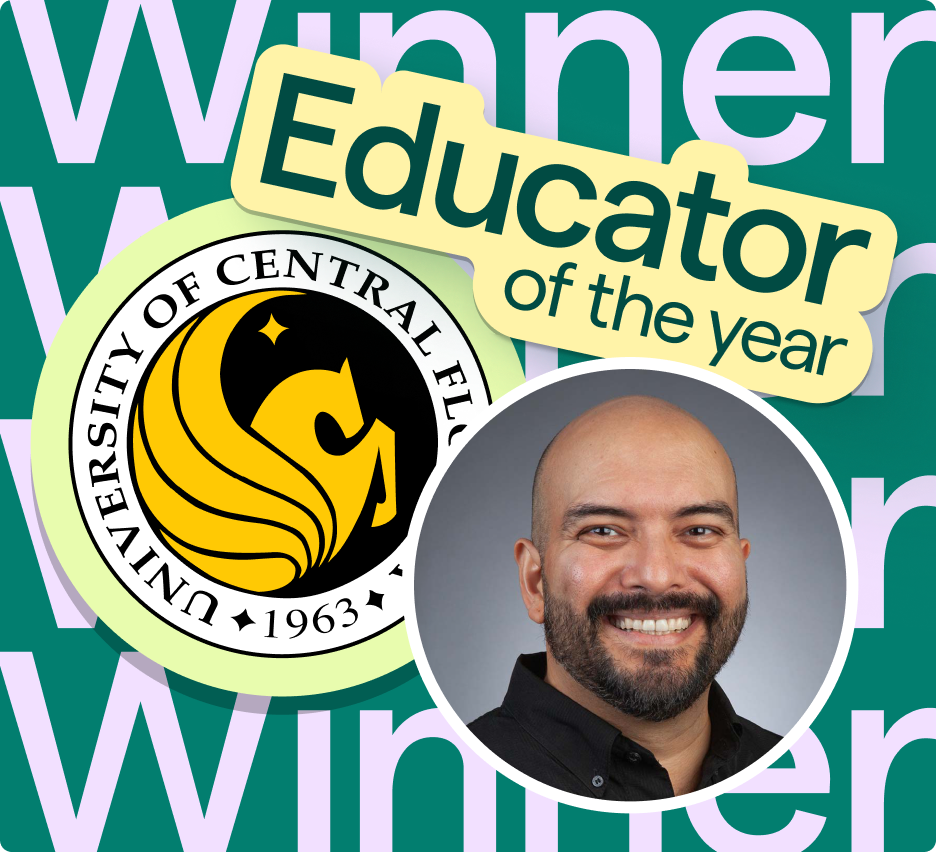
This compassionate and student-centered approach to AI use is part of why Castillo was named Superhuman (formerly Grammarly’s) 2026 Educator of the Year.
.
 .
.
“You are the one who’s responsible for that writing,” Castillo tells his students. “Your name is the only name that’s going to be among the published authors, so you are the one who needs to verify those sources.”
He adds that rather than being a drawback, allowing students to make these types of mistakes with AI use in the college setting has value.
“It is a teaching opportunity,” Castillo says. “This is the moment to make those mistakes.”
I Was a University AI Czar. I’m Not Equipped to Teach in the Age of AI. — from jgellers.substack.com by Josh Gellers, PhD
The reason that I claim I am not well-suited to thrive as an instructor in the age of AI is because both AI Enthusiasts and AI Resisters put a lot of thought and energy into completely redesigning their classes in response to AI. This is the one takeaway that I don’t think the Exhausted Majority has fully accepted yet—to excel as a teacher in this AI era, you need to totally revise how you teach and how you assess what students learn in your classes.
I can say this much—whatever solution our industry comes up with, it’s likely to emerge from teaching and learning centers. Contrary to what Paul Schofield wrote in the Chronicle of Higher Education, pedagogy experts are the best hope we have to equip today’s faculty with the tools required to succeed in this uncertain educational environment. As I always tell my students, “I was trained for 7 years to become a researcher and 2 days to become a teacher.” The idea that only disciplinary experts know how to teach and have nothing to learn from so-called “nonscholars” is so laughable that one has to wonder whether an AI agent jokingly wrote that sad opinion piece to troll the whole academe.
Also from Dr. Gellers, see:
The Worst AI Policy in Higher Ed
How Berkeley Law Boalt-ed From Expertise in Favor of Abstinence
Last week, one of the top law schools in the United States, the University of California, Berkeley School of Law, released its final policy on artificial intelligence, effective summer 2026. In the span of a breezy 1.5 pages, the school outlined the challenge AI poses to legal education and how it plans to address this problem. Despite these intentions, this AI policy is, in my estimation, the worst AI policy in higher education I have seen.
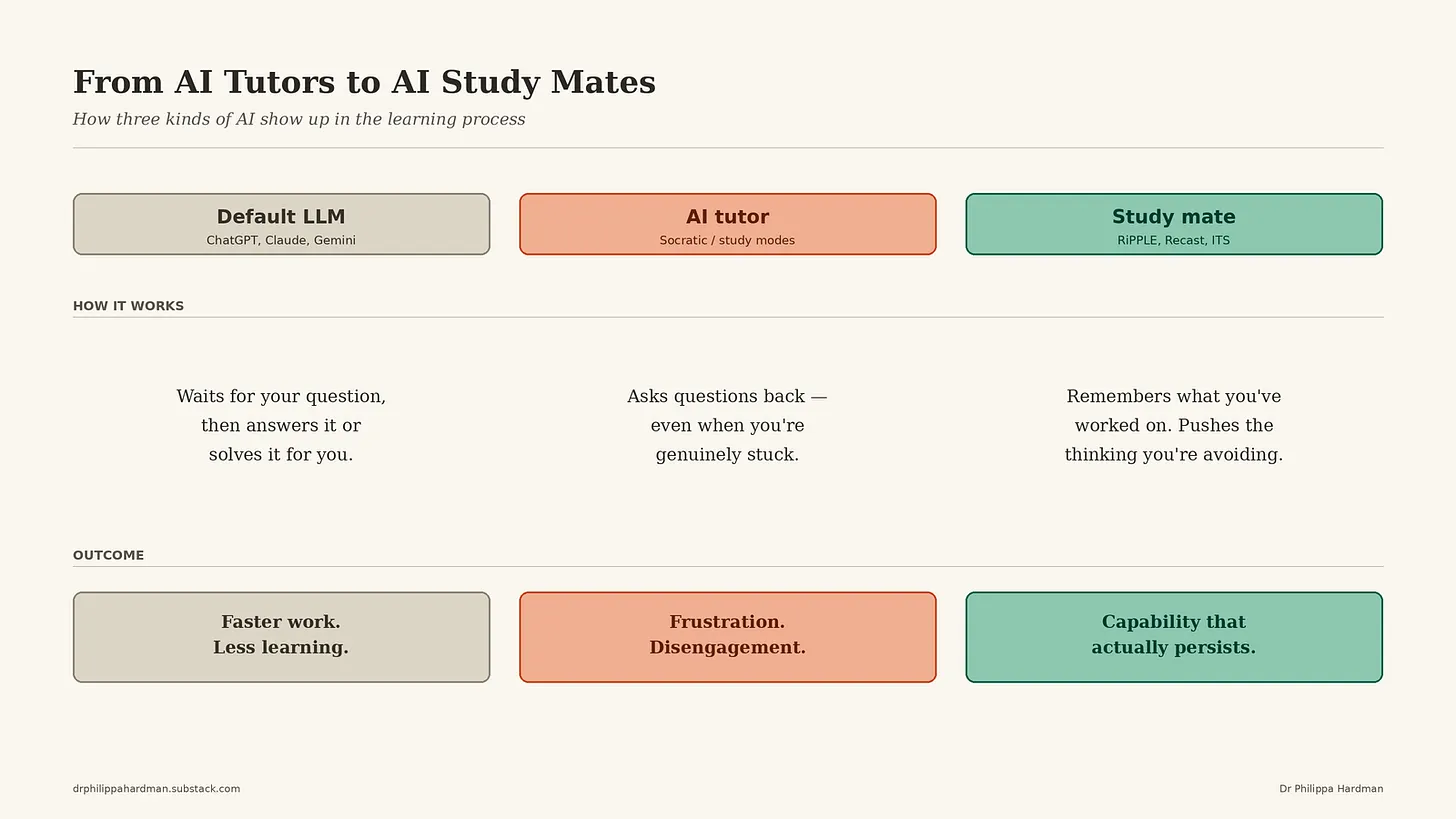
From AI Tutors to AI Study Mates— from drphilippahardman.substack.com by Dr Philippa Hardman
New research reveals how AI can enable real learning — not just productivity gains
.
The point isn’t that AI is inherently bad for learning — it’s that the meta-analyses showing that LLMs improve assignment and performance scores are measuring the wrong thing. They’re measuring performance with the AI present, not learning that persists once it’s gone.
.
From DSC:
Notice that when an AI-based learning system can remember what you’ve worked on and how you are doing — where you are struggling or doing well — it can have a positive impact on your longer-term learning. That, to me, is where long-term based learner profiles come in.
Later in the article, Dr. Hardman points out that “if we want to deliver AI tooling which supports substantive learning, we need to intentionally create a new category of AI tool for ‘learning at work’ which prioritises learning and development over productivity.” While I agree with that, I do wonder if businesses will care, so long as the work gets done and gets done well. But this calls into mind the word “experience” — something that traditionally has been hard fought to get in the corporate world. But the corporate realm often doesn’t like to pay for experience (beyond key AI-based jobs) when they perceive it’s getting too expensive. Ask all those 50 and over who had or have a target on their backs.
.
Putting college on the fast track — from hechingerreport.org by Jon Marcus
As students grow impatient, colleges try three-year bachelor’s degrees
Some colleges and the accreditors and states that oversee them are adding and approving three-year bachelor’s degrees that require fewer credits than the traditional four-year kind.
Institutions facing enrollment declines hope the new three-year degrees will attract students unwilling to spend the usual amount of time and money that it takes to graduate. States need those graduates to fill jobs.
Nearly 60 universities and colleges are planning, considering or have already launched reduced-credit, three-year bachelor’s degrees in some disciplines. They’re calling them “applied” or “career-focused” bachelor’s degrees.
While earning bachelor’s degrees with fewer credits may appeal to some students, the idea is so new that there’s a key unanswered question: whether employers, graduate schools and licensing agencies will accept them.
From DSC:
Given the often high price of obtaining a degree these days…whether it’s a 4-year program or a 3-year program, the key is whether a student can get a good job coming out of that program. I think the required time doesn’t help as much as making the necessary changes to offer more responsive curricula, relevant programs, and real-world learning experiences (including apprenticeships and internships). I appreciate the experiment to lower the overall costs, but like so many other “innovations,” it’s playing at the fringes. It’s really the same old, same old — just on a shorter time frame.
At current prices, families are FORCED to consider employment prospects. They are demanding a ROI, because they have to.
I was at a meeting earlier this year with other parents and family members who were interested in a particular program at a Michigan-based university. One set of parents really wanted to know if their student would be getting a good job coming out of the program. They didn’t want to take a second mortgage out if the investment wasn’t going to pay off.
Also see:
LinkedIn Grad’s Guide 2026: Starting your career in the AI era — from linkedin.com by Gianna Prudente
To help you head off in the right direction, we’ve identified where those starting their careers are finding opportunity, based on data from millions of LinkedIn member profiles.
While all of this is happening, colleges are still catching up. Many students are graduating without having spent much time learning how AI actually fits into day-to-day work — even as employers seek out those exact skills.
“Colleges are moving into an era of, we’ll let the faculty decide, which leads to a very uneven experience for students because some faculty are really into AI and other faculty are not,” says Jeff Selingo, a higher education strategist. “Employers are the same; they don’t really know how to act around early careers.”
Taken together, new grads are entering a uniquely challenging environment: fewer traditional entry points, slower turnover and a workplace that’s evolving faster than the systems preparing people for it.
.

I knew my writing students were using AI. Their confessions led to a powerful teaching moment — from theguardian.com by Micah Nathan
The problem wasn’t just the perfectly polished, yet mediocre prose. It’s what’s lost when we surrender the struggle to translate thought into words
For a few moments, all was quiet except the classroom’s ticking radiators. Then, a teary-eyed confession: one of the ostensible authors said she only used AI because she was scared of looking stupid, of being criticized for bad writing. She said she loved writing stories and hated having used AI. But she couldn’t stop herself, recounting a sequence similar to an addict’s descent: at first she fed her story into AI for a grammar check, it suggested line edits and she accepted, then it asked if she wanted structural edits, then it offered to rewrite the entire piece.
The other would-be author admitted he had never written a short story before and he had an idea but didn’t know where to start. I asked him why he didn’t reach out to me for help. He shrugged.
One of the other students raised her hand, saying she didn’t understand why it was bad for AI to write stories as long as the stories are based on their ideas. More students spoke: one wanted to know how using AI was any different from using a human editor. Another wanted me to answer why, at a university that launched one of the world’s first AI research programs in 1959, were we even having this debate? Isn’t AI meant to make everyone’s life easier? Less stressful? Isn’t the point of AI to free humans from the tedium of rote tasks?
The conversation that followed their confessions was one of the most productive teaching moments of my eight years at MIT. Writing, I told them, isn’t supposed to be easy, and of course it can be tedious but that doesn’t make it rote. Writing isn’t just the production of sentences – it’s the training of endurance by way of sustained attention. It’s a way of learning what one thinks by attempting to say it.
This $10K AI School Promises to Future-Proof Your Career — from builtin.com by Matthew Urwin
Khan Academy, TED and ETS are starting a new program to equip students and professionals with the skills to thrive in an increasingly AI-driven economy. Here’s what you need to know.
Summary: The Khan TED Institute is a higher-education program that will teach students and workers how to use AI through interactive learning. The program’s AI-centric curriculum is an unproven approach, though, casting doubt on whether it will actually improve learning outcomes and career prospects.
Want Students to Build a Healthier Relationship With Technology? Start With The Arts — from techlearning.com by Adrianna Marshall
Arts classrooms demonstrate what technology integration at its best can look like
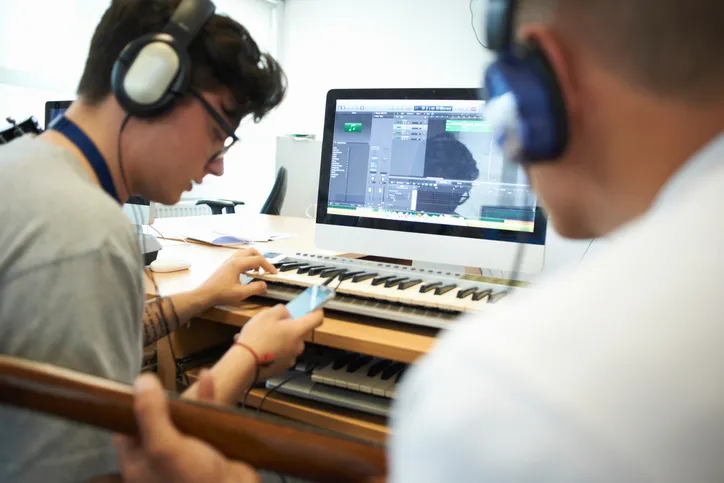
But at a moment defined by rapid AI adoption and ongoing debates about screen time, the argument for protecting and investing in arts education needs to take on a new tone. The arts continue to be one of the most effective places in school for students to build healthier, more intentional relationships with technology.
In short, in the age of AI, we need the arts more than ever.
…
Digital composition software, notation tools, and recording platforms allow students to experiment, revise, and refine their ideas in ways that would have been far more time-consuming a decade ago. Students can layer tracks, hear immediate playback, annotate their own scores, and collaborate across devices. The same is true in other contexts besides music; in visual arts, for instance, a variety of digital drawing and painting platforms enable students to practice with new mediums, styles, and techniques without having to worry about supplies or messes. But in either case, the core intellectual work of looking and listening critically, understanding structure, and making aesthetic choices remains entirely human and part of the learning.
From DSC:
I agree. At one of my previous positions, I spent 10 years supervising a digital studio — helping professors and students use a variety of applications to create things. The applications were from Adobe, Apple, and a variety of smaller vendors. The deliverables could be graphics, edited soundtracks, music, videos, flyers, posters, collages, edited photographs, presentations, websites, and more. I longed for people to discover the power of multimedia to communicate their messages, tell stories, stir emotion, powerfully engage themselves (and others), and unleash their creativity.
There were several obstacles to our digital studio being more impactful at that institution. It was under the IT department, not the academic side of the house. It was in the basement of the library, where few students and faculty traveled. During those years, it was highly uncommon for faculty members to require multimedia-based assignments — so many students had to WANT to develop these skills on their own time. The majority of students didn’t see the value in developing the types of digital skills that we were trying to build…or they didn’t have the time.
Also relevant/see:
- Want to boost early literacy skills? Try singing — from hechingerreport.org by Jackie Mader
Experts say music can help prepare children for reading success.
6 Reasons Universities Are Building Media Labs Now — from edtechmagazine.com by Brad Grimes
Digital production centers help institutions close the gap between academic training and professional practice.
Higher education is undergoing a significant transformation in how it prepares the next generation of media professionals. Across the country, universities are investing in state-of-the-art media labs — facilities built not around traditional classroom instruction, but around the tools, workflows and collaborative environments that define today’s professional production landscape. These spaces represent a fundamental rethinking of what it means to train students for careers in film, animation, gaming and digital storytelling.