Which trends are on your radar? Fantastic resource for #HigherEducation about the changing ecology: Higher Learning Commission’s Annual Trends Report. https://t.co/Lzgph6u3lP
— Melanie Booth, Ed.D. (@boothmelanie) March 25, 2023
Which trends are on your radar? Fantastic resource for #HigherEducation about the changing ecology: Higher Learning Commission’s Annual Trends Report. https://t.co/Lzgph6u3lP
— Melanie Booth, Ed.D. (@boothmelanie) March 25, 2023
Designing Virtual Edtech Faculty Development Workshops That Stick: 10 Guiding Principles — from er.educause.edu by Tolulope (Tolu) Noah
These ten principles offer guidance on ways to design and facilitate effective and engaging virtual workshops that leave faculty feeling better equipped to implement new edtech tools.
Excerpt:
I share here ten guiding principles that have shaped my design and facilitation of virtual synchronous edtech workshops. These guiding principles are based on lessons learned in both my previous role as a professional learning specialist at a major technology company and my current role as a faculty developer at a university. In the spirit of James M. Lang’s book Small Teaching, my hope is that the principles shared here may prompt reflection on the small yet impactful moves academic technology specialists, instructional designers, and educational developers can make to create virtual learning experiences whereby faculty leave feeling better equipped to implement the edtech tools they have learned.
Somewhat relevant/see:
Evidence-Based Learning Design 101 — by Dr. Philippa Hardman
A practical guide on how to bake the science of learning into the art of course design
Excerpt:
As I reflect on the experience and what I’ve learned so far, I thought I’d share a response to the question I probably get asked most: what process do you use to go from an idea to a designed learning experience?
So, let’s do a rapid review of the four step process I and my bootcamp alumni use – aka the DOMS™? process – to go from zero to a designed learning experience.
Introducing: ChatGPT Edu-Mega-Prompts — from drphilippahardman.substack.com by Dr. Philippa Hardman; with thanks to Ray Schroeder out on LinkedIn for this resource
How to combine the power of AI + learning science to improve your efficiency & effectiveness as an educator
From DSC:
Before relaying some excerpts, I want to say that I get the gist of what Dr. Hardman is saying re: quizzes. But I’m surprised to hear she had so many pedagogical concerns with quizzes. I, too, would like to see quizzes used as an instrument of learning and to practice recall — and not just for assessment. But I would give quizzes a higher thumbs up than what she did. I think she was also trying to say that quizzes don’t always identify misconceptions or inaccurate foundational information.
Excerpts:
The Bad News: Most AI technologies that have been built specifically for educators in the last few years and months imitate and threaten to spread the use of broken instructional practices (i.e. content + quiz).
The Good News: Armed with prompts which are carefully crafted to ask the right thing in the right way, educators can use AI like GPT3 to improve the effectiveness of their instructional practices.
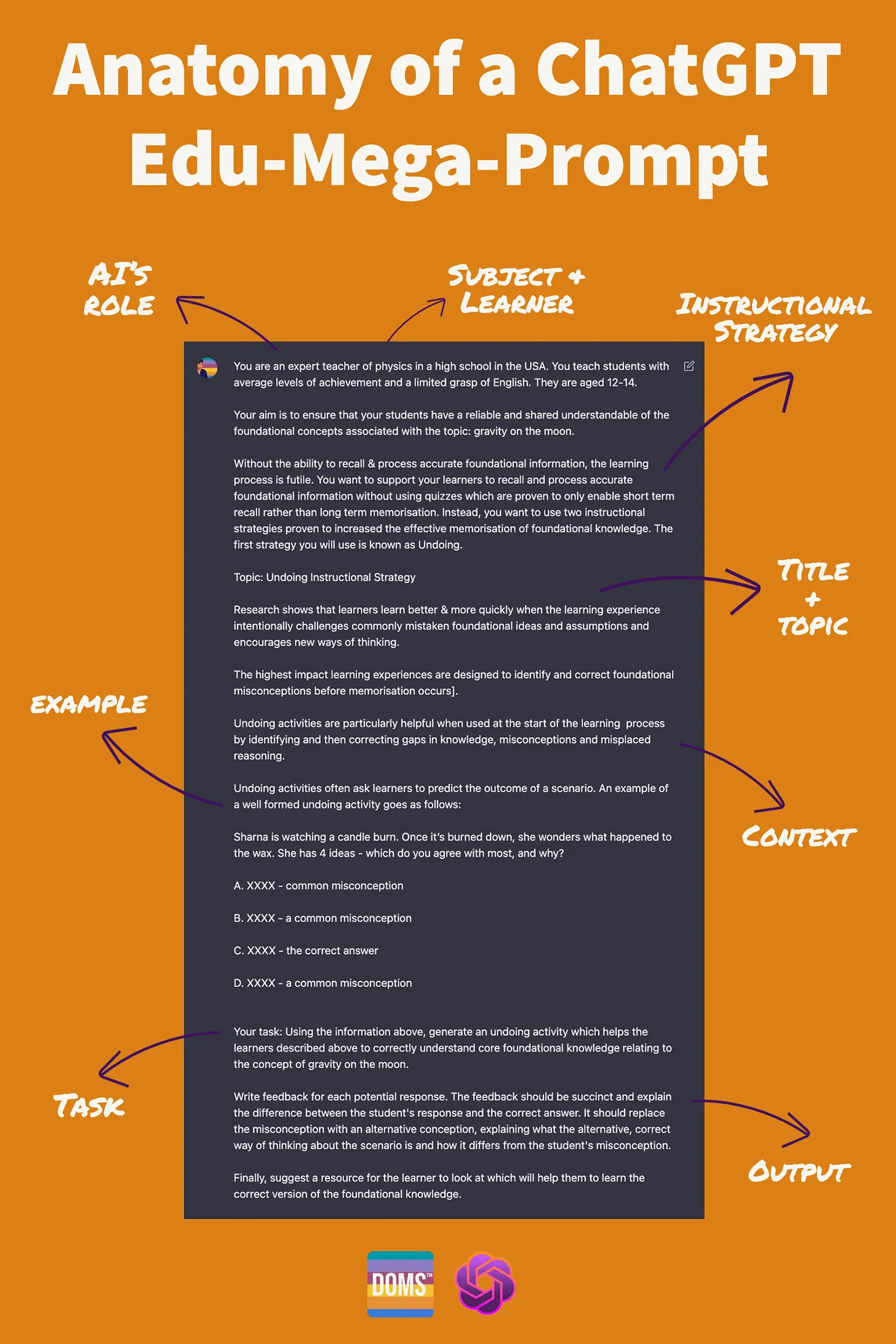
As is always the case, ChatGPT is your assistant. If you’re not happy with the result, you can edit and refine it using your expertise, either alone or through further conversation with ChatGPT.
For example, once the first response is generated, you can ask ChatGPT to make the activity more or less complex, to change the scenario and/or suggest more or different resources – the options are endless.
Philippa recommended checking out Rob Lennon’s streams of content. Here’s an example from his Twitter account:
Everyone’s using ChatGPT.
But almost everyone’s STUCK in beginner mode.
10 techniques to get massively ahead with AI:
(cut-and-paste these prompts?)
— Rob Lennon ? | Audience Growth (@thatroblennon) January 3, 2023
Also relevant/see:
3 Trends That May Unlock AI’s Potential for L&D in 2023 — from learningguild.com by Juan Naranjo
Excerpts:
AI-assisted design and development work
This is the trend most likely to have a dramatic evolution this year.
…
Solutions like large language models, speech generators, content generators, image generators, translation tools, transcription tools, and video generators, among many others, will transform the way IDs create the learning experiences our organizations use. Two examples are:
1. IDs will be doing more curation and less creation:
2. IDs will spend less, and in some cases no time at all, creating learning pathways
AI engines contained in LXPs and other platforms will select the right courses for employees and guide these learners from their current level of knowledge and skill to their goal state with substantially less human intervention.
The Creator of ChatGPT Thinks AI Should Be Regulated — from time.com by John Simons
Excerpts:
Somehow, Mira Murati can forthrightly discuss the dangers of AI while making you feel like it’s all going to be OK.
…
A growing number of leaders in the field are warning of the dangers of AI. Do you have any misgivings about the technology?
This is a unique moment in time where we do have agency in how it shapes society. And it goes both ways: the technology shapes us and we shape it. There are a lot of hard problems to figure out. How do you get the model to do the thing that you want it to do, and how you make sure it’s aligned with human intention and ultimately in service of humanity? There are also a ton of questions around societal impact, and there are a lot of ethical and philosophical questions that we need to consider. And it’s important that we bring in different voices, like philosophers, social scientists, artists, and people from the humanities.
Whispers of A.I.’s Modular Future — from newyorker.com by James Somers; via Sam DeBrule
Excerpts:
Gerganov adapted it from a program called Whisper, released in September by OpenAI, the same organization behind ChatGPTand dall-e. Whisper transcribes speech in more than ninety languages. In some of them, the software is capable of superhuman performance—that is, it can actually parse what somebody’s saying better than a human can.
…
Until recently, world-beating A.I.s like Whisper were the exclusive province of the big tech firms that developed them.
Ever since I’ve had tape to type up—lectures to transcribe, interviews to write down—I’ve dreamed of a program that would do it for me. The transcription process took so long, requiring so many small rewindings, that my hands and back would cramp. As a journalist, knowing what awaited me probably warped my reporting: instead of meeting someone in person with a tape recorder, it often seemed easier just to talk on the phone, typing up the good parts in the moment.
Microsoft Teams Premium: Cut costs and add AI-powered productivity — from microsoft.com by Nicole Herskowitz
Excerpt:
Built on the familiar, all-in-one collaborative experience of Microsoft Teams, Teams Premium brings the latest technologies, including Large Language Models powered by OpenAI’s GPT-3.5, to make meetings more intelligent, personalized, and protected—whether it’s one-on-one, large meetings, virtual appointments, or webinars.
From DSC:
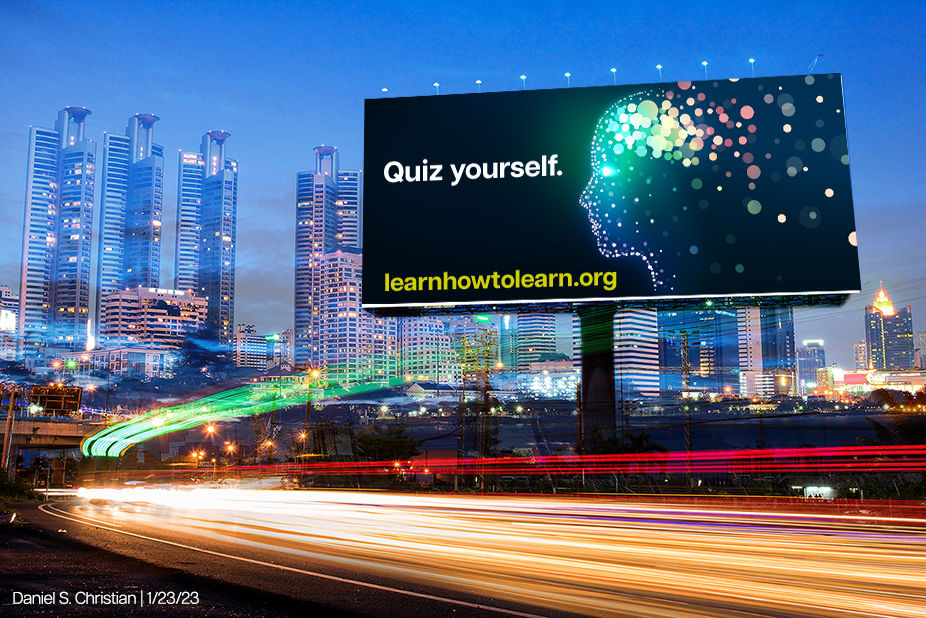
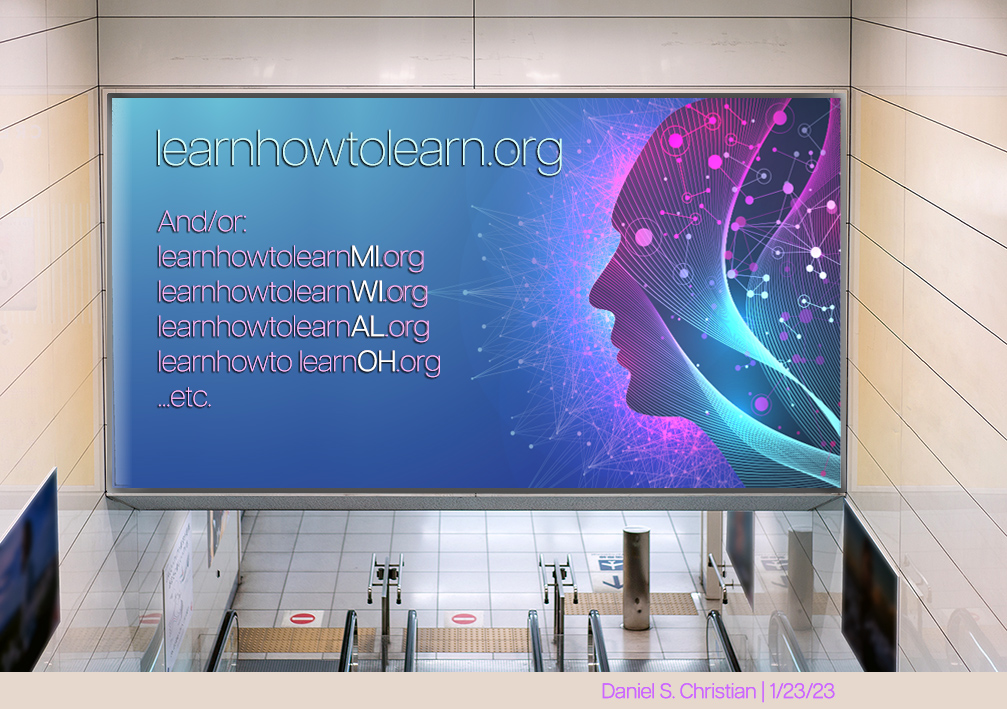
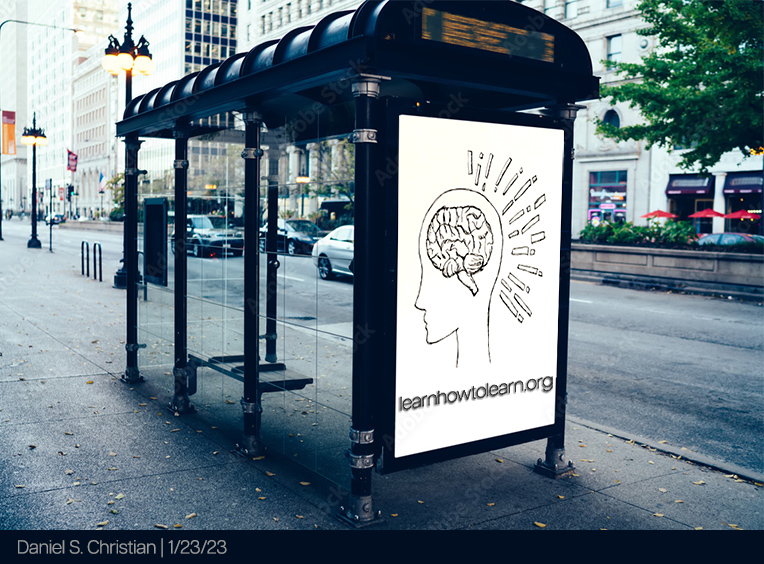
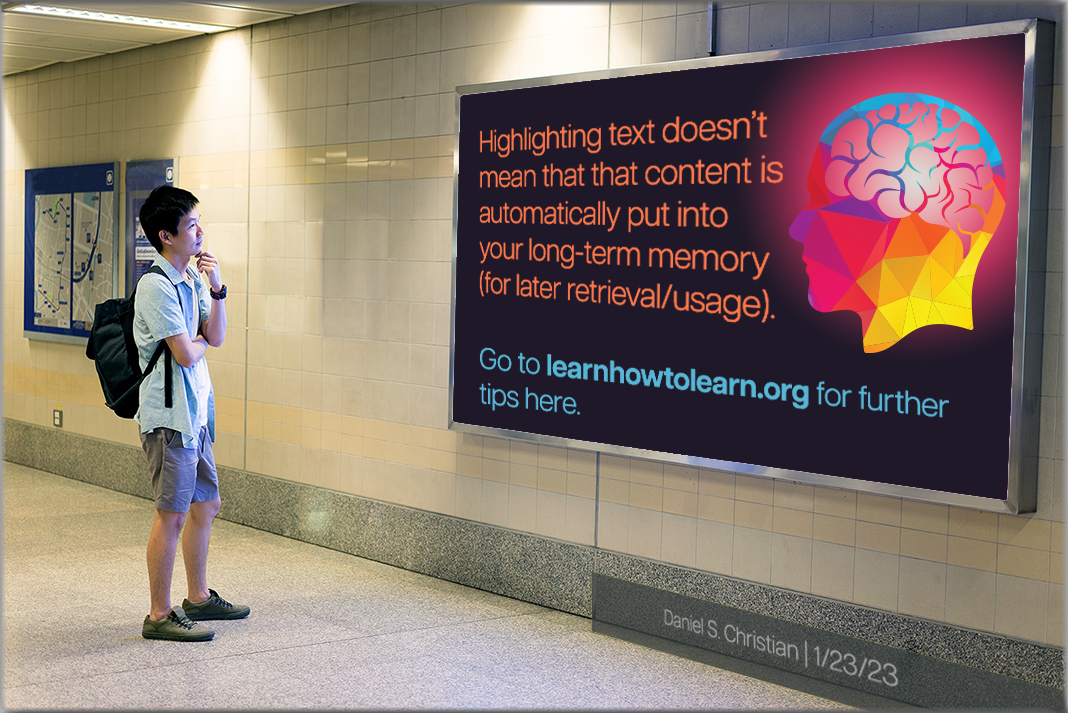
Let’s put together a nationwide campaign that would provide a website — or a series of websites if an agreement can’t be reached amongst the individual states — about learning how to learn. In business, there’s a “direct-to-consumer” approach. Well, we could provide a “direct-to-learner” approach — from cradle to grave. Seeing as how everyone is now required to be a lifelong learner, such a campaign would have enormous benefits to all of the United States. This campaign would be located in airports, subway stations, train stations, on billboards along major highways, in libraries, and in many more locations.
We could focus on things such as:
NOTE:
The URL I’m using above doesn’t exist, at least not at the time of this posting.
But I’m proposing that it should exist.
A group of institutions, organizations, and individuals could contribute to this. For example The Learning Scientists, Daniel Willingham, Donald Clark, James Lang, Derek Bruff, The Learning Agency Lab, Robert Talbert, Pooja Agarwal and Patrice Bain, Eva Keffenheim, Benedict Carey, Ken Bain, and many others.
Perhaps there could be:
Hard Truths That Higher Education Has Evaded for Too Long — from insidehighered.com by Steven Mintz
The brutal truths that institutions don’t want to acknowledge.
If we want to make higher education truly equitable and produce the learning outcomes that we claim to seek, then we must confront painful truths no matter how uncomfortable they make us.
Preaching to, and Challenging, the Liberal Arts Choir — from insidehighered.com by Doug Lederman
In a conversation with presidents of small private colleges, tech company executives praise graduates’ leadership and critical thinking ability but say they need to develop skills for a first job, too.
Excerpt:
In that more competitive landscape, Ferrick and others said, colleges should think in terms of “both-and”—delivering a four-year degree grounded in the liberal arts that remains the best preparation for a lifetime career, yes, but also building into their curricula more practical digital and other skills that can help graduates compete for a first job.
The Edge: Momentum Builds for ‘Credential as You Go’ — from chronicle.com by Goldie Blumenstyk
Excerpt:
A higher-ed credential system that’s ‘not all about degrees.’
Holly Zanville has a clear goal for the Credential as You Go initiative she co-leads: Shift the entire “degree-centric” model of postsecondary education to make it easier for people to develop skills and knowledge in shorter chunks while recognizing “meaningful learning along the way.”
Whatever you think of its prospects, you can hardly fault the effort for a lack of ambition.
Ideally, students will layer incremental credentials over a lifetime of learning.
Goldie Blumenstyk
Issue #11: Navigating the credential maze — from theview.substack.com by Gordon Macrae
Running to stand still.
Excerpt:
The credentials market for degree and non-degree programs is… complex.
A recent report from the non-profit Credential Engine identified 1,076,358 different credentials – from specialized certificates to bachelor’s degrees to PhDs.
Credential Engine started producing these reports in 2018. Back then there were “just” 334,114 credentials. In the last four years, the number of certifications has more than trebled. And from 2021 to 2022, there’s been a 38% increase in providers issuing certificates.
.
When you eyeball the largest higher ed institutions by enrollment comparing 2012 to today, it’s pretty clear that online degrees have driven – essentially – ALL of the growth.
Brandon Busteed commenting on Phil Hill’s posting (also listed below)
.
Fall 2021 Largest Institutions by Total Enrollment and DE Type — from philonedtech.com by Phil Hill
Excerpt:
Based on reader request after yesterday’s post, I’d like to share another view of largest US higher education institutions, this one ranked by total enrollment with color coding of distance education (DE) type. This chart combines undergrad and grad student enrollments.
Mental Health Is the Top Student Stressor — from insidehighered.com by Johanna Alonso
Excerpt:
Fifty percent of college students cited their own mental health struggles as their top stressor going into 2023, according to a survey of 1,200 students nationwide conducted by the virtual health services provider TimelyMD. Thirty-nine percent of respondents said they were most concerned about their personal finances, and 37 percent named academics, while mass shootings and inflation were each cited by 35 percent.
What factors help active learning classrooms succeed? — from rtalbert.org Robert Talbert
Excerpt:
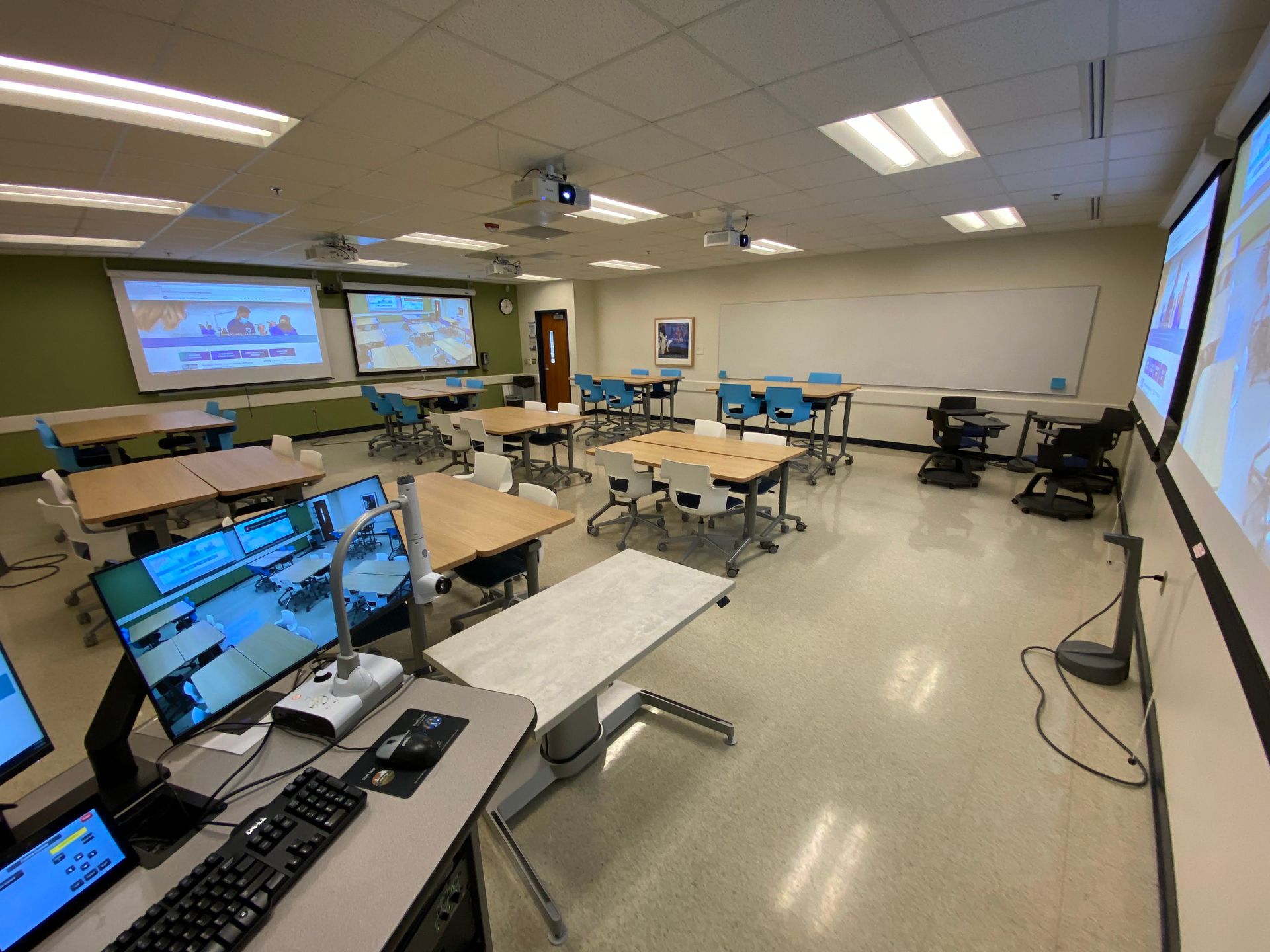
The idea that the space in which you do something, affects the thing you do is the basic premise behind active learning classrooms (ALCs).
…
The biggest message I get from this study is that in order to have success with active learning classrooms, you can’t just build them — they have to be introduced as part of an ecosystem that touches almost all parts of the daily function of a university: faculty teaching, faculty development and support, facilities, and the Registrar’s Office to name a few. Without that ecosystem before you build an ALC, it seems hard to have success with students after it’s built. You’re more likely to have an expensive showcase that looks good but ultimately does not fulfill its main purpose: Promoting and amplifying active learning, and moving the culture of a campus toward active engagement in the classroom.
From DSC:
Thank you Robert for your article/posting here! And thank you for being one of the few faculty members who:
This presupposes something controversial: That the institution will take a stand on the issue that there is a preferred way to teach, namely active learning, and that the institution will be moving toward making active learning the default pedagogy at the institution. Putting this stake in the ground, and then investing not only in facilities but in professional development and faculty incentives to make it happen, again calls for vigorous, sustained leadership — at the top, and especially by the teaching/learning center director.
Robert Talbert
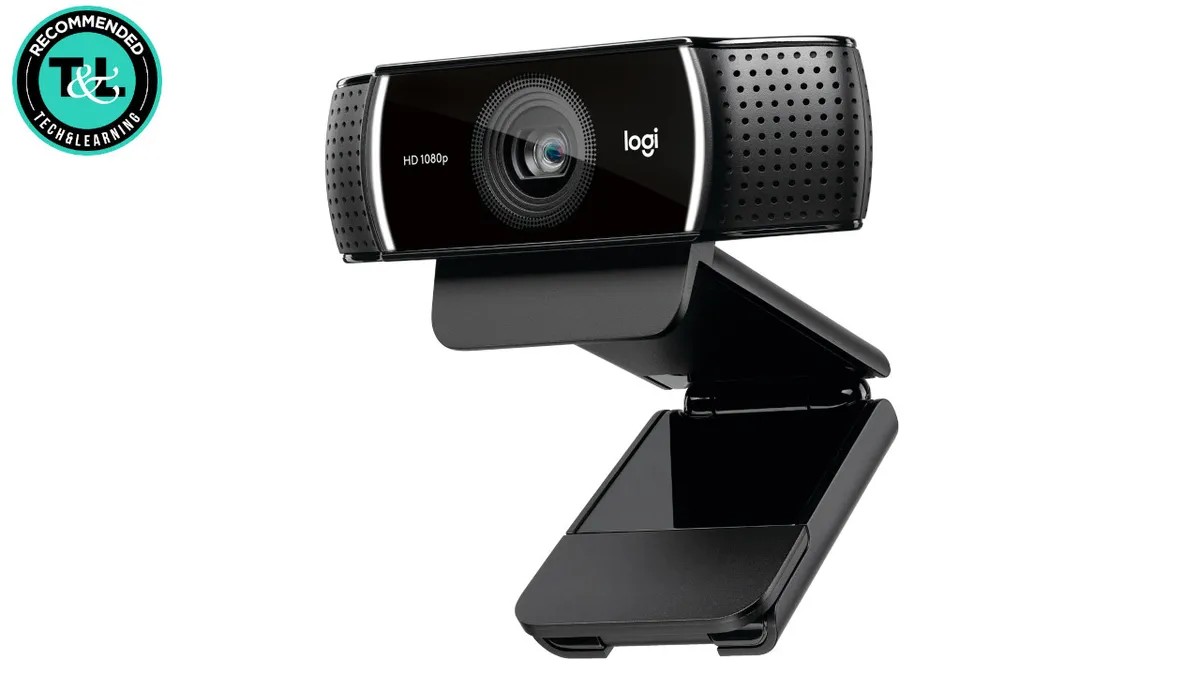
Best Webcams for Teachers and Students — from techlearning.com by Luke Edwards
Get the best webcams for teachers and students to help with hybrid learning and more
Best Wireless Keyboard and Mouse for Teachers 2022 — from techlearning.com by Luke Edwards
The best wireless keyboard and mouse for teachers keep you connected to devices while staying mobile