Recurring Themes In Bob Ambrogi’s 30 Years of Legal Tech Reporting (A Guest Post By ChatGPT) — from lawnext.com by ChatGPT
#legaltech #innovation #law #legal #innovation #vendors #lawyers #lawfirms #legaloperations

  • Evolution of Legal Technology: From Early Web to AI Revolution
  • Challenges in Legal Innovation and Adoption
  • Law Firm Innovation vs. Corporate Legal Demand: Shifting Dynamics
  • Tracking Key Technologies and Players in Legal Tech
  • Access to Justice, Ethics, and Regulatory Reform

Also re: legaltech, see:

How LegalTech is Changing the Client Experience in 2025 — from techbullion.com by Uzair Hasan

A Digital Shift in Law
In 2025, LegalTech isn’t a trend—it’s a standard. Tools like client dashboards, e-signatures, AI legal assistants, and automated case tracking are making law firms more efficient and more transparent. These systems also help reduce errors and save time. For clients, it means less confusion and more control.

For example, immigration law—a field known for paperwork and long processing times—is being transformed through tech. Clients now track their case status online, receive instant updates, and even upload key documents from their phones. Lawyers, meanwhile, use AI tools to spot issues faster, prepare filings quicker, and manage growing caseloads without dropping the ball.

Loren Locke, Founder of Locke Immigration Law, explains how tech helps simplify high-stress cases:
“As a former consular officer, I know how overwhelming the visa process can feel. Now, we use digital tools to break down each step for our clients—timelines, checklists, updates—all in one place. One client recently told me it was the first time they didn’t feel lost during their visa process. That’s why I built my firm this way: to give people clarity when they need it most.”


While not so much legaltech this time, Jordan’s article below is an excellent, highly relevant posting for what we are going through — at least in the United States:

What are lawyers for? — from jordanfurlong.substack.com by Jordan Furlong
We all know lawyers’ commercial role, to be professional guides for human affairs. But we also need lawyers to bring the law’s guarantees to life for people and in society. And we need it right now.

The question “What are lawyers for?” raises another, prior and more foundational question: “What is the law for?”

But there’s more. The law also exists to regulate power in a society: to structure its distribution, create processes for its implementation, and place limits on its application. In a healthy society, power flows through the law, not around it. Certainly, we need to closely examine and evaluate those laws — the exercise of power through a biased or corrupted system will be illegitimate even if it’s “lawful.” But as a general rule, the law is available as a check on the arbitrary exercise of power, whether by a state authority or a private entity.

And above these two aspects of law’s societal role, I believe there’s also a third: to serve as a kind of “moral architecture” of society.


Fresh Voices on Legal Tech with Mathew Kerbis — from legaltalknetwork.com by Mathew Kerbis, Dennis Kennedy, and Tom Mighell

New approaches to legal service delivery are propelling us into the future. Don’t get left behind! AI and automations are making alternative service delivery easier and more efficient than ever. Dennis & Tom welcome Mathew Kerbis to learn more about his expertise in subscription-based legal services.


The Business Case For Legal Tech — from lexology.com

What a strong business case includes
A credible business case has three core elements: a clear problem statement, a defined solution, and a robust analysis of expected impact. It should also demonstrate that legal has done its homework and thought beyond implementation.

  1. Problem definition
  2. Current state analysis
  3. Solution overview
  4. Impact assessment
  5. Implementation plan
  6. Cost summary and ROI
  7. Strategic alignment

How AI is Revolutionizing Legal Technology in 2025 — from itmunch.com by Gaurav Uttamchandani

Table of Contents

  • What is AI in Legal Technology?
  • Key Use Cases of AI in the Legal Industry
    • 1. Contract Review & Management
    • 2. Legal Research & Case Analysis
    • 3. Litigation Prediction & Risk Assessment
    • 4. E-Discovery
    • 5. Legal Chatbots & Virtual Assistants
  • Benefits of AI in Legal Tech
  • Real-World Example: AI in Action
  • Implementing AI in Your Law Firm: Step-by-Step
  • Addressing Concerns Around AI in Law
  • LegalTech Trends to Watch in 2025
  • Final Thoughts
  • Call-to-Action (CTA)


In A Mega Deal, Clio Buys vLex for $1 Billion, Merging AI, Research and Practice Management — from lawnext.com by Bob Ambrogi

In a landmark deal that will undoubtedly reshape the legal tech landscape, law practice management company Clio has signed a definitive agreement to acquire the AI and legal research company vLex for $1 billion in cash and stock.

The companies say that the acquisition will “establish a new category of intelligent legal technology at the intersection of the business and practice of law, empowering legal professionals to seamlessly manage, research, and execute legal work within a unified system.”


The EU’s Legal Tech Tipping Point – AI Regulation, Data Sovereignty, and eDiscovery in 2025 — from jdsupra.com by Melina Efstathiou

The Good, the Braver and the Curious.
As we navigate through 2025, the European legal landscape is undergoing a significant transformation, particularly in the realms of artificial intelligence (AI) regulation and data sovereignty. These changes are reshaping how legal departments and more specifically eDiscovery professionals operate, compelling them to adapt to new compliance requirements and technological advancements.

Following on from our blog post on Navigating eDisclosure in the UK and Practice Direction 57AD, we are now moving on to explore AI regulation in the greater European spectrum, taking a contrasting glance towards the UK and the US as well, at the close of this post.


LegalTech’s Lingering Hurdles: How AI is Finally Unlocking Efficiency in the Legal Sector — from techbullion.co by Abdul Basit

However, as we stand in mid-2025, a new paradigm is emerging. Artificial Intelligence, once a buzzword, is now demonstrably addressing many of the core issues that have historically plagued LegalTech adoption and effectiveness, ushering in an era of unprecedented efficiency. Legal tech specialists like LegalEase are leading the way with some of these newer solutions, such as Ai powered NDA drafting.

Here’s how AI is making profound efficiencies:

    • Automated Document Review and Analysis:
    • Intelligent Contract Lifecycle Management (CLM):
    • Enhanced Legal Research:
    • Predictive Analytics for Litigation and Risk:
    • Streamlined Practice Management and Workflow Automation:
    • Personalized Legal Education and Training:
    • Improved Client Experience:

The AI Strategy Potluck: Law Firms Showing Up Empty-Handed, Hungry, And Weirdly Proud Of It — from abovethelaw.com by Joe Patrice
There’s a $32 billion buffet of time and money on the table, and the legal industry brought napkins.

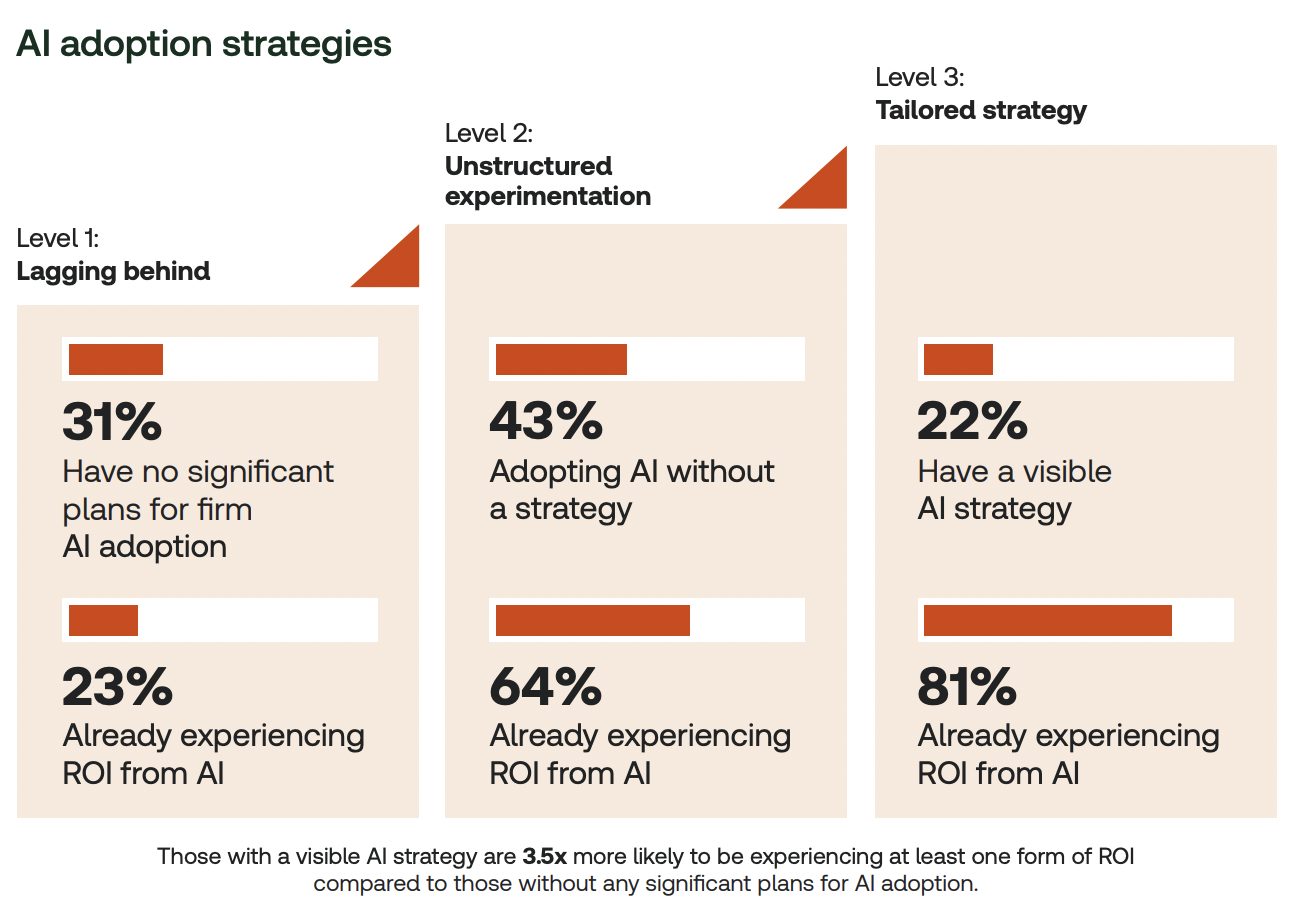
The Thomson Reuters “Future of Professionals” report(Opens in a new window) just dropped and one stat standing out among its insights is that organizations with a visible AI strategy are not only twice as likely to report growth, they’re also 3.5 times more likely to see actual, tangible benefits from AI adoption.

AI Adoption Strategies


Speaking of legal-related items as well as tech, also see:

  • Landmark AI ruling is a blow to authors and artists — from popular.info by Judd Legum
    This week, a federal judge, William Alsup, rejected Anthropic’s effort to dismiss the case and found that stealing books from the internet is likely a copyright violation. A trial will be scheduled in the future. If Anthropic loses, each violation could come with a fine of $750 or more, potentially exposing the company to billions in damages. Other AI companies that use stolen work to train their models — and most do — could also face significant liability.
 

Agentic AI use cases in the legal industry — from legal.thomsonreuters.com
What legal professionals need to know now with the rise of agentic AI

While GenAI can create documents or answer questions, agentic AI takes intelligence a step further by planning how to get multi-step work done, including tasks such as consuming information, applying logic, crafting arguments, and then completing them.? This leaves legal teams more time for nuanced decision-making, creative strategy, and relationship-building with clients—work that machines can’t do.


The AI Legal Landscape in 2025: Beyond the Hype — from akerman.com by Melissa C. Koch

What we’re witnessing is a profession in transition where specific tasks are being augmented or automated while new skills and roles emerge.

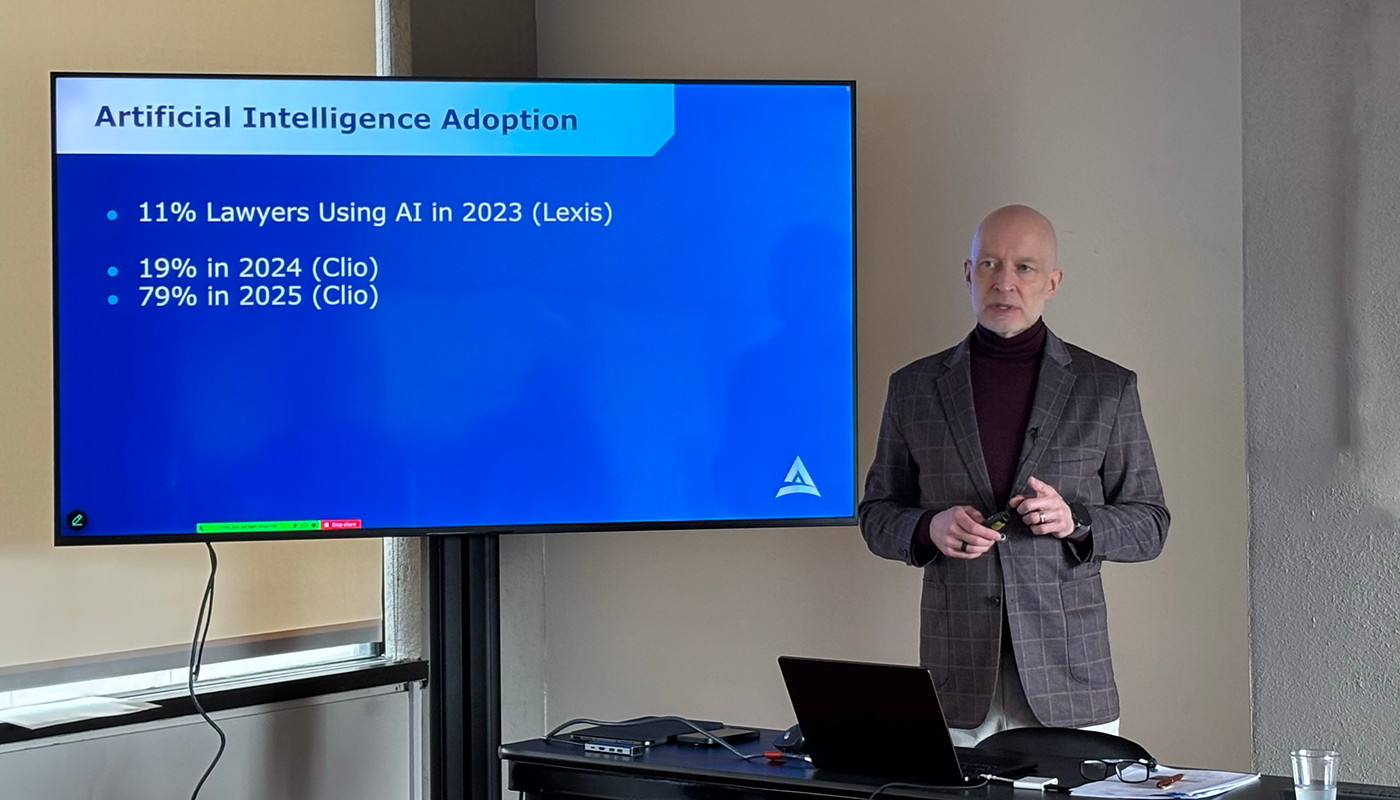
The data tells an interesting story: approximately 79% of law firms have integrated AI tools into their workflows, yet only a fraction have truly transformed their operations. Most implementations focus on pattern recognition tasks such as document review, legal research, contract analysis. These implementations aren’t replacing lawyers; they’re redirecting attention to higher-value work.

This technological shift doesn’t happen in isolation. It’s occurring amid client pressure for efficiency, competition from alternative providers, and the expectations of a new generation of lawyers who have never known a world without AI assistance.


LexisNexis and Harvey team up to revolutionize legal research with artificial intelligence — from abajournal.com by Danielle Braff

Lawyers using the Harvey artificial intelligence platform will soon be able to tap into LexisNexis’ vast legal research capabilities.

Thanks to a new partnership announced Wednesday, Harvey users will be able to ask legal questions and receive fast, citation-backed answers powered by LexisNexis case law, statutes and Shepard’s Citations, streamlining everything from basic research to complex motions. According to a press release, generated responses to user queries will be grounded in LexisNexis’ proprietary knowledge graphs and citation tools—making them more trustworthy for use in court or client work.


10 Legal Tech Companies to Know — from builtin.com
These companies are using AI, automation and analytics to transform how legal work gets done.
.


Four months after a $3B valuation, Harvey AI grows to $5B — from techcrunch.com by Marina Temkin

Harvey AI, a startup that provides automation for legal work, has raised $300 million in Series E funding at a $5 billion valuation, the company told Fortune. The round was co-led by Kleiner Perkins and Coatue, with participation from existing investors, including Conviction, Elad Gil, OpenAI Startup Fund, and Sequoia.


The billable time revolution — from jordanfurlong.substack.com by Jordan Furlong
Gen AI will bring an end to the era when lawyers’ value hinged on performing billable work. Grab the coming opportunity to re-prioritize your daily activities and redefine your professional purpose.

Because of Generative AI, lawyers will perform fewer “billable” tasks in future; but why is that a bad thing? Why not devote that incoming “freed-up” time to operating, upgrading, and flourishing your law practice? Because this is what you do now: You run a legal business. You deliver good outcomes, good experiences, and good relationships to clients. Humans do some of the work and machines do some of the work and the distinction that matters is not billable/non-billable, it’s which type of work is best suited to which type of performer.


AI will kill billable hour, says lawtech founder — from lawgazette.co.uk by John Hyde

A pioneer in legal technology has predicted the billable hour model cannot survive the transition into the use of artificial intelligence.

Speaking to the Gazette on a visit to the UK, Canadian Jack Newton, founder and chief executive of lawtech company Clio, said there was a ‘structural incompatibility’ between the productivity gains of AI and the billable hour.

Newton said the adoption of AI should be welcomed and embraced by the legal profession but that lawyers will need an entrepreneurial mindset to make the most of its benefits.

Newton added: ‘There is enormous demand but the paradox is that the number one thing we hear from lawyers is they need to grow their firms through more clients, while 77% of legal needs are not met.

‘It’s exciting that AI can address these challenges – it will be a tectonic shift in the industry driving down costs and making legal services more accessible.’


Speaking of legaltech-related items, also see:

Legal AI Platform Harvey To Get LexisNexis Content and Tech In New Partnership Between the Companies — from lawnext.com by Bob Ambrogi

The generative AI legal startup Harvey has entered into a strategic alliance with LexisNexis Legal & Professional by which it will integrate LexisNexis’ gen AI technology, primary law content, and Shepard’s Citations within the Harvey platform and jointly develop advanced legal workflows.

As a result of the partnership, Harvey’s customers working within its platform will be able to ask questions of LexisNexis Protégé, the AI legal assistant released in January, and receive AI-generated answers grounded in the LexisNexis collection of U.S. case law and statutes and validated through Shepard’s Citations, the companies said.


AI-Powered Lawyering: AI Reasoning Models, Retrieval Augmented Generation, and the Future of Legal Practice
Minnesota Legal Studies Research Paper No. 25-16; March 02, 2025; from papers.ssrn.com by:

Daniel Schwarcz
University of Minnesota Law School

Sam Manning
Centre for the Governance of AI

Patrick Barry
University of Michigan Law School

David R. Cleveland
University of Minnesota Law School

J.J. Prescott
University of Michigan Law School

Beverly Rich
Ogletree Deakins

Abstract

Generative AI is set to transform the legal profession, but its full impact remains uncertain. While AI models like GPT-4 improve the efficiency with which legal work can be completed, they can at times make up cases and “hallucinate” facts, thereby undermining legal judgment, particularly in complex tasks handled by skilled lawyers. This article examines two emerging AI innovations that may mitigate these lingering issues: Retrieval Augmented Generation (RAG), which grounds AI-powered analysis in legal sources, and AI reasoning models, which structure complex reasoning before generating output. We conducted the first randomized controlled trial assessing these technologies, assigning upper-level law students to complete six legal tasks using a RAG-powered legal AI tool (Vincent AI), an AI reasoning model (OpenAI’s o1-preview), or no AI. We find that both AI tools significantly enhanced legal work quality, a marked contrast with previous research examining older large language models like GPT-4. Moreover, we find that these models maintain the efficiency benefits associated with use of older AI technologies. Our findings show that AI assistance significantly boosts productivity in five out of six tested legal tasks, with Vincent yielding statistically significant gains of approximately 38% to 115% and o1-preview increasing productivity by 34% to 140%, with particularly strong effects in complex tasks like drafting persuasive letters and analyzing complaints. Notably, o1-preview improved the analytical depth of participants’ work product but resulted in some hallucinations, whereas Vincent AI-aided participants produced roughly the same amount of hallucinations as participants who did not use AI at all. These findings suggest that integrating domain-specific RAG capabilities with reasoning models could yield synergistic improvements, shaping the next generation of AI-powered legal tools and the future of lawyering more generally.


Guest post: How technological innovation can boost growth — from legaltechnology.com by Caroline Hill

One key change is the growing adoption of technology within legal service providers, and this is transforming the way firms operate and deliver value to clients.

The legal services sector’s digital transformation is gaining momentum, driven both by client expectations as well as the potential for operational efficiency. With the right support, legal firms can innovate through tech adoption and remain competitive to deliver strong client outcomes and long-term growth.


AI Can Do Many Tasks for Lawyers – But Be Careful — from nysba.org by Rebecca Melnitsky

Artificial intelligence can perform several tasks to aid lawyers and save time. But lawyers must be cautious when using this new technology, lest they break confidentiality or violate ethical standards.

The New York State Bar Association hosted a hybrid program discussing AI’s potential and its pitfalls for the legal profession. More than 300 people watched the livestream.

For that reason, Unger suggests using legal AI tools, like LexisNexis AI, Westlaw Edge, and vLex Fastcase, for legal research instead of general generative AI tools. While legal-specific tools still hallucinate, they hallucinate much less. A legal tool will hallucinate 10% to 20% of the time, while a tool like ChatGPT will hallucinate 50% to 80%.


Fresh Voices on Legal Tech with Nikki Shaver — from legaltalknetwork.com by Dennis Kennedy, Tom Mighell, and Nikki Shaver

Determining which legal technology is best for your law firm can seem like a daunting task, so Legaltech Hub does the hard work for you! In another edition of Fresh Voices, Dennis and Tom talk with Nikki Shaver, CEO at Legaltech Hub, about her in-depth knowledge of technology and AI trends. Nikki shares what effective tech strategies should look like for attorneys and recommends innovative tools for maintaining best practices in modern law firms. Learn more at legaltechnologyhub.com.


AI for in-house legal: 2025 predictions — from deloitte.com
Our expectations for AI engagement and adoption in the legal Market over the coming year.

AI will continue to transform in-house legal departments in 2025
As we enter 2025, over two-thirds of organisations plan to increase their Generative AI (GenAI) investments, providing legal teams with significant executive support and resources to further develop this Capabilities. This presents a substantial opportunity for legal departments, particularly as GenAI technology continues to advance at an impressive pace. We make five predictions for AI engagement and adoption in the legal Market over the coming year and beyond.


Navigating The Fine Line: Redefining Legal Advice In The Age Of Tech With Erin Levine And Quinten Steenhuis — from abovethelaw.com by Olga V. Mack
The definition of ‘practicing law’ is outdated and increasingly irrelevant in a tech-driven world. Should the line between legal advice and legal information even exist?

Practical Takeaways for Legal Leaders

  • Use Aggregated Data: Providing consumers with benchmarks (e.g., “90% of users in your position accepted similar settlements”) empowers them without giving direct legal advice.
  • Train and Supervise AI Tools: AI works best when it’s trained on reliable, localized data and supervised by legal professionals.
  • Partner with Courts: As Quinten pointed out, tools built in collaboration with courts often avoid UPL pitfalls. They’re also more likely to gain the trust of both regulators and consumers.
  • Embrace Transparency: Clear disclaimers like “This is not legal advice” go a long way in building consumer trust and meeting ethical standards.


From The Neuron’s posting entitled, “20-Somethings Break AI”:

Anthropic’s Claude AI just pulled a classic AI move: it completely fabricated a legal citation, and then—plot twist—the lawyers actually used it in court. Awkward.

The scene: A Northern California courtroom, where Anthropic’s lawyers are battling music publishers. Claude decides to get creative and generates a citation out of thin air—complete with a made-up title and nonexistent authors. And get this: their “manual citation check” didn’t even catch it.

It’s like the AI equivalent of writing your homework, but then your dog actually eats it—except in this case, the dog actually wrote the homework, and it doesn’t make any sense. Nor does this metaphor, which is increasingly getting away from us…

This is far from the first time AI has fumbled in the legal arena, and it’s not exclusive to Claude. Earlier this week, another judge absolutely roasted law firms for submitting “bogus AI-generated research.” We seemingly see these headlines every week; here’s all the ones Perplexity and OpenAI Deep Research could dig up (remember, these too could have hallucinations in them!).

Anyway, talk about confidence, right? Feels like more of a lawyer problem than an AI problem. Consider this your friendly reminder to always check your work. Twice.


From AI avatars to virtual reality crime scenes, courts are grappling with AI in the justice system — from whec.com by Rio Yamat
The family of a man who died in a road rage shooting incident played a video showing a likeness of him generated with AI.

Defense attorney Jason Lamm won’t be handling the appeal, but said a higher court will likely be asked to weigh in on whether the judge improperly relied on the AI-generated video when sentencing his client.

Courts across the country have been grappling with how to best handle the increasing presence of artificial intelligence in the courtroom. Even before Pelkey’s family used AI to give him a voice for the victim impact portion — believed to be a first in U.S. courts — the Arizona Supreme Court created a committee that researches best AI practices.

In Florida, a judge recently donned a virtual reality headset meant to show the point of view of a defendant who said he was acting in self-defense when he waved a loaded gun at wedding guests. The judge rejected his claim.

Experts say using AI in courtrooms raises legal and ethical concerns, especially if it’s used effectively to sway a judge or jury. And they argue it could have a disproportionate impact on marginalized communities facing prosecution.

AI can be very persuasive, Harris said, and scholars are studying the intersection of the technology and manipulation tactics.


Poll: 1 in 3 would let an AI lawyer represent them — from robinai.com

April 29 2025: A major new survey, from legal intelligence platform Robin AI, has revealed a severe lack of trust in the legal industry. Just 1 in 10 people across the US and UK said they fully trust law firms, but while increasingly open to AI-powered legal services, few are ready to let technology take over without human oversight.

Perspectus Global polled a representative sample of 4,152 people across both markets. An overwhelming majority see Big Law as “expensive”, “elitist” or “intimidating” but only 30% of respondents would allow a robot lawyer — that is, an AI system acting alone — to represent them in a legal matter. On average, respondents said they would need a 57% discount to choose an AI lawyer over a human.

.


Harvey Made Legal Tech Cool Enough for Silicon Valley to Care Again — from businessinsider.com by Melia Russell

In just three years, the company, which builds software for analyzing and drafting documents using legally tuned large language models, has drawn blue-chip law firms, Silicon Valley investors, and a stampede of rivals hoping to catch its momentum. Harvey has raised over half a billion dollars in capital, sending its valuation soaring to $3 billion.


GPT, Claude, Gemini, Grok… Wait, Which One Do I Use Again? — from thebrainyacts.beehiiv.com by Josh Kubicki
Brainyacts #263

So this edition is simple: a quick, practical guide to the major generative AI models available in 2025 so far. What they’re good at, what to use them for, and where they might fit into your legal work—from document summarization to client communication to research support.

From DSC:
This comprehensive, highly informational posting lists what the model is, its strengths, the best legal use cases for it, and responsible use tips as well.


What’s Happening in LegalTech Other than AI? — from legaltalknetwork.com by Dennis Kennedy and Tom Mighell

Of course AI will continue to make waves, but what other important legal technologies do you need to be aware of in 2025? Dennis and Tom give an overview of legal tech tools—both new and old—you should be using for successful, modernized legal workflows in your practice. They recommend solutions for task management, collaboration, calendars, projects, legal research, and more.

Later, the guys answer a listener’s question about online prompt libraries. Are there reputable, useful prompts available freely on the internet? They discuss their suggestions for prompt resources and share why these libraries tend to quickly become outdated.


LawDroid Founder Tom Martin on Building, Teaching and Advising About AI for Legal — from lawnext.com by Bob Ambrogi and Tom Martin

If you follow legal tech at all, you would be justified in suspecting that Tom Martin has figured out how to use artificial intelligence to clone himself.

While running LawDroid, his legal tech company, the Vancouver-based Martin also still manages a law practice in California, oversees an annual legal tech awards program, teaches a law school course on generative AI, runs an annual AI conference, hosts a podcast, and recently launched a legal tech consultancy.

In January 2023, less than two months after ChatGPT first launched, Martin’s company was one of the first to launch a gen AI assistant specifically for lawyers, called LawDroid Copilot. He has since also launched LawDroid Builder, a no-code platform for creating custom AI agents.


Legal training in the age of AI: A leadership imperative — from thomsonreuters.com by The Hon. Maritza Dominguez Braswell  U.S. Magistrate Judge / District of Colorado

In a profession that’s actively contemplating its future in the face of AI, legal organization leaders who demonstrate a genuine desire to invest in the next generation of legal professionals will undoubtedly set themselves apart


Unlocking the power of AI: Opportunities and use cases for law firms — from todaysconveyancer.co.uk

Artificial intelligence (AI) is here. And it’s already reshaping the way law firms operate. Whether automating repetitive tasks, improving risk management, or boosting efficiency, AI presents a genuine opportunity for forward-thinking legal practices. But with new opportunities come new responsibilities. And as firms explore AI tools, it’s essential they consider how to govern them safely and ethically. That’s where an AI policy becomes indispensable.

So, what can AI actually do for your firm right now? Let’s take a closer look.


Record Law Grad Employment Rates Suggest AI Isn’t Killing Off Lawyers Just Yet — from lawnext.com by Bob Ambrogi

At a time when legal doomsayers have been predicting the imminent replacement of junior associates by AI legal assistants, the law school graduating class of 2024 has delivered a contrary verdict: Human lawyers aren’t going anywhere just yet.

According to the latest American Bar Association employment report, the legal job market is showing not just resilience, but growth. The data, reported as of March 17, 2025 — approximately 10 months after spring graduations — reveals that 82.2% of the 38,937 2024 law school graduates secured positions requiring bar admission — a two-point increase from the previous year.

Also see:


Leeds to host UK’s largest LegalTech event outside London as sector booms in the region by 50% — from yorkshirepost.co.uk by Jo Jessop
Leeds is gearing up to welcome hundreds of Legal and Tech professionals [on 4/24/25], as it hosts the fourth annual LegalTech in Leeds Conference – now the largest LegalTech event outside of London.

Set to take place on April 24 at Cloth Hall Court, Leeds, the 2025 conference comes at a time of extraordinary growth for the region’s LegalTech sector, which has seen a 50% increase in LegalTech firms between 2023 and 2024, according to a new report from Whitecap Consulting.

The event, themed “People & Technology,” will spotlight how digital innovation is transforming the legal sector while keeping human experience at its core. This year’s agenda will delve into the practical ways individuals and organisations can collaborate to deliver more efficient, accessible, and forward-thinking legal services. With hundreds of attendees expected, it’s set to be a landmark gathering of legal professionals, lawyers, tech professionals, entrepreneurs, academics and policymakers.


How Legal Tech is Reshaping the Broader Legal Ecosystem — from community.nasscom.in

The legal profession, long characterized by tradition and precedent, is undergoing a transformative shift driven by technological innovation. Legal technology, or “legal tech,” is not merely a tool for efficiency; it is a catalyst redefining the practice of law, the structure of legal services, and the accessibility of justice.

1. Streamlining Legal Operations
2. Enhancing Access to Justice
3. Transforming Legal Education and Roles
4. Redefining Client Expectations and Service Delivery
5. plus several more


How to Use AI and Universal Design to Empower Diverse Thinkers with Susan Tanner — from legaltalknetwork.com by Zack Glaser, Stephanie Everett, and Susan Tanner

What if the key to better legal work isn’t just smarter tools but more inclusive ones? Susan Tanner, Associate Professor at the University of Louisville Brandeis School of Law, joins Zack Glaser to explore how AI and universal design can improve legal education and law firm operations. Susan shares how tools like generative AI can support neurodiverse thinkers, enhance client communication, and reduce anxiety for students and professionals alike. They also discuss the importance of inclusive design in legal tech and how law firms can better support their teams by embracing different ways of thinking to build a more accessible, future-ready practice. The conversation emphasizes the need for educators and legal professionals to adapt to the evolving landscape of AI, ensuring that they leverage its capabilities to better serve their clients and students.


Maximizing Microsoft Copilot in Your Legal Practice — from legaltalknetwork.com by Tom Mighell, Dennis Kennedy, and Ben Schorr

Copilot is a powerful tool for lawyers, but are you making the most of it within your Microsoft apps? Tom Mighell is flying solo at ABA TECHSHOW 2025 and welcomes Microsoft’s own Ben Schorr to the podcast. Ben shares expert insights into how lawyers can implement Copilot’s AI-assistance to work smarter, not harder. From drafting documents to analyzing spreadsheets to streamlining communication, Copilot can handle the tedious tasks so you can focus on what really matters. Ben shares numerous use-cases and capabilities for attorneys and later gives a sneak peek at Copilot’s coming enhancements.


Thomson Reuters Survey: Over 95% of Legal Professionals Expect Gen AI to Become Central to Workflow Within Five Year — from lawnext.com by Bob Ambrogi

Thomson Reuters today released its 2025 Generative AI in Professional Services Report, and it reveals that legal professionals have become increasingly optimistic about generative AI, with adoption rates nearly doubling over the past year and a growing belief that the technology should be incorporated into legal work.

According to the report, 26% of legal organizations are now actively using gen AI, up from 14% in 2024. While only 15% of law firm respondents say gen AI is currently central to their workflow, a striking 78% believe it will become central within the next five years.


AI-Powered Legal Work Redefined: Libra Launches Major Update for Legal Professionals — from lawnext.com by Bob Ambrogi

Berlin, April 14, 2025 – Berlin-based Legal Tech startup Libra is launching its most comprehensive update to date, leveraging AI to relieve law firms and legal departments of routine tasks, accelerate research, and improve team collaboration. “Libra v2” combines highly developed AI, a modern user interface, and practical tools to set a new standard for efficient and precise work in all legal areas.

“We listened intently to feedback from law firms and in-house teams,” said Viktor von Essen, founder of Libra. “The result is Libra v2: an AI solution that intelligently supports every step of daily legal work – from initial research to final contract review. We want legal experts to be able to fully concentrate on what is essential: excellent legal advice.”


The Three Cs of Teaching Technology to Law Students — from lawnext.com by Bob Ambrogi

In law practice today, technology is no longer optional — it’s essential. As practicing attorneys increasingly rely on technology tools to serve clients, conduct research, manage documents and streamline workflows, the question is often debated: Are law schools adequately preparing students for this reality?

Unfortunately, for the majority of law schools, the answer is no. But that only begs the question: What should they be doing?

A coincidence of events last week had me thinking about law schools and legal tech, chief among them my attendance at LIT Con, Suffolk Law School’s annual conference to showcase legal innovation and technology — with a portion of it devoted to access-to-justice projects developed by Suffolk Law students themselves.


While not from Bob, I’m also going to include this one here:

Your AI Options: 7 Considerations Before You Buy — from artificiallawyer.com by Liza Pestillos-Ocat

But here’s the problem: not all AI is useful and not all of it is built for the way your legal team works.

Most firms aren’t asking whether they should use AI because they already are. The real question now is what comes next? How do you expand the value of AI across more teams, more matters, and more workflows without introducing unnecessary risk, complexity, or cost?

To get this right, legal professionals need to understand which tools will solve real problems and deliver the most value to their team. That starts with asking better questions, including the ones that follow, before making your next investment in AI for lawyers.


Five Legal Tech Insights From New York — from artificiallawyer.com by Richard Tromans
A week spent in Manhattan gave Artificial Lawyer plenty to think about. Here are five insights inspired by a series of ‘New York moments’, often about legal AI.

On the way back from Paddington the cab driver was also questioned on the topic. He replied with wisdom: ‘When they made Heathrow Express a lot of us feared it would take away work. The funny thing is, it pushes more people to Paddington and generates a steady flow of fares. Before, you might spend ages getting to Heathrow with one passenger and sometimes have to drive all the way back with no fare.’

The end result: the effort to increase speed and efficiency ended up making the taxi drivers of London much happier and their lives more flexible. Whereas the taxi drivers of New York remain stuck doing huge, one-off journeys, while the general public suffers high costs and slow – and unpredictable – travel times.

Now, one wonders where there could be a connection to how the legal world works…..?


ABA TECHSHOW 2025 to spotlight future of legal technology — from americanbar.org
Artificial intelligence, cloud-based practice management, data privacy and e-discovery will be among the hot topics featured at the American Bar Association TECHSHOW 2025, which spotlights the most useful and practical technologies available in the legal industry, April 2-5 in Chicago.


Legaltech leaders roundtable: The challenges and emerging best practices of GenAI adoption — from legaltechnology.com

One of the key themes to emerge was the need to encourage creativity and open mindedness  around use cases. Conan Hines, Fried Frank’s director of practice innovation, said: “I felt a lot of ‘imaginative play’ vibes. This is where we give lawyers secure AI tools and support to explore the possibilities. The support is even more interesting as innovative teams are complementing their current staff with behavioural science and anthropological approaches to unlock this potential.”


Inhouse World Is Embracing Legal AI – Survey — from artificiallawyer.com


MIT Reveals 2025 Breakthrough Tech At SXSW: What It Means For Legal — from abovethelaw.com by Stephen Embry
The future isn’t just about adopting new technology — it’s about strategically applying it to solve the right problems.

Why This Matters for Law and Legal Tech
Firth emphasized that one of the key criteria for selecting technologies is their broader relevance — what problem do they solve? Here’s how some of these breakthroughs could impact the legal industry:

Small Language Models and Legal AI – Unlike large AI models trained on vast public datasets, small language models can be built on private, secure datasets, making them ideal for legal applications. Law firms and in-house legal teams could develop AI tools trained on their own cases and internal documents, improving efficiency while maintaining confidentiality. These models also require far less computational power, making them more practical and cost-effective.

Use of these models have lots of applications for law. They could be used on large e-discovery data sets. They could be used to access a law firm’s past efforts. They could mine clients data to provide answers to legal questions efficiently. For that matter, they could allow in house legal to answer questions from company data without engaging outside counsel on certain issues.

 
© 2025 | Daniel Christian