Planning Your L&D Hiring for Next Year? Start With Skills, Salary Ranges, and Realistic Expectations — from teamedforlearning.com

Salary transparency laws across many states now require organizations to publish compensation ranges. While this can feel like a burden, the truth is: transparency can dramatically speed up hiring. Candidates self-select, mismatches decrease, and teams save time.

But transparency only works when the salary range itself is grounded in reality. And that’s where many organizations struggle.

Posting a salary range is the easy part.
Determining a fair, defensible range is where the work happens.

Also from Teamed for Learning, see:

Hiring Trends For 2026 
The learning industry shifts fast, and this year is no exception. Here’s what’s shaping the hiring landscape right now:

  • AI is now a core skill, not a bonus
  • Project management is showing up in every job description
  • Generalists with business awareness are beating tool-heavy candidates
  • Universities and edtech companies are speeding up content refresh cycles
  • Hiring budgets are tight – but expectations aren’t easing up


From Stephanie T.’s posting out on LinkedIn

The lesson isn’t to make school reports more like Spotify Wrapped.

It’s to design reports that are accessible, timely, and readable — without losing the humanity that makes teacher insight meaningful.

If a report is too difficult to access, or arrives too late to matter, who is it really for?


What’s Happening to Jobs for New Grads — from linkedin.com by Jeff Selingo

No matter where you go to college, the job market math for new graduates is grim right now, as I write in a new article out yesterday in New York magazine.

There were 15% fewer entry-level and internship job postings in 2025 than the year before, according to Handshake, a job-search platform popular with college students; meanwhile, applications per posting rose 26%.

How much AI is to blame for the fragile entry-level job market is unclear. Several research studies show AI is hitting young college-educated workers disproportionately, but broader economic forces are part of the story, too.

As Christine Y. Cruzvergara, Handshake’s chief education strategy officer, told me, AI isn’t “taking” jobs so much as employers are “choosing” to replace parts of jobs with automation rather than redesign roles around workers. “They’re replacing people instead of enabling their workforce,” she said.

Today’s graduates are stuck in an in-between moment. Many started college before AI mattered and graduated into a labor market reshaped almost overnight, where entry-level roles are disappearing faster than students can adapt.


The US wants more apprenticeships. The UK figured out how to make them coveted roles — from hechingerreport.org by Kelly Field
‘Degree apprenticeships’ that pair bachelor’s with jobs can be harder to get into than elite colleges

Most students here and in the United States wouldn’t get access to expensive equipment like this until graduate school. Goshawk — a 21-year-old undergraduate student and one of 149 “degree apprentices” employed by AstraZeneca across the U.K. — started using them his second week in.

“It shows the trust we’ve been given,” said Goshawk, who is working nearly full time while studying toward a degree in chemical science at Manchester Metropolitan University that his employer is paying for. By the time he graduates next spring, he will have earned roughly 100,000 pounds (approximately $130,000) in wages, on top of the tuition-free education.

Degree apprenticeships like Goshawk’s have exploded across England since their introduction a decade ago. More than 60,000 apprentices began programs leading to the U.K. equivalent of bachelor’s and master’s degrees in the 2024-25 academic year, in fields as varied as engineering, digital technology, health care, law and business.


AI Is Quietly Rewiring the ADDIE Model (In a Good Way) — from drphilippahardman.substack.com by Dr. Philippa Hardman
The traditional ADDIE workflow isn’t dead, but it is evolving

The real story isn’t what AI can produce — it’s how it changes the decisions we make at every stage of instructional design.

After working with thousands of instructional designers on my bootcamp, I’ve learned something counterintuitive: the best teams aren’t the ones with the fanciest AI tools — they’re the ones who know when to use which mode—and when to use none at all.

Once you recognise that, you start to see instructional design differently — not as a linear process, but as a series of decision loops where AI plays distinct roles.

In this post, I show you the 3 modes of AI that actually matter in instructional design — and map them across every phase of ADDIE so you know exactly when to let AI run, and when to slow down and think.


Also see:

Generative AI for Course Design: Writing Effective Prompts for Multiple Choice Question Development — from onlineteaching.umich.edu by Hedieh Najafi

In higher education, developing strong multiple-choice questions can be a time-intensive part of the course design process. Developing such items requires subject-matter expertise and assessment literacy, and for faculty and designers who are creating and producing online courses, it can be difficult to find the capacity to craft quality multiple-choice questions.

At the University of Michigan Center for Academic Innovation, learning experience designers are using generative artificial intelligence to streamline the multiple-choice question development process and help ameliorate this issue. In this article, I summarize one of our projects that explored effective prompting strategies to develop multiple-choice questions with ChatGPT for our open course portfolio. We examined how structured prompting can improve the quality of AI-generated assessments, producing relevant comprehension and recall items and options that include plausible distractors.

Achieving this goal enables us to develop several ungraded practice opportunities, preparing learners for their graded assessments while also freeing up more time for course instructors and designers.


Which AI Video Tool Is Most Powerful for L&D Teams? — from by Dr. Philippa Hardman
Evaluating four popular AI video generation platforms through a learning-science lens

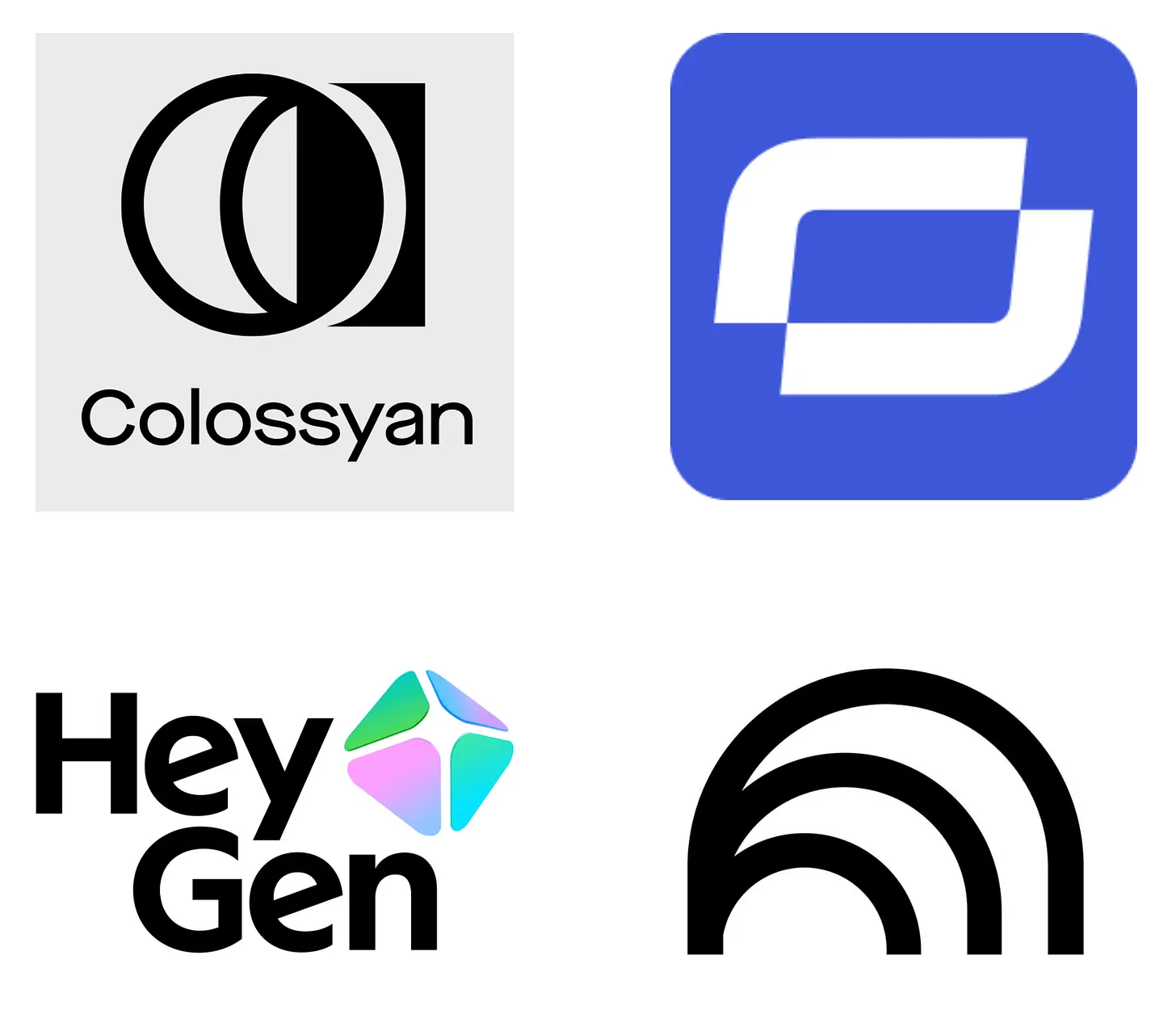
Happy new year! One of the biggest L&D stories of 2025 was the rise to fame among L&D teams of AI video generator tools. As we head into 2026, platforms like Colossyan, Synthesia, HeyGen, and NotebookLM’s video creation feature are firmly embedded in most L&D tech stacks. These tools promise rapid production and multi-language output at significantly reduced costs —and they deliver on a lot of that.

But something has been playing on my mind: we rarely evaluate these tools on what matters most for learning design—whether they enable us to build instructional content that actually enables learning.

So, I spent some time over the holiday digging into this question: do the AI video tools we use most in L&D create content that supports substantive learning?

To answer it, I took two decades of learning science research and translated it into a scoring rubric. Then I scored the four most popular AI video generation platforms among L&D professionals against the rubric.
.


For an AI-based tool or two — as they regard higher ed — see:

5 new tools worth trying — from wondertools.substack.com by Jeremy Kaplan

YouTube to NotebookLM: Import a Whole Playlist or Channel in One Click
YouTube to NotebookLM is a remarkably useful new Chrome extension that lets you bulk-add any YouTube playlists, channels, or search results into NotebookLM. for AI-powered analysis.

What to try

  • Find or create YouTube playlists on topics of interest. Then use this extension to ingest those playlists into NotebookLM. The videos are automatically indexed, and within minutes you can create reports, slides, and infographics to enhance your learning.
  • Summarize a playlist or channel with an audio or video overview. Or create quizzes, flash cards, data tables, or mind maps to explore a batch of YouTube videos. Or have a chat in NotebookLM with your favorite video channel. Check my recent post for some YouTube channels to try.
 

Corporate Training Solutions That Actually Improve Performance — from blog.upsidelearning.com by Unnati Umare

Designing Learning Around Performance in the Flow of Work
Once it becomes clear that completion does not reliably translate into changed behavior, the next question tends to surface on its own. If training is not failing outright, then what it should be designed around becomes harder to ignore.

In most organizations, the answer remains content. Content is easier to define, easier to build, and easier to track, even when it explains very little about how work actually gets done.

Performance-aligned learning design shifts that starting point by paying closer attention to how work unfolds in practice. Instead of organizing learning around topics or courses, design decisions begin with what a role requires people to notice, decide, and act on during real situations.  


What 3 credit ratings agencies forecast for higher ed in 2026 — from highereddive.com by Ben Unglesbee
Fitch Ratings, S&P Global and Moody’s Ratings all predicted a tough year ahead, pointing to deteriorating financial conditions and heightened uncertainty.

Fitch Ratings labeled its higher ed financial outlook for 2026 as “deteriorating” while Moody’s Ratings described an “increasingly difficult and shifting operating environment for colleges and universities.” Similarly, S&P Global Ratings said it expects“mounting operating pressures and uncertainty” ahead for the sector’s nonprofit institutions.

Analysts cited additional disruption and belt-tightening ahead in the new year, from predicted demographic declines to pressures on international enrollment to uncertainties about how Republicans’ big spending bill passed this summer will impact demand for college.

Below are the various takes on higher ed in 2026 by Moody’s, Fitch and S&P Global Ratings:


10 Elearning Interaction Ideas You May Not Have Thought Of Yet — from theelearningcoach.com by Connie Malamed

Is click-to-reveal always bad for learning?
Not necessarily. Click-to-reveal interactions can be useful when you want to manage cognitive load, reveal information gradually, or work within limited screen space. In those cases, clicking supports the presentation of information.

However, from an instructional perspective, clicking alone does not make an interaction meaningful. An interaction adds value when it asks learners to think, not just trigger more content.

The interaction ideas below require learners to analyze, judge, predict, or diagnose. These are the types of mental actions learners perform in real work settings. Each one includes a short, real-world question to show how the idea might be used in practice.


6 Ed Tech Tools to Try in 2026 — from cultofpedagogy.com by Jennifer Gonzalez

It’s that time again ~ the annual round-up of tech tools we think are worth a look this year. This year I really feel like there’s something for everyone: history teachers, math and science teachers, people who run makerspaces, teachers interested in music or podcasting, writing teachers, special ed teachers, and anyone whose course content could be made clearer through graphic organizers.


Also somewhat relevant here, see:


© 2025 | Daniel Christian