AI will kill billable hour, says lawtech founder — from lawgazette.co.uk by John Hyde

A pioneer in legal technology has predicted the billable hour model cannot survive the transition into the use of artificial intelligence.

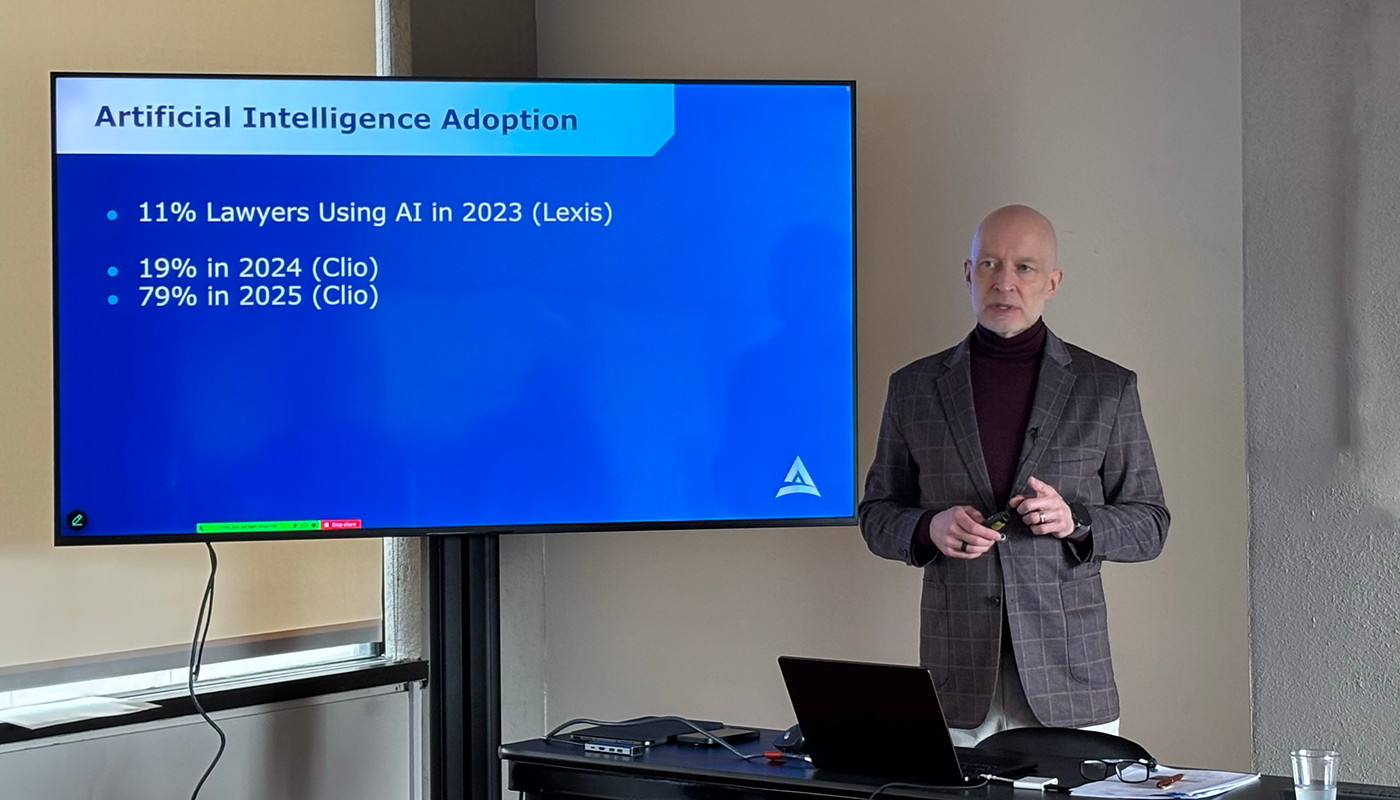
Speaking to the Gazette on a visit to the UK, Canadian Jack Newton, founder and chief executive of lawtech company Clio, said there was a ‘structural incompatibility’ between the productivity gains of AI and the billable hour.

Newton said the adoption of AI should be welcomed and embraced by the legal profession but that lawyers will need an entrepreneurial mindset to make the most of its benefits.

Newton added: ‘There is enormous demand but the paradox is that the number one thing we hear from lawyers is they need to grow their firms through more clients, while 77% of legal needs are not met.

‘It’s exciting that AI can address these challenges – it will be a tectonic shift in the industry driving down costs and making legal services more accessible.’


Speaking of legaltech-related items, also see:

Legal AI Platform Harvey To Get LexisNexis Content and Tech In New Partnership Between the Companies — from lawnext.com by Bob Ambrogi

The generative AI legal startup Harvey has entered into a strategic alliance with LexisNexis Legal & Professional by which it will integrate LexisNexis’ gen AI technology, primary law content, and Shepard’s Citations within the Harvey platform and jointly develop advanced legal workflows.

As a result of the partnership, Harvey’s customers working within its platform will be able to ask questions of LexisNexis Protégé, the AI legal assistant released in January, and receive AI-generated answers grounded in the LexisNexis collection of U.S. case law and statutes and validated through Shepard’s Citations, the companies said.


The Memory Paradox: Why Our Brains Need Knowledge in an Age of AI — from papers.ssrn.com by Barbara Oakley, Michael Johnston, Kenzen Chen, Eulho Jung, and Terrence Sejnowski; via George Siemens

Abstract
In an era of generative AI and ubiquitous digital tools, human memory faces a paradox: the more we offload knowledge to external aids, the less we exercise and develop our own cognitive capacities.
This chapter offers the first neuroscience-based explanation for the observed reversal of the Flynn Effect—the recent decline in IQ scores in developed countries—linking this downturn to shifts in educational practices and the rise of cognitive offloading via AI and digital tools. Drawing on insights from neuroscience, cognitive psychology, and learning theory, we explain how underuse of the brain’s declarative and procedural memory systems undermines reasoning, impedes learning, and diminishes productivity. We critique contemporary pedagogical models that downplay memorization and basic knowledge, showing how these trends erode long-term fluency and mental flexibility. Finally, we outline policy implications for education, workforce development, and the responsible integration of AI, advocating strategies that harness technology as a complement to – rather than a replacement for – robust human knowledge.

Keywords
cognitive offloading, memory, neuroscience of learning, declarative memory, procedural memory, generative AI, Flynn Effect, education reform, schemata, digital tools, cognitive load, cognitive architecture, reinforcement learning, basal ganglia, working memory, retrieval practice, schema theory, manifolds


From DSC:
And regarding this weekend, what an incredible waste of money to put the military on display (for his own birthday).  This smacks of what arrogant dictators do. It’s big-time ugly.

If our justice system had done its job, this arrogant lawbreaker and convicted criminal would be in jail right now. No wonder he has no regard for the legal system, the Constitution, or the law — those things don’t serve his interests. They impede his interests. And thank God for that! In fact, may true leaders rise up within the Legislative and Judicial Branches of our government. The latter is our best chance of keeping our democracy, as the Republican Party has ceded all of their power — and responsibility — over to Donald Trump. They are not leaders in any sense of the word.

But whatever happens, ultimately, there WILL be justice.

Is America being humbled? Or is it being destroyed?

Trump Is Getting the Military Parade He Wanted in His First Term — from nytimes.com by Helene Cooper
There will be 28 Abrams tanks, 6,700 soldiers, 50 helicopters, 34 horses, two mules and a dog, according to the Army’s plans for the June 14 event.

In President Trump’s first term, the Pentagon opposed his desire for a military parade in Washington, wanting to keep the armed forces out of politics.

But in Mr. Trump’s second term, that guardrail has vanished. There will be a parade this year, and on the president’s 79th birthday, no less.

The current plan involves a tremendous scene in the center of Washington: 28 M1A1 Abrams tanks (at 70 tons each for the heaviest in service); 28 Stryker armored personnel carriers; more than 100 other vehicles; a World War II-era B-25 bomber; 6,700 soldiers; 50 helicopters; 34 horses; two mules; and a dog.


Navigating Career Transitions — from er.educause.edu by Jay James, Mike Richichi, Sarah Buszka, and Wes Johnson

In this episode, we hear from professionals at different stages of their career journeys as they reflect on risk, resilience, and growth. They share advice on stepping into leadership roles, recognizing when it may be time for a change, and overcoming imposter syndrome.

.


.


“The AI-enhanced learning ecosystem” [Jennings] + other items re: AI in our learning ecosystems

The AI-enhanced learning ecosystem: A case study in collaborative innovation — from chieflearningofficer.com by Kevin Jennings
How artificial intelligence can serve as a tool and collaborative partner in reimagining content development and management.

Learning and development professionals face unprecedented challenges in today’s rapidly evolving business landscape. According to LinkedIn’s 2025 Workplace Learning Report, 67 percent of L&D professionals report being “maxed out” on capacity, while 66 percent have experienced budget reductions in the past year.

Despite these constraints, 87 percent agree their organizations need to develop employees faster to keep pace with business demands. These statistics paint a clear picture of the pressure L&D teams face: do more, with less, faster.

This article explores how one L&D leader’s strategic partnership with artificial intelligence transformed these persistent challenges into opportunities, creating a responsive learning ecosystem that addresses the modern demands of rapid product evolution and diverse audience needs. With 71 percent of L&D professionals now identifying AI as a high or very high priority for their learning strategy, this case study demonstrates how AI can serve not merely as a tool but as a collaborative partner in reimagining content development and management.
.


How we use GenAI and AR to improve students’ design skills — from timeshighereducation.com by Antonio Juarez, Lesly Pliego and Jordi Rábago who are professors of architecture at Monterrey Institute of Technology in Mexico; Tomas Pachajoa is a professor of architecture at the El Bosque University in Colombia; & Carlos Hinrichsen and Marietta Castro are educators at San Sebastián University in Chile.
Guidance on using generative AI and augmented reality to enhance student creativity, spatial awareness and interdisciplinary collaboration

Blend traditional skills development with AI use
For subjects that require students to develop drawing and modelling skills, have students create initial design sketches or models manually to ensure they practise these skills. Then, introduce GenAI tools such as Midjourney, Leonardo AI and ChatGPT to help students explore new ideas based on their original concepts. Using AI at this stage broadens their creative horizons and introduces innovative perspectives, which are crucial in a rapidly evolving creative industry.

Provide step-by-step tutorials, including both written guides and video demonstrations, to illustrate how initial sketches can be effectively translated into AI-generated concepts. Offer example prompts to demonstrate diverse design possibilities and help students build confidence using GenAI.

Integrating generative AI and AR consistently enhanced student engagement, creativity and spatial understanding on our course. 


How Texas is Preparing Higher Education for AI — from the74million.org by Kate McGee
TX colleges are thinking about how to prepare students for a changing workforce and an already overburdened faculty for new challenges in classrooms.

“It doesn’t matter if you enter the health industry, banking, oil and gas, or national security enterprises like we have here in San Antonio,” Eighmy told The Texas Tribune. “Everybody’s asking for competency around AI.”

It’s one of the reasons the public university, which serves 34,000 students, announced earlier this year that it is creating a new college dedicated to AI, cyber security, computing and data science. The new college, which is still in the planning phase, would be one of the first of its kind in the country. UTSA wants to launch the new college by fall 2025.

But many state higher education leaders are thinking beyond that. As AI becomes a part of everyday life in new, unpredictable ways, universities across Texas and the country are also starting to consider how to ensure faculty are keeping up with the new technology and students are ready to use it when they enter the workforce.


In the Room Where It Happens: Generative AI Policy Creation in Higher Education — from er.educause.edu by Esther Brandon, Lance Eaton, Dana Gavin, and Allison Papini

To develop a robust policy for generative artificial intelligence use in higher education, institutional leaders must first create “a room” where diverse perspectives are welcome and included in the process.


Q&A: Artificial Intelligence in Education and What Lies Ahead — from usnews.com by Sarah Wood
Research indicates that AI is becoming an essential skill to learn for students to succeed in the workplace.

Q: How do you expect to see AI embraced more in the future in college and the workplace?
I do believe it’s going to become a permanent fixture for multiple reasons. I think the national security imperative associated with AI as a result of competing against other nations is going to drive a lot of energy and support for AI education. We also see shifts across every field and discipline regarding the usage of AI beyond college. We see this in a broad array of fields, including health care and the field of law. I think it’s here to stay and I think that means we’re going to see AI literacy being taught at most colleges and universities, and more faculty leveraging AI to help improve the quality of their instruction. I feel like we’re just at the beginning of a transition. In fact, I often describe our current moment as the ‘Ask Jeeves’ phase of the growth of AI. There’s a lot of change still ahead of us. AI, for better or worse, it’s here to stay.


AI-Generated Podcasts Outperform Textbooks in Landmark Education Study — form linkedin.com by David Borish

A new study from Drexel University and Google has demonstrated that AI-generated educational podcasts can significantly enhance both student engagement and learning outcomes compared to traditional textbooks. The research, involving 180 college students across the United States, represents one of the first systematic investigations into how artificial intelligence can transform educational content delivery in real-time.


What can we do about generative AI in our teaching?  — from linkedin.com by Kristina Peterson

So what can we do?

  • Interrogate the Process: We can ask ourselves if we I built in enough checkpoints. Steps that can’t be faked. Things like quick writes, question floods, in-person feedback, revision logs.
  • Reframe AI: We can let students use AI as a partner. We can show them how to prompt better, revise harder, and build from it rather than submit it. Show them the difference between using a tool and being used by one.
  • Design Assignments for Curiosity, Not Compliance: Even the best of our assignments need to adapt. Mine needs more checkpoints, more reflective questions along the way, more explanation of why my students made the choices they did.

Teachers Are Not OK — from 404media.co by Jason Koebler

The response from teachers and university professors was overwhelming. In my entire career, I’ve rarely gotten so many email responses to a single article, and I have never gotten so many thoughtful and comprehensive responses.

One thing is clear: teachers are not OK.

In addition, universities are contracting with companies like Microsoft, Adobe, and Google for digital services, and those companies are constantly pushing their AI tools. So a student might hear “don’t use generative AI” from a prof but then log on to the university’s Microsoft suite, which then suggests using Copilot to sum up readings or help draft writing. It’s inconsistent and confusing.

I am sick to my stomach as I write this because I’ve spent 20 years developing a pedagogy that’s about wrestling with big ideas through writing and discussion, and that whole project has been evaporated by for-profit corporations who built their systems on stolen work. It’s demoralizing.


AI-Powered Lawyering: AI Reasoning Models, Retrieval Augmented Generation, and the Future of Legal Practice
Minnesota Legal Studies Research Paper No. 25-16; March 02, 2025; from papers.ssrn.com by:

Daniel Schwarcz
University of Minnesota Law School

Sam Manning
Centre for the Governance of AI

Patrick Barry
University of Michigan Law School

David R. Cleveland
University of Minnesota Law School

J.J. Prescott
University of Michigan Law School

Beverly Rich
Ogletree Deakins

Abstract

Generative AI is set to transform the legal profession, but its full impact remains uncertain. While AI models like GPT-4 improve the efficiency with which legal work can be completed, they can at times make up cases and “hallucinate” facts, thereby undermining legal judgment, particularly in complex tasks handled by skilled lawyers. This article examines two emerging AI innovations that may mitigate these lingering issues: Retrieval Augmented Generation (RAG), which grounds AI-powered analysis in legal sources, and AI reasoning models, which structure complex reasoning before generating output. We conducted the first randomized controlled trial assessing these technologies, assigning upper-level law students to complete six legal tasks using a RAG-powered legal AI tool (Vincent AI), an AI reasoning model (OpenAI’s o1-preview), or no AI. We find that both AI tools significantly enhanced legal work quality, a marked contrast with previous research examining older large language models like GPT-4. Moreover, we find that these models maintain the efficiency benefits associated with use of older AI technologies. Our findings show that AI assistance significantly boosts productivity in five out of six tested legal tasks, with Vincent yielding statistically significant gains of approximately 38% to 115% and o1-preview increasing productivity by 34% to 140%, with particularly strong effects in complex tasks like drafting persuasive letters and analyzing complaints. Notably, o1-preview improved the analytical depth of participants’ work product but resulted in some hallucinations, whereas Vincent AI-aided participants produced roughly the same amount of hallucinations as participants who did not use AI at all. These findings suggest that integrating domain-specific RAG capabilities with reasoning models could yield synergistic improvements, shaping the next generation of AI-powered legal tools and the future of lawyering more generally.


Guest post: How technological innovation can boost growth — from legaltechnology.com by Caroline Hill

One key change is the growing adoption of technology within legal service providers, and this is transforming the way firms operate and deliver value to clients.

The legal services sector’s digital transformation is gaining momentum, driven both by client expectations as well as the potential for operational efficiency. With the right support, legal firms can innovate through tech adoption and remain competitive to deliver strong client outcomes and long-term growth.


AI Can Do Many Tasks for Lawyers – But Be Careful — from nysba.org by Rebecca Melnitsky

Artificial intelligence can perform several tasks to aid lawyers and save time. But lawyers must be cautious when using this new technology, lest they break confidentiality or violate ethical standards.

The New York State Bar Association hosted a hybrid program discussing AI’s potential and its pitfalls for the legal profession. More than 300 people watched the livestream.

For that reason, Unger suggests using legal AI tools, like LexisNexis AI, Westlaw Edge, and vLex Fastcase, for legal research instead of general generative AI tools. While legal-specific tools still hallucinate, they hallucinate much less. A legal tool will hallucinate 10% to 20% of the time, while a tool like ChatGPT will hallucinate 50% to 80%.


Fresh Voices on Legal Tech with Nikki Shaver — from legaltalknetwork.com by Dennis Kennedy, Tom Mighell, and Nikki Shaver

Determining which legal technology is best for your law firm can seem like a daunting task, so Legaltech Hub does the hard work for you! In another edition of Fresh Voices, Dennis and Tom talk with Nikki Shaver, CEO at Legaltech Hub, about her in-depth knowledge of technology and AI trends. Nikki shares what effective tech strategies should look like for attorneys and recommends innovative tools for maintaining best practices in modern law firms. Learn more at legaltechnologyhub.com.


AI for in-house legal: 2025 predictions — from deloitte.com
Our expectations for AI engagement and adoption in the legal Market over the coming year.

AI will continue to transform in-house legal departments in 2025
As we enter 2025, over two-thirds of organisations plan to increase their Generative AI (GenAI) investments, providing legal teams with significant executive support and resources to further develop this Capabilities. This presents a substantial opportunity for legal departments, particularly as GenAI technology continues to advance at an impressive pace. We make five predictions for AI engagement and adoption in the legal Market over the coming year and beyond.


Navigating The Fine Line: Redefining Legal Advice In The Age Of Tech With Erin Levine And Quinten Steenhuis — from abovethelaw.com by Olga V. Mack
The definition of ‘practicing law’ is outdated and increasingly irrelevant in a tech-driven world. Should the line between legal advice and legal information even exist?

Practical Takeaways for Legal Leaders

  • Use Aggregated Data: Providing consumers with benchmarks (e.g., “90% of users in your position accepted similar settlements”) empowers them without giving direct legal advice.
  • Train and Supervise AI Tools: AI works best when it’s trained on reliable, localized data and supervised by legal professionals.
  • Partner with Courts: As Quinten pointed out, tools built in collaboration with courts often avoid UPL pitfalls. They’re also more likely to gain the trust of both regulators and consumers.
  • Embrace Transparency: Clear disclaimers like “This is not legal advice” go a long way in building consumer trust and meeting ethical standards.


‘What I learned when students walked out of my AI class’ — from timeshighereducation.com by Chris Hogg
Chris Hogg found the question of using AI to create art troubled his students deeply. Here’s how the moment led to deeper understanding for both student and educator

Teaching AI can be as thrilling as it is challenging. This became clear one day when three students walked out of my class, visibly upset. They later explained their frustration: after spending years learning their creative skills, they were disheartened to see AI effortlessly outperform them at the blink of an eye.

This moment stuck with me – not because it was unexpected, but because it encapsulates the paradoxical relationship we all seem to have with AI. As both an educator and a creative, I find myself asking: how do we engage with this powerful tool without losing ourselves in the process? This is the story of how I turned moments of resistance into opportunities for deeper understanding.


In the AI era, how do we battle cognitive laziness in students? — from timeshighereducation.com by Sean McMinn
With the latest AI technology now able to handle complex problem-solving processes, will students risk losing their own cognitive engagement? Metacognitive scaffolding could be the answer, writes Sean McMinn

The concern about cognitive laziness seems to be backed by Anthropic’s report that students use AI tools like Claude primarily for creating (39.8 per cent) and analysing (30.2 per cent) tasks, both considered higher-order cognitive functions according to Bloom’s Taxonomy. While these tasks align well with advanced educational objectives, they also pose a risk: students may increasingly delegate critical thinking and complex cognitive processes directly to AI, risking a reduction in their own cognitive engagement and skill development.


Make Instructional Design Fun Again with AI Agents — from drphilippahardman.substack.com by Dr. Philippa Hardman
A special edition practical guide to selecting & building AI agents for instructional design and L&D

Exactly how we do this has been less clear, but — fuelled by the rise of so-called “Agentic AI” — more and more instructional designers ask me: “What exactly can I delegate to AI agents, and how do I start?”

In this week’s post, I share my thoughts on exactly what instructional design tasks can be delegated to AI agents, and provide a step-by-step approach to building and testing your first AI agent.

Here’s a sneak peak….


AI Personality Matters: Why Claude Doesn’t Give Unsolicited Advice (And Why You Should Care) — from mikekentz.substack.com by Mike Kentz
First in a four-part series exploring the subtle yet profound differences between AI systems and their impact on human cognition

After providing Claude with several prompts of context about my creative writing project, I requested feedback on one of my novel chapters. The AI provided thoughtful analysis with pros and cons, as expected. But then I noticed what wasn’t there: the customary offer to rewrite my chapter.

Without Claude’s prompting, I found myself in an unexpected moment of metacognition. When faced with improvement suggestions but no offer to implement them, I had to consciously ask myself: “Do I actually want AI to rewrite this section?” The answer surprised me – no, I wanted to revise it myself, incorporating the insights while maintaining my voice and process.

The contrast was striking. With ChatGPT, accepting its offer to rewrite felt like a passive, almost innocent act – as if I were just saying “yes” to a helpful assistant. But with Claude, requesting a rewrite required deliberate action. Typing out the request felt like a more conscious surrender of creative agency.


Also re: metacognition and AI, see:

In the AI era, how do we battle cognitive laziness in students? — from timeshighereducation.com by Sean McMinn
With the latest AI technology now able to handle complex problem-solving processes, will students risk losing their own cognitive engagement? Metacognitive scaffolding could be the answer, writes Sean McMinn

The concern about cognitive laziness seems to be backed by Anthropic’s report that students use AI tools like Claude primarily for creating (39.8 per cent) and analysing (30.2 per cent) tasks, both considered higher-order cognitive functions according to Bloom’s Taxonomy. While these tasks align well with advanced educational objectives, they also pose a risk: students may increasingly delegate critical thinking and complex cognitive processes directly to AI, risking a reduction in their own cognitive engagement and skill development.

By prompting students to articulate their cognitive processes, such tools reinforce the internalisation of self-regulated learning strategies essential for navigating AI-augmented environments.


EDUCAUSE Panel Highlights Practical Uses for AI in Higher Ed — from govtech.com by Abby Sourwine
A webinar this week featuring panelists from the education, private and nonprofit sectors attested to how institutions are applying generative artificial intelligence to advising, admissions, research and IT.

Many higher education leaders have expressed hope about the potential of artificial intelligence but uncertainty about where to implement it safely and effectively. According to a webinar Tuesday hosted by EDUCAUSE, “Unlocking AI’s Potential in Higher Education,” their answer may be “almost everywhere.”

Panelists at the event, including Kaskaskia College CIO George Kriss, Canyon GBS founder and CEO Joe Licata and Austin Laird, a senior program officer at the Gates Foundation, said generative AI can help colleges and universities meet increasing demands for personalization, timely communication and human-to-human connections throughout an institution, from advising to research to IT support.


Partly Cloudy with a Chance of Chatbots — from derekbruff.org by Derek Bruff

Here are the predictions, our votes, and some commentary:

  • “By 2028, at least half of large universities will embed an AI ‘copilot’ inside their LMS that can draft content, quizzes, and rubrics on demand.” The group leaned toward yes on this one, in part because it was easy to see LMS vendors building this feature in as a default.
  • “Discipline-specific ‘digital tutors’ (LLM chatbots trained on course materials) will handle at least 30% of routine student questions in gateway courses.” We learned toward yes on this one, too, which is why some of us are exploring these tools today. We would like to be ready how to use them well (or avoid their use) when they are commonly available.
  • “Adaptive e-texts whose examples, difficulty, and media personalize in real time via AI will outsell static digital textbooks in the U.S. market.” We leaned toward no on this one, in part because the textbook market and what students want from textbooks has historically been slow to change. I remember offering my students a digital version of my statistics textbook maybe 6-7 years ago, and most students opted to print the whole thing out on paper like it was 1983.
  • “AI text detectors will be largely abandoned as unreliable, shifting assessment design toward oral, studio, or project-based ‘AI-resilient’ tasks.” We leaned toward yes on this. I have some concerns about oral assessments (they certainly privilege some students over others), but more authentic assignments seems like what higher ed needs in the face of AI. Ted Underwood recently suggested a version of this: “projects that attempt genuinely new things, which remain hard even with AI assistance.” See his post and the replies for some good discussion on this idea.
  • “AI will produce multimodal accessibility layers (live translation, alt-text, sign-language avatars) for most lecture videos without human editing.” We leaned toward yes on this one, too. This seems like another case where something will be provided by default, although my podcast transcripts are AI-generated and still need editing from me, so we’re not there quite yet.

‘We Have to Really Rethink the Purpose of Education’
The Ezra Klein Show

Description: I honestly don’t know how I should be educating my kids. A.I. has raised a lot of questions for schools. Teachers have had to adapt to the most ingenious cheating technology ever devised. But for me, the deeper question is: What should schools be teaching at all? A.I. is going to make the future look very different. How do you prepare kids for a world you can’t predict?

And if we can offload more and more tasks to generative A.I., what’s left for the human mind to do?

Rebecca Winthrop is the director of the Center for Universal Education at the Brookings Institution. She is also an author, with Jenny Anderson, of “The Disengaged Teen: Helping Kids Learn Better, Feel Better, and Live Better.” We discuss how A.I. is transforming what it means to work and be educated, and how our use of A.I. could revive — or undermine — American schools.


From The Neuron’s posting entitled, “20-Somethings Break AI”:

Anthropic’s Claude AI just pulled a classic AI move: it completely fabricated a legal citation, and then—plot twist—the lawyers actually used it in court. Awkward.

The scene: A Northern California courtroom, where Anthropic’s lawyers are battling music publishers. Claude decides to get creative and generates a citation out of thin air—complete with a made-up title and nonexistent authors. And get this: their “manual citation check” didn’t even catch it.

It’s like the AI equivalent of writing your homework, but then your dog actually eats it—except in this case, the dog actually wrote the homework, and it doesn’t make any sense. Nor does this metaphor, which is increasingly getting away from us…

This is far from the first time AI has fumbled in the legal arena, and it’s not exclusive to Claude. Earlier this week, another judge absolutely roasted law firms for submitting “bogus AI-generated research.” We seemingly see these headlines every week; here’s all the ones Perplexity and OpenAI Deep Research could dig up (remember, these too could have hallucinations in them!).

Anyway, talk about confidence, right? Feels like more of a lawyer problem than an AI problem. Consider this your friendly reminder to always check your work. Twice.


From AI avatars to virtual reality crime scenes, courts are grappling with AI in the justice system — from whec.com by Rio Yamat
The family of a man who died in a road rage shooting incident played a video showing a likeness of him generated with AI.

Defense attorney Jason Lamm won’t be handling the appeal, but said a higher court will likely be asked to weigh in on whether the judge improperly relied on the AI-generated video when sentencing his client.

Courts across the country have been grappling with how to best handle the increasing presence of artificial intelligence in the courtroom. Even before Pelkey’s family used AI to give him a voice for the victim impact portion — believed to be a first in U.S. courts — the Arizona Supreme Court created a committee that researches best AI practices.

In Florida, a judge recently donned a virtual reality headset meant to show the point of view of a defendant who said he was acting in self-defense when he waved a loaded gun at wedding guests. The judge rejected his claim.

Experts say using AI in courtrooms raises legal and ethical concerns, especially if it’s used effectively to sway a judge or jury. And they argue it could have a disproportionate impact on marginalized communities facing prosecution.

AI can be very persuasive, Harris said, and scholars are studying the intersection of the technology and manipulation tactics.


Poll: 1 in 3 would let an AI lawyer represent them — from robinai.com

April 29 2025: A major new survey, from legal intelligence platform Robin AI, has revealed a severe lack of trust in the legal industry. Just 1 in 10 people across the US and UK said they fully trust law firms, but while increasingly open to AI-powered legal services, few are ready to let technology take over without human oversight.

Perspectus Global polled a representative sample of 4,152 people across both markets. An overwhelming majority see Big Law as “expensive”, “elitist” or “intimidating” but only 30% of respondents would allow a robot lawyer — that is, an AI system acting alone — to represent them in a legal matter. On average, respondents said they would need a 57% discount to choose an AI lawyer over a human.

.


Harvey Made Legal Tech Cool Enough for Silicon Valley to Care Again — from businessinsider.com by Melia Russell

In just three years, the company, which builds software for analyzing and drafting documents using legally tuned large language models, has drawn blue-chip law firms, Silicon Valley investors, and a stampede of rivals hoping to catch its momentum. Harvey has raised over half a billion dollars in capital, sending its valuation soaring to $3 billion.


“Student Guide to AI”; “AI Isn’t Just Changing How We Work — It’s Changing How We Learn”; + other items re: AI in our LE’s

.Get the 2025 Student Guide to Artificial Intelligence — from studentguidetoai.org
This guide is made available under a Creative Commons license by Elon University and the American Association of Colleges and Universities (AAC&U).
.


AI Isn’t Just Changing How We Work — It’s Changing How We Learn — from entrepreneur.com by Aytekin Tank; edited by Kara McIntyre
AI agents are opening doors to education that just a few years ago would have been unthinkable. Here’s how.

Agentic AI is taking these already huge strides even further. Rather than simply asking a question and receiving an answer, an AI agent can assess your current level of understanding and tailor a reply to help you learn. They can also help you come up with a timetable and personalized lesson plan to make you feel as though you have a one-on-one instructor walking you through the process. If your goal is to learn to speak a new language, for example, an agent might map out a plan starting with basic vocabulary and pronunciation exercises, then progress to simple conversations, grammar rules and finally, real-world listening and speaking practice.

For instance, if you’re an entrepreneur looking to sharpen your leadership skills, an AI agent might suggest a mix of foundational books, insightful TED Talks and case studies on high-performing executives. If you’re aiming to master data analysis, it might point you toward hands-on coding exercises, interactive tutorials and real-world datasets to practice with.

The beauty of AI-driven learning is that it’s adaptive. As you gain proficiency, your AI coach can shift its recommendations, challenge you with new concepts and even simulate real-world scenarios to deepen your understanding.

Ironically, the very technology feared by workers can also be leveraged to help them. Rather than requiring expensive external training programs or lengthy in-person workshops, AI agents can deliver personalized, on-demand learning paths tailored to each employee’s role, skill level, and career aspirations. Given that 68% of employees find today’s workplace training to be overly “one-size-fits-all,” an AI-driven approach will not only cut costs and save time but will be more effective.


What’s the Future for AI-Free Spaces? — from higherai.substack.com by Jason Gulya
Please let me dream…

This is one reason why I don’t see AI-embedded classrooms and AI-free classrooms as opposite poles. The bone of contention, here, is not whether we can cultivate AI-free moments in the classroom, but for how long those moments are actually sustainable.

Can we sustain those AI-free moments for an hour? A class session? Longer?

Here’s what I think will happen. As AI becomes embedded in society at large, the sustainability of imposed AI-free learning spaces will get tested. Hard. I think it’ll become more and more difficult (though maybe not impossible) to impose AI-free learning spaces on students.

However, consensual and hybrid AI-free learning spaces will continue to have a lot of value. I can imagine classes where students opt into an AI-free space. Or they’ll even create and maintain those spaces.


Duolingo’s AI Revolution — from drphilippahardman.substack.com by Dr. Philippa Hardman
What 148 AI-Generated Courses Tell Us About the Future of Instructional Design & Human Learning

Last week, Duolingo announced an unprecedented expansion: 148 new language courses created using generative AI, effectively doubling their content library in just one year. This represents a seismic shift in how learning content is created — a process that previously took the company 12 years for their first 100 courses.

As CEO Luis von Ahn stated in the announcement, “This is a great example of how generative AI can directly benefit our learners… allowing us to scale at unprecedented speed and quality.”

In this week’s blog, I’ll dissect exactly how Duolingo has reimagined instructional design through AI, what this means for the learner experience, and most importantly, what it tells us about the future of our profession.


Are Mixed Reality AI Agents the Future of Medical Education? — from ehealth.eletsonline.com

Medical education is experiencing a quiet revolution—one that’s not taking place in lecture theatres or textbooks, but with headsets and holograms. At the heart of this revolution are Mixed Reality (MR) AI Agents, a new generation of devices that combine the immersive depth of mixed reality with the flexibility of artificial intelligence. These technologies are not mere flashy gadgets; they’re revolutionising the way medical students interact with complicated content, rehearse clinical skills, and prepare for real-world situations. By combining digital simulations with the physical world, MR AI Agents are redefining what it means to learn medicine in the 21st century.


4 Reasons To Use Claude AI to Teach — from techlearning.com by Erik Ofgang
Features that make Claude AI appealing to educators include a focus on privacy and conversational style.

After experimenting using Claude AI on various teaching exercises, from generating quizzes to tutoring and offering writing suggestions, I found that it’s not perfect, but I think it behaves favorably compared to other AI tools in general, with an easy-to-use interface and some unique features that make it particularly suited for use in education.


What Happened When Trump Altered the Deal With Law Firms and Universities — from nytimes.com by Amanda Taub; this is a gifted article
Does the prisoner’s dilemma still apply when the rules break down?

A few weeks ago, several prominent American universities and law firms found themselves in what seemed to be a classic prisoner’s dilemma, courtesy of President Trump.

His campaign of retribution against law firms that represented or hired his political opponents, and against universities that engaged in “woke” policies or purportedly fostered antisemitism, was forcing them to make an unappealing choice.

Those who capitulated and struck an early deal with the White House, it seemed, might be spared the worst of Mr. Trump’s wrath, but at the cost of jeopardizing their independence. Standing up to the president risked even harsher punishment, particularly if other institutions stayed silent.

Columbia University made a deal with the administration. So did some of the largest law firms in the country. Recent changes, however, suggest that the dilemma is starting to look very different.

In the real world, however, instead of rewarding those who capitulated early, the Trump administration pressured them even more.

“Capitulation has a track record,” said Ms. Saunders, “and it’s not pretty.”


GPT, Claude, Gemini, Grok… Wait, Which One Do I Use Again? — from thebrainyacts.beehiiv.com by Josh Kubicki
Brainyacts #263

So this edition is simple: a quick, practical guide to the major generative AI models available in 2025 so far. What they’re good at, what to use them for, and where they might fit into your legal work—from document summarization to client communication to research support.

From DSC:
This comprehensive, highly informational posting lists what the model is, its strengths, the best legal use cases for it, and responsible use tips as well.


What’s Happening in LegalTech Other than AI? — from legaltalknetwork.com by Dennis Kennedy and Tom Mighell

Of course AI will continue to make waves, but what other important legal technologies do you need to be aware of in 2025? Dennis and Tom give an overview of legal tech tools—both new and old—you should be using for successful, modernized legal workflows in your practice. They recommend solutions for task management, collaboration, calendars, projects, legal research, and more.

Later, the guys answer a listener’s question about online prompt libraries. Are there reputable, useful prompts available freely on the internet? They discuss their suggestions for prompt resources and share why these libraries tend to quickly become outdated.


LawDroid Founder Tom Martin on Building, Teaching and Advising About AI for Legal — from lawnext.com by Bob Ambrogi and Tom Martin

If you follow legal tech at all, you would be justified in suspecting that Tom Martin has figured out how to use artificial intelligence to clone himself.

While running LawDroid, his legal tech company, the Vancouver-based Martin also still manages a law practice in California, oversees an annual legal tech awards program, teaches a law school course on generative AI, runs an annual AI conference, hosts a podcast, and recently launched a legal tech consultancy.

In January 2023, less than two months after ChatGPT first launched, Martin’s company was one of the first to launch a gen AI assistant specifically for lawyers, called LawDroid Copilot. He has since also launched LawDroid Builder, a no-code platform for creating custom AI agents.


Legal training in the age of AI: A leadership imperative — from thomsonreuters.com by The Hon. Maritza Dominguez Braswell  U.S. Magistrate Judge / District of Colorado

In a profession that’s actively contemplating its future in the face of AI, legal organization leaders who demonstrate a genuine desire to invest in the next generation of legal professionals will undoubtedly set themselves apart


Unlocking the power of AI: Opportunities and use cases for law firms — from todaysconveyancer.co.uk

Artificial intelligence (AI) is here. And it’s already reshaping the way law firms operate. Whether automating repetitive tasks, improving risk management, or boosting efficiency, AI presents a genuine opportunity for forward-thinking legal practices. But with new opportunities come new responsibilities. And as firms explore AI tools, it’s essential they consider how to govern them safely and ethically. That’s where an AI policy becomes indispensable.

So, what can AI actually do for your firm right now? Let’s take a closer look.


Record Law Grad Employment Rates Suggest AI Isn’t Killing Off Lawyers Just Yet — from lawnext.com by Bob Ambrogi

At a time when legal doomsayers have been predicting the imminent replacement of junior associates by AI legal assistants, the law school graduating class of 2024 has delivered a contrary verdict: Human lawyers aren’t going anywhere just yet.

According to the latest American Bar Association employment report, the legal job market is showing not just resilience, but growth. The data, reported as of March 17, 2025 — approximately 10 months after spring graduations — reveals that 82.2% of the 38,937 2024 law school graduates secured positions requiring bar admission — a two-point increase from the previous year.

Also see:


Leeds to host UK’s largest LegalTech event outside London as sector booms in the region by 50% — from yorkshirepost.co.uk by Jo Jessop
Leeds is gearing up to welcome hundreds of Legal and Tech professionals [on 4/24/25], as it hosts the fourth annual LegalTech in Leeds Conference – now the largest LegalTech event outside of London.

Set to take place on April 24 at Cloth Hall Court, Leeds, the 2025 conference comes at a time of extraordinary growth for the region’s LegalTech sector, which has seen a 50% increase in LegalTech firms between 2023 and 2024, according to a new report from Whitecap Consulting.

The event, themed “People & Technology,” will spotlight how digital innovation is transforming the legal sector while keeping human experience at its core. This year’s agenda will delve into the practical ways individuals and organisations can collaborate to deliver more efficient, accessible, and forward-thinking legal services. With hundreds of attendees expected, it’s set to be a landmark gathering of legal professionals, lawyers, tech professionals, entrepreneurs, academics and policymakers.


How Legal Tech is Reshaping the Broader Legal Ecosystem — from community.nasscom.in

The legal profession, long characterized by tradition and precedent, is undergoing a transformative shift driven by technological innovation. Legal technology, or “legal tech,” is not merely a tool for efficiency; it is a catalyst redefining the practice of law, the structure of legal services, and the accessibility of justice.

1. Streamlining Legal Operations
2. Enhancing Access to Justice
3. Transforming Legal Education and Roles
4. Redefining Client Expectations and Service Delivery
5. plus several more


How to Use AI and Universal Design to Empower Diverse Thinkers with Susan Tanner — from legaltalknetwork.com by Zack Glaser, Stephanie Everett, and Susan Tanner

What if the key to better legal work isn’t just smarter tools but more inclusive ones? Susan Tanner, Associate Professor at the University of Louisville Brandeis School of Law, joins Zack Glaser to explore how AI and universal design can improve legal education and law firm operations. Susan shares how tools like generative AI can support neurodiverse thinkers, enhance client communication, and reduce anxiety for students and professionals alike. They also discuss the importance of inclusive design in legal tech and how law firms can better support their teams by embracing different ways of thinking to build a more accessible, future-ready practice. The conversation emphasizes the need for educators and legal professionals to adapt to the evolving landscape of AI, ensuring that they leverage its capabilities to better serve their clients and students.


Maximizing Microsoft Copilot in Your Legal Practice — from legaltalknetwork.com by Tom Mighell, Dennis Kennedy, and Ben Schorr

Copilot is a powerful tool for lawyers, but are you making the most of it within your Microsoft apps? Tom Mighell is flying solo at ABA TECHSHOW 2025 and welcomes Microsoft’s own Ben Schorr to the podcast. Ben shares expert insights into how lawyers can implement Copilot’s AI-assistance to work smarter, not harder. From drafting documents to analyzing spreadsheets to streamlining communication, Copilot can handle the tedious tasks so you can focus on what really matters. Ben shares numerous use-cases and capabilities for attorneys and later gives a sneak peek at Copilot’s coming enhancements.


© 2025 | Daniel Christian