How ChatGPT is going to change the future of work and our approach to education — from livemint.com

From DSC: 
I thought that the article made a good point when it asserted:

The pace of technological advancement is booming aggressively and conversations around ChatGPT snatching away jobs are becoming more and more frequent. The future of work is definitely going to change and that makes it clear that the approach toward education is also demanding a big shift.
…
A report from Dell suggests that 85% of jobs that will be around in 2030 do not exist yet. The fact becomes important as it showcases that the jobs are not going to vanish, they will just change and most of the jobs by 2030 will be new.

The Future of Human Agency — from pewresearch.org by Janna Anderson and Lee Rainie

Excerpt:

Thus the question: What is the future of human agency? Pew Research Center and Elon University’s Imagining the Internet Center asked experts to share their insights on this; 540 technology innovators, developers, business and policy leaders, researchers, academics and activists responded. Specifically, they were asked:

By 2035, will smart machines, bots and systems powered by artificial intelligence be designed to allow humans to easily be in control of most tech-aided decision-making that is relevant to their lives?

The results of this nonscientific canvassing:

    • 56% of these experts agreed with the statement that by 2035 smart machines, bots and systems will not be designed to allow humans to easily be in control of most tech-aided decision-making.
    • 44% said they agreed with the statement that by 2035 smart machines, bots and systems will be designed to allow humans to easily be in control of most tech-aided decision-making.

What are the things humans really want agency over? When will they be comfortable turning to AI to help them make decisions? And under what circumstances will they be willing to outsource decisions altogether to digital systems?

The next big threat to AI might already be lurking on the web — from zdnet.com by Danny Palmer; via Sam DeBrule
Artificial intelligence experts warn attacks against datasets used to train machine-learning tools are worryingly cheap and could have major consequences.

Excerpts:

Data poisoning occurs when attackers tamper with the training data used to create deep-learning models. This action means it’s possible to affect the decisions that the AI makes in a way that is hard to track.

By secretly altering the source information used to train machine-learning algorithms, data-poisoning attacks have the potential to be extremely powerful because the AI will be learning from incorrect data and could make ‘wrong’ decisions that have significant consequences.

Why AI Won’t Cause Unemployment — from pmarca.substack.com by Marc Andreessen

Excerpt:

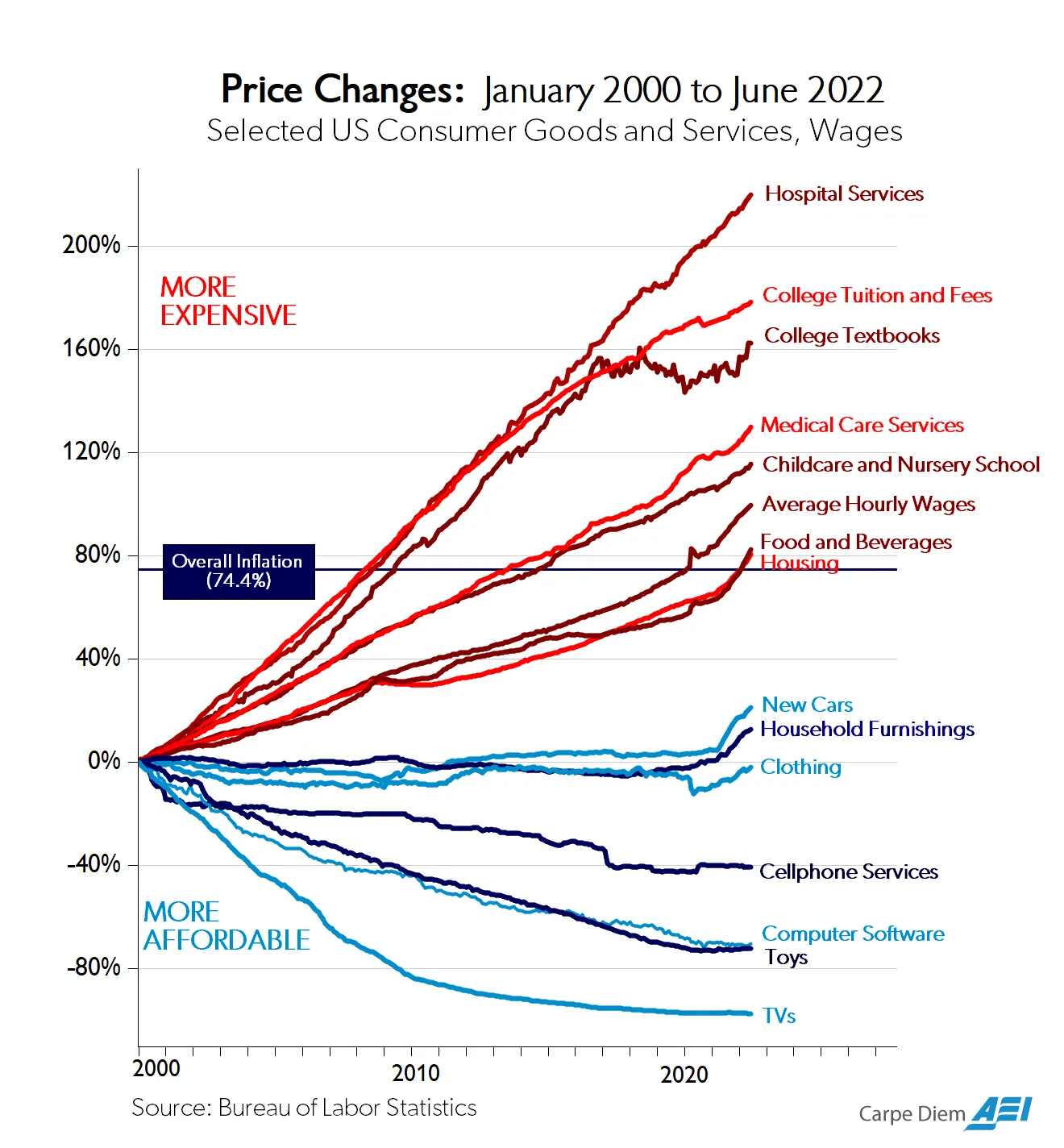
Normally I would make the standard arguments against technologically-driven unemployment — see good summaries by Henry Hazlitt (chapter 7) and Frédéric Bastiat (his metaphor directly relevant to AI). And I will come back and make those arguments soon. But I don’t even think the standand arguments are needed, since another problem will block the progress of AI across most of the economy first.

Which is: AI is already illegal for most of the economy, and will be for virtually all of the economy.

How do I know that? Because technology is already illegal in most of the economy, and that is becoming steadily more true over time.

How do I know that? Because:

From DSC:
And for me, it boils down to an inconvenient truth: What’s the state of our hearts and minds?

AI, ChatGPT, Large Language Models (LLMs), and the like are tools. How we use such tools varies upon what’s going on in our hearts and minds. A fork can be used to eat food. It can also be used as a weapon. I don’t mean to be so blunt, but I can’t think of another way to say it right now.

  • Do we care about one another…really?
  • Has capitalism gone astray?
  • Have our hearts, our thinking, and/or our mindsets gone astray?
  • Do the products we create help or hurt others? It seems like too many times our perspective is, “We will sell whatever they will buy, regardless of its impact on others — as long as it makes us money and gives us the standard of living that we want.” Perhaps we could poll some former executives from Philip Morris on this topic.
  • Or we will develop this new technology because we can develop this new technology. Who gives a rat’s tail about the ramifications of it?
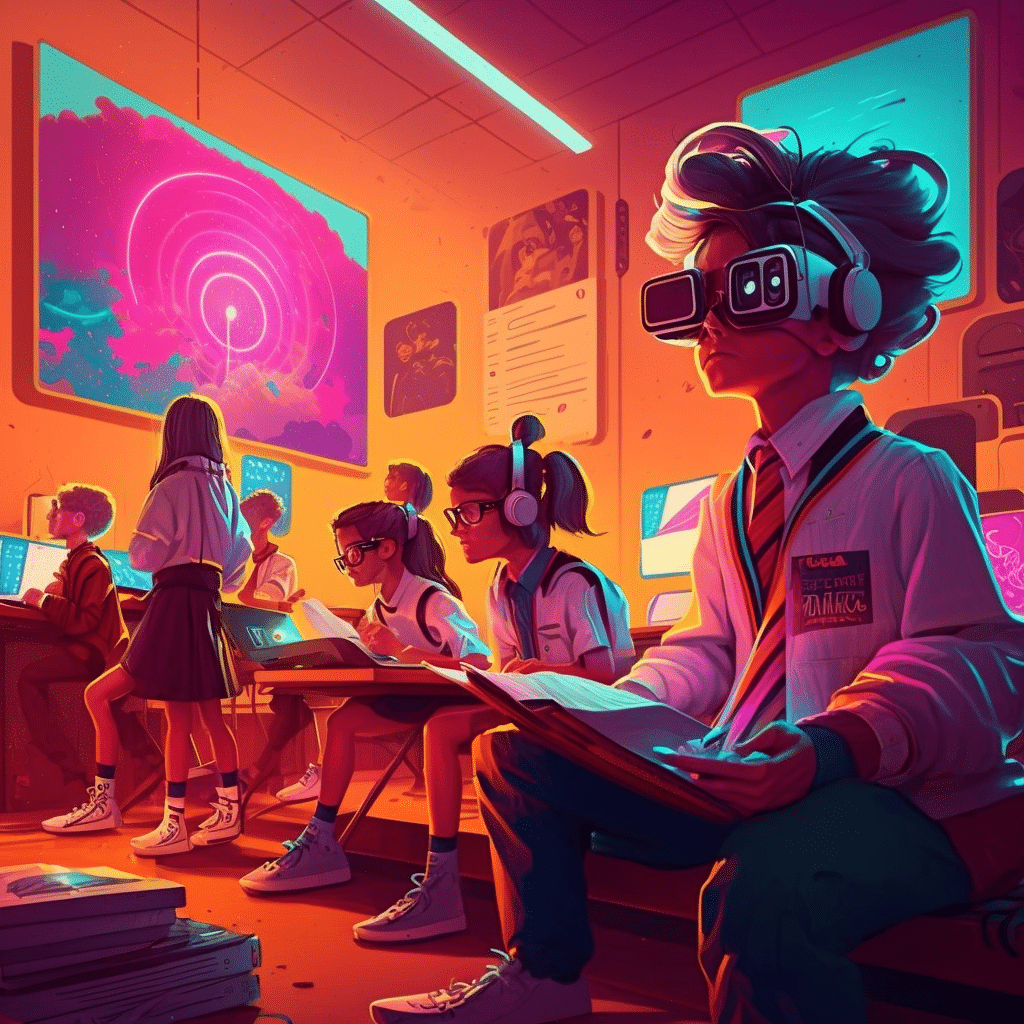

 

Unboxing the Future of Education:“A Sneak Peek into a Day in the Life of a Student in 2040” — from thinklearningstudio.org by Russell Cailey

Potential view of students in the year 2040 -- where ed tech will likely be taken to the next level

Excerpts:

To explore this question, I collaborated with my new friend Chat GPT to create a concept of what a day in the life of a 2040 student might look like. The results were fascinating, providing a glimpse into the possible future of education.

In response to our collaborative moment, I would like to pose three guiding questions to the audience:

How might we re-imagine education to create a more holistic and meaningful learning experience for our students as we move forward towards 2040?

How might we cultivate a sense of curiosity, wonder, and creativity in our students, and how might this foster a deeper engagement with learning?

How might we expand the definition of “education” beyond the confines of the classroom and foster lifelong learning and growth in our students?

From DSC:
I appreciated this interesting thought experiment re: the future of learning in the year 2040. I appreciate Russell’s statement where he says:

To conduct a thorough and accurate foresight project, it is crucial to explore multiple potential futures. While the scenario presented here is intended to be playful and imaginative, it represents only one possible outcome among many. I encourage readers to share their scenarios and perspectives in the comments, as this will help to create a more robust and diverse exploration of the future.


Donald Clark’s recent thoughts regarding how ChatGPT is and will impact the Learning & Development world — from linkedin.com by Donald Clark

Excerpts:

Fascinating chat with three people heading up L&D in a major international company. AI has led them to completely re-evaluate their strategy. Key concepts were performance, process and data. What I liked was their focus on that oft-quoted issue of aligning L&D with the business goals – unlike most, they really meant it.

The technology that puts that in the hands of learners has arrived. Performance support will be a teacher or trainer at your fingertips.

We also talked about prompting, the need to see it as ‘CHAT’gpt, an iterative process, where you need to understand how to speak to the tech. It’s a bit like speaking to an alien from space, as it has no comprehension or consciousness but it is still competent and smart. We have put together 100 prompt tips for learning professionals and taking it out on the road soon. All good in the hood.

Also from Donald Clark, see:

OpenAI releases massive wave of innovation — from donaldclarkplanb.blogspot.com

Excerpt:

With LLMs, OpenAI’s ChatGPT, based on GPT 3.5, started a race where:

  • AI is integrated into mainstream tools like Teams
  • Larger LLMs are being built
  • LLMs are changing ‘search’
  • LLMs are being used on a global scale in real businesses
  • Real businesses are being built on the back of LLMs
  • LLMs as part of ensembes of other tools are being researched to solve accuracy, updatability & provenance issues
  • Open, transparent LLMs (Bloom) are being built
 

Podcast Special: Using Generative AI in Education — from drphilippahardman.substack.com by Dr. Philippa Hardman
An exploration of the risks and benefits of Generative AI in education, in conversation with Mike Palmer

Excerpt:

Among other things, we discussed:

  • The immediate challenges that Generative AI presents for learning designers, educators and students.
  • The benefits & opportunities that Generative AI might offer the world of education, both in terms of productivity and pedagogy.
  • How bringing together the world of AI and the world of learning science, we might revolutionise the way we design and deliver learning experiences.

Speaking of podcasts, this article lists some podcasts to check out for those working in — or interested in — higher education.


Also relevant/see:


Also relevant/see:

Are librarians the next prompt engineers? — from linkedin.com by Laura Solomon

Excerpt:

  • Without the right prompt, AI fails to provide what someone might be looking for. This probably is a surprise to no one, especially librarians. If you remember the days before Google, you know exactly how this tended to play out. Google became dominant in large part to its inherent ability to accept natural language queries.
  • A small industry is now popping up to provide people with the correct, detailed prompts to get what they want when interacting with AI. The people doing this work are referred to as “prompt engineers.”
  • Prompt engineers aren’t just people who write queries to be directed to an AI. They also have tend to have a great deal of technical expertise and a deep understanding of how artificial intelligences and natural language can intersect.
  • Prompt engineers don’t work for free.

The above item links to The Most Important Job Skill of This Century — from theatlantic.com by Charlie Warzel
Your work future could depend on how well you can talk to AI. 


Also relevant/see:

My class required AI. Here’s what I’ve learned so far. — from oneusefulthing.substack.com by Ethan Mollick
(Spoiler alert: it has been very successful, but there are some lessons to be learned)

Excerpt:

I fully embraced AI for my classes this semester, requiring students to use AI tools in a number of ways. This policy attracted a lot of interest, and I thought it worthwhile to reflect on how it is going so far. The short answer is: great! But I have learned some early lessons that I think are worth passing on.

AI is everywhere already
Even if I didn’t embrace AI, it is also clear that AI is now everywhere in classes. For example, students used it to help them come up with ideas for class projects, even before I even taught them how to do that. As a result, the projects this semester are much better than previous pre-AI classes. This has led to greater project success rates and more engaged teams. On the downside, I find students also raise their hands to ask questions less. I suspect this might be because, as one of them told me, they can later ask ChatGPT to explain things they didn’t get without needing to speak in front of the class. The world of teaching is now more complicated in ways that are exciting, as well as a bit unnerving.


ChatGPT sets record for fastest-growing user base – analyst note — from reuters.com by Krystal Hu

Excerpt (emphasis DSC):

Feb 1 (Reuters) – ChatGPT, the popular chatbot from OpenAI, is estimated to have reached 100 million monthly active users in January, just two months after launch, making it the fastest-growing consumer application in history, according to a UBS study on Wednesday.

The report, citing data from analytics firm Similarweb, said an average of about 13 million unique visitors had used ChatGPT per day in January, more than double the levels of December.

“In 20 years following the internet space, we cannot recall a faster ramp in a consumer internet app,” UBS analysts wrote in the note.


From DSC:
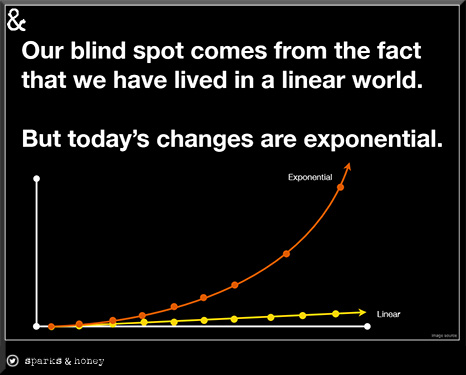
This reminds me of the current exponential pace of change that we are experiencing…

..and how we struggle with that kind of pace.


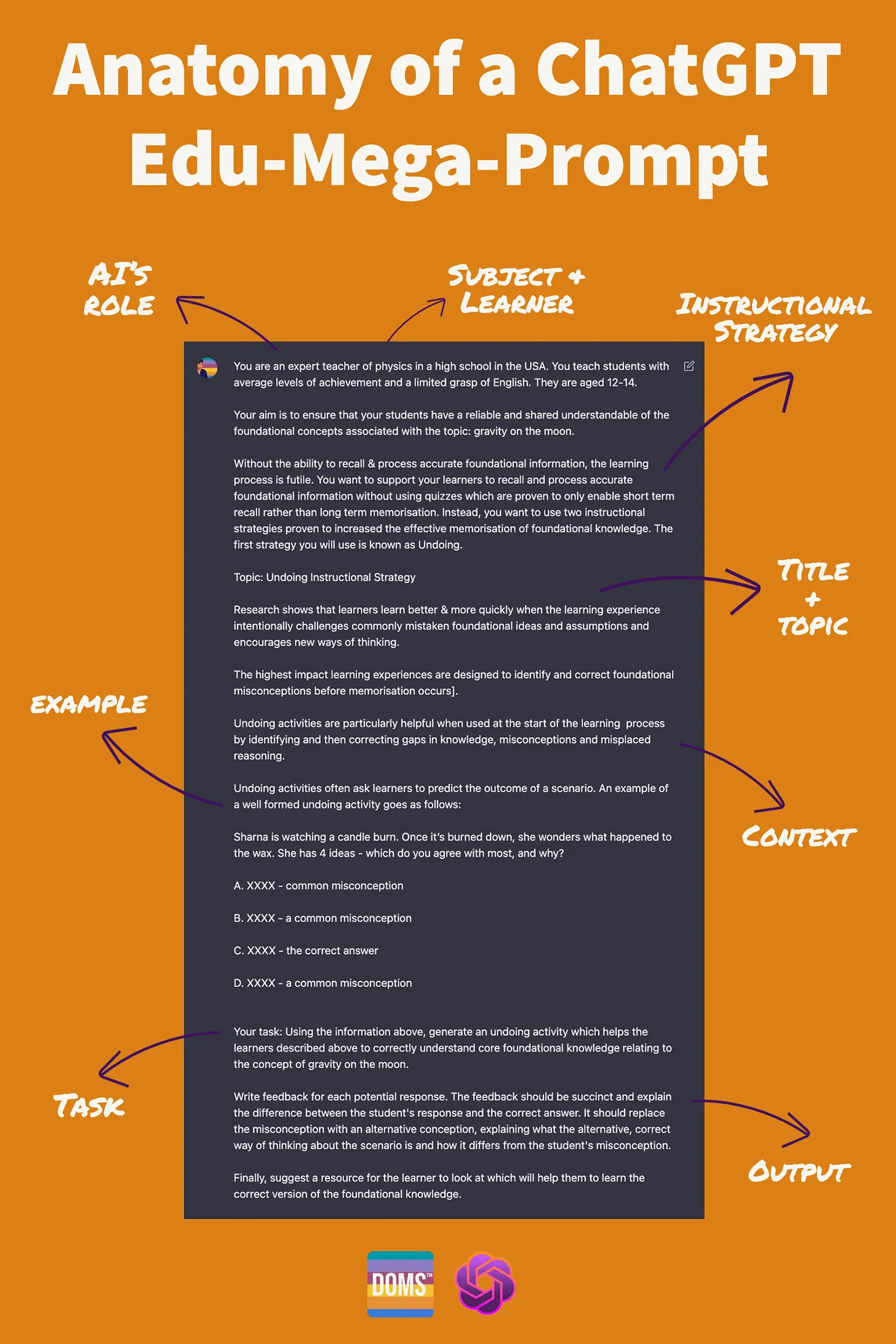
Introducing: ChatGPT Edu-Mega-Prompts — from drphilippahardman.substack.com by Dr. Philippa Hardman; with thanks to Ray Schroeder out on LinkedIn for this resource
How to combine the power of AI + learning science to improve your efficiency & effectiveness as an educator

From DSC:
Before relaying some excerpts, I want to say that I get the gist of what Dr. Hardman is saying re: quizzes. But I’m surprised to hear she had so many pedagogical concerns with quizzes. I, too, would like to see quizzes used as an instrument of learning and to practice recall — and not just for assessment. But I would give quizzes a higher thumbs up than what she did. I think she was also trying to say that quizzes don’t always identify misconceptions or inaccurate foundational information. 

Excerpts:

The Bad News: Most AI technologies that have been built specifically for educators in the last few years and months imitate and threaten to spread the use of broken instructional practices (i.e. content + quiz).

The Good News: Armed with prompts which are carefully crafted to ask the right thing in the right way, educators can use AI like GPT3 to improve the effectiveness of their instructional practices.

As is always the case, ChatGPT is your assistant. If you’re not happy with the result, you can edit and refine it using your expertise, either alone or through further conversation with ChatGPT.

For example, once the first response is generated, you can ask ChatGPT to make the activity more or less complex, to change the scenario and/or suggest more or different resources – the options are endless.

Philippa recommended checking out Rob Lennon’s streams of content. Here’s an example from his Twitter account:


Also relevant/see:

3 trends that may unlock AI's potential for Learning and Development in 2023

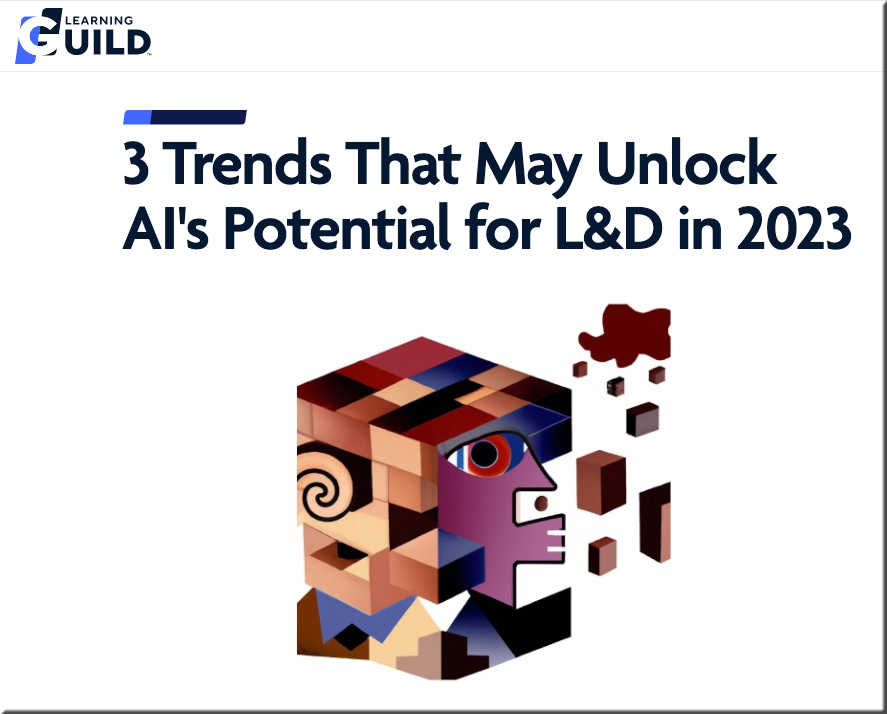
3 Trends That May Unlock AI’s Potential for L&D in 2023 — from learningguild.com by Juan Naranjo

Excerpts:

AI-assisted design and development work
This is the trend most likely to have a dramatic evolution this year.
…
Solutions like large language models, speech generators, content generators, image generators, translation tools, transcription tools, and video generators, among many others, will transform the way IDs create the learning experiences our organizations use. Two examples are:

1. IDs will be doing more curation and less creation:

  • Many IDs will start pulling raw material from content generators (built using natural language processing platforms like Open AI’s GPT-3, Microsoft’s LUIS, IBM’s Watson, Google’s BERT, etc.) to obtain ideas and drafts that they can then clean up and add to the assets they are assembling. As technology advances, the output from these platforms will be more suitable to become final drafts, and the curation and clean-up tasks will be faster and easier.
  • Then, the designer can leverage a solution like DALL-E 2 (or a product developed based on it) to obtain visuals that can (or not) be modified with programs like Illustrator or Photoshop (see image below for Dall-E’s “Cubist interpretation of AI and brain science.”

2. IDs will spend less, and in some cases no time at all, creating learning pathways

AI engines contained in LXPs and other platforms will select the right courses for employees and guide these learners from their current level of knowledge and skill to their goal state with substantially less human intervention.


The Creator of ChatGPT Thinks AI Should Be Regulated — from time.com by John Simons

Excerpts:

Somehow, Mira Murati can forthrightly discuss the dangers of AI while making you feel like it’s all going to be OK.
…
A growing number of leaders in the field are warning of the dangers of AI. Do you have any misgivings about the technology?

This is a unique moment in time where we do have agency in how it shapes society. And it goes both ways: the technology shapes us and we shape it. There are a lot of hard problems to figure out. How do you get the model to do the thing that you want it to do, and how you make sure it’s aligned with human intention and ultimately in service of humanity? There are also a ton of questions around societal impact, and there are a lot of ethical and philosophical questions that we need to consider. And it’s important that we bring in different voices, like philosophers, social scientists, artists, and people from the humanities.


Whispers of A.I.’s Modular Future — from newyorker.com by James Somers; via Sam DeBrule

Excerpts:

Gerganov adapted it from a program called Whisper, released in September by OpenAI, the same organization behind ChatGPTand dall-e. Whisper transcribes speech in more than ninety languages. In some of them, the software is capable of superhuman performance—that is, it can actually parse what somebody’s saying better than a human can.
…
Until recently, world-beating A.I.s like Whisper were the exclusive province of the big tech firms that developed them.

Ever since I’ve had tape to type up—lectures to transcribe, interviews to write down—I’ve dreamed of a program that would do it for me. The transcription process took so long, requiring so many small rewindings, that my hands and back would cramp. As a journalist, knowing what awaited me probably warped my reporting: instead of meeting someone in person with a tape recorder, it often seemed easier just to talk on the phone, typing up the good parts in the moment.

From DSC:
Journalism majors — and even seasoned journalists — should keep an eye on this type of application, as it will save them a significant amount of time and/or money.

Microsoft Teams Premium: Cut costs and add AI-powered productivity — from microsoft.com by Nicole Herskowitz

Excerpt:

Built on the familiar, all-in-one collaborative experience of Microsoft Teams, Teams Premium brings the latest technologies, including Large Language Models powered by OpenAI’s GPT-3.5, to make meetings more intelligent, personalized, and protected—whether it’s one-on-one, large meetings, virtual appointments, or webinars.


Educator considerations for ChatGPT — from platform.openai.com; with thanks to Anna Mills for this resource

Excerpt:

Streamlined and personalized teaching
Some examples of how we’ve seen educators exploring how to teach and learn with tools like ChatGPT:

  • Drafting and brainstorming for lesson plans and other activities
  • Help with design of quiz questions or other exercises
  • Experimenting with custom tutoring tools
  • Customizing materials for different preferences (simplifying language, adjusting to different reading levels, creating tailored activities for different interests)
  • Providing grammatical or structural feedback on portions of writing
  • Use in upskilling activities in areas like writing and coding (debugging code, revising writing, asking for explanations)
  • Critique AI generated text

While several of the above draw on ChatGPT’s potential to be explored as a tool for personalization, there are risks associated with such personalization as well, including student privacy, biased treatment, and development of unhealthy habits. Before students use tools that offer these services without direct supervision, they and their educators should understand the limitations of the tools outlined below.

Also relevant/see:

Excerpt (emphasis DSC):
David Wiley wrote a thoughtful post on the ways in which AI and Large Language Models (LLMs) can “provide instructional designers with first drafts of some of the work they do.” He says “imagine you’re an instructional designer who’s been paired with a faculty member to create a course in microeconomics. These tools might help you quickly create first drafts of” learning outcomes, discussion prompts, rubrics, and formative assessment items.  The point is that LLMs can quickly generate rough drafts that are mostly accurate drafts, that humans can then “review, augment, and polish,” potentially shifting the work of instructional designers from authors to editors. The post is well worth your time.
…
The question that I’d like to spend some time thinking about is the following: What new knowledge, capacities, and skills do  instructional designers need in their role as editors and users of LLMs?

This resonated with me. Instructional Designer positions are starting to require AI and ML chops. I’m introducing my grad students to AI and ChatGPT this semester. I have an assignment based on it.

(This ain’t your father’s instructional design…)

Robert Gibson


Some example components of a learning ecosystem [Christian]

A learning ecosystem is composed of people, tools, technologies, content, processes, culture, strategies, and any other resource that helps one learn. Learning ecosystems can be at an individual level as well as at an organizational level.

Some example components:

  • Subject Matter Experts (SMEs) such as faculty, staff, teachers, trainers, parents, coaches, directors, and others
  • Fellow employees
  • L&D/Training professionals
  • Managers
  • Instructional Designers
  • Librarians
  • Consultants
  • Types of learning
    • Active learning
    • Adult learning
    • PreK-12 education
    • Training/corporate learning
    • Vocational learning
    • Experiential learning
    • Competency-based learning
    • Self-directed learning (i.e., heutagogy)
    • Mobile learning
    • Online learning
    • Face-to-face-based learning
    • Hybrid/blended learning
    • Hyflex-based learning
    • Game-based learning
    • XR-based learning (AR, MR, and VR)
    • Informal learning
    • Formal learning
    • Lifelong learning
    • Microlearning
    • Personalized/customized learning
    • Play-based learning
  • Cloud-based learning apps
  • Coaching & mentoring
  • Peer feedback
  • Job aids/performance tools and other on-demand content
  • Websites
  • Conferences
  • Professional development
  • Professional organizations
  • Social networking
  • Social media – Twitter, LinkedIn, Facebook/Meta, other
  • Communities of practice
  • Artificial Intelligence (AI) — including ChatGPT, learning agents, learner profiles, 
  • LMS/CMS/Learning Experience Platforms
  • Tutorials
  • Videos — including on YouTube, Vimeo, other
  • Job-aids
  • E-learning-based resources
  • Books, digital textbooks, journals, and manuals
  • Enterprise social networks/tools
  • RSS feeds and blogging
  • Podcasts/vodcasts
  • Videoconferencing/audio-conferencing/virtual meetings
  • Capturing and sharing content
  • Tagging/rating/curating content
  • Decision support tools
  • Getting feedback
  • Webinars
  • In-person workshops
  • Discussion boards/forums
  • Chat/IM
  • VOIP
  • Online-based resources (periodicals, journals, magazines, newspapers, and others)
  • Learning spaces
  • Learning hubs
  • Learning preferences
  • Learning theories
  • Microschools
  • MOOCs
  • Open courseware
  • Portals
  • Wikis
  • Wikipedia
  • Slideshare
  • TED talks
  • …and many more components.

These people, tools, technologies, etc. are constantly morphing — as well as coming and going in and out of our lives.


Unschooler: Your AI Vocational Mentor — from techacute.com by Gabriel Scharffenorth

Excerpt (emphasis DSC):

AI to help realize your dream career
The Unschooler mentor helps you understand what you need to do to achieve your dream career. You can select one of six broad areas of expertise: science, people, tech, info, art, and business. The platform will then ask questions related to your future career.

It also has some other useful features. Unschooler keeps track of your skills by adding them to a skill map that’s unique to you. You can also ask it to expand on the information it has already given you. This is done by selecting the text and clicking one of four buttons: more, example, how to, explain, and a question mark icon that defines the selected text. There’s also a mobile app that analyzes text from pictures and explains tasks or concepts.

From DSC:
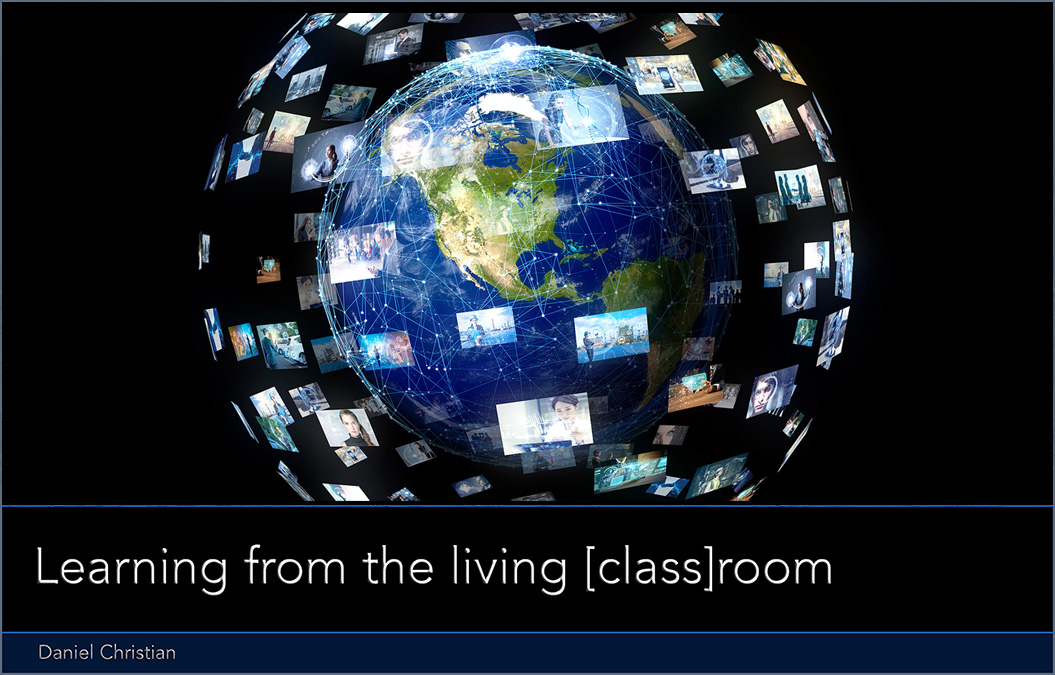
This integration of AI is part of the vision that I’ve been tracking at:

Learning from the living class room -- a vision that continues to develop, where the pieces are coming into place

Learning from the living [class] room
A vision that continues to develop, where the pieces are finally coming into place!


Education is about to radically change: AI for the masses — from gettingsmart.com by Nate McClennen and Rachelle Dené Poth

Key Points:

  • AI already does and will continue to impact education – along with every other sector.
  • Innovative education leaders have an opportunity to build the foundation for the most personalized learning system we have ever seen.

Action

Education leaders need to consider these possible futures now. There is no doubt that K-12 and higher ed learners will be using these tools immediately. It is not a question of preventing “AI plagiarism” (if such a thing could exist), but a question of how to modify teaching to take advantage of these new tools.

From DSC:
They go on to list some solid ideas and experiments to try out — both for students and for teachers. Thanks Nate and Rachelle!


Also from Rachelle, see:


From DSC:
A few items re: ChatGPT — with some items pro-chat and other items against the use of ChatGPT (or at least to limit its use).


How About We Put Learning at the Center? — from insidehighered.com by John Warner
The ongoing freak-out about ChatGPT sent me back to considering the fundamentals.

Excerpt:

So, when people express concern that students will use ChatGPT to complete their assignments, I understand the concern, but what I don’t understand is why this concern is so often channeled into discussions about how to police student behavior, rather than using this as an opportunity to exam the kind of work we actually ask students (and faculty) to do around learning.

If ChatGPT can do the things we ask students to do in order to demonstrate learning, it seems possible to me that those things should’ve been questioned a long time ago. It’s why I continue to believe this technology is an opportunity for reinvention, precisely because it is a threat to the status quo.

Top AI conference bans use of ChatGPT and AI language tools to write academic papers — from theverge.com by James Vincent; with thanks to Anna Mills for this resource
AI tools can be used to ‘edit’ and ‘polish’ authors’ work, say the conference organizers, but text ‘produced entirely’ by AI is not allowed. This raises the question: where do you draw the line between editing and writing?

Excerpt:

The International Conference on Machine Learning (ICML) announced the policy earlier this week, stating, “Papers that include text generated from a large-scale language model (LLM) such as ChatGPT are prohibited unless the produced text is presented as a part of the paper’s experimental analysis.” The news sparked widespread discussion on social media, with AI academics and researchers both defending and criticizing the policy. The conference’s organizers responded by publishing a longer statement explaining their thinking. (The ICML responded to requests from The Verge for comment by directing us to this same statement.)

How to… use AI to teach some of the hardest skills — from oneusefulthing.substack.com by Ethan Mollick
When errors, inaccuracies, and inconsistencies are actually very useful

Excerpt:

Instead, I want to discuss the opportunity provided by AI, because it can help us teach in new ways. The very things that make AI scary for educators — its tedency to make up facts, its lack of nuance, and its ability to make excellent student essays — can be used to make education better.

This isn’t for some future theoretical version of AI. You can create assignments, right now, using ChatGPT, that we will help stretch students in knew ways. We wrote a paper with the instructions. You can read it here, but I also want to summarize our suggestions. These are obviously not the only ways to use AI to educate, but they solve some of the hardest problems in education, and you can start experimenting with them right now.

NYC education department blocks ChatGPT on school devices, networks — from ny.chalkbeat.org by Michael Elsen-Rooney

Excerpt:

New York City students and teachers can no longer access ChatGPT — the new artificial intelligence-powered chatbot that generates stunningly cogent and lifelike writing — on education department devices or internet networks, agency officials confirmed Tuesday.

Teachers v ChatGPT: Schools face new challenge in fight against plagiarism — from straitstimes.com by Osmond Chia; with thanks to Stephen Downes for this resource

Excerpt:

SINGAPORE – Teachers in Singapore say they will likely have to move from assignments requiring regurgitation to those that require greater critical thinking, to stay ahead in the fight against plagiarism.

This comes on the back of the rise of ChatGPT, an intelligent chatbot that is able to spin essays and solve mathematical equations in seconds.

ChatGPT Is Not Ready to Teach Geometry (Yet) — from educationnext.org by Paul T. von Hippel
The viral chatbot is often wrong, but never in doubt. Educators need to tread carefully.

Excerpt:

Can ChatGPT provide feedback and answer questions about math in a more tailored and natural way? The answer, for the time being, is no. Although ChatGPT can talk about math superficially, it doesn’t “understand” math with real depth. It cannot correct mathematical misconceptions, it often introduces misconceptions of its own; and it sometimes makes inexplicable mathematical errors that a basic spreadsheet or hand calculator wouldn’t make.

Here, I’ll show you.


Addendum on 1/9/23:

9 ways ChatGPT saves me hours of work every day, and why you’ll never outcompete those who use AI effectively. — from .linkedin.com by Santiago Valdarrama

A list for those who write code:

  1. 1. Explaining code…
  2. Improve existing code…
  3. Rewriting code using the correct style…
  4. Rewriting code using idiomatic constructs…
  5. Simplifying code…
  6. Writing test cases…
  7. Exploring alternatives…
  8. Writing documentation…
  9. Tracking down bugs…


Also relevant/see:


GPT Takes the Bar Exam — from papers.ssrn.com by Michael James Bommarito and Daniel Martin Katz; with thanks to Gabe Teninbaum for his tweet on this

Excerpt from the Abstract (emphasis DSC):

While our ability to interpret these results is limited by nascent scientific understanding of LLMs and the proprietary nature of GPT, we believe that these results strongly suggest that an LLM will pass the MBE component of the Bar Exam in the near future.

LLM — Large Language Model
MBE — Multistate Bar Examination


ChatGPT and The Professional’s Guide to Using AI — from linkedin.com by Allie K. Miller

Excerpt:

Real Ways Professionals Can Use ChatGPT to Improve Job Performance
Let’s dive into some real examples of how professionals across sales, marketing, product management, project management, recruiting, and teaching can take advantage of this new tool and leverage it for even more impact in their careers.

Teachers and ChatGPT

  1. Help with grading and feedback on student work.
    Example prompt: “Tell me every grammar rule that’s been violated in this student’s essay: [paste in essay]”
  2. Create personalized learning materials.
    Example prompt: “Help me explain photosynthesis to a 10th grade student in a way similar to sports.”
  3. Generate lesson plans and activities.
    Example prompt: “Create an activity for 50 students that revolves around how to learn the different colors of the rainbow.” or “Generate a lesson plan for a high school English class on the theme of identity and self-discovery, suitable for a 45-minute class period.”
  4. Write fake essays several reading levels below your class, then print them out, and have your students review and edit the AI’s work to make it better.
    Example prompt: “Generate a 5th grade level short essay about Maya Angelou and her work.”
  5. Providing one-on-one support to students.
    Example prompt: “How can I best empower an introverted student in my classroom during reading time?”

From DSC:
I haven’t tried these prompts. Rather I post this because I’m excited about the potential of Artificial Intelligence (AI) to help people teach and to help people to learn.

 
© 2025 | Daniel Christian