


L&D Global Sentiment Survey 2026 — from linkedin.com by Donald H. Taylor
On 01/12/2026,
in corporate / business world, corporate universities / corporate training, ideas, India, instructional design, learning, learning ecosystem, Learning Experience Design, skills, training / L&D, usability, vendors,
by Daniel Christian
Corporate Training Solutions That Actually Improve Performance — from blog.upsidelearning.com by Unnati Umare
Designing Learning Around Performance in the Flow of Work
Once it becomes clear that completion does not reliably translate into changed behavior, the next question tends to surface on its own. If training is not failing outright, then what it should be designed around becomes harder to ignore.
In most organizations, the answer remains content. Content is easier to define, easier to build, and easier to track, even when it explains very little about how work actually gets done.
Performance-aligned learning design shifts that starting point by paying closer attention to how work unfolds in practice. Instead of organizing learning around topics or courses, design decisions begin with what a role requires people to notice, decide, and act on during real situations.
On 10/21/2025,
in 21st century, Africa, Artificial Intelligence/Agents/LLMs/and Related, Asia, Australia, Canada, ethics, Europe, human-computer interaction (HCI), India, intelligent systems, legislatures / government / legal, mathematics, platforms, programming, science, society, surviving, UK, United States,
by Daniel Christian
International AI Safety Report — from internationalaisafetyreport.org

About the International AI Safety Report
The International AI Safety Report is the world’s first comprehensive review of the latest science on the capabilities and risks of general-purpose AI systems. Written by over 100 independent experts and led by Turing Award winner Yoshua Bengio, it represents the largest international collaboration on AI safety research to date. The Report gives decision-makers a shared global picture of AI’s risks and impacts, serving as the authoritative reference for governments and organisations developing AI policies worldwide. It is already shaping debates and informing evidence-based decisions across research and policy communities.
On 09/17/2025,
in 21st century, Africa, Artificial Intelligence/Agents/LLMs/and Related, Asia, Australia, business, Canada, career development, change, corporate / business world, emerging technologies, Europe, experimentation, India, legislatures / government / legal, society, UK, United States, workplace,
by Daniel Christian
3 Work Trends – Issue 87 — from the World Economic Forum

1. #AI adoption is delivering real results for early movers
Three years into the generative AI revolution, a small but growing group of global companies is demonstrating the tangible potential of AI. Among firms with revenues of $1 billion or more:
- 17% report cost savings or revenue growth of at least 10% from AI.
- Almost 80% say their AI investments have met or exceeded expectations.
- Half worry they are not moving fast enough and could fall behind competitors.

The world’s first AI cabinet member — from therundown.ai by Zach Mink, Rowan Cheung, Shubham Sharma, Joey Liu & Jennifer Mossalgue
PLUS: Startup produces 3,000 AI podcast episodes weekly
The details:
- Prime Minister Edi Rama unveiled Diella during a cabinet announcement this week, calling her the first member “virtually created by artificial intelligence”.
- The AI avatar will evaluate and award all public tenders where the government contracts private firms.
- Diella already serves citizens through Albania’s digital services portal, processing bureaucratic requests via voice commands.
- Rama claims the AI will eliminate bribes and threats from decision-making, though the government hasn’t detailed what human oversight will exist.
The Rundown AI’s article links to:
- Albania appoints world’s first AI-made minister — from politico.eu by Alice Taylor
Diella, who is powered by artificial intelligence, will handle public procurement.
Anthropic Economic Index report: Uneven geographic and enterprise AI adoption — from anthropic.com
In other words, a hallmark of early technological adoption is that it is concentrated—in both a small number of geographic regions and a small number of tasks in firms. As we document in this report, AI adoption appears to be following a similar pattern in the 21st century, albeit on shorter timelines and with greater intensity than the diffusion of technologies in the 20th century.
To study such patterns of early AI adoption, we extend the Anthropic Economic Index along two important dimensions, introducing a geographic analysis of Claude.ai conversations and a first-of-its-kind examination of enterprise API use. We show how Claude usage has evolved over time, how adoption patterns differ across regions, and—for the first time—how firms are deploying frontier AI to solve business problems.
How human-centric AI can shape the future of work — from weforum.org by Sapthagiri Chapalapalli
- Last year, use of AI in the workplace increased by 5.5% in Europe alone.
- AI adoption is accelerating, but success depends on empowering people, not just deploying technology.
- Redesigning roles and workflows to combine human creativity and critical thinking with AI-driven insights is key.
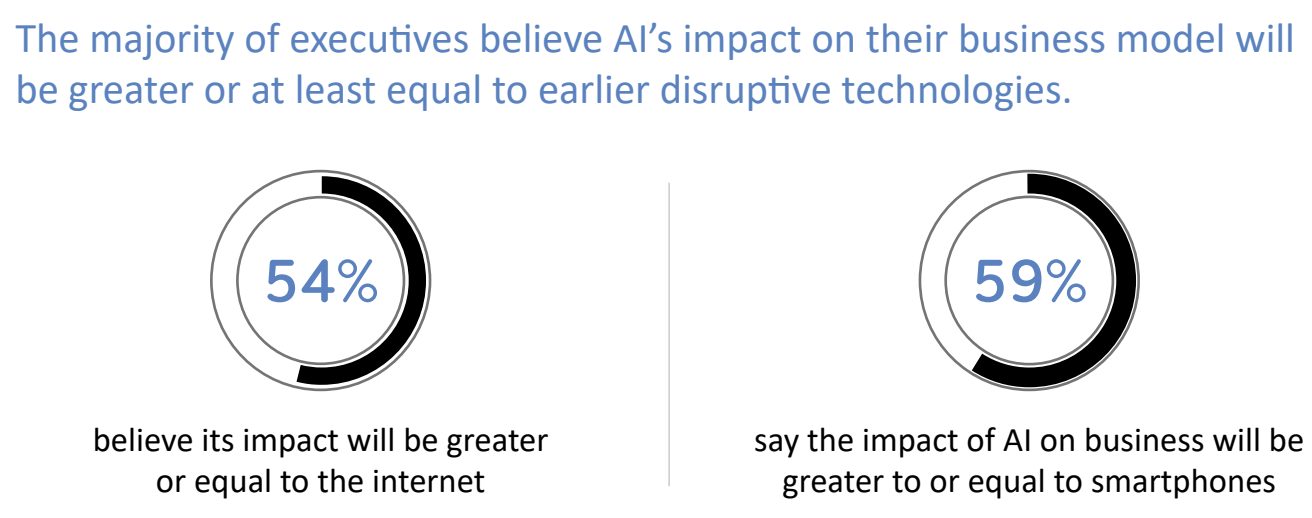
Organizations are having to rapidly adapt their business models. Image: TCS
Using ChatGPT to get a job — from linkedin.com by Ishika Rawat
On 07/11/2025,
in Africa, business, career development, change, collaboration, colleges, communities of practice, community colleges, corporate / business world, curriculum, entrepreneurship, experimentation, faculty/staff, higher education, ideas, India, teaching & learning, United States, universities,
by Daniel Christian
Is graduate employability a core university priority? — from timeshighereducation.com by Katherine Emms and Andrea Laczik
Universities, once judged primarily on the quality of their academic outcomes, are now also expected to prepare students for the workplace. Here’s how higher education is adapting to changing pressures
A clear, deliberate shift in priorities is under way. Embedding employability is central to an Edge Foundation report, carried out in collaboration with UCL’s Institute of Education, looking at how English universities are responding. In placing employability at the centre of their strategies – not just for professional courses but across all disciplines – the two universities that were analysed in this research show how they aim to prepare students for the labour market overall. Although the employability strategy is initialled by the universities’ senior leaders, the research showed that realising this employability strategy must be understood and executed by staff at all levels across departments. The complexity of offering insights into industry pathways and building relevant skills involves curricula development, student-centred teaching, careers support, partnership work and employer engagement.
Every student can benefit from an entrepreneurial mindset — from timeshighereducation.com by Nicolas Klotz
To develop the next generation of entrepreneurs, universities need to nurture the right mindset in students of all disciplines. Follow these tips to embed entrepreneurial education
This shift demands a radical rethink of how we approach entrepreneurial mindset in higher education. Not as a specialism for a niche group of business students but as a core competency that every student, in every discipline, can benefit from.
At my university, we’ve spent the past several years re-engineering how we embed entrepreneurship into daily student life and learning.
What we’ve learned could help other institutions, especially smaller or resource-constrained ones, adapt to this new landscape.
The first step is recognising that entrepreneurship is not only about launching start-ups for profit. It’s about nurturing a mindset that values initiative, problem-solving, resilience and creative risk-taking. Employers increasingly want these traits, whether the student is applying for a traditional job or proposing their own venture.
Build foundations for university-industry partnerships in 90 days— from timeshighereducation.com by Raul Villamarin Rodriguez and Hemachandran K
Graduate employability could be transformed through systematic integration of industry partnerships. This practical guide offers a framework for change in Indian universities
The most effective transformation strategy for Indian universities lies in systematic industry integration that moves beyond superficial partnerships and towards deep curriculum collaboration. Rather than hoping market alignment will occur naturally, institutions must reverse-engineer academic programmes from verified industry needs.
Our six-month implementation at Woxsen University demonstrates this framework’s practical effectiveness, achieving more than 130 industry partnerships, 100 per cent faculty participation in transformation training, and 75 per cent of students receiving industry-validated credentials with significantly improved employment outcomes.
On 05/05/2025,
in business side of he, changing business models, CMS/LMS, colleges, community colleges, content development, aggregation, repositories, cost of getting a degree, credentialing, digital learning, education technology, experimentation, faculty/staff, global / globalization, higher education, human-computer interaction (HCI), India, instructional design, learning ecosystem, Learning from the Living [Class] Room, microlearning, MOOCs -- Massive Open Online Courses, online learning, open courseware and systems, platforms, productivity / tips and tricks, skills, United States, universities, vendors,
by Daniel Christian
MOOC-Style Skills Training — from the-job.beehiiv.com by Paul Fain
WGU and tech companies use Open edX for flexible online learning. Could community colleges be next?
Open Source for Affordable Online Reach
The online titan Western Governors University is experimenting with an open-source learning platform. So are Verizon and the Indian government. And the platform’s leaders want to help community colleges take the plunge on competency-based education.
…
The Open edX platform inherently supports self-paced learning and offers several features that make it a good fit for competency-based education and skills-forward learning, says Stephanie Khurana, Axim’s CEO.
“Flexible modalities and a focus on competence instead of time spent learning improves access and affordability for learners who balance work and life responsibilities alongside their education,” she says.
“Plus, being open source means institutions and organizations can collaborate to build and share CBE-specific tools and features,” she says, “which could lower costs and speed up innovation across the field.”
Axim thinks Open edX’s ability to scale affordably can support community colleges in reaching working learners across an underserved market.
On 04/25/2025,
in Access to Justice (A2J), human-computer interaction (HCI), India, innovation, law schools, Legal operations, legal reform, legal technologies, legislatures / government / legal, UK, United States, workplace,
by Daniel Christian
Record Law Grad Employment Rates Suggest AI Isn’t Killing Off Lawyers Just Yet — from lawnext.com by Bob Ambrogi
At a time when legal doomsayers have been predicting the imminent replacement of junior associates by AI legal assistants, the law school graduating class of 2024 has delivered a contrary verdict: Human lawyers aren’t going anywhere just yet.
According to the latest American Bar Association employment report, the legal job market is showing not just resilience, but growth. The data, reported as of March 17, 2025 — approximately 10 months after spring graduations — reveals that 82.2% of the 38,937 2024 law school graduates secured positions requiring bar admission — a two-point increase from the previous year.
Also see:
- Record Law School Employment Rates in 2024 Defy Market Fears Despite Enrollment Surge — from jdjournal.com by Maria Lenin Laus
Leeds to host UK’s largest LegalTech event outside London as sector booms in the region by 50% — from yorkshirepost.co.uk by Jo Jessop
Leeds is gearing up to welcome hundreds of Legal and Tech professionals [on 4/24/25], as it hosts the fourth annual LegalTech in Leeds Conference – now the largest LegalTech event outside of London.
Set to take place on April 24 at Cloth Hall Court, Leeds, the 2025 conference comes at a time of extraordinary growth for the region’s LegalTech sector, which has seen a 50% increase in LegalTech firms between 2023 and 2024, according to a new report from Whitecap Consulting.
The event, themed “People & Technology,” will spotlight how digital innovation is transforming the legal sector while keeping human experience at its core. This year’s agenda will delve into the practical ways individuals and organisations can collaborate to deliver more efficient, accessible, and forward-thinking legal services. With hundreds of attendees expected, it’s set to be a landmark gathering of legal professionals, lawyers, tech professionals, entrepreneurs, academics and policymakers.
How Legal Tech is Reshaping the Broader Legal Ecosystem — from community.nasscom.in
The legal profession, long characterized by tradition and precedent, is undergoing a transformative shift driven by technological innovation. Legal technology, or “legal tech,” is not merely a tool for efficiency; it is a catalyst redefining the practice of law, the structure of legal services, and the accessibility of justice.
1. Streamlining Legal Operations
2. Enhancing Access to Justice
3. Transforming Legal Education and Roles
4. Redefining Client Expectations and Service Delivery
5. plus several more
On 03/12/2025,
in 21st century, 24x7x365 access, Access to Justice (A2J), business, change, changing business models, disruption, India, innovation, law schools, Legal operations, legal reform, legal technologies, legislatures / government / legal, new business models, productivity / tips and tricks, United States,
by Daniel Christian
The $100 billion disruption: How AI is reshaping legal tech — from americanbazaaronline.com by Rohan Hundia and Rajesh Mehta
The Size of the Problem: Judicial Backlog and Inefficiencies
India has a massive backlog of more than 47 million pending cases, with civil litigation itself averaging 1,445 days in resolution. In the United States, federal courts dispose of nearly 400,000 cases a year, and complex litigations take years to complete. Artificial intelligence-driven case law research, contract automation, and predictive analytics will cut legal research times by 90%, contract drafting fees by 60%, and hasten case settlements, potentially saving billions of dollars in legal costs.
This is not just an evolution—it is a permanent change toward data-driven jurisprudence, with AI supplementing human capabilities, speeding up delivery of justice, and extending access to legal services. The AI revolution for legal tech is not on its way; it is already under way, dismantling inefficiencies and transforming the legal world in real time.
Scaling and Improving Legal Tech Projects — from legaltalknetwork.com by Taylor Sartor, Luigi Bai, David Gray, and Cat Moon
Legal tech innovators discuss how they are working to scale and improve their successful projects on Talk Justice. FosterPower and Legal Aid Content Intelligence (LACI) leverage technology to make high-quality legal information available to people for free online. Both also received Technology Initiative Grants (TIG) from the Legal Services Corporation to launch their projects. Then, in 2024 they were both selected for a different TIG, called the Sustainability, Enhancement and Adoption (SEA) grant. This funding supports TIG projects that have demonstrated excellent results as they improve their tools and work to increase uptake.
On 01/14/2025,
in 21st century, 24x7x365 access, Artificial Intelligence/Agents/LLMs/and Related, bots, collaboration, colleges, community colleges, content development, aggregation, repositories, corporate / business world, corporate universities / corporate training, education technology, emerging technologies, ethics, experimentation, faculty/staff, future, game-changing environment, generational differences, Google, India, innovation, instructional design, intelligent systems, intelligent tutoring, IT in HE, K-12 related, law schools, learning, learning ecosystem, Learning Experience Design, Learning from the Living [Class] Room, morals/values, NVIDIA, platforms, policy, research, student-related, teachers, teaching & learning, tools, training / L&D, trends, United States, universities, vendors, voice recognition / voice enabled interfaces,
by Daniel Christian
Students Pushback on AI Bans, India Takes a Leading Role in AI & Education & Growing Calls for Teacher Training in AI — from learningfuturesdigest.substack.com by Dr. Philippa Hardman
Key developments in the world of AI & Education at the turn of 2025
At the end of 2024 and start of 2025, we’ve witnessed some fascinating developments in the world of AI and education, from from India’s emergence as a leader in AI education and Nvidia’s plans to build an AI school in Indonesia to Stanford’s Tutor CoPilot improving outcomes for underserved students.
Other highlights include Carnegie Learning partnering with AI for Education to train K-12 teachers, early adopters of AI sharing lessons about implementation challenges, and AI super users reshaping workplace practices through enhanced productivity and creativity.
Also mentioned by Philippa:
- AI for Education and Carnegie Learning’s new partnership
- India emerges as Global Leader in AI Education: Bosch Tech Compass 2025 — from medianews4u.com
57% Indians receive employer-provided AI training, surpassing Germany, and other European nations
Bengaluru: India is emerging as a global leader in artificial intelligence (AI) education, with over 50% of its population actively self-educating in AI-related skills, according to Bosch’s fourth annual Tech Compass Survey. The report highlights India’s readiness to embrace AI in work, education, and daily life, positioning the nation as a frontrunner in the AI revolution.
ElevenLabs AI Voice Tool Review for Educators — from aiforeducation.io with Amanda Bickerstaff and Mandy DePriest
AI for Education reviewed the ElevenLabs AI Voice Tool through an educator lens, digging into the new autonomous voice agent functionality that facilitates interactive user engagement. We showcase the creation of a customized vocabulary bot, which defines words at a 9th-grade level and includes options for uploading supplementary material. The demo includes real-time testing of the bot’s capabilities in defining terms and quizzing users.
The discussion also explored the AI tool’s potential for aiding language learners and neurodivergent individuals, and Mandy presented a phone conversation coach bot to help her 13-year-old son, highlighting the tool’s ability to provide patient, repetitive practice opportunities.
While acknowledging the technology’s potential, particularly in accessibility and language learning, we also want to emphasize the importance of supervised use and privacy considerations. Right now the tool is currently free, this likely won’t always remain the case, so we encourage everyone to explore and test it out now as it continues to develop.
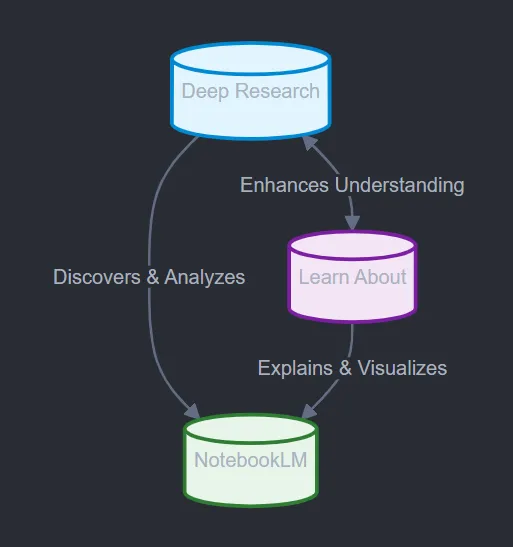
How to Use Google’s Deep Research, Learn About and NotebookLM Together — from ai-supremacy.com by Michael Spencer and Nick Potkalitsky
Supercharging your research with Google Deepmind’s new AI Tools.
Why Combine Them?
Faster Onboarding: Start broad with Deep Research, then refine and clarify concepts through Learn About. Finally, use NotebookLM to synthesize everything into a cohesive understanding.
Deeper Clarity: Unsure about a concept uncovered by Deep Research? Head to Learn About for a primer. Want to revisit key points later? Store them in NotebookLM and generate quick summaries on demand.
Adaptive Exploration: Create a feedback loop. Let new terms or angles from Learn About guide more targeted Deep Research queries. Then, compile all findings in NotebookLM for future reference.
.
Getting to an AI Policy Part 1: Challenges — from aiedusimplified.substack.com by Lance Eaton, PH.D.
Why institutional policies are slow to emerge in higher education
There are several challenges to making policy that make institutions hesitant to or delay their ability to produce it. Policy (as opposed to guidance) is much more likely to include a mixture of IT, HR, and legal services. This means each of those entities has to wrap their heads around GenAI—not just for their areas but for the other relevant areas such as teaching & learning, research, and student support. This process can definitely extend the time it takes to figure out the right policy.
That’s naturally true with every policy. It does not often come fast enough and is often more reactive than proactive.
Still, in my conversations and observations, the delay derives from three additional intersecting elements that feel like they all need to be in lockstep in order to actually take advantage of whatever possibilities GenAI has to offer.
- Which Tool(s) To Use
- Training, Support, & Guidance, Oh My!
- Strategy: Setting a Direction…
Prophecies of the Flood — from oneusefulthing.org by Ethan Mollick
What to make of the statements of the AI labs?
What concerns me most isn’t whether the labs are right about this timeline – it’s that we’re not adequately preparing for what even current levels of AI can do, let alone the chance that they might be correct. While AI researchers are focused on alignment, ensuring AI systems act ethically and responsibly, far fewer voices are trying to envision and articulate what a world awash in artificial intelligence might actually look like. This isn’t just about the technology itself; it’s about how we choose to shape and deploy it. These aren’t questions that AI developers alone can or should answer. They’re questions that demand attention from organizational leaders who will need to navigate this transition, from employees whose work lives may transform, and from stakeholders whose futures may depend on these decisions. The flood of intelligence that may be coming isn’t inherently good or bad – but how we prepare for it, how we adapt to it, and most importantly, how we choose to use it, will determine whether it becomes a force for progress or disruption. The time to start having these conversations isn’t after the water starts rising – it’s now.
On 11/19/2024,
in Artificial Intelligence/Agents/LLMs/and Related, Blockchain, computer science, design, emerging technologies, engineering, experimentation, game-changing environment, Google, graphics, India, innovation, Microsoft, NVIDIA, Open AI, platforms, programming, robotics, simulations, society, tools, usability, user experience (UX), vendors,
by Daniel Christian
Miscommunication Leads AI-Based Hiring Tools Astray — from adigaskell.org
Nearly every Fortune 500 company now uses artificial intelligence (AI) to screen resumes and assess test scores to find the best talent. However, new research from the University of Florida suggests these AI tools might not be delivering the results hiring managers expect.
The problem stems from a simple miscommunication between humans and machines: AI thinks it’s picking someone to hire, but hiring managers only want a list of candidates to interview.
Without knowing about this next step, the AI might choose safe candidates. But if it knows there will be another round of screening, it might suggest different and potentially stronger candidates.
AI agents explained: Why OpenAI, Google and Microsoft are building smarter AI agents — from digit.in by Jayesh Shinde
In the last two years, the world has seen a lot of breakneck advancement in the Generative AI space, right from text-to-text, text-to-image and text-to-video based Generative AI capabilities. And all of that’s been nothing short of stepping stones for the next big AI breakthrough – AI agents. According to Bloomberg, OpenAI is preparing to launch its first autonomous AI agent, which is codenamed ‘Operator,’ as soon as in January 2025.
Apparently, this OpenAI agent – or Operator, as it’s codenamed – is designed to perform complex tasks independently. By understanding user commands through voice or text, this AI agent will seemingly do tasks related to controlling different applications in the computer, send an email, book flights, and no doubt other cool things. Stuff that ChatGPT, Copilot, Google Gemini or any other LLM-based chatbot just can’t do on its own.
2025: The year ‘invisible’ AI agents will integrate into enterprise hierarchies — from venturebeat.com by Taryn Plumb
In the enterprise of the future, human workers are expected to work closely alongside sophisticated teams of AI agents.
According to McKinsey, generative AI and other technologies have the potential to automate 60 to 70% of employees’ work. And, already, an estimated one-third of American workers are using AI in the workplace — oftentimes unbeknownst to their employers.
However, experts predict that 2025 will be the year that these so-called “invisible” AI agents begin to come out of the shadows and take more of an active role in enterprise operations.
“Agents will likely fit into enterprise workflows much like specialized members of any given team,” said Naveen Rao, VP of AI at Databricks and founder and former CEO of MosaicAI.
State of AI Report 2024 Summary — from ai-supremacy.com by Michael Spencer
Part I, Consolidation, emergence and adoption.
Which AI Image Model Is the Best Speller? Let’s Find Out! — from whytryai.com by Daniel Nest
I test 7 image models to find those that can actually write.
The contestants
I picked 7 participants for today’s challenge:
- DALL-E 3 by OpenAI (via Microsoft Designer)
- FLUX1.1 [pro] by Black Forest Labs (via Glif)
- Ideogram 2.0 by Ideogram (via Ideogram)
- Imagen 3 by Google (via Image FX)
- Midjourney 6.1 by Midjourney (via Midjourney)
- Recraft V3 by Recraft (via Recraft)
- Stable Diffusion 3.5 Large by Stability AI (via Hugging Face)
How to get started with AI agents (and do it right) — from venturebeat.com by Taryn Plumb
So how can enterprises choose when to adopt third-party models, open source tools or build custom, in-house fine-tuned models? Experts weigh in.
OpenAI, Google and Anthropic Are Struggling to Build More Advanced AI — from bloomberg.com (behind firewall)
Three of the leading artificial intelligence companies are seeing diminishing returns from their costly efforts to develop newer models.
OpenAI and others seek new path to smarter AI as current methods hit limitations — from reuters.com by Krystal Hu and Anna Tong
Summary
- AI companies face delays and challenges with training new large language models
- Some researchers are focusing on more time for inference in new models
- Shift could impact AI arms race for resources like chips and energy
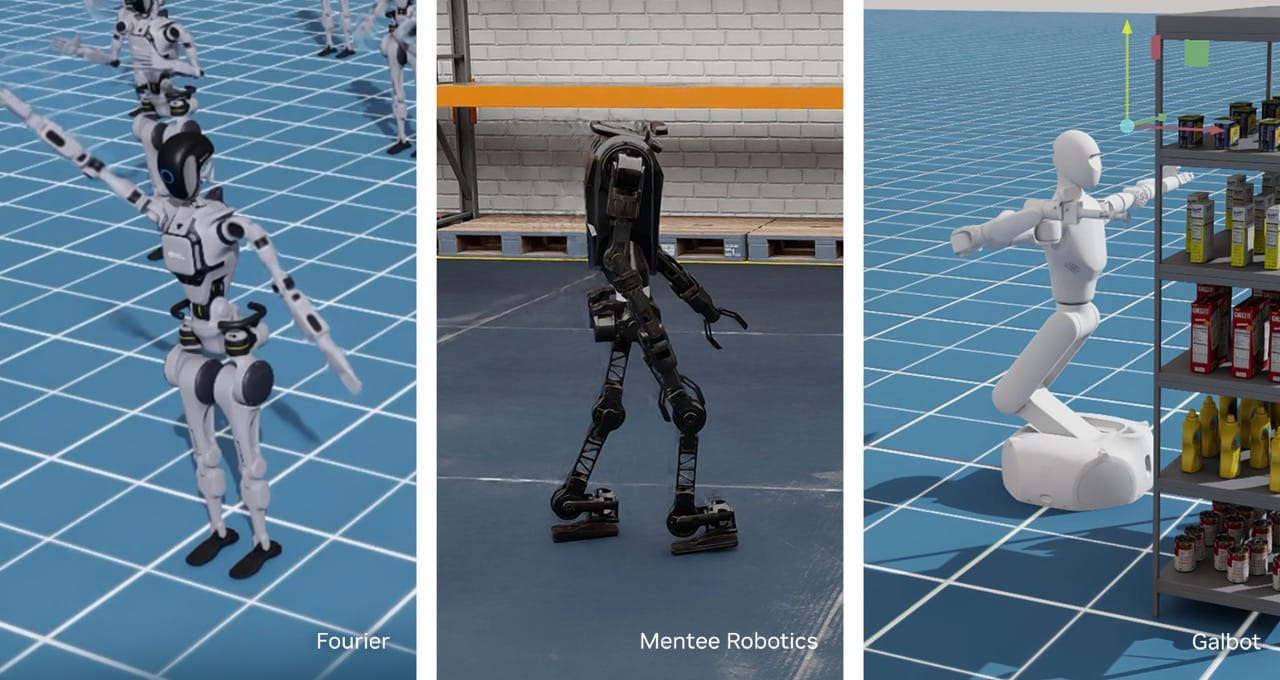
NVIDIA Advances Robot Learning and Humanoid Development With New AI and Simulation Tools — from blogs.nvidia.com by Spencer Huang
New Project GR00T workflows and AI world model development technologies to accelerate robot dexterity, control, manipulation and mobility.
How Generative AI is Revolutionizing Product Development — from intelligenthq.com
A recent report from McKinsey predicts that generative AI could unlock up to $2.6 to $4.4 annually trillion in value within product development and innovation across various industries. This staggering figure highlights just how significantly generative AI is set to transform the landscape of product development. Generative AI app development is driving innovation by using the power of advanced algorithms to generate new ideas, optimize designs, and personalize products at scale. It is also becoming a cornerstone of competitive advantage in today’s fast-paced market. As businesses look to stay ahead, understanding and integrating technologies like generative AI app development into product development processes is becoming more crucial than ever.
What are AI Agents: How To Create a Based AI Agent — from ccn.com by Lorena Nessi
Key Takeaways
- AI agents handle complex, autonomous tasks beyond simple commands, showcasing advanced decision-making and adaptability.
- The Based AI Agent template by Coinbase and Replit provides an easy starting point for developers to build blockchain-enabled AI agents.
- AI based agents specifically integrate with blockchain, supporting crypto wallets and transactions.
- Securing API keys in development is crucial to protect the agent from unauthorized access.
What are AI Agents and How Are They Used in Different Industries? — from rtinsights.com by Salvatore Salamone
AI agents enable companies to make smarter, faster, and more informed decisions. From predictive maintenance to real-time process optimization, these agents are delivering tangible benefits across industries.