From DSC:
The types of postings/articles (such as the one below) make me ask, are we not shooting ourselves in the foot with AI and recent college graduates? If the bottom rungs continue to disappear, internships and apprenticeships can only go so far. There aren’t enough of them — especially valuable ones. So as this article points out, there will be threats to the long-term health of our talent pipelines unless we can take steps to thwart those impacts — and to do so fairly soon.

To me…vocational training and jobs are looking better all the time — i.e., plumbers, carpenters, electricians, mechanics, and more.


Can New Graduates Compete With AI? — from builtin.combyRichard Johnson
The increasing adoption of AI automation is compressing early-career jobs. How should new graduates get a foothold in the economy now?

Summary: AI is hollowing out entry-level roles by automating routine tasks, eliminating a rung on the career ladder. New graduates face intense competition and a rising skill floor. While firms gain short-term productivity, they risk a long-term talent shortage by eliminating junior training grounds.

Conversations about AI have covered all grounds: hype, fear and slop. But while some roll their eyes at yet another automation headline, soon?to?be graduates are watching the labor market with a very different level of urgency. They’re entering a world where the old paradox of needing experience to get experience is colliding with a new reality: AI is absorbing the standardized, routine tasks that once defined entry?level work. The result isn’t just a shift in job descriptions or skill-requirements, but rather a structural reshaping of the career pipeline.

Entry-level workers face an outsized disruption to their long-term career trajectories. They have the least buffer to adapt given their lack of relevant job market experience and heightened financial pressure to secure a job quickly with the student-debt repayment periods for recent graduates looming.

Momentum early in one’s career matters, and the first job on a resume shapes future compensation bands and opportunities. It also serves as a signal for perceived specialization or, at minimum, interest. Losing that foothold has compounding effects to one’s career ladder.


Also relevant/see:

New Anthropic Institute to Study Risks and Economic Effects of Advanced AI — from campustechnology.com by John K. Waters

Key Takeaways

  • Anthropic has launched the Anthropic Institute, a new research effort focused on the biggest societal challenges posed by more powerful AI systems.
  • The institute will study how advanced AI could affect the economy, the legal system, public safety, and broader social outcomes.
  • Anthropic co-founder Jack Clark will lead the institute in a new role as the company’s head of public benefit.
  • The new unit brings together Anthropic’s existing red-teaming, societal impacts, and economic research work, while adding new hires and new research areas.
 

Across the divide: reimagining faculty-staff collaboration in higher education — from timeshighereducation.com by Saskia van de Gevel
Academic units do best when they harness different viewpoints – from field scientists and curriculum designers to extension professionals – to drive innovation and relevance. Saskia van de Gevel offers proactive advice

Universities are not sustained by individual leaders or isolated units. They are sustained by teams of people who bring different kinds of expertise to a shared mission. When faculty and professional staff collaborate as genuine partners – aligned around outcomes, clear about roles and committed to mutual respect – institutions become more resilient, innovative and effective.

Also from timeshighereducation.com, see:

Again, we don’t send them 200 CVs. We might send 20, but they’re meticulously shortlisted. The employer saves time, the student feels they are being taken seriously and trust builds quickly on both sides.

And because we work closely with employers, we learn something universities often struggle to find out early enough: what the market is asking for now.

What academics need to know: we can’t do this without you
If I could say one thing to academic colleagues anywhere, it’s that employability can’t sit next to the curriculum. It has to live with it.


The Surprising Power Of A Degreeless Career — from forbes.com by Mark C. Perna
Fueled by ballooning tuition and disillusionment with higher education, degreeless careers are on the rise. Here’s how to thrive in today’s workplace without a college degree.

“We are beginning to break down the national narrative that you have to go to college to get a ‘good job’,” says Kathleen deLaski, author of “Who Needs College Anymore?” and founder and chairman of The Education Design Lab. “The fastest growing form of college enrollment is actually short term certificates and certifications at community colleges, rather than degrees.”

But the real dealbreaker is the fast-rising cost of college, especially for the debt-averse Generation Z. “Most folks know someone who is saddled by student debt,” says deLaski. “So they have more of a ‘buyer-beware’ view when considering a four year degree.”

This presents a challenge especially to younger workers, who simply haven’t had the time yet to gain that experience. It’s a catch-22: to land the entry-level job, you must have experience, but to gain that experience, you have to have that entry-level job.

The answer is to expand our definition of work experience. It doesn’t have to be gained in the exact field where you want to be hired, nor does it strictly have to be in an employment setting. “Earning certifications, doing internships and apprenticeships, even volunteering, and leading a team or a project really add authenticity to your resume,” says deLaski.

In other words, work skills gained via personal experience are usually highly transferable to other industries. Work, learning and volunteer experience of any kind—if you can make the case for its relevance—is the new litmus test.


Faster, thinner: Colleges are swiftly trimming a B.A. degree to three years — from hechingerreport.org by Jon Marcus
Needing to fill seats and facing demands for faster routes to jobs, more colleges are shortening degree programs

That’s an option being made available by colleges and universities with astonishing speed — especially in the notoriously slow-moving world of higher education: an entirely new kind of bachelor’s degree muscling into the space between the traditional four-year version and the two-year associate degree. Three-year degrees have existed, but they simply jammed those 120 credits into fewer semesters.

At least one school, Ensign College in Utah, will convert all of its bachelor’s degrees into the new, reduced-credit, three-year kind, it announced in February. Nearly 60 other universities and colleges are planning, considering or have already launched them in some disciplines. States including Indiana have required or are considering requiring their public universities to add reduced-credit bachelor’s degrees. Even graduate and professional schools are being pressed to shorten the duration of degrees.

Even more than employers, consumers have lost patience with the time and expense it takes to get a four-year bachelor’s degree, according to the advocates and politicians pushing schools to offer them. More than half of students who start down the conventional four-year path today take even longer than four years, according to the Department of Education.

Also from Jon Marcus, see:


The Future of College in an AI World — from linkedin.com by Jeff Selingo
In today’s issue: The tension over AI in higher ed; application inflation continues and testing is back; what’s the future of the original classroom technology, the learning management system. 


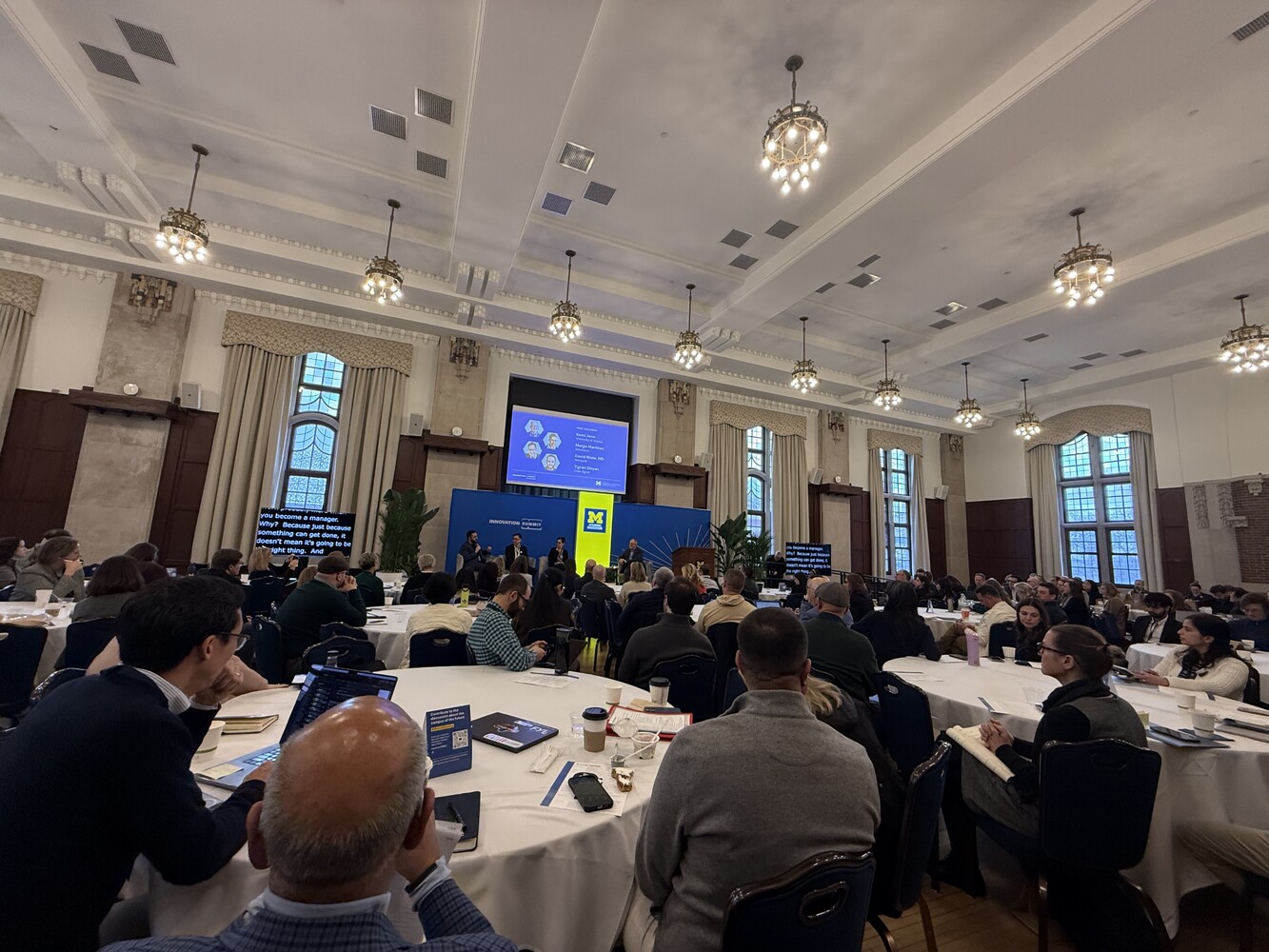
Hundreds of higher ed and industry leaders gathered Tuesday for a summit
on AI and the future of learning at the University of Michigan.
.

Conversations like the one we had at Michigan this week are necessary, but the action rarely matches the ambition.

  • We say the humanities are the operating system of an AI world, yet students and parents don’t believe it. They’re voting with their feet toward STEM, business, and narrowly tailored majors they believe will lead to a job.
  • Meanwhile, colleges are quietly eliminating the very humanities degrees the panelists were championing, employers are cutting the entry rungs off the career ladder for new graduates, and as Podium Education co-founder Christopher Parrish reminded us yesterday, there’s a yawning gap between demand for experience and the internships that actually exist.


AI Music Generators: Teaching With These Catchy AI Tools — from techlearning.com by Erik Ofgang
AI music generators are getting better and better, and there are more applications in the classroom as a result.

Are All AI Music Generators More Or Less The Same?
No. After experimenting with a few various free ones, I found a wide range of quality with the same prompts.

Gemini is the only one I’d currently recommend. It’s user-friendly but limited and only creates 30-second clips. Other music generators could potentially outperform Gemini with prompt adjustments. The ones I tried did better with the instrumentals but struggled more with the lyrics, and that kind of defeated the purpose of the tool for me.


ChatDOC: Teaching With The AI Summarizing Tool — from techlearning.com by Erik Ofgang
ChatDOC lets users turn any PDF into an AI chatbot that can summarize the text, answer questions, and generate quizzes.

What Is ChatDOC?
ChatDOC is an AI designed to help users interact with PDFs of various types, be it research papers, short stories, or chapters from larger works. Users upload a PDF and then have the opportunity to “chat” with that document, that is speak with a chatbot that bases its answers off of the uploaded text.

ChatDOC can perform tasks such as provide a short summary, search for specific terms, explain the overall theme if it’s a work of literature, or unpack the science in a research paper.

Other similar tools are out there, but ChatDOC is definitely one of the better PDF readers I’ve used. Its free version is quick and easy-to-use, and delivers on its promise of providing an AI that can discuss a given document with users and even quiz them on it.


From AI access to workforce readiness — from chieflearningofficer.com by Johnny Hamilton, Amy Stratbucker, & Brad Bigelow
Is your workforce using the right tool with an outdated mindset and playbook? Why old playbooks fall short — and what learning leaders must do next.

The leadership opportunity
Organizations do not need to predict every future AI capability. They need systems that allow people to explore with curiosity, practice safely, reflect deeply and adapt continuously — starting with what they already have and extending as capabilities evolve.

For CLOs, this is a moment to lead from the center of change — designing workforce readiness that keeps pace with accelerating technology while making work more rewarding for employees and more valuable for the organization. That is how AI moves from the promise of transformation to demonstrated readiness and, ultimately, from promise to performance.


Addendums on 3/19/26:
How to Build Practice-Based Learning Activities with AI — from drphilippahardman.substack.com by Dr Philippa Hardman
Four evidence-based methods for designing, building & deploying active learning activities with your favourite LLM

Most L&D teams are using AI to make content faster. The real opportunity is using it as a practice engine.

The Synthesia 2026 AI in L&D Report f2026 AI in L&D Report found that the fastest-growing areas of planned AI adoption aren’t in content creation — they’re in assessments and simulations (36%), adaptive pathways (33%), and AI tutors (29%). In other words: L&D teams are starting to realise that the most powerful use of AI isn’t producing learning materials. It’s creating environments where learners actually practise.

And you can build these right now — no dev team, no custom platform, no code. Each method below includes a prompt you can paste into your preferred AI tool to generate a working interactive prototype: a self-contained practice activity with a briefing screen, a live AI interaction, and a debrief — all running in the browser, ready to share with stakeholders or deploy to learners.

OpenAI Adds Interactive Math and Science Learning Tools to ChatGPT — from campustechnology.com by Rhea Kelly

Key Takeaways

  • ChatGPT adds interactive learning tools: OpenAI introduced interactive math and science visualizations that allow users to explore formulas, variables, and relationships in real time.
  • The tool currently covers over 70 core math and science topics and is aimed initially at high school and college-level learners.
  • Users can adjust variables, manipulate formulas, and immediately see how changes affect graphs and outcomes.
 

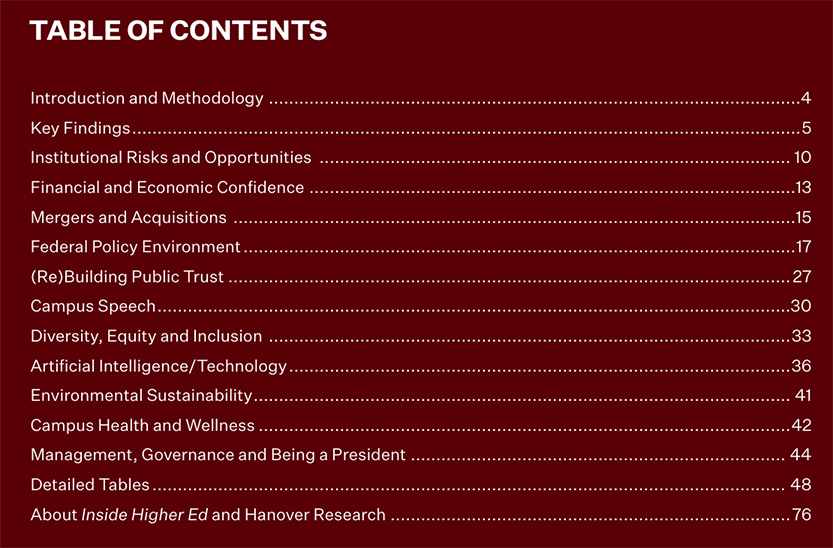
2026 Survey of College and University Presidents — from insidehighered.com, Liaison, & Jenzabar
Download and explore exclusive insights from the 2026 Survey of College and University Presidents to see how these campus leaders are responding to financial volatility, political interference, rapid advances in AI, and where they believe the biggest risks and opportunities lie as they look toward 2030.

In this year’s survey, presidents share perspectives on:

  • How presidents assess the second Trump administration’s impact on higher education
  • Which emerging or evolving educational models they plan to add or expand in the coming years
  • How effective they believe higher education has been in shaping national conversations arout AI
  • The issues presidents expect will have the greatest impact on higher education by 2030


How to Get Consistent, On-Brand Course Images from Any AI Image Tool — from drphilippahardman.substack.com by Dr. Philippa Hardman
A 3-step workflow that works every time — whatever AI tool you’re using

Most designers try to describe their way to an image. That’s the wrong approach. The goal is to show the tool the world it should be working in, then give it the minimum it needs to place your subject inside that world.

Every long, over-specified prompt is a sign that your visual inputs aren’t doing enough work.

The fix is an 3-step process which gives you superpowers in AI image generation…


How AI Could Transform, or Replace, the LMS — from futureupodcast.com by Jeff Selingo, Michael Horn, and Matthew Pittinsky

Tuesday, March 10, 2026 – For 30 years now, colleges have relied on the Learning Management System, or LMS, as a key portal for professors and students to teach and learn. It’s a tool that has helped colleges adapt to online learning and bring digital tools to classroom teaching. But generative AI seems poised to disrupt the LMS. And it’s unclear whether the LMS will evolve—or be replaced altogether. For this episode, Jeff and Michael talk with a pioneer of the technology, Matthew Pittinsky, about the lessons of past moments of tech disruption like the smartphone and cloud computing and about what could be different this time. This episode is made with support from Ascendium Education Group.


Gemini, Explained — from wondertools.substack.com by Jeremy Caplan
5 features worth your time — tested and compared

Google’s AI, Gemini, has quickly become one of the AI tools I rely on most. It builds dashboards and creates remarkable infographics. It spins out comprehensive research reports in minutes that would once have taken days to assemble.

It’s improving every month. On March 13, Google announced Ask Maps, so you can query Gemini about things like “Which nearby tennis courts are open with lights so I can play tonight?” On March 10, Gemini added new integrations to build, summarize, and analyze your Google Docs, Sheets, and Slides.

In today’s post below: catch up on the Gemini features worth your time, candid comparisons with other AI tools, and answers to the questions I hear most.


How we’re reimagining Maps with Gemini — from blog.google
Ask Maps answers your real-world questions with a conversation, and Immersive Navigation makes your route more intuitive.

Today, Google Maps is fundamentally changing what a map can do. By bringing together the world’s freshest map with our most capable Gemini models, we’re transforming exploration into a simple conversation and making driving more intuitive than ever with our biggest navigation upgrade in over a decade.

Ask anything about any place
We’re introducing Ask Maps, a new conversational experience that answers complex, real-world questions a map could never answer before. Now you can ask for things like, “My phone is dying — where can I charge it without having to wait in a long line for coffee?” or “Is there a public tennis court with lights on that I can play at tonight?” Previously, finding this information meant lots of research and sifting through reviews. But now, you can just tap the “Ask Maps” button and get your questions answered conversationally, with a customized map to help you visualize your options.


The Rungs of the Career Ladder We Removed — from by Dr. Michelle Weise
On the slow, quiet disappearance of learning HOW to work

There used to be a time when starting a job meant being a little lost. You sat in on meetings you didn’t run. You watched someone else handle the difficult client, draft the tricky email, navigate the room when the room shifted. You made your first draft of something, and someone returned it bleeding red ink. And somehow — through the mess and the margin notes — you learned.

That time is vanishing.

In just the first seven months of 2025, generative AI adoption was linked to thousands of job cuts. But the headline number misses the quieter, more consequential story: it’s not just fewer jobs. It’s the disappearance of the work that teaches you how to work.

So here’s the uncomfortable question: if genAI is absorbing the entry-level doing, where does that formation happen now?

We have to answer that. Not theoretically. Practically. Because the ladder hasn’t disappeared — but we’ve removed the bottom rungs. And no employer is going to drop a newly minted graduate into a mid-career role and hope they figure it out.


The Future of Learning Looks Like Workforce Infrastructure — from workshift.org by Bruno V. Manno

For years, “ed tech” was an umbrella term grouping schools, online platforms, courses, credentials, and software under one idea: technology applied to education. That shorthand made it easier for investors, policymakers, and institutions to talk about innovation without rethinking how learning fits into the economy. Today, it no longer explains what’s happening.

That’s the central insight of “The European Learning & Work Funding Report” by Brighteye Ventures, a research and advisory firm tracking investment at the intersection of learning, work, and productivity. The report’s seventh edition shows that learning is no longer funded primarily as education. It is increasingly funded as part of how work gets done.

Across Europe, and increasingly the U.S., capital is flowing not toward courses or credentials but toward systems that are closer to production, including hiring platforms, staffing firms, clinical decision tools, payroll systems, and compliance software. These are not educational products, though learning is embedded throughout them.

In these systems, learning is not the point. Outcomes are.

Build hybrid institutions that erase boundaries. Stop forcing learners to navigate disconnected systems. Create partnerships that blend K-12 schools, community colleges, training providers, and employers into one integrated system, so students move through one coherent system, not four separate bureaucracies.


Teach Smarter with AI — from wondertools.substack.com by Jeremy Caplan and Lance Eaton
10 tested strategies from two educators who actually use them

I recently talked with Lance Eaton, Senior Associate Director of AI and Teaching & Learning at Northeastern University and writer of AI + Education = Simplified. We traded ideas about what’s actually working. We came up with 10 specific, practical ways anyone who teaches, coaches, or leads can put AI to work.

Watch the full conversation above, or read highlights below.


Beyond Audio Summaries: How to Use NotebookLM to *Actually* Design Better Learning — from drphilippahardman.substack.com by Dr. Philippa Hardman
Five methods to maximise the value of NotebookLM’s features

In practice, what makes NotebookLM different for learning designers is four things:

  • Answers grounded in your sources (with citations):
  • Source toggling:
  • Multi-format studio & multi-source summaries:
  • Persistent workspace:


5 Evidence-Based Methods NotebookLM Operationalises…


Shadow AI Isn’t a Threat: It’s a Signal — from campustechnology.com by Damien Eversmann
Unofficial AI use on campus reveals more about institutional gaps than misbehavior.

Key Takeaways

  • Shadow AI is widespread in higher education: Faculty, researchers, students, and staff are using AI tools outside official IT channels, including consumer platforms and public cloud services that may involve sensitive data.
  • Unauthorized AI use creates data, compliance, and cost risks: Consumer AI tools may store or reuse user data, while uncoordinated adoption drives redundant licenses, unpredictable cloud costs, and weaker security oversight.
  • Institutions are shifting from restriction to enablement: Some campuses are making approved paths easier by offering ready-to-use research environments, campus-managed AI tools, clear guidance on data and vendors, and streamlined approval processes.

How L&D Can Lead in the Age of AI Even If Your Company’s Not Ready — from learningguild.com

How to lead even when your company doesn’t allow AI
Even if your corporation isn’t ready for AI, you can still research tools personally to stay ahead of the curve, so when organizational restrictions lift, you are ready to use AI for learning right away. Here are some tools you can test at home if they’re restricted in your workplace:

  • Content generation – Start testing text-based tools to get a taste of how AI can accelerate content creation. Then take it to the next level by exploring tools that generate voices, music, and sound effects.
  • AI coaching tools – Have AI pose as a customer co-worker or customer to get a taste of what it’s like to use it as a conversation coach. Next, use the voice and video capabilities in an app like ChatGPT to explore how AI can coach someone through tasks.
  • In-the-flow learning assistants – Test turning documents into a conversational avatar and interacting with it to see how it feels. Then think about how the technology could potentially transform static content into dynamic learning experiences for employees.
  • Vibe-coded simulations – Experiment with this technology by creating a simple, fun game. Afterwards, brainstorm some ideas on how it could quickly create simulations for your learners in the future.

The Higher Ed Playbook for AI Affordability — from campustechnology.com by Jason Dunn-Potter

Key Takeaways

  • Affordable AI adoption focuses on evolving existing systems: Universities are embedding AI into current devices, workflows, and legacy systems rather than rebuilding infrastructure or investing in new data centers.
  • Edge AI reduces costs and improves access: Running AI models on local devices or networks lowers cloud processing costs, enhances security, and supports learning use cases such as tutoring, translation, transcription, and adaptive learning.
  • Enterprise integration and governance drive impact: Institutions are applying AI across admissions, advising, facilities, and research workflows, supported by shared resource hubs, data governance, AI literacy, and outcome-driven implementation.


Earning a degree behind bars is difficult. Finding housing after release can be harder. — from college-inside.beehiiv.com by Charlotte West
Some prison education programs are expanding their services to provide their alumni with a place to live alongside job assistance and other support.

Short on time? Here’s what you need to know:

  • The number of people coming home from prison with college degrees is expected to increase with the return of Pell Grants. Recognizing that housing underpins successful reentry, some prison education programs are expanding their services. College Inside visited Hudson Link in New York State. 
  • In a first-person essay we published last year, incarcerated writer Kwaneta Harris asks: how can prisons celebrate Black History Month while banning the very books that tell Black history?
 

“But what’s happening right now is exponential.” — from linkedin.com by Josh Cavalier

Excerpt:

I need to be honest with you. I’ve been running experiments this week with Claude Code and Opus 4.6, and we have reached the precipice in the collapse of time required to produce high-quality text-based ID outputs.

This includes performance consulting reports, learning needs analyses, action mapping, scripts, storyboards, facilitator guides, rubrics, and technical specs.

I just mapped the entire performance consulting process into a multimodal AI integration architecture (diagram image). Every phase. Entry and contracting. Performance analysis. Cause analysis. Solution design. Implementation. Evaluation. Thirty files. System specifications for each. The next step is to vet out each “skill” with an expert performance consultant.

Then I attempted a learning output: an 8-module course built with a cognitive scaffold that moves beyond content delivery to facilitate deliberate practice, meaning-making, and guided reflection within the learner’s own context.

The result:


AI and human-centered learning — from linkedin.com by Patrick Blessinger

Democratizing opportunities

AI adaptive learning can adapt learning in real-time. These tools have the potential to provide a more personalized learning experience, but only if used properly.

The California State University system uses ChatGPT Edu (OpenAI, 2025). Students use it for AI-assisted tutoring, study aids, and writing support. These resources provide 24/7 availability of subject-matter expertise tailored to students’ learning needs. It is not a replacement for professors. Rather, it extends the reach of mentorship by reducing access barriers.

However, we must proceed with intellectual humility and ethical responsibility. Even though AI can customize messages, it cannot replace the encouragement of a teacher or professor, or the social and emotional aspects of learning. It’s at the intersection of humanistic values and knowledge development that education must find its balance.


Centering work-based learning on the 4 As—authenticity, aspiration, ability, agency — from explore.gpsed.org

In the rush to expand work-based learning (WBL), it is easy to focus on the “placement”—the logistics of getting a student into a workplace. But a placement alone isn’t a strategy. If an experience doesn’t help a student build the internal capacity to navigate their own future, we are simply checking a box.

At GPS Ed, we believe WBL is most powerful when viewed as a sequenced journey of career literacy. It starts with early awareness and exploration, giving students the chance to “try on” different roles, and scales up to intensive, hands-on experiences. By centering this journey on the 4 As—authenticity, aspiration, ability, agency—we ensure that the time invested by students, schools, and employers yields a lifelong return.


Also see:


Make Gatherings More Engaging — from wondertools.substack.com by Jeremy Caplan
Tested tools for quizzes, online discussions, & shareable docs

The hardest part of teaching — or leading meetings — is sparking engagement. Getting people to engage enthusiastically with something new can be tough. It’s especially challenging if people are overwhelmed, super busy, or just tired.

As we aim to stretch people’s thinking in a new direction, tools are just one part of the overall picture. But they can help. Last week I shared five tools for creating learning paths, interactive lessons, and new kinds of digital notebooks. Today’s follow-up recommendations focus on creative engagement.

You don’t have to be a teacher to find these resources for opening up participation useful. If you lead a team, run meetings, or collaborate with colleagues, you can benefit from these tools.

I’ve baked into this post multiple ways to engage.

 
© 2025 | Daniel Christian