LearnLM is Google's new family of models fine-tuned for learning, and grounded in educational research to make teaching and learning experiences more active, personal and engaging.

LearnLM is our new family of models fine-tuned for learning, and grounded in educational research to make teaching and learning experiences more active, personal and engaging.

.


AI in Education: Google’s LearnLM product has incredible potential — from ai-supremacy.com by Michael Spencer and Nick Potkalitsky
Google’s Ed Suite is giving Teachers new ideas for incorporating AI into the classroom.

We often talk about what Generative AI will do for coders, healthcare, science or even finance, but what about the benefits for the next generation? Permit me if you will, here I’m thinking about teachers and students.

It’s no secret that some of the most active users of ChatGPT in its heyday, were students. But how are other major tech firms thinking about this?

I actually think one of the best products with the highest ceiling from Google I/O 2024 is LearnLM. It has to be way more than a chatbot, it has to feel like a multimodal tutor. I can imagine frontier model agents (H) doing this fairly well.

What if everyone, everywhere could have their own personal AI tutor, on any topic?


ChatGPT4o Is the TikTok of AI Models — from nickpotkalitsky.substack.com by Nick Potkalitsky
In Search of Better Tools for AI Access in K-12 Classrooms

Nick makes the case that we should pause on the use of OpenAI in the classrooms:

In light of these observations, it’s clear that we must pause and rethink the use of OpenAI products in our classrooms, except for rare cases where accessibility needs demand it. The rapid consumerization of AI, epitomized by GPT4o’s transformation into an AI salesperson, calls for caution.


The Future of AI in Education: Google and OpenAI Strategies Unveiled — from edtechinsiders.substack.comby Ben Kornell

Google’s Strategy: AI Everywhere
Key Points

  • Google will win through seamless Gemini integration across all Google products
  • Enterprise approach in education to make Gemini the default at low/no additional cost
  • Functional use cases and model tuning demonstrate Google’s knowledge of educators

OpenAI’s Strategy: ChatGPT as the Front Door
Key Points

  • OpenAI taking a consumer-led freemium approach to education
  • API powers an app layer that delivers education-specific use cases
  • Betting on a large user base + app marketplace
 

A Guide to the GPT-4o ‘Omni’ Model — from aieducation.substack.com by Claire Zau
The closest thing we have to “Her” and what it means for education / workforce

Today, OpenAI introduced its new flagship model, GPT-4o, that delivers more powerful capabilities and real-time voice interactions to its users. The letter “o” in GPT-4o stands for “Omni”, referring to its enhanced multimodal capabilities. While ChatGPT has long offered a voice mode, GPT-4o is a step change in allowing users to interact with an AI assistant that can reason across voice, text, and vision in real-time.

Facilitating interaction between humans and machines (with reduced latency) represents a “small step for machine, giant leap for machine-kind” moment.

Everyone gets access to GPT-4: “the special thing about GPT-4o is it brings GPT-4 level intelligence to everyone, including our free users”, said CTO Mira Murati. Free users will also get access to custom GPTs in the GPT store, Vision and Code Interpreter. ChatGPT Plus and Team users will be able to start using GPT-4o’s text and image capabilities now

ChatGPT launched a desktop macOS app: it’s designed to integrate seamlessly into anything a user is doing on their keyboard. A PC Windows version is also in the works (notable that a Mac version is being released first given the $10B Microsoft relationship)


Also relevant, see:

OpenAI Drops GPT-4 Omni, New ChatGPT Free Plan, New ChatGPT Desktop App — from theneuron.ai [podcast]

In a surprise launch, OpenAI dropped GPT-4 Omni, their new leading model. They also made a bunch of paid features in ChatGPT free and announced a new desktop app. Pete breaks down what you should know and what this says about AI.


What really matters — from theneurondaily.com

  • Free users get 16 ChatGPT-4o messages per 3 hours.
  • Plus users get 80 ChatGPT-4o messages per 3 hours
  • Teams users 160 ChatGPT-4o messages per 3 hours.
 

io.google/2024

.


How generative AI expands curiosity and understanding with LearnLM — from blog.google
LearnLM is our new family of models fine-tuned for learning, and grounded in educational research to make teaching and learning experiences more active, personal and engaging.

Generative AI is fundamentally changing how we’re approaching learning and education, enabling powerful new ways to support educators and learners. It’s taking curiosity and understanding to the next level — and we’re just at the beginning of how it can help us reimagine learning.

Today we’re introducing LearnLM: our new family of models fine-tuned for learning, based on Gemini.

On YouTube, a conversational AI tool makes it possible to figuratively “raise your hand” while watching academic videos to ask clarifying questions, get helpful explanations or take a quiz on what you’ve been learning. This even works with longer educational videos like lectures or seminars thanks to the Gemini model’s long-context capabilities. These features are already rolling out to select Android users in the U.S.

Learn About is a new Labs experience that explores how information can turn into understanding by bringing together high-quality content, learning science and chat experiences. Ask a question and it helps guide you through any topic at your own pace — through pictures, videos, webpages and activities — and you can upload files or notes and ask clarifying questions along the way.


Google I/O 2024: An I/O for a new generation — from blog.google

The Gemini era
A year ago on the I/O stage we first shared our plans for Gemini: a frontier model built to be natively multimodal from the beginning, that could reason across text, images, video, code, and more. It marks a big step in turning any input into any output — an “I/O” for a new generation.

In this story:


Daily Digest: Google I/O 2024 – AI search is here. — from bensbites.beehiiv.com
PLUS: It’s got Agents, Video and more. And, Ilya leaves OpenAI

  • Google is integrating AI into all of its ecosystem: Search, Workspace, Android, etc. In true Google fashion, many features are “coming later this year”. If they ship and perform like the demos, Google will get a serious upper hand over OpenAI/Microsoft.
  • All of the AI features across Google products will be powered by Gemini 1.5 Pro. It’s Google’s best model and one of the top models. A new Gemini 1.5 Flash model is also launched, which is faster and much cheaper.
  • Google has ambitious projects in the pipeline. Those include a real-time voice assistant called Astra, a long-form video generator called Veo, plans for end-to-end agents, virtual AI teammates and more.


New ways to engage with Gemini for Workspace — from workspace.google.com

Today at Google I/O we’re announcing new, powerful ways to get more done in your personal and professional life with Gemini for Google Workspace. Gemini in the side panel of your favorite Workspace apps is rolling out more broadly and will use the 1.5 Pro model for answering a wider array of questions and providing more insightful responses. We’re also bringing more Gemini capabilities to your Gmail app on mobile, helping you accomplish more on the go. Lastly, we’re showcasing how Gemini will become the connective tissue across multiple applications with AI-powered workflows. And all of this comes fresh on the heels of the innovations and enhancements we announced last month at Google Cloud Next.


Google’s Gemini updates: How Project Astra is powering some of I/O’s big reveals — from techcrunch.com by Kyle Wiggers

Google is improving its AI-powered chatbot Gemini so that it can better understand the world around it — and the people conversing with it.

At the Google I/O 2024 developer conference on Tuesday, the company previewed a new experience in Gemini called Gemini Live, which lets users have “in-depth” voice chats with Gemini on their smartphones. Users can interrupt Gemini while the chatbot’s speaking to ask clarifying questions, and it’ll adapt to their speech patterns in real time. And Gemini can see and respond to users’ surroundings, either via photos or video captured by their smartphones’ cameras.


Generative AI in Search: Let Google do the searching for you — from blog.google
With expanded AI Overviews, more planning and research capabilities, and AI-organized search results, our custom Gemini model can take the legwork out of searching.


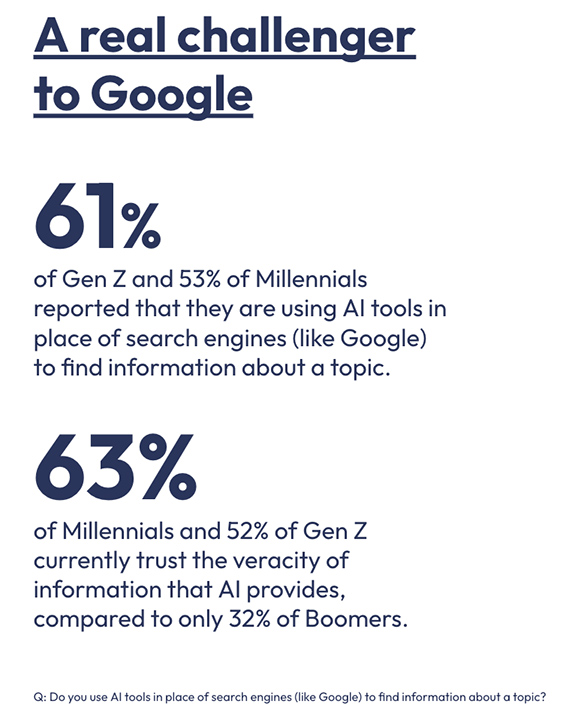
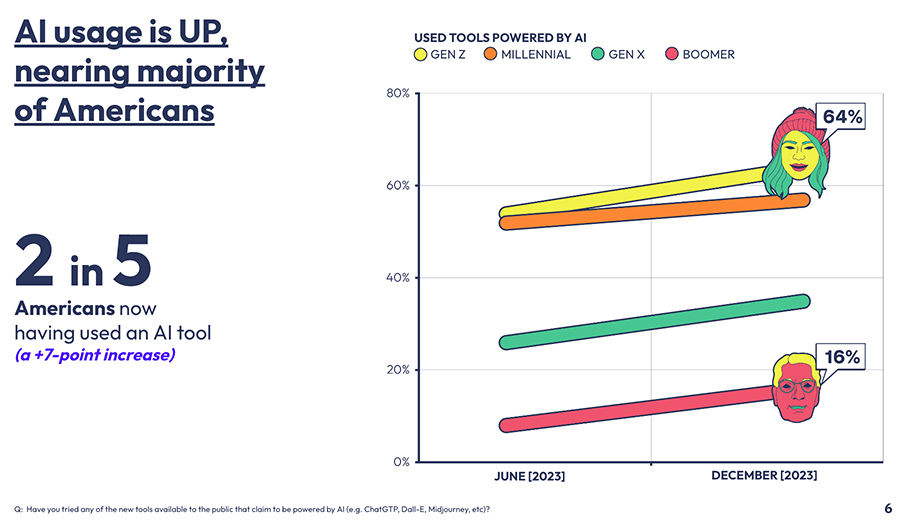
The Verge | What’s Next With AI | February 2024 | Consumer Survey


Microsoft AI creates talking deepfakes from single photo — from inavateonthenet.net


The Great Hall – where now with AI? It is not ‘Human Connection V Innovative Technology’ but ‘Human Connection + Innovative Technology’ — from donaldclarkplanb.blogspot.com by Donald Clark

The theme of the day was Human Connection V Innovative Technology. I see this a lot at conferences, setting up the human connection (social) against the machine (AI). I think this is ALL wrong. It is, and has always been a dialectic, human connection (social) PLUS the machine. Everyone had a smartphone, most use it for work, comms and social media. The binary between human and tech has long disappeared. 


Techno-Social Engineering: Why the Future May Not Be Human, TikTok’s Powerful ForYou Algorithm, & More — from by Misha Da Vinci

Things to consider as you dive into this edition:

  • As we increasingly depend on technology, how is it changing us?
  • In the interaction between humans and technology, who is adapting to whom?
  • Is the technology being built for humans, or are we being changed to fit into tech systems?
  • As time passes, will we become more like robots or the AI models we use?
  • Over the next 30 years, as we increasingly interact with technology, who or what will we become?


Are we ready to navigate the complex ethics of advanced AI assistants? — from futureofbeinghuman.com by Andrew Maynard
An important new paper lays out the importance and complexities of ensuring increasingly advanced AI-based assistants are developed and used responsibly

Last week a behemoth of a paper was released by AI researchers in academia and industry on the ethics of advanced AI assistants.

It’s one of the most comprehensive and thoughtful papers on developing transformative AI capabilities in socially responsible ways that I’ve read in a while. And it’s essential reading for anyone developing and deploying AI-based systems that act as assistants or agents — including many of the AI apps and platforms that are currently being explored in business, government, and education.

The paper — The Ethics of Advanced AI Assistants — is written by 57 co-authors representing researchers at Google Deep Mind, Google Research, Jigsaw, and a number of prominent universities that include Edinburgh University, the University of Oxford, and Delft University of Technology. Coming in at 274 pages this is a massive piece of work. And as the authors persuasively argue, it’s a critically important one at this point in AI development.

From that large paper:

Key questions for the ethical and societal analysis of advanced AI assistants include:

  1. What is an advanced AI assistant? How does an AI assistant differ from other kinds of AI technology?
  2. What capabilities would an advanced AI assistant have? How capable could these assistants be?
  3. What is a good AI assistant? Are there certain values that we want advanced AI assistants to evidence across all contexts?
  4. Are there limits on what AI assistants should be allowed to do? If so, how are these limits determined?
  5. What should an AI assistant be aligned with? With user instructions, preferences, interests, values, well-being or something else?
  6. What issues need to be addressed for AI assistants to be safe? What does safety mean for this class of technologies?
  7. What new forms of persuasion might advanced AI assistants be capable of? How can we ensure that users remain appropriately in control of the technology?
  8. How can people – especially vulnerable users – be protected from AI manipulation and unwanted disclosure of personal information?
  9. Is anthropomorphism for AI assistants morally problematic? If so, might it still be permissible under certain conditions?
 

AI RESOURCES AND TEACHING (Kent State University) — from aiadvisoryboards.wordpress.com

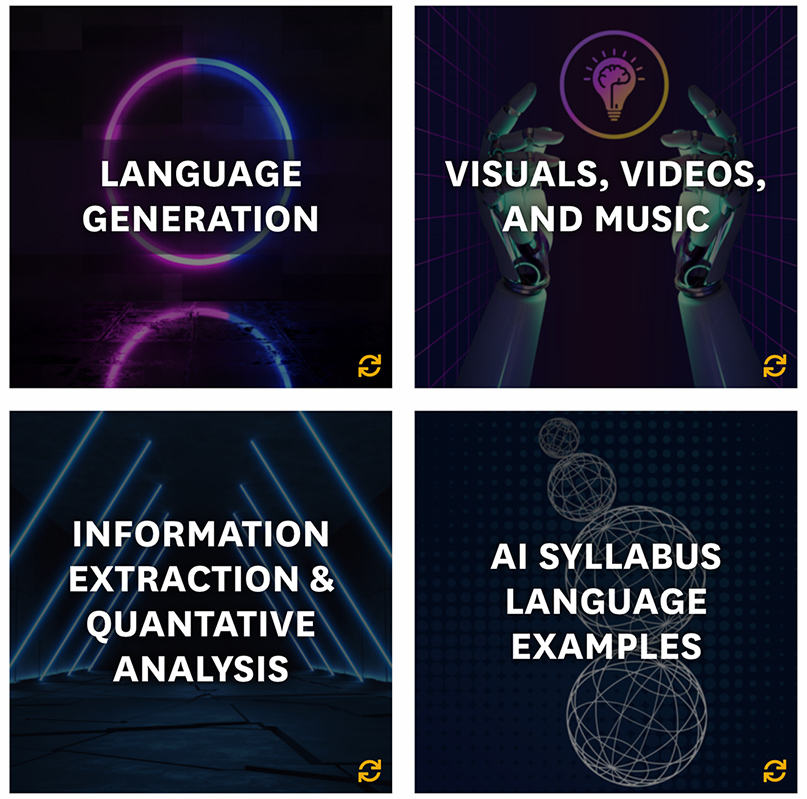
AI Resources and Teaching | Kent State University offers valuable resources for educators interested in incorporating artificial intelligence (AI) into their teaching practices. The university recognizes that the rapid emergence of AI tools presents both challenges and opportunities in higher education.

The AI Resources and Teaching page provides educators with information and guidance on various AI tools and their responsible use within and beyond the classroom. The page covers different areas of AI application, including language generation, visuals, videos, music, information extraction, quantitative analysis, and AI syllabus language examples.


A Cautionary AI Tale: Why IBM’s Dazzling Watson Supercomputer Made a Lousy Tutor — from the74million.org by Greg Toppo
With a new race underway to create the next teaching chatbot, IBM’s abandoned 5-year, $100M ed push offers lessons about AI’s promise and its limits.

For all its jaw-dropping power, Watson the computer overlord was a weak teacher. It couldn’t engage or motivate kids, inspire them to reach new heights or even keep them focused on the material — all qualities of the best mentors.

It’s a finding with some resonance to our current moment of AI-inspired doomscrolling about the future of humanity in a world of ascendant machines. “There are some things AI is actually very good for,” Nitta said, “but it’s not great as a replacement for humans.”

His five-year journey to essentially a dead-end could also prove instructive as ChatGPT and other programs like it fuel a renewed, multimillion-dollar experiment to, in essence, prove him wrong.

To be sure, AI can do sophisticated things such as generating quizzes from a class reading and editing student writing. But the idea that a machine or a chatbot can actually teach as a human can, he said, represents “a profound misunderstanding of what AI is actually capable of.” 

Nitta, who still holds deep respect for the Watson lab, admits, “We missed something important. At the heart of education, at the heart of any learning, is engagement. And that’s kind of the Holy Grail.”

From DSC:
This is why the vision that I’ve been tracking and working on has always said that HUMAN BEINGS will be necessary — they are key to realizing this vision. Along these lines, here’s a relevant quote:

Another crucial component of a new learning theory for the age of AI would be the cultivation of “blended intelligence.” This concept recognizes that the future of learning and work will involve the seamless integration of human and machine capabilities, and that learners must develop the skills and strategies needed to effectively collaborate with AI systems. Rather than viewing AI as a threat to human intelligence, a blended intelligence approach seeks to harness the complementary strengths of humans and machines, creating a symbiotic relationship that enhances the potential of both.

Per Alexander “Sasha” Sidorkin, Head of the National Institute on AI in Society at California State University Sacramento.


How Early Adopters of Gen AI Are Gaining Efficiencies — from knowledge.wharton.upenn.edu by Prasanna (Sonny) Tambe and Scott A. Snyder; via Ray Schroeder on LinkedIn
Enterprises are seeing gains from generative AI in productivity and strategic planning, according to speakers at a recent Wharton conference.

Its unique strengths in translation, summation, and content generation are especially useful in processing unstructured data. Some 80% of all new data in enterprises is unstructured, he noted, citing research firm Gartner. Very little of that unstructured data that resides in places like emails “is used effectively at the point of decision making,” he noted. “[With gen AI], we have a real opportunity” to garner new insights from all the information that resides in emails, team communication platforms like Slack, and agile project management tools like Jira, he said.


6 YouTube Channels to Stay Up to Date with AI — from heaigirl.substack.com by Diana Dovgopol
Here are some cool AI YouTube channels.

Here are 6 YouTube channels I watch to stay up to date with AI. This list will be useful whether you’re a casual AI enthusiast or an experienced programmer.

1. Matt Wolfe: AI for non-coders
This is a fast-growing YouTube channel focused on artificial intelligence for non-coders. On this channel, you’ll find videos about ChatGPT, Midjourney, and any AI tool that it’s gaining popularity.


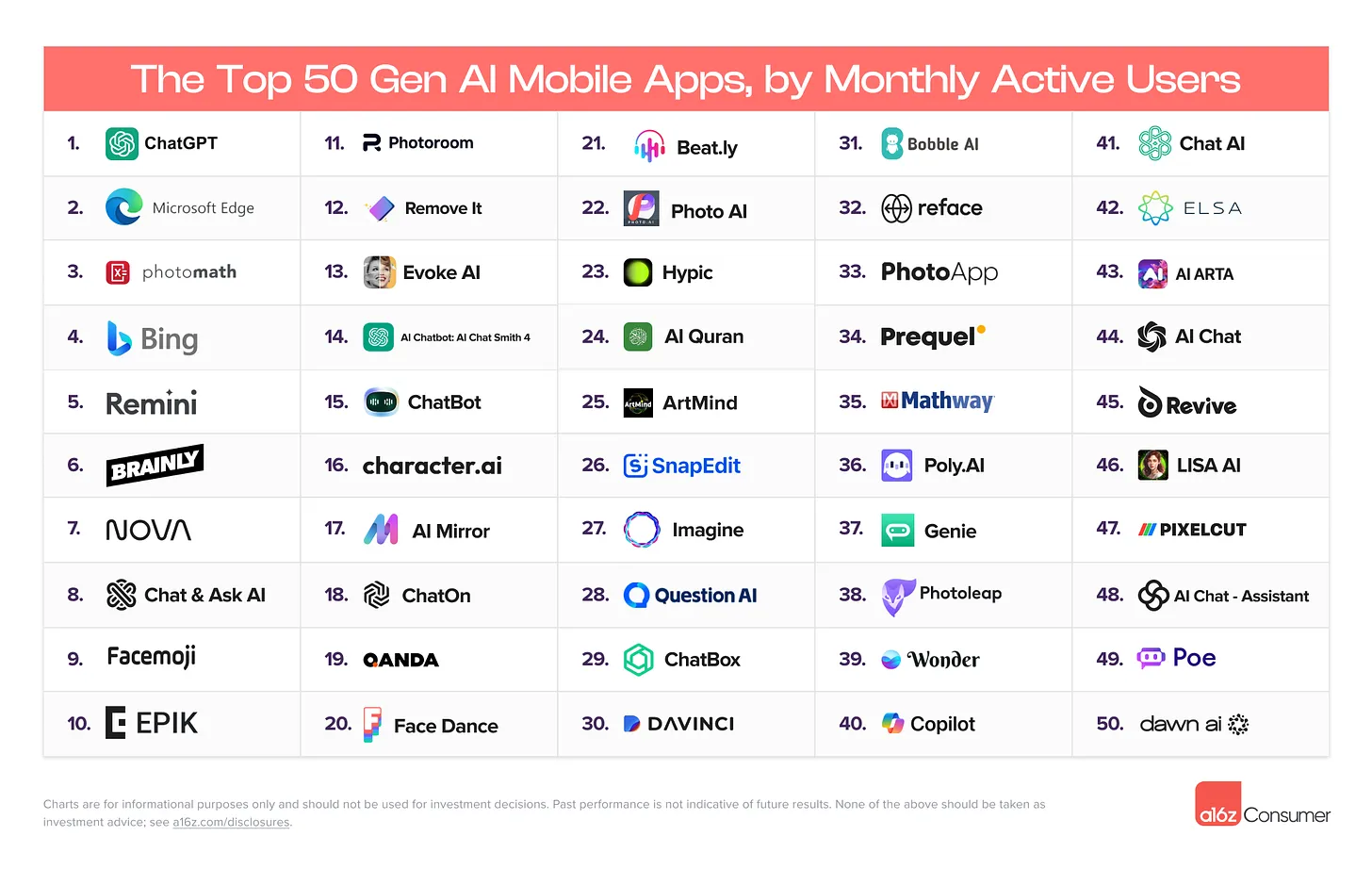
Top AI mobile apps, Stable Video 3D, & my AI film workflow — from by Heather Cooper
Plus 1-Click 3D animation and other cool AI tools

#3 Photomath
Photomath is a comprehensive math help app that provides step-by-step explanations for a wide range of math problems, from elementary to college level. Photomath is only available as a mobile app. (link)

Features:

  • Get step-by-step solutions with multiple methods to choose from
  • Scan any math problem, including word problems, using the app’s camera
  • Access custom visual aids and extra “how” and “why” tips for deeper understanding

Google researchers unveil ‘VLOGGER’, an AI that can bring still photos to life — from venturebeat.com by Michael Nuñez

Google researchers have developed a new artificial intelligence system that can generate lifelike videos of people speaking, gesturing and moving — from just a single still photo. The technology, called VLOGGER, relies on advanced machine learning models to synthesize startlingly realistic footage, opening up a range of potential applications while also raising concerns around deepfakes and misinformation.


What We Risk By Automating Tasks We Loathe — from marcwatkins.substack.com by Marc Watkins

I’m fascinated by the potential of these tools to augment and enhance our work and creativity. There’s no denying the impressive capabilities we’re already seeing with text generation, image creation, coding assistance, and more. Used thoughtfully, AI can be a powerful productivity multiplier.

At the same time, I have significant concerns about the broader implications of this accelerating technology, especially for education and society at large. We’re traversing new ground at a breakneck pace, and it’s crucial that we don’t blindly embrace AI without considering the potential risks.

My worry is that by automating away too many tasks, even seemingly rote ones like creating slide decks, we risk losing something vital—humanity at the heart of knowledge work.


Nvidia Introduce AI Nurses — from wireprompt.substack.com | Weekkly AI Report from WirePrompt

Nvidia has announced a partnership with Hippocratic AI to introduce AI “agents” aimed at replacing nurses in hospitals. These AI “nurses” come at a significantly low cost compared to human nurses and are purportedly intended to address staffing issues by handling “low-risk,” patient-facing tasks via video calls. However, concerns are raised regarding the ethical implications and effectiveness of replacing human nurses with AI, particularly given the complex nature of medical care.


16 Changes to the Way Enterprises Are Building and Buying Generative AI — from a16z.com by Sarah Wang and Shangda Xu

TABLE OF CONTENTS

  • Resourcing: budgets are growing dramatically and here to stay
  • Models: enterprises are trending toward a multi-model, open source world
  • Use cases: more migrating to production
  • Size of total opportunity: massive and growing quickly


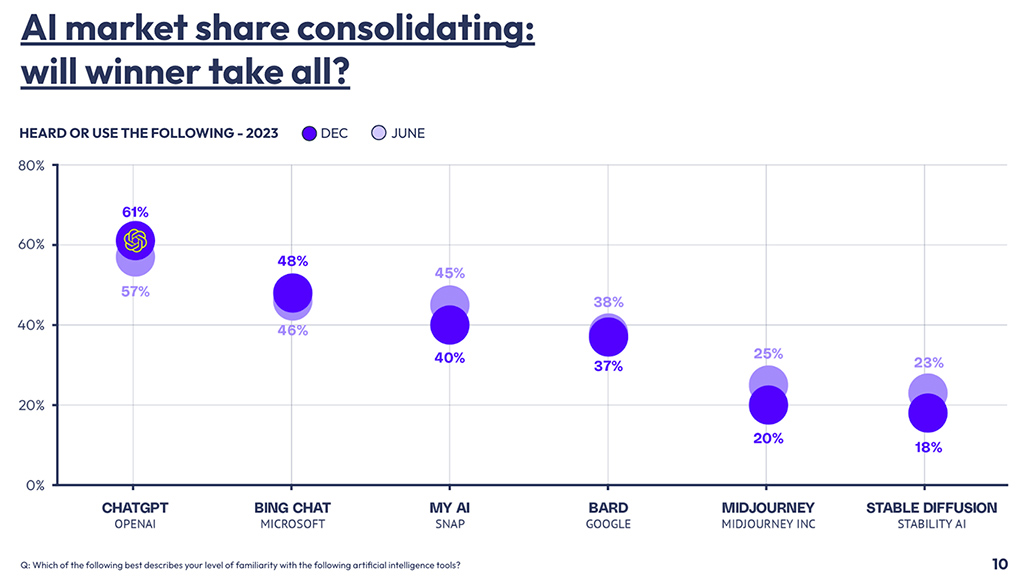
[Report] Generative AI Top 150: The World’s Most Used AI Tools (Feb 2024) — from flexos.work by Daan van Rossum
FlexOS.work surveyed Generative AI platforms to reveal which get used most. While ChatGPT reigns supreme, countless AI platforms are used by millions.

As the FlexOS research study “Generative AI at Work” concluded based on a survey amongst knowledge workers, ChatGPT reigns supreme.

2. AI Tool Usage is Way Higher Than People Expect – Beating Netflix, Pinterest, Twitch.
As measured by data analysis platform Similarweb based on global web traffic tracking, the AI tools in this list generate over 3 billion monthly visits.

With 1.67 billion visits, ChatGPT represents over half of this traffic and is already bigger than Netflix, Microsoft, Pinterest, Twitch, and The New York Times.

.


Artificial Intelligence Act: MEPs adopt landmark law — from europarl.europa.eu

  • Safeguards on general purpose artificial intelligence
  • Limits on the use of biometric identification systems by law enforcement
  • Bans on social scoring and AI used to manipulate or exploit user vulnerabilities
  • Right of consumers to launch complaints and receive meaningful explanations


The untargeted scraping of facial images from CCTV footage to create facial recognition databases will be banned © Alexander / Adobe Stock


A New Surge in Power Use Is Threatening U.S. Climate Goals — from nytimes.com by Brad Plumer and Nadja Popovich
A boom in data centers and factories is straining electric grids and propping up fossil fuels.

Something unusual is happening in America. Demand for electricity, which has stayed largely flat for two decades, has begun to surge.

Over the past year, electric utilities have nearly doubled their forecasts of how much additional power they’ll need by 2028 as they confront an unexpected explosion in the number of data centers, an abrupt resurgence in manufacturing driven by new federal laws, and millions of electric vehicles being plugged in.


OpenAI and the Fierce AI Industry Debate Over Open Source — from bloomberg.com by Rachel Metz

The tumult could seem like a distraction from the startup’s seemingly unending march toward AI advancement. But the tension, and the latest debate with Musk, illuminates a central question for OpenAI, along with the tech world at large as it’s increasingly consumed by artificial intelligence: Just how open should an AI company be?

The meaning of the word “open” in “OpenAI” seems to be a particular sticking point for both sides — something that you might think sounds, on the surface, pretty clear. But actual definitions are both complex and controversial.


Researchers develop AI-driven tool for near real-time cancer surveillance — from medicalxpress.com by Mark Alewine; via The Rundown AI
Artificial intelligence has delivered a major win for pathologists and researchers in the fight for improved cancer treatments and diagnoses.

In partnership with the National Cancer Institute, or NCI, researchers from the Department of Energy’s Oak Ridge National Laboratory and Louisiana State University developed a long-sequenced AI transformer capable of processing millions of pathology reports to provide experts researching cancer diagnoses and management with exponentially more accurate information on cancer reporting.


Amid explosive demand, America is running out of power — from washingtonpost.com by Evan Halper
AI and the boom in clean-tech manufacturing are pushing America’s power grid to the brink. Utilities can’t keep up.

Vast swaths of the United States are at risk of running short of power as electricity-hungry data centers and clean-technology factories proliferate around the country, leaving utilities and regulators grasping for credible plans to expand the nation’s creaking power grid.

A major factor behind the skyrocketing demand is the rapid innovation in artificial intelligence, which is driving the construction of large warehouses of computing infrastructure that require exponentially more power than traditional data centers. AI is also part of a huge scale-up of cloud computing. Tech firms like Amazon, Apple, Google, Meta and Microsoft are scouring the nation for sites for new data centers, and many lesser-known firms are also on the hunt.


The Obscene Energy Demands of A.I. — from newyorker.com by Elizabeth Kolbert
How can the world reach net zero if it keeps inventing new ways to consume energy?

“There’s a fundamental mismatch between this technology and environmental sustainability,” de Vries said. Recently, the world’s most prominent A.I. cheerleader, Sam Altman, the C.E.O. of OpenAI, voiced similar concerns, albeit with a different spin. “I think we still don’t appreciate the energy needs of this technology,” Altman said at a public appearance in Davos. He didn’t see how these needs could be met, he went on, “without a breakthrough.” He added, “We need fusion or we need, like, radically cheaper solar plus storage, or something, at massive scale—like, a scale that no one is really planning for.”


A generative AI reset: Rewiring to turn potential into value in 2024 — from mckinsey.com by Eric Lamarre, Alex Singla, Alexander Sukharevsky, and Rodney Zemmel; via Philippa Hardman
The generative AI payoff may only come when companies do deeper organizational surgery on their business.

  • Figure out where gen AI copilots can give you a real competitive advantage
  • Upskill the talent you have but be clear about the gen-AI-specific skills you need
  • Form a centralized team to establish standards that enable responsible scaling
  • Set up the technology architecture to scale
  • Ensure data quality and focus on unstructured data to fuel your models
  • Build trust and reusability to drive adoption and scale

AI Prompt Engineering Is Dead Long live AI prompt engineering — from spectrum.ieee.org

Since ChatGPT dropped in the fall of 2022, everyone and their donkey has tried their hand at prompt engineering—finding a clever way to phrase your query to a large language model (LLM) or AI art or video generator to get the best results or sidestep protections. The Internet is replete with prompt-engineering guides, cheat sheets, and advice threads to help you get the most out of an LLM.

However, new research suggests that prompt engineering is best done by the model itself, and not by a human engineer. This has cast doubt on prompt engineering’s future—and increased suspicions that a fair portion of prompt-engineering jobs may be a passing fad, at least as the field is currently imagined.


What the birth of the spreadsheet teaches us about generative AI — from timharford.com by Tim Harford; via Sam DeBrule

There is one very clear parallel between the digital spreadsheet and generative AI: both are computer apps that collapse time. A task that might have taken hours or days can suddenly be completed in seconds. So accept for a moment the premise that the digital spreadsheet has something to teach us about generative AI. What lessons should we absorb?

It’s that pace of change that gives me pause. Ethan Mollick, author of the forthcoming book Co-Intelligence, tells me “if progress on generative AI stops now, the spreadsheet is not a bad analogy”. We’d get some dramatic shifts in the workplace, a technology that broadly empowers workers and creates good new jobs, and everything would be fine. But is it going to stop any time soon? Mollick doubts that, and so do I.


Generative AI’s environmental costs are soaring — and mostly secret — from nature.com by Kate Crawfold
First-of-its-kind US bill would address the environmental costs of the technology, but there’s a long way to go.

Last month, OpenAI chief executive Sam Altman finally admitted what researchers have been saying for years — that the artificial intelligence (AI) industry is heading for an energy crisis. It’s an unusual admission. At the World Economic Forum’s annual meeting in Davos, Switzerland, Altman warned that the next wave of generative AI systems will consume vastly more power than expected, and that energy systems will struggle to cope. “There’s no way to get there without a breakthrough,” he said.

I’m glad he said it. I’ve seen consistent downplaying and denial about the AI industry’s environmental costs since I started publishing about them in 2018. Altman’s admission has got researchers, regulators and industry titans talking about the environmental impact of generative AI.


Get ready for the age of sovereign AI | Jensen Huang interview— from venturebeat.com by Dean Takahashi

Yesterday, Nvidia reported $22.1 billion in revenue for its fourth fiscal quarter of fiscal 2024 (ending January 31, 2024), easily topping Wall Street’s expectations. The revenues grew 265% from a year ago, thanks to the explosive growth of generative AI.

He also repeated a notion about “sovereign AI.” This means that countries are protecting the data of their users and companies are protecting data of employees through “sovereign AI,” where the large-language models are contained within the borders of the country or the company for safety purposes.


Yikes, Google — from theneurondaily.com by Noah Edelman
PLUS: racially diverse nazis…WTF?!

Google shoots itself in the foot.
Last week was the best AND worst week for Google re AI.

The good news is that its upcoming Gemini 1.5 Pro model showcases remarkable capabilities with its expansive context window (details forthcoming).

The bad news is Google’s AI chatbot “Gemini” is getting A LOT of heat after generating some outrageous responses. Take a look:

Also from the Daily:

  • Perplexity just dropped this new podcast, Discover Daily, that recaps the news in 3-4 minutes.
  • It already broke into the top #200 news pods within a week.
  • AND it’s all *100% AI-generated*.

Daily Digest: It’s Nvidia’s world…and we’re just living in it. — from bensbites.beehiiv.com

  • Nvidia is building a new type of data centre called AI factory. Every company—biotech, self-driving, manufacturing, etc will need an AI factory.
  • Jensen is looking forward to foundational robotics and state space models. According to him, foundational robotics could have a breakthrough next year.
  • The crunch for Nvidia GPUs is here to stay. It won’t be able to catch up on supply this year. Probably not next year too.
  • A new generation of GPUs called Blackwell is coming out, and the performance of Blackwell is off the charts.
  • Nvidia’s business is now roughly 70% inference and 30% training, meaning AI is getting into users’ hands.

Gemma: Introducing new state-of-the-art open models  — from blog.google


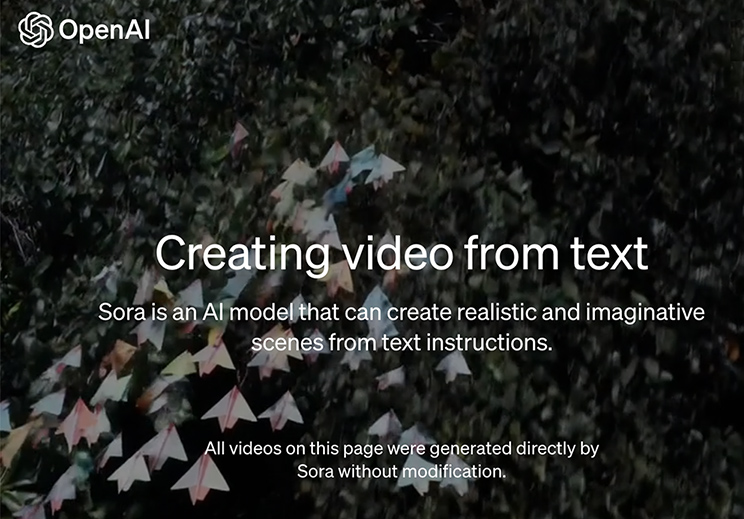
Text to video via OpenAI’s Sora. (I had taken this screenshot on the 15th, but am posting it now.)

We’re teaching AI to understand and simulate the physical world in motion, with the goal of training models that help people solve problems that require real-world interaction.

Introducing Sora, our text-to-video model. Sora can generate videos up to a minute long while maintaining visual quality and adherence to the user’s prompt.

Along these lines, also see:

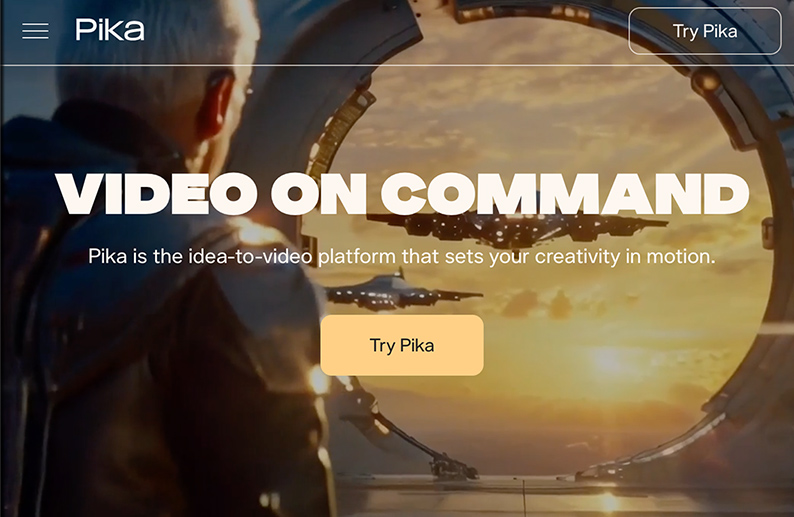
Pika; via Superhuman AI


An Ivy League school just announced its first AI degree — from qz.com by Michelle Cheng; via Barbara Anna Zielonka on LinkedIn
It’s a sign of the times. At the same time, AI talent is scarce

At the University of Pennsylvania, undergraduate students in its school of engineering will soon be able to study for a bachelor of science degree in artificial intelligence.

What can one do with an AI degree? The University of Pennsylvania says students will be able to apply the skills they learn in school to build responsible AI tools, develop materials for emerging chips and hardware, and create AI-driven breakthroughs in healthcare through new antibiotics, among other things.


Google Pumps $27 Million Into AI Training After Microsoft Pledge—Here’s What To Know — from forbes.com by Robert Hart

Google on Monday announced plans to help train people in Europe with skills in artificial intelligence, the latest tech giant to invest in preparing workers and economies amid the disruption brought on by technologies they are racing to develop.


The Exhausting Pace of AI: Google’s Ultra Leap — from marcwatkins.substack.com by Marc Watkins

The acceleration of AI deployments has gotten so absurdly out of hand that a draft post I started a week ago about a new development is now out of date.

The Pace is Out of Control
A mere week since Ultra 1.0’s announcement, Google has now introduced us to Ultra 1.5, a model they are clearly positioning to be the leader in the field. Here is the full technical report for Gemini Ultra 1.5, and what it can do is stunning.


Maryville Announces $21 Million Investment in AI and New Technologies Amidst Record Growth — from maryville.edu; via Arthur “Art” Fredrich on LinkedIn

[St. Louis, MO, February 14, 2024] – In a bold move that counters the conventions of more traditional schools, Maryville University has unveiled a substantial $21 million multi-year investment in artificial intelligence (AI) and cutting-edge technologies. This groundbreaking initiative is set to transform the higher education experience to be powered by the latest technology to support student success and a five-star experience for thousands of students both on-campus and online.


Scammers trick company employee using video call filled with deepfakes of execs, steal $25 million — from techspot.com by Rob Thubron; via AI Valley
The victim was the only real person on the video conference call

The scammers used digitally recreated versions of an international company’s Chief Financial Officer and other employees to order $25 million in money transfers during a video conference call containing just one real person.

The victim, an employee at the Hong Kong branch of an unnamed multinational firm, was duped into taking part in a video conference call in which they were the only real person – the rest of the group were fake representations of real people, writes SCMP.

As we’ve seen in previous incidents where deepfakes were used to recreate someone without their permission, the scammers utilized publicly available video and audio footage to create these digital versions.


Letter from the YouTube CEO: 4 Big bets for 2024 — from blog.youtube by Neal Mohan, CEO, YouTube; via Ben’s Bites

.

#1: AI will empower human creativity.

#2: Creators should be recognized as next-generation studios.

#3: YouTube’s next frontier is the living room and subscriptions.

#4: Protecting the creator economy is foundational.

Viewers globally now watch more than 1 billion hours on average of YouTube content on their TVs every day.


Bard becomes Gemini: Try Ultra 1.0 and a new mobile app today — from blog.google by Sissie Hsiao; via Rundown AI
Bard is now known as Gemini, and we’re rolling out a mobile app and Gemini Advanced with Ultra 1.0.

Since we launched Bard last year, people all over the world have used it to collaborate with AI in a completely new way — to prepare for job interviews, debug code, brainstorm new business ideas or, as we announced last week, create captivating images.

Our mission with Bard has always been to give you direct access to our AI models, and Gemini represents our most capable family of models. To reflect this, Bard will now simply be known as Gemini.


A new way to discover places with generative AI in Maps — from blog.google by Miriam Daniel; via AI Valley
Here’s a look at how we’re bringing generative AI to Maps — rolling out this week to select Local Guides in the U.S.

Today, we’re introducing a new way to discover places with generative AI to help you do just that — no matter how specific, niche or broad your needs might be. Simply say what you’re looking for and our large-language models (LLMs) will analyze Maps’ detailed information about more than 250 million places and trusted insights from our community of over 300 million contributors to quickly make suggestions for where to go.

Starting in the U.S., this early access experiment launches this week to select Local Guides, who are some of the most active and passionate members of the Maps community. Their insights and valuable feedback will help us shape this feature so we can bring it to everyone over time.


Google Prepares for a Future Where Search Isn’t King — from wired.com by Lauren Goode
CEO Sundar Pichai tells WIRED that Google’s new, more powerful Gemini chatbot is an experiment in offering users a way to get things done without a search engine. It’s also a direct shot at ChatGPT.


Your guide to AI: February 2024 — from nathanbenaich.substack.com by Nathan Benaich & Alex Chalmers

Areas covered include:

  • Policy
  • The (geo)politics of AI
  • Hardware
  • Big tech start-ups
  • Research
  • Startups
  • Exits

=


Text-to-Video with Google’s Lumiere


Amazon announces Rufus, a new generative AI-powered conversational shopping experience — from aboutamazon.com by Rajiv Mehta

Rufus is an expert shopping assistant trained on Amazon’s product catalog and information from across the web to answer customer questions on shopping needs, products, and comparisons, make recommendations based on this context, and facilitate product discovery in the same Amazon shopping experience customers use regularly.

Launching [2/1/24] in beta to a small subset of customers in Amazon’s mobile app, Rufus will progressively roll out to additional U.S. customers in the coming weeks.


Augment teaching with AI – this teacher has it sussed… — from donaldclarkplanb.blogspot.com by Donald Clark

Emphasis (emphasis DSC):

You’re a teacher who wants to integrate AI into your teaching. What do you do? I often get asked how should I start with AI in my school or University. This, I think, is one answer.

Continuity with teaching
One school has got this exactly right in my opinion. Meredith Joy Morris has implemented ChatGPT into the teaching process. The teacher does their thing and the chatbot picks up where the teacher stops, augmenting and scaling the teaching and learning process, passing the baton to the learners who carry on. This gives the learner a more personalised experience, encouraging independent learning by using the undoubted engagement that 1:1 dialogue provides.

There’s no way any teacher can provide this carry on support with even a handful of students, never mind a class of 30 or a course with 100. Teaching here is ‘extended’ and ‘scaled’ by AI. The feedback from the students was extremely positive.


Reflections on Teaching in the AI Age — from by Jeffrey Watson

The transition which AI forces me to make is no longer to evaluate writings, but to evaluate writers. I am accustomed to grading essays impersonally with an objective rubric, treating the text as distinct from the author and commenting only on the features of the text. I need to transition to evaluating students a bit more holistically, as philosophers – to follow along with them in the early stages of the writing process, to ask them to present their ideas orally in conversation or in front of their peers, to push them to develop the intellectual virtues that they will need if they are not going to be mastered by the algorithms seeking to manipulate them. That’s the sort of development I’ve meant to encourage all along, not paragraph construction and citation formatting. If my grading practices incentivize outsourcing to a machine intelligence, I need to change my grading practices.


4 AI Imperatives for Higher Education in 2024 — from campustechnology.com by Rhea Kelly

[Bryan Alexander] There’s a crying need for faculty and staff professional development about generative AI. The topic is complicated and fast moving. Already the people I know who are seriously offering such support are massively overscheduled. Digital materials are popular. Books are lagging but will gradually surface. I hope we see more academics lead more professional development offerings.

For an academic institution to take emerging AI seriously it might have to set up a new body. Present organizational nodes are not necessarily a good fit.


A Technologist Spent Years Building an AI Chatbot Tutor. He Decided It Can’t Be Done. — from edsurge.com by Jeffrey R. Young
Is there a better metaphor than ‘tutor’ for what generative AI can do to help students and teachers?

When Satya Nitta worked at IBM, he and a team of colleagues took on a bold assignment: Use the latest in artificial intelligence to build a new kind of personal digital tutor.

This was before ChatGPT existed, and fewer people were talking about the wonders of AI. But Nitta was working with what was perhaps the highest-profile AI system at the time, IBM’s Watson. That AI tool had pulled off some big wins, including beating humans on the Jeopardy quiz show in 2011.

Nitta says he was optimistic that Watson could power a generalized tutor, but he knew the task would be extremely difficult. “I remember telling IBM top brass that this is going to be a 25-year journey,” he recently told EdSurge.


Teachers stan AI in education–but need more support — from eschoolnews.com by Laura Ascione

What are the advantages of AI in education?
Canva’s study found 78 percent of teachers are interested in using AI education tools, but their experience with the technology remains limited, with 93 percent indicating they know “a little” or “nothing” about it – though this lack of experience hasn’t stopped teachers quickly discovering and considering its benefits:

  • 60 percent of teachers agree it has given them ideas to boost student productivity
  • 59 percent of teachers agree it has cultivated more ways for their students to be creative
  • 56 percent of teachers agree it has made their lives easier

When looking at the ways teachers are already using generative artificial intelligence, the most common uses were:

  • Creating teaching materials (43 percent)
  • Collaborative creativity/co-creation (39 percent)
  • Translating text (36 percent)
  • Brainstorming and generating ideas (35 percent)

The next grand challenge for AI — from ted.com by Jim Fan


The State of Washington Embraces AI for Public Schools — from synthedia.substack.com by Bret Kinsella; via Tom Barrett
Educational institutions may be warming up to generative AI

Washington state issued new guidelines for K-12 public schools last week based on the principle of “embracing a human-centered approach to AI,” which also embraces the use of AI in the education process. The state’s Superintendent of Public Instruction, Chris Reykdal, commented in a letter accompanying the new guidelines:


New education features to help teachers save time and support students — from by Shantanu Sinha

Giving educators time back to invest in themselves and their students
Boost productivity and creativity with Duet AI: Educators can get fresh ideas and save time using generative AI across Workspace apps. With Duet AI, they can get help drafting lesson plans in Docs, creating images in Slides, building project plans in Sheets and more — all with control over their data.

 
© 2025 | Daniel Christian