Aeneas transforms how historians connect the past — from deepmind.google Introducing the first model for contextualizing ancient inscriptions, designed to help historians better interpret, attribute and restore fragmentary texts.
Today, we’re publishing a paper in Nature introducing Aeneas, the first artificial intelligence (AI) model for contextualizing ancient inscriptions.
When working with ancient inscriptions, historians traditionally rely on their expertise and specialized resources to identify “parallels” — which are texts that share similarities in wording, syntax, standardized formulas or provenance.
Aeneas greatly accelerates this complex and time-consuming work. It reasons across thousands of Latin inscriptions, retrieving textual and contextual parallels in seconds that allow historians to interpret and build upon the model’s findings.
Intellectual rigor comes from the journey: the dead ends, the uncertainty, and the internal debate. Skip that, and you might still get the insight–but you’ll have lost the infrastructure for meaningful understanding. Learning by reading LLM output is cheap. Real exercise for your mind comes from building the output yourself.
The irony is that I now know more than I ever would have before AI. But I feel slightly dumber. A bit more dull. LLMs give me finished thoughts, polished and convincing, but none of the intellectual growth that comes from developing them myself.
Every few months I put together a guide on which AI system to use. Since I last wrote my guide, however, there has been a subtle but important shift in how the major AI products work. Increasingly, it isn’t about the best model, it is about the best overall system for most people. The good news is that picking an AI is easier than ever and you have three excellent choices. The challenge is that these systems are getting really complex to understand. I am going to try and help a bit with both.
First, the easy stuff.
Which AI to Use For most people who want to use AI seriously, you should pick one of three systems: Claude from Anthropic, Google’s Gemini, and OpenAI’s ChatGPT.
This summer, I tried something new in my fully online, asynchronous college writing course. These classes have no Zoom sessions. No in-person check-ins. Just students, Canvas, and a lot of thoughtful design behind the scenes.
One activity I created was called QuoteWeaver—a PlayLab bot that helps students do more than just insert a quote into their writing.
It’s a structured, reflective activity that mimics something closer to an in-person 1:1 conference or a small group quote workshop—but in an asynchronous format, available anytime. In other words, it’s using AI not to speed students up, but to slow them down.
…
The bot begins with a single quote that the student has found through their own research. From there, it acts like a patient writing coach, asking open-ended, Socratic questions such as:
What made this quote stand out to you?
How would you explain it in your own words?
What assumptions or values does the author seem to hold?
How does this quote deepen your understanding of your topic?
It doesn’t move on too quickly. In fact, it often rephrases and repeats, nudging the student to go a layer deeper.
On [6/13/25], UNESCO published a piece I co-authored with Victoria Livingstone at Johns Hopkins University Press. It’s called The Disappearance of the Unclear Question, and it’s part of the ongoing UNESCO Education Futures series – an initiative I appreciate for its thoughtfulness and depth on questions of generative AI and the future of learning.
Our piece raises a small but important red flag. Generative AI is changing how students approach academic questions, and one unexpected side effect is that unclear questions – for centuries a trademark of deep thinking – may be beginning to disappear. Not because they lack value, but because they don’t always work well with generative AI. Quietly and unintentionally, students (and teachers) may find themselves gradually avoiding them altogether.
Of course, that would be a mistake.
We’re not arguing against using generative AI in education. Quite the opposite. But we do propose that higher education needs a two-phase mindset when working with this technology: one that recognizes what AI is good at, and one that insists on preserving the ambiguity and friction that learning actually requires to be successful.
By leveraging generative artificial intelligence to convert lengthy instructional videos into micro-lectures, educators can enhance efficiency while delivering more engaging and personalized learning experiences.
Researchers at Massachusetts Institute of Technology (MIT) have now devised a way for LLMs to keep improving by tweaking their own parameters in response to useful new information.
The work is a step toward building artificial intelligence models that learn continually—a long-standing goal of the field and something that will be crucial if machines are to ever more faithfully mimic human intelligence. In the meantime, it could give us chatbots and other AI tools that are better able to incorporate new information including a user’s interests and preferences.
The MIT scheme, called Self Adapting Language Models (SEAL), involves having an LLM learn to generate its own synthetic training data and update procedure based on the input it receives.
Edu-Snippets — from scienceoflearning.substack.com by Nidhi Sachdeva and Jim Hewitt Why knowledge matters in the age of AI; What happens to learners’ neural activity with prolonged use of LLMs for writing
Highlights:
Offloading knowledge to Artificial Intelligence (AI) weakens memory, disrupts memory formation, and erodes the deep thinking our brains need to learn.
Prolonged use of ChatGPT in writing lowers neural engagement, impairs memory recall, and accumulates cognitive debt that isn’t easily reversed.
Here are some incredibly powerful numbers from Mary Meeker’s AI Trends report, which showcase how artificial intelligence as a tech is unlike any other the world has ever seen.
AI took only three years to reach 50% user adoption in the US; mobile internet took six years, desktop internet took 12 years, while PCs took 20 years.
ChatGPT reached 800 million users in 17 months and 100 million in only two months, vis-à-vis Netflix’s 100 million (10 years), Instagram (2.5 years) and TikTok (nine months).
ChatGPT hit 365 billion annual searches in two years (2024) vs. Google’s 11 years (2009)—ChatGPT 5.5x faster than Google.
Above via Mary Meeker’s AI Trend-Analysis — from getsuperintel.com by Kim “Chubby” Isenberg How AI’s rapid rise, efficiency race, and talent shifts are reshaping the future.
The TLDR
Mary Meeker’s new AI trends report highlights an explosive rise in global AI usage, surging model efficiency, and mounting pressure on infrastructure and talent. The shift is clear: AI is no longer experimental—it’s becoming foundational, and those who optimize for speed, scale, and specialization will lead the next wave of innovation.
The Rundown: Meta aims to release tools that eliminate humans from the advertising process by 2026, according to a report from the WSJ — developing an AI that can create ads for Facebook and Instagram using just a product image and budget.
The details:
Companies would submit product images and budgets, letting AI craft the text and visuals, select target audiences, and manage campaign placement.
The system will be able to create personalized ads that can adapt in real-time, like a car spot featuring mountains vs. an urban street based on user location.
The push would target smaller companies lacking dedicated marketing staff, promising professional-grade advertising without agency fees or skillset.
Advertising is a core part of Mark Zuckerberg’s AI strategy and already accounts for 97% of Meta’s annual revenue.
Why it matters: We’re already seeing AI transform advertising through image, video, and text, but Zuck’s vision takes the process entirely out of human hands. With so much marketing flowing through FB and IG, a successful system would be a major disruptor — particularly for small brands that just want results without the hassle.
Learning and development professionals face unprecedented challenges in today’s rapidly evolving business landscape. According to LinkedIn’s 2025 Workplace Learning Report, 67 percent of L&D professionals report being “maxed out” on capacity, while 66 percent have experienced budget reductions in the past year.
Despite these constraints, 87 percent agree their organizations need to develop employees faster to keep pace with business demands. These statistics paint a clear picture of the pressure L&D teams face: do more, with less, faster.
This article explores how one L&D leader’s strategic partnership with artificial intelligence transformed these persistent challenges into opportunities, creating a responsive learning ecosystem that addresses the modern demands of rapid product evolution and diverse audience needs. With 71 percent of L&D professionals now identifying AI as a high or very high priority for their learning strategy, this case study demonstrates how AI can serve not merely as a tool but as a collaborative partner in reimagining content development and management. .
How we use GenAI and AR to improve students’ design skills— from timeshighereducation.com by Antonio Juarez, Lesly Pliego and Jordi Rábago who are professors of architecture at Monterrey Institute of Technology in Mexico; Tomas Pachajoa is a professor of architecture at the El Bosque University in Colombia; & Carlos Hinrichsen and Marietta Castro are educators at San Sebastián University in Chile. Guidance on using generative AI and augmented reality to enhance student creativity, spatial awareness and interdisciplinary collaboration
Blend traditional skills development with AI use For subjects that require students to develop drawing and modelling skills, have students create initial design sketches or models manually to ensure they practise these skills. Then, introduce GenAI tools such as Midjourney, Leonardo AI and ChatGPT to help students explore new ideas based on their original concepts. Using AI at this stage broadens their creative horizons and introduces innovative perspectives, which are crucial in a rapidly evolving creative industry.
Provide step-by-step tutorials, including both written guides and video demonstrations, to illustrate how initial sketches can be effectively translated into AI-generated concepts. Offer example prompts to demonstrate diverse design possibilities and help students build confidence using GenAI.
Integrating generative AI and AR consistently enhanced student engagement, creativity and spatial understanding on our course.
How Texas is Preparing Higher Education for AI — from the74million.org by Kate McGee TX colleges are thinking about how to prepare students for a changing workforce and an already overburdened faculty for new challenges in classrooms.
“It doesn’t matter if you enter the health industry, banking, oil and gas, or national security enterprises like we have here in San Antonio,” Eighmy told The Texas Tribune. “Everybody’s asking for competency around AI.”
It’s one of the reasons the public university, which serves 34,000 students, announced earlier this year that it is creating a new college dedicated to AI, cyber security, computing and data science. The new college, which is still in the planning phase, would be one of the first of its kind in the country. UTSA wants to launch the new college by fall 2025.
But many state higher education leaders are thinking beyond that. As AI becomes a part of everyday life in new, unpredictable ways, universities across Texas and the country are also starting to consider how to ensure faculty are keeping up with the new technology and students are ready to use it when they enter the workforce.
To develop a robust policy for generative artificial intelligence use in higher education, institutional leaders must first create “a room” where diverse perspectives are welcome and included in the process.
Q: How do you expect to see AI embraced more in the future in college and the workplace?
I do believe it’s going to become a permanent fixture for multiple reasons. I think the national security imperative associated with AI as a result of competing against other nations is going to drive a lot of energy and support for AI education. We also see shifts across every field and discipline regarding the usage of AI beyond college. We see this in a broad array of fields, including health care and the field of law. I think it’s here to stay and I think that means we’re going to see AI literacy being taught at most colleges and universities, and more faculty leveraging AI to help improve the quality of their instruction. I feel like we’re just at the beginning of a transition. In fact, I often describe our current moment as the ‘Ask Jeeves’ phase of the growth of AI. There’s a lot of change still ahead of us. AI, for better or worse, it’s here to stay.
A new study from Drexel University and Google has demonstrated that AI-generated educational podcasts can significantly enhance both student engagement and learning outcomes compared to traditional textbooks. The research, involving 180 college students across the United States, represents one of the first systematic investigations into how artificial intelligence can transform educational content delivery in real-time.
Interrogate the Process: We can ask ourselves if we I built in enough checkpoints. Steps that can’t be faked. Things like quick writes, question floods, in-person feedback, revision logs.
Reframe AI: We can let students use AI as a partner. We can show them how to prompt better, revise harder, and build from it rather than submit it. Show them the difference between using a tool and being used by one.
Design Assignments for Curiosity, Not Compliance: Even the best of our assignments need to adapt. Mine needs more checkpoints, more reflective questions along the way, more explanation of why my students made the choices they did.
The response from teachers and university professors was overwhelming. In my entire career, I’ve rarely gotten so many email responses to a single article, and I have never gotten so many thoughtful and comprehensive responses.
One thing is clear: teachers are not OK.
…
In addition, universities are contracting with companies like Microsoft, Adobe, and Google for digital services, and those companies are constantly pushing their AI tools. So a student might hear “don’t use generative AI” from a prof but then log on to the university’s Microsoft suite, which then suggests using Copilot to sum up readings or help draft writing. It’s inconsistent and confusing.
I am sick to my stomach as I write this because I’ve spent 20 years developing a pedagogy that’s about wrestling with big ideas through writing and discussion, and that whole project has been evaporated by for-profit corporations who built their systems on stolen work. It’s demoralizing.
With a running time of 2 hours, Google I/O 2025 leaned heavily into Gemini and new models that make the assistant work in more places than ever before. Despite focusing the majority of the keynote around Gemini, Google saved its most ambitious and anticipated announcement towards the end with its big Android XR smart glasses reveal.
Shockingly, very little was spent around Android 16. Most of its Android 16 related news, like the redesigned Material 3 Expressive interface, was announced during the Android Show live stream last week — which explains why Google I/O 2025 was such an AI heavy showcase.
That’s because Google carved out most of the keynote to dive deeper into Gemini, its new models, and integrations with other Google services. There’s clearly a lot to unpack, so here’s all the biggest Google I/O 2025 announcements.
Our vision for building a universal AI assistant— from blog.google We’re extending Gemini to become a world model that can make plans and imagine new experiences by simulating aspects of the world.
Making Gemini a world model is a critical step in developing a new, more general and more useful kind of AI — a universal AI assistant. This is an AI that’s intelligent, understands the context you are in, and that can plan and take action on your behalf, across any device.
By applying LearnLM capabilities, and directly incorporating feedback from experts across the industry, Gemini adheres to the principles of learning science to go beyond just giving you the answer. Instead, Gemini can explain how you get there, helping you untangle even the most complex questions and topics so you can learn more effectively. Our new prompting guide provides sample instructions to see this in action.
Learn in newer, deeper ways with Gemini — from blog.google.com by Ben Gomes We’re infusing LearnLM directly into Gemini 2.5 — plus more learning news from I/O.
At I/O 2025, we announced that we’re infusing LearnLM directly into Gemini 2.5, which is now the world’s leading model for learning. As detailed in our latest report, Gemini 2.5 Pro outperformed competitors on every category of learning science principles. Educators and pedagogy experts preferred Gemini 2.5 Pro over other offerings across a range of learning scenarios, both for supporting a user’s learning goals and on key principles of good pedagogy.
Gemini gets more personal, proactive and powerful— from blog.google.com by Josh Woodward It’s your turn to create, learn and explore with an AI assistant that’s starting to understand your world and anticipate your needs.
Here’s what we announced at Google IO:
Gemini Live with camera and screen sharing, is now free on Android and iOS for everyone, so you can point your phone at anything and talk it through.
Imagen 4, our new image generation model, comes built in and is known for its image quality, better text rendering and speed.
Veo 3, our new, state-of-the-art video generation model, comes built in and is the first in the world to have native support for sound effects, background noises and dialogue between characters.
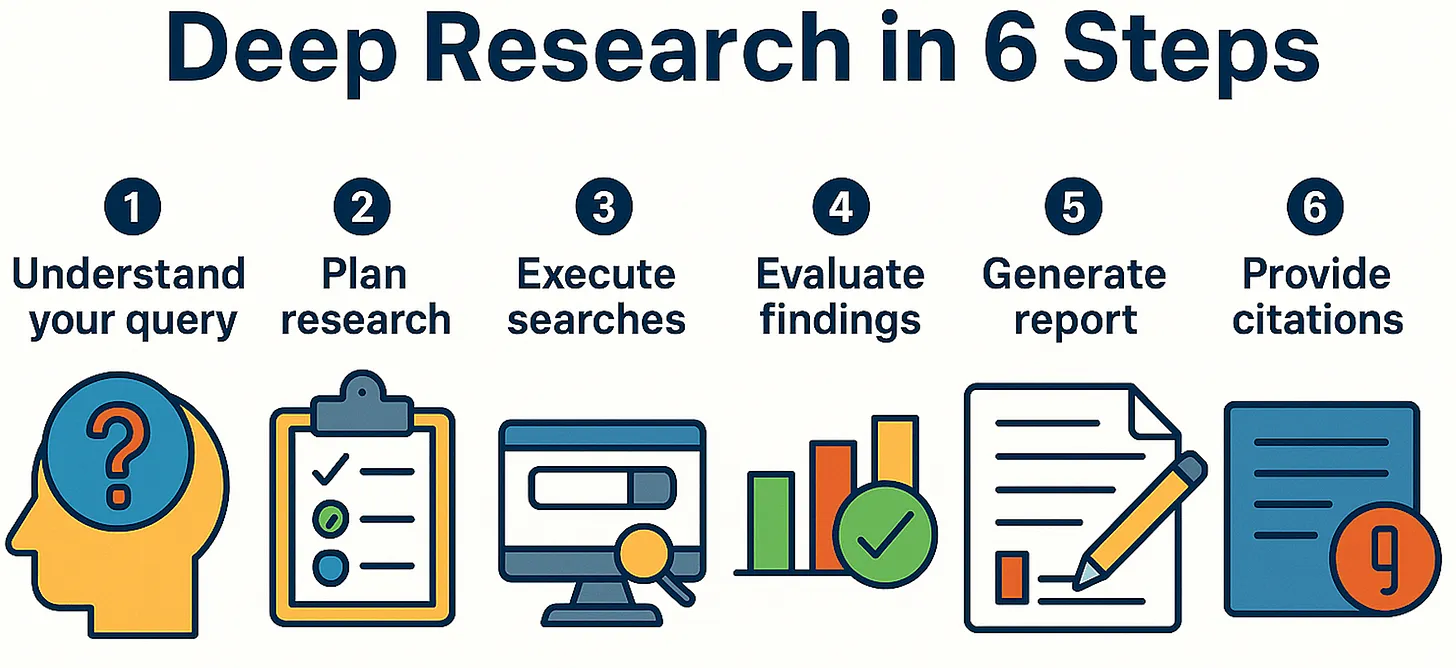
Deep Research and Canvas are getting their biggest updates yet, unlocking new ways to analyze information, create podcasts and vibe code websites and apps.
Gemini is coming to Chrome, so you can ask questions while browsing the web.
Students around the world can easily make interactive quizzes, and college students in the U.S., Brazil, Indonesia, Japan and the UK are eligible for a free school year of the Google AI Pro plan.
Google AI Ultra, a new premium plan, is for the pioneers who want the highest rate limits and early access to new features in the Gemini app.
2.5 Flash has become our new default model, and it blends incredible quality with lightning fast response times.
AI in Search is making it easier to ask Google anything and get a helpful response, with links to the web. That’s why AI Overviews is one of the most successful launches in Search in the past decade. As people use AI Overviews, we see they’re happier with their results, and they search more often. In our biggest markets like the U.S. and India, AI Overviews is driving over 10% increase in usage of Google for the types of queries that show AI Overviews.
This means that once people use AI Overviews, they’re coming to do more of these types of queries, and what’s particularly exciting is how this growth increases over time. And we’re delivering this at the speed people expect of Google Search — AI Overviews delivers the fastest AI responses in the industry.
Anthropic’s “Prompt Engineering Overview” is a free masterclass that’s worth its weight in gold. Their “constitutional AI prompting” section helped us create a content filter that actually works—unlike the one that kept flagging our coffee bean reviews as “inappropriate.” Apparently “rich body” triggered something…
OpenAI’s “Cookbook” is like having a Michelin-star chef explain cooking—simple for beginners, but packed with pro techniques. Their JSON formatting examples saved us 3 hours of debugging last week…
Google’s “Prompt Design Strategies” breaks down complex concepts with clear examples. Their before/after gallery showing how slight prompt tweaks improve results made us rethink everything we knew about getting quality outputs.
Pro tip: Save these guides as PDFs before they disappear behind paywalls. The best AI users keep libraries of these resources for quick reference. .
“To address this, organizations should consider building a sustainable AI governance model, prioritizing transparency, and tackling the complex challenge of AI-fueled imposter syndrome through reinvention. Employers who fail to approach innovation with empathy and provide employees with autonomy run the risk of losing valuable staff and negatively impacting employee productivity.”
Key findings from the report include the following:
Employees are keeping their productivity gains a secret from their employers. …
In-office employees may still log in remotely after hours. …
Younger workers are more likely to switch jobs to gain more flexibility.
AI discovers new math algorithms— from by Zach Mink & Rowan Cheung PLUS: Anthropic reportedly set to launch new Sonnet, Opus models
The Rundown: Google just debuted AlphaEvolve, a coding agent that harnesses Gemini and evolutionary strategies to craft algorithms for scientific and computational challenges — driving efficiency inside Google and solving historic math problems.
… Why it matters: Yesterday, we had OpenAI’s Jakub Pachocki saying AI has shown “significant evidence” of being capable of novel insights, and today Google has taken that a step further. Math plays a role in nearly every aspect of life, and AI’s pattern and algorithmic strengths look ready to uncover a whole new world of scientific discovery.
At the recent HR Executive and Future Talent Council event at Bentley University near Boston, I talked with Top 100 HR Tech Influencer Joey Price about what he’s hearing from HR leaders. Price is president and CEO of Jumpstart HR and executive analyst at Aspect43, Jumpstart HR’s HR?tech research division, and author of a valuable new book, The Power of HR: How to Make an Organizational Impact as a People?Professional.
This puts him solidly at the center of HR’s most relevant conversations. Price described the curiosity he’s hearing from many HR leaders about AI agents, which have become increasingly prominent in recent months.
What it is: A career visualization tool. See a map of professional fields related to your interests. (See video demo below)
How to use it: Start by typing in a current or previous role, or a type of job that interests you, using up to five words. Then optionally add the name of an organization or industry.
The free service then confirms job activities of interest and shows you a variety of related career paths. Pick one at a time to explore. You can then browse current job openings, refining the search based on location, company size, or other factors you care about.
Example: I’m not job hunting, but I tested out the service by typing in “journalist, writer and educator” as roles and then “journalism and education” as my industries of interest.
… Why it’s useful: I appreciate that Career Dreamer not only suggests a range of relevant fields, but also summarizes what a typical day in those jobs might be like. It also suggests skills you’ll develop and other jobs that might follow on that career path.
Next step: After exploring potential career paths and looking at available jobs, you can jump into Gemini — Google’s equivalent of ChatGPT — for further career planning.
.Get the 2025 Student Guide to Artificial Intelligence — from studentguidetoai.org This guide is made available under a Creative Commons license by Elon University and the American Association of Colleges and Universities (AAC&U). .
Agentic AI is taking these already huge strides even further. Rather than simply asking a question and receiving an answer, an AI agent can assess your current level of understanding and tailor a reply to help you learn. They can also help you come up with a timetable and personalized lesson plan to make you feel as though you have a one-on-one instructor walking you through the process. If your goal is to learn to speak a new language, for example, an agent might map out a plan starting with basic vocabulary and pronunciation exercises, then progress to simple conversations, grammar rules and finally, real-world listening and speaking practice.
…
For instance, if you’re an entrepreneur looking to sharpen your leadership skills, an AI agent might suggest a mix of foundational books, insightful TED Talks and case studies on high-performing executives. If you’re aiming to master data analysis, it might point you toward hands-on coding exercises, interactive tutorials and real-world datasets to practice with.
The beauty of AI-driven learning is that it’s adaptive. As you gain proficiency, your AI coach can shift its recommendations, challenge you with new concepts and even simulate real-world scenarios to deepen your understanding.
Ironically, the very technology feared by workers can also be leveraged to help them. Rather than requiring expensive external training programs or lengthy in-person workshops, AI agents can deliver personalized, on-demand learning paths tailored to each employee’s role, skill level, and career aspirations. Given that 68% of employees find today’s workplace training to be overly “one-size-fits-all,” an AI-driven approach will not only cut costs and save time but will be more effective.
This is one reason why I don’t see AI-embedded classrooms and AI-free classrooms as opposite poles. The bone of contention, here, is not whether we can cultivate AI-free moments in the classroom, but for how long those moments are actually sustainable.
Can we sustain those AI-free moments for an hour? A class session? Longer?
…
Here’s what I think will happen. As AI becomes embedded in society at large, the sustainability of imposed AI-free learning spaces will get tested. Hard. I think it’ll become more and more difficult (though maybe not impossible) to impose AI-free learning spaces on students.
However, consensual and hybrid AI-free learning spaces will continue to have a lot of value. I can imagine classes where students opt into an AI-free space. Or they’ll even create and maintain those spaces.
Duolingo’s AI Revolution — from drphilippahardman.substack.com by Dr. Philippa Hardman What 148 AI-Generated Courses Tell Us About the Future of Instructional Design & Human Learning
Last week, Duolingo announced an unprecedented expansion: 148 new language courses created using generative AI, effectively doubling their content library in just one year. This represents a seismic shift in how learning content is created — a process that previously took the company 12 years for their first 100 courses.
As CEO Luis von Ahn stated in the announcement, “This is a great example of how generative AI can directly benefit our learners… allowing us to scale at unprecedented speed and quality.”
In this week’s blog, I’ll dissect exactly how Duolingo has reimagined instructional design through AI, what this means for the learner experience, and most importantly, what it tells us about the future of our profession.
Medical education is experiencing a quiet revolution—one that’s not taking place in lecture theatres or textbooks, but with headsets and holograms. At the heart of this revolution are Mixed Reality (MR) AI Agents, a new generation of devices that combine the immersive depth of mixed reality with the flexibility of artificial intelligence. These technologies are not mere flashy gadgets; they’re revolutionising the way medical students interact with complicated content, rehearse clinical skills, and prepare for real-world situations. By combining digital simulations with the physical world, MR AI Agents are redefining what it means to learn medicine in the 21st century.
4 Reasons To Use Claude AI to Teach — from techlearning.com by Erik Ofgang Features that make Claude AI appealing to educators include a focus on privacy and conversational style.
After experimenting using Claude AI on various teaching exercises, from generating quizzes to tutoring and offering writing suggestions, I found that it’s not perfect, but I think it behaves favorably compared to other AI tools in general, with an easy-to-use interface and some unique features that make it particularly suited for use in education.
So this edition is simple: a quick, practical guide to the major generative AI models available in 2025 so far. What they’re good at, what to use them for, and where they might fit into your legal work—from document summarization to client communication to research support.
From DSC: This comprehensive, highly informational posting lists what the model is, its strengths, the best legal use cases for it, and responsible use tips as well.
Of course AI will continue to make waves, but what other important legal technologies do you need to be aware of in 2025? Dennis and Tom give an overview of legal tech tools—both new and old—you should be using for successful, modernized legal workflows in your practice. They recommend solutions for task management, collaboration, calendars, projects, legal research, and more.
Later, the guys answer a listener’s question about online prompt libraries. Are there reputable, useful prompts available freely on the internet? They discuss their suggestions for prompt resources and share why these libraries tend to quickly become outdated.
If you follow legal tech at all, you would be justified in suspecting that Tom Martin has figured out how to use artificial intelligence to clone himself.
While running LawDroid, his legal tech company, the Vancouver-based Martin also still manages a law practice in California, oversees an annual legal tech awards program, teaches a law school course on generative AI, runs an annual AI conference, hosts a podcast, and recently launched a legal tech consultancy.
In January 2023, less than two months after ChatGPT first launched, Martin’s company was one of the first to launch a gen AI assistant specifically for lawyers, called LawDroid Copilot. He has since also launched LawDroid Builder, a no-code platform for creating custom AI agents.
In a profession that’s actively contemplating its future in the face of AI, legal organization leaders who demonstrate a genuine desire to invest in the next generation of legal professionals will undoubtedly set themselves apart
Artificial intelligence (AI) is here. And it’s already reshaping the way law firms operate. Whether automating repetitive tasks, improving risk management, or boosting efficiency, AI presents a genuine opportunity for forward-thinking legal practices. But with new opportunities come new responsibilities. And as firms explore AI tools, it’s essential they consider how to govern them safely and ethically. That’s where an AI policy becomes indispensable.
So, what can AI actually do for your firm right now? Let’s take a closer look.
DC: THIS could unfortunately be the ROI companies will get from large investments in #AI — reduced headcount/employees/contract workers. https://t.co/zEWlqCSWzI
Duolingo will “gradually stop using contractors to do work that AI can handle,” according to an all-hands email sent by cofounder and CEO Luis von Ahn announcing that the company will be “AI-first.” The email was posted on Duolingo’s LinkedIn account.
According to von Ahn, being “AI-first” means the company will “need to rethink much of how we work” and that “making minor tweaks to systems designed for humans won’t get us there.” As part of the shift, the company will roll out “a few constructive constraints,” including the changes to how it works with contractors, looking for AI use in hiring and in performance reviews, and that “headcount will only be given if a team cannot automate more of their work.”
Something strange, and potentially alarming, is happening to the job market for young, educated workers.
According to the New York Federal Reserve, labor conditions for recent college graduates have “deteriorated noticeably” in the past few months, and the unemployment rate now stands at an unusually high 5.8 percent. Even newly minted M.B.A.s from elite programs are struggling to find work. Meanwhile, law-school applications are surging—an ominous echo of when young people used graduate school to bunker down during the great financial crisis.
What’s going on? I see three plausible explanations, and each might be a little bit true.
The new workplace trend is not employee friendly. Artificial intelligence and automation technologies are advancing at blazing speed. A growing number of companies are using AI to streamline operations, cut costs, and boost productivity. Consequently, human workers are facing facing layoffs, replaced by AI. Like it or not, companies need to make tough decisions, including layoffs to remain competitive.
Corporations including Klarna, UPS, Duolingo, Intuit and Cisco are replacing laid-off workers with AI and automation. While these technologies enhance productivity, they raise serious concerns about future job security. For many workers, there is a big concern over whether or not their jobs will be impacted.
Key takeaway: Career navigation has remained largely unchanged for decades, relying on personal networks and static job boards. The advent of AI is changing this, offering personalised career pathways, better job matching, democratised job application support, democratised access to career advice/coaching, and tailored skill development to help you get to where you need to be.Hundreds of millions of people start new jobs every year, this transformation opens up a multi-billion dollar opportunity for innovation in the global career navigation market.
…
A.4 How will AI disrupt this segment? Personalised recommendations: AI can consume a vast amount of information (skills, education, career history, even youtube history, and x/twitter feeds), standardise this data at scale, and then use data models to match candidate characteristics to relevant careers and jobs. In theory, solutions could then go layers deeper, helping you position yourself for those future roles. Currently based in Amsterdam, and working in Strategy at Uber and want to work in a Product role in the future? Here are X,Y,Z specific things YOU can do in your role today to align yourself perfectly. E.g. find opportunities to manage cross functional projects in your current remit, reach out to Joe Bloggs also at Uber in Amsterdam who did Strategy and moved to Product, etc.
No matter the school, no matter the location, when I deliver an AI workshop to a group of teachers, there are always at least a few colleagues thinking (and sometimes voicing), “Do I really need to use AI?”
Nearly three years after ChatGPT 3.5 landed in our lives and disrupted workflows in ways we’re still unpacking, most schools are swiftly catching up. Training sessions, like the ones I lead, are springing up everywhere, with principals and administrators trying to answer the same questions: Which tools should we use? How do we use them responsibly? How do we design learning in this new landscape?
But here’s what surprises me most: despite all the advances in AI technology, the questions and concerns from teachers remain strikingly consistent.
…
In this article, I want to pull back the curtain on those conversations. These concerns aren’t signs of reluctance – they reflect sincere feelings. And they deserve thoughtful, honest answers.
This week, in advance of major announcements from us and other vendors, I give you a good overview of the AI Agent market, and discuss the new role of AI governance platforms, AI agent development tools, AI agent vendors, and how AI agents will actually manifest and redefine what we call an “application.”
I discuss ServiceNow, Microsoft, SAP, Workday, Paradox, Maki People, and other vendors. My goal today is to “demystify” this space and explain the market, the trends, and why and how your IT department is going to be building a lot of the agents you need. And prepare for our announcements next week!
DeepSeek has quietly launched Prover V2, an open-source model built to solve math problems using Lean 4 assistant, which ensures every step of a proof is rigorously verified.
What’s impressive about it?
Massive scale: Based on DeepSeek-V3 with 671B parameters using a mixture-of-experts (MoE) architecture, which activates only parts of the model at a time to reduce compute costs.
Theorem solving: Uses long context windows (32K+ tokens) to generate detailed, step-by-step formal proofs for a wide range of math problems — from basic algebra to advanced calculus theorems.
Research grade: Assists mathematicians in testing new theorems automatically and helps students understand formal logic by generating both Lean 4 code and readable explanations.
New benchmark: Introduces ProverBench, a new 325-question benchmark set featuring problems from recent AIME exams and curated academic sources to evaluate mathematical reasoning.
The need for deep student engagement became clear at Dartmouth Geisel School of Medicine when a potential academic-integrity issue revealed gaps in its initial approach to artificial intelligence use in the classroom, leading to significant revisions to ensure equitable learning and assessment.
From George Siemens “SAIL: Transmutation, Assessment, Robots e-newsletter on 5/2/25
All indications are that AI, even if it stops advancing, has the capacity to dramatically change knowledge work. Knowing things matters less than being able to navigate and make sense of complex environments. Put another way, sensemaking, meaningmaking, and wayfinding (with their yet to be defined subelements) will be the foundation for being knowledgeable going forward.
That will require being able to personalize learning to each individual learner so that who they are (not what our content is) forms the pedagogical entry point to learning.(DSC: And I would add WHAT THEY WANT to ACHIEVE.)LLMs are particularly good and transmutation. Want to explain AI to a farmer? A sentence or two in a system prompt achieves that. Know that a learner has ADHD? A few small prompt changes and it’s reflected in the way the LLM engages with learning. Talk like a pirate. Speak in the language of Shakespeare. Language changes. All a matter of a small meta comment send to the LLM. I’m convinced that this capability to change, transmute, information will become a central part of how LLMS and AI are adopted in education.
… Speaking of Duolingo– it took them 12 years to develop 100 courses. In the last year, they developed an additional 148. AI is an accelerant with an impact in education that is hard to overstate. “Instead of taking years to build a single course with humans the company now builds a base course and uses AI to quickly customize it for dozens of different languages.”
FutureHouse is launching our platform, bringing the first publicly available superintelligent scientific agents to scientists everywhere via a web interface and API. Try it out for free at https://platform.futurehouse.org.
Over the course of the next 10 years, AI-powered institutions will rise in the rankings. US News & World Report will factor a college’s AI capabilities into its calculations. Accrediting agencies will assess the degree of AI integration into pedagogy, research, and student life. Corporations will want to partner with universities that have demonstrated AI prowess. In short, we will see the emergence of the AI haves and have-nots.
…
What’s happening in higher education today has a name: creative destruction. The economist Joseph Schumpeter coined the term in 1942 to describe how innovation can transform industries. That typically happens when an industry has both a dysfunctional cost structure and a declining value proposition. Both are true of higher education.
…
Out of the gate, professors will work with technologists to get AI up to speed on specific disciplines and pedagogy. For example, AI could be “fed” course material on Greek history or finance and then, guided by human professors as they sort through the material, help AI understand the structure of the discipline, and then develop lectures, videos, supporting documentation, and assessments.
…
In the near future, if a student misses class, they will be able watch a recording that an AI bot captured. Or the AI bot will find a similar lecture from another professor at another accredited university. If you need tutoring, an AI bot will be ready to help any time, day or night. Similarly, if you are going on a trip and wish to take an exam on the plane, a student will be able to log on and complete the AI-designed and administered exam. Students will no longer be bound by a rigid class schedule. Instead, they will set the schedule that works for them.
Early and mid-career professors who hope to survive will need to adapt and learn how to work with AI. They will need to immerse themselves in research on AI and pedagogy and understand its effect on the classroom.
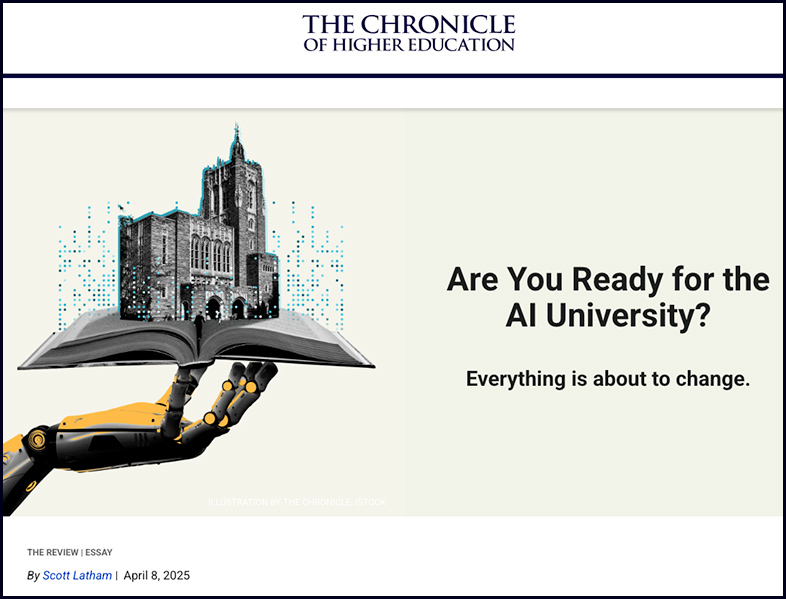
From DSC: I had a very difficult time deciding which excerpts to include. There were so many more excerpts for us to think about with this solid article. While I don’t agree with several things in it, EVERY professor, president, dean, and administrator working within higher education today needs to read this article and seriously consider what Scott Latham is saying.
Change is already here, but according to Scott, we haven’t seen anything yet. I agree with him and, as a futurist, one has to consider the potential scenarios that Scott lays out for AI’s creative destruction of what higher education may look like. Scott asserts that some significant and upcoming impacts will be experienced by faculty members, doctoral students, and graduate/teaching assistants (and Teaching & Learning Centers and IT Departments, I would add). But he doesn’t stop there. He brings in presidents, deans, and other members of the leadership teams out there.
There are a few places where Scott and I differ.
The foremost one is the importance of the human element — i.e., the human faculty member and students’ learning preferences. I think many (most?) students and lifelong learners will want to learn from a human being. IBM abandoned their 5-year, $100M ed push last year and one of the key conclusions was that people want to learn from — and with — other people:
To be sure, AI can do sophisticated things such as generating quizzes from a class reading and editing student writing. But the idea that a machine or a chatbot can actually teach as a human can, he said, represents “a profound misunderstanding of what AI is actually capable of.”
Nitta, who still holds deep respect for the Watson lab, admits, “We missed something important. At the heart of education, at the heart of any learning, is engagement. And that’s kind of the Holy Grail.”
— Satya Nitta, a longtime computer researcher at
IBM’s Watson Research Center in Yorktown Heights, NY .
By the way, it isn’t easy for me to write this. As I wanted AI and other related technologies to be able to do just what IBM was hoping that it would be able to do.
Also, I would use the term learning preferences where Scott uses the term learning styles.
Scott also mentions:
“In addition, faculty members will need to become technologists as much as scholars. They will need to train AI in how to help them build lectures, assessments, and fine-tune their classroom materials. Further training will be needed when AI first delivers a course.”
It has been my experience from working with faculty members for over 20 years that not all faculty members want to become technologists. They may not have the time, interest, and/or aptitude to become one (and vice versa for technologists who likely won’t become faculty members).
That all said, Scott relays many things that I have reflected upon and relayed for years now via this Learning Ecosystems blog and also via The Learning from the Living [AI-Based Class] Room vision — the use of AI to offer personalized and job-relevant learning, the rising costs of higher education, the development of new learning-related offerings and credentials at far less expensive prices, the need to provide new business models and emerging technologies that are devoted more to lifelong learning, plus several other things.
So this article is definitely worth your time to read, especially if you are working in higher education or are considering a career therein!
Google Public Sector and the University of Michigan’s Ross School of Business have launched an advanced Virtual Teaching Assistant pilot program aimed at improving personalized learning and enlightening educators on artificial intelligence in the classroom.
The AI technology, aided by Google’s Gemini chatbot, provides students with all-hours access to support and self-directed learning. The Virtual TA represents the next generation of educational chatbots, serving as a sophisticated AI learning assistant that instructors can use to modify their specific lessons and teaching styles.
The Virtual TA facilitates self-paced learning for students, provides on-demand explanations of complex course concepts, guides them through problem-solving, and acts as a practice partner. It’s designed to foster critical thinking by never giving away answers, ensuring students actively work toward solutions.
Uplimit unveiled a suite of AI-powered learning agents today designed to help companies rapidly upskill employees while dramatically reducing administrative burdens traditionally associated with corporate training.
The San Francisco-based company announced three sets of purpose-built AI agents that promise to change how enterprises approach learning and development: skill-building agents, program management agents, and teaching assistant agents. The technology aims to address the growing skills gap as AI advances faster than most workforces can adapt.
“There is an unprecedented need for continuous learning—at a scale and speed traditional systems were never built to handle,” said Julia Stiglitz, CEO and co-founder of Uplimit, in an interview with VentureBeat. “The companies best positioned to thrive aren’t choosing between AI and their people—they’re investing in both.”
Today we’re launching Claude for Education, a specialized version of Claude tailored for higher education institutions. This initiative equips universities to develop and implement AI-enabled approaches across teaching, learning, and administration—ensuring educators and students play a key role in actively shaping AI’s role in society.
As part of announcing Claude for Education, we’re introducing:
Learning mode: A new Claude experience that guides students’ reasoning process rather than providing answers, helping develop critical thinking skills
University-wide Claude availability:Full campus access agreements with Northeastern University, London School of Economics and Political Science (LSE), and Champlain College, making Claude available to all students
Academic partnerships: Joining Internet2 and working with Instructure to embed AI into teaching & learning with Canvas LMS
Student programs: A new Claude Campus Ambassadors program along with an initiative offering API credits for student projects
Why it matters: Education continues to grapple with AI, but Anthropic is flipping the script by making the tech a partner in developing critical thinking rather than an answer engine. While the controversy over its use likely isn’t going away, this generation of students will have access to the most personalized, high-quality learning tools ever.
Should College Graduates Be AI Literate?— from chronicle.com by Beth McMurtrie (behind a paywall) More institutions are saying yes. Persuading professors is only the first barrier they face.
Last fall one of Jacqueline Fajardo’s students came to her office, eager to tell her about an AI tool that was helping him learn general chemistry. Had she heard of Google NotebookLM? He had been using it for half a semester in her honors course. He confidently showed her how he could type in the learning outcomes she posted for each class and the tool would produce explanations and study guides. It even created a podcast based on an academic paper he had uploaded. He did not feel it was important to take detailed notes in class because the AI tool was able to summarize the key points of her lectures.
The Risk of Disengagement Let’s be honest: most of us aren’t jumping headfirst into AI. At many of our institutions, it’s not a gold rush—it’s a quiet standoff. But the group I worry most about isn’t the early adopters. It’s the faculty who’ve decided to opt out altogether.
That choice often comes from a place of care. Concerns about data privacy, climate impact, exploitative labor, and the ethics of using large language models are real—and important. But choosing not to engage at all, even on ethical grounds, doesn’t remove us from the system. It just removes our voices from the conversation.
And without those voices, we risk letting others—those with very different priorities—make the decisions that shape what AI looks like in our classrooms, on our campuses, and in our broader culture of learning.
You’ve just mastered a few new eLearning authoring tools, and now AI is knocking on the door, offering to do your job faster, smarter, and without needing coffee breaks. Should you be worried? Or excited?
If you’re a Learning and Development (L&D) professional today, AI is more than just a buzzword—it’s transforming the way we design, deliver, and measure corporate training. But here’s the good news: AI isn’t here to replace you. It’s here to make you better at what you do.
The challenge is to harness its potential to build digital-ready talent, not just within your organization but within yourself.
Let’s explore how AI is reshaping L&D strategies and how you can leverage it for professional development.
1. OpenAI’s New Image Generator
What Happened: OpenAI integrated a much more powerful image generator directly into GPT-4o, making it the default image creator in ChatGPT. Unlike previous image models, this one excels at accurately rendering text in images, precise visualization of diagrams/charts, and multi-turn image refinement through conversation.
Why It’s Big: For educators, this represents a significant advancement in creating educational visuals, infographics, diagrams, and other instructional materials with unprecedented accuracy and control. It’s not perfect, but you can now quickly generate custom illustrations that accurately display mathematical equations, chemical formulas, or process workflows — previously a significant hurdle in digital content creation — without requiring graphic design expertise or expensive software. This capability dramatically reduces the time between conceptualizing a visual aid and implementing it in course materials. .