A Los Angeles jury found social media giant Meta and video platform YouTube negligent in a landmark trial, awarding $3 million in compensation to a young woman who alleged she had become addicted to the companies’ platforms as a child.
The verdict came at the end of a month-long trial that featured testimony by Facebook founder Mark Zuckerberg and a day after a jury in New Mexico ordered Meta to pay $375 million in penalties for endangering children. The twin verdicts are signs that legal protections which for decades made tech companies seem almost impervious are beginning to crack, as lawyers accuse the platforms of putting addictive or otherwise harmful features into their platforms.
With the armor of Silicon Valley companies fractured, they will now have to size up their appetite for future courtroom battles. There are thousands more lawsuits waiting to be heard, with young internet users, parents, school districts and state attorneys general all seeking to hold the industry accountable.
The Bull and Bear Case For the AI Bubble, Explained — from theneuron.ai by Grant Harvey AI is both a genuine technological revolution and a massive financial bubble, and the defining question is whether miraculous progress can outrun the catastrophic, multi-trillion-dollar cost required to achieve it.
This sets the stage for the defining conflict of our technological era. The narrative has split into two irreconcilable realities. In one, championed by bulls like venture capitalist Marc Andreessen and NVIDIA CEO Jensen Huang, we are at the dawn of “computer industry V2”—a platform shift so profound it will unlock unprecedented productivity and reshape civilization.
In the other, detailed by macro investors like Julien Garran and forensic bears like writer Ed Zitron, AI is a historically massive, circular, debt-fueled mania built on hype, propped up by a handful of insiders, and destined for a collapse that will make past busts look quaint.
This is a multi-layered conflict playing out across public stock markets, the private venture ecosystem, and the fundamental unit economics of the technology itself. To understand the future, and whether it holds a revolution, a ruinous crash, or a complex mixture of both, we must dissect every layer of the argument, from the historical parallels to the hard financial data and the technological critiques that question the very foundation of the boom.
From DSC:
I second what Grant said at the beginning of his analysis:
**The following is shared for educational purposes and is not intended to be financial advice; do your own research!
But I post this because Grant provides both sides of the argument very well.
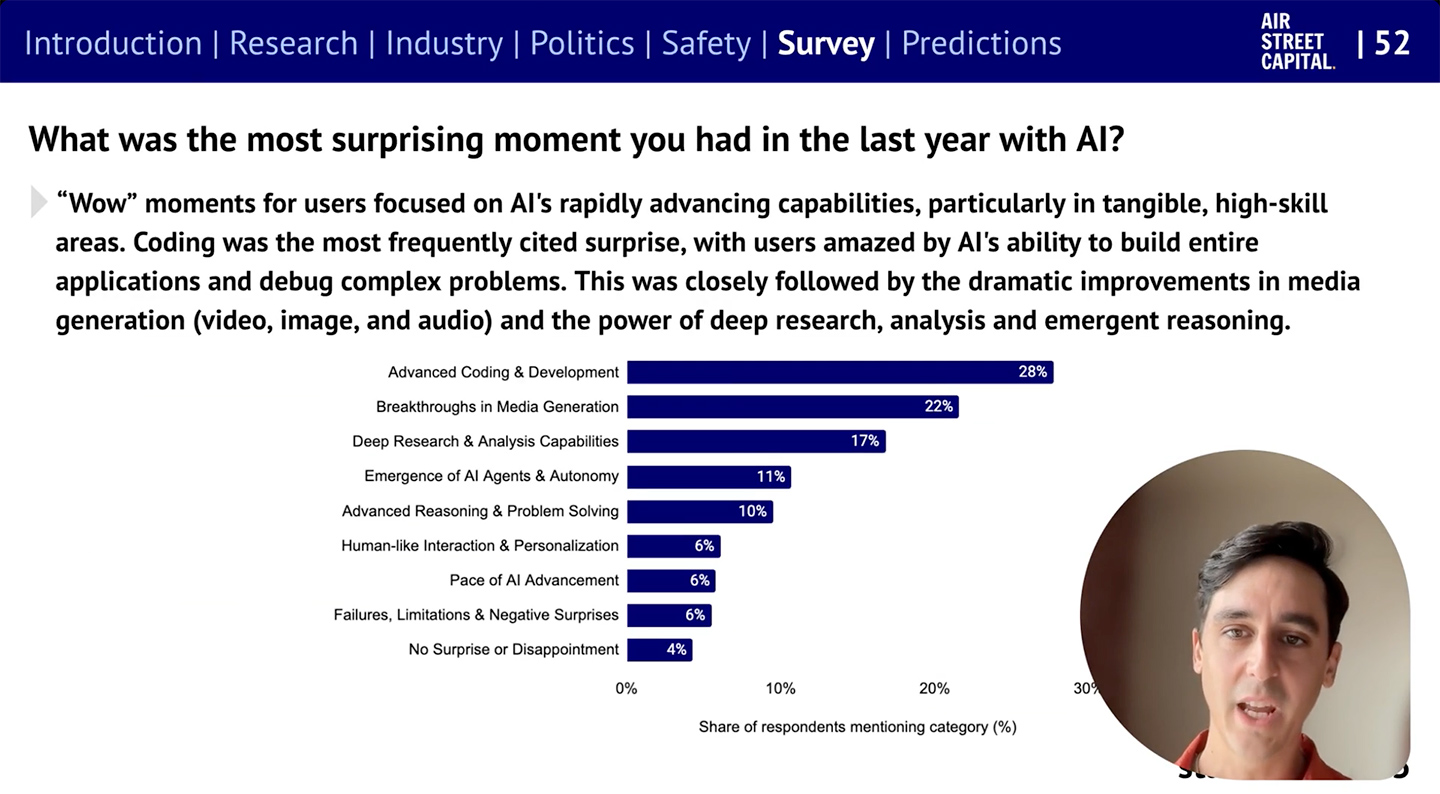
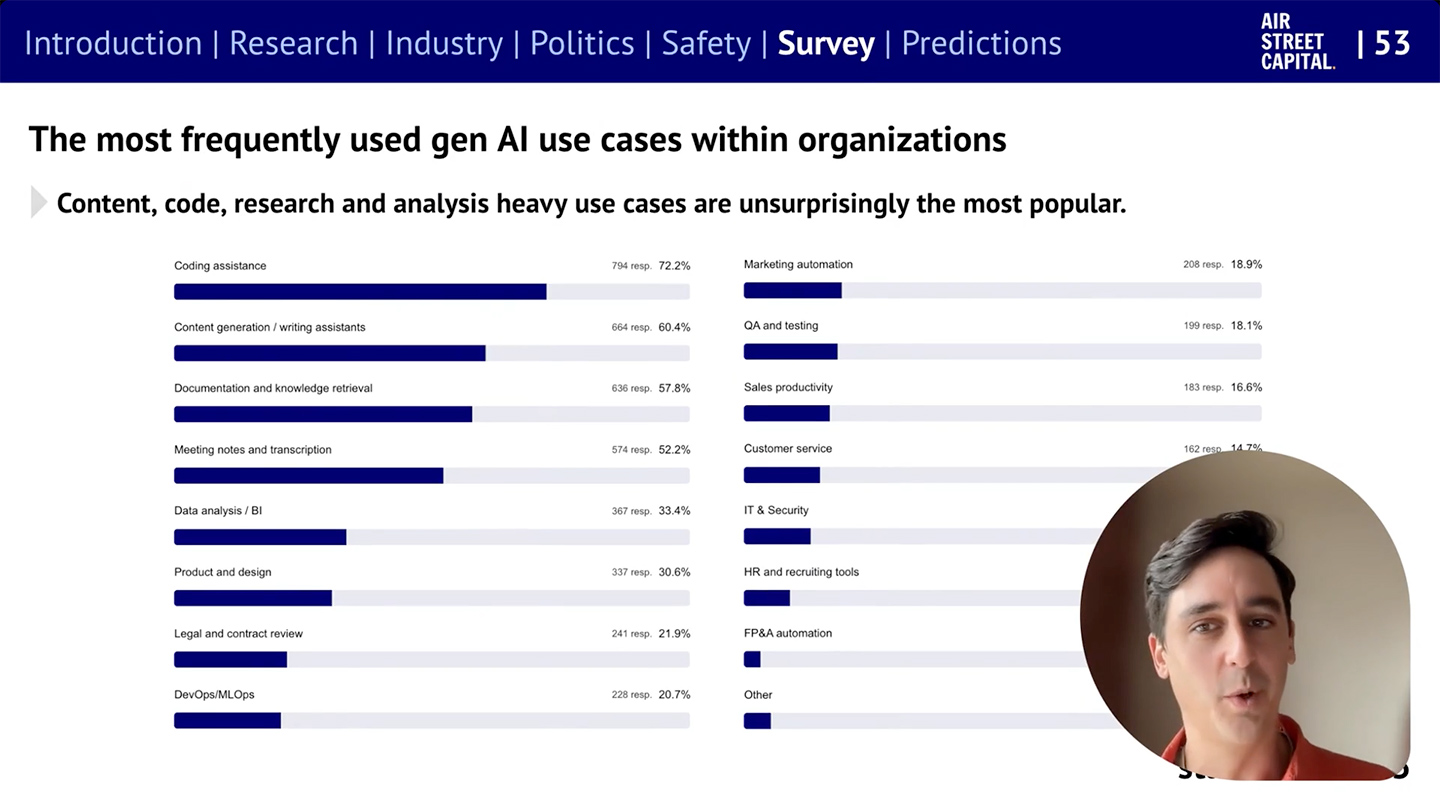
In short, it’s been a monumental 12 months for AI. Our eighth annual report is the most comprehensive it’s ever been, covering what you need to know about research, industry, politics, and safety – along with our first State of AI Usage Survey of 1,200 practitioners.
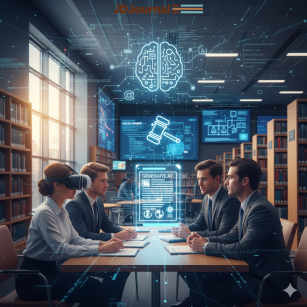
A growing number of U.S. law schools are now requiring students to train in artificial intelligence, marking a shift from optional electives to essential curriculum components. What was once treated as a “nice-to-have” skill is fast becoming integral as the legal profession adapts to the realities of AI tools.
From Experimentation to Obligation
Until recently, most law schools relegated AI instruction to upper-level electives or let individual professors decide whether to incorporate generative AI into their teaching. Now, however, at least eight law schools require incoming students—especially in their first year—to undergo training in AI, either during orientation, in legal research and writing classes, or via mandatory standalone courses.
Some of the institutions pioneering the shift include Fordham University, Arizona State University, Stetson University, Suffolk University, Washington University in St. Louis, Case Western, and the University of San Francisco.
There’s a vision that’s been teased Learning & Development for decades: a vision of closing the gap between learning and doing—of moving beyond stopping work to take a course, and instead bringing support directly into the workflow. This concept of “learning in the flow of work” has been imagined, explored, discussed for decades —but never realised. Until now…?
This week, an article published Harvard Business Review provided some some compelling evidence that a long-awaited shift from “courses to coaches” might not just be possible, but also powerful.
…
The two settings were a) traditional in-classroom workshops, led by an expert facilitator and b) AI-coaching, delivered in the flow of work.The results were compelling….
TLDR: The evidence suggests that “learning in the flow of work” is not only feasible as a result of gen AI—it also show potential to be more scalable, more equitable and more efficient than traditional classroom/LMS-centred models.
The 10 Most Popular AI Chatbots For Educators — from techlearning.com by Erik Ofgang Educators don’t need to use each of these chatbots, but it pays to be generally aware of the most popular AI tools
I’ve spent time testing many of these AI chatbots for potential uses and abuses in my own classes, so here’s a quick look at each of the top 10 most popular AI chatbots, and what educators should know about each. If you’re looking for more detail on a specific chatbot, click the link, as either I or other Tech & Learning writers have done deeper dives on all these tools.
Generative artificial intelligence isn’t just a new tool—it’s a catalyst forcing the higher education profession to reimagine its purpose, values, and future.
…
As experts in educational technology, digital literacy, and organizational change, we argue that higher education must seize this moment to rethink not just how we use AI, but how we structure and deliver learning altogether.
Over the past decade, microschools — experimental small schools that often have mixed-age classrooms — have expanded.
…
Some superintendents have touted the promise of microschools as a means for public schools to better serve their communities’ needs while still keeping children enrolled in the district. But under a federal administration that’s trying to dismantle public education and boost homeschool options, others have critiqued poor oversight and a lack of information for assessing these models.
Microschools offer a potential avenue to bring innovative, modern experiences to rural areas, argues Keith Parker, superintendent of Elizabeth City-Pasquotank Public Schools.
Imagining Teaching with AI Agents… — from michellekassorla.substack.com by Michelle Kassorla Teaching with AI is only one step toward educational change, what’s next?
More than two years ago I started teaching with AI in my classes. At first I taught against AI, then I taught with AI, and now I am moving into unknown territory: agents. I played with Manus and n8n and some other agents, but I really never got excited about them. They seemed more trouble than they were worth. It seemed they were no more than an AI taskbot overseeing some other AI bots, and that they weren’t truly collaborating. Now, I’m looking at Perplexity’s Comet browser and their AI agent and I’m starting to get ideas for what the future of education might hold.
I have written several times about the dangers of AI agents and how they fundamentally challenge our systems, especially online education. I know there is no way that we can effectively stop them–maybe slow them a little, but definitely not stop them. I am already seeing calls to block and ban agents–just like I saw (and still see) calls to block and ban AI–but the truth is they are the future of work and, therefore, the future of education.
So, yes! This is my next challenge: teaching with AI agents. I want to explore this idea, and as I started thinking about it, I got more and more excited. But let me back up a bit. What is an agent and how is it different than Generative AI or a bot?
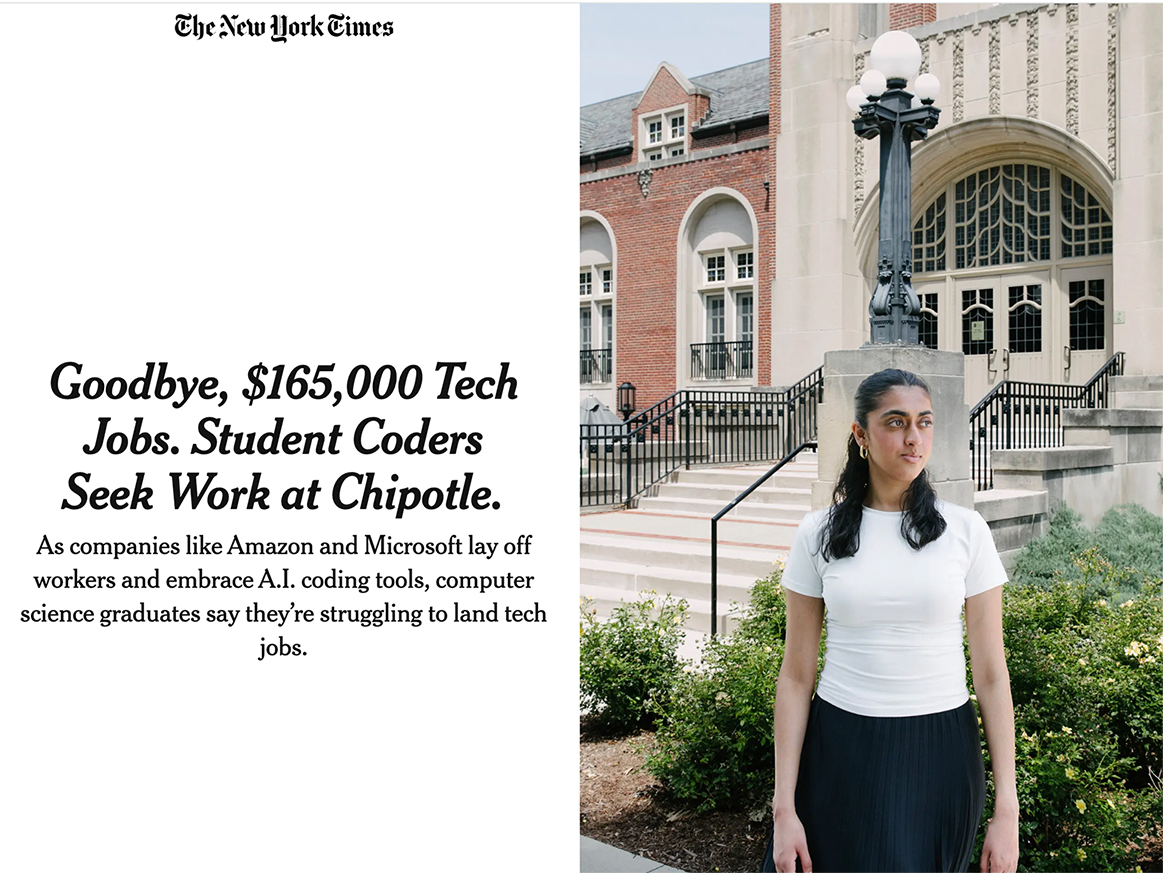
“The rhetoric was, if you just learned to code, work hard and get a computer science degree, you can get six figures for your starting salary,” Ms. Mishra, now 21, recalls hearing as she grew up in San Ramon, Calif.
Those golden industry promises helped spur Ms. Mishra to code her first website in elementary school, take advanced computing in high school and major in computer science in college. But after a year of hunting for tech jobs and internships, Ms. Mishra graduated from Purdue University in May without an offer.
“I just graduated with a computer science degree, and the only company that has called me for an interview is Chipotle,” Ms. Mishra said in a get-ready-with-me TikTok video this summer that has since racked up more than 147,000 views.
But now, the spread of A.I. programming tools, which can quickly generate thousands of lines of computer code — combined with layoffs at companies like Amazon, Intel, Meta and Microsoft — is dimming prospects in a field that tech leaders promoted for years as a golden career ticket. The turnabout is derailing the employment dreams of many new computing grads and sending them scrambling for other work.
Tech Layoffs 2025: Why AI is Behind the Rising Job Cuts — from finalroundai.com by Kaustubh Saini, Jaya Muvania, and Kaivan Dave; via George Siemens 507 tech workers lose their jobs to AI every day in 2025. Complete breakdown of 94,000 job losses across Microsoft, Tesla, IBM, and Meta – plus which positions are next. .
Amid all the talk about the state of our economy, little noticed and even less discussed was June’s employment data. It showed that the unemployment rate for recent college graduates stood at 5.8%, topping the national level for the first and only time in its 45-year historical record.
It’s an alarming number that needs to be considered in the context of a recent warning from Dario Amodei, CEO of AI juggernaut Anthropic, who predicted artificial intelligence could wipe out half of all entry-level, white-collar-jobs and spike unemployment to 10-20% in the next one to five years.
The upshot: our college graduates’ woes could be just the tip of the spear.
But as I thought about it, it just didn’t feel right. Replying to people sharing real gratitude with a copy-paste message seemed like a terribly inauthentic thing to do. I realized that when you optimize the most human parts of your business, you risk removing the very reason people connect with you in the first place.
Here are some incredibly powerful numbers from Mary Meeker’s AI Trends report, which showcase how artificial intelligence as a tech is unlike any other the world has ever seen.
AI took only three years to reach 50% user adoption in the US; mobile internet took six years, desktop internet took 12 years, while PCs took 20 years.
ChatGPT reached 800 million users in 17 months and 100 million in only two months, vis-à-vis Netflix’s 100 million (10 years), Instagram (2.5 years) and TikTok (nine months).
ChatGPT hit 365 billion annual searches in two years (2024) vs. Google’s 11 years (2009)—ChatGPT 5.5x faster than Google.
Above via Mary Meeker’s AI Trend-Analysis — from getsuperintel.com by Kim “Chubby” Isenberg How AI’s rapid rise, efficiency race, and talent shifts are reshaping the future.
The TLDR
Mary Meeker’s new AI trends report highlights an explosive rise in global AI usage, surging model efficiency, and mounting pressure on infrastructure and talent. The shift is clear: AI is no longer experimental—it’s becoming foundational, and those who optimize for speed, scale, and specialization will lead the next wave of innovation.
The Rundown: Meta aims to release tools that eliminate humans from the advertising process by 2026, according to a report from the WSJ — developing an AI that can create ads for Facebook and Instagram using just a product image and budget.
The details:
Companies would submit product images and budgets, letting AI craft the text and visuals, select target audiences, and manage campaign placement.
The system will be able to create personalized ads that can adapt in real-time, like a car spot featuring mountains vs. an urban street based on user location.
The push would target smaller companies lacking dedicated marketing staff, promising professional-grade advertising without agency fees or skillset.
Advertising is a core part of Mark Zuckerberg’s AI strategy and already accounts for 97% of Meta’s annual revenue.
Why it matters: We’re already seeing AI transform advertising through image, video, and text, but Zuck’s vision takes the process entirely out of human hands. With so much marketing flowing through FB and IG, a successful system would be a major disruptor — particularly for small brands that just want results without the hassle.
.Get the 2025 Student Guide to Artificial Intelligence — from studentguidetoai.org This guide is made available under a Creative Commons license by Elon University and the American Association of Colleges and Universities (AAC&U). .
Agentic AI is taking these already huge strides even further. Rather than simply asking a question and receiving an answer, an AI agent can assess your current level of understanding and tailor a reply to help you learn. They can also help you come up with a timetable and personalized lesson plan to make you feel as though you have a one-on-one instructor walking you through the process. If your goal is to learn to speak a new language, for example, an agent might map out a plan starting with basic vocabulary and pronunciation exercises, then progress to simple conversations, grammar rules and finally, real-world listening and speaking practice.
…
For instance, if you’re an entrepreneur looking to sharpen your leadership skills, an AI agent might suggest a mix of foundational books, insightful TED Talks and case studies on high-performing executives. If you’re aiming to master data analysis, it might point you toward hands-on coding exercises, interactive tutorials and real-world datasets to practice with.
The beauty of AI-driven learning is that it’s adaptive. As you gain proficiency, your AI coach can shift its recommendations, challenge you with new concepts and even simulate real-world scenarios to deepen your understanding.
Ironically, the very technology feared by workers can also be leveraged to help them. Rather than requiring expensive external training programs or lengthy in-person workshops, AI agents can deliver personalized, on-demand learning paths tailored to each employee’s role, skill level, and career aspirations. Given that 68% of employees find today’s workplace training to be overly “one-size-fits-all,” an AI-driven approach will not only cut costs and save time but will be more effective.
This is one reason why I don’t see AI-embedded classrooms and AI-free classrooms as opposite poles. The bone of contention, here, is not whether we can cultivate AI-free moments in the classroom, but for how long those moments are actually sustainable.
Can we sustain those AI-free moments for an hour? A class session? Longer?
…
Here’s what I think will happen. As AI becomes embedded in society at large, the sustainability of imposed AI-free learning spaces will get tested. Hard. I think it’ll become more and more difficult (though maybe not impossible) to impose AI-free learning spaces on students.
However, consensual and hybrid AI-free learning spaces will continue to have a lot of value. I can imagine classes where students opt into an AI-free space. Or they’ll even create and maintain those spaces.
Duolingo’s AI Revolution — from drphilippahardman.substack.com by Dr. Philippa Hardman What 148 AI-Generated Courses Tell Us About the Future of Instructional Design & Human Learning
Last week, Duolingo announced an unprecedented expansion: 148 new language courses created using generative AI, effectively doubling their content library in just one year. This represents a seismic shift in how learning content is created — a process that previously took the company 12 years for their first 100 courses.
As CEO Luis von Ahn stated in the announcement, “This is a great example of how generative AI can directly benefit our learners… allowing us to scale at unprecedented speed and quality.”
In this week’s blog, I’ll dissect exactly how Duolingo has reimagined instructional design through AI, what this means for the learner experience, and most importantly, what it tells us about the future of our profession.
Medical education is experiencing a quiet revolution—one that’s not taking place in lecture theatres or textbooks, but with headsets and holograms. At the heart of this revolution are Mixed Reality (MR) AI Agents, a new generation of devices that combine the immersive depth of mixed reality with the flexibility of artificial intelligence. These technologies are not mere flashy gadgets; they’re revolutionising the way medical students interact with complicated content, rehearse clinical skills, and prepare for real-world situations. By combining digital simulations with the physical world, MR AI Agents are redefining what it means to learn medicine in the 21st century.
4 Reasons To Use Claude AI to Teach — from techlearning.com by Erik Ofgang Features that make Claude AI appealing to educators include a focus on privacy and conversational style.
After experimenting using Claude AI on various teaching exercises, from generating quizzes to tutoring and offering writing suggestions, I found that it’s not perfect, but I think it behaves favorably compared to other AI tools in general, with an easy-to-use interface and some unique features that make it particularly suited for use in education.
From DSC: Look out Google, Amazon, and others! Nvidia is putting the pedal to the metal in terms of being innovative and visionary! They are leaving the likes of Apple in the dust.
The top talent out there is likely to go to Nvidia for a while. Engineers, programmers/software architects, network architects, product designers, data specialists, AI researchers, developers of robotics and autonomous vehicles, R&D specialists, computer vision specialists, natural language processing experts, and many more types of positions will be flocking to Nvidia to work for a company that has already changed the world and will likely continue to do so for years to come.
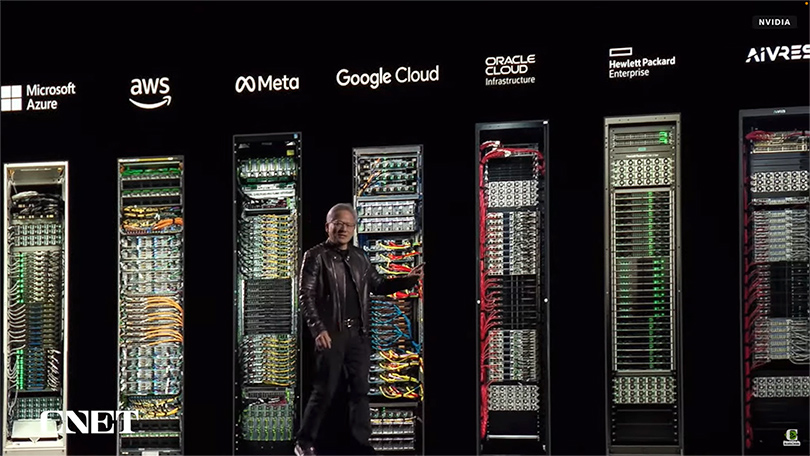
NVIDIA just shook the AI and Robotic world at NVIDIA GTC 2025.
CEO Jensen Huang announced jaw-dropping breakthroughs.
Here are the top 11 key highlights you can’t afford to miss: (wait till you see no 3) pic.twitter.com/domejuVdw5
For enterprises, NVIDIA unveiled DGX Spark and DGX Station—Jensen’s vision of AI-era computing, bringing NVIDIA’s powerful Blackwell chip directly to your desk.
Nvidia Bets Big on Synthetic Data — from wired.com by Lauren Goode Nvidia has acquired synthetic data startup Gretel to bolster the AI training data used by the chip maker’s customers and developers.
Nvidia, xAI to Join BlackRock and Microsoft’s $30 Billion AI Infrastructure Fund — from investopedia.com by Aaron McDade Nvidia and xAI are joining BlackRock and Microsoft in an AI infrastructure group seeking $30 billion in funding. The group was first announced in September as BlackRock and Microsoft sought to fund new data centers to power AI products.
AI Super Bowl. Hi everyone. This week, 20,000 engineers, scientists, industry executives, and yours truly descended upon San Jose, Calif. for Nvidia’s annual GTC developers’ conference, which has been dubbed the “Super Bowl of AI.”
Top AI Tools of 2024 — from ai-supremacy.com by Michael Spencer (behind a paywall) Which AI tools stood out for me in 2024? My list.
Memorable AI Tools of 2024
Catergories included:
Useful
Popular
Captures the zeighest of AI product innovation
Fun to try
Personally satisfying
NotebookLM
Perplexity
Claude
…
New “best” AI tool? Really? — from theneurondaily.com by Noah and Grant
PLUS: A free workaround to the “best” new AI…
What is Google’s Deep Research tool, and is it really “the best” AI research tool out there? … Here’s how it works: Think of Deep Research as a research team that can simultaneously analyze 50+ websites, compile findings, and create comprehensive reports—complete with citations.
Unlike asking ChatGPT to research for you, Deep Research shows you its research plan before executing, letting you edit the approach to get exactly what you need.
…
It’s currently free for the first month (though it’ll eventually be $20/month) when bundled with Gemini Advanced. Then again, Perplexity is always free…just saying.
We couldn’t just take J-Cal’s word for it, so we rounded up some other takes:
Our take: We then compared Perplexity, ChatGPT Search, and Deep Research (which we’re calling DR, or “The Docta” for short) on robot capabilities from CES revealed:
An excerpt from today’s Morning Edition from Bloomberg
Global banks will cut as many as 200,000 jobs in the next three to five years—a net 3% of the workforce—as AI takes on more tasks, according to a Bloomberg Intelligence survey. Back, middle office and operations are most at risk. A reminder that Citi said last year that AI is likely to replace more jobs in banking than in any other sector. JPMorgan had a more optimistic view (from an employee perspective, at any rate), saying its AI rollout has augmented, not replaced, jobs so far.
Per The Rundown: OpenAI just launched a surprising new way to access ChatGPT — through an old-school 1-800 number & also rolled out a new WhatsApp integration for global users during Day 10 of the company’s livestream event.
Agentic AI represents a significant evolution in artificial intelligence, offering enhanced autonomy and decision-making capabilities beyond traditional AI systems. Unlike conventional AI, which requires human instructions, agentic AI can independently perform complex tasks, adapt to changing environments, and pursue goals with minimal human intervention.
This makes it a powerful tool across various industries, especially in the customer service function. To understand it better, let’s compare AI Agents with non-AI agents.
… Characteristics of Agentic AI
Autonomy: Achieves complex objectives without requiring human collaboration.
Language Comprehension: Understands nuanced human speech and text effectively.
Rationality: Makes informed, contextual decisions using advanced reasoning engines.
Adaptation: Adjusts plans and goals in dynamic situations.
Workflow Optimization: Streamlines and organizes business workflows with minimal oversight.
How, then, can we research and observe how our systems are used while rigorously maintaining user privacy?
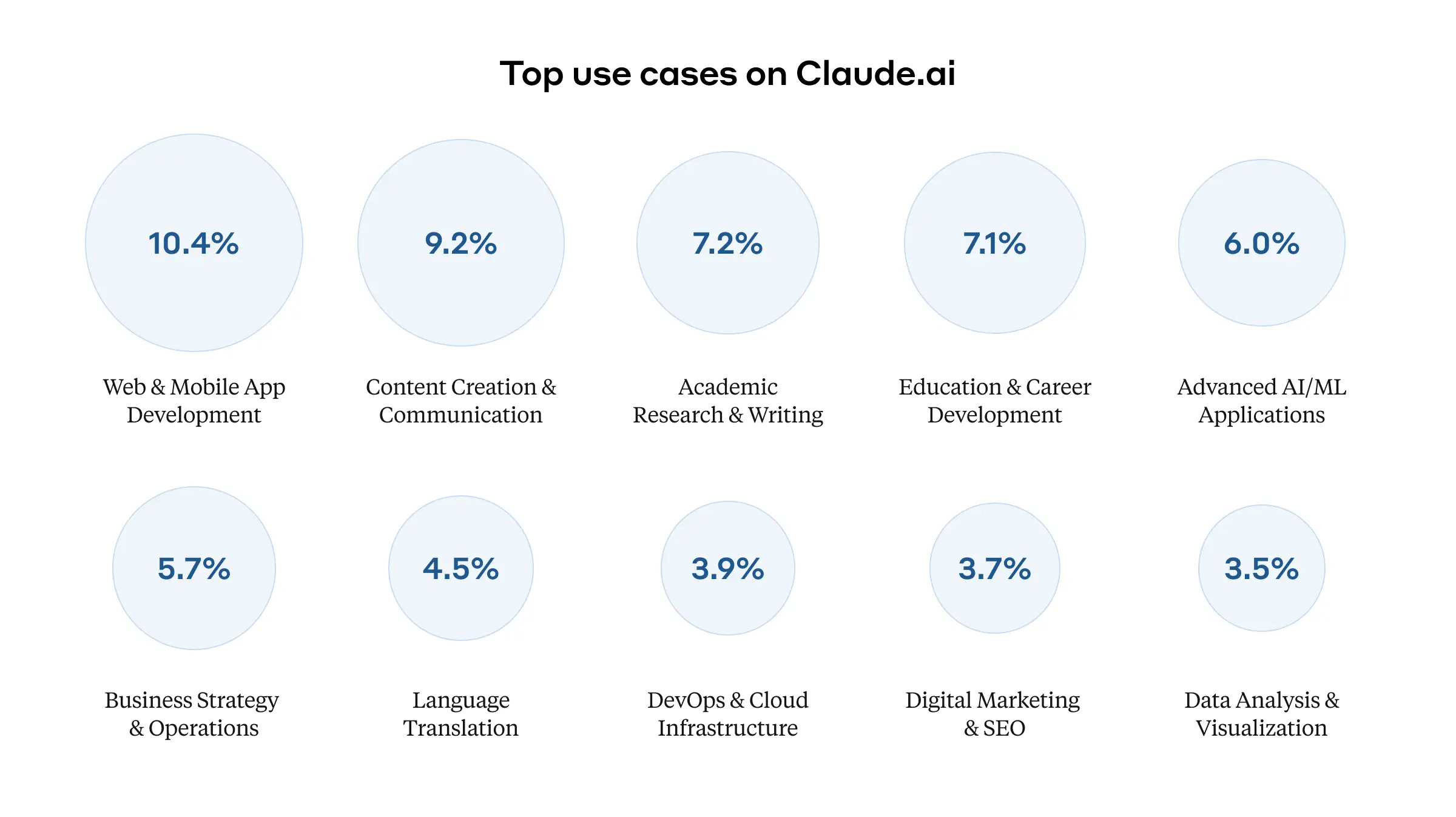
Claude insights and observations, or “Clio,” is our attempt to answer this question. Clio is an automated analysis tool that enables privacy-preserving analysis of real-world language model use. It gives us insights into the day-to-day uses of claude.ai in a way that’s analogous to tools like Google Trends. It’s also already helping us improve our safety measures. In this post—which accompanies a full research paper—we describe Clio and some of its initial results.
Evolving tools redefine AI video — from heatherbcooper.substack.com by Heather Cooper Google’s Veo 2, Kling 1.6, Pika 2.0 & more
AI video continues to surpass expectations
The AI video generation space has evolved dramatically in recent weeks, with several major players introducing groundbreaking tools.
Here’s a comprehensive look at the current landscape:
Veo 2…
Pika 2.0…
Runway’s Gen-3…
Luma AI Dream Machine…
Hailuo’s MiniMax…
OpenAI’s Sora…
Hunyuan Video by Tencent…
There are several other video models and platforms, including …
Today we’re excited to launch our next era of models built for this new agentic era: introducing Gemini 2.0, our most capable model yet. With new advances in multimodality — like native image and audio output — and native tool use, it will enable us to build new AI agents that bring us closer to our vision of a universal assistant.
We’re getting 2.0 into the hands of developers and trusted testers today. And we’re working quickly to get it into our products, leading with Gemini and Search. Starting today our Gemini 2.0 Flash experimental model will be available to all Gemini users. We’re also launching a new feature called Deep Research, which uses advanced reasoning and long context capabilities to act as a research assistant, exploring complex topics and compiling reports on your behalf. It’s available in Gemini Advanced today.
Over the last year, we have been investing in developing more agentic models, meaning they can understand more about the world around you, think multiple steps ahead, and take action on your behalf, with your supervision.
Today, we’re sharing the latest updates to Gemini, your AI assistant, including Deep Research — our new agentic feature in Gemini Advanced — and access to try Gemini 2.0 Flash, our latest experimental model.
Deep Research uses AI to explore complex topics on your behalf and provide you with findings in a comprehensive, easy-to-read report, and is a first look at how Gemini is getting even better at tackling complex tasks to save you time.1
Google Unveils A.I. Agent That Can Use Websites on Its Own — from nytimes.com by Cade Metz and Nico Grant (NOTE: This is a GIFTED article for/to you.)
The experimental tool can browse spreadsheets, shopping sites and other services, before taking action on behalf of the computer user.
Google on Wednesday unveiled a prototype of this technology, which artificial intelligence researchers call an A.I. agent.
…
Google’s new prototype, called Mariner, is based on Gemini 2.0, which the company also unveiled on Wednesday. Gemini is the core technology that underpins many of the company’s A.I. products and research experiments. Versions of the system will power the company’s chatbot of the same name and A.I. Overviews, a Google search tool that directly answers user questions.
Google Gemini 2.0 — a major upgrade to the core workings of Google’s AI that the company launched Wednesday — is designed to help generative AI move from answering users’ questions to taking action on its own…
… The big picture: Hassabis said building AI systems that can take action on their own has been DeepMind’s focus since its early days teaching computers to play games such as chess and Go.
“We were always working towards agent-based systems,” Hassabis said. “From the beginning, they were able to plan and then carry out actions and achieve objectives.”
Hassabis said AI systems that can act as semi-autonomous agents also represent an important intermediate step on the path toward artificial general intelligence (AGI) — AI that can match or surpass human capabilities.
“If we think about the path to AGI, then obviously you need a system that can reason, break down problems and carry out actions in the world,” he said.
The same paradigm applies to AI systems. AI assistants function as reactive tools, completing tasks like answering queries or managing workflows upon request. Think of chatbots or scheduling tools. AI agents, however, work autonomously to achieve set objectives, making decisions and executing tasks dynamically, adapting as new information becomes available.
Together, AI assistants and agents can enhance productivity and innovation in business environments. While assistants handle routine tasks, agents can drive strategic initiatives and problem-solving. This powerful combination has the potential to elevate organizations, making processes more efficient and professionals more effective.
Meet NVIDIA – The Engine of AI. From gaming to data science, self-driving cars to climate change, we’re tackling the world’s greatest challenges and transforming everyday life. The Microsoft and NVIDIA partnership enables Startups, ISVs, and Partners global access to the latest NVIDIA GPUs on-demand and comprehensive developer solutions to build, deploy and scale AI-enabled products and services.
The swift progress of artificial intelligence (AI) has simplified the creation and deployment of AI agents with the help of new tools and platforms. However, deploying these systems beneath the surface comes with hidden challenges, particularly concerning ethics, fairness and the potential for bias.
The history of AI agents highlights the growing need for expertise to fully realize their benefits while effectively minimizing risks.
Google is an illegal monopoly, federal court rules — from washingtonpost.com by Eva Dou and Gerrit De Vynck Judgment delivers a victory to the Justice Department as it takes on a string of federal antitrust lawsuits against Big Tech.
A federal court has found that Google illegally abused its market power to quash competition in internet search, handing the Justice Department a landmark victory against Big Tech.
“Google is a monopolist, and it has acted as one to maintain its monopoly,” Judge Amit P. Mehta wrote in his judgment on Monday.
Mehta wrote that Google, a unit of Alphabet Inc., has violated Section 2 of the Sherman Antitrust Act by maintaining its monopoly in two product markets in the United States — general search service and general text advertising — through exclusive distribution agreements with customer companies.
The case has been closely watched in antitrust law circles as the first of a string of cases federal prosecutors have launched against high-tech giants. Antitrust enforcers argue that Big Tech has gotten too powerful and doesn’t serve the public interest. Lawsuits have also been filed against Amazon, Meta and Apple.