3 Strategies for Asking Better Questions. — from edutopia.org by Cathleen Beachboard
By reframing your questions slightly, you can create more opportunities for students to think deeply, reflect, and engage.

Try these reframes:

  • Instead of Why didn’t you finish the assignment? ask, What helped you complete the parts you did finish?
  • Instead of What’s the problem with this argument? ask, What’s a strength in this argument that you could build on?

Tip for question formation: Identify the problem-based question, shift the focus to strengths or opportunities, and ask in a way that encourages forward movement.


Using Weekly Routines to Build Speaking Skills — from edutopia.org by Marianne Rule
These six strategies guide students to build confidence in their speaking skills through low-stakes, highly engaging discussions.

By making dialogue a daily practice, we equip students not just for academic success but for meaningful engagement with the world. Even small shifts—like dedicating five minutes to student-generated prompts—can positively shape classroom culture at a time when conversations can feel like battles that are won or lost.


What to Do When Your Lesson Goes Kaput — from edutopia.org by Sarah Gonser
Teacher-tested strategies for handling instructional snafus—including when to call it quits on a lesson and regroup.

To put you back on track, we checked in with veteran teachers across grade levels, set the scene, and asked for guidance.


5 Axioms to Promote Deeper Discussions — from edutopia.org by Matthew R. Kay
Getting students engaged in sustained conversations requires a combination of inquiry, routine, and relationship building.

All great discussions have one thing in common, whether they exist in a classroom, a barber shop, a boardroom, or on a marriage counselor’s couch: inquiry. All participants in a great discussion are trying to figure something out.

Sometimes it starts like this:


How Letting Go of Perfectionism Made Me a Better Teacher — from edutopia.org by Michelle Singh
Shifting the focus of a classroom from performance to process means embracing mistakes as a necessary part of learning.

The good news? Every mindset we challenge opens the door to deeper learning, stronger student connections, and a more fulfilling teaching experience. Shifting even one of these beliefs can create lasting change—for both you and your students. Choose one shift to try this week, and notice what changes.


AI in Education Survey: What UK and US Educators Think in 2025 — from twinkl.com
As artificial intelligence (AI) continues to shape the world around us, Twinkl conducted a large-scale survey between January 15th and January 22nd to explore its impact on the education sector, as well as the work lives of teachers across the UK and the USA.

Teachers’ use of AI for work continues to rise
Twinkl’s survey asked teachers whether they were currently using AI for work purposes. Comparing these findings to similar surveys over recent years shows the use of AI tools by teachers has seen a significant increase across both the UK and USA.

  • According to two UK surveys by the National Literacy Trust – 30% of teachers used generative AI in 2023 and nearly half (47.7%) in 2024. Twinkl’s survey indicates that AI adoption continues to rise rapidly, with 60% of UK educators currently integrating it into their work lives in 2025.
  • Similarly, with 62% of US teachers currently using AI for work, uptake appears to have risen greatly in the past 12 months, with just 25% saying they were leveraging the new technology in the 2023-24 school year according to a RAND report.
  • Teachers are using AI more for work than in their personal lives: In the UK, personal usage drops to 43% (from 60% at school).  In the US, 52% are using AI for non-work purposes (versus 62% in education settings).

    60% of UK teachers and 62% of US teachers use AI in their work life in 2025.


What trauma-informed practice is not — from timeshighereducation.com by Kate Cantrell, India Bryce, and Jessica Gildersleeve from The University of Southern Queensland
Before trauma-informed care can be the norm across all areas of the university, academic and professional staff need to understand what it is. Here, three academics debunk myths and demystify best practice

Recently, we conducted focus groups at our university to better ascertain how academics, administrators and student support staff perceive the purpose and value of trauma-informed practice, and how they perceive their capacity to contribute to organisational change.

We discovered that while most staff were united on the importance of trauma-informed care, several myths persist about what trauma-informed practice is (and is not). Some academic staff, for example, conflated teaching about trauma with trauma-informed teaching, confused trigger warnings with trigger points and, perhaps most alarmingly – given the prevalence of trauma exposure and risk among university students – misjudged trauma-informed practice as “the business of psychologists” rather than educators.


The Third Horizon of Learning Shifting beyond the Industrial Model — from gettingsmart.com by Sujata Bhatt & Mason Pashia

Over 24 blog posts, we have sketched a bold vision of what this next horizon of education looks like in action and highlighted the many innovators working to bring it to life. These pioneers are building new models that prioritize human development, relationships, and real-world relevance as most valuable. They are forging partnerships, designing and adopting transformative technologies, developing new assessment methods, and more. These shifts transform the lived experiences of young people and serve the needs of families and communities. In short, they are delivering authentic learning experiences that better address the demands of today’s economy, society, and learners.

We’ve aggregated our findings from this blog series and turned it into an H3 Publication. Inside, you’ll find our key transformation takeaways for school designers and system leaders, as well as a full list of the contributing authors. Thank you to all of the contributors, including LearnerStudio for sponsoring the series and Sujata Bhatt at Incubate Learning for authorship, editing and curation support throughout the entirety of the series and publication.
.


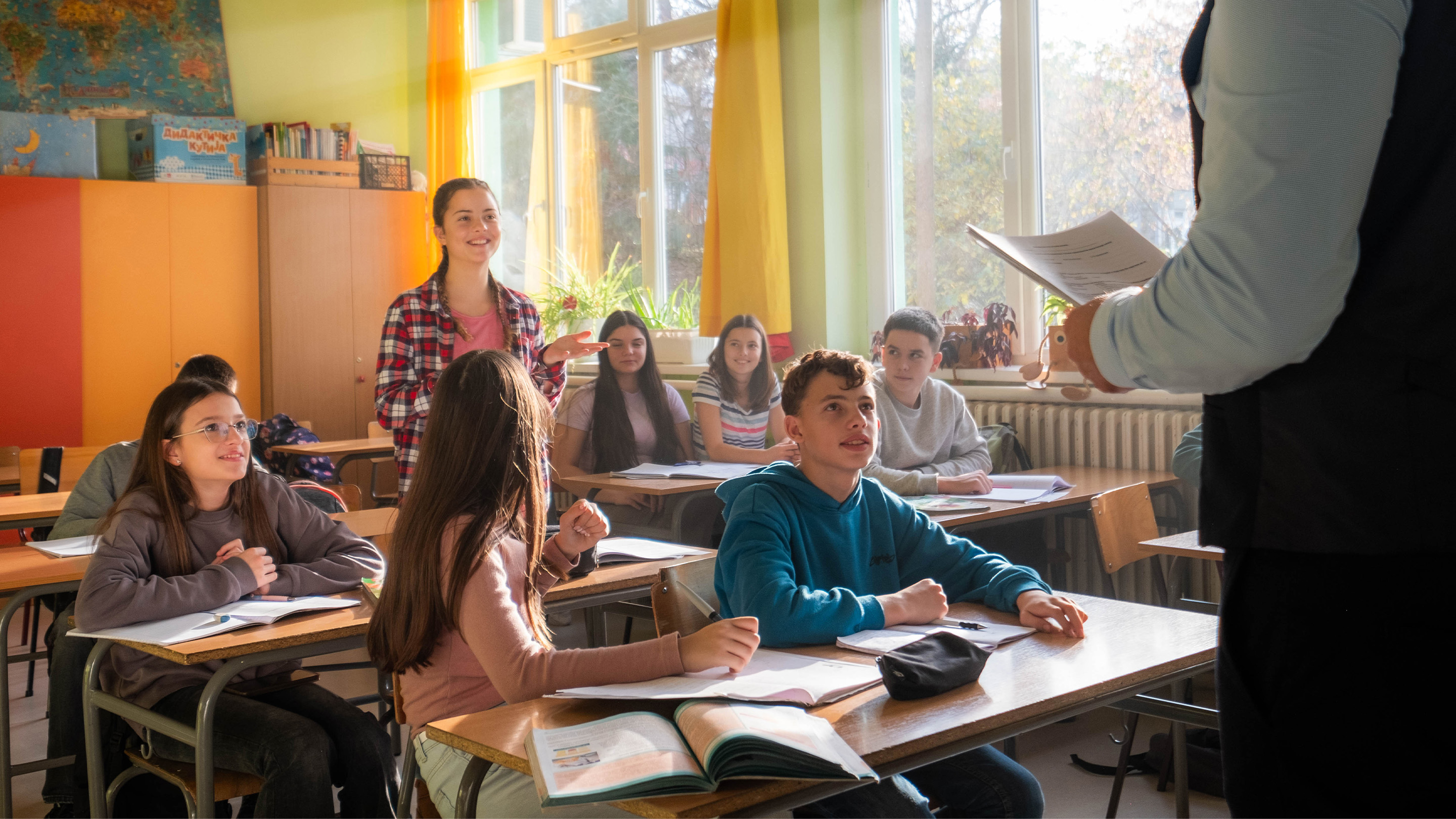
Cultivating Speaking and Listening Skills in the Primary Grades — from edutopia.org by Rachel Scheer
Early elementary teachers can use these strategies to help students improve their oral communication skills.

The good news? There are many engaging and effective strategies to develop these interpersonal skills, and most are easy to incorporate into daily classroom routines. I use the strategies below to directly teach, model, and practice these essential communication skills at a developmentally appropriate level: turn-taking, small group speaking and listening, whole group speaking and listening, and accountable talk.

From DSC:
I love the parts about practicing how to LISTEN. We need more of that in our communications with one another…as well as when we are praying to God.


Teaching Students About Corporate Influences in a Curriculum — from edutopia.org by Elaine Alvey
By uncovering any hidden interests in a curriculum, teachers can open important discussions about media literacy with students.

These instances underscore the need for educators to be vigilant in vetting materials, recognizing that even seemingly reputable sources can harbor hidden agendas, necessitating a robust approach to media and information literacy both for ourselves and for students.

How to Spot Corporate Influences in Your Curriculum
So, how do we, as educators, navigate this minefield? Media literacy strategies offer important tools to equip ourselves and our students to analyze information landscapes intentionally, including the curricular resources we evaluate for use in our classrooms.
.

From DSC:
I would encourage you to take a look at the work my sister Sue Ellen Christian has been doing re: media literacy, news literacy, and more. She created the Wonder Media website to discuss those topics. Plus she collaborated with several other people and organizations to develop a large, professionally-done exhibit re: these important topics.
.


Boosting Engagement in World Language Classes With Games — from edutopia.org by Rachelle Dené Poth
Middle school teachers can use a variety of tech and no-tech games to help students build skills in the target language.

As a world language educator, I’ve always sought innovative ways to engage my students through meaningful learning experiences as they build their language skills. One way we do this is through gameplay. The benefits of games go far beyond simply learning and increased retention of vocabulary or grammar. Games can also foster collaboration, critical thinking, creativity, and problem-solving skills, making learning fun for students.


How Administrators Can Respond—Instead of React—in Tough Situations — from edutopia.org by Jessica Cabeen
These strategies can help school leaders stay self-regulated in the middle of frustrating and stressful moments.

Conversations That Might Be Better Left for Later
Not every conversation needs to happen in the heat of the moment. Some of the most productive conversations happen after we’ve given ourselves time to regulate. Here are a few categories of conversations that might benefit from a pause:

  • Difficult feedback conversations. If emotions are running high, it might be best to wait until you can approach the discussion with clarity and empathy. A rushed or reactive conversation can shut down dialogue rather than encourage growth.
  • Conflict resolution. When two parties are upset, stepping in immediately to mediate can sometimes escalate tensions. A brief pause allows for perspective-taking and a calmer, solution-oriented approach.
  • Big-picture decisions. When stress is high, it’s easy to make decisions based on immediate pressures rather than long-term goals. Giving yourself space to step back ensures that decisions align with your leadership vision.
  • Personal or emotional responses. If you feel personally triggered by a comment, criticism, or situation, take time to process before responding. Self-awareness in these moments can prevent regretful words or actions.

So the next time frustration creeps in, take a breath. Pause before you speak, type, or react. Because more often than not, the best response isn’t the fastest one—it’s the one that comes from a place of clarity, patience, and purpose.


Trump signs order closing Education Department to ‘maximum extent appropriate’ — from highereddive.com by Naaz Modan
The directive comes on the heels of U.S. Education Secretary Linda McMahon’s decision to gut half the agency as its “final mission.”

President Donald Trump on Thursday afternoon ordered U.S. Secretary of Education Linda McMahon to “take all necessary steps to facilitate the closure of the Department of Education,” marking the boldest push from the president to shut down the agency since its establishment under the Carter administration over four decades ago.

Trump also said prior to the signing that he intends to disperse the department’s core functions — such as Pell Grants, Title I funding, and providing funding and resources for students with disabilities — to other parts of the government.


Also related see:


Education Department Fires 1,300 Workers, Gutting Its Staff — from nytimes.com by Michael C. Bender and Dana Goldstein. From DSC: I’m gifting this article to you.
The layoffs mean that the department will now have a work force of about half the size it did when President Trump took office.

The Education Department announced on Tuesday that it was firing more than 1,300 workers, effectively gutting the agency that manages federal loans for college, tracks student achievement and enforces civil rights laws in schools.

The layoffs mean that the department, which started the year with 4,133 employees, will now have a work force of about half that size after less than two months with President Trump in office. In addition to the 1,315 workers who were fired on Tuesday, 572 employees accepted separation packages offered in recent weeks and 63 probationary workers were terminated last month.


All of the articles listed below are from edutopia.org


4 Ways to Boost Students’ Self-Efficacy — by Tyler Rablin
These strategies help students see what they have learned so they believe they can be successful in school in the future.

Self-efficacy, on the other hand, focuses on outcomes to drive beliefs. In essence, self-efficacy involves intentionally providing students with evidence of early success to help them build the belief that they can be successful in the future.

Self-efficacy has been a powerful focus for me because it helps me to be more intentional as a teacher. It requires me to be mindful of how I structure assessments, feedback, etc., to provide students with evidence of their successes early on to help them see potential future successes.

Maintaining Students’ Focus in the Spring — by Miriam Plotinsky
Teachers can use these small ‘upgrades’ or tweaks to their regular practices to help keep students focused and involved.

As a recent MindShift article notes, “The second semester brings a lot of potential challenges to teachers’ regularly scheduled programming because of standardized testing, graduation events, and student burnout.” These challenges may be complex, but they are not insurmountable. With subtle shifts in practice, classrooms can remain safe and productive spaces—even in the spring.

She recommends a “coping jar” to help students identify moments of angst and manage their feelings. Fagell explains that when students find an effective coping mechanism, they write their idea on one side of a Popsicle stick and explain how it works on the other side. As students add ideas to the jar, they have an increased awareness of coping strategies and the importance of helping one another.

10 Picture Books That Showcase Collaboration — by Kristin Rydholm
These entertaining stories feature collaboration and social-emotional skills to highlight the benefit of working together to accomplish a goal.

Are you an early childhood teacher in search of relationship-building resources to help unify your classroom? Have I got a book list for you! In the verbiage of 1970s infomercials: “This collection has everything!” The main characters are early childhood students, the setting is the school, and each plot requires the class to work collaboratively. The characters are united in curiosity, determination, and mission to work on accomplishing projects together that they couldn’t possibly do alone.

What a 30-Day Break From AI Taught Me About My Teaching — by James Bedford
Using AI became second nature for this educator. A month without the tools gave him an opportunity to pause, reflect, and recalibrate.

My goal is to try to preserve the messy, creative core of what it means to be an educator: curiosity, critical thinking, and the grit and energy to solve problems without always resorting to shortcuts—technological or otherwise. My hope is that my students will do the same.

Unplug and reconnect: Challenge yourself and your students to embark on an AI detox. Step away from AI tools where possible, and rediscover the power of human creativity and independent thought. Start a journal to document the journey, exploring questions like “How does it feel to rely solely on my own intellect?” or “What challenges arise when AI isn’t there to assist? This activity can foster resilience, raise self-awareness, and cultivate a deeper appreciation for the human capacity to think, create, problem-solve, and innovate.


6 Characteristics of an Education that Students Want — from gettingsmart.com by IDEA (School of Industrial Design, Engineering and Arts) Students in Tacoma Washington

As current high school students, we want:

  1. Education for the Real World
  2. Personalized and Flexible Education
  3. Cultivating Agency
  4. Creativity and Divergent Thinking
  5. Joyful Learning and Community Building
  6. Empathy and Emotional Growth

Also from gettingsmart.com

Diving into the Evidence: Virtual and Hybrid Models as High-Quality School Choice Options

Key Points

  • The Learning Accelerator is building an evidence base of what high-quality virtual and hybrid learning looks like and how it can be a catalyst for expanding access to powerful learning opportunities.
  • An analysis of 64 high-quality models revealed that virtual and hybrid learning occurs in various contexts, from state-based, fully-virtual programs to individual, hybrid schools and meets the needs of different student populations, including those underserved or disengaged by traditional education systems as well as looking for increased flexibility and course access.
 

Nvidia helps launch AI platform for teaching American Sign Language — from venturebeat.com by Dean Takahashi; via Claire Zau

Nvidia has unveiled a new AI platform for teaching people how to use American Sign Language to help bridge communication gaps.

The Signs platform is creating a validated dataset for sign language learners and developers of ASL-based AI applications.

Nvidia, the American Society for Deaf Children and creative agency Hello Monday are helping close this gap with Signs, an interactive web platform built to support ASL learning and the development of accessible AI applications.


Using Gen AI to Design, Implement, and Assess PBL — from gettingsmart.com by David Ross

Key Points

  • Generative AI can significantly reduce the time and effort required in designing PBL by providing tools for research, brainstorming, and organization.
  • AI tools can assist educators in managing project implementation and assessment, providing formative feedback and organizing resources efficiently.

I usually conclude blogs with some pithy words, but this time I’ll turn the microphone over to Rachel Harcrow, a high school English/Language Arts teacher at Young Women’s College Prep Charter School of Rochester, NY: “After years of struggling to call myself a PBL practitioner, I finally feel comfortable saying I am, thanks to the power of Gen AI,” Harcrow told me. “Initial ideas now turn into fully fledged high-quality project plans in minutes that I can refine, giving me the space and energy to focus on what truly matters: My students.”


AI Resources for District Leaders — from techlearning.com by Steve Baule
Educational leaders aiming to effectively integrate generative AI into their schools should consider several key resources

To truly harness the transformative power of generative AI in education, district leaders must navigate a landscape rich with resources and opportunities. By delving into state and national guidelines, exploring successful case studies, utilizing innovative planning tools, and engaging in professional development, educational leaders can craft robust implementation plans. These plans can then assist in integrating AI seamlessly into their schools and elevate the learning experience to new heights.


Anthropic brings ‘extended thinking’ to Claude, which can solves complex physics problems with 96.5% accuracy — from rdworldonline.com by Brian Buntz

Anthropic, a favorite frontier AI lab among many coders and genAI power users has unveiled Claude 3.7 Sonnet, its first “hybrid reasoning” AI model. It is capable of both near-instant answers and in-depth, step-by-step reasoning within a single system.

Users can toggle an extended thinking mode where the model self-reflects before answering, considerably improving performance on complex tasks like math, physics and coding. In early testing by the author, the model largely succeeded in creating lines of Python (related to unsupervised learning) that were close to 1,000 lines long that ran without error on the first or second try, including the unsupervised machine learning task shown below:


New Tools. Old Complaints. Why AI Won’t Kill Education or Fix it  — from coolcatteacher.com by Vicki Davis; via Stephen Downes

AI won’t kill education. But will it kill learning? The challenge isn’t AI itself—it’s whether students can still think for themselves when the answers are always one click away.

Wait. Before you go, let me ask you one thing.
AI has opportunities to help learning. But it also won’t fix it. The real question isn’t whether students can use AI—but whether they’re still learning without it.

Whether the learning is happening between the ears.

And so much of what we teach in schools isn’t the answers on a test. It answers questions like “What is my purpose in life?” “How do I make friends?” and “How can I help my team be stronger.” Questions that aren’t asked on a test but are essential to living a good life. These questions aren’t answered between the ears but within the heart.

That, my friends, is what teaching has always been about.

The heart.

And the heart of the matter is we have new challenges, but these are old complaints. Complaints since the beginning of time and teaching. And in those days, you didn’t need kids just to be able to talk about how to build a fire, they had to make one themselves. Their lives depend on it.

And these days, we need to build another kind of fire. A fire that sparks the joy of learning. The joy of the opportunities that await us sparked by some of the most powerful tools ever invented. Kids need to not be able to just talk about making a difference, they need to know how to build a better world tomorrow. Our lives depend on it.


How Debating Skills Can Help Us In The Fight Against AI — from adigaskell.org by Adi Gaskell

Debating skills have a range of benefits in the workplace, from helping to improve our communication to bolstering our critical thinking skills. Research from the University of Mississippi suggests it might also help us in the battle with AI in the workplace.

We can often assume that debate teaches us nothing more than how to argue our point, but in order to do this, we have to understand both our own take on a subject and that of our opponent. This allows us to see both sides of any issue we happen to be debating.

“Even though AI has offered a shortcut through the writing process, it actually still is important to be able to write and speak and think on your own,” the researchers explain. “That’s what the focus of this research is: how debate engenders those aspects of being able to write and speak and study and research on your own.”


Assistive tech in your classroom: A practical guide — from understood.org by Andrew M.I. Lee, JD
Assistive technology (AT) are tools that let people with differences work around challenges. They make tasks and activities accessible at school, work, and home. Learn how AT apps and software can help with reading, writing, math, and more.

People who learn and think differently can use technology to help work around their challenges. This is called assistive technology (AT). AT helps people with disabilities learn, communicate, or function better. It can be as high-tech as a computer, or as low-tech as a pencil grip. It’s a type of accommodation that involves tools.

Assistive technology has two parts: devices (the actual tools people use) and services (the support to choose and use the tools).

Students who struggle with learning can use AT to help with subjects like reading, writing, and math. AT can also help kids and adults with the tasks of daily life. And many adults use these tools on the job, too.
.


What Educators Need to Know About Dyslexia—and Why It’s Not Something to ‘Fix’ — from edweek.org by Elizabeth Heubeck

“The good news is, though, with early intervention and with the appropriate types of modifications and intervention, people with dyslexia thrive in today’s world.”

From DSC:
I have a retired friend who is dyslexic and, to this very day, feels the pain of being told — and treated like — he was stupid in the majority of his K-12 years. He later went on to get trained on how to operate missiles, solve a variety of highly technical IT-related problems, set up networks, run security departments, and more. He is a highly intelligent individual. But he is dsylexic. And he recalls the pain of those early education days.

I’m glad that we’ve made some significant progress in understanding dsylexia. And I hope that today’s dyslexic students don’t have experiences like his.


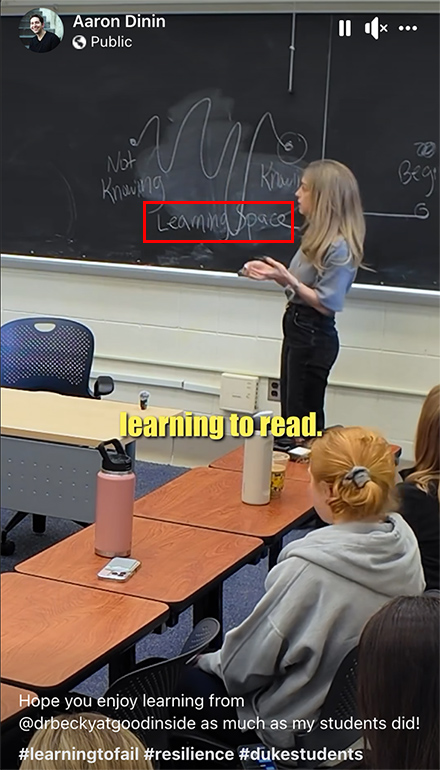
“Learning is frustration.”

The learning space is that space between “not knowing” and “knowing.” It can be very frustrating. But don’t be discouraged when you are frustrated. It means that you are learning. Eventually, you’ll get to “knowing.”
.


Department of Education Helps Students With Disabilities. Don’t Let It Disappear | Opinion — from newsweek.com by Katy NeasCEO, The Arc of the United States

When education is limited, so is opportunity. Without education, students with disabilities face higher rates of poverty, unemployment, poor health, and social isolation. Education is the foundation for independence, inclusion, and a future with choices. Strip it away, and we are not just limiting potential—we are forcing millions of people into a lifetime of barriers and hardship.

This issue is personal for me. As a former deputy assistant secretary in the Department of Education’s Office of Special Education and a lifelong advocate for disability rights, I have seen firsthand what happens when children with disabilities face barriers—and how the Department of Education steps in to make things right.


An excerpt from Derek Bruff’s newsletter entitled, “Digital reading, belonging stories, escape rooms, and more

Course Contributors
At the Top Hat Engage conference last week, I met Whitney Silvis-Sawyer, who teaches education courses at Louisiana Tech University. She regularly invites her students to provide feedback on her courses, and when she makes a change to a course in response to student feedback, she acknowledges that student by name (and with permission) in a “course contributors” section of her syllabus. Some of her course syllabi now have dozens of students listed who have helped shape her courses. I love this as a way to help students see that you take their feedback seriously and as a way to acknowledge sources of inspiration for one’s teaching.

In-Class Escape Rooms
Over on Bluesky, I was delighted to see that Lisa Fazio, who teaches psychology at Vanderbilt University, shared images of the escape room activity she designed as a review for her social cognition course. Her students worked in teams of four to complete a series of puzzles and open a number of combination locks, all of which required them to apply social cognition concepts they had been studying. Lisa writes, “Watching them race through the puzzles today brought me joy!” See Lisa’s thread for all the details.


Designing the Classroom of the Future: 5 Easy Pieces — from ed-spaces.com by Leslie Stebbins
When designing new classrooms the most important factors to consider are designs that encourage movement, provide space for collaborative and independent work, seamlessly embed technology, promote creativity, and provide flexibility.

  1. Design for Movement: Sitting is the new smoking!
  2. Build for Collaboration and Independent Work
  3. Embed Technology Seamlessly: Clean up your Cables!
  4. Promote Creativity: Mix it Up!
  5. Flexibility with Limits

Addendums:


What if students had the power to design their own learning journeys?

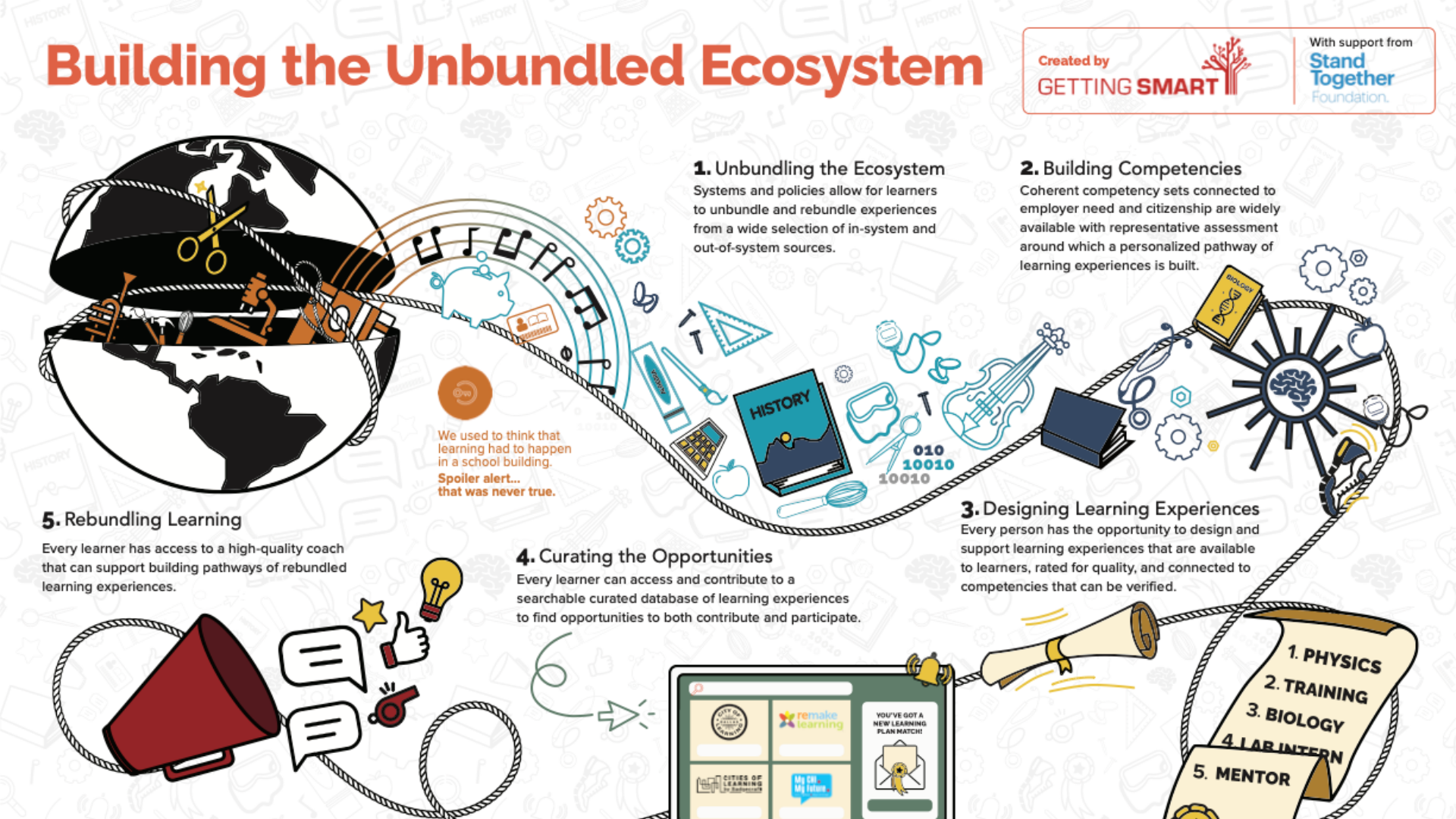
Across the U.S., states are moving beyond one-size-fits-all education and embracing unbundled learning, creating personalized pathways that equip students with the skills they need for the future. Getting Smart’s Unbundled Learning Podcast Series explores how Colorado, Arizona, and New Hampshire are leading the way—expanding real-world learning, shifting to competency-based models, empowering learner agency, and aligning education with workforce needs.

For policymakers, the newly released Policymaker’s Guide offers a roadmap for fostering unbundled systems. It highlights key priorities such as competency-driven accountability, flexible credentialing, and funding models that prioritize equity, helping state leaders create policies that expand opportunities for all learners.

Explore how unbundled learning is shaping the future of education and how states can build more personalized, future-ready systems.

New Pathways > Unbundled Learning — from gettingsmart.com
We used to think that learning had to happen in a school building. Spoiler alert…that was never true.

How might we create an ecosystem where learning doesn’t just happen at school? With Unbundled Learning, learners don’t need permission to have equitable experiences. Unbundled Learning removes all the barriers and allows learning to happen at school, after school, with industry partners and anywhere a learner can imagine. Unbundled Learning is the foundation for which new learning models are built, learners are supported and systems are scaled.

If we used to think that school was the only answer, now we know we have options.
.


How to Make Learning as Addictive as Social Media | Duolingo’s Luis Von Ahn | TED — from youtube.com; via Kamil Banc at AI Adopter

When technologist Luis von Ahn was building the popular language-learning platform Duolingo, he faced a big problem: Could an app designed to teach you something ever compete with addictive platforms like Instagram and TikTok? He explains how Duolingo harnesses the psychological techniques of social media and mobile games to get you excited to learn — all while spreading access to education across the world.
.

 
© 2025 | Daniel Christian