New Partnership Offers Online Tutoring in Michigan Schools — from govtech.com via GSV
The online education nonprofit Michigan Virtual has partnered with Stride Tutoring to offer remote academic support for students in 700 school districts as part of a statewide push to reverse pandemic learning loss.

Online education provider Michigan Virtual is working with a Virginia-based online tutoring company to increase access to personalized academic support for Michigan students, according to a news release last month. The partnership is in line with a statewide push to reverse pandemic learning loss through high-impact tutoring.


Speaking of education — but expanding the scope of this posting to a global scale:

Kids worldwide face huge educational challenges. Is better leadership a solution? — from hechingerreport.org by Liz Willen
Amid dismal data, educators from around the world gather in Brazil and say they can rise to the challenges

While the conversation clearly focused on a continuing worldwide crisis in education, the UNESCO conference I participated in was different. It emphasized a topic of huge importance to improving student outcomes, and coincided with the release of a report detailing how effective leaders can make a big difference in the lives of children.

From DSC:
Leadership is important, for sure. But being a leader in education is very difficult these days — there are many different (and high) expectations and agendas being thrown your way from a variety of shareholders. But I do appreciate those leaders who are trying to create effective learning ecosystems out there!


One more for high school students considering going to college…


7 Urgent Changes to Stop the Teacher Shortage Crisis — from teachingexpertise.com by Natalie Cates

In the past few years, the teacher shortage has reached critical levels. According to recent surveys, about 30% of teachers plan to leave their jobs in the next year, and 40% of those are considering leaving education altogether. Even more shocking is that only 16% of educators would strongly recommend the profession to others. This isn’t just a temporary problem; it’s a crisis that threatens the future of education. Teachers are burned out, undervalued, and overwhelmed by growing demands.

The question is: What needs to change? What will it take to stop the mass exodus from education and create an environment where teachers want to stay and thrive?

Below are the key areas that need urgent reform if we want to stop the teacher shortage and rebuild a sustainable, respected profession.

Micromanagement is a key contributor to teacher burnout. Teachers are bogged down with endless paperwork, restrictive policies, and constant oversight, leaving little room for creativity or autonomy in their classrooms. Instead of focusing on teaching, educators are often tied up with administrative tasks that serve little purpose in improving student outcomes.

“AMEN!! These are so accurate about what is needed in education.”, as what most teachers exclaimed. Teachers are professionals, and they deserve to be treated as such. Restoring autonomy is key to retaining talented educators.


From DSC:
I believe in giving those on the front lines — of anything (business, government, education, other) — as much control, autonomy, and power as possible. I hold this position because those are the folks who really know what’s going on, what’s working and what’s not working, and how best to fix things.

So I’m all in favor of trusting our teachers to tell us what they need and want to do. We need less input and control from legislators and more input and control from teachers.


For Teens Online, Conspiracy Theories Are Commonplace. Media Literacy Is Not. — from edsurge.com by Nadia Tamez-Robledo

If you’re a teen, you could be exposed to conspiracy theories and a host of other pieces of misinformation as frequently as every day while scrolling through your social media feeds.

That’s according to a new study by the News Literacy Project, which also found that teens struggle with identifying false information online. This comes at a time when media literacy education isn’t available to most students, the report finds, and their ability to distinguish between objective and biased information sources is weak. The findings are based on responses from more than 1,000 teens ages 13 to 18.

“News literacy is fundamental to preparing students to become active, critically thinking members of our civic life — which should be one of the primary goals of a public education,” Kim Bowman, News Literacy Project senior research manager and author of the report, said in an email interview. “If we don’t teach young people the skills they need to evaluate information, they will be left at a civic and personal disadvantage their entire lives. News literacy instruction is as important as core subjects like reading and math.”


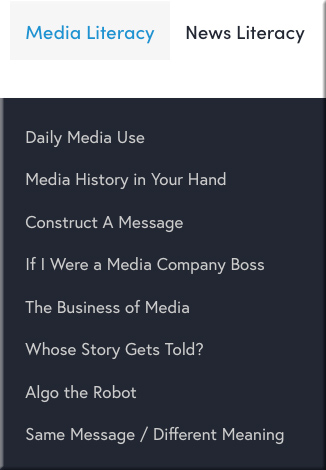
To help teach your students about news and media literacy, I highly recommend my sister Sue Ellen Christian’s work out at Wonder Media.

Wonder Media -- a site to teach your students about Media and News Literacy
.

.

.

There you will find numerous resources for libraries, schools, families and individuals. Suggestions of books, articles, other websites, and online materials to assist you in growing your media literacy and news media literacy are also included there.


Below are several items from edutopia.org:


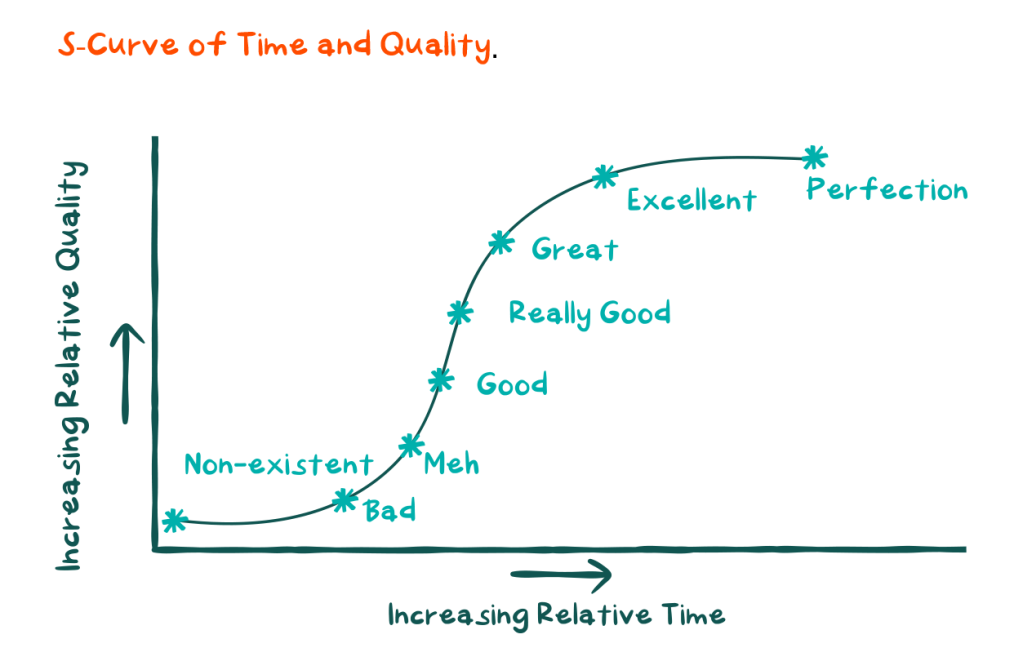
Doing the Best You Can With the Time You Have — by Jay Schauer
These strategies can help overwhelmed teachers prioritize tasks and find a balance between perfectionism and efficiency.
.


How to Support Teachers’ Emotional Health — by Hedreich Nichols
Emotional well-being plays a major role in teachers’ job satisfaction, and it’s essential that they have effective resources for support.

Teachers cannot be expected to teach SEL effectively without first being intentional about their own emotional health. If we want educators to guide students through emotional regulation, they must have the time, space, and support to do that work themselves. This goes beyond surface-level wellness initiatives—teachers need opportunities to reflect on their emotional triggers, manage their own stresses, and receive genuine support from their schools. Only when teachers are empowered to process their own emotional challenges can they truly foster a healthy social and emotional environment for their students.


In Praise of the Humble Document Camera — by Emily Rankin
Revisiting a simple edtech tool can help you introduce rigor and engage students more deeply in their lessons.

4 Ways to Use a Document Camera in Your Classroom— by Emily Rankin
If a document camera is gathering dust in a classroom, its lack of impact is probably linked to the user, not what the gadget is capable of. Case in point, I wasn’t using mine regularly because I didn’t know the value it could add to my teaching and learning. Here are some of the practices I now know are possible:

  1. Guided practice. …
  2. Assessment for learning. …
  3. Sharing materials. …
  4. Expanding teaching and learning possibilities.

Weighing Inquiry-Based Learning and Direct Instruction in Elementary Math — by Vivian Quan
Teachers can ask themselves three key questions in order to choose the most effective instructional approach to a topic.

One factor to consider is the subject. In math, students need opportunities to work on rich tasks and solve problems in ways that make sense to them. However, that doesn’t mean direct instruction is totally absent from math time. The questions below can guide you in deciding whether to use direct instruction, when it would be appropriate, and who else in the classroom you might involve.


Increasing Talk Time in World Language Classes — by Kate Good
Teachers can experiment with a variety of strategies to build and assess students’ ability to converse in the target language.

To capitalize on my students’ (seemingly inexhaustible) desire to chat, I work to increase student talk time in our Spanish immersion classes. I use several strategies to build and assess students’ oral language.


Career Cluster Appendix — from gettingsmart.com
New technology, global challenges and initiatives point to new pathways and new opportunities in our economies career clusters. The following resources highlight exemplars, entrepreneurial opportunities and high schools who are leading the way in pathway development and implementation. 


AI Tutors Double Rates of Learning in Less Learning Time — by drphilippahardman.substack.com Dr. Philippa Hardman
Inside Harvard’s new groundbreaking study

Conclusion
This Harvard study provides robust evidence that AI tutoring, when thoughtfully designed, can significantly enhance learning outcomes. The combination of doubled learning gains, increased engagement, and reduced time to competency suggests we’re seeing just the beginning of AI’s potential in education and that its potential is significant.

If this data is anything to go by, and if we – as humans – are open and willing to acting on it, it’s possible AI will have a significant and for some deeply positive impact on how we design and deliver learning experiences.

That said, as we look forward, the question shouldn’t just be, “how AI can enhance current educational methods?”, but also “how it might AI transform the very nature of learning itself?”. With continued research and careful implementation, we could be moving toward an era of education that’s more effective but also more accessible than ever before.


Three Quick Examples of Teaching with and about Generative AI — from derekbruff.org Derek Bruff

  • Text-to-Podcast.
  • Assigning Students to Groups.
  • AI Acceptable Use Scale.

Also from Derek’s blog, see:


From Mike Sharples on LinkedIn: 


ChatGPT’s free voice wizard — from wondertools.substack.com by Jeremy Caplan
How and why to try the new Advanced Voice Mode

7 surprisingly practical ways to use voice AI
Opening up ChatGPT’s Advanced Voice Mode (AVM) is like conjuring a tutor eager to help with whatever simple — or crazy — query you throw at it. Talking is more fluid and engaging than typing, especially if you’re out and about. It’s not a substitute for human expertise, but AVM provides valuable machine intelligence.

  • Get a virtual museum tour. …
  • Chat with historical figures….
  • Practice languages. …
  • Explore books. …
  • Others…


Though not AI-related, this is along the lines of edtech:


…which links to:


Half of Higher Ed Institutions Now Use AI for Outcomes Tracking, But Most Lag in Implementing Comprehensive Learner Records — from prnewswire.com; via GSV

SALT LAKE CITY, Oct. 22, 2024 /PRNewswire/ — Instructure, the leading learning ecosystem and UPCEA, the online and professional education association, announced the results of a survey on whether institutions are leveraging AI to improve learner outcomes and manage records, along with the specific ways these tools are being utilized. Overall, the study revealed interest in the potential of these technologies is far outpacing adoption. Most respondents are heavily involved in developing learner experiences and tracking outcomes, though nearly half report their institutions have yet to adopt AI-driven tools for these purposes. The research also found that only three percent of institutions have implemented Comprehensive Learner Records (CLRs), which provide a complete overview of an individual’s lifelong learning experiences.


New Survey Says U.S. Teachers Colleges Lag on AI Training. Here are 4 Takeaways — from the74million.org by ; via GSV
Most preservice teachers’ programs lack policies on using AI, CRPE finds, and are likely unready to teach future educators about the field.

In the nearly two years since generative artificial intelligence burst into public consciousness, U.S. schools of education have not kept pace with the rapid changes in the field, a new report suggests.

Only a handful of teacher training programs are moving quickly enough to equip new K-12 teachers with a grasp of AI fundamentals — and fewer still are helping future teachers grapple with larger issues of ethics and what students need to know to thrive in an economy dominated by the technology.

The report, from the Center on Reinventing Public Education, a think tank at Arizona State University, tapped leaders at more than 500 U.S. education schools, asking how their faculty and preservice teachers are learning about AI. Through surveys and interviews, researchers found that just one in four institutions now incorporates training on innovative teaching methods that use AI. Most lack policies on using AI tools, suggesting that they probably won’t be ready to teach future educators about the intricacies of the field anytime soon.


The 5 Secret Hats Teachers are Wearing Right Now (Thanks to AI!) — from aliciabankhofer.substack.com by Alicia Bankhofer
New, unanticipated roles for educators sitting in the same boat

As beta testers, we’re shaping the tools of tomorrow. As researchers, we’re pioneering new pedagogical approaches. As ethical guardians, we’re ensuring that AI enhances rather than compromises the educational experience. As curators, we’re guiding students through the wealth of information AI provides. And as learners ourselves, we’re staying at the forefront of educational innovation.


Most parents know AI will be crucial to their children’s future — from eschoolnews.com
A new survey from Samsung Solve for Tomorrow reveals an urgent need to address the looming AI knowledge gap in schools

Parents of Gen Alpha and Gen Z students are optimistic about the potential of artificial intelligence (AI) to enhance various aspects of education, according to a new Morning Consult survey commissioned by Samsung Solve for Tomorrow.

The survey notes that an overwhelming 88 percent of parents believe that knowledge of AI will be crucial in their child’s future education and career. However, despite this belief, 81 percent of parents either don’t believe or are not sure that AI is even part of their children’s curriculum. That disparity highlights a pressing need to raise awareness of and increase parental involvement in AI discussions, and advance the implementation of AI in American primary and secondary education.


Norway law decrees: Let childhood be childhood — from hechingerreport.org by Jackie Mader
In the Scandinavian country, early childhood education is a national priority, enshrined in law

Ullmann’s conclusion embodies one of Norway’s goals for its citizens: to build a nation of thriving adults by providing childhoods that are joyful, secure and inclusive. Perhaps nowhere is this belief manifested more clearly than in the nation’s approach to early child care. (In Norway, all education for children 5 and under is referred to as “barnehagen,” the local translation of “kindergarten.”) To an American, the Norwegian philosophy, both in policy and in practice, could feel alien. The government’s view isn’t that child care is a place to put children so parents can work, or even to prepare children for the rigors of elementary school. It’s about protecting childhood.

“A really important pillar of Norway’s early ed philosophy is the value of childhood in itself,” said Henrik D. Zachrisson, a professor at the Centre for Research on Equality in Education at the University of Oslo. “Early ed is supposed to be a place where children can be children and have the best childhood possible.”


The Tutoring Revolution — from educationnext.org by Holly Korbey
More families are seeking one-on-one help for their kids. What does that tell us about 21st-century education?

Recent research suggests that the number of students seeking help with academics is growing, and that over the last couple of decades, more families have been turning to tutoring for that help.

What the Future Holds
Digital tech has made private tutoring more accessible, more efficient, and more affordable. Students whose families can’t afford to pay $75 an hour at an in-person center can now log on from home to access a variety of online tutors, including Outschool, Wyzant, and Anchorbridge, and often find someone who can cater to their specific skills and needs—someone who can offer help in French to a student with ADHD, for example. Online tutoring is less expensive than in-person programs. Khan Academy’s Khanmigo chatbot can be a student’s virtual AI tutor, no Zoom meeting required, for $4 a month, and nonprofits like Learn to Be work with homeless shelters and community centers to give virtual reading and math tutoring free to kids who can’t afford it and often might need it the most.


From DSC:
I don’t care whether this video won an Oscar or not — it’s message is incredibly powerful. 


According to Notebook LM on this Future U podcast Searching for Fit: The Impacts of AI in Higher Edhere are some excerpts from the generated table of contents:

Part 1: Setting the Stage

I. Introduction (0:00 – 6:16): …
II. Historical Contextualization (6:16 – 11:30): …
III. The Role of Product Fit in AI’s Impact (11:30 – 17:10): …
IV. AI and the Future of Knowledge Work (17:10 – 24:03): …
V. Teaching About AI in Higher Ed: A Measured Approach (24:03 – 34:20): …
VI. AI & the Evolving Skills Landscape (34:20 – 44:35): …
VII. Ethical & Pedagogical Considerations in an AI-Driven World (44:35 – 54:03):…
VIII. AI Beyond the Classroom: Administrative Applications & the Need for Intuition (54:03 – 1:04:30): …
IX. Reflections & Future Directions (1:04:30 – 1:11:15): ….

Part 2: Administrative Impacts & Looking Ahead

X. Bridging the Conversation: From Classroom to Administration (1:11:15 – 1:16:45): …
XI. The Administrative Potential of AI: A Looming Transformation (1:16:45 – 1:24:42): …
XII. The Need for Intuitiveness & the Importance of Real-World Applications (1:24:42 – 1:29:45): …
XIII. Looking Ahead: From Hype to Impactful Integration (1:29:45 – 1:34:25): …
XIV. Conclusion and Call to Action (1:34:25 – 1:36:03): …


The future of language learning — from medium.com by Sami Tatar

Most language learners do not have access to affordable 1:1 tutoring, which is also proven to be the most effective way to learn (short of moving to a specific country for complete immersion). Meanwhile, language learning is a huge market, and with an estimated 60% of this still dominated by “offline” solutions, meaning it is prime for disruption and never more so than with the opportunities unlocked through AI powered language learning. Therefore — we believe this presents huge opportunities for new startups creating AI native products to create the next language learning unicorns.


“The Broken Mirror: Rethinking Education, AI, and Equity in America’s Classrooms” — from nickpotkalitsky.substack.com by JC Price

It’s not that AI is inherently biased, but in its current state, it favors those who can afford it. The wealthy districts continue to pull ahead, leaving schools without resources further behind. Students in these underserved areas aren’t just being deprived of technology—they’re being deprived of the future.

But imagine a different world—one where AI doesn’t deepen the divide, but helps to bridge it. Technology doesn’t have to be the luxury of the wealthy. It can be a tool for every student, designed to meet them where they are. Adaptive AI systems, integrated into schools regardless of their budget, can provide personalized learning experiences that help students catch up and push forward, all while respecting the limits of their current infrastructure. This is where AI’s true potential lies—not in widening the gap, but in leveling the field.

But imagine if, instead of replacing teachers, AI helped to support them. Picture a world where teachers are freed from the administrative burdens that weigh them down. Where AI systems handle the logistics, so teachers can focus on what they do best—teaching, mentoring, and inspiring the next generation. Professional development could be personalized, helping teachers integrate AI into their classrooms in ways that enhance their teaching, without adding to their workload. This is the future we should be striving toward—one where technology serves to lift up educators, not push them out.


Duolingo Introduces AI-Powered Innovations at Duocon 2024 — from investors.duolingo.com; via Claire Zau

Duolingo’s new Video Call feature represents a leap forward in language practice for learners. This AI-powered tool allows Duolingo Max subscribers to engage in spontaneous, realistic conversations with Lily, one of Duolingo’s most popular characters. The technology behind Video Call is designed to simulate natural dialogue and provides a personalized, interactive practice environment. Even beginner learners can converse in a low-pressure environment because Video Call is designed to adapt to their skill level. By offering learners the opportunity to converse in real-time, Video Call builds the confidence needed to communicate effectively in real-world situations. Video Call is available for Duolingo Max subscribers learning English, Spanish, and French.


And here’s another AI-based learning item:

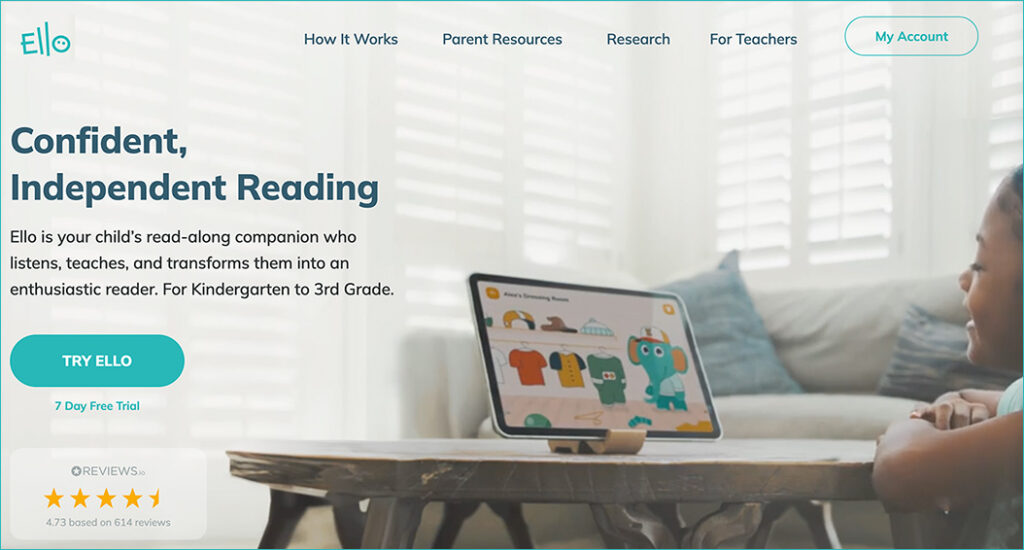
AI reading coach startup Ello now lets kids create their own stories — from techcrunch.com by Lauren Forristal; via Claire Zau

Ello, the AI reading companion that aims to support kids struggling to read, launched a new product on Monday that allows kids to participate in the story-creation process.

Called “Storytime,” the new AI-powered feature helps kids generate personalized stories by picking from a selection of settings, characters, and plots. For instance, a story about a hamster named Greg who performed in a talent show in outer space.


Understanding behavior as communication: A teacher’s guide — from understood.org by Amanda Morin
Figuring out the function of, or the reasons behind, a behavior is critical for finding an appropriate response or support. Knowing the function can also help you find ways to prevent behavior issues in the future.

Think of the last time a student called out in class, pushed in line, or withdrew by putting their head down on their desk. What was their behavior telling you?

In most cases, behavior is a sign they may not have the skills to tell you what they need. Sometimes, students may not even know what they need. What are your students trying to communicate? What do they need, and how can you help?

One way to reframe your thinking is to respond to the student, not the behavior. Start by considering the life experiences that students bring to the classroom.

Some students who learn and think differently have negative past experiences with teachers and school. Others may come from cultures in which speaking up for their needs in front of the whole class isn’t appropriate.


Also relevant/see:

Exclusive: Watchdog finds Black girls face more frequent, severe discipline in school— from npr.org by Claudia Grisales

Black girls face more discipline and more severe punishments in public schools than girls from other racial backgrounds, according to a groundbreaking new report set for release Thursday by a congressional watchdog.

The report, shared exclusively with NPR, took nearly a year-and-a-half to complete and comes after several Democratic congressional members requested the study.


Giving ELA Lessons a Little Edtech Boost — from edutopia.org by Julia Torres
Common activities in English language arts classes such as annotation and note-taking can be improved through technology.

6 ELA Practices That Can Be Enhanced by EdTech

  1. Book clubs.
  2. Collective note-taking.
  3. Comprehension checks.
  4. Video lessons.
  5. ..and more

Using Edtech Tools to Differentiate Learning— from edutopia.org by Katie Novak and Mary E. Pettit
Teachers can use tech tools to make it easier to give students choice about their learning, increasing engagement.

3 UDL-Aligned EdTech Tools

  1. Digital audiobook platforms.
  2. Multimedia presentation tools.
  3. Digital annotation tools.
 
© 2025 | Daniel Christian