74 percent of microschools have annual tuition and fees at or below $10,000, with 65 percent offering sliding scale tuition and discounts;
Among microschools that track academic growth data of students over time, 81 percent reported between 1 and 2 years of academic gains during one school year;
Children receive letter grades in just 29 percent of microschools, while observation-based reporting, portfolios, and tracking mastery are the most prevalent methods of tracking their impact;
The most important student outcomes for currently-operating microschools are growth in nonacademic learning, children’s happiness in their microschool, skills perceived as needed for future, and academic growth.
Five Essential Skills Kids Need (More than Coding)
I’m not saying we shouldn’t teach kids to code. It’s a useful skill. But these are the five true foundations that will serve them regardless of how technology evolves.
Day of AI Australia hosted a panel discussion on 20 May, 2025. Hosted by Dr Sebastian Sequoiah-Grayson (Senior Lecturer in the School of Computer Science and Engineering, UNSW Sydney) with panel members Katie Ford (Industry Executive – Higher Education at Microsoft), Tamara Templeton (Primary School Teacher, Townsville), Sarina Wilson (Teaching and Learning Coordinator – Emerging Technology at NSW Department of Education) and Professor Didar Zowghi (Senior Principal Research Scientist at CSIRO’s Data61).
As many students face criticism and punishment for using artificial intelligence tools like ChatGPT for assignments, new reporting shows that many instructors are increasingly using those same programs.
Our next challenge is to self-analyze and develop meaningful benchmarks for AI use across contexts. This research exhibit aims to take the first major step in that direction.
With the right approach, a transcript becomes something else:
A window into student decision-making
A record of how understanding evolves
A conversation that can be interpreted and assessed
An opportunity to evaluate content understanding
This week, I’m excited to share something that brings that idea into practice.
Over time, I imagine a future where annotated transcripts are collected and curated. Schools and universities could draw from a shared library of real examples—not polished templates, but genuine conversations that show process, reflection, and revision. These transcripts would live not as static samples but as evolving benchmarks.
This Field Guide is the first move in that direction.
Rick: What kinds of strategies do you think would help?
Richard: In education, we should expand the use of male-friendly teaching methods, such as more hands-on and active learning approaches. We should also consider redshirting boys—starting them in school a year later—to account for developmental differences between boys and girls. We should also introduce more male mentors and role models in schools, particularly in elementary education, where male teachers are scarce. In the workforce, apprenticeship and vocational training programs need to be expanded to create pathways into stable employment for young men who may not pursue a four-year degree. Career counseling should also emphasize diverse pathways to ensure that boys who may not thrive in a traditional academic setting still have opportunities for success. Additionally, fatherhood policies should recognize the importance of male engagement in family life, supporting fathers in their role as caregivers and providers.
While on the topic of K12 education, also see:
How Electives Help All Students Succeed — from edutopia.org by Miriam Plotinsky Giving students a choice of electives increases engagement and allows them to develop skills outside of core academic subjects.
I recently conducted a student focus group on the topic of school attendance. One of the participants, a high school junior who admitted to being frequently late or absent, explained why she still came to school: “I never want to miss Drama. My teacher is awesome. Her class is the reason I show up every day.” As the rest of the focus group chimed in with similar thoughts, I reflected on the power that elective courses hold for students of all ages.
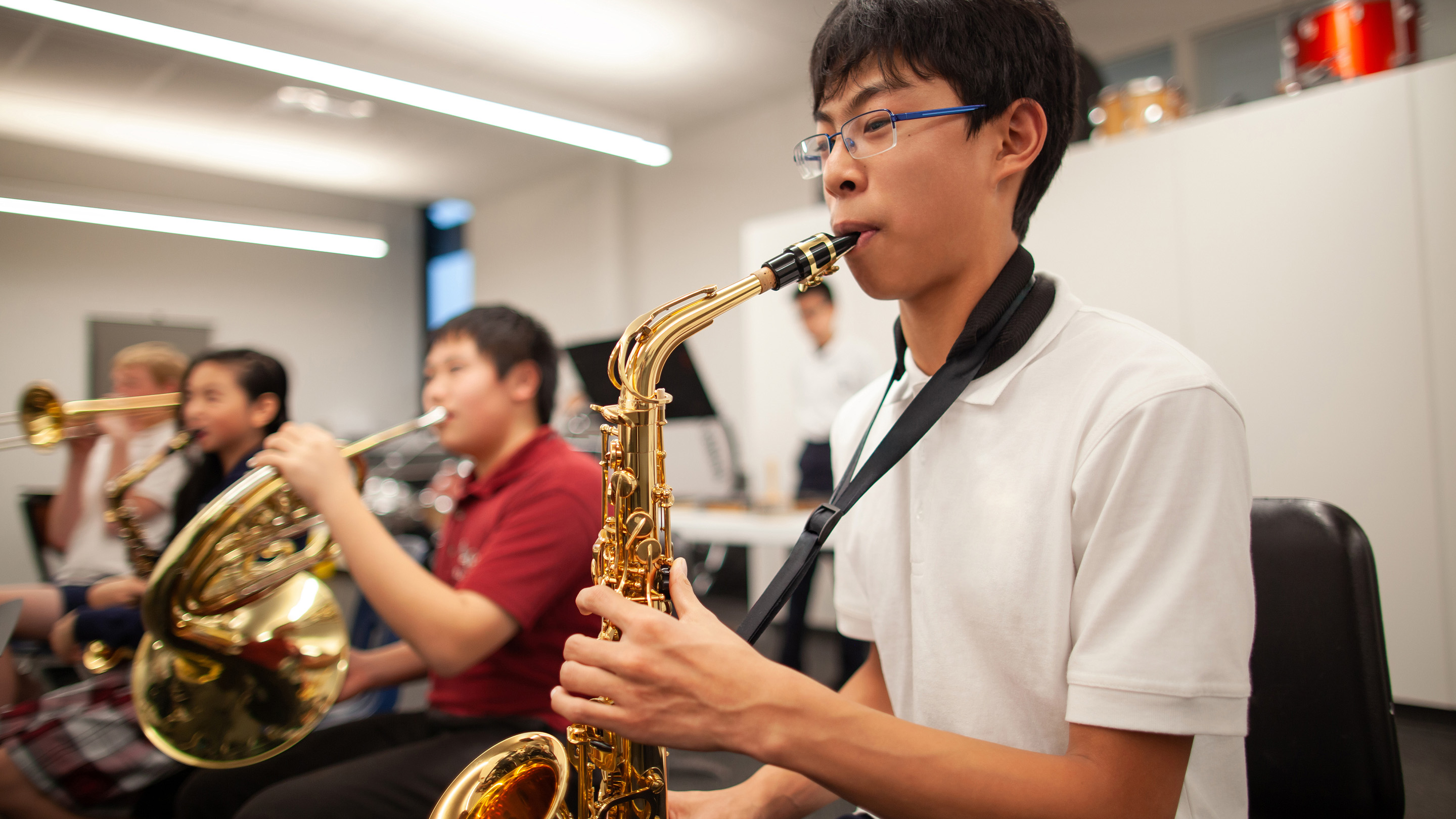
These courses, from jazz band to yoga, cement students’ sense of self not just in their primary and secondary years, but also in their journey toward adulthood. In these tight economic times, schools or districts often slash electives to save money on staffing, which is highly detrimental to student success. Instead, not only should budget cuts be made elsewhere, but also elective offerings should increase to heighten student choice and well-being.
School systems today face a complex challenge: how to personalize learning while responding to the rapidly shifting needs of students, families, and communities. Enter the Public Microschool Playbook—a new, field-tested resource co-created by Getting Smart, Learner-Centered Collaborative, and Transcend to help public education leaders reimagine learning from the ground up.
This isn’t just about launching new schools. It’s about designing dynamic, student-centered ecosystems that live inside our public systems and reflect the aspirations of the communities they serve. With an intentional focus on access and opportunity, microschools offer more than just flexibility—they offer a path to more relevant, sustainable, and empowering learning for all.
Grounded in three key phases—Planning, Designing, and Implementing—the Playbook equips district leaders, charter networks, and innovators with real-world tools and insights to launch microschools that meet local needs and drive systemic transformation. From policy navigation and budgeting to learner-centered design elements like advisory, PBL, and multi-age cohorts, this guide is a blueprint for creating purpose-built environments that make learning personal and powerful.
CTE programs need to move beyond traditional frameworks and adopt the Career Clusters Framework to better prepare students for real-world opportunities.
It’s crucial to integrate career readiness into the entire educational experience, making it an intentional and structured pathway from early education through high school.
What’s Next: Middle States’ Next Generation Accreditation Inspired by the Iowa project, we teamed up with the Middle States Association (MSA)—a national accreditor that shared our belief that the process had become more of a hurdle than a help.
Together with partners like the National Microschooling Center, Kaipod, and Getting Smart, we’ve built something new: Next Generation Accreditation (NGA)—a faster, more flexible, more affordable process that respects school founders’ time, budgets, and models.
Flexible evidence: Schools can demonstrate quality in ways that fit their model.
More relevant standards: Built for founders, not bureaucrats.
Affordable: Annual dues of $650–$775 and a flat $500 site visit fee—no upsells or hidden costs.
Narrative-driven: Focused on how schools serve families and students, not just ticking boxes.
Fast: We’re piloting this in 2025, aiming to accredit schools in time for ESA eligibility for the 2026–27 school year.
Schools push career ed classes ‘for all,’ even kids heading to college— from hechingerreport.org by Javeria Salman As backlash to ‘college for all’ grows, a new ‘CTE for all’ model blossoms. Backers say it engages students and prepares them for the future, but others worry it comes at a cost
The credit union is one small piece of a districtwide effort, Academies of Louisville, to embed career and technical education, or CTE, alongside core subjects like math and English and require every student to pick a career pathway by 10th grade. Piloted in 2017 at 11 high schools, the model has expanded to all 15 of the district’s main high schools. As part of that effort, the district has also launched a career exploration program at 14 middle schools, partnered with local colleges and universities to provide dual credit courses and smoothed the path for students to graduate with industry-recognized certifications.
The Academies of Louisville is one of roughly 30such programs that are working to provide CTE for all students, regardless of whether they plan to go to college or directly into the workforce, according to Jessica Delgado, marketing and communications director of Ford Next Generation Learning, which supports school districts in adopting the approach.
Public schools do not work for everyone. But options have increased since 1922, when Oregon tried to ban private education. The Supreme Court shut down that scheme fast. But now, after more than 100 years, political insiders are rallying again to stop a new source of choice.
The target this time is microschooling, a Covid-era alternative that has outlasted the pandemic. Key players in the movement will gather May 8–9, 2025, at the International Microschools Conference in Washington, D.C. I will join them.
Most likely, I will meet educators running all kinds of programs in all kinds of community spaces. Microschools blur the lines between home, public, and private schooling—combining elements from all three models.
The result is a fourth category of schooling that hinges on flexibility. Some parents pool their resources and hire outside instructors. Other groups rotate teaching duties among themselves, gathering daily or perhaps only once or twice per week. These are the do-it-yourselfers. Professionals also get involved with standalone enterprises and national networks.
FOOD FOR THOUGHT + DISCUSSION Translating CBE Vision into Learning Design
What if your Portrait of a Graduate could shape every unit, lesson, and conversation you’re building? Check out one of our most requested resources, The Teacher’s First Steps Guide, created in partnership with schools in South Carolina. .
Unpack the vision.
Start with small-group conversations about your graduate profile – where are you aligned? What feels fuzzy?
Connect to practice.
Use Future9 or your own framework to translate vision into observable skills.
Prototype with purpose.
Invite teachers to refine a task or lesson using one of the guide’s steps
And despite not getting that original question answered, the search did lead me to something called competency-based learning. Although I was vaguely familiar with it — I believed it was in the same ballpark as standards-based learning and mastery learning, which we’ve seen in the Modern Classrooms approach — I had never looked closely at it. So I’m doing that now. I invited three people onto the podcast who have a lot of experience and success with this approach:
Susie Bell, Executive Director of Programs at the Mastery Transcript Consortium (MTC), an organization that supports schools in implementing competency-based learning.
Heather Messer, a teacher and advisor at a Wisconsin school where competency-based learning is a school-wide practice.
Beth Blankenship, an English teacher who has figured out how to use competency-based learning at her Virginia high school, a school that still uses traditional grading.
A new kind of high school diploma trades chemistry for carpentry — from hechingerreport.org by Ariel Gilreath Starting this fall, Alabama high school students can choose to take state-approved career and technical education courses in place of upper level math and science, such as Algebra 2 or chemistry.
Alabama state law previously required students to take at least four years each of English, math, science and social studies to graduate from high school. The state is now calling that track the “Option A” diploma. The new “Option B” workforce diploma allows students to replace two math and two science classes with a sequence of three CTE courses of their choosing. The CTE courses do not have to be related to math or science, but they do have to be in the same career cluster. Already, more than 70 percent of Alabama high school students take at least one CTE class, according to the state’s Office of Career and Technical Education/Workforce Development.
***
BIRMINGHAM, Ala. — In a corner of Huffman High School, the sounds of popping nail guns and whirring table saws fill the architecture and construction classroom.
Down the hall, culinary students chop and saute in the school’s commercial kitchen, and in another room, cosmetology students snip mannequin hair to prepare for the state’s natural hair stylist license.
Starting this fall, Alabama high school students can choose to take these classes — or any other state-approved career and technical education courses — in place of upper level math and science, such as Algebra 2 or chemistry.
From DSC: This is excellent. Provide more choice. Engage all kinds of students with all kinds of interests, gifts, and abilities. Make learning fun and enjoyable and practical for students. The setup in this article mentions that “many universities, including the state’s flagship University of Alabama, require at least three math credits for admission. The workforce diploma would make it more difficult for students on that track to get into those colleges.” But perhaps college is not where these students want to go. Or perhaps the colleges and universities across our land should offer some additional pathways into them as well as new sorts of curricula and programs.
Why agency is becoming a new buzzword in educational circles— from jerseyeveningpost.com by by Megan Davies When people believe that they can effectively navigate life challenges, it’s easier to find the resilience and persistence that is needed
The term agency has gained increasing attention as educators and researchers emphasise the importance of providing students with a greater sense of ownership and competence in their learning journeys. Equally, agency has relevance to anyone who seeks to become more self-directed, confident, and be able to adapt to the challenges of a volatile, uncertain, complex and ambiguous world. There is no running away from the fact that, for most people, there is a need for a mindset that facilitates the capabilities for lifelong learning, personal responsibility and resilience.
From DSC:
After seeing Sam’s posting below, I can’t help but wonder:
How might the memory of an AI over time impact the ability to offer much more personalized learning?
How will that kind of memory positively impact a person’s learning-related profile?
Which learning-related agents get called upon?
Which learning-related preferences does a person have while learning about something new?
Which methods have worked best in the past for that individual? Which methods didn’t work so well with him or her?
we have greatly improved memory in chatgpt–it can now reference all your past conversations!
this is a surprisingly great feature imo, and it points at something we are excited about: ai systems that get to know you over your life, and become extremely useful and personalized.
Starting today, memory in ChatGPT can now reference all of your past chats to provide more personalized responses, drawing on your preferences and interests to make it even more helpful for writing, getting advice, learning, and beyond. pic.twitter.com/s9BrWl94iY
What trauma-informed practice is not — from timeshighereducation.com by Kate Cantrell, India Bryce, and Jessica Gildersleeve from The University of Southern Queensland Before trauma-informed care can be the norm across all areas of the university, academic and professional staff need to understand what it is. Here, three academics debunk myths and demystify best practice
Recently, we conducted focus groups at our university to better ascertain how academics, administrators and student support staff perceive the purpose and value of trauma-informed practice, and how they perceive their capacity to contribute to organisational change.
We discovered that while most staff were united on the importance of trauma-informed care, several myths persist about what trauma-informed practice is (and is not). Some academic staff, for example, conflated teaching about trauma with trauma-informed teaching, confused trigger warnings with trigger points and, perhaps most alarmingly – given the prevalence of trauma exposure and risk among university students – misjudged trauma-informed practice as “the business of psychologists” rather than educators.
Over 24 blog posts, we have sketched a bold vision of what this next horizon of education looks like in action and highlighted the many innovators working to bring it to life. These pioneers are building new models that prioritize human development, relationships, and real-world relevance as most valuable. They are forging partnerships, designing and adopting transformative technologies, developing new assessment methods, and more. These shifts transform the lived experiences of young people and serve the needs of families and communities. In short, they are delivering authentic learning experiences that better address the demands of today’s economy, society, and learners.
We’ve aggregated our findings from this blog series and turned it into an H3 Publication. Inside, you’ll find our key transformation takeaways for school designers and system leaders, as well as a full list of the contributing authors. Thank you to all of the contributors, including LearnerStudio for sponsoring the series and Sujata Bhatt at Incubate Learning for authorship, editing and curation support throughout the entirety of the series and publication. .
President Donald Trump on Thursday afternoon ordered U.S. Secretary of Education Linda McMahon to “take all necessary steps to facilitate the closure of the Department of Education,” marking the boldest push from the president to shut down the agency since its establishment under the Carter administration over four decades ago.
Trump also said prior to the signing that he intends to disperse the department’s core functions — such as Pell Grants, Title I funding, and providing funding and resources for students with disabilities — to other parts of the government.
What if students had the power to design their own learning journeys?
Across the U.S., states are moving beyond one-size-fits-all education and embracing unbundled learning, creating personalized pathways that equip students with the skills they need for the future. Getting Smart’s Unbundled Learning Podcast Series explores how Colorado, Arizona, and New Hampshire are leading the way—expanding real-world learning, shifting to competency-based models, empowering learner agency, and aligning education with workforce needs.
For policymakers, the newly released Policymaker’s Guide offers a roadmap for fostering unbundled systems. It highlights key priorities such as competency-driven accountability, flexible credentialing, and funding models that prioritize equity, helping state leaders create policies that expand opportunities for all learners.
Explore how unbundled learning is shaping the future of education and how states can build more personalized, future-ready systems.
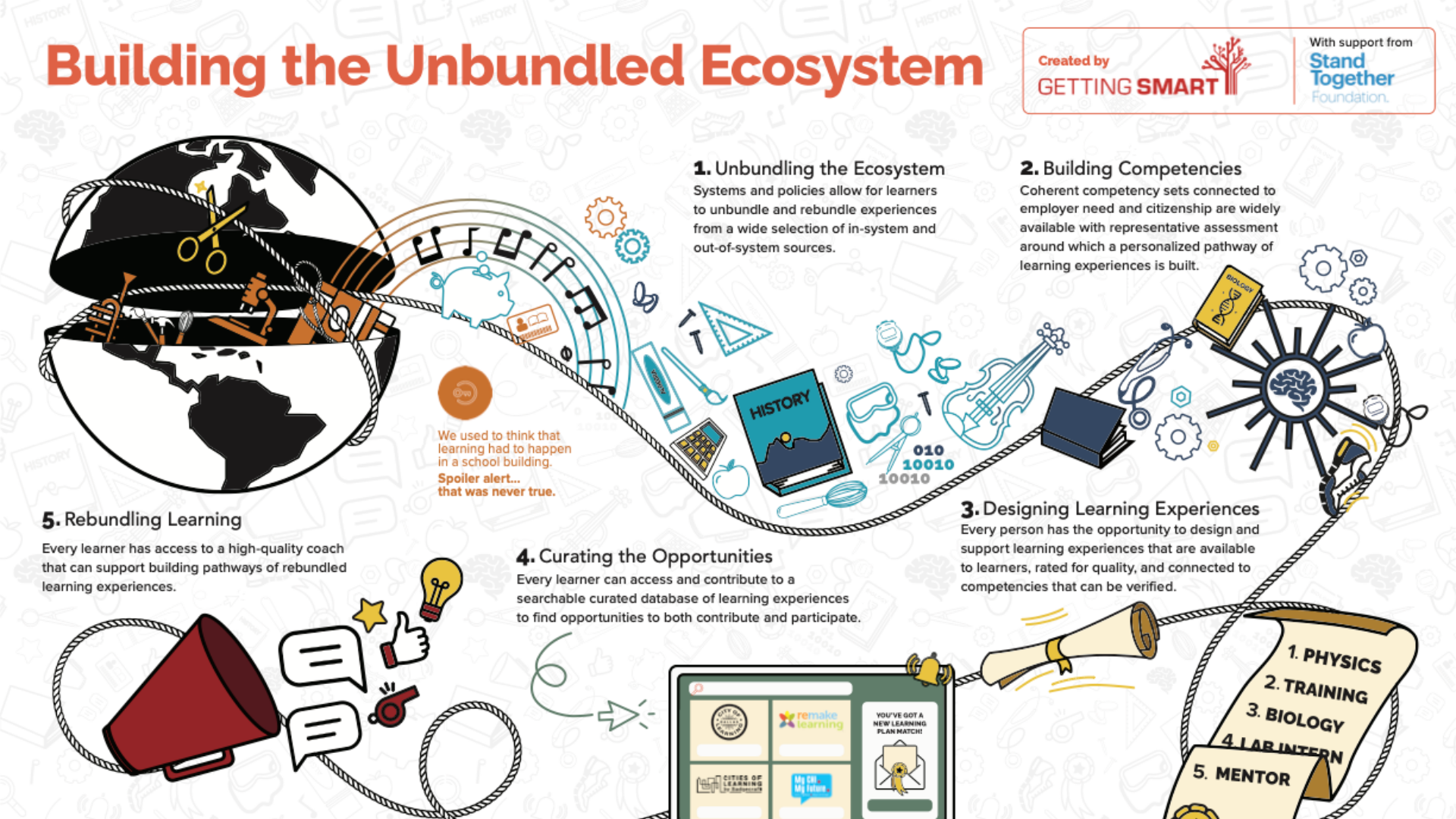
New Pathways > Unbundled Learning — from gettingsmart.com We used to think that learning had to happen in a school building. Spoiler alert…that was never true.
How might we create an ecosystem where learning doesn’t just happen at school? With Unbundled Learning, learners don’t need permission to have equitable experiences. Unbundled Learning removes all the barriers and allows learning to happen at school, after school, with industry partners and anywhere a learner can imagine. Unbundled Learning is the foundation for which new learning models are built, learners are supported and systems are scaled.
If we used to think that school was the only answer, now we know we have options. .