Aspiring educators should have the requisites to spend time in their community as a part of their education.
Educators should be asking: how do we build cultures of cooperation and collaboration?
Investigate your intellectual genealogy to see where you are getting the ideas you have to question assumptions.
His mantra, “We Need Black Teachers” is more than a rallying cry, but a deep desire to give voice to the over 8 million black learners that need to see themselves in their classrooms and community.
Around the same time, the concept of microschooling was gaining traction nationally. Microschools offer multiage learning environments that focus on personalized, often less-regulated instruction. Popularity grew during the pandemic when families sought learning alternatives in online, hybrid and pod options; an estimated 750,000 to 2 million students now attend the schools.
The schools are typically privately run, but Philhower saw a role for them in his small district. Last year, he won approval from the state’s charter school board to establish the Indiana Microschool Collaborative, which he says will incubate a network of microschools statewide. They will operate as charter schools, meaning they are public but have more flexibility in terms of curricula and other operations than traditional public schools.
In the rush to expand work-based learning (WBL), it is easy to focus on the “placement”—the logistics of getting a student into a workplace. But a placement alone isn’t a strategy. If an experience doesn’t help a student build the internal capacity to navigate their own future, we are simply checking a box.
At GPS Ed, we believe WBL is most powerful when viewed as a sequenced journey of career literacy. It starts with early awareness and exploration, giving students the chance to “try on” different roles, and scales up to intensive, hands-on experiences. By centering this journey on the 4 As—authenticity, aspiration, ability, agency—we ensure that the time invested by students, schools, and employers yields a lifelong return.
Federal, state, and local policymakers and education leaders urgently need up-to-date national estimates for what is spent to provide special education services to inform their funding policies and budget for special education expenses.
The National Study of Special Education Spending’s (NSSES) purpose is to update our understanding of the costs of special education and related services. The study will collect information from a national sample of districts and schools about what is spent to educate students with disabilities, as well as what states and districts spend to operate their special education programs and comply with federal and state laws. The Institute of Education Sciences within the Department of Education has partnered with AIR, NORC at the University of Chicago, and Allovue, a PowerSchool Company, to design the study.
Pilot Study A pilot study for the NSSES study will take place during the 2024/25 and 2025/26 school years. The pilot study’s findings will help inform the study design for the full-scale national study, which is planned for 2026/27 school year.
The timeline for the 2025/26 pilot study is:
Summer 2025: District recruitment
Fall 2025: School recruitment within participating districts and sampling students within participating schools
December 2025—February 2026: Data collection, including surveys with district and school staff and financial data from districts
Spring 2026: Analysis of pilot study data and preparation for full-scale study
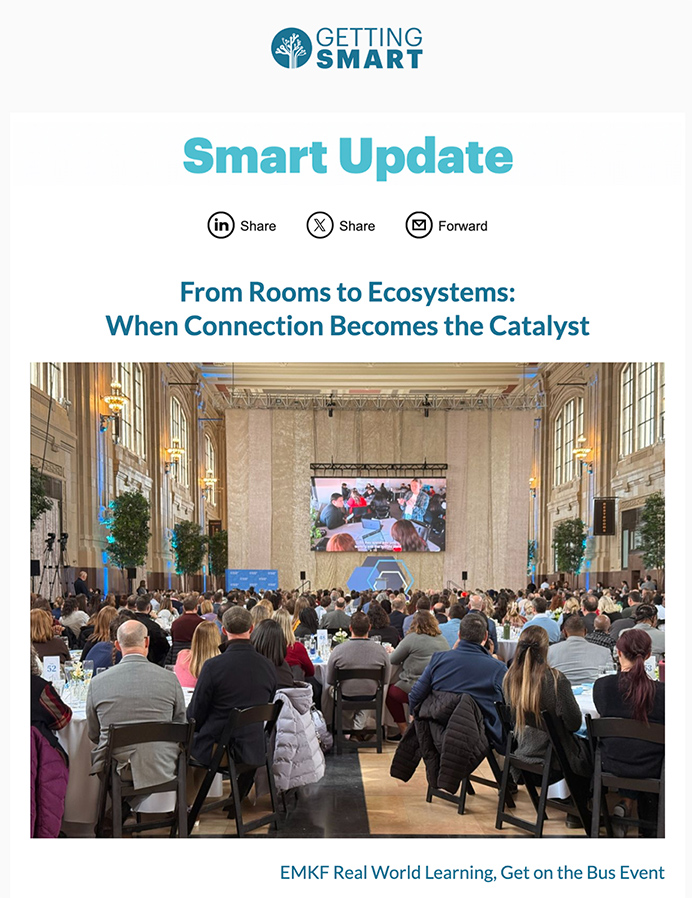
Some gatherings change not just in size, but in meaning. What started as a small, intentional space to celebrate partners has grown into a moment that reflects how an entire ecosystem has matured. Each year, the room fills with more leaders, more relationships, and more shared language about what learning can look like when people are genuinely connected. It is less about an event on the calendar and more about what it represents: an education community that knows each other, trusts each other, and keeps showing up.
That kind of connection did not happen by accident. Through efforts like Get on the Bus, hosted by the Ewing Marion Kauffman Foundation, networking for education leaders has shifted from transactional to relational. Students lead. Stories anchor the work. Conversations happen across tables, sectors, and roles. System leaders, intermediaries, industry partners, and civic organizations are not passing business cards. They are building shared understanding and social capital that lasts long after the room clears.
This week’s newsletter carries that same energy. You will find examples of learning that travels beyond buildings, leadership conversations grounded in real tensions, and models that reflect what becomes possible when ecosystems are aligned. When people feel connected to one another and to a common purpose, the work gets clearer, stronger, and more human. That sense of belonging is not just powerful. It is foundational to what comes next.
As we enter 2026, the Getting Smart team is diving deep into the convergence of human potential and technological opportunity. Our annual Town Hall isn’t just a forecast—it’s a roadmap for the year ahead. We will explore how human-centered AI is reshaping pedagogy, the power of participation, and the new realities of educational leadership. Join us as we define the new dispositions for future-ready educators and discover how to build meaningful, personalized pathways for every student.
Educators have become more discerning about initiatives to invest in, tools to explore, and expectations to set. The question “Can we do this?” shifted to “Should we do this? And “Why?” Which then led to the “How” part.
This shift showed up in conversations around curriculum, assessment, technology use, and student well-being. Schools began reducing or being more selective rather than layering, which helped educators to adjust better to change. Leaders focused more on coherence instead of compliance. And in some conversations I had or articles I read, I noticed respectful pushback on practices that added complexity without improving learning.
I think this is why the recalibration mattered.
AI has become less about “cheating” and more about helping students and others learn how to think, evaluate, and create responsibly in an AI-infused world.
…
Educators have become more discerning about initiatives to invest in, tools to explore, and expectations to set. The question “Can we do this?” shifted to “Should we do this? And “Why?” Which then led to the “How” part.
So, You Want to Open a Microschool— from educationnext.org by Kerry McDonald For aspiring founders who have the will but lack the way to launch their schools, startup partners are there to help
In recent years, microschools—small, highly individualized, flexible learning models—have become a popular education option, now serving at least 750,000 U.S. schoolchildren. More than half of microschools nationwide operate as homeschooling centers, while 30 percent function as private schools, 5 percent are public charters, and the rest fit into unique, often overlapping categories, according to a 2025 sector analysis by the National Microschooling Center. While many founders achieve success on their own, joining an accelerator or network can offer the business coaching and community connection that make the inevitable challenges of entrepreneurship more manageable. Van Camp decided to join KaiPod Catalyst, a microschool accelerator program from KaiPod Learning.
I feature six of these microschool accelerators and networks in my new book, Joyful Learning: How to Find Freedom, Happiness, and Success Beyond Conventional Schooling. Some of them have been around for years, but they have attracted rising interest since 2020 as more parents and teachers consider starting schools. These programs vary widely in the startup services and supports they offer, but they share a commitment to building relationships among founders and facilitating the ongoing success of today’s creative schooling options.
High quality, personalized instruction in an intimate setting that focuses on the whole child is growing in popularity—and it looks very different from traditional models both past and present. What may seem like a throwback to the pioneers’ one-room schoolhouse actually speaks volumes about what we as a society have outgrown.
What began as a response to a global crisis has led to a watershed moment.
Yet to categorize microschools simply as “pandemic pods” or private schools with a low headcount largely misses the mark. They are perhaps best described as intentionally-designed small learning environments that are bucking two centuries of inertia and industrial-era constraints.
Microschools are providing educators with an entrepreneurial opportunity that was unthinkable just a couple of decades ago, in tandem with the ability to deliver high student and family satisfaction. And they’re doing it by prioritizing learner agency, personalization, and mastery over compliance and standardization.
However, for microschools to truly scale and impact equitable outcomes, the K-12 sector must address critical policy challenges related to access, accountability and regulatory restrictions.
The following key findings from deeply researched case studies and strategic guides published by the Getting Smart team are intended to provide a comprehensive overview on the microschool movement. Each section offers an opportunity to dive deeper into resources on specific, timely topics.
Speaking of education reform and alternatives, also see:
Today’s education ecosystem must meet the needs of today’s learners. This means learner-centered outcomes, pathways between education and careers, and policies and practices that support both degree and non-degree programs.
Jobs for the Future’s Education practice works to support systems change in the education ecosystem, influence policies that promote diverse pathways, and identify and apply data-informed, learner-centered solutions.
We’re excited to announce and share our new Parents Guide to Microschools, a clear and approachable introduction to one of the fastest growing learning models in the country. The guide unpacks what microschools are, how they work and why families are increasingly drawn to intimate, relationship centered environments. It highlights features like flexible schedules, small cohorts, personalized pathways and hands-on learning so parents can picture what these settings actually look and feel like.
It also equips families with practical tools to navigate the decision making process: key questions to ask during visits, indicators of strong culture and instruction, considerations around cost and accreditation and how to assess overall fit for each learner. Whether parents are simply curious or actively exploring new options, this guide offers clarity, confidence and a starting point for imagining what learning could look like next.
The number of education degrees awarded in the U.S. steadily decreased in the nearly two decades between 2003-04 and 2022-23, according to a new analysis of federal data by the American Association of Colleges for Teacher Education.
Bachelor’s degrees in education dipped from 109,622 annually to 90,710 while master’s degrees declined from 162,632 to 143,669 in that time span, AACTE said in its report on data from the U.S. Department of Education.
In our efforts to improve school, especially in the United States, student voice has really gotten lost. We focus on test scores, top-down curriculum, and measures of success that never quite get to the humanity of our students. Not only have these efforts not succeeded in raising test scores (Schwartz, 2025), they haven’t given us much satisfaction in other ways, either: In a recent survey, nearly half of educators reported that student behavior was worse than before the pandemic, and that number had grown since teachers were surveyed just two years earlier (Stephens, 2025).
Although there are most certainly individual schools where great things are happening, too many schools are still missing the mark. Too many schools keep trying to address these problems without hearing from the very people who are impacted most: the students.
But there is another way. Four years ago, I started talking a lot about a new book I’d read called Street Data.
K-12 to Career — from the-job.beehiiv.com by Paul Fain Ohio eases eligibility rules for high school students to pursue college-level coursework in high-demand fields.
Three Ohio community colleges offer free industry-recognized credentials in manufacturing to more high school students. Also, new career-connected AP courses designed with industry input, a partnership on skilled trade prep for K-12 students, and essays on the race to define the future of credentials and how data and research can inform Workforce Pell.
Minarets High School prioritizes student-centered learning with innovative programs like project-based learning, digital tools, and unique offerings.
Emphasis on student voice and personalized learning fosters engagement, creativity, and real-world preparation, setting a benchmark for educational innovation.
High school should focus on personalized and purposeful learning experiences that engage students and build real-world skills.
Traditional transcripts should be replaced with richer learning and experience records to better communicate students’ skills to higher education and employers.
“Americans want to grant more control to students themselves, prioritizing a K-12 education where all students have the option to choose the courses they want to study based on interests and aspirations.”
Research on motivation and engagement supports personalized and purposeful learning. Students are more motivated when they see relevance and have some choice. We summarize this in six core principles to which schools should strive.
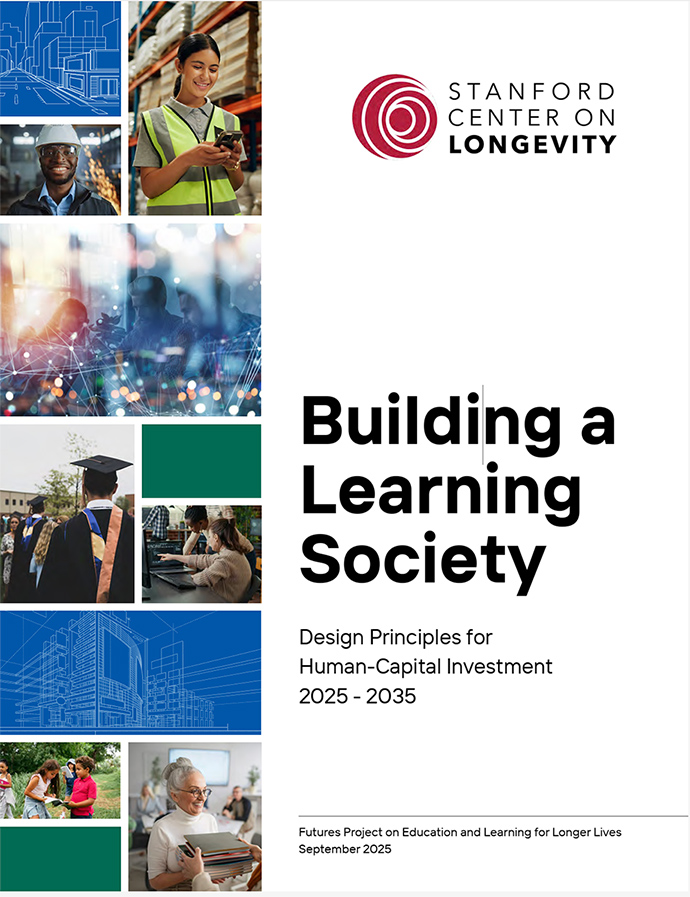
The Big Idea: A new collaborative effort led out of the Stanford center aims to tackle that goal—giving clearer shape to what it would mean to truly build a new “learning society.” As a starting point, the collaborative released a report and set of design principles this week, crafted through a year of discussion and debate among about three dozen fellows in leadership roles in education, industry, government, and research.
The fellows landed on nine core principles—including that working is learning and credentials are a means, not an end—designed to transition the United States from a “schooled society” to a “learning society.”
“Universal access to K-12 education and the massification of access to college were major accomplishments of 20th century America,” Stevens says. “But all that schooling also has downsides that only recently have come into common view. Conventional schooling is expensive, bureaucratic, and often inflexible.” .
I’ve since found enrichment in substitute teaching. Along the way, I’ve compiled a handful of strategies that have helped me stay involved and make a difference, one day at a time. Those strategies—which are useful for new substitutes still learning the ropes, as well as full-time teachers who are scaling back to substitute duties—are laid out below.
A Quiet Classroom Isn’t Always an Ideal Classroom — from edutopia.org by Clementina Jose By rethinking what a good day in the classroom looks and sounds like, new teachers can better support their students.
If your classroom hums with the energy of students asking questions, debating ideas, and working together, you haven’t failed. You’ve succeeded in building a space where learning isn’t about being compliant, but about being alive and present.
SINGAPORE Sept. 3, 2025 /PRNewswire/ — Today, Midoo AIproudly announces the launch of the world’s first AI language learning agent, a groundbreaking innovation set to transform language education forever.
For decades, language learning has pursued one ultimate goal: true personalization. Traditional tools offered smart recommendations, gamified challenges, and pre-written role-play scripts—but real personalization remained out of reach. Midoo AI changes that. Here is the >launch video of Midoo AI.
Imagine a learning experience that evolves with you in real time. A system that doesn’t rely on static courses or scripts but creates a dynamic, one-of-a-kind language world tailored entirely to your needs. This is the power of Midoo’s Dynamic Generation technology.
“Midoo is not just a language-learning tool,” said Yvonne, co-founder of Midoo AI. “It’s a living agent that senses your needs, adapts instantly, and shapes an experience that’s warm, personal, and alive. Learning is no longer one-size-fits-all—now, it’s yours and yours alone.”
Language learning apps have traditionally focused on exercises, quizzes, and progress tracking. Midoo AI introduces a different approach. Instead of presenting itself as a course provider, it acts as an intelligent learning agent that builds, adapts, and sustains a learner’s journey.
This review examines how Midoo AI operates, its feature set, and what makes it distinct from other AI-powered tutors.
Midoo AI in Context: Purpose and Position
Midoo AI is not structured around distributing lessons or modules. Its core purpose is to provide an agent-like partner that adapts in real time. Where many platforms ask learners to select a “level” or “topic,”
Midoo instead begins by analyzing goals, usage context, and error patterns. The result is less about consuming predesigned units and more about co-constructing a pathway.
Turning Time Saved Into Better Learning
AI can save teachers time, but what can that time be used for (besides taking a breath)? For most of us, it means redirecting energy into the parts of teaching that made us want to pursue this profession in the first place: connecting with our students and helping them grow academically.
Differentiation Every classroom has students with different readiness levels, language needs, and learning preferences. AI tools like Diffit or MagicSchool can instantly create multiple versions of a passage or assignment, differentiated by grade level, complexity, or language. This allows every student to engage with the same core concept, moving together as one cohesive class. Instead of spending an evening retyping and rephrasing, teachers can review and tweak AI drafts in minutes, ready for the next lesson.
Mass Intelligence — from oneusefulthing.org by Ethan Mollick From GPT-5 to nano banana: everyone is getting access to powerful AI
When a billion people have access to advanced AI, we’ve entered what we might call the era of Mass Intelligence. Every institution we have — schools, hospitals, courts, companies, governments — was built for a world where intelligence was scarce and expensive. Now every profession, every institution, every community has to figure out how to thrive with Mass Intelligence. How do we harness a billion people using AI while managing the chaos that comes with it? How do we rebuild trust when anyone can fabricate anything? How do we preserve what’s valuable about human expertise while democratizing access to knowledge?
By the time today’s 9th graders and college freshman enter the workforce, the most disruptive waves of AGI and robotics may already be embedded into part society.
What replaces the old system will not simply be a more digital version of the same thing. Structurally, schools may move away from rigid age-groupings, fixed schedules, and subject silos. Instead, learning could become more fluid, personalized, and interdisciplinary—organized around problems, projects, and human development rather than discrete facts or standardized assessments.
AI tutors and mentors will allow for pacing that adapts to each student, freeing teachers to focus more on guidance, relationships, and high-level facilitation. Classrooms may feel less like miniature factories and more like collaborative studios, labs, or even homes—spaces for exploring meaning and building capacity, not just delivering content.
…
If students are no longer the default source of action, then we need to teach them to:
Design agents,
Collaborate with agents,
Align agentic systems with human values,
And most of all, retain moral and civic agency in a world where machines act on our behalf.
We are no longer educating students to be just doers.
We must now educate them to be judges, designers, and stewards of agency.
Meet Your New AI Tutor — from wondertools.substack.com by Jeremy Caplan Try new learning modes in ChatGPT, Claude, and Gemini
AI assistants are now more than simple answer machines. ChatGPT’s new Study Mode, Claude’s Learning Mode, and Gemini’s Guided Learningrepresent a significant shift. Instead of just providing answers, these free tools act as adaptive, 24/7 personal tutors.
That’s why, in preparation for my next bootcamp which kicks off September 8th 2025, I’ve just completed a full refresh of my list of the most powerful & popular AI tools for Instructional Designers, complete with tips on how to get the most from each tool.
The list has been created using my own experience + the experience of hundreds of Instructional Designers who I work with every week.
It contains the 50 most powerful AI tools for instructional design available right now, along with tips on how to optimise their benefits while mitigating their risks.
Addendums on 9/4/25:
AI Companies Roll Out Educational Tools — from insidehighered.com by Ray Schroeder This fall, Google, Anthropic and OpenAI are rolling out powerful new AI tools for students and educators, each taking a different path to shape the future of learning.
So here’s the new list of essential skills I think my students will need when they are employed to work with AI five years from now:
They can follow directions, analyze outcomes, and adapt to change when needed.
They can write or edit AI to capture a unique voice and appropriate tone in sync with an audience’s needs
They have a deep understanding of one or more content areas of a particular profession, business, or industry, so they can easily identify factual errors.
They have a strong commitment to exploration, a flexible mindset, and a broad understanding of AI literacy.
They are resilient and critical thinkers, ready to question results and demand better answers.
They are problem solvers.
And, of course, here is a new rubric built on those skills: