How to Get Consistent, On-Brand Course Images from Any AI Image Tool — from drphilippahardman.substack.com by Dr. Philippa Hardman
A 3-step workflow that works every time — whatever AI tool you’re using

Most designers try to describe their way to an image. That’s the wrong approach. The goal is to show the tool the world it should be working in, then give it the minimum it needs to place your subject inside that world.

Every long, over-specified prompt is a sign that your visual inputs aren’t doing enough work.

The fix is an 3-step process which gives you superpowers in AI image generation…


How AI Could Transform, or Replace, the LMS — from futureupodcast.com by Jeff Selingo, Michael Horn, and Matthew Pittinsky

Tuesday, March 10, 2026 – For 30 years now, colleges have relied on the Learning Management System, or LMS, as a key portal for professors and students to teach and learn. It’s a tool that has helped colleges adapt to online learning and bring digital tools to classroom teaching. But generative AI seems poised to disrupt the LMS. And it’s unclear whether the LMS will evolve—or be replaced altogether. For this episode, Jeff and Michael talk with a pioneer of the technology, Matthew Pittinsky, about the lessons of past moments of tech disruption like the smartphone and cloud computing and about what could be different this time. This episode is made with support from Ascendium Education Group.


Gemini, Explained — from wondertools.substack.com by Jeremy Caplan
5 features worth your time — tested and compared

Google’s AI, Gemini, has quickly become one of the AI tools I rely on most. It builds dashboards and creates remarkable infographics. It spins out comprehensive research reports in minutes that would once have taken days to assemble.

It’s improving every month. On March 13, Google announced Ask Maps, so you can query Gemini about things like “Which nearby tennis courts are open with lights so I can play tonight?” On March 10, Gemini added new integrations to build, summarize, and analyze your Google Docs, Sheets, and Slides.

In today’s post below: catch up on the Gemini features worth your time, candid comparisons with other AI tools, and answers to the questions I hear most.


How we’re reimagining Maps with Gemini — from blog.google
Ask Maps answers your real-world questions with a conversation, and Immersive Navigation makes your route more intuitive.

Today, Google Maps is fundamentally changing what a map can do. By bringing together the world’s freshest map with our most capable Gemini models, we’re transforming exploration into a simple conversation and making driving more intuitive than ever with our biggest navigation upgrade in over a decade.

Ask anything about any place
We’re introducing Ask Maps, a new conversational experience that answers complex, real-world questions a map could never answer before. Now you can ask for things like, “My phone is dying — where can I charge it without having to wait in a long line for coffee?” or “Is there a public tennis court with lights on that I can play at tonight?” Previously, finding this information meant lots of research and sifting through reviews. But now, you can just tap the “Ask Maps” button and get your questions answered conversationally, with a customized map to help you visualize your options.
 

Cinematic Prompting Without IP — from heatherbcooper.substack.com by Heather Cooper
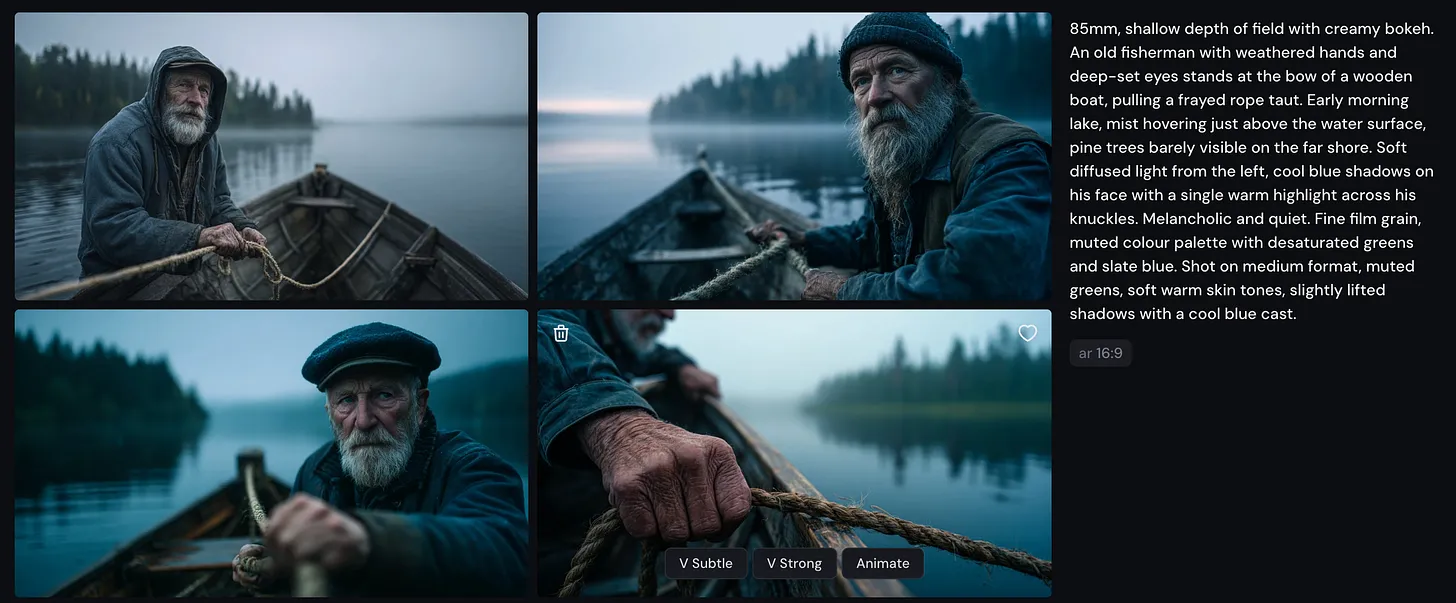
Stop saying “Blade Runner” style.

Beginner Prompt Structure
If you’re new to prompting, start with this framework:
[Subject] + [Description] + [Setting] + [Lighting] + [Style/Medium]

The advanced framework adds three layers:
[Lens] + [Subject + Action] + [Environment + Atmosphere] + [Lighting + Colour] + [Mood/Emotion] + [Technical Detail]


Rediscover a Rembrandt After More than Six Decades in Hiding — from thisiscolossal.com by Kate Mothese and Rembrandt Harmenszoon van Rijn (Rembrandt)

In 1898, Amsterdam’s Stedelijk Museum staged an exhibition of paintings by renowned Dutch Golden Age artist Rembrandt (1606-1669). Included in this show was a 23-by-19-inch oil painting titled “Vision of Zacharias in the Temple,” which was completed in 1633, relatively early in the artist’s career. Fast-forward to 1960, and the work was deemed to have not actually been made by Rembrandt. Despite that in the past it had been catalogued as part of his oeuvre, that was no longer the case. So, a private collector purchased it in 1961, from which point on, it remained out of sight—until now.


Also from thisiscolossal.com, see:

Scale the Dramatic Verticality of Grundtvigs Kirke in David Altrath’s Dreamy Photos — from thisiscolossal.com by Kate Mothes and David Altrath


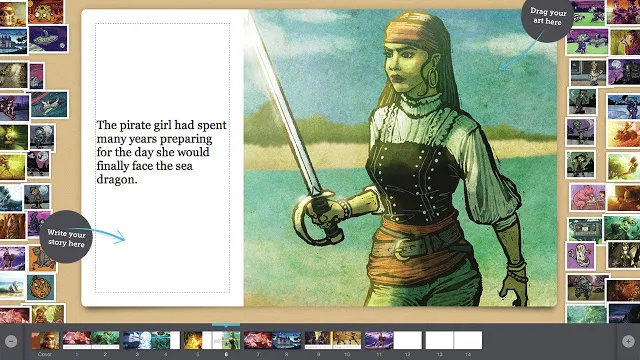
5 of the Best Tools To Teach Storytelling — from techlearning.com by Luke Edwards
Use these best tools to teach storytelling to help students progress towards mastery

The best tools to teach storytelling can also be some of the most ideal ways to engage students, both creatively and more generally with education. From sparking their imaginations to helping structure a creative toolset, these digital assistants can be powerful in the classroom and beyond.

Giving a student the ability to structure and tell a compelling story can help to empower them in terms of literacy, empathy, and critical thinking.

Students can be given the opportunity to explore historical perspectives, dive into personal narratives, build fictional worlds, and present research in a story form. All of which helps strengthen communication skills while learning at the same time.
.


See the Best of Nearly Half a Million Entries to the Sony World Photography Awards — from thisiscolossal.com by Kate Mothes & various others

For its 19th edition, the Sony World Photography Awards welcomed over 430,000 submissions for its Open competition from photographers in more than 200 countries and territories around the globe. Ten categories, ranging from portraiture to landscapes to travel, encompass the staggering breadth and beauty of nature and society captured throughout 2025.
.


Also see:

Journey Through Autumn and Winter in Robinsson Cravents’ Hand-Drawn ‘Yosemite’ — from thisiscolossal.com by Grace Ebert


Something Big Is Happening — from shumer.dev by Matt Shumer; see below from the BIG Questions Institute, where I got this article from

I’ve spent six years building an AI startup and investing in the space. I live in this world. And I’m writing this for the people in my life who don’t… my family, my friends, the people I care about who keep asking me “so what’s the deal with AI?” and getting an answer that doesn’t do justice to what’s actually happening. I keep giving them the polite version. The cocktail-party version. Because the honest version sounds like I’ve lost my mind. And for a while, I told myself that was a good enough reason to keep what’s truly happening to myself. But the gap between what I’ve been saying and what is actually happening has gotten far too big. The people I care about deserve to hear what is coming, even if it sounds crazy.


They’ve now done it. And they’re moving on to everything else.

The experience that tech workers have had over the past year, of watching AI go from “helpful tool” to “does my job better than I do”, is the experience everyone else is about to have. Law, finance, medicine, accounting, consulting, writing, design, analysis, customer service. Not in ten years. The people building these systems say one to five years. Some say less. And given what I’ve seen in just the last couple of months, I think “less” is more likely.

The models available today are unrecognizable from what existed even six months ago. The debate about whether AI is “really getting better” or “hitting a wall” — which has been going on for over a year — is over. It’s done. Anyone still making that argument either hasn’t used the current models, has an incentive to downplay what’s happening, or is evaluating based on an experience from 2024 that is no longer relevant. I don’t say that to be dismissive. I say it because the gap between public perception and current reality is now enormous, and that gap is dangerous… because it’s preventing people from preparing.


What “Something Big Is Happening” Means for Schools — from/by the BIG Questions Institute
Matt Shumer’s newsletter post Something Big is Happening has been read over 80 million times within the week when it was published, on February 9.

Still, it’s worth reading Shumer’s post. Given the claims and warnings in Something Big Is Happening (and countless other articles), how would you truly, honestly respond to these questions:

  • What will the purpose of school be in 5 years?
  • What are we doing now that we must leave behind right away?
  • What can we leave behind gradually?
  • What does rigor look like in this AI-powered world?
  • Does our strategy look like making adjustments at the margins or are we preparing our students for a fundamental shift?
  • What is our definition of success? How do the the implications of AI and jobs (and other important forces, from geopolitical shifts and climate change, to mental health needs and shifting generational values) impact the outcomes we prioritize? What is the story of success we want to pass on to our students and wider community?
 

Kling 3.0 just launched. The best video model yet. — from heatherbcooper.substack.com by Heather Cooper
& workflows from Imagine Art 1.5 pro, Pixverse Real-Time Video & Genspark

In today’s edition:

  • Kling 3.0: Everyone a Director
  • Character consistency, native audio, 15-second generations & first results
  • Image & Video Prompts
  • Imagine Art 1.5 Pro, Genspark AI Workspace 2.0 & PixVerse Real-Time Video Workflows

Kling 3.0: Everyone a Director
Kling just dropped version 3.0, and it’s a legitimate leap forward for AI video production (Kling is the GOAT). After spending early access time testing the new capabilities, I can confirm this is the most significant update to video generation tools I’ve seen in months.

Key highlights:

  • Character & Element Consistency:
  • Flexible Video Production:
  • Native Audio with Dialogue & Singing:
  • Enhanced Image Generation:
  • Professional Output:
 

Which AI Video Tool Is Most Powerful for L&D Teams? — from by Dr. Philippa Hardman
Evaluating four popular AI video generation platforms through a learning-science lens

Happy new year! One of the biggest L&D stories of 2025 was the rise to fame among L&D teams of AI video generator tools. As we head into 2026, platforms like Colossyan, Synthesia, HeyGen, and NotebookLM’s video creation feature are firmly embedded in most L&D tech stacks. These tools promise rapid production and multi-language output at significantly reduced costs —and they deliver on a lot of that.

But something has been playing on my mind: we rarely evaluate these tools on what matters most for learning design—whether they enable us to build instructional content that actually enables learning.

So, I spent some time over the holiday digging into this question: do the AI video tools we use most in L&D create content that supports substantive learning?

To answer it, I took two decades of learning science research and translated it into a scoring rubric. Then I scored the four most popular AI video generation platforms among L&D professionals against the rubric.
.


For an AI-based tool or two — as they regard higher ed — see:

5 new tools worth trying — from wondertools.substack.com by Jeremy Kaplan

YouTube to NotebookLM: Import a Whole Playlist or Channel in One Click
YouTube to NotebookLM is a remarkably useful new Chrome extension that lets you bulk-add any YouTube playlists, channels, or search results into NotebookLM. for AI-powered analysis.

What to try

  • Find or create YouTube playlists on topics of interest. Then use this extension to ingest those playlists into NotebookLM. The videos are automatically indexed, and within minutes you can create reports, slides, and infographics to enhance your learning.
  • Summarize a playlist or channel with an audio or video overview. Or create quizzes, flash cards, data tables, or mind maps to explore a batch of YouTube videos. Or have a chat in NotebookLM with your favorite video channel. Check my recent post for some YouTube channels to try.
 

What AI-Generated Voice Technology Means For Creators And Brands — from bitrebels.com by Ryan Mitchell

Voice has become one of the most influential elements in how digital content is experienced. From podcasts and videos to apps, ads, and interactive platforms, spoken audio shapes how messages are understood and remembered. In recent years, the rise of the ai voice generator has changed how creators and brands approach audio production, lowering barriers while expanding creative possibilities.

Rather than relying exclusively on traditional voice recording, many teams now use AI-generated voices as part of their content and brand strategies. This shift is not simply about efficiency; it reflects broader changes in how digital experiences are produced, scaled, and personalised.

The Future Role Of AI-Generated Voice
As AI voice technology continues to improve, its role in creative and brand workflows will likely expand. Future developments may include more adaptive voices that respond to context, audience behaviour, or emotional cues in real time. Rather than replacing traditional voice work, AI-generated voice is becoming another option in a broader creative toolkit, one that offers speed, flexibility, and accessibility.


6 Ed Tech Tools to Try in 2026 — from cultofpedagogy.com by Jennifer Gonzalez

It’s that time again ~ the annual round-up of tech tools we think are worth a look this year. This year I really feel like there’s something for everyone: history teachers, math and science teachers, people who run makerspaces, teachers interested in music or podcasting, writing teachers, special ed teachers, and anyone whose course content could be made clearer through graphic organizers.


Also somewhat relevant here, see:


Making the case for arts and humanities — from timeshighereducation.com by campus contributors, Eliza Compton
The arts and humanities are often dismissed as an unaffordable luxury, when these disciplines underpin vital human skills such as critical thinking, creativity and communication. This collection explores many ways in which arts and humanities can be harnessed for the benefit of all – students, universities and wider society

Yet, amid the threat of AI-driven automation in the workforce, fierce competition for entry-level jobs, and complex global problems such as climate change, the skills that humanities disciplines are built upon are vital. These skills – such as critical thinking, communication and creativity – are also key to universities’ capacity to share knowledge with industry, policymakers and the public. When it comes to understanding how high-tech solutions can best be applied in the real world, often the barriers are not technical but human, as low vaccine take-ups show.

These human skills are not unique to disciplines such as history, philosophy, literature, linguistics, performance and visual arts, of course. The need for deep thinking and analysis across all areas of academic enquiry is embedded in interdisciplinarity and STEAM initiatives, which integrate science, technology, mathematics and engineering with arts and humanities.

At their core, the arts and humanities interrogate what makes us human and how we understand and communicate with the world. In this collection, contributors from around the globe articulate the value that these disciplines bring to students, industry, government and society, when taught and designed effectively. It also considers how arts-based research can drive discovery, the role of interdisciplinarity in teaching and research, and how humanities-led expertise supports sustainability and inclusion.


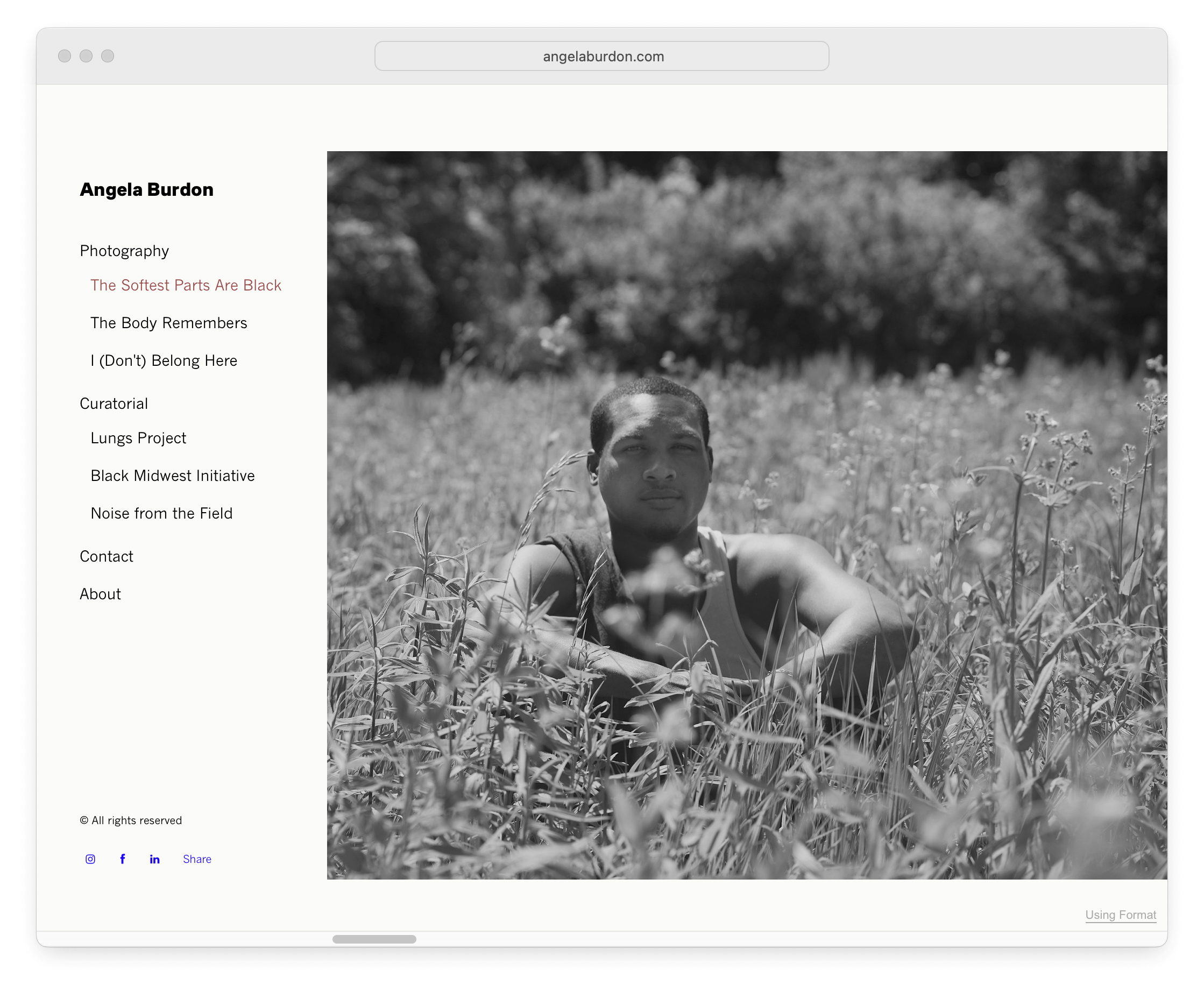
12 Photographer Portfolios Packed With Ideas and Inspiration — from booooooom.com


Speaking of photography, also see:

Photographer Spotlight: Pelle Cass — from booooooom.com


Field Kallop Meditates on Universal Patterns Through Bold Chromatic Compositions — from thisiscolossal.com by Field Kallop and Grace Ebert
.

 
© 2025 | Daniel Christian