Characteristics of Strong Culture
Although each organization’s culture is unique, strong cultures share several common traits. They communicate openly, maintain trust across all levels, and reinforce their values through daily actions rather than slogans. Recognition is frequent and meaningful. Collaboration is encouraged over competition, and employees feel psychologically safe expressing ideas or concerns. These cultures evolve as the organization grows, ensuring alignment between stated values and lived behavior.
… How to Strengthen Culture
A thriving environment is built through everyday habits: transparent communication, active listening, constructive feedback, and ensuring employees have the resources to grow. Embedding values into hiring, onboarding, recognition, and decision-making reinforces culture at every level. Sustaining culture requires ongoing attention—listening regularly, adjusting to evolving needs, and ensuring leaders continue to model the behaviors the organization expects.
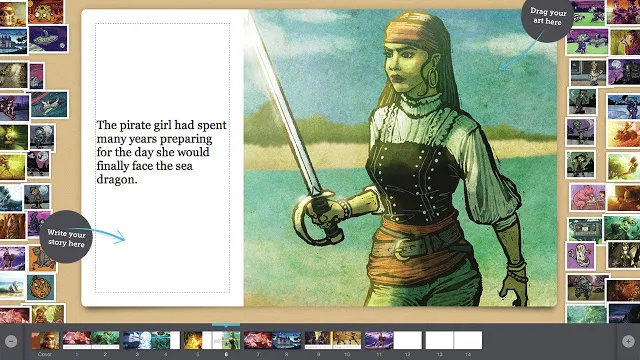
5 of the Best Tools To Teach Storytelling — from techlearning.com by Luke Edwards Use these best tools to teach storytelling to help students progress towards mastery
The best tools to teach storytelling can also be some of the most ideal ways to engage students, both creatively and more generally with education. From sparking their imaginations to helping structure a creative toolset, these digital assistants can be powerful in the classroom and beyond.
Giving a student the ability to structure and tell a compelling story can help to empower them in terms of literacy, empathy, and critical thinking.
Students can be given the opportunity to explore historical perspectives, dive into personal narratives, build fictional worlds, and present research in a story form. All of which helps strengthen communication skills while learning at the same time. .
Make Gatherings More Engaging— from wondertools.substack.com by Jeremy Caplan Tested tools for quizzes, online discussions, & shareable docs
The hardest part of teaching — or leading meetings — is sparking engagement. Getting people to engage enthusiastically with something new can be tough. It’s especially challenging if people are overwhelmed, super busy, or just tired.
As we aim to stretch people’s thinking in a new direction, tools are just one part of the overall picture. But they can help. Last week I shared five tools for creating learning paths, interactive lessons, and new kinds of digital notebooks. Today’s follow-up recommendations focus on creative engagement.
You don’t have to be a teacher to find these resources for opening up participation useful. If you lead a team, run meetings, or collaborate with colleagues, you can benefit from these tools.
I’ve baked into this post multiple ways to engage.
Character consistency, native audio, 15-second generations & first results
Image & Video Prompts
Imagine Art 1.5 Pro, Genspark AI Workspace 2.0 & PixVerse Real-Time Video Workflows
Kling 3.0: Everyone a Director
Kling just dropped version 3.0, and it’s a legitimate leap forward for AI video production (Kling is the GOAT). After spending early access time testing the new capabilities, I can confirm this is the most significant update to video generation tools I’ve seen in months.
Gray does an incredible job packing a lot of material into a very concise book. In it, she describes the difference between a rowboat church (which relies on human efforts) and a sailboat church (which relies upon the LORD to guide it, resource it, and empower it). She asserts that the main purpose of a sailboat is to leave the dock and set out on the waters of life to achieve what the LORD guides us to by His Holy Spirit. And prayer is a key element of this book and this process.
Making the case for arts and humanities — from timeshighereducation.com by campus contributors, Eliza Compton The arts and humanities are often dismissed as an unaffordable luxury, when these disciplines underpin vital human skills such as critical thinking, creativity and communication. This collection explores many ways in which arts and humanities can be harnessed for the benefit of all – students, universities and wider society
Yet, amid the threat of AI-driven automation in the workforce, fierce competition for entry-level jobs, and complex global problems such as climate change, the skills that humanities disciplines are built upon are vital. These skills – such as critical thinking, communication and creativity – are also key to universities’ capacity to share knowledge with industry, policymakers and the public. When it comes to understanding how high-tech solutions can best be applied in the real world, often the barriers are not technical but human, as low vaccine take-ups show.
These human skills are not unique to disciplines such as history, philosophy, literature, linguistics, performance and visual arts, of course. The need for deep thinking and analysis across all areas of academic enquiry is embedded in interdisciplinarity and STEAM initiatives, which integrate science, technology, mathematics and engineering with arts and humanities.
At their core, the arts and humanities interrogate what makes us human and how we understand and communicate with the world. In this collection, contributors from around the globe articulate the value that these disciplines bring to students, industry, government and society, when taught and designed effectively. It also considers how arts-based research can drive discovery, the role of interdisciplinarity in teaching and research, and how humanities-led expertise supports sustainability and inclusion.
Could Your Next Side Hustle Be Training AI? — from builtin.com by Jeff Rumage As automation continues to reshape the labor market, some white-collar professionals are cashing in by teaching AI models to do their jobs.
Summary: Artificial intelligence may be replacing jobs, but it’s also creating some new ones. Professionals in fields like medicine, law and engineering can earn big money training AI models, teaching them human skills and expertise that may one day make those same jobs obsolete.
Here’s the thing: voice is finally good enough to replace typing now. And I mean actually good enough, not “Siri, play Despacito” good enough.
To Paraphrase Andrej Karpathy’s famous quote, “the hottest new programming language is English”, in this case, the hottest new user interface is talking.
The Great Convergence: Why Voice Is Having Its Moment Three massive shifts just collided to make voice interfaces inevitable.
First, speech recognition stopped being terrible. …
Second, our devices got ears everywhere. …
Third, and most importantly: LLMs made voice assistants smart enough to be worth talking to. …
Update on November 20, 2025: Early feedback from the pilot has been positive, so we’re expanding group chats to all logged-in users on ChatGPT Free, Go, Plus and Pro plans globally over the coming days. We will continue refining the experience as more people start using it.
Today, we’re beginning to pilot a new experience in a few regions that makes it easy for people to collaborate with each other—and with ChatGPT—in the same conversation. With group chats, you can bring friends, family, or coworkers into a shared space to plan, make decisions, or work through ideas together.
Whether you’re organizing a group dinner or drafting an outline with coworkers, ChatGPT can help. Group chats are separate from your private conversations, and your personal ChatGPT memory is never shared with anyone in the chat.
EVANSTON, ILL. — The number of local news deserts in the U.S. jumped to record levels this year as newspaper closures continued unabated, and funding cuts to public radio could worsen the problem in coming months, according to the Medill State of Local News Report 2025 released today.
While the local news crisis deepened overall, Medill researchers found cause for optimism — more than 300 local news startups have launched over the past five years, 80% of which were digital-only outlets.
For the fourth consecutive year, the Medill Local News Initiative at Northwestern University’s Medill School of Journalism, Media, Integrated Marketing Communications conducted a months-long, county-by-county survey of local news organizations to identify trends in the rapidly morphing local media landscape. Researchers looked at local newspapers, digital-only sites, ethnic media and public broadcasters.
For decades, election reporting in the U.S. has leaned heavily on the “horse race”—who’s up, who’s down, and who’s raising the most money. But new research from the University of Kansas suggests that this approach is starting to shift, thanks to a national training program aimed at helping journalists better engage with their communities.
The program, called Democracy SOS, encourages reporters to move beyond headline polls and campaign drama. Instead, it asks them to focus on the issues people care about and explain how those issues are being tackled. In other words: less spectacle, more substance.
So why can’t digital journalism fill the gap? The researchers argue that online media isn’t a true replacement for local reporting. “If you’re in New York writing about San Francisco, you just don’t know the area,” they say. “You don’t have the context. You’re not there.”
Even local online reporters face pressure to chase clicks. “Every journalist now has a global audience,” they explain. “That means the stories that matter most—ones that require digging, patience, and a deep knowledge of the community—often get ignored.”
The takeaway: local newspapers may seem like an old-fashioned idea, but they play a key role in how communities function. And when they vanish, the costs go beyond the news.
For the word of God is alive and active. Sharper than any double-edged sword, it penetrates even to dividing soul and spirit, joints and marrow; it judges the thoughts and attitudes of the heart.
The LORD detests dishonest scales, but accurate weights find favor with him.
From DSC:
As a relevant aside, the following article made me think about some of the reasons why the LORD used parables/stories to speak to the people:
The Storytelling Approach
Sharing stories is effective because it seems to get around our defensiveness. When information is presented in a story form, people reason about it differently than if it were presented as a list of facts or a direct critique.
Here’s more of why and then how to implement it with success in your school leadership work.
1. Transportation and Distancing: Listening to a story pulls us out of a defensive mode (the “do I agree or do I disagree?” mindset) and into a thoughtful, observant framework. Being transported allows the individual to identify with others in a way that is different from experiencing the situation for themselves. It’s a third-person, objective mindset, a safe zone for people to evaluate a situation from.
2. Shifting Perspective: When individuals consider challenges from the perspective of someone who is not them, it dramatically alters their thinking. They gain the latitude and freedom to consider the available options without feeling personally attacked. That wise sage did this when he shared his story of struggling. Making it safe and helping me to see him as having an objective, difficult experience is why when I was able to take the perspective of a distanced other. It became easier to think about the situation in a wiser way and come up with a better solution.
3. Engaging Different Brain Systems: Fundamentally different pathways are triggered when processing stories compared to facts. Storytelling engages social relevance brain systems–those that help us understand what other people think and feel, such as empathy, another higher order processing mechanism.
From DSC: Stephen has some solid reflections and asks some excellent questions in this posting, including:
The question is: how do we optimize an AI to support learning? Will one model be enough? Or do we need different models for different learners in different scenarios?
A More Human University: The Role of AI in Learning — from er.educause.edu by Robert Placido Far from heralding the collapse of higher education, artificial intelligence offers a transformative opportunity to scale meaningful, individualized learning experiences across diverse classrooms.
The narrative surrounding artificial intelligence (AI) in higher education is often grim. We hear dire predictions of an “impending collapse,” fueled by fears of rampant cheating, the erosion of critical thinking, and the obsolescence of the human educator.Footnote1 This dystopian view, however, is a failure of imagination. It mistakes the death rattle of an outdated pedagogical model for the death of learning itself. The truth is far more hopeful: AI is not an asteroid coming for higher education. It is a catalyst that can finally empower us to solve our oldest, most intractable problem: the inability to scale deep, engaged, and truly personalized learning.
Increasing the rate of scientific progress is a core part of Anthropic’s public benefit mission.
We are focused on building the tools to allow researchers to make new discoveries – and eventually, to allow AI models to make these discoveries autonomously.
Until recently, scientists typically used Claude for individual tasks, like writing code for statistical analysis or summarizing papers. Pharmaceutical companies and others in industry also use it for tasks across the rest of their business, like sales, to fund new research. Now, our goal is to make Claude capable of supporting the entire process, from early discovery through to translation and commercialization.
To do this, we’re rolling out several improvements that aim to make Claude a better partner for those who work in the life sciences, including researchers, clinical coordinators, and regulatory affairs managers.
AI as an access tool for neurodiverse and international staff— from timeshighereducation.com by Vanessa Mar-Molinero Used transparently and ethically, GenAI can level the playing field and lower the cognitive load of repetitive tasks for admin staff, student support and teachers
Where AI helps without cutting academic corners When framed as accessibility and quality enhancement, AI can support staff to complete standard tasks with less friction. However, while it supports clarity, consistency and inclusion, generative AI (GenAI) does not replace disciplinary expertise, ethical judgement or the teacher–student relationship. These are ways it can be put to effective use:
The Sleep of Liberal Arts Produces AI — from aiedusimplified.substack.com by Lance Eaton, Ph.D. A keynote at the AI and the Liberal Arts Symposium Conference
This past weekend, I had the honor to be the keynote speaker at a really fantstistic conferece, AI and the Liberal Arts Symposium at Connecticut College. I had shared a bit about this before with my interview with Lori Looney. It was an incredible conference, thoughtfully composed with a lot of things to chew on and think about.
It was also an entirely brand new talk in a slightly different context from many of my other talks and workshops. It was something I had to build entirely from the ground up. It reminded me in some ways of last year’s “What If GenAI Is a Nothingburger”.
It was a real challenge and one I’ve been working on and off for months, trying to figure out the right balance. It’s a work I feel proud of because of the balancing act I try to navigate. So, as always, it’s here for others to read and engage with. And, of course, here is the slide deck as well (with CC license).
From DSC: One of my sisters is a Professor of Communication at a major university and she recently sent me the following article. I thought I’d pass it along to those of you who are also interested in this topic. My sister has written several books on media literacy and has created museum-based exhibits to address this topic.
Here’s a few suggestions for how to navigate our new, challenging news media reality.
Find individual journalists to trust…
Don’t let the perfect be the enemy of the good…
Be skeptical of those telling you what you want to hear…
Learn what outlets are good at covering…
…and more
The above article links to:
My take on why Americans don’t trust journalists anymore — from ericdeggans.substack.com by Switching Codes w/Eric Deggans It’s more complicated than journalists failing in their mission. And reversing the numbers are key to preserving democracy. .
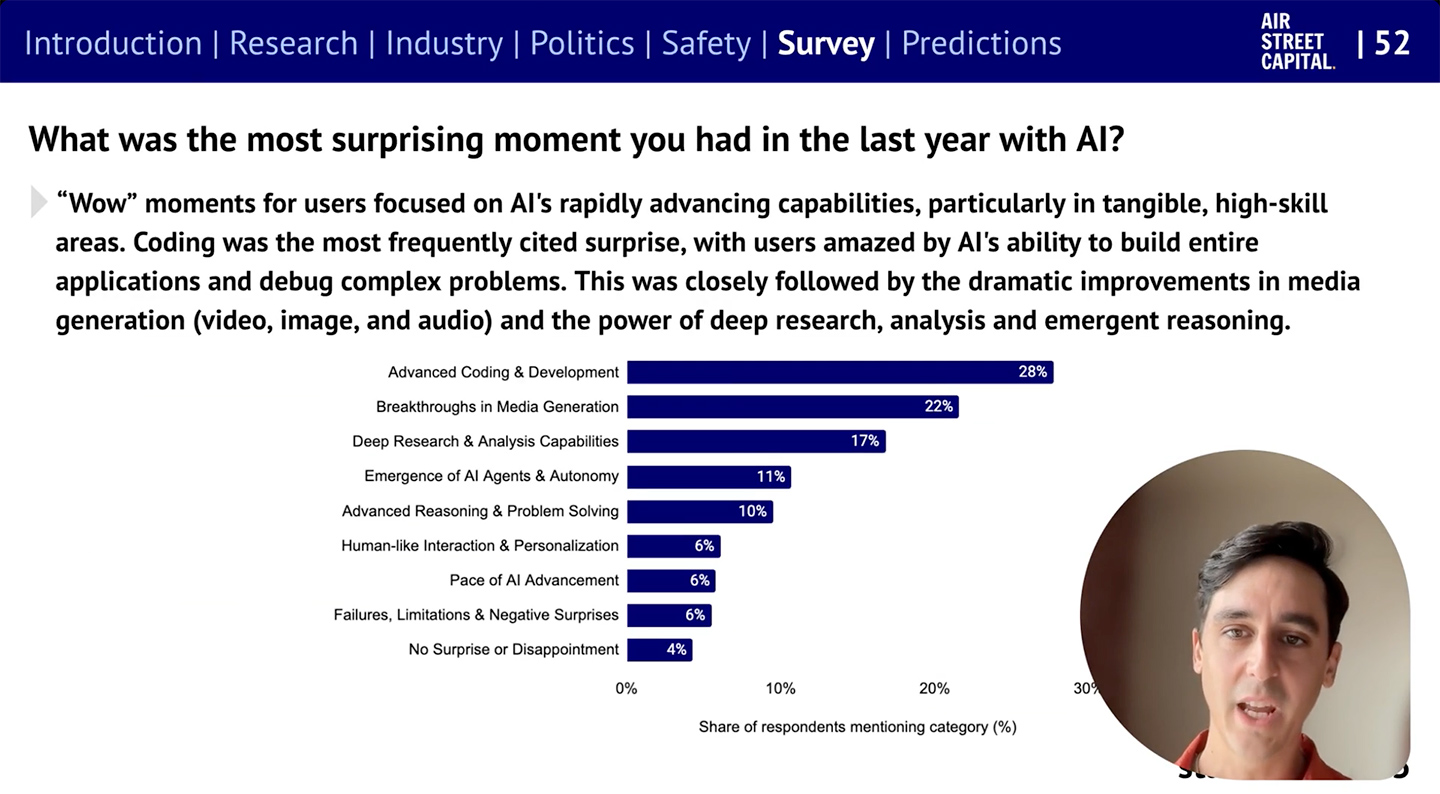
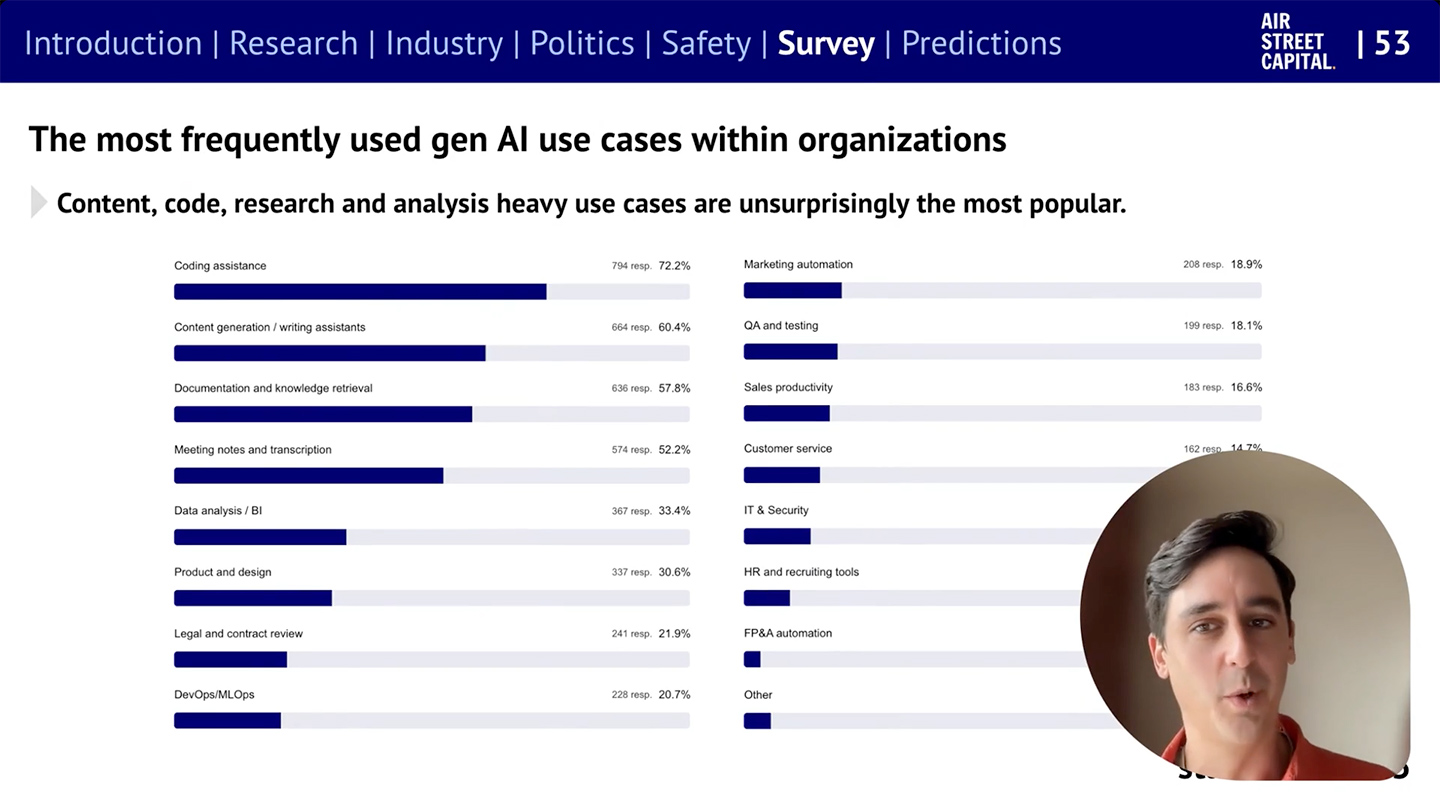
In short, it’s been a monumental 12 months for AI. Our eighth annual report is the most comprehensive it’s ever been, covering what you need to know about research, industry, politics, and safety – along with our first State of AI Usage Survey of 1,200 practitioners.
The 4 Rs framework Salesforce has developed what Holt Ware calls the “4 Rs for AI agent success.” They are:
Redesign by combining AI and human capabilities. This requires treating agents like new hires that need proper onboarding and management.
Reskilling should focus on learning future skills. “We think we know what they are,” Holt Ware notes, “but they will continue to change.”
Redeploy highly skilled people to determine how roles will change. When Salesforce launched an AI coding assistant, Holt Ware recalls, “We woke up the next day and said, ‘What do we do with these people now that they have more capacity?’ ” Their answer was to create an entirely new role: Forward-Deployed Engineers. This role has since played a growing part in driving customer success.
Rebalance workforce planning. Holt Ware references a CHRO who “famously said that this will be the last year we ever do workforce planning and it’s only people; next year, every team will be supplemented with agents.”
Our latest video generation model is more physically accurate, realistic, and more controllable than prior systems. It also features synchronized dialogue and sound effects. Create with it in the new Sora app.
The Rundown: OpenAI just released Sora 2, its latest video model that now includes synchronized audio and dialogue, alongside a new social app where users can create, remix, and insert themselves into AI videos through a “Cameos” feature.
… Why it matters: Model-wise, Sora 2 looks incredible — pushing us even further into the uncanny valley and creating tons of new storytelling capabilities. Cameos feels like a new viral memetic tool, but time will tell whether the AI social app can overcome the slop-factor and have staying power past the initial novelty.
OpenAI Just Dropped Sora 2 (And a Whole New Social App) — from heneuron.ai by Grant Harvey OpenAI launched Sora 2 with a new iOS app that lets you insert yourself into AI-generated videos with realistic physics and sound, betting that giving users algorithm control and turning everyone into active creators will build a better social network than today’s addictive scroll machines.
What Sora 2 can do
Generate Olympic-level gymnastics routines, backflips on paddleboards (with accurate buoyancy!), and triple axels.
Follow intricate multi-shot instructions while maintaining world state across scenes.
Create realistic background soundscapes, dialogue, and sound effects automatically.
Insert YOU into any video after a quick one-time recording (they call this “cameos”).
The best video to show what it can do is probably this one, from OpenAI researcher Gabriel Peters, that depicts the behind the scenes of Sora 2 launch day…
Sora 2: AI Video Goes Social — from getsuperintel.com by Kim “Chubby” Isenberg OpenAI’s latest AI video model is now an iOS app, letting users generate, remix, and even insert themselves into cinematic clips
Technically, Sora 2 is a major leap. It syncs audio with visuals, respects physics (a basketball bounces instead of teleporting), and follows multi-shot instructions with consistency. That makes outputs both more controllable and more believable. But the app format changes the game: it transforms world simulation from a research milestone into a social, co-creative experience where entertainment, creativity, and community intersect.
Also along the lines of creating digital video, see:
What used to take hours in After Effects now takes just one text prompt. Tools like Google’s Nano Banana, Seedream 4, Runway’s Aleph, and others are pioneering instruction-based editing, a breakthrough that collapses complex, multi-step VFX workflows into a single, implicit direction.
The history of VFX is filled with innovations that removed friction, but collapsing an entire multi-step workflow into a single prompt represents a new kind of leap.
For creators, this means the skill ceiling is no longer defined by technical know-how, it’s defined by imagination. If you can describe it, you can create it. For the industry, it points toward a near future where small teams and solo creators compete with the scale and polish of large studios.
Something big shifted this week. OpenAI just turned ChatGPT into a platform – not just a product.With apps now running inside ChatGPT and a no-code Agent Builder for creating full AI workflows, the line between “using AI” and “building with AI” is fading fast. Developers suddenly have a new playground, and for the first time, anyone can assemble their own intelligent system without touching code. The question isn’t what AI can do anymore – it’s what you’ll make it do.
5 Your love, Lord, reaches to the heavens, your faithfulness to the skies. 6 Your righteousness is like the highest mountains, your justice like the great deep. You, Lord, preserve both people and animals. 7 How priceless is your unfailing love, O God! People take refuge in the shadow of your wings.
7 “Ask and it will be given to you; seek and you will find; knock and the door will be opened to you.8 For everyone who asks receives; the one who seeks finds; and to the one who knocks, the door will be opened.