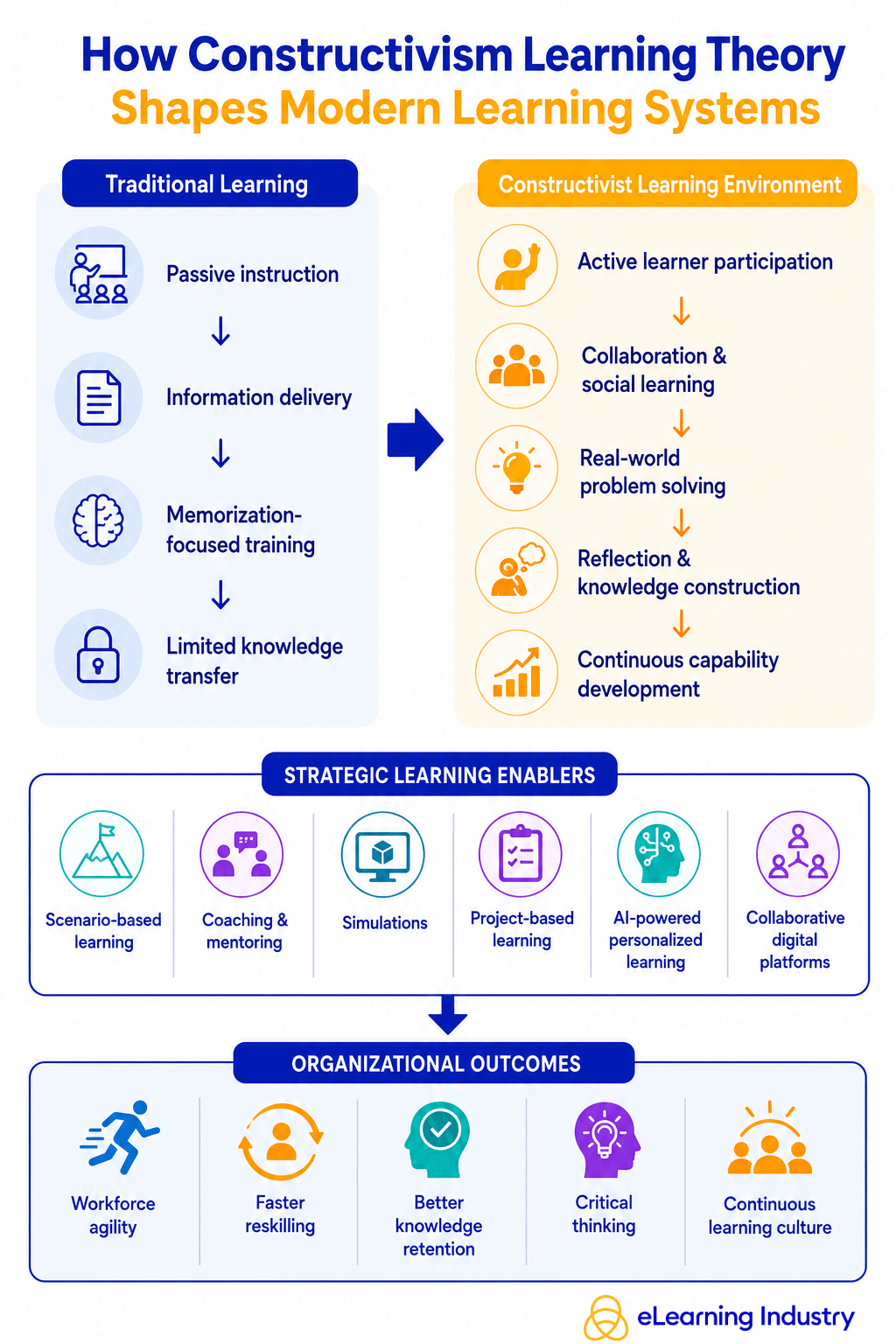
Anthology Declares Bankruptcy, Blackboard to Remain as the Core — from onedtech.philhillaa.com by Phil Hill
The official Chapter 11 plan is to recapitalize around Blackboard and sell off SIS/ERP and CRM/Student Success to competitors

Anthology Inc., the Veritas Capital-backed education-software provider has sought Chapter 11 bankruptcy protection in the US after a failed attempt to sell the company or parts of the business outside of court protection.

The company filed for Chapter 11 in the United States Bankruptcy Court for the Southern District of Texas, according to a statement on Tuesday. It listed assets and liabilities of $1 billion to $10 billion each in its petition, court documents show.

As part of the process, the firm will focus on its core teaching and learning business, which will be recapitalized with at least $50 million of new cash and its debt completely written off, Anthology said in a press release. The deal is backed by investors that include Oaktree Capital Management LP and Nexus Capital Management, and expected to be completed by early 2026.


Also see this posting out on LinkedIn:


U.S. Law Schools Make AI Training Mandatory as Technology Becomes Core Legal Skill — from jdjournal.com by Fatima E

A growing number of U.S. law schools are now requiring students to train in artificial intelligence, marking a shift from optional electives to essential curriculum components. What was once treated as a “nice-to-have” skill is fast becoming integral as the legal profession adapts to the realities of AI tools.

From Experimentation to Obligation
Until recently, most law schools relegated AI instruction to upper-level electives or let individual professors decide whether to incorporate generative AI into their teaching. Now, however, at least eight law schools require incoming students—especially in their first year—to undergo training in AI, either during orientation, in legal research and writing classes, or via mandatory standalone courses.

Some of the institutions pioneering the shift include Fordham University, Arizona State University, Stetson University, Suffolk University, Washington University in St. Louis, Case Western, and the University of San Francisco.


Beyond the Classroom & LMS: How AI Coaching is Transforming Corporate Learning — from by Dr Philippa Hardman
What a new HBR study tells about the changing nature of workplace L&D

There’s a vision that’s been teased Learning & Development for decades: a vision of closing the gap between learning and doing—of moving beyond stopping work to take a course, and instead bringing support directly into the workflow. This concept of “learning in the flow of work” has been imagined, explored, discussed for decades —but never realised. Until now…?

This week, an article published Harvard Business Review provided some some compelling evidence that a long-awaited shift from “courses to coaches” might not just be possible, but also powerful.

The two settings were a) traditional in-classroom workshops, led by an expert facilitator and b) AI-coaching, delivered in the flow of work. The results were compelling….

TLDR: The evidence suggests that “learning in the flow of work” is not only feasible as a result of gen AI—it also show potential to be more scalable, more equitable and more efficient than traditional classroom/LMS-centred models.


The 10 Most Popular AI Chatbots For Educators — from techlearning.com by Erik Ofgang
Educators don’t need to use each of these chatbots, but it pays to be generally aware of the most popular AI tools

I’ve spent time testing many of these AI chatbots for potential uses and abuses in my own classes, so here’s a quick look at each of the top 10 most popular AI chatbots, and what educators should know about each. If you’re looking for more detail on a specific chatbot, click the link, as either I or other Tech & Learning writers have done deeper dives on all these tools.


…which links to:

Beyond Tool or Threat: GenAI and the Challenge It Poses to Higher Education — from er.educause.edu by Adam Maksl, Anne Leftwich, Justin Hodgson and Kevin Jones

Generative artificial intelligence isn’t just a new tool—it’s a catalyst forcing the higher education profession to reimagine its purpose, values, and future.

As experts in educational technology, digital literacy, and organizational change, we argue that higher education must seize this moment to rethink not just how we use AI, but how we structure and deliver learning altogether.


At This Rural Microschool, Students Will Study With AI and Run an Airbnb — from edsurge.com by Daniel Mollenkamp

Over the past decade, microschools — experimental small schools that often have mixed-age classrooms — have expanded.

Some superintendents have touted the promise of microschools as a means for public schools to better serve their communities’ needs while still keeping children enrolled in the district. But under a federal administration that’s trying to dismantle public education and boost homeschool options, others have critiqued poor oversight and a lack of information for assessing these models.

Microschools offer a potential avenue to bring innovative, modern experiences to rural areas, argues Keith Parker, superintendent of Elizabeth City-Pasquotank Public Schools.


Are We Ready for the AI University? An AI in Higher Education Webinar with Dr. Scott Latham


Imagining Teaching with AI Agents… — from michellekassorla.substack.com by Michelle Kassorla
Teaching with AI is only one step toward educational change, what’s next?

More than two years ago I started teaching with AI in my classes. At first I taught against AI, then I taught with AI, and now I am moving into unknown territory: agents. I played with Manus and n8n and some other agents, but I really never got excited about them. They seemed more trouble than they were worth. It seemed they were no more than an AI taskbot overseeing some other AI bots, and that they weren’t truly collaborating. Now, I’m looking at Perplexity’s Comet browser and their AI agent and I’m starting to get ideas for what the future of education might hold.

I have written several times about the dangers of AI agents and how they fundamentally challenge our systems, especially online education. I know there is no way that we can effectively stop them–maybe slow them a little, but definitely not stop them. I am already seeing calls to block and ban agents–just like I saw (and still see) calls to block and ban AI–but the truth is they are the future of work and, therefore, the future of education.

So, yes! This is my next challenge: teaching with AI agents. I want to explore this idea, and as I started thinking about it, I got more and more excited. But let me back up a bit. What is an agent and how is it different than Generative AI or a bot?


MoodleMoot Global Conference Notes 2025 — from onedtech.philhillaa.com by Glenda Morgan
It’s a long way from Me?rida to Edinburgh
.

Moodle Higher Ed
This kept getting underplayed, probably because its exact shape is still undetermined and it will arrive “soon” (where, to quote Marie, “soon is a relative term”). But it’s big in that Moodle HQ is developing a premium product for higher education.

The Moodle execs were careful to say that Moodle Higher Ed won’t be an LMS, per se.

So over the next few years we’re bringing something new to the Moodle product ecosystem. A tailored solution for higher education. Just as Workplace is a specialized product built on top of Moodle LMS for corporate and government needs, we’re bringing that same philosophy to higher ed with an AI assistance strategy focused on point solutions that deliver real institutional value.


Also from Phil Hill on LinkedIn:


What today’s students really want — and what that means for higher ed — from highereddive.com by Ellucian

Cost is too high. Pathways are unclear. Options feel limited. For many prospective, current, or former students, these barriers define their relationship with higher education. As colleges and universities face the long-anticipated enrollment cliff, the question isn’t just how to recruit—it’s how to reimagine value, access, and engagement across the entire student journey.

Ellucian’s 2025 Student Voice Report offers one of the most comprehensive views into that journey to date. With responses from over 1,500 learners across the U.S.—including high school students, current undergrads, college grads, stop-outs, and opt-outs—the findings surface one clear mandate for institutions: meet students where they are, or risk losing them entirely.

What Are Learners Asking For?
Across demographics, four priorities rose to the top:
Affordability. Flexibility. Relevance. Clarity.

Students aren’t rejecting education—they’re rejecting systems that don’t clearly show how their investment leads to real outcomes. 


ChatGPT: the world’s most influential teacher — from drphilippahardman.substack.com by Dr. Philippa Hardman; emphasis DSC
New research shows that millions of us are “learning with AI” every week: what does this mean for how (and how well) humans learn?

This week, an important piece of research landed that confirms the gravity of AI’s role in the learning process. The TLDR is that learning is now a mainstream use case for ChatGPT; around 10.2% of all ChatGPT messages (that’s ~2BN messages sent by over 7 million users per week) are requests for help with learning.

The research shows that about 10.2% of all messages are tutoring/teaching, and within the “Practical Guidance” category, tutoring is 36%. “Asking” interactions are growing faster than “Doing” and are rated higher quality by users. Younger people contribute a huge share of messages, and growth is fastest in low- and middle-income countries (How People Use ChatGPT, 2025).

If AI is already acting as a global tutor, the question isn’t “will people learn with AI?”—they already are. The real question we need to ask is: what does great learning actually look like, and how should AI evolve to support it? That’s where decades of learning science help us separate “feels like learning” from “actually gaining new knowledge and skills”.

Let’s dive in.


Digital Accessibility with Amy Lomellini — from intentionalteaching.buzzsprout.com by Derek Bruff

In this episode, we explore why digital accessibility can be so important to the student experience. My guest is Amy Lomellini, director of accessibility at Anthology, the company that makes the learning management system Blackboard. Amy teaches educational technology as an adjunct at Boise State University, and she facilitates courses on digital accessibility for the Online Learning Consortium. In our conversation, we talk about the importance of digital accessibility to students, moving away from the traditional disclosure-accommodation paradigm, AI as an assistive technology, and lots more.


Provosts Are a ‘Release Valve’ for Campus Controversy — from insidehighered.com by Emma Whitford
According to former Western Michigan provost Julian Vasquez Heilig, provosts are stuck driving change with few, if any, allies, while simultaneously playing crisis manager for the university.

After two years, he stepped down, and he now serves as a professor of educational leadership, research and technology at Western Michigan. His frustrations with the provost role had less to do with Western Michigan and more to do with how the job is designed, he explained. “Each person sees the provost a little differently. The faculty see the provost as administration, although, honestly, around the table at the cabinet, the provost is probably the only faculty member,” Heilig said. “The trustees—they see the provost as a middle manager below the president, and the president sees [the provost] as a buffer from issues that are arising.”

Inside Higher Ed sat down with Heilig to talk about the provost job and all he’s learned about the role through years of education leadership research, conversations with colleagues and his own experience.


Brandeis University launches a new vision for American higher education, reinventing liberal arts and emphasizing career development — from brandeis.edu

Levine unveiled “The Brandeis Plan to Reinvent the Liberal Arts,” a sweeping redesign of academic structures, curricula, degree programs, teaching methods, career education, and student support systems. Developed in close partnership with Brandeis faculty, the plan responds to a rapidly shifting landscape in which the demands on higher education are evolving at unprecedented speed in a global, digital economy.

“We are living through a time of extraordinary change across technology, the economy, and society,” Levine said. “Today’s students need more than knowledge. They need the skills, experiences, and confidence to lead in a world we cannot yet predict. We are advancing a new model. We need reinvention. And that’s exactly what Brandeis is establishing.”

The Brandeis Plan transforms the student experience by integrating career preparation into every stage of a student’s education, requiring internships or apprenticeships, sustaining career counseling, and implementing a core curriculum built around the skills that employers value most. The plan also reimagines teaching. It will be more experiential and practical, and introduce new ways to measure and showcase student learning and growth over time.


Tuition Tracker from the Hechinger Report


From EdTech to TechEd: The next chapter in learning’s evolution — from linkedin.com by Lev Gonick

A day in the life: The next 25 years
A learner wakes up. Their AI-powered learning coach welcomes them, drawing their attention to their progress and helping them structure their approach to the day.  A notification reminds them of an upcoming interview and suggests reflections to add to their learning portfolio.

Rather than a static gradebook, their portfolio is a dynamic, living record, curated by the student, validated by mentors in both industry and education, and enriched through co-creation with maturing modes of AI. It tells a story through essays, code, music, prototypes, journal reflections, and team collaborations. These artifacts are not “submitted”, they are published, shared, and linked to verifiable learning outcomes.

And when it’s time to move, to a new institution, a new job, or a new goal, their data goes with them, immutable, portable, verifiable, and meaningful.

From DSC:
And I would add to that last solid sentence that the learner/student/employee will be able to control who can access this information. Anyway, some solid reflections here from Lev.


AI Could Surpass Schools for Academic Learning in 5-10 Years — from downes.ca with commentary from Stephen Downes

I know a lot of readers will disagree with this, and the timeline feels aggressive (the future always arrives more slowly than pundits expect) but I think the overall premise is sound: “The concept of a tipping point in education – where AI surpasses traditional schools as the dominant learning medium – is increasingly plausible based on current trends, technological advancements, and expert analyses.”


The world’s first AI cabinet member — from therundown.ai by Zach Mink, Rowan Cheung, Shubham Sharma, Joey Liu & Jennifer Mossalgue

The Rundown: In this tutorial, you will learn how to combine NotebookLM with ChatGPT to master any subject faster, turning dense PDFs into interactive study materials with summaries, quizzes, and video explanations.

Step-by-step:

  1. Go to notebooklm.google.com, click the “+” button, and upload your PDF study material (works best with textbooks or technical documents)
  2. Choose your output mode: Summary for a quick overview, Mind Map for visual connections, or Video Overview for a podcast-style explainer with visuals
  3. Generate a Study Guide under Reports — get Q&A sets, short-answer questions, essay prompts, and glossaries of key terms automatically
  4. Take your PDF to ChatGPT and prompt: “Read this chapter by chapter and highlight confusing parts” or “Quiz me on the most important concepts”
  5. Combine both tools: Use NotebookLM for quick context and interactive guides, then ChatGPT to clarify tricky parts and go deeperPro Tip: If your source is in EPUB or audiobook, convert it to PDF before uploading. Both NotebookLM and ChatGPT handle PDFs best.

Claude can now create and edit files — from anthropic.com

Claude can now create and edit Excel spreadsheets, documents, PowerPoint slide decks, and PDFs directly in Claude.ai and the desktop app. This transforms how you work with Claude—instead of only receiving text responses or in-app artifacts, you can describe what you need, upload relevant data, and get ready-to-use files in return.

Also see:

  • Microsoft to lessen reliance on OpenAI by buying AI from rival Anthropic — from techcrunch.com byRebecca Bellan
    Microsoft will pay to use Anthropic’s AI in Office 365 apps, The Information reports, citing two sources. The move means that Anthropic’s tech will help power new features in Word, Excel, Outlook, and PowerPoint alongside OpenAI’s, marking the end of Microsoft’s previous reliance solely on the ChatGPT maker for its productivity suite. Microsoft’s move to diversify its AI partnerships comes amid a growing rift with OpenAI, which has pursued its own infrastructure projects as well as a potential LinkedIn competitor.

Ep. 11 AGI and the Future of Higher Ed: Talking with Ray Schroeder

In this episode of Unfixed, we talk with Ray Schroeder—Senior Fellow at UPCEA and Professor Emeritus at the University of Illinois Springfield—about Artificial General Intelligence (AGI) and what it means for the future of higher education. While most of academia is still grappling with ChatGPT and basic AI tools, Schroeder is thinking ahead to AI agents, human displacement, and AGI’s existential implications for teaching, learning, and the university itself. We explore why AGI is so controversial, what institutions should be doing now to prepare, and how we can respond responsibly—even while we’re already overwhelmed.


Best AI Tools for Instructional Designers — from blog.cathy-moore.com by Cathy Moore

Data from the State of AI and Instructional Design Report revealed that 95.3% of the instructional designers interviewed use AI in their daily work [1]. And over 85% of this AI use occurs during the design and development process.

These figures showcase the immense impact AI is already having on the instructional design world.

If you’re an L&D professional still on the fence about adding AI to your workflow or an AI convert looking for the next best tools, keep reading.

This guide breaks down 5 of the top AI tools for instructional designers in 2025, so you can streamline your development processes and build better training faster.

But before we dive into the tools of the trade, let’s address the elephant in the room:


3 Human Skills That Make You Irreplaceable in an AI World — from gettingsmart.com/ by Tom Vander Ark and Mason Pashia

Key Points

  • Update learner profiles to emphasize curiosity, curation, and connectivity, ensuring students develop irreplaceable human skills.
  • Integrate real-world learning experiences and mastery-based assessments to foster agency, purpose, and motivation in students.
 

The waiting game — from college-inside.beehiiv.com by Charlotte West
College Inside breaks down the numbers from a first-of-its kind report on higher education in Illinois prisons.

For every person enrolled in higher education at Illinois prisons, someone else is waiting for their turn, according to new state data that reveals a system where access to college depends largely on where someone is incarcerated.

Right now, roughly 2,000 people in Illinois prisons are participating in higher education programs, according to a report released at the beginning of September. That’s about 1 out of every 15 people incarcerated in the state. At the same time, though, another 2,000 are stuck on waiting lists to get into classes because there’s not enough programming available.

Another 700 people on supervised release — Illinois’ version of parole — are also enrolled in higher education, per the report. Those numbers include enrollment in both college classes, and career and technical education.


Miro and GenAI as drivers of online student engagement — from timeshighereducation.com by Jaime Eduardo Moncada Garibay
A set of practical strategies for transforming passive online student participation into visible, measurable and purposeful engagement through the use of Miro, enhanced by GenAI

To address this challenge, I shifted my focus from requesting participation to designing it. This strategic change led me to integrate Miro, a visual digital workspace, into my classes. Miro enables real-time visualisation and co-creation of ideas, whether individually or in teams.

The transition from passive attendance to active engagement in online classes requires deliberate instructional design. Tools such as Miro, enhanced by GenAI, enable educators to create structured, visually rich learning environments in which participation is both expected and documented.

While technology provides templates, frames, timers and voting features, its real pedagogical value emerges through intentional facilitation, where the educator’s role shifts from delivering content to orchestrating collaborative, purposeful learning experiences.


Benchmarking Online Education with Bruce Etter and Julie Uranis — from buzzsprout.com by Derek Bruff

Here are some that stood out to me:

  • In the past, it was typical for faculty to teach online courses as an “overload” of some kind, but BOnES data show that 92% of online programs feature courses taught as part of faculty member’s standard teaching responsibilities. Online teaching has become one of multiple modalities in which faculty teach regularly.
  • Three-quarters of chief online officers surveyed said they plan to have a great market share of online enrollments in the future, but only 23% said their current marketing is better than their competitors. The rising tide of online enrollments won’t lift all boats–some institutions will fare better than others.
  • Staffing at online education units is growing, with the median staff size increasing from 15 last year to 20 this year. Julie pointed out that successful online education requires investment of resources. You might need as many buildings as onsite education does, but you need people and you need technology.


GRCC students to use AI to help businesses solve ‘real world’ challenges in new course — from www-mlive-com.cdn.ampproject.org by Brian McVicar; via Patrick Bailey on LinkedIn

GRAND RAPIDS, MI — A new course at Grand Rapids Community College aims to help students learn about artificial intelligence by using the technology to solve real-world business problems.

In a release, the college said its grant application was supported by 20 local businesses, including Gentex, TwistThink and the Grand Rapids Public Museum. The businesses have pledged to work with students who will use business data to develop an AI project such as a chatbot that interacts with customers, or a program that automates social media posts or summarizes customer data.

“This rapidly emerging technology can transform the way businesses process data and information,” Kristi Haik, dean of GRCC’s School of Science, Technology, Engineering and Mathematics, said in a statement. “We want to help our local business partners understand and apply the technology. We also want to create real experiences for our students so they enter the workforce with demonstrated competence in AI applications.”

As Patrick Bailey said on LinkedIn about this article:

Nice to see a pedagogy that’s setting a forward movement rather than focusing on what could go wrong with AI in a curriculum.


Forecast for Learning and Earning in 2025-2026 report — from pages.asugsvsummit.com by Jennifer Lee and Claire Zau

In this look ahead at the future of learning and work, we aim to define:

  • Major thematic observations
  • What makes this moment an inflection point
  • Key predictions (and their precedent)
  • Short- and long-term projected impacts


The LMS at 30: From Course Management to Learning Management (At Last) — from onedtech.philhillaa.com; a guest post from Matthew Pittinsky, Ph.D.

As a 30 year observer and participant, it seems to me that previous technology platform shifts like SaaS and mobile did not fundamentally change the LMS. AI is different. We’re standing at the precipice of LMS 2.0, where the branding change from Course Management System to Learning Management System will finally live up to its name. Unlike SaaS or mobile, AI represents a technology platform shift that will transform the way participants interact with learning systems – and with it, the nature of the LMS itself.

Given the transformational potential of AI, it is useful to set the context and think about how we got here, especially on this 30th anniversary of the LMS.

LMS at 30 Part 2: Learning Management in the AI Era — from onedtech.philhillaa.com; a guest post from Matthew Pittinsky, Ph.D.

Where AI is disruptive is in its ability to introduce a whole new set of capabilities that are best described as personalized learning services. AI offers a new value proposition to the LMS, roughly the set of capabilities currently being developed in the AI Tutor / agentic TA segment. These new capabilities are so valuable given their impact on learning that I predict they will become the services with greatest engagement within a school or university’s “enterprise” instructional platform.

In this way, by LMS paradigm shift, I specifically mean a shift from buyers valuing the product on its course-centric and course management capabilities, to valuing it on its learner-centric and personalized learning capabilities.


AI and the future of education: disruptions, dilemmas and directions — from unesdoc.unesco.org

This anthology reveals how the integration of AI in education poses profound philosophical, pedagogical, ethical and political questions. As this global AI ecosystem evolves and becomes increasingly ubiquitous, UNESCO and its partners have a shared responsibility to lead the global discourse towards an equity- and justice-centred agenda. The volume highlights three areas in which UNESCO will continue to convene and lead a global commons for dialog and action particularly in areas on AI futures, policy and practice innovation, and experimentation.

  1. As guardian of ethical, equitable human-centred AI in education.
  2. As thought leader in reimagining curriculum and pedagogy
  3. As a platform for engaging pluralistic and contested dialogues

AI, copyright and the classroom: what higher education needs to know — from timeshighereducation.com by Cayce Myers
As artificial intelligence reshapes teaching and research, one legal principle remains at the heart of our work: copyright. Understanding its implications isn’t just about compliance – it’s about protecting academic integrity, intellectual property and the future of knowledge creation. Cayce Myers explains


The School Year We Finally Notice “The Change” — from americanstogether.substack.com by Jason Palmer

Why It Matters
A decade from now, we won’t say “AI changed schools.” We’ll say: this was the year schools began to change what it means to be human, augmented by AI.

This transformation isn’t about efficiency alone. It’s about dignity, creativity, and discovery, and connecting education more directly to human flourishing. The industrial age gave us schools to produce cookie-cutter workers. The digital age gave us knowledge anywhere, anytime. The AI age—beginning now—gives us back what matters most: the chance for every learner to become infinitely capable.

This fall may look like any other—bells ringing, rows of desks—but beneath the surface, education has begun its greatest transformation since the one-room schoolhouse.


How should universities teach leadership now that teams include humans and autonomous AI agents? — from timeshighereducation.com by Alex Zarifis
Trust and leadership style are emerging as key aspects of teambuilding in the age of AI. Here are ways to integrate these considerations with technology in teaching

Transactional and transformational leaderships’ combined impact on AI and trust
Given the volatile times we live in, a leader may find themselves in a situation where they know how they will use AI, but they are not entirely clear on the goals and journey. In a teaching context, students can be given scenarios where they must lead a team, including autonomous AI agents, to achieve goals. They can then analyse the situations and decide what leadership styles to apply and how to build trust in their human team members. Educators can illustrate this decision-making process using a table (see above).

They may need to combine transactional leadership with transformational leadership, for example. Transactional leadership focuses on planning, communicating tasks clearly and an exchange of value. This works well with both humans and automated AI agents.


Higher ed’s ‘hunker-down mindset’ — from open-campus-dispatch.beehiiv.com by Colleen Murphy
A tight housing market and a fragile job market mean those working in higher ed have fewer options than ever.

Faculty and administrators could be just as constrained by the golden handcuffs of a 2% interest rate as everybody else. That makes them less likely to move for a new job, Kelchen said, especially since they’re unlikely to get the type of salary increase they’d need to offset more pricey mortgage payments. Plus, even finding an affordable house in the first place could be a challenge right now.

All of this contributes to what Kelchen called a “hunker-down mindset” in higher ed.

“Even if the institutions are giving out pay raises, the pay raises aren’t matching housing costs,” Kelchen said. “And then that creates a pressure to stay.”

While that might seem like a “first-world problem,” it also affects college and university staff members, Kelchen told me. Often the only way for staff members to make more money is to move universities — there aren’t the same in-house growth opportunities as there are for faculty. But that’s easier said than done.


A Journalist’s Toolkit for the AI Era — from wondertools.substack.com by Jeremy Caplan and Joe Amditis
A guest expert shares his practical tools

As news organizations scramble to update their digital toolkits, I invited one of the most tech savvy journalism advisors I know to share his guidance.

In the guest post below, Joe Amditis shares a bunch of useful resources. A former CUNY student of mine, Joe now serves as associate director of operations at the Center for Cooperative Media at Montclair State University.


The Jobs and Degrees Underemployed College Graduates Have — from stlouisfed.org by Heather Hennerich; via Ryan Craig

Economist Oksana Leukhina, an economic policy advisor at the Federal Reserve Bank of St. Louis, sat down for a conversation about underemployment, including:

  • The effects it has on college graduates’ income and careers
  • The kinds of degrees underemployed grads are more likely to have
  • The job amenities underemployed graduates have

On a somewhat-related note, also see:


Workers disagree with executives on outlook as labor market stall continues — from linkedin.com by Kory Kantenga

In this month’s edition of the State of the Labor Market, we dive deeper into recent hiring trends, including revisiting entry-level work. This edition also examines labor market churn and its importance to the overall health of a dynamic labor market. We end by taking a closer look at the growing divide between worker and executive sentiment.


Midoo AI Launches the World’s First AI Language Learning Agent, Redefining How People Learn Languages — from morningstar.com

SINGAPORE Sept. 3, 2025  /PRNewswire/ — Today, Midoo AI proudly announces the launch of the world’s first AI language learning agent, a groundbreaking innovation set to transform language education forever.

For decades, language learning has pursued one ultimate goal: true personalization. Traditional tools offered smart recommendations, gamified challenges, and pre-written role-play scripts—but real personalization remained out of reach. Midoo AI changes that. Here is the >launch video of Midoo AI.

Imagine a learning experience that evolves with you in real time. A system that doesn’t rely on static courses or scripts but creates a dynamic, one-of-a-kind language world tailored entirely to your needs. This is the power of Midoo’s Dynamic Generation technology.

“Midoo is not just a language-learning tool,” said Yvonne, co-founder of Midoo AI. “It’s a living agent that senses your needs, adapts instantly, and shapes an experience that’s warm, personal, and alive. Learning is no longer one-size-fits-all—now, it’s yours and yours alone.”


Midoo AI Review: Meet the First AI Language Learning Agent — from autogpt.net

Language learning apps have traditionally focused on exercises, quizzes, and progress tracking. Midoo AI introduces a different approach. Instead of presenting itself as a course provider, it acts as an intelligent learning agent that builds, adapts, and sustains a learner’s journey.

This review examines how Midoo AI operates, its feature set, and what makes it distinct from other AI-powered tutors.

Midoo AI in Context: Purpose and Position
Midoo AI is not structured around distributing lessons or modules. Its core purpose is to provide an agent-like partner that adapts in real time. Where many platforms ask learners to select a “level” or “topic,”

Midoo instead begins by analyzing goals, usage context, and error patterns. The result is less about consuming predesigned units and more about co-constructing a pathway.


AI Isn’t Replacing Teachers — It’s Helping Us Teach Better — from rdene915.com by guest author Matthew Mawn

Turning Time Saved Into Better Learning
AI can save teachers time, but what can that time be used for (besides taking a breath)? For most of us, it means redirecting energy into the parts of teaching that made us want to pursue this profession in the first place: connecting with our students and helping them grow academically.

Differentiation
Every classroom has students with different readiness levels, language needs, and learning preferences. AI tools like Diffit or MagicSchool can instantly create multiple versions of a passage or assignment, differentiated by grade level, complexity, or language. This allows every student to engage with the same core concept, moving together as one cohesive class. Instead of spending an evening retyping and rephrasing, teachers can review and tweak AI drafts in minutes, ready for the next lesson.


Mass Intelligence — from oneusefulthing.org by Ethan Mollick
From GPT-5 to nano banana: everyone is getting access to powerful AI

When a billion people have access to advanced AI, we’ve entered what we might call the era of Mass Intelligence. Every institution we have — schools, hospitals, courts, companies, governments — was built for a world where intelligence was scarce and expensive. Now every profession, every institution, every community has to figure out how to thrive with Mass Intelligence. How do we harness a billion people using AI while managing the chaos that comes with it? How do we rebuild trust when anyone can fabricate anything? How do we preserve what’s valuable about human expertise while democratizing access to knowledge?


AI Is the Cognitive Layer. Schools Still Think It’s a Study Tool. — from stefanbauschard.substack.com by Stefan Bauschard

By the time today’s 9th graders and college freshman enter the workforce, the most disruptive waves of AGI and robotics may already be embedded into part society.

What replaces the old system will not simply be a more digital version of the same thing. Structurally, schools may move away from rigid age-groupings, fixed schedules, and subject silos. Instead, learning could become more fluid, personalized, and interdisciplinary—organized around problems, projects, and human development rather than discrete facts or standardized assessments.

AI tutors and mentors will allow for pacing that adapts to each student, freeing teachers to focus more on guidance, relationships, and high-level facilitation. Classrooms may feel less like miniature factories and more like collaborative studios, labs, or even homes—spaces for exploring meaning and building capacity, not just delivering content.

If students are no longer the default source of action, then we need to teach them to:

    • Design agents,
    • Collaborate with agents,
    • Align agentic systems with human values,
    • And most of all, retain moral and civic agency in a world where machines act on our behalf.

We are no longer educating students to be just doers.
We must now educate them to be judgesdesigners, and stewards of agency.


Meet Your New AI Tutor — from wondertools.substack.com by Jeremy Caplan
Try new learning modes in ChatGPT, Claude, and Gemini

AI assistants are now more than simple answer machines. ChatGPT’s new Study Mode, Claude’s Learning Mode, and Gemini’s Guided Learning represent a significant shift. Instead of just providing answers, these free tools act as adaptive, 24/7 personal tutors.


AI Tools for Instructional Design (September, 2025) — from drphilh.gumroad.com by Dr Philippa Hardman

That’s why, in preparation for my next bootcamp which kicks off September 8th 2025, I’ve just completed a full refresh of my list of the most powerful & popular AI tools for Instructional Designers, complete with tips on how to get the most from each tool.

The list has been created using my own experience + the experience of hundreds of Instructional Designers who I work with every week.

It contains the 50 most powerful AI tools for instructional design available right now, along with tips on how to optimise their benefits while mitigating their risks.


Addendums on 9/4/25:


AI Companies Roll Out Educational Tools — from insidehighered.com by Ray Schroeder
This fall, Google, Anthropic and OpenAI are rolling out powerful new AI tools for students and educators, each taking a different path to shape the future of learning.


Rethinking My List of Essential Job Skills in the Age of AI — from michellekassorla.substack.com by Michelle Kassorla

So here’s the new list of essential skills I think my students will need when they are employed to work with AI five years from now:

  1. They can follow directions, analyze outcomes, and adapt to change when needed.
  2. They can write or edit AI to capture a unique voice and appropriate tone in sync with an audience’s needs
  3. They have a deep understanding of one or more content areas of a particular profession, business, or industry, so they can easily identify factual errors.
  4. They have a strong commitment to exploration, a flexible mindset, and a broad understanding of AI literacy.
  5. They are resilient and critical thinkers, ready to question results and demand better answers.
  6. They are problem solvers.

And, of course, here is a new rubric built on those skills:


© 2025 | Daniel Christian