


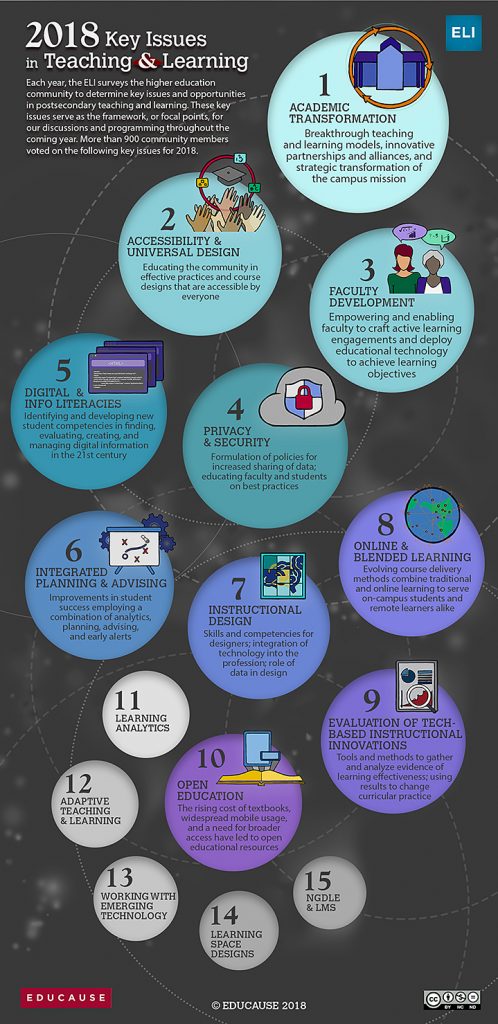
2018 Key Issues in Teaching and Learning — from educause.edu
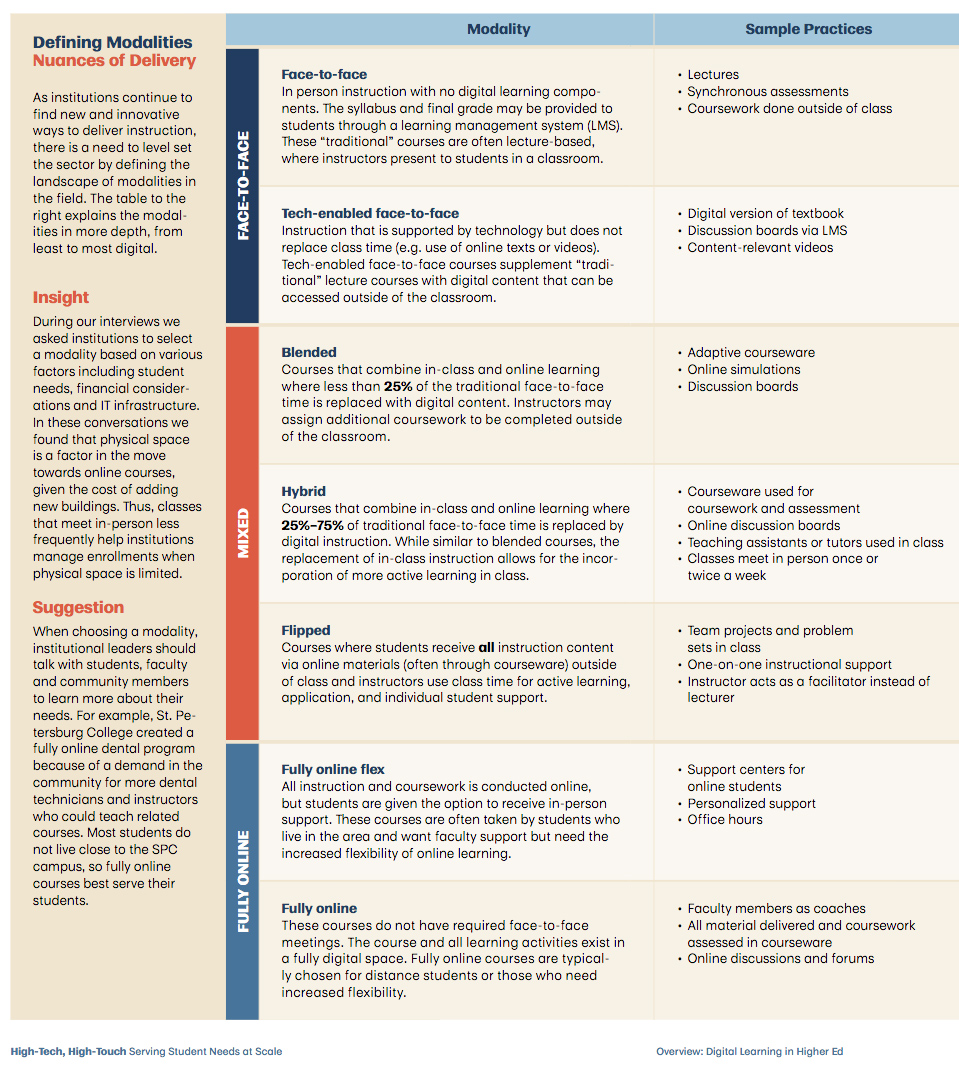
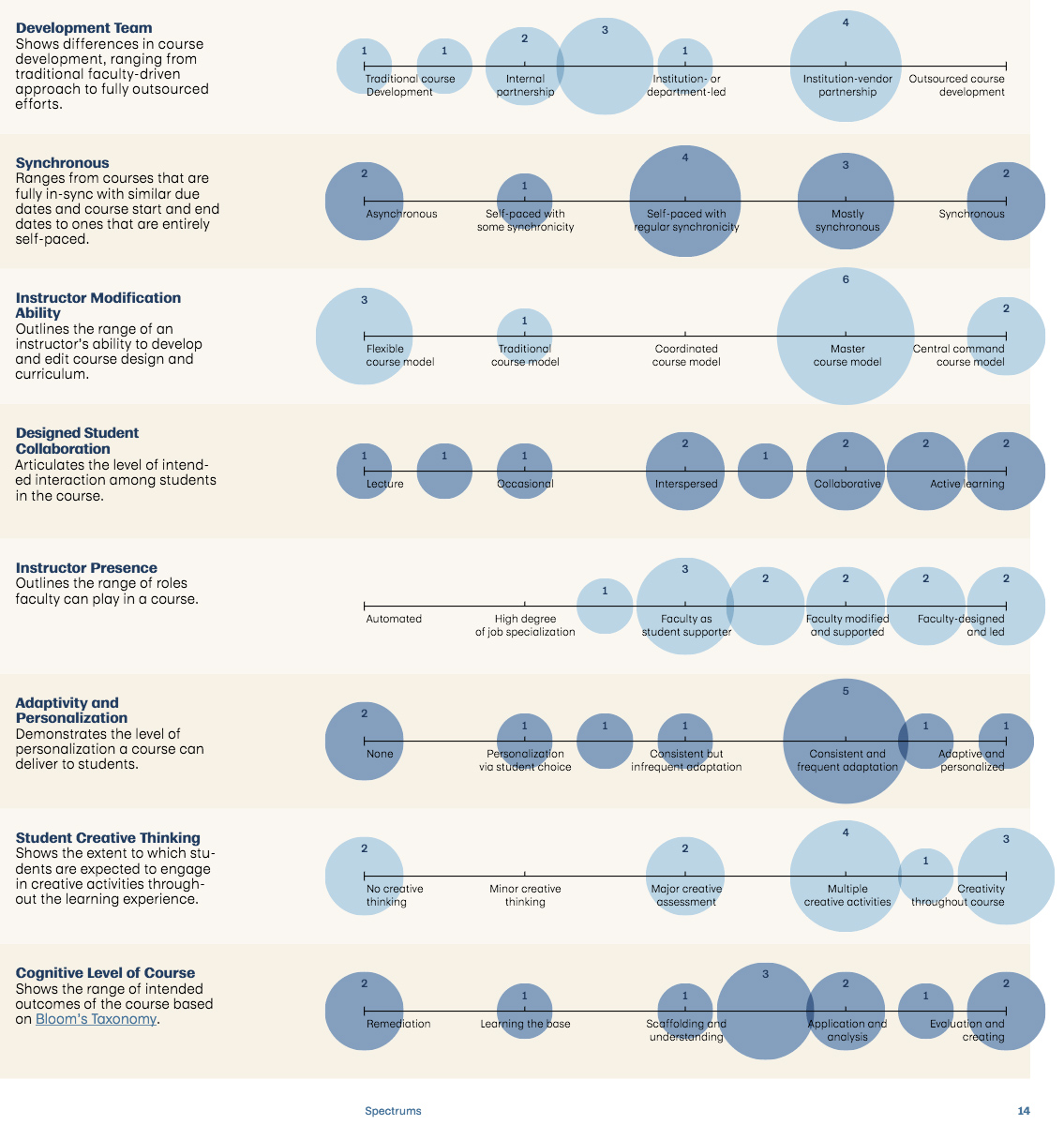
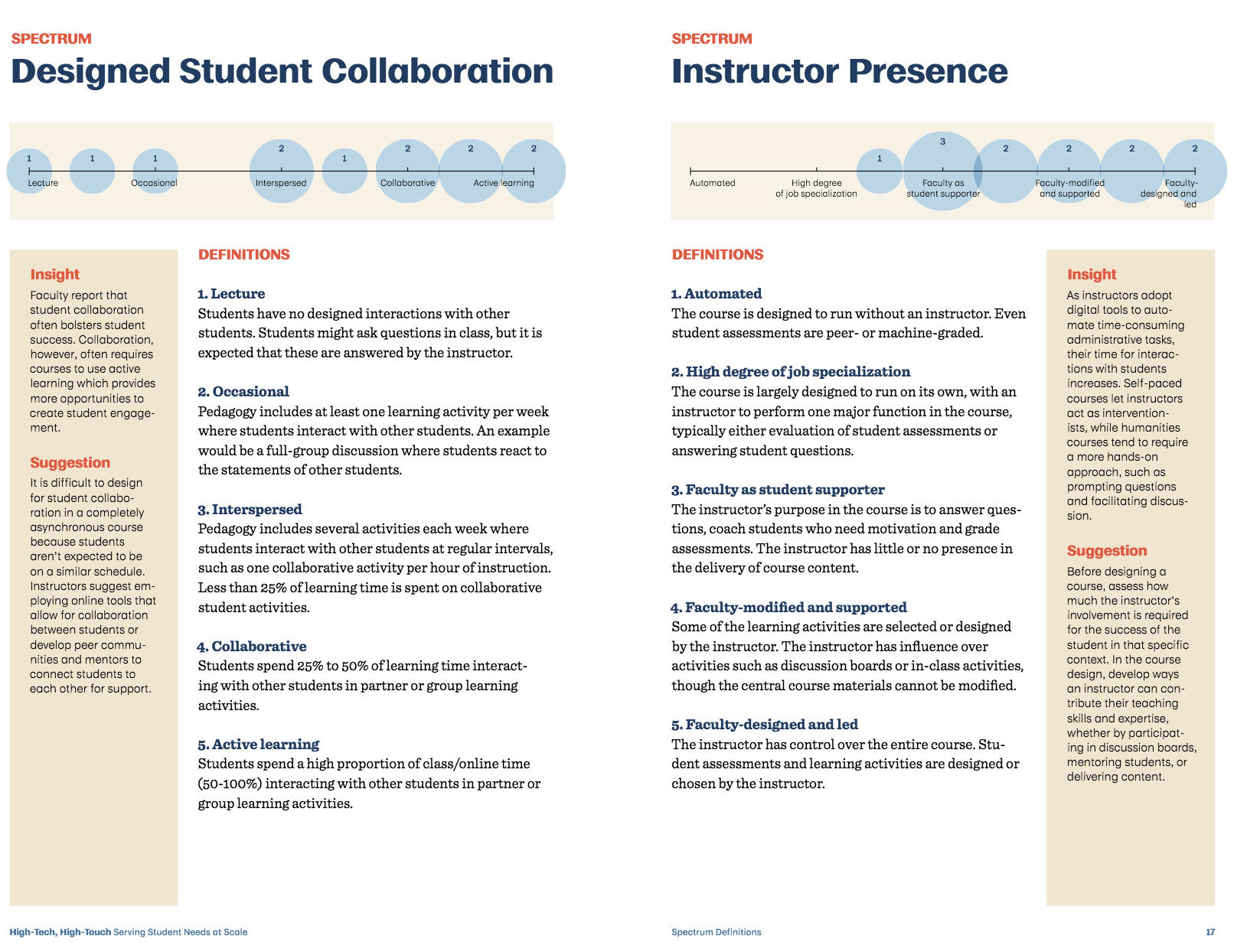
High-Tech, High Touch: Digital Learning Report and Workbook, 2017 Edition — from Intentional Futures, with thanks to Maria Andersen on Linkedin for her posting therein which was entitled, “Spectrums to Measure Digital Learning”
Excerpt (emphasis DSC):
Our work uncovered five high-tech strategies employed by institutions that have successfully implemented digital learning at scale across a range of modalities. The strategies that underscore the high-tech, high-touch connection are customizing through technology, leveraging adaptive courseware, adopting cost-efficient resources, centralizing course development and making data-driven decisions.
Although many of the institutions we studied are employing more than one of these strategies, in this report we have grouped the institutional use cases according to the strategy that has been most critical to achieving digital learning at scale. As institutional leaders make their way through this document, they should watch for strategies that target challenges similar to those they hope to solve. Reading the corresponding case studies will unpack how institutions employed these strategies effectively.
…
Digital learning in higher education is becoming more ubiquitous as institutions realize its ability to support student success and empower faculty. Growing diversity in student demographics has brought related changes in student needs, prompting institutions to look to technology to better serve their students. Digital courseware gives institutions the ability to build personalized, accessible and engaging content. It enables educators to provide relevant content and interventions for individual students, improve instructional techniques based on data and distribute knowledge to a wider audience (MIT Office of Digital Learning, 2017).
PARTICIPATION IN DIGITAL LEARNING IS GROWING
Nationally, the number of students engaged in digital learning is growing rapidly. One driver of this growth is rising demand for distance learning, which often relies on digital learning environments. Distance learning programs saw enrollment increases of approximately 4% between 2015 and 2016, with nearly 30% of higher education students taking at least one digital distance learning course (Allen, 2017). Much of this growth is occurring at the undergraduate level (Allen, 2017). The number of students who take distance learning courses exclusively is growing as well. Between 2012 and 2015, both public and private nonprofit institutions saw an increase in students taking only distance courses, although private, for-profit institutions have seen a decrease (Allen, 2017).
Online learning in Michigan, as delivered by Michigan Virtual and others, has exploded in recent years.
This strategic plan began with an extensive research and stakeholder outreach effort. This was designed to enhance our understanding of demographic and economic conditions, education policies and priorities, competitors and technology trends, stakeholder wants and needs, and views and perceptions of Michigan Virtual.
We interviewed or surveyed more than 425 individual stakeholders, including Michigan Virtual teachers, staff, students, and board members; the leadership and membership of leading educational organizations such as the Education Alliance of Michigan, the Virtual School Leadership Alliance, MASA, MAISA, MEMPSA, MASSP; and other leaders in education across Michigan. We also consulted research and data on technology trends, K-12 enrollment projections, state and national economic forecasts, education policies and priorities, and the competitive landscape.
KEY FINDINGS INCLUDE (emphasis DSC):
…
Today’s digital-learning landscape could not have been predicted when Michigan Virtual was founded in 1998, or even when our last strategic plan was developed in 2014. Some areas of digital learning have been frustratingly slow to advance, while others have perhaps grown too quickly at the expense of effectiveness and student outcomes.
This plan was intentionally designed with an unpredictable landscape in mind. The plan printed here is static, but the actions to implement the plan are dynamic. Tactics for each strategy and goal will be evaluated at least annually to stay aligned with ever-evolving challenges and opportunities. However, the goals, when taken together, provide a formula for success regardless of how the landscape evolves. We will provide an awesome experience for internal and external stakeholders alike, build partnerships to scale and grow our success, and operate efficiently and as good stewards of our resources to ensure our financial viability. Doing this, in alignment with our mission to advance K-12 digital learning and teaching through research, practice, and partnerships will bring us to a point where our vision (every person can use digital learning to reach his or her full potential) is a reality.
* In teaching, “You can’t do the Bloom stuff until you take care of the Maslow stuff.” [Beck]
Video on Its Way to Becoming Education Norm — from campustechnology.com by Dian Schaffhauser
Excerpt:
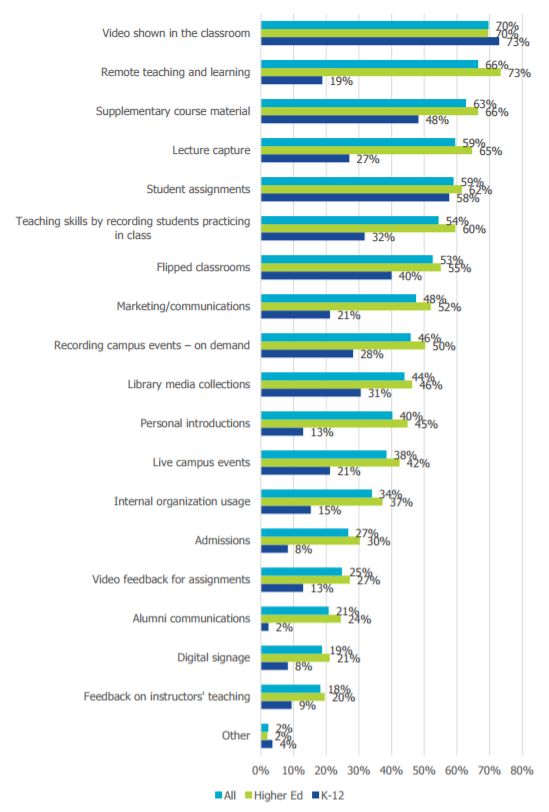
Video has become as ubiquitous in higher education classrooms as big screens in the fitness center and Hulu in residential halls. The use cases abound. The most popular use right now is to help with remote teaching and learning; 73 percent of institutions in a recent survey report the use of video for that purpose. That’s followed by the showing of video in classrooms (70 percent), as supplementary course material (66 percent) and for lecture capture (65 percent). But video is also gaining steam in student assignments, teaching skills and recording students as they practice them, recording campus events for on-demand viewing, as part of library media collections, to deliver personal introductions and to give feedback on student assignments and instructor teaching practices.
These examples aren’t the only ones cited in the latest results of Kaltura’s “The State of Video in Education.” The 2017 survey, done in May and June 2017, drew responses from more than a thousand people, 81 percent of whom work in higher ed (the rest from K–12 and other educational organizations). Most of the survey respondents hold one of four primary roles: instructional design, IT, faculty and media. Kaltura is a company that sells video products and services.
Also see:
Survey: Blended Learning on the Rise — from campustechnology.com by Rhea Kelly
Most faculty in our second annual Teaching with Technology Survey said they employ a mix of online and face-to-face instruction, and many are using the flipped model in their courses.
Excerpt:
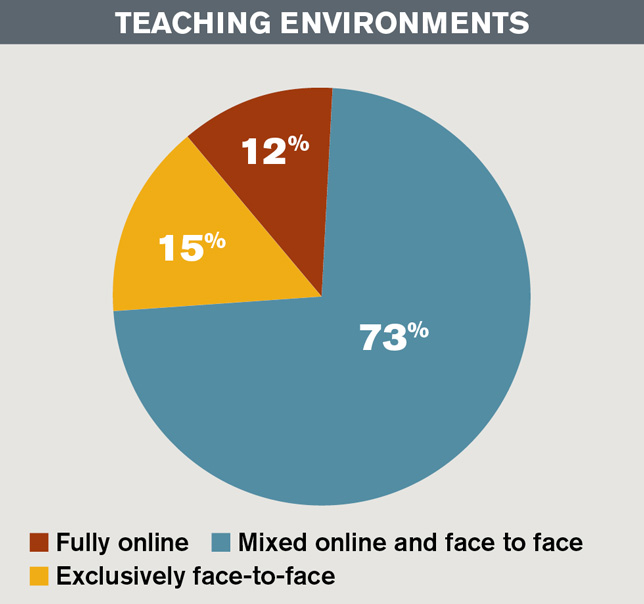
In a nationwide survey on the use of technology for teaching and learning, an increasing number of higher education faculty members said they employ a mix of online and face-to-face learning in their courses. A full 73 percent of respondents said they use the blended model — that’s up from 71 percent in 2016. And while 15 percent of faculty are still teaching exclusively face-to-face, 12 percent have gone fully online (an increase from 10 percent teaching online in 2016).
Those findings came out of Campus Technology‘s 2017 Teaching with Technology Survey, in which we asked faculty to dish on their approach to teaching, use of technology, views of the future and more.
A Starter Kit for Instructional Designers — from edsurge.com by Amy Ahearn
Excerpts:
A 2016 report funded by the Gates Foundation found that in the U.S. alone, there are 13,000 instructional designers. Yet, when I graduated from college in 2008, I didn’t know this field existed. Surely a lot has changed!
Instructional design is experiencing a renaissance. As online course platforms proliferate, institutions of all shapes and sizes realize that they’ll need to translate content into digital forms. Designing online learning experiences is essential to training employees, mobilizing customers, serving students, building marketing channels, and sustaining business models.
The field has deep roots in distance education, human computer interaction, and visual design. But I’ve come to believe that contemporary instructional design sits at the intersection of three core disciplines: learning science, human-centered design, and digital marketing. It requires a deep respect for the pedagogical practices that teachers have honed for decades, balanced with fluency in today’s digital tools.
…
Below are some of the lessons and resources that I wish I knew of when I first went on the job market—a combination of the academic texts you read in school along with practical tools that have been essential to practicing instructional design in the real world. This is not a complete or evergreen list, but hopefully it’s a helpful start.
So You Want to Be an Instructional Designer? — from edsurge.com by Marguerite McNeal
Excerpt:
Good listener. People person. Lifelong learner. Sound like you? No, we’re not trying to arrange a first date. These are some common traits of people with successful careers in a booming job market: instructional design.
Colleges, K-12 schools and companies increasingly turn to instructional designers to help them improve the quality of teaching in in-person, online or blended-learning environments.
The Higher Education Technology Paradox — from edtechmagazine.com by Hank Lucas
The academic rewards system will continue to stymie technology adoption unless higher ed administrators promote organizational change.
Excerpts:
The number one paradox in higher education is that technology is both transforming and disrupting universities around the world. Institutions that adapt to the technology and become content producers will survive and flourish; those confined to being content consumers will struggle to stay in business.
…
What does it take for a university to develop the kind of materials described above? Obviously, it requires money, but more than money it needs a motivated and committed faculty. The reward system in most institutions and the inherent conservatism of faculty members create a huge barrier to adopting new technologies for education. (Many faculty members are in denial that the technology can improve student learning and that it will be widely implemented.)
How does the reward system impact technology adoption?
From DSC:
This is one of the reasons why I believe that a new organization will arise in the future that uses a solid, team-based approach from day 1. They will have teams of experts from a variety of fields/disciplines — and they will have the types of incentive systems that one would expect to see in startup companies. They will value innovation and will see to it that ideas can be grown and supported.
Anybody come to mind? How about Amazon.com?
Also, faculty members — like all of us — have a limited amount of time and energy. The current workplace has loaded up faculty members’ job plates — they don’t have much time to experiment with new technologies. Also — again, like all of us — they have a variety of skills and interests. Many times, those skills and interest don’t involve working with technology.
Look for more team-based approaches to dominate the future of higher education.
From DSC:
In terms of learning, having to be in the same physical place as others continues to not be a requirement nearly as much as it used to be. But I’m not just talking about online learning here. I’m talking about a new type of learning environment that involves both hardware and software to facilitate collaboration (and it was designed that way from day 1). These new types of setups can provide us with new opportunities and affordances that we should begin experimenting with immediately.
Check out the following products — all of which allow a person to contribute to a discussion or conversation from anywhere they can get Internet access:
When you go to those sites, you will see words and phrase such as:
So using these types of software and hardware setups, I can contribute regardless of where I’m located. Remote learning — from anywhere in the world — being combined with our face-to-face based classrooms.
Also, the push for Active Learning Classrooms (ALCs) continues across higher education. Such hands-on, project-learning based, student-centered approaches fit extremely well with the collaboration setups mentioned above.
Then, there’s the insight from Simon Dudley in this article:
“…video conferencing is increasingly an application within in a larger workflow…”
Lastly, if colleges and universities don’t have the funds to maintain their physical plants, look for higher education to move increasingly online — and these types of solutions could play a significant role in that environment. Plus, for working adults who need to reinvent themselves, this is an extremely efficient means of picking up some new skills and competencies.
So the growth of these types of setups — where the software and hardware work together to support worldwide collaboration — will likely create a powerful, new, emerging piece of our learning ecosystems.
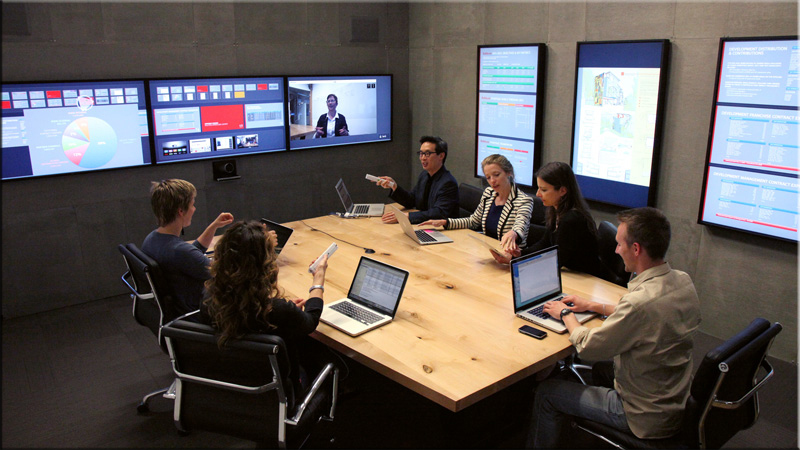


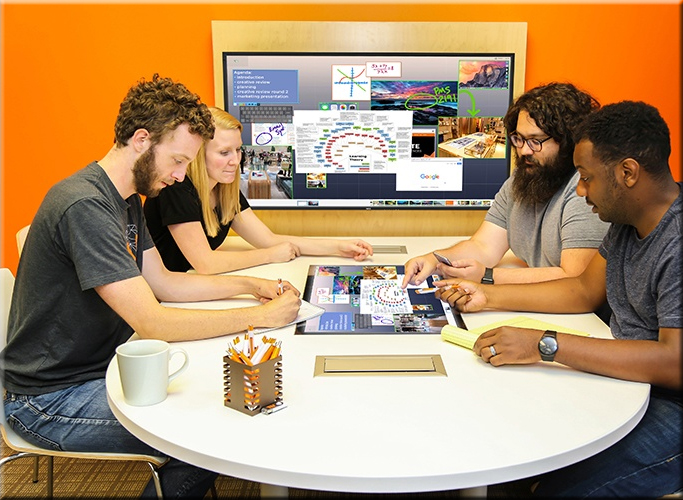


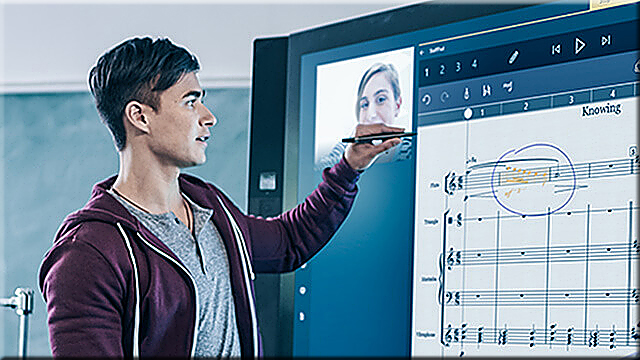


Remote learning — from anywhere in the world — being combined with our face-to-face based classrooms.
The disruption of digital learning: Ten things we have learned — from joshbersin.com
Excerpt:
Over the last few months I’ve had a series of meetings with Chief Learning Officers, talent management leaders, and vendors of next generation learning tools. My goal has been simple: try to make sense of the new corporate learning landscape, which for want of a better word, we can now call “Digital Learning.” In this article I’d like to share ten things to think about, with the goal of helping L&D professionals, HR leaders, and business leaders understand how the world of corporate learning has changed.
Digital Learning does not mean learning on your phone, it means “bringing learning to where employees are.”
It is a “way of learning” not a “type of learning.”
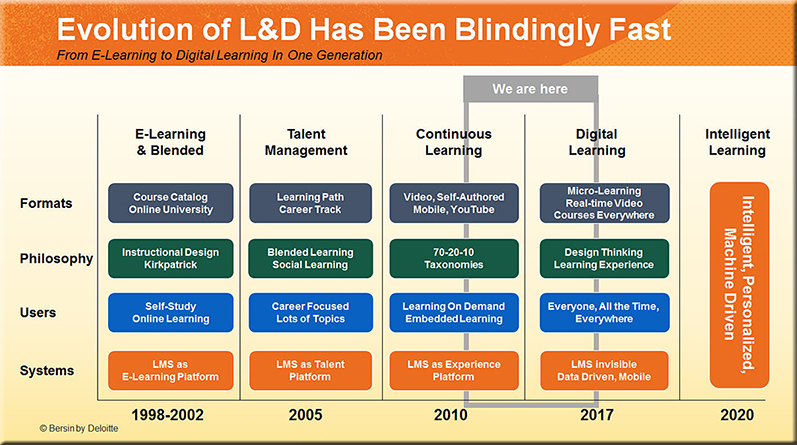
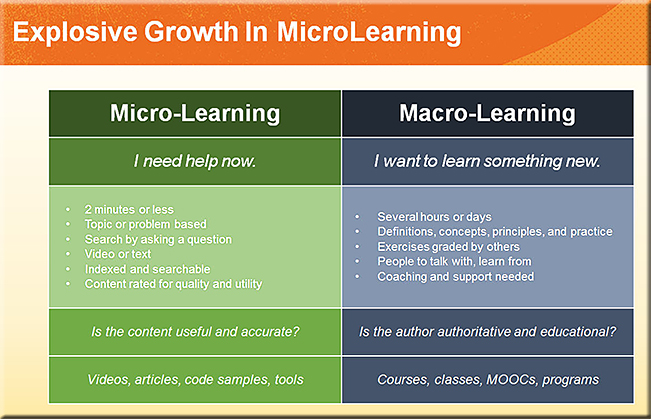
The traditional LMS is no longer the center of corporate learning, and it’s starting to go away.
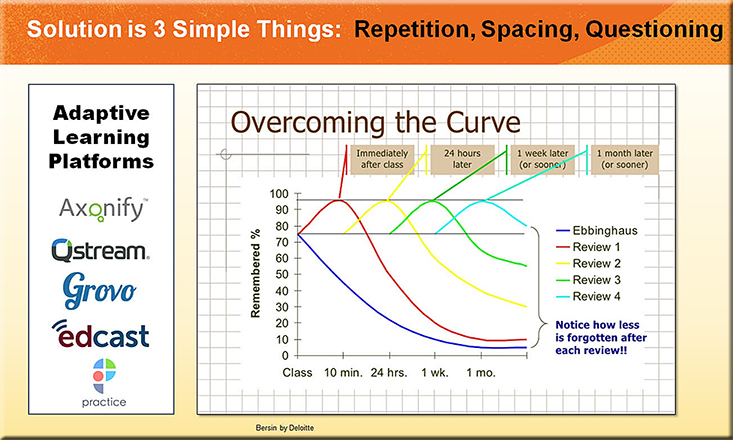
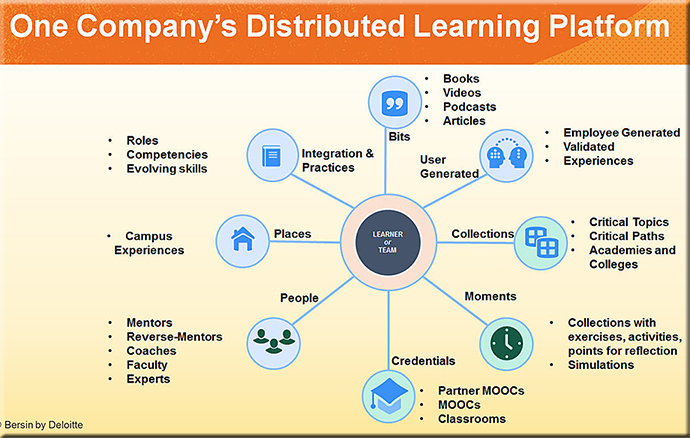
What Josh calls a Distributed Learning Platform, I call a Learning Ecosystem:
Also see:
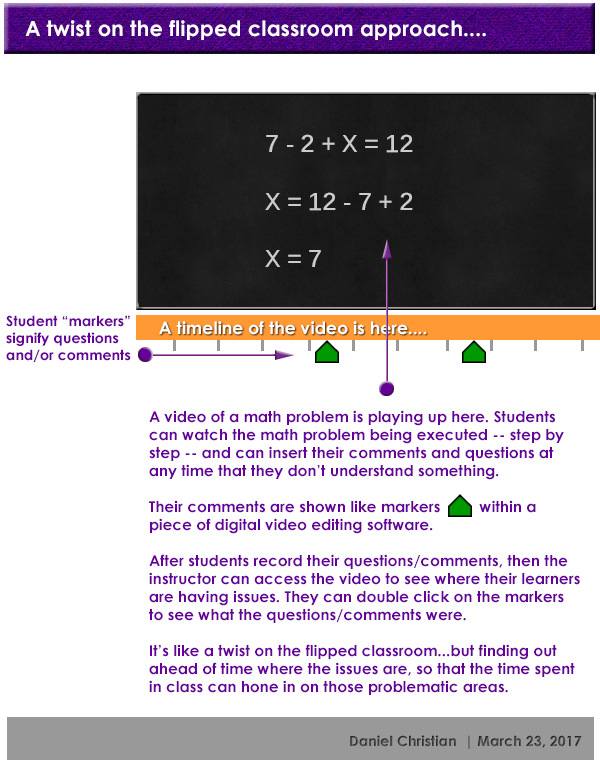
From DSC:
For you ed tech vendors, programmers, and/or entrepreneurs out there, would you please create the software to do this? By the way, for purposes of equal access, this could be done in class — it doesn’t have to be done outside of normal school hours.