The Role of Faculty in the University of the Future — from er.educause.edu by Tanya Gamby, David Kil, Rachel Koblic, Paul LeBlanc, Mihnea Moldoveanu, and George Siemens
In the age of AI, the true future of higher education lies not in replacing faculty but in freeing them to do what only humans can—build meaningful relationships, cultivate wisdom, and guide students through the ethical and intellectual challenges machines cannot navigate.

Today, the work of knowledge transfer is often done better, faster, with more precision, and more patiently by AI. These systems can provide nonjudgmental, individualized learning opportunities twenty-four hours a day, seven days a week. Think of AI as a “genius teaching assistant” who assumes much of the work of basic knowledge transfer, unlocking learning when students get stuck and providing real-time assessment. Such a genius TA would offer faculty dashboards that update student progress, flag those who are struggling, and recommend targeted interventions. These tasks free faculty to focus on building genuine relationships with students, using the classroom to foster human skills, and curating community. This may be the great gift of AI to education. But it requires a profound reimagining of faculty roles—perhaps the single biggest hurdle to reimagining higher education, and equally its greatest opportunity.

A concerned faculty member might hear all this and conclude they are becoming obsolete. The opposite is true. The evolution of faculty roles demands more—not less—of what makes a great teacher.

This means intervening in high-impact moments when the genius TA has not unlocked learning; curating class time to lift students from knowing material to applying it in contexts that require critical thinking, judgment, and discernment; and cultivating the human skills that will be most prized in the age of AI: effective communication, constructive dialogue, empathy, creativity, and professional disposition. Most importantly, it means building genuine relationships with students—that make them feel like they matter—the kind that fuels transformation.


From DSC:
A quick comment on one of the sentences in the article, which asserts:

Centers for teaching and learning, which have long supported faculty development at many institutions, will be among the busiest places on campus in the years ahead.

I would change the word will be to should:

Centers for teaching and learning, which have long supported faculty development at many institutions, should be among the busiest places on campus in the years ahead.

For that statement to be true, centers for teaching and learning need to be well-versed in the tools and pedagogies involved, plus in learning science. Those centers need to have credibility for faculty members to value their services. And that’s just it, isn’t it? The faculty members need to see those centers for teaching and learning as having something that they lack…that they need assistance with. Otherwise, if such centers are just viewed as superfluous, nothing much will change.

Also, my experience has been that if those centers for teaching and learning are in an IT group/department, they should be moved to the academic side of the house instead. Many faculty members don’t value people from IT enough to make changes in how they teach — no matter how qualified those people are. They view those people as “IT” only.


You might also be interested in the other articles in that series:


AI for Your Next Career Move — from wondertools.substack.com by Jeremy Caplan
Free tools to explore, research, and interview better

AI tools can serve as patient assistants when you’re looking for a job. Use them to organize your search. Or to challenge your assumptions about potential jobs. They can also help you present your strengths more persuasively. When you’re changing fields, or trying to move up, AI can help you stand out.

1. Visualize Your Career Options
Try: Google’s
Career Dreamer

What it is: A free tool for exploring jobs adjacent to yours. See a map of professional fields related to your interests.

How to use it: Start by typing in a current or previous role. Or name a job that interests you. Use up to five words. You can also name a specific organization or industry, if you have one in mind.

Career Dreamer asks what work activities interest you, then maps related career paths. Pick one at a time to explore.

You can then browse actual job openings. Refine the search based on location, company size, or other factors you care about.


The “Cognitive Offloading” Paradox — from drphilippahardman.substack.com by Dr. Philippa Hardman
New research shows that offloading learning tasks to AI can improve – rather than erode – human thinking and learning

The Rise of the “Offloading Paradox”
In March 2026, the International Journal of Educational Technology in Higher Education published a study that went beyond the question “does offloading hurt?” and asked a harder one: when students form genuine partnerships with AI — treating it as an intellectual collaborator rather than a passive tool — what actually happens to the way they think and learn? Specifically, do two cognitive responses — critical evaluation of AI outputs (what the researchers call cognitive vigilance) and strategic delegation to AI (cognitive offloading) — compete with each other, or can they coexist?

Based on previous research, Wang and Zhang hypothesised that cognitive offloading would hurt transformative learning. They expected the familiar story: delegation reduces cognitive struggle, struggle is where learning happens, therefore delegation undermines learning.

The study — 912 students across China, Europe, and the United States, using a three-wave time-lagged survey design that measured partnership orientation first, cognitive strategies two weeks later, and learning outcomes two weeks after that — found something more interesting than a simple reversal.


Which Jobs Are Most at Risk From AI? New Anthropic Data Offers Clues. — from builtin.com by Matthew Urwin
Anthropic set out in its latest study to predict how artificial intelligence could impact the labor market. Instead, its findings raise more questions than answers for tech workers as the U.S. government refuses to regulate the AI industry.

Summary:
In its latest labor market study, Anthropic found that artificial intelligence poses the greatest threat to software jobs, women and younger professionals. As the Trump administration takes a hands-off approach to AI, tech workers may be left to grapple with these findings on their own.


Matthew links to:

Labor market impacts of AI: A new measure and early evidence — from anthropic.com

Key findings

  • We introduce a new measure of AI displacement risk, observed exposure, that combines theoretical LLM capability and real-world usage data, weighting automated (rather than augmentative) and work-related uses more heavily
  • AI is far from reaching its theoretical capability: actual coverage remains a fraction of what’s feasible
  • Occupations with higher observed exposure are projected by the BLS to grow less through 2034
  • Workers in the most exposed professions are more likely to be older, female, more educated, and higher-paid
  • We find no systematic increase in unemployment for highly exposed workers since late 2022, though we find suggestive evidence that hiring of younger workers has slowed in exposed occupations


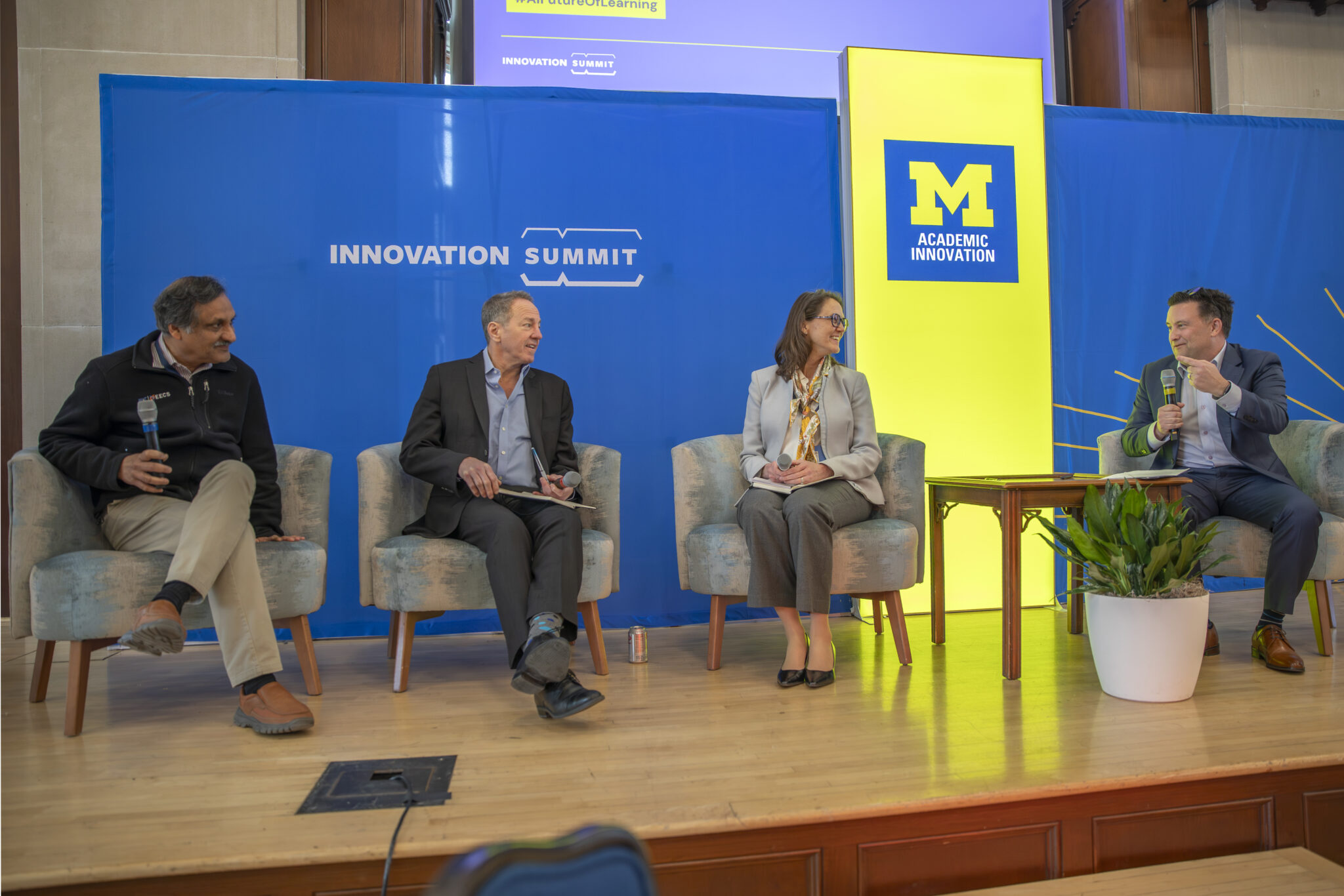
What the Future of Learning Looks Like in the Era of AI — from the Center for Academic Innovation at the University of Michigan, by Sean Corp

AI & the Future of Learning Summit brings industry, education leaders together to discuss higher education’s opportunity to lead, what students need, and what partnerships are possible

As artificial intelligence rapidly reshapes the nature of work and learning, speakers at the University of Michigan’s AI & the Future of Learning Summit delivered a clear message: higher education must take a leading role in defining what comes next.

One CEO of a leading educational technology company put it like this: “The only bad thing would be universities standing still.”

Universities must embrace their roles as providers of continuous, lifelong learning that evolves alongside technological change. 


This shift is already affecting early-career pathways. Employers are placing greater emphasis on experience, while traditional entry-level roles are becoming less accessible. There is often a gap between what a credential represents and the expectations of employers.

That gap is particularly evident in access to internships. Chris Parrish, co-founder and president of Podium, noted that millions of students compete for a limited number of internships each year, making it increasingly difficult to gain the experience employers demand.

“If you miss out on an internship, you’re twice as likely to be unemployed,” Parrish said. 


You Can’t Future-Proof Your Career From AI, But You Can Do This — from builtin.com by Liz Tran
Agility has become the most important skill to cultivate in today’s job market. Here’s how to get started.

Summary: Job seekers facing future panic should prioritize agility over information consumption. Build it by focusing on 30-day action experiments, reframing resumes around durable skills like problem-solving and embracing uncertainty through stretch applications and real-world feedback.

The antidote is what I call AQ — the agility quotient — which is your capacity to face change, disappointment and uncertainty without losing your footing. Unlike IQ, which measures what you know, AQ measures how fast you adapt when the rules change. Right now, it’s the most important career asset you have. Here’s how to build it.

What Is Agility Quotient (AQ)?
AQ is a measure of an individual’s capacity to adapt quickly when rules, industries or circumstances change. Unlike IQ, which focuses on existing knowledge, AQ emphasizes the ability to face uncertainty and disappointment without losing one’s footing, prioritizing action and iteration over exhaustive planning.


Summary: Accessible AI has killed traditional signals of legitimacy.

Experiments show $20 consumer tools can easily bypass verification. The solution is shifting toward contextual proof that verifies human uniqueness without exposing identity.


After Hours 1: The legal profession’s new value proposition — from jordanfurlong.substack.com by Jordan Furlong
The days of selling legal tasks by the hour are ending. Lawyers’ future value lies in safeguarding clients’ legal journeys by overcoming the most challenging obstacles on the way. Part 1 of 2.

As a result, legal work is dividing into two spheres, the first larger than the second: what Gen AI can satisfactorily address, and what it can’t.

  • Sphere 1: Legal Production. This is all the specialized intellectual work involved in generating legal solutions: researching, issue-spotting, summarizing, synthesizing, drafting, revising, reasoning, and analyzing. This is the bulk of lawyers’ traditional activity and billed hours. In future, it will be done faster, cheaper, and increasingly better with machines — either by clients themselves, or embedded in systems and platforms that reduce the need for lawyer involvement.
  • Sphere 2: Legal Judgment. This is higher-value work defined by the unpredictability, complexity, and impact of its challenges. In this sphere, you’ll find hard-decision advice, guidance under uncertainty, systematic dispute avoidance, strategic counsel, critical advocacy, risk prioritization, and high-stakes accountability. It’s likely (but far from certain) that this work will remain outside the reach of Gen AI. This is the sphere that holds the potential to support a future legal profession.

But not every legal journey is so simple or safe that the client can go it alone. Many times, Point B is more like Point F or Point R: a long and tortuous distance away. Many AI-generated maps will suggest a clear and direct route that bears little resemblance to the messy tangles of reality. On even moderately complex legal journeys, the unwelcome and the unexpected are always lurking. Something arises that was nowhere on the map, and until it gets resolved, the client can’t move any further towards their destination.


Below are some items from Jordan’s article — or by following a rabbit trail from his posting:


AI-Native Firms, Built by Private Equity, Will Strain Legacy Model — from news.bloomberglaw.com by Eric Dodson Greenberg

The emergence of AI-native law firms reveals the limits of a fixed binary that has characterized the legal market over the last year.

The straightest path to AI law firms isn’t innovation within the legacy model, or capital investing around it, but external capital being deployed to build competitors to legacy firms. These firms use AI and narrow regulatory openings to create from scratch tech-enabled law firms.

Not acquire them. Not invest around them.

Build them.

This third path is no longer theoretical.

The $3,500 Hour vs. The $500 Contract — from legaltechnologyhub.com by Brandi Pack

While rates at the top continue climbing, the operational foundation of legal work is being rebuilt.

Its pricing reflects that structure. Contract review between three and 50 pages costs $500. Short agreements are $250. Longer contracts are billed per page. Drafting from scratch is offered at a fixed fee. 

There is no running clock.

The premise is straightforward. If generative AI materially reduces the time required for standardized work, the cost base changes. And when the cost base changes, pricing models eventually follow.

.


From DSC:
This next item is not from Jordan, but may also be useful to some of you out there:

Want to Work at Legora, Harvey or Another Legal AI Startup? — from legallydisrupted.com by Zach Abramowitz
Podcast with a Biglaw Partner Who Now Occupies a Senior Role at Legora

In Episode 45 of Zach Abramowitz is Legally Disrupted, Kyle and dive into why building tech workflows and writing AI prompts should absolutely be considered billable work. We also explore why AI commoditizing the legal “grinders” and “minders” means old-school social skills are about to become your single biggest competitive advantage. Finally, Kyle goes into great detail about how exactly how he landed a top role at Legora and how others can do the same (hint: merely dropping your resume into a web portal is not enough).


The quest to build a better AI tutor — from hechingerreport.org by Jill Barshay
Researchers make progress with an older ed tech idea: personalized practice

One promising idea has less to do with how an AI tutor explains concepts and more with what it asks students to practice next.

A team at the University of Pennsylvania, which included some AI skeptics, recently tested this approach in a study of close to 800 Taiwanese high school students learning Python programming. All the students used the same AI tutor, which was designed not to give away answers.

But there was one key difference. Half the students were randomly assigned to a fixed sequence of practice problems, progressing from easy to hard. The other half received a personalized sequence with the AI tutor continuously adjusting the difficulty of each problem based on how the student was performing and interacting with the chatbot.

The idea is based on what educators call the “zone of proximal development.” When problems are too easy, students get bored. When they’re too hard, students get frustrated. The goal is to keep students in a sweet spot: challenged, but not overwhelmed.

The researchers found that students in the personalized group did better on a final exam than students in the fixed problem group. The difference was characterized as the equivalent of 6 to 9 months of additional schooling, an eye-catching claim for an after-school online course that lasted only five months.

To address this, Chung’s team combined a large language model with a separate machine-learning algorithm that analyzes how students interact with the online course platform — how they answer the practice questions, how many times they revise or edit their coding, and the quality of their conversations with the chatbot — and uses that information to decide which problem to serve up next.


Why Educators Must Become AI Literate, And How to Start  — from edmentum.com by Priten Soundar-Shah

Much of our focus these few years has been spent helping students learn how to use AI responsibly, especially to combat cheating and plagiarism, and also with consideration given to productive learning, critical thinking, and online safety. But we are still behind on building fundamental literacy for teachers. Recent data supports this literacy gap. For example, Microsoft Education found that 80% of teachers say they are using AI, but 60% have received no or little training. We cannot continue to expect teachers to build student AI literacy without defining what success looks like for educator literacy, and there we’re falling short.

In some instances, AI literacy in the classroom is being defined as the ability to use chat tools to produce some sort of outcome. By that standard, we’re doing much better than we were three years ago. Students and teachers are increasingly turning to AI tools to produce study aids, outlines, drafts, and other content. And, some schools do provide training that is often concentrated on a particular vendor’s tool and how to use it effectively in the classroom.

However, we are leaving out the training that is necessary to help educators learn how to decide when to use or not use the technology and what the implications of that are. For example, I’ve spoken to teachers who have access to a variety of AI tools, have received training on how to use them, but still don’t incorporate them into their workflow, because they don’t know if it’s “right.”


AI and the Law: What Educators Need to Know About Responsible Use in a Rapidly Changing Landscape — from rdene915.com by Dr. Rachelle Dené Poth, JD

As both an attorney and educator who has spent more than eight years researching, teaching, presenting, and writing about AI, I have worked with schools across K–12 and higher education that are navigating these exact questions. The legal implications of AI are not barriers to innovation, but I consider them to serve as guardrails that assist schools with adopting technology responsibly. The key is protecting students, educators, and institutions and staying informed. Understanding the legal landscape and any potential legal implications as a result of the use of AI in classrooms helps schools move forward with confidence rather than hesitation.

Sections of Rachelle’s posting include:

  • Why AI and the Law Matter in Education
  • Key Laws That Shape AI Use in Schools
  • Data Privacy and Vendor Responsibility
  • Transparency Builds Trust With Students and Families
  • Accessibility, Equity, and Emerging Legal Considerations
  • Teaching Digital Citizenship With AI Literacy
  • Supporting Schools and Organizations Through AI and Legal Guidance
  • Moving Forward With Confidence
 

Google expands Search Live globally with voice and camera AI — from digitaltrends.com by Varun Mirchandani
The feature is now available in 200+ countries with multilingual support

Think of it as Google Search… but you talk to it. Search Live lets users ask questions using voice or even their phone’s camera, both on Android and iOS, via the Google App, and get spoken responses along with relevant web links.

This is a pretty big shift. Google isn’t just improving search, but it’s also slowly replacing the whole “type and scroll” experience. With Search Live, users can talk, ask follow-ups, and interact naturally, making it feel more like a conversation than a query. It’s basically ChatGPT-style interaction, but baked right into Google Search.

.


Legal AI Access at 83%, But Trust Issues Remain — from artificiallawyer.com

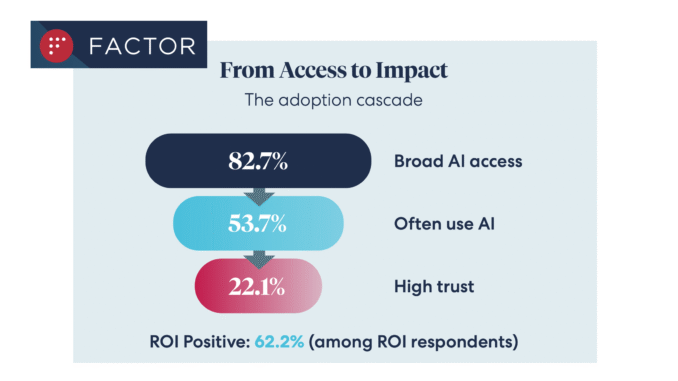
A new survey of over 200 inhouse and law firm leaders provides solid evidence that while AI tools are now ‘standard’ across our sector, that trust in AI outputs fundamentally drives usage, along with ROI – and vice versa.

The data, from ALSP Factor, shows that 83% had ‘broad AI access’, which is up from 61% in 2025, and in itself is a very positive development that tells us legal AI is now becoming ubiquitous for commercial lawyers, with around 54% using such tools ‘often’.


From DSC:
I have been proposing that the AI-based learning platform of the future will be constantly doing this — every single day. It will know what the in-demand skills are — at any given moment in time. It will then be able to direct you to resources that will help you gain those skills. Though in my vision, the system is querying actual/open job descriptions, not analyzing learning data from enterprise learners. Perhaps I should add that to the vision.


Coursera’s Job Skills Report 2026: Top skills for your students — from coursera.org

The Job Skills Report 2026 analyzes learning data from more than 6 million enterprise learners to identify the future job skills organizations need most. It’s designed for HR and L&D leaders; data, IT, and software & product development leaders; higher education administrators; and government agencies seeking actionable insights on workforce skills trends and AI-driven transformation.

Drawing on data from 6 million enterprise learners across nearly 7,000 organizations, the Job Skills Report 2026 guides you through the skills reshaping the global economy. This year’s analysis spans Data, IT, and Software & Product Development—and the Generative AI skills becoming essential for every role.


© 2025 | Daniel Christian