Creative Exercises for Artists and Art Students — from free technology for teachers

“I recently learned about a blog for artists called My French Easel. The author of My French Easel, Benoit Philippe, recently published an ebook (available in SlideShare format) titled Creative Exercises for Artists and Everyone Else. Creative Exercises for Artists and Everyone Else contains seventeen specific exercises for artists and aspiring artists. The exercises cover a range of drawing and painting techniques that almost anyone can do regardless of your current skill level. Included with the publication are templates on which you can try the exercises. Philippe also included some background information on the history and development of some the techniques and exercises. Check out Creative Exercises for Artists and Everyone Else in the SlideShare below.”
Tagged with: •  
Student-provided sites from The Teaching & Learning Digital Studio at Calvin College

Student-provided sites from The Teaching & Learning Digital Studio at Calvin College

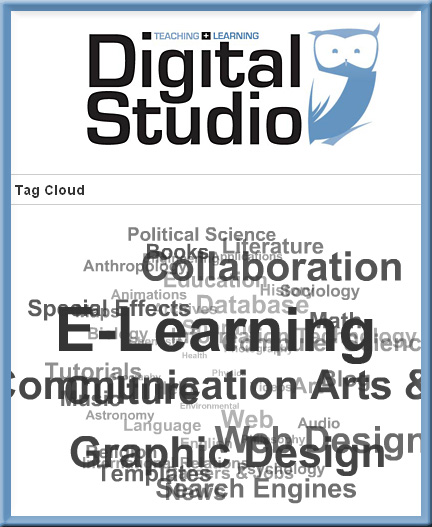
Digital Studio Sites is a blog with a large collection links from the Teaching & Learning Digital Studio Staff at Calvin College (Grand Rapids, MI) that covers a wide range of academic topics and more. The staff scours the Web for the best, most interesting, and useful Web sites for the classroom (and maybe beyond) on the Internet and continually updates the list of links. Professors can quickly find sites related to their field of study by keyword, search, or by subscribing via RSS feed.

Tagged with: • •  

Art Through Time: A Global View — from Annenberg Media

“Annenberg Media’s newest course resource Art Through Time: A Global View has premiered on Learner.org at www.learner.org/courses/globalart/ . The course materials cover art history throughout time and in many cultures across the globe by examining hundreds of paintings, drawings, sculptures, photos, and objects used for domestic or ceremonial purposes. The 13 video programs with accompanying online text units take a thematic approach by considering how, for example, portraits were created to convey political power, wealth or to call attention to the hierarchy of the social order. More than 125 scholars, art curators, and artists comment on the works and the themes and more than 250 can be viewed and sorted on the course web site. ”

Art through time

Tagged with: •  
© 2025 | Daniel Christian