


Bartlett School of Architecture spotlights 10 standout student projects — from dezeen.com by Lizzie Crook
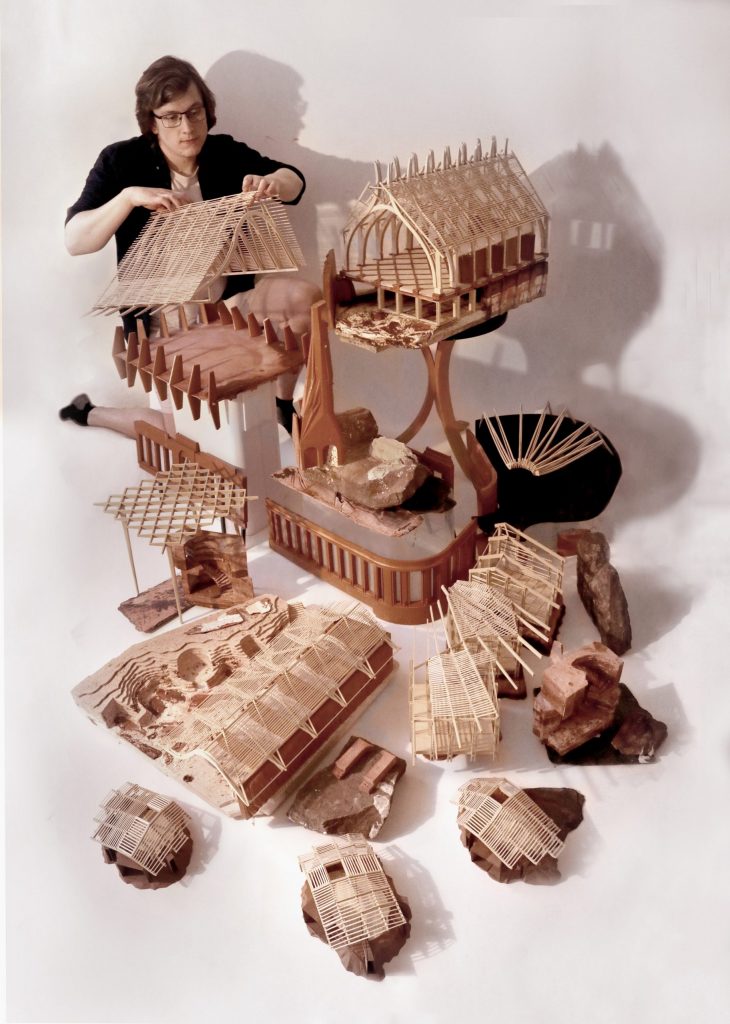
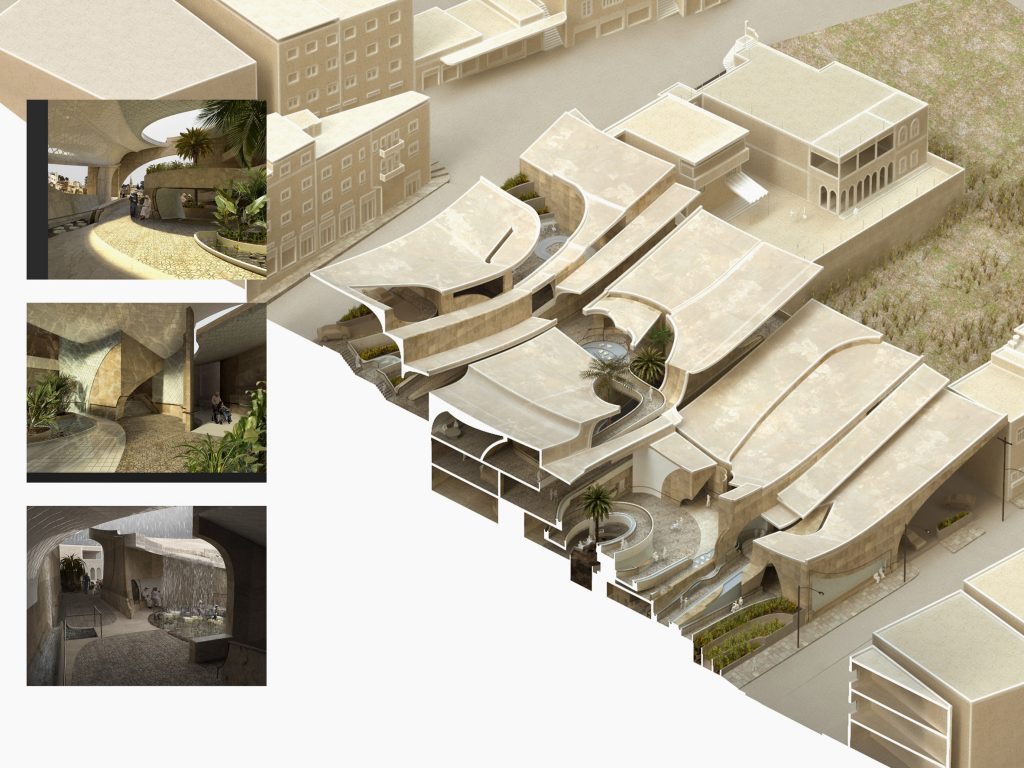
Bartlett School of Architecture spotlights 10 standout student projects — from dezeen.com by Lizzie Crook
Eight ways Virtual Design Festival has set the agenda for architecture and design — from dezeen.com
Excerpt:
After three months, two million video plays, over 600 posts and more than 50 live interviews, Virtual Design Festival [ended on 7/10/20]. From defining a new design movement to imagining new planets and urban wildernesses, here are a few of the agenda-setting ideas it raised.

Atelier Oslo and Lundhagem unveil Oslo’s “huge but intimate” central library — from dezeen.com by Tom Ravenscroft
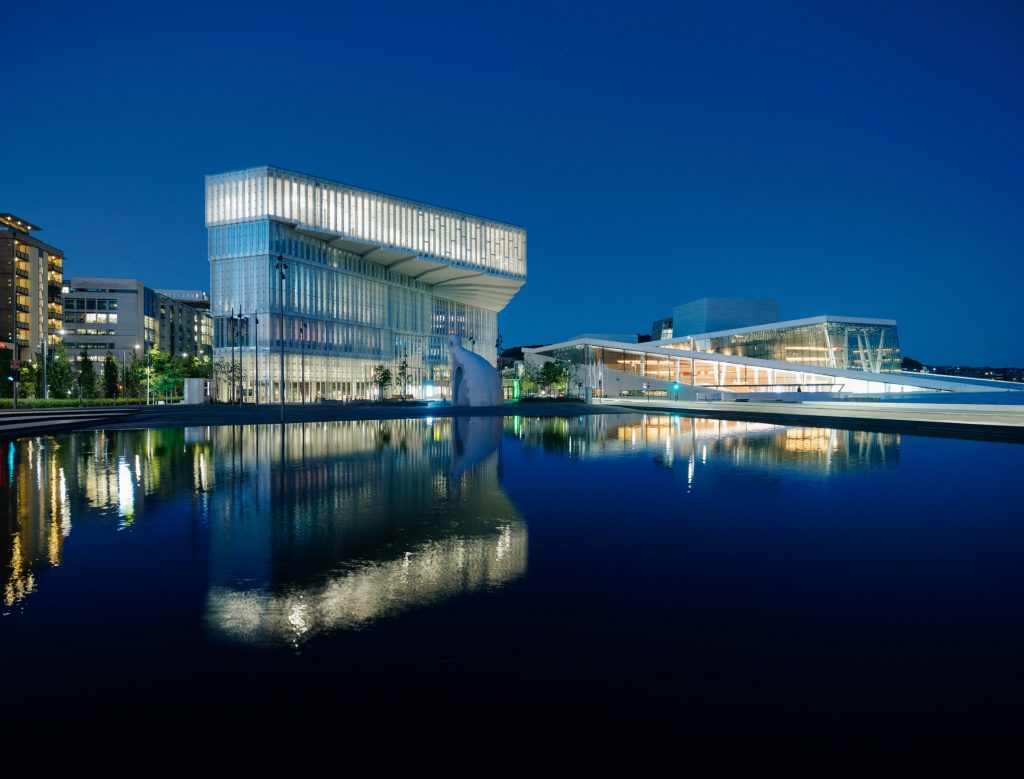
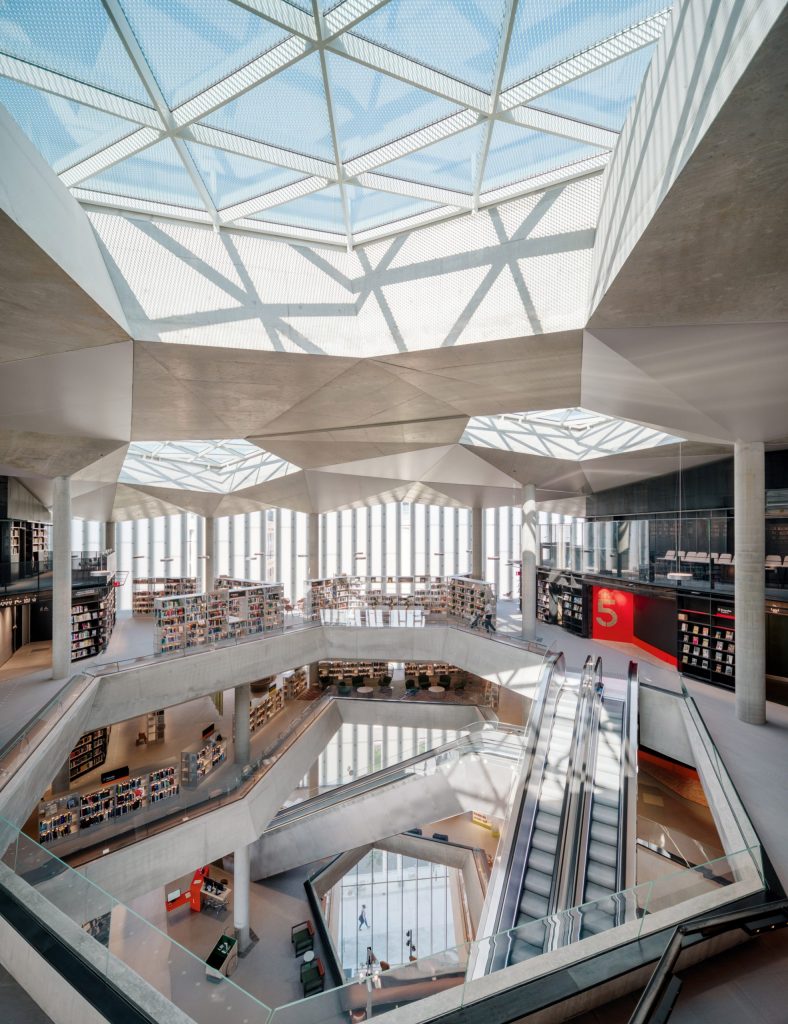
Amazing Architectural Photography by Anna Devís and Daniel Rueda – Fubiz Media https://t.co/sM4IQ8iLhK
— Daniel Christian (@dchristian5) May 31, 2020

From DSC:
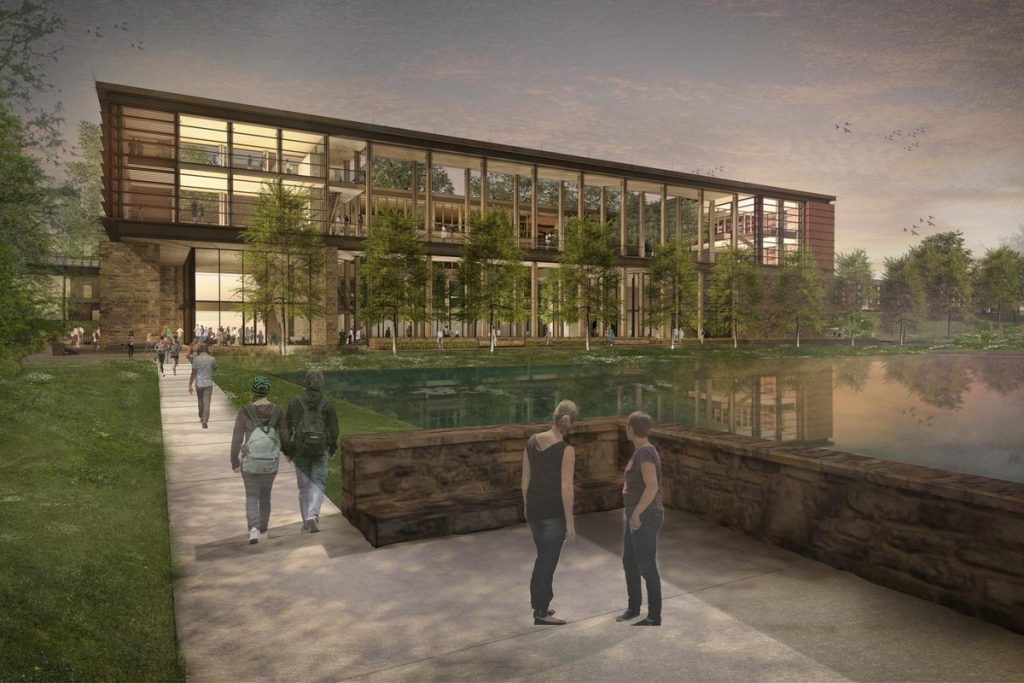
Very nice! “The Contemplative Commons at the University of Virginia” — from csc.virginia.edu
The Contemplative Commons embodies a new model of higher education at the University of Virginia that is based upon immersive, experiential, and participatory modes of deep learning that facilitate student flourishing.
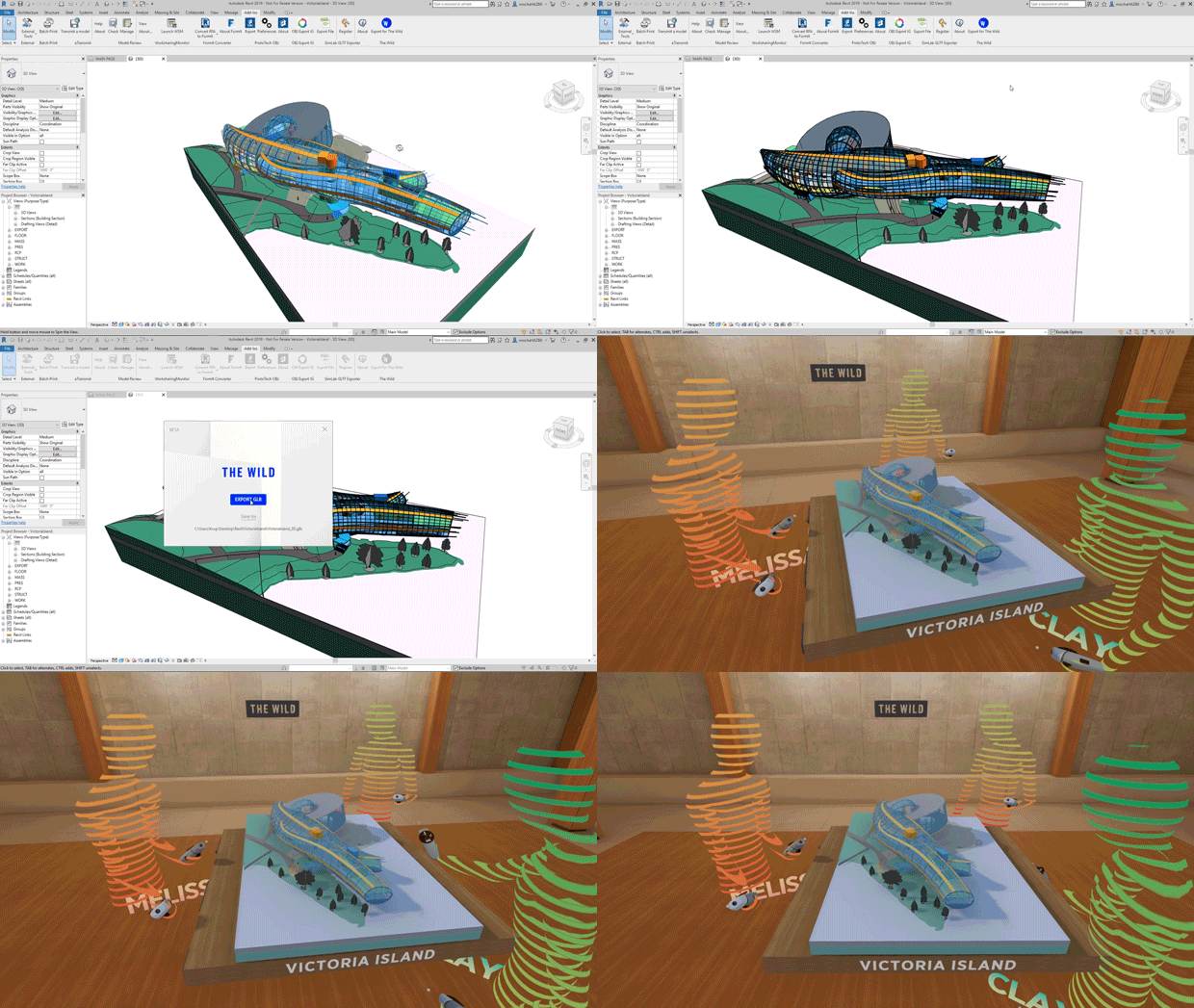
Explore Revit models in VR with Unity Reflect — from by Nick Davis
Unity Reflect makes it easy to bring Building Information Modeling (BIM) data into virtual reality (VR). Learn how you can use the Unity Reflect VR Viewer to conduct immersive design reviews with Autodesk Revit models.
Excerpt (emphasis DSC):
The value of VR in the architecture, engineering, and construction (AEC) industry is well documented. It provides an unrivaled medium for gathering rich feedback, catching design flaws, and reducing the need for physical mockups. Studies have shown construction professionals are twice as likely to spot design errors when reviewing designs in VR versus PCs.
Today, 60% of AR and VR content is powered by Unity. Unity’s AEC customers use VR for a wide range of use cases, from conducting immersive walkthroughs that help their clients catch errors pre-construction and save hundreds of thousands of dollars on individual projects, to creating immersive training programs that lead to safer job sites.
Are smart cities the pathway to blockchain and cryptocurrency adoption? — from forbes.com by Chrissa McFarlane

Excerpts:
At the recent Blockchain LIVE 2019 hosted annually in London, I had the pleasure of giving a talk on Next Generation Infrastructure: Building a Future for Smart Cities. What exactly is a “smart city?” The term refers to an overall blueprint for city designs of the future. Already half the world’s population lives in a city, which is expected to grow to sixty-five percent in the next five years. Tackling that growth takes more than just simple urban planning. The goal of smart cities is to incorporate technology as an infrastructure to alleviate many of these complexities. Green energy, forms of transportation, water and pollution management, universal identification (ID), wireless Internet systems, and promotion of local commerce are examples of current of smart city initiatives.
What’s most important to a smart city, however, is integration. None of the services mentioned above exist in a vacuum; they need to be put into a single system. Blockchain provides the technology to unite them into a single system that can track all aspects combined.
From DSC:
There are many examples of the efforts/goals of creating smart cities (throughout the globe) in the above article. Also see the article below.
DC: Some solid points to consider.
“As cities around the world become increasingly ‘smart’, I argue that – amid the optimised encounters and experiences – there also need to be slow moments, when people can mindfully engage with and enjoy the city.” https://t.co/NhzWIKgFOU
— Daniel Christian (@dchristian5) October 24, 2019
Collaborate in VR and AR with the Wild’s Revit Add-In — from revitiq.com by Gabe Paez
Excerpt:
Sharing your model in The Wild enables you to cohabitate the space with your collaborators. Anyone with access can join using their own virtual reality headset and explore the space with you, whether they’re located in the same building or across the world.
Helvetica, the world’s most famous typeface, gets a makeover — from fastcompany.com by Mark Wilson
Helvetica is one of the most popular typefaces on the planet. Here’s why Monotype decided to remake it.
Excerpt:
Helvetica Now is the product of two dozen type designers, and when you see everything it can do, you’ll see why. First and foremost, Helvetica Now offers three separate “masters” (or three separate Helvetica variations) for various use cases. Its “Micro” version is for small screens. “Display” is for signage. And “Text” is for more standard sizes in written materials. Each of these options will cause the letters to be both drawn and spaced differently.
Also see:

Bauhaus architecture and design from A to Z — from dezeen.com by Tom Ravenscroft
Excerpt:
To conclude our Bauhaus 100 series, celebrating the centenary of the hugely influential design school, we round out everything you need to know about the Bauhaus, from A to Z.
A giant book-shaped library — from fubiz.net

Cambridge library installation gives readers control of their sensory space — from cambridge.wickedlocal.com by Hannah Schoenbaum
Excerpts:
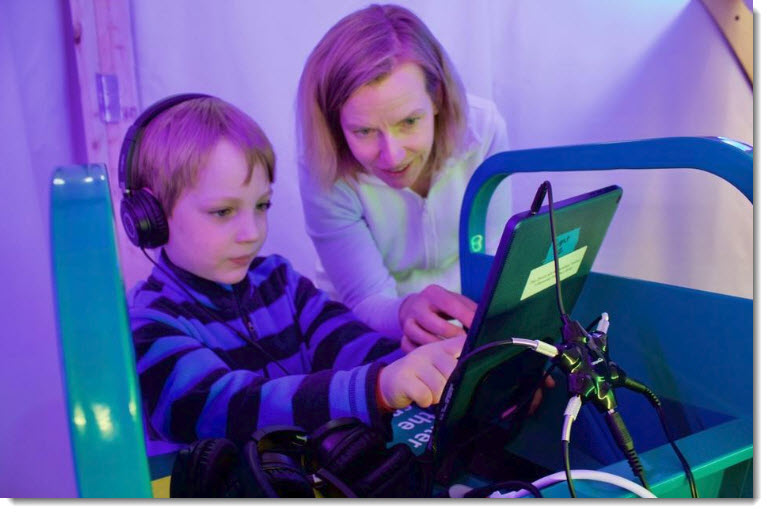
A luminous igloo-shaped structure in the front room of the Cambridge Public Library beckoned curious library visitors during the snowy first weekend of March, inviting them to explore a space engineered for everyone, yet uniquely their own.
Called “Alterspace” and developed by Harvard’s metaLAB and Library Innovation Lab, this experiment in adaptive architecture granted the individual control over the sensory elements in his or her space. A user enters the LED-illuminated dome to find headphones, chairs and an iPad on a library cart, which displays six modes: Relax, Read, Meditate, Focus, Create and W3!Rd.
From the cool blues and greens of Relax mode to a rainbow overload of excitement in the W3!Rd mode, Alterspace is engineered to transform its lights, sounds and colors into the ideal environment for a particular action.
From DSC:
This brings me back to the question/reflection…in the future, will students using VR headsets be able to study by a brook? An ocean? In a very quiet library (i.e., the headset would come with solid noise cancellation capabilities build into it)? This type of room/capability would really be helpful for our daughter…who is easily distracted and doesn’t like noise.
Dezeen’s top 10 architecture and interiors trends of 2018 — from dezeen.com by Tom Ravenscroft
Excerpt:
For our review of 2018, deputy editor Tom Ravenscroft looks at the year’s biggest trends in architecture and interior design, including action to address gender imbalance, the rise of hyperloop and the move towards off-grid living.
Can space activate learning? UC Irvine seeks to find out with $67M teaching facility — from edsurge.com by Sydney Johnson
Excerpt:
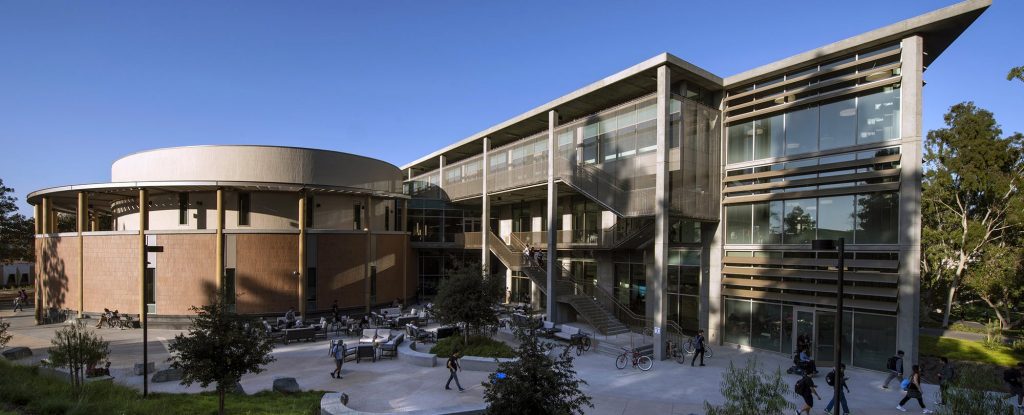
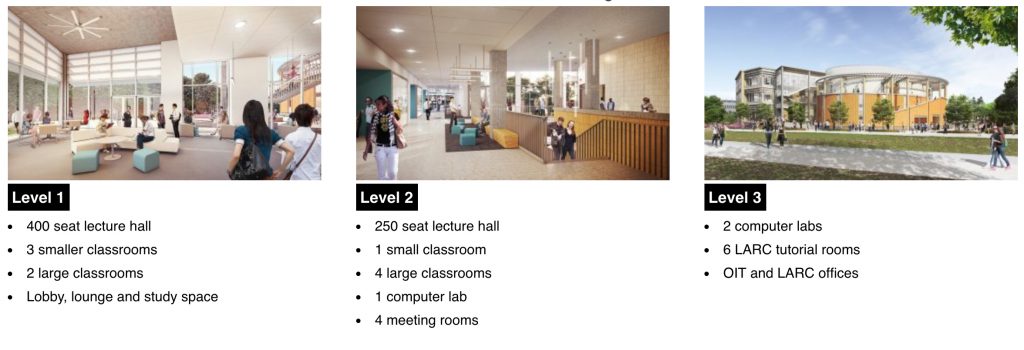
When class isn’t in session, UC Irvine’s shiny new Anteater Learning Pavillion looks like any modern campus building. There are large lecture halls, hard-wired lecture capture technology, smaller classrooms, casual study spaces and brightly colored swivel chairs.
But there’s more going on in this three-level, $67-million facility, which opened its doors in September. For starters, the space is dedicated to “active learning,” a term that often refers to teaching styles that go beyond a one-way lecture format. That could range from simply giving students a chance to pause and discuss with peers, to role playing, to polling students during class, and more.
To find out what that really looks like—and more importantly, if it works—the campus is also conducting a major study over the next year to assess active learning in the new building.
100 voices of AR/VR in education — from virtualiteach.com
Ambitious VR experience restores 7,000 Roman buildings, monuments to their former glory — from smithsonianmag.com by Meilan Solly
You can take an aerial tour of the city circa 320 A.D. or stop by specific sites for in-depth exploration
Excerpt:
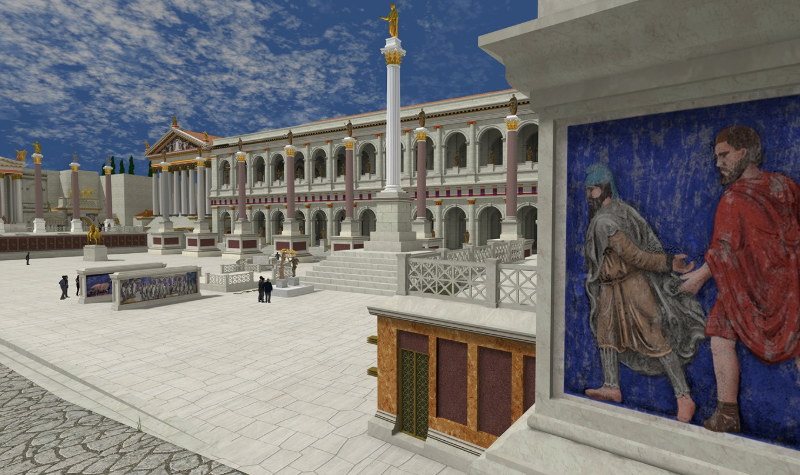
Ever wish you could step into a hot air balloon, travel back in time to 320 A.D., and soar over the streets of Ancient Rome? Well, that oddly specific fantasy is achievable in a new virtual reality experience called “Rome Reborn.”
The ambitious undertaking, painstakingly built by a team of 50 academics and computer experts over a 22-year period, recreates 7,000 buildings and monuments scattered across a 5.5 square mile stretch of the famed Italian city. The project, according to Tom Kington of the Times, is being marketed as the largest digital reconstruction of Rome to date.
VR Isn’t a Novelty: Here’s How to Integrate it Into the Curriculum — from edsurge.com by Jan Sikorsky
Excerpt:
While the application of VR to core academics remains nascent, early returns are promising: research now suggests students retain more information and can better synthesize and apply what they have learned after participating in virtual reality exercises.
And the technology is moving within the reach of classroom teachers. While once considered high-end and cost-prohibitive, virtual reality is becoming more affordable. Discovery VR and Google Expeditions offer several virtual reality experiences for free. Simple VR viewers now come in relatively low-cost DIY cardboard view boxes, like Google Cardboard, that fit a range of VR-capable smartphones.
…
Still, teachers may remain unsure of how they might implement such cutting-edge technology in their classrooms. Their concerns are well founded. Virtual reality takes careful planning and implementation for success. It’s not simply plug-and-play technology. It also takes a lot of work to develop.
From DSC:
Reduced costs & greater development efficiencies needed here:
“In our case, to create just 10 minutes of simulation, a team of six developers logged almost 1,000 hours of development time.”
Unveiling RLab: the First-City Funded VR/AR Center in the Country Opens Doors at Brooklyn Navy Yard — from prnewswire.com
New York City’s Virtual and Augmented Reality Center Will Fuel Innovation, Entrepreneurship, and Education, While Creating Hundreds of Well-Paying Jobs
Excerpt:
BROOKLYN, N.Y., Oct. 24, 2018 /PRNewswire/ — New York City Economic Development Corporation (NYCEDC), the Mayor’s Office of Media and Entertainment (MOME), the NYU Tandon School of Engineering and the Brooklyn Navy Yard today announced the launch of RLab – the first City-funded virtual and augmented reality (VR/AR) lab in the country. Administered by NYU Tandon with a participating consortium of New York City universities, including Columbia University, CUNY and The New School, RLab will operate out of Building 22 in the Brooklyn Navy Yard and will cement New York City’s status as a global leader in VR/AR, creating over 750 jobs in the industry.
New virtual reality lab at UNMC — from wowt.com
This VR-live actor mashup is like your best absinthe-fueled nightmare — from cnet.com by Joan Solsman
Chained, an immersive reimagining of Dickens’ A Christmas Carol, weds virtual reality with a motion-capture live actor. Could it be the gateway that makes VR a hit?
Also see:
…and this as well:
See the results of a months-long effort to create a HoloLens experience that pays homage to Mont-Saint-Michel, in Normandy, France, in all its forms – as a physical relief map and work of art; as a real place visited by millions of people over the centuries; and as a remarkable digital story of resilience. In this three-part Today in Technology series, they examine how AI and mixed reality can open a new window into French culture by using technology like HoloLens.
A Space for Learning: A review of research on active learning spaces — from by Robert Talbert and Anat Mor-Avi
Abstract:
Active Learning Classrooms (ALCs) are learning spaces specially designed to optimize the practice of active learning and amplify its positive effects in learners from young children through university-level learners. As interest in and adoption of ALCs has increased rapidly over the last decade, the need for grounded research in their effects on learners and schools has grown proportionately. In this paper, we review the peer-reviewed published research on ALCs, dating back to the introduction of “studio” classrooms and the SCALE-UP program up to the present day. We investigate the literature and summarize findings on the effects of ALCs on learning outcomes, student engagement, and the behaviors and practices of instructors as well as the specific elements of ALC design that seem to contribute the most to these effects. We also look at the emerging cultural impact of ALCs on institutions of learning, and we examine the drawbacks of the published research as well as avenues for potential future research in this area.
1: Introduction
1.1: What is active learning, and what is an active learning classroom?
Active learning is defined broadly to include any pedagogical method that involves students actively working on learning tasks and reflecting on their work, apart from watching, listening, and taking notes (Bonwell & Eison, 1991). Active learning has taken hold as a normative instructional practice in K12 and higher education institutions worldwide. Recent studies, such as the 2014 meta-analysis linking active learning pedagogies with dramatically reduced failure rates in university-level STEM courses (Freeman et al., 2014) have established that active learning drives increased student learning and engagement across disciplines, grade levels, and demographics.
As schools, colleges, and universities increasingly seek to implement active learning, concerns about the learning spaces used for active learning have naturally arisen. Attempts to implement active learning pedagogies in spaces that are not attuned to the particular needs of active learning — for example, large lecture halls with fixed seating — have resulted in suboptimal results and often frustration among instructors and students alike. In an effort to link architectural design to best practices in active learning pedagogy, numerous instructors, school leaders, and architects have explored how learning spaces can be differently designed to support active learning and amplify its positive effects on student learning. The result is a category of learning spaces known as Active Learning Classrooms (ALCs).
While there is no universally accepted definition of an ALC, the spaces often described by this term have several common characteristics:
2.1: Research questions
The main question that this study intends to investigate is: What are the effects of the use of ALCs on student learning, faculty teaching, and institutional cultures? Within this broad overall question, we will focus on four research questions:
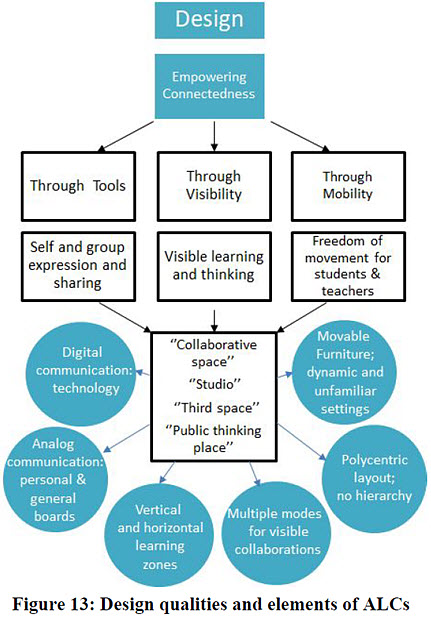
The common denominator in the larger cultural effects of ALCs and active learning on students and instructors is the notion of connectedness, a concept we have already introduced in discussions of specific ALC design elements. By being freer to move and have physical and visual contact with each other in a class meeting, students feel more connected to each other and more connected to their instructor. By having an architectural design that facilitates not only movement but choice and agency — for example, through the use of polycentric layouts and reconfigurable furniture — the line between instructor and students is erased, turning the ALC into a vessel in which an authentic community of learners can take form.