“A new L&D operating system for the AI Era?” [Hardman] + other items re: AI in our learning ecosystems

From 70/20/10 to 90/10 — from drphilippahardman.substack.com by Dr Philippa Hardman
A new L&D operating system for the AI Era?

This week I want to share a hypothesis I’m increasingly convinced of: that we are entering an age of the 90/10 model of L&D.

90/10 is a model where roughly 90% of “training” is delivered by AI coaches as daily performance support, and 10% of training is dedicated to developing complex and critical skills via high-touch, human-led learning experiences.

Proponents of 90/10 argue that the model isn’t about learning less, but about learning smarter by defining all jobs to be done as one of the following:

  • Delegate (the dead skills): Tasks that can be offloaded to AI.
  • Co-Create (the 90%): Tasks which well-defined AI agents can augment and help humans to perform optimally.
  • Facilitate (the 10%): Tasks which require high-touch, human-led learning to develop.

So if AI at work is now both real and material, the natural question for L&D is: how do we design for it? The short answer is to stop treating learning as an event and start treating it as a system.


My daughter’s generation expects to learn with AI, not pretend it doesn’t exist, because they know employers expect AI fluency and because AI will be ever-present in their adult lives.

— Jenny Maxell

The above quote was taken from this posting.


Unlocking Young Minds: How Gamified AI Learning Tools Inspire Fun, Personalized, and Powerful Education for Children in 2025 — from techgenyz.com by Sreyashi Bhattacharya

Table of Contents

Highlight

  • Gamified AI Learning Tools personalize education by adapting the difficulty and content to each child’s pace, fostering confidence and mastery.
  • Engaging & Fun: Gamified elements like quests, badges, and stories keep children motivated and enthusiastic.
  • Safe & Inclusive: Attention to equity, privacy, and cultural context ensures responsible and accessible learning.

How to test GenAI’s impact on learning — from timeshighereducation.com by Thibault Schrepel
Rather than speculate on GenAI’s promise or peril, Thibault Schrepel suggests simple teaching experiments to uncover its actual effects

Generative AI in higher education is a source of both fear and hype. Some predict the end of memory, others a revolution in personalised learning. My two-year classroom experiment points to a more modest reality: Artificial intelligence (AI) changes some skills, leaves others untouched and forces us to rethink the balance.

This indicates that the way forward is to test, not speculate. My results may not match yours, and that is precisely the point. Here are simple activities any teacher can use to see what AI really does in their own classroom.

4. Turn AI into a Socratic partner
Instead of being the sole interrogator, let AI play the role of tutor, client or judge. Have students use AI to question them, simulate cross-examination or push back on weak arguments. New “study modes” now built into several foundation models make this kind of tutoring easy to set up. Professors with more technical skills can go further, design their own GPTs or fine-tuned models trained on course content and let students interact directly with them. The point is the practice it creates. Students learn that questioning a machine is part of learning to think like a professional.


Assessment tasks that support human skills — from timeshighereducation.com by Amir Ghapanchi and Afrooz Purarjomandlangrudi
Assignments that focus on exploration, analysis and authenticity offer a road map for university assessment that incorporates AI while retaining its rigour and human elements

Rethinking traditional formats

1. From essay to exploration 
When ChatGPT can generate competent academic essays in seconds, the traditional format’s dominance looks less secure as an assessment task. The future lies in moving from essays as knowledge reproduction to assessments that emphasise exploration and curation. Instead of asking students to write about a topic, challenge them to use artificial intelligence to explore multiple perspectives, compare outputs and critically evaluate what emerges.

Example: A management student asks an AI tool to generate several risk plans, then critiques the AI’s assumptions and identifies missing risks.


What your students are thinking about artificial intelligence — from timeshighereducation.com by Florencia Moore and Agostina Arbia
GenAI has been quickly adopted by students, but the consequences of using it as a shortcut could be grave. A study into how students think about and use GenAI offers insights into how teaching might adapt

However, when asked how AI negatively impacts their academic development, 29 per cent noted a “weakening or deterioration of intellectual abilities due to AI overuse”. The main concern cited was the loss of “mental exercise” and soft skills such as writing, creativity and reasoning.

The boundary between the human and the artificial does not seem so easy to draw, but as the poet Antonio Machado once said: “Traveller, there is no path; the path is made by walking.”


Jelly Beans for Grapes: How AI Can Erode Students’ Creativity — from edsurge.com by Thomas David Moore

There is nothing new about students trying to get one over on their teachers — there are probably cuneiform tablets about it — but when students use AI to generate what Shannon Vallor, philosopher of technology at the University of Edinburgh, calls a “truth-shaped word collage,” they are not only gaslighting the people trying to teach them, they are gaslighting themselves. In the words of Tulane professor Stan Oklobdzija, asking a computer to write an essay for you is the equivalent of “going to the gym and having robots lift the weights for you.”


Deloitte will make Claude available to 470,000 people across its global network — from anthropic.com

As part of the collaboration, Deloitte will establish a Claude Center of Excellence with trained specialists who will develop implementation frameworks, share leading practices across deployments, and provide ongoing technical support to create the systems needed to move AI pilots to production at scale. The collaboration represents Anthropic’s largest enterprise AI deployment to date, available to more than 470,000 Deloitte people.

Deloitte and Anthropic are co-creating a formal certification program to train and certify 15,000 of its professionals on Claude. These practitioners will help support Claude implementations across Deloitte’s network and Deloitte’s internal AI transformation efforts.


How AI Agents are finally delivering on the promise of Everboarding: driving retention when it counts most — from premierconstructionnews.com

Everboarding flips this model. Rather than ending after orientation, everboarding provides ongoing, role-specific training and support throughout the employee journey. It adapts to evolving responsibilities, reinforces standards, and helps workers grow into new roles. For high-turnover, high-pressure environments like retail, it’s a practical solution to a persistent challenge.

AI agents will be instrumental in the success of everboarding initiatives; they can provide a much more tailored training and development process for each individual employee, keeping track of which training modules may need to be completed, or where staff members need or want to develop further. This personalisation helps staff to feel not only more satisfied with their current role, but also guides them on the right path to progress in their individual careers.

Digital frontline apps are also ideal for everboarding. They offer bite-sized training that staff can complete anytime, whether during quiet moments on shift or in real time on the job, all accessible from their mobile devices.


TeachLM: insights from a new LLM fine-tuned for teaching & learning — from drphilippahardman.substack.com by Dr Philippa Hardman
Six key takeaways, including what the research tells us about how well AI performs as an instructional designer

As I and many others have pointed out in recent months, LLMs are great assistants but very ineffective teachers. Despite the rise of “educational LLMs” with specialised modes (e.g. Anthropic’s Learning Mode, OpenAI’s Study Mode, Google’s Guided Learning) AI typically eliminates the productive struggle, open exploration and natural dialogue that are fundamental to learning.

This week, Polygence, in collaboration with Stanford University researcher Prof Dora Demszky. published a first-of-its-kind research on a new model — TeachLM — built to address this gap.

In this week’s blog post, I deep dive what the research found and share the six key findings — including reflections on how well TeachLM performs on instructional design.


The Dangers of using AI to Grade — from marcwatkins.substack.com by Marc Watkins
Nobody Learns, Nobody Gains

AI as an assessment tool represents an existential threat to education because no matter how you try and establish guardrails or best practices around how it is employed, using the technology in place of an educator ultimately cedes human judgment to a machine-based process. It also devalues the entire enterprise of education and creates a situation where the only way universities can add value to education is by further eliminating costly human labor.

For me, the purpose of higher education is about human development, critical thinking, and the transformative experience of having your ideas taken seriously by another human being. That’s not something we should be in a rush to outsource to a machine.

 

Free Sites for Back to School — from techlearning.com by Diana Restifo
Top free and freemium sites for learning

An internet search for free learning resources will likely return a long list that includes some useful sites amid a sea of not-really-free and not-very-useful sites.

To help teachers more easily find the best free and freemium sites they can use in their classrooms and curricula, I’ve curated a list that describes the top free/freemium sites for learning.

In some cases, Tech & Learning has reviewed the site in detail, and those links are included so readers can find out more about how to make the best use of the online materials. In all cases, the websites below provide valuable educational tools, lessons, and ideas, and are worth exploring further.


Two bonus postings here! 🙂 


How Much Do Voice Actors Make? — from elevenlabs.io
Learn how much voice actors can expect to make and how to create passive income streams with ElevenLabs.

In the recording studio or passively, how much do voice actors make?

If you’re considering a career in the voice acting industry, you may be wondering how much do voice actors make?

A voice actor’s salary is based on many factors, from talent to type of voice work, and the ability to market yourself. Voice actors can experience massive earning potential, and a voice actor salary can range from tens of thousands of dollars to six figures a year.

In this article, we’ll explore how to make your voice talent work for you, whether you’re an entry-level voice actor or an experienced voice actor, the kind of voice actor’s salary you can expect, and what the highest-paid voice actors earn.


Also from elevenlabs.io see:

How Do Video Game AI Sound Effects Work?
Learn how AI tools are transforming the world of video game sound effect generation.

Have you ever wondered how video games create those immersive and dynamic sound effects that react to your every move? From the satisfying crunch of footsteps on different surfaces to the realistic reverberations of gunshots in various environments, game audio has come a long way.

Now, AI is revolutionizing the way video game audio is produced and experienced. AI algorithms and machine learning techniques are being leveraged to power real-time sound effect generation, creating more realistic, adaptive, and efficient sound effects that respond to player actions and in-game events in real-time. For example, ElevenLabs’ upcoming AI Sound Effects feature will allow video game developers to describe a sound and then generate it with AI.

What Are the Best AI Video Game Tools?
Looking to enhance your video generation process with AI tools? You’ve come to the right place. Learn all about the top tools and their specific use cases.

From generating realistic assets and environments to crafting compelling narratives and lifelike characters, AI is revolutionizing the way video games are designed and developed.

In this article, we will explore the different types of AI video game tools available and highlight some of the best tools in each category. We’ll delve into the key features and benefits of these tools, helping you understand how they can streamline your game development process and enhance the overall quality of your game.

Whether you’re an indie developer or part of a large studio, understanding the AI landscape and selecting the right tools for your project is crucial. We’ll provide insights into what to look for when choosing an AI video game tool, ensuring that you make an informed decision that aligns with your project’s requirements and budget.


Tools and Apps to Bring Augmented Reality into Your Classroom — from techlearning.com by Steve Baule and Dillon Martinez
These digital tools and platforms can support the use of augmented reality in the classroom, making a more dynamic and engaging learning experience

AR allows virtual 3D models, animations, and contextual information to be overlaid on the real world through mobile devices or AR headsets. The Franklin Institute provides a good overview of what constitutes AR, as does UK’s Talk Business and Tech & Learning. This immersive technology provides unique opportunities for interactive, experiential learning across numerous subjects.

For example, in a science class, students could use an AR app to visualize the 3D structure of a molecule they are studying and interact with it by rotating, resizing, or even building it atom-by-atom. For history lessons, AR can transport students to ancient archaeological sites projected on their desks, where they can explore 3D reconstructions of ruins and artifacts. Google’s Expeditions tool can allow students to take a virtual walkthrough South Africa and learn about its geography or visit the Seven New Wonders of the World.


How Early Adopters of Gen AI Are Gaining Efficiencies — from knowledge.wharton.upenn.edu by Prasanna (Sonny) Tambe and Scott A. Snyder; via Ray Schroeder on LinkedIn
Enterprises are seeing gains from generative AI in productivity and strategic planning, according to speakers at a recent Wharton conference.

Its unique strengths in translation, summation, and content generation are especially useful in processing unstructured data. Some 80% of all new data in enterprises is unstructured, he noted, citing research firm Gartner. Very little of that unstructured data that resides in places like emails “is used effectively at the point of decision making,” he noted. “[With gen AI], we have a real opportunity” to garner new insights from all the information that resides in emails, team communication platforms like Slack, and agile project management tools like Jira, he said.


6 YouTube Channels to Stay Up to Date with AI — from heaigirl.substack.com by Diana Dovgopol
Here are some cool AI YouTube channels.

Here are 6 YouTube channels I watch to stay up to date with AI. This list will be useful whether you’re a casual AI enthusiast or an experienced programmer.

1. Matt Wolfe: AI for non-coders
This is a fast-growing YouTube channel focused on artificial intelligence for non-coders. On this channel, you’ll find videos about ChatGPT, Midjourney, and any AI tool that it’s gaining popularity.


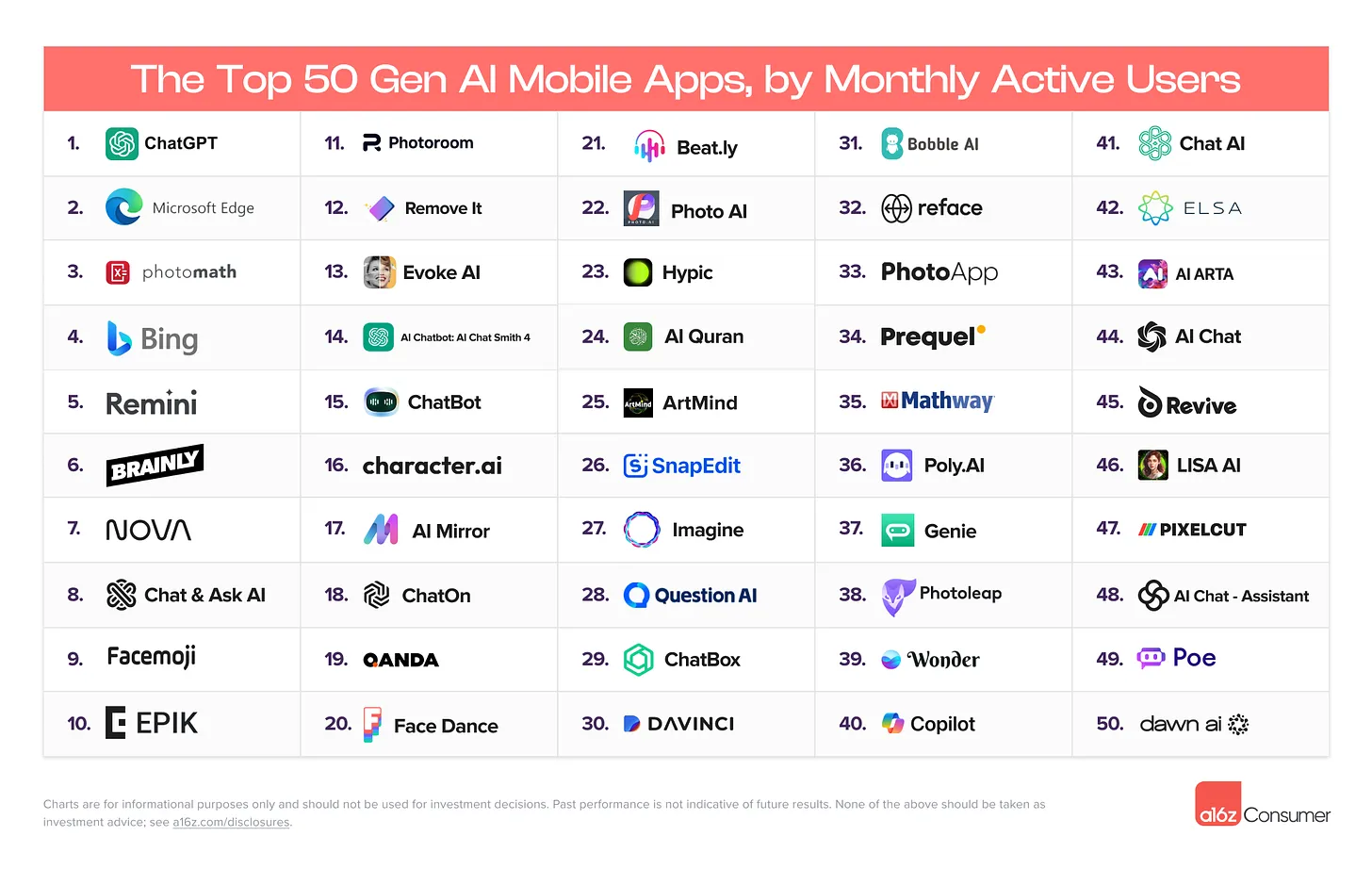
Top AI mobile apps, Stable Video 3D, & my AI film workflow — from by Heather Cooper
Plus 1-Click 3D animation and other cool AI tools

#3 Photomath
Photomath is a comprehensive math help app that provides step-by-step explanations for a wide range of math problems, from elementary to college level. Photomath is only available as a mobile app. (link)

Features:

  • Get step-by-step solutions with multiple methods to choose from
  • Scan any math problem, including word problems, using the app’s camera
  • Access custom visual aids and extra “how” and “why” tips for deeper understanding

Google researchers unveil ‘VLOGGER’, an AI that can bring still photos to life — from venturebeat.com by Michael Nuñez

Google researchers have developed a new artificial intelligence system that can generate lifelike videos of people speaking, gesturing and moving — from just a single still photo. The technology, called VLOGGER, relies on advanced machine learning models to synthesize startlingly realistic footage, opening up a range of potential applications while also raising concerns around deepfakes and misinformation.


What We Risk By Automating Tasks We Loathe — from marcwatkins.substack.com by Marc Watkins

I’m fascinated by the potential of these tools to augment and enhance our work and creativity. There’s no denying the impressive capabilities we’re already seeing with text generation, image creation, coding assistance, and more. Used thoughtfully, AI can be a powerful productivity multiplier.

At the same time, I have significant concerns about the broader implications of this accelerating technology, especially for education and society at large. We’re traversing new ground at a breakneck pace, and it’s crucial that we don’t blindly embrace AI without considering the potential risks.

My worry is that by automating away too many tasks, even seemingly rote ones like creating slide decks, we risk losing something vital—humanity at the heart of knowledge work.


Nvidia Introduce AI Nurses — from wireprompt.substack.com | Weekkly AI Report from WirePrompt

Nvidia has announced a partnership with Hippocratic AI to introduce AI “agents” aimed at replacing nurses in hospitals. These AI “nurses” come at a significantly low cost compared to human nurses and are purportedly intended to address staffing issues by handling “low-risk,” patient-facing tasks via video calls. However, concerns are raised regarding the ethical implications and effectiveness of replacing human nurses with AI, particularly given the complex nature of medical care.


16 Changes to the Way Enterprises Are Building and Buying Generative AI — from a16z.com by Sarah Wang and Shangda Xu

TABLE OF CONTENTS

  • Resourcing: budgets are growing dramatically and here to stay
  • Models: enterprises are trending toward a multi-model, open source world
  • Use cases: more migrating to production
  • Size of total opportunity: massive and growing quickly


Animate Anyone — from theneurondaily.com by Noah Edelman & Pete Huang

Animate Anyone is a new project from Alibaba that can animate any image to move however you’d like.

While the technology is bonkers (duh), the demo video has stirred up mixed reactions.

I mean…just check out the (justified) fury on Twitter in response to this research.

To the researchers’ credit, they haven’t released a working demo yet, probably for this exact concern.


OpenAI Is Slowly Killing Prompt Engineering With The Latest ChatGPT and DALL-E Updates — from artificialcorner.substack.com by
ChatGPT and DALL-E 3 now do most of the prompting for us. Does this mean the end of prompt engineering?

Prompt engineering is a must-have skill that any AI enthusiast should have … at least until OpenAI released GPTs and DALL-E 3.

OpenAI doesn’t want to force users to learn prompt engineering to get the most out of its tools.

It seems OpenAI’s goal is to make its tools as easy to use as possible allowing even non-tech people to create outstanding AI images and tailored versions of ChatGPT without learning prompting techniques or coding.

AI can now generate prompts for us, but is this enough to kill prompt engineering? To answer this, let’s see how good are these AI-generated prompts.

From DSC:
I agree with several others that prompt engineering will be drastically altered…for the majority of us, I wouldn’t spend a lot of time becoming a Prompt Engineer.


.


10 Free AI Tools for Graphic Designing — from medium.com by Qz Ruslan

With the advancements in Artificial Intelligence (AI), designers now have access to a wide array of free AI-powered tools that streamline their creative process, enhance productivity, and add a touch of uniqueness to their designs. In this article, we will explore ten such free AI tools websites for graphic designing that have revolutionized the way designers approach their craft.


Generative Art in Motion — from heatherbcooper.substack.com by Heather Cooper
Animation and video tools create an explosion of creative expression


World’s first AI cinema opening in Auckland to make all your Matrix fantasies come true — from stuff.co.nz by Jonny Mahon-Heap
Review: My HyperCinema experience was futuristic, sleek – and slightly insane as I became the star of my own show.


AI That Alters Voice and Imagery in Political Ads Will Require Disclosure on Google and YouTube — from usnews.com by Associated Press
Political ads using artificial intelligence on Google and YouTube must soon be accompanied by a prominent disclosure if imagery or sounds have been synthetically altered

Google will soon require that political ads using artificial intelligence be accompanied by a prominent disclosure if imagery or sounds have been synthetically altered.

AI-generated election ads on YouTube and other Google platforms that alter people or events must include a clear disclaimer located somewhere that users are likely to notice, the company said in an update this week to its political content policy.


Animation Tips for eLearning — from learningguild.com by Bill Brandon

Excerpt:

Why use animation in eLearning? Many people may think of animation in terms of entertainment value alone. Animation is far more valuable for its ability to engage learners, explain or illustrate ideas, and improve recall of complex relationships, such as cause and effect.

Look up these specific animation types for use in your projects:

  1. Whiteboard animation: Not necessary to be able to draw the characters. Multiple brands.
  2. Stop-motion animation
  3. Animation programs for beginners
  4. Free animation software

Also relevant/see:

Be an eLearning Storyteller With Style and Confidence — from learningguild.com by Bill Brandon

Excerpt:

Humans are good storytellers, and humans respond well to stories. We know this from our own experience. Not only that, people remember stories for a long time, far longer than we remember a lot of teaching. Do you recall stories that someone in your family told you? Why don’t we remember lessons from school as long or as vividly? Stories are powerful if we know how to use them. In this article I will introduce you to a way to use stories to achieve outcomes.

Any time you are designing a course, a learning experience, or just pitching an idea to your boss or an L&D stakeholder, it’s a story. Even if it does not seem like one, a successful production—whether it is an animated presentation, a virtual supporting example or other content—is based on some fundamental storytelling tactics. It doesn’t have to begin “Once Upon A Time,” it just needs to be constructed the right way for your purpose – To make it a memory.


Peanuts Sing Roundabout — from theawesomer.com; I hadn’t seen this yet…so for those of my generation, you might like this as well! 🙂


Poetry writing about Flint murals allows for ‘creative freedom’ in this high school classroom — from mlive.com  by Dylan Goetz (behind paywall)

Excerpt:

It’s a new tradition in the curriculum of the senior-level English class, where teacher Carrie Mattern asks her students to seek out a mural in Flint and write poetry about it.

This year, there was a focus on writing around cultural grief and the process of healing.

It’s become a favorite assignment for the students who’ve worked on the project, who say it allows them to use “creative freedom” in a way that other classes don’t.
.


Also see:


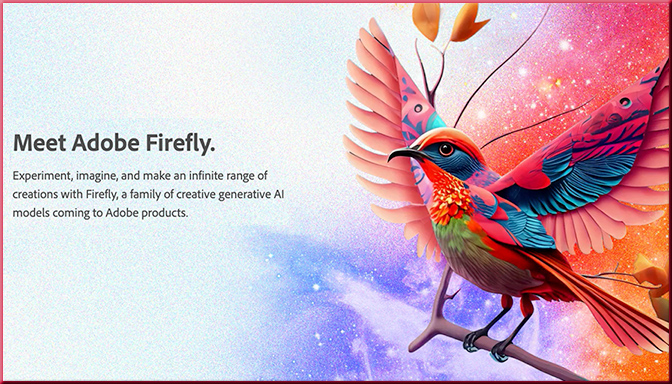
Meet Adobe Firefly. Experiment, imagine, and make an infinite range of creations with Firefly, a family of creative generative AI models coming to Adobe products.

Meet Adobe Firefly. — from adobe.com
Experiment, imagine, and make an infinite range of creations with Firefly, a family of creative generative AI models coming to Adobe products.

Generative AI made for creators.
With the beta version of the first Firefly model, you can use everyday language to generate extraordinary new content. Looking forward, Firefly has the potential to do much, much more.


Also relevant/see:

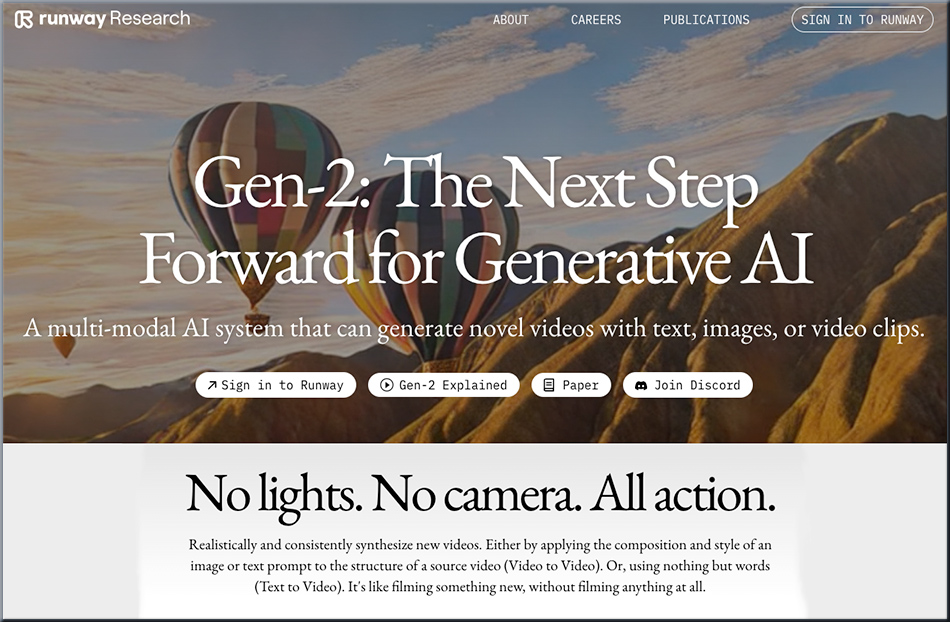
Gen-2 from runway Research -- the next step forward for generative AI

Gen-2: The Next Step Forward for Generative AI — from research.runwayml.com
A multi-modal AI system that can generate novel videos with text, images, or video clips.

Realistically and consistently synthesize new videos. Either by applying the composition and style of an image or text prompt to the structure of a source video (Video to Video). Or, using nothing but words (Text to Video). It’s like filming something new, without filming anything at all.


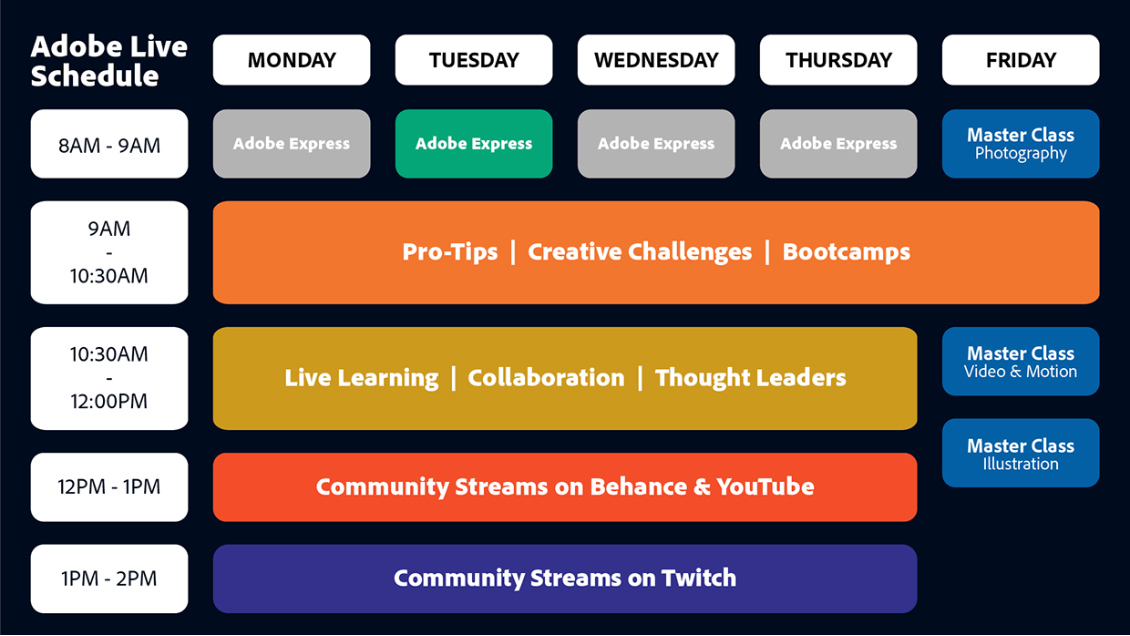
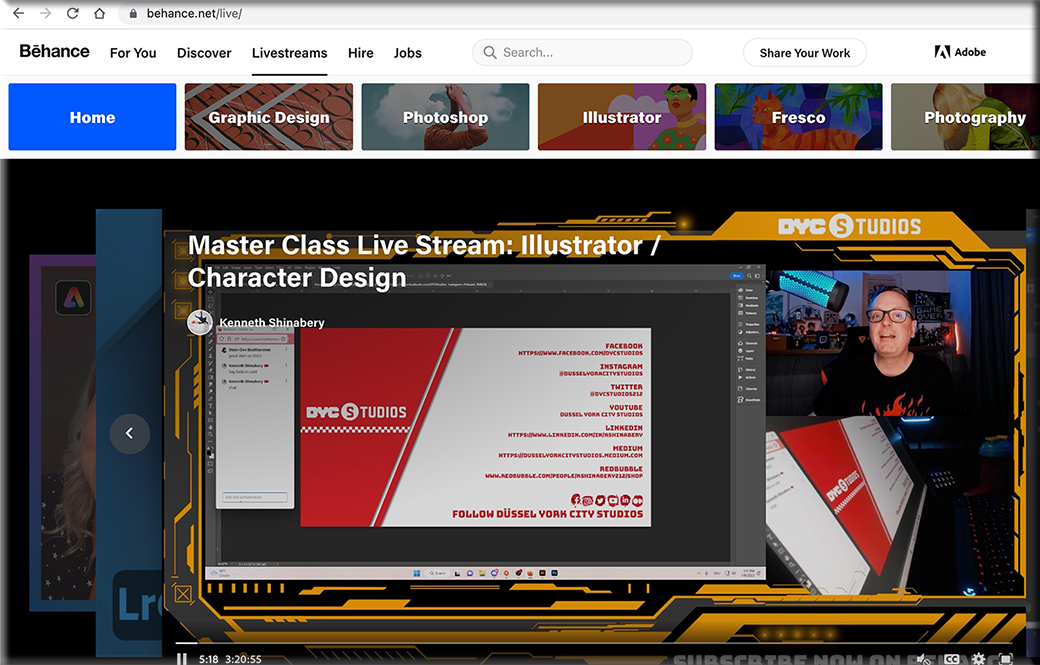
behance.net/live/   <— Check out our revamped schedule!

Join us in the morning for Adobe Express streams — If you are an aspiring creative, small business owner, or looking to kickstart a side hustle – these live streams are for you!

Then level up your skills with Creative Challenges, Bootcamps, and Pro-Tips. Get inspired by artists from all over the world during our live learning events. Tune in to connect directly with your instructors and other creatives just like you.

In the afternoon, join creatives in their own Community Streams! Laugh and create along side other Adobe Live Community members on Behance, Youtube and Twitch!

For weekly updates on the Adobe Live schedule + insight into upcoming guests and content, join our discord communities!

Watch Adobe Live Now!


Californians approve big funding boost for arts education — from apnews.com by Julie Watson; with thanks to Goldie Blumenstyk for this resource

Excerpt:

SAN DIEGO (AP) — California voters on Tuesday approved a ballot measure backed by a celebrity lineup that included Barbra Streisand and Los Angeles-born rappers will.i.am and Dr. Dre that could pump as much as $1 billion a year from the state’s general fund into arts education.

Supporters said it would benefit public school programs that go beyond the traditional art, theater, dance and music classes to include graphic design, computer coding, animation, music composition and script writing.

Also from Goldie Blumenstyk:

 
© 2025 | Daniel Christian