AI Plus VR at Purdue University Global — from er.educause.edu by Abbey Elliott, Michele McMahon, Jerrica Sheridan, and Gregory Dobbin
Adding artificial intelligence to virtual reality provides nursing students with realistic, immersive learning experiences that prepare them to treat patients from diverse backgrounds.

Excerpt:

Adding artificial intelligence (AI) to immersive VR simulations can deepen the learning by enabling patient interactions that reflect a variety of patient demographics and circumstances, adjusting patient responses based on students’ questions and actions. In this way, the immersive learning activities become richer, with the goal of providing unique experiences that can help students make a successful transition from student to provider in the workforce. The use of AI and immersive learning techniques augments learning experiences and reinforces concepts presented in both didactic and clinical courses and coursework. The urgency of the pandemic prompted the development of a vision of such learning that would be sustainable beyond the pandemic as a tool for education on a relevant and scalable platform.


Speaking of emerging technologies and education/learning, also see:

NVIDIA's new AI magic turns 2d photos into 3D graphics

Best virtual tours of Ireland


From DSC:
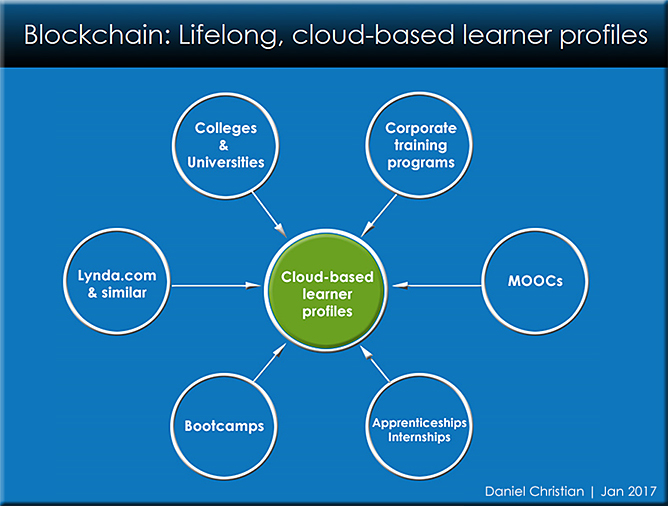
An AI-backed platform will constantly search all job postings and present the most desired skills in the marketplace and then how to get those skills. The providers will be individuals, organizations, training providers, traditional institutions of higher education, vendors and more.

Depending upon what happens with blockchain — and if a much more energy-efficient/environmentally-friendly solution can be implemented — blockchain may be a part of that equation.


Changing the narrative on degree requirements — from workshift.opencampusmedia.org by Paul Fain; with thanks to Ryan Craig (I believe) for this resource
An ad campaign from Opportunity@Work and the Ad Council will call on employers to drop the “paper ceiling” and hire more skilled workers without four-year degrees.

Excerpt:

A new national advertising campaign will seek to influence employers to look beyond the four-year degree in hiring, with the message that a “paper ceiling” holds back half the U.S. workforce.

The ads from Opportunity@Work and the Ad Council are slated to start running in September. With slick production and some big corporate partners, including Walmart and Google, the campaign is designed to nudge hiring managers across the country to make good on the growing number of pledges from company C-suites, state capitals, and the White House to drop barriers for skilled job seekers who lack bachelor’s degrees.

This group of more than 70M Americans includes community college graduates, experienced workers, veterans of the U.S. military, and completers of job training programs or alternatives to college, according to the nonprofit Opportunity@Work. The ads will celebrate these workers, which the group says are skilled through alternative routes (STARs).


Also relevant, see:

Americans support student loan forgiveness, but would rather rein in college costs — from npr.org by Cory Turner; with thanks to Bryan Alexander for posting this on LinkedIn

Excerpt (emphasis DSC):

Erasing old debts vs. fixing the system
In one of the poll’s most unexpected findings, respondents were asked to choose which sentence they agreed with more:

    1. “The government should prioritize making college more affordable for current and future students”
    2. “The government should prioritize forgiving some debt for those with existing student loans”

A whopping 82% said the government’s priority should be making college more affordable for current and future students. Just 16% believed forgiving student debts should take priority.

What that tells me is that, while student loan forgiveness for some is seen as a good proposal and a short-term fix, where we actually need to go from here is true, systematic change,” Newall says.


The Future of Education | By Futurist Gerd Leonhard | A Video for EduCanada — from futuristgerd.com

Per Gerd:

Recently, I was invited by the Embassy of Canada in Switzerland to create this special presentation and promotional video discussing the Future of Education and to explore how Canada might be leading the way. Here are some of the key points I spoke about in the video. Watch the whole thing here: the Future of Education.


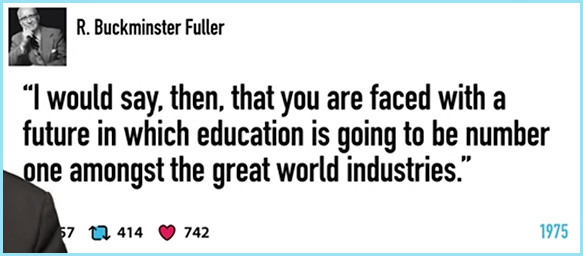
…because by 2030, I believe, the traditional way of learning — just in case — you know storing, downloading information will be replaced by learning just in time, on-demand, learning to learn, unlearning, relearning, and the importance of being the right person. Character skills, personality skills, traits, they may very well rival the value of having the right degree.

If you learn like a robot…you’ll never have a job to begin with.

Gerd Leonhard


Also relevant/see:

The Next 10 Years: Rethinking Work and Revolutionising Education (Gerd Leonhard’s keynote in Riga) — from futuristgerd.com


Animated Series: What’s Up with the Metaverse — from joetechnologist.com by Joseph Raczynski with creative by Elise Harmening, Esq.

Video description (emphasis DSC):

What’s Up with the Metaverse, published on June 2, 2022, was written by Joseph Raczynski of Thomas Reuters, a member of the Governing Council for the Center for Innovation, and created by Elise Harmening, Esq., Project Specialist Manager at the Center for Innovation. Innovation and You is a production by The American Bar Association’s Center for Innovation to help lawyers and our members think about innovative legal technology and practices as the legal landscape continues to change. Join the conversation on Twitter @ABAInnovation.


Also see:

Animated Series: What is an API? — from joetechnologist.com by Joseph Raczynski with creative by Elise Harmening, Esq.


The Restaurant of Mistaken Orders: A Tokyo Restaurant Where All the Servers Are People Living with Dementia — from openculture.com

Whole towns have already begun to structure their services around a growing number of citizens with dementia. But dementia itself remains “widely misunderstood,” says Restaurant of Mistaken Orders producer Shiro Oguni in the “concept movie” at the top of the post. “People believe you can’t do anything for yourself, and the condition will often mean isolation from society. We want to change society to become more easy-going so, dementia or no dementia, we can live together in harmony.”

Also see:

How Technology Can Improve Elder Care — from digitalsalutem.com by João Bocas

In this article, I talk about:

  1. The growth of the aging population
  2. The future of elder care is already here
  3. Smart homes, augmented and virtual reality, and wearables as potential solutions
  4. How these solutions can help providers deliver elder care
  5. The benefits of using these solutions

The world is changing. The way we live, the way we work, and the way we age are all being transformed by technology. In fact, some experts say that by 2030, more than half of the world’s population will be over 50 years old.

This is a new phenomenon for humanity. With this shift comes a need for new approaches to healthcare that are better suited to an aging population with increasingly complex needs.


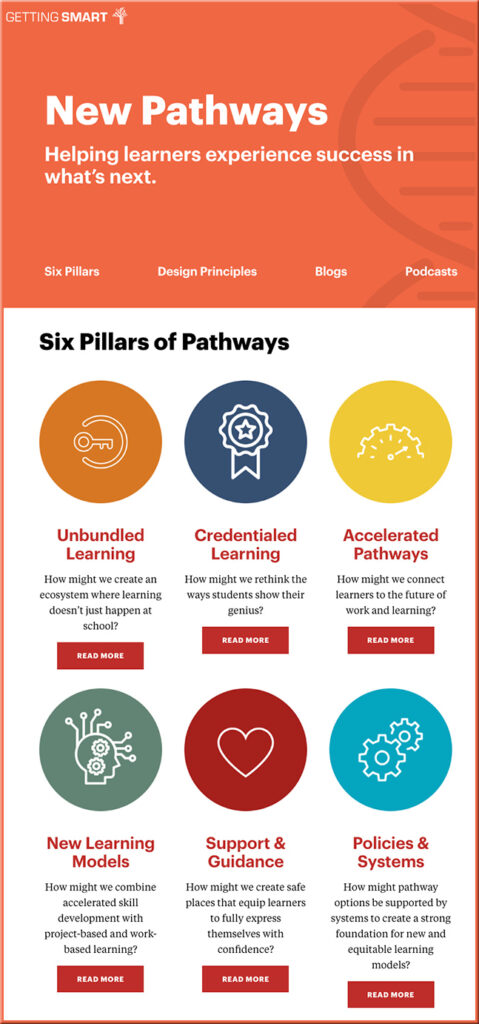
New Pathways: Experiencing Success In What’s Next — from Getting Smart

Excerpt:

Some of you were able to attend our official kick-off event yesterday (on 6/21/22), but for those who weren’t able to make it we wanted to let you know that our new campaign, New Pathways, has officially begun!. Over the next few years, and in partnership with ASA, the Bill & Melinda Gates Foundation, Stand Together and the Walton Foundation, we will be dedicated to tracking innovations in the following six pillars:

  1. Unbundled Learning
  2. Credentialed Learning
  3. Accelerated Pathways
  4. New Learning Models
  5. Support & Guidance
  6. Policies & Systems
We believe that when combined, these pillars enable learners to find success in what’s next in their professional lives, their personal lives and in their communities.


Boost Usability of Libraries & Knowledge Hubs with Automation — from learningsolutionsmag.com by Markus Bernhardt

Excerpts (emphasis DSC):

Our article series looks at the top three areas where we see automation and AI revolutionizing the way in which successful L&D teams work: Asset libraries and knowledge hubs; hyper-personalized, truly adaptive learning; and capability mapping. This article examines the impact of AI and automation on maintaining asset libraries and knowledge hubs.

Thus, the contextualization engine becomes a powerful content management tool. It is also easy to use and requires no particular subject matter knowledge of the user; the librarian who has read everything does that for the user. And this works, of course, with articles, slide decks, audio, video, and even VR/AR content, and basically any file type.

Assets can be mapped to competencies, skills, learning objectives, departments, the requirements of a specific course or workshop, or to the horizontals and verticals of an organization’s internal restructuring model. And this takes place within seconds and minutes, and at scale.

With the ability to map content as well as practice exercises, questions, and assessments automatically into each concept’s complexity tree, it is now possible to use automation and AI to deliver adaptive and truly personalized learning content and learning paths. 
 

Will Learning Move into the Metaverse? — from learningsolutionsmag.com by Pamela Hogle

Excerpt:

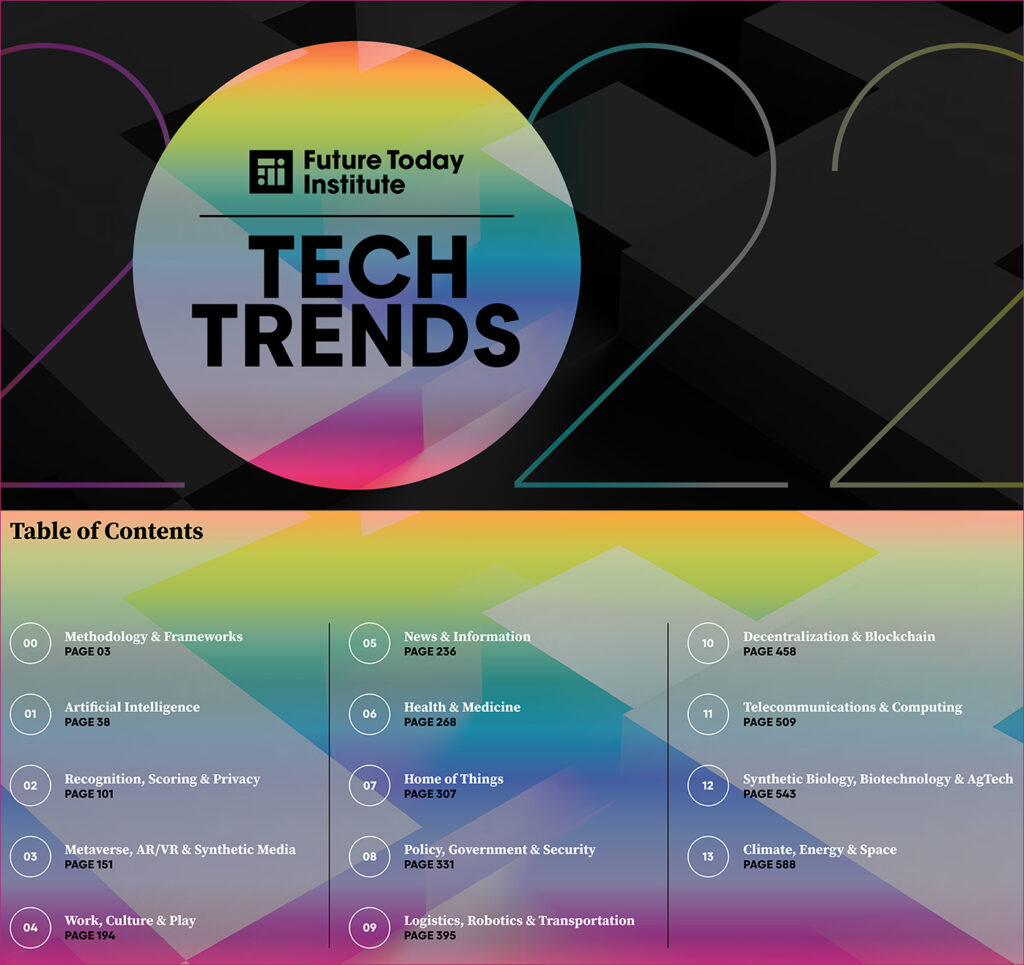
In its 2022 Tech Trends report, the Future Today Institute predicts that, “The future of work will become more digitally immersive as companies deploy virtual meeting platforms, digital experiences, and mixed reality worlds.”

Learning leaders are likely to spearhead the integration of their organizations’ workers into a metaverse, whether by providing training in using the tools that make a metaverse possible or through developing training and performance support resources that learners will use in an immersive environment.

Advantages of moving some workplace collaboration and learning into a metaverse include ease of scaling and globalization. The Tech Trends report mentions personalization at scale and easy multilingual translation as advantages of “synthetic media”—algorithmically generated digital content, which could proliferate in metaverses.

Also see:

Future Institute Today -- Tech Trends 2022


Also from learningsolutionsmag.com, see:

Manage Diverse Learning Ecosystems with Federated Governance

Excerpt:

So, over time, the L&D departments eventually go back to calling their own shots.

What does this mean for the learning ecosystem? If each L&D team chooses its own learning platforms, maintenance and support will be a nightmare. Each L&D department may be happy with the autonomy but learners have no patience for navigating multiple LMSs or going to several systems to get their training records.

Creating common infrastructure among dispersed groups
Here you have the problem: How can groups that have no accountability to each other share a common infrastructure?


Conduct Your Own Virtual Orchestra In Maestro VR — from vrscout.com by Kyle Melnick

Niantic moves beyond games with Lightship AR platform and a social network — from theverge.com by Alex Heath
The maker of Pokémon Go is releasing its AR map for other apps and a location-based social network called Campfire

Excerpt:

Niantic made a name for itself in the mobile gaming industry through the enduring success of Pokémon Go. Now the company is hoping to become something else: a platform for other developers to build location-aware AR apps on top of.

disguise launches Metaverse Solutions division enabling next-level extended reality experiences — from etnow.com

Excerpt:

UK – disguise, the visual storytelling platform and market leader for extended reality (xR) solutions has launched its Metaverse Solutions division to enable the next generation of extraordinary live, virtual production and audiovisual location-based experiences for the metaverse.

The recent rise of real-time 3D graphics rendering capabilities in gaming platforms means that today’s audiences are craving richer, more immersive experiences that are delivered via the metaverse. While the metaverse is already defined as an $8 trillion dollar opportunity by Goldman Sachs, companies are still finding it challenging to navigate the technical elements needed to start building metaverse experiences.

On this item, also see:

disguise.one

disguise launches Metaverse Solutions division — from televisual.com by

Excerpt:

“Our xR technology combines key metaverse building blocks including real-time 3D graphics, spatial technologies and advanced display interfaces – all to deliver a one-of-a-kind gateway to the metaverse,” says disguise CXO and head of Metaverse Solutions Alex Wills.


Every month Essentials publish an Industry Trend Report on AI in general and the following related topics:

  • AI Research
  • AI Applied Use Cases
  • AI Ethics
  • AI Robotics
  • AI Marketing
  • AI Cybersecurity
  • AI Healthcare

The Race to Hide Your Voice — from wired.com by Matt Burgess
Voice recognition—and data collection—have boomed in recent years. Researchers are figuring out how to protect your privacy.

AI: Where are we now? — from educause.edu by EDUCAUSE
Is the use of AI in higher education today invisible? dynamic? perilous? Maybe it’s all three.

What is artificial intelligence and how is it used? — from europart.europa.eu; with thanks to Tom Barrett for this resource


Shifting Skills, Moving Targets, and Remaking the Workforce — from bcg.com by Matt Sigelman, Bledi Taska, Layla O’Kane, Julia Nitschke, Rainer Strack, Jens Baier, Frank Breitling, and Ádám Kotsis; with thanks to Ryan Craig for this resource
Our analysis of more than 15 million job postings reveals the future of work.

Excerpt (emphasis DSC):

Jobs do come and go, but even more significantly, jobs change. Day by day, skill by skill, the basic building blocks of a job are repositioned, until the role looks much different than it did just five years ago. Yet the job title—and the worker in the job—may remain the same.

But even company leaders may not realize how profoundly and rapidly the jobs throughout their business and industry are evolving. A comprehensive look at job listings from 2016 through 2021 reveals significant changes in requested skills, with new skills appearing, some existing skills disappearing, and other existing skills shifting in importance.

The challenge for employers and employees alike is to keep up—or, better yet, to get ahead of the trends.

Four Big Trends
We see four big trends in skill change:

    • Digital skills, like technical fluency and abilities including data analysis, digital marketing, and networking, aren’t limited to jobs in IT.
    • Soft skills, like verbal communication, listening, and relationship building, are needed in digital occupations.
    • Visual communication has become increasingly important even outside of traditional data occupations. Experience with tools such as Tableau, MS Power BI, and Adobe Analytics is in high demand.
    • Social media skills, such as experience with Facebook, LinkedIn, and Adobe Photoshop, are in demand in the current media climate.

Also from Ryan Craig, see:

How to Really Fix Higher Ed — from theatlantic.com by Ben Sasse
Rather than wiping the slate clean on student debt, Washington should take a hard look at reforming a broken system.

Excerpts:

Most young Americans never earn a college degree, and far too many of those who do are poorly served by sclerotic institutions that offer regularly overpriced degrees producing too little life transformation, too little knowledge transmission, and too little pragmatic, real-world value.

Far too often, higher education equates value with exclusivity, and not with outcomes. The paradigmatic schools that dominate higher-ed discussions in the pages of The New York Times, The Wall Street Journal, and The Washington Post measure themselves by how many high-school seniors they reject, rather than by how many they successfully launch, by how much they bolster the moral and intellectual development of the underprivileged, or even by a crude utilitarian calculus such as the average earnings of their recent graduates.

Each of these changes will depend on breaking up the accreditation cartels. College presidents tell me that the accrediting system, which theoretically aims to ensure quality and to prevent scammers from tapping into federal education dollars, actually stifles programmatic innovation inside extant colleges and universities aiming to serve struggling and underprepared students in new ways. 


One last item here:

Learning Should Be Like Cooking — from linkedin.com by Cali Koerner Morrison

Excerpt:

We need systems of record that are learner-owned, verifiable and travel across all types of learning recognition. 1EdTech is making great strides in this direction with the comprehensive learner record and the T3 Innovation Network with the LEROpen Skills Network and Credential Engine are making great strides to level the playing field on defining all elements of skills-based learning and credentialing. We need pathways that help guide learner-earners through their career progression so they are in a constant swirl of learning and earning, leveling up with each new achievement – from a microcredenial to a master’s degree.


How has your legal service delivery model changed as we look forward to post-pandemic life? — from legal.thomsonreuters.com

Excerpt:

The rise of the self-service delivery model
Self-service for legal clients was already a trend before COVID, a trend that accelerated during the shutdowns. Clients now expect to be able to find answers themselves to many of their basic legal questions. Call it the Google-fication of legal service delivery. Clients also want to be able to see their matter statuses without having to take the time to call their lawyers, possibly incurring a charge.

Below are some other legal-related items:

Law Schools Are Changing Thanks To Legal Tech — from lawyer-monthly.com
New digital skills courses are rapidly being added to undergraduate law degrees in the UK. While the first students are currently studying the digital skills course, it’s expected that further students will take part over the coming months. Here, we explore what digital skills courses in law schools are covering.

Pioneers and Pathfinders: Bob Ambrogi — from seyfarth.com by J. StephenPoor

Description of podcast:

For anyone following the rapidly evolving area of legal technology, today’s guest will be a familiar voice. Bob Ambrogi—lawyer, journalist, media consultant, and blogger—has been working at the intersection of law, media, and technology for 40 years. He is known internationally for his expertise in legal technology, legal practice, and legal ethics. He’s won numerous awards for his blog and his leading role on the cutting edge of change in the industry, including being named to Fastcase 50 and Legal Rebels Trailblazers. Before entering the blogosphere, Bob was an editor at a number of mainstream legal publications.

In today’s conversation, we talk about Bob’s journey as a journalist, his views on the current state of mainstream media, the potential of regulatory reform to further disrupt the industry, and the growing diversity of the legal technology industry.

***

Founders Forum invests in fintech-focused virtual law startup Chronos Law — from globallegalpost.com by Ben Edwards
Chronos will be rebranded Founders Law as part of the deal

Bohills said: “Most tech businesses require flexible legal services that don’t fit the traditional law firm model. I designed the firm to scale with the ambitious startups we support. This new investment will enable us to further recruit and satisfy the growing demand from the tech sector and its need for a new way to access legal advice. 


Apple Starts Connecting the Dots for Its Next Big Thing — from nytimes.com by Tripp Mickle and Brian X. Chen
The company has enlisted Hollywood directors like Jon Favreau to help its effort to create products that blend the physical and virtual worlds.

Excerpt:

Nearly 15 years after the iPhone set off the smartphone revolution, Apple is assembling the pieces for what it hopes will become its next business-altering device: a headset that blends the digital world with the real one.

The company has enlisted Hollywood directors such as Jon Favreau to develop video content for a headset that it is expected to ship next year, according to three people familiar with that work. Mr. Favreau, an executive producer of “Prehistoric Planet” on Apple TV+, is working to bring that show’s dinosaurs to life on the headset, which looks like a pair of ski goggles and aims to offer virtual- and augmented-reality experiences, these people said.

Speaking of the future, here’s another item regarding what’s coming down the pike:

 
© 2025 | Daniel Christian